Daily Life · El Salvador
El Salvador: Small Country, Long-Distance Family
A pupusa griddle going all evening, a transfer from a relative in the United States that many households count on, and streets that have grown far calmer since 2022
By Worldlore Editorial · 30 September 2026
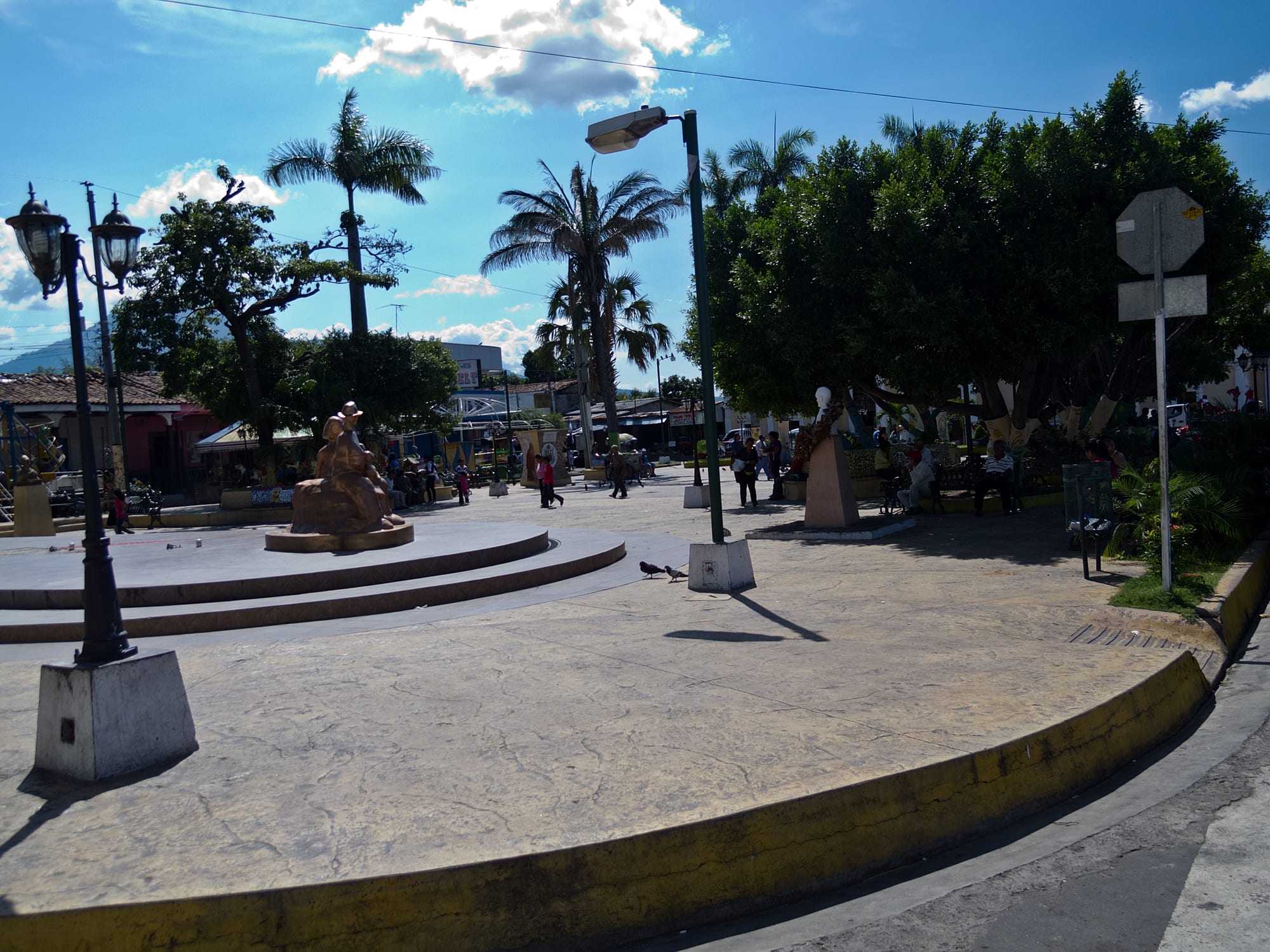
El Salvador is small enough that most of the country can be crossed in a few hours, and densely packed enough that towns and farmland run into one another almost without a break. What shapes an ordinary day here more than geography is distance of another kind: a large share of Salvadoran families have a parent, sibling or child living and working abroad, mostly in the United States, and the money they send home is woven into daily budgets rather than treated as a windfall. Streets themselves have grown noticeably calmer since 2022, when a state of exception launched a sweeping crackdown on the gangs; the government credits it with a steep fall in homicides, while human rights groups have criticised its mass arrests.
Family and home life
Extended family remains the core unit of Salvadoran life, and multiple generations frequently live under one roof or nearby, with grandparents often central to raising children while parents work. Remittances from relatives abroad reach about a third of households and often cover a substantial part of monthly income where they arrive, paying for groceries, school costs and rent as much as for anything extra. Salvadorans abroad are affectionately called hermanos lejanos, "faraway brothers," and a monument on the airport road into San Salvador was built in their honour; having one in the family is an ordinary part of life rather than an exception.
Work, school and the rhythm of the day
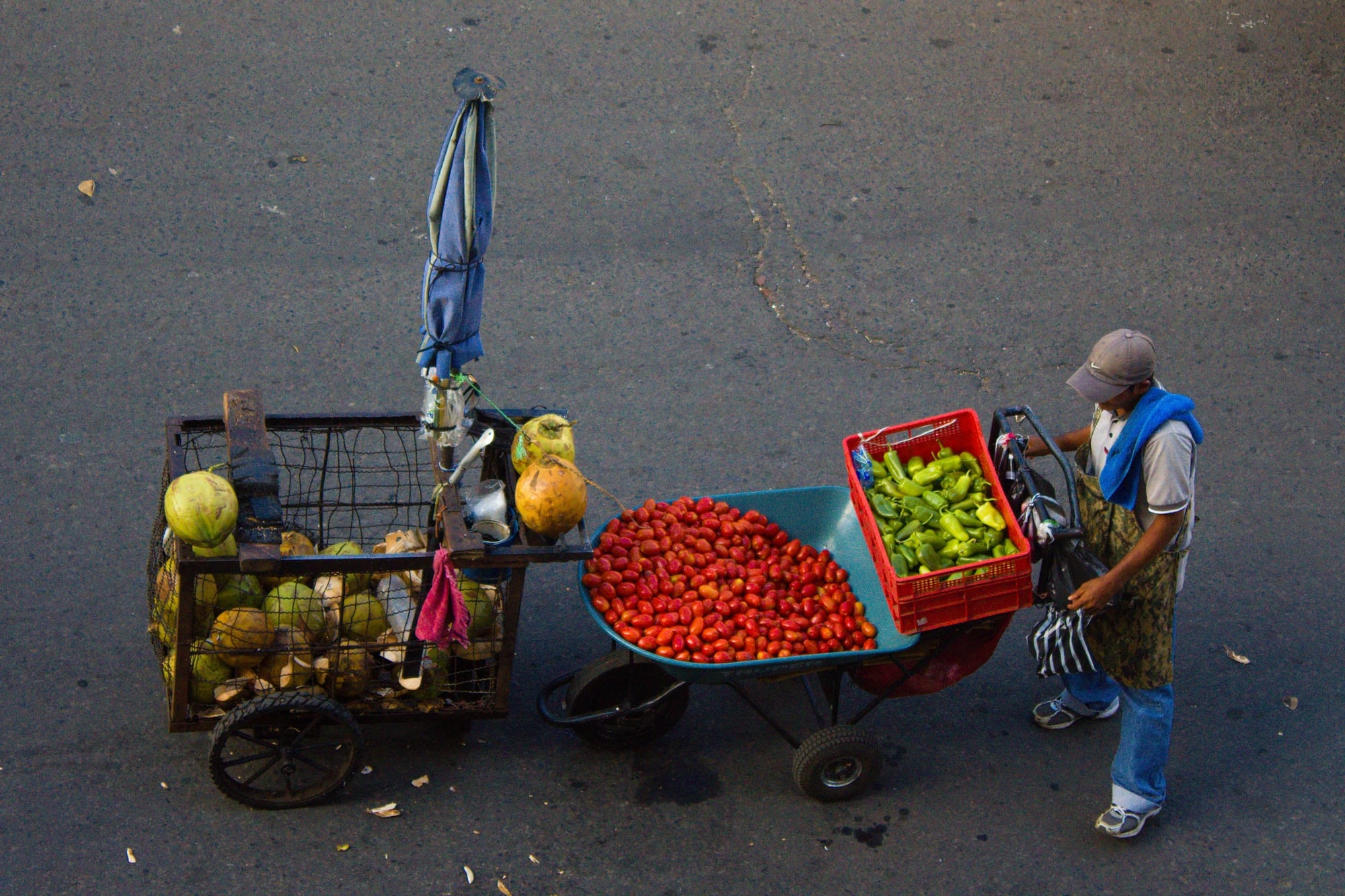
The standard working day is capped at eight hours and the working week at 44, typically across five or six days depending on the employer. Daytime shifts generally run from early morning to early evening, and small businesses, especially pupuserías and comedores, keep considerably longer and less rigid hours than any office. Since a state of exception was declared in 2022, gangs' extortion of small businesses and public transport, once a routine cost of doing business, has fallen sharply, according to business owners and news reporting, a change that has visibly altered daily commercial life even as it has drawn criticism over due process for those detained.
Community life and public spaces
Most towns of any size are built around a central plaza, shaded by trees and anchored by the church, benches and, often, a piece of public art or a statue, where people sit, meet and let children play in the cooler parts of the day. The comedor, a simple set-menu eatery, and the pupusería are everyday fixtures rather than occasional treats, and retired US school buses, repainted and known as chicken buses, remain the backbone of intercity and local transport, running frequent services on set routes.
Free time and weekends
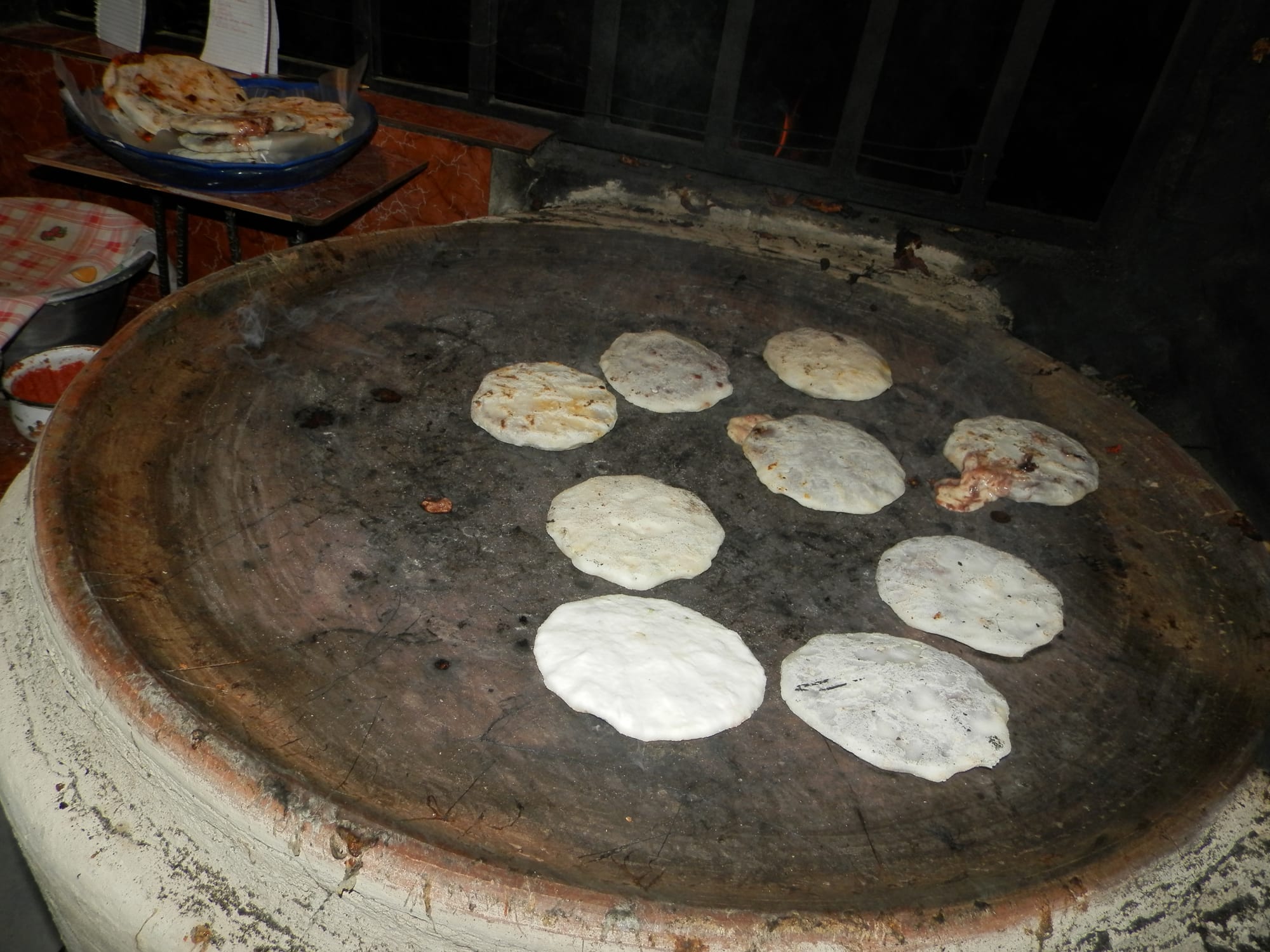
Football is the default weekend pastime, watched at home, in the street or in a comedor rather than only at a stadium. Making and eating pupusas is as much a social occasion as a meal, and family gatherings often revolve around a hot griddle turning out pupusas one after another through the evening. Where money and time allow, a weekend trip to the Pacific coast or to one of the cooler highland coffee towns is a common escape from the heat of the lowlands, and patron-saint festivals, with fireworks and food stalls, punctuate the calendar in towns across the country.
A visitor's ordinary day
El Salvador uses the US dollar, which simplifies budgeting for visitors even if small bills are still useful for buses and comedores; cards work in the capital and tourist towns but are less reliable elsewhere. Chicken buses are cheap and cover the country but rarely follow a published timetable, while tourist shuttles and a rental car offer a faster, more predictable alternative between the main towns. Since 2022, the main tourist circuit has become markedly safer than it was a decade ago, though it remains sensible to stick to established routes, use registered transport in San Salvador after dark, and avoid photographing police or soldiers.
What to take away
What defines an ordinary day in El Salvador is a country that feels close-knit and geographically small, yet is held together in large part by family members who are, for now, living somewhere else entirely.