Culture & Customs · Egypt
Egypt: Honour, Hospitality and the Lantern-Lit Month
A Muslim-majority nation with one of the world's oldest Christian communities, where honour belongs to the whole family, a guest is greeted as someone who brings light, and Ramadan turns the streets into a festival of lanterns
By Worldlore Editorial · 30 September 2026
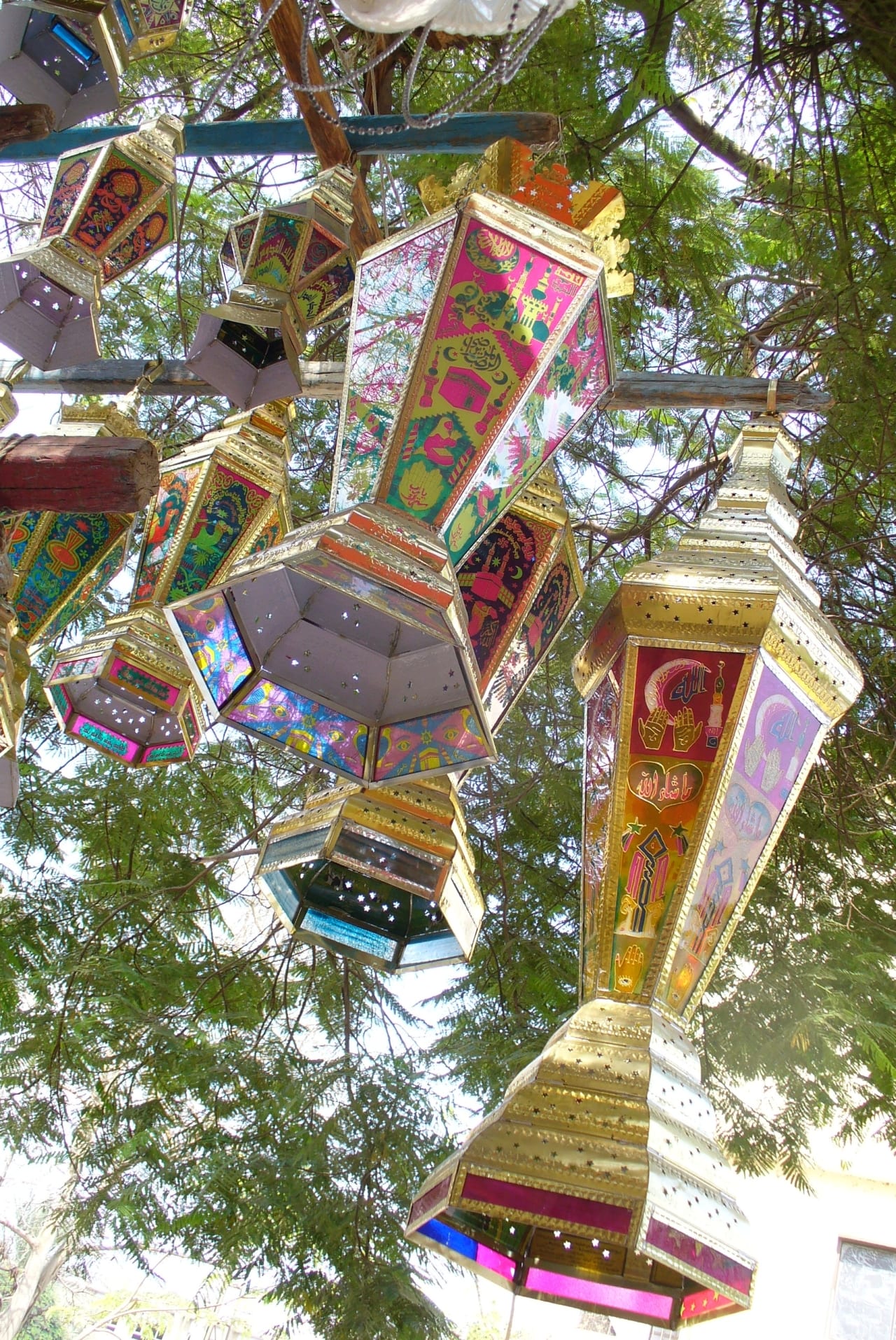
In the weeks before Ramadan, Egypt's streets begin to glow. Lanterns called fanous, made of metal and coloured glass, go up over doorways, across alleys and on balconies, and children carry smaller ones through the streets, singing and asking for sweets. At sunset, when the fast is broken, long tables appear by the roadside, offering a free iftar meal to anyone who needs one. Hours later, well before dawn, a man with a small drum walks the neighbourhood calling people by name to wake for the last meal before the next day's fast, with a trail of children running after him and begging him to call out theirs. For a month, the whole country keeps a different rhythm, and in its mixture of faith, generosity, family and street-level celebration, Ramadan shows Egyptian culture at its most characteristic.
Faith, identity and values
Religion shapes daily life in Egypt more visibly than almost anything else. According to estimates cited by the US State Department, about 90 per cent of Egyptians are Sunni Muslims and about 10 per cent are Christians, the great majority of them members of the Coptic Orthodox Church. The head of that church has put the number of Copts in Egypt at around 15 million, the largest Coptic community in the world. Islam is expressed day to day through dress, diet, regular prayer and constant references to God's will; the phrase "inshallah", God willing, attaches itself to almost any plan for the future.
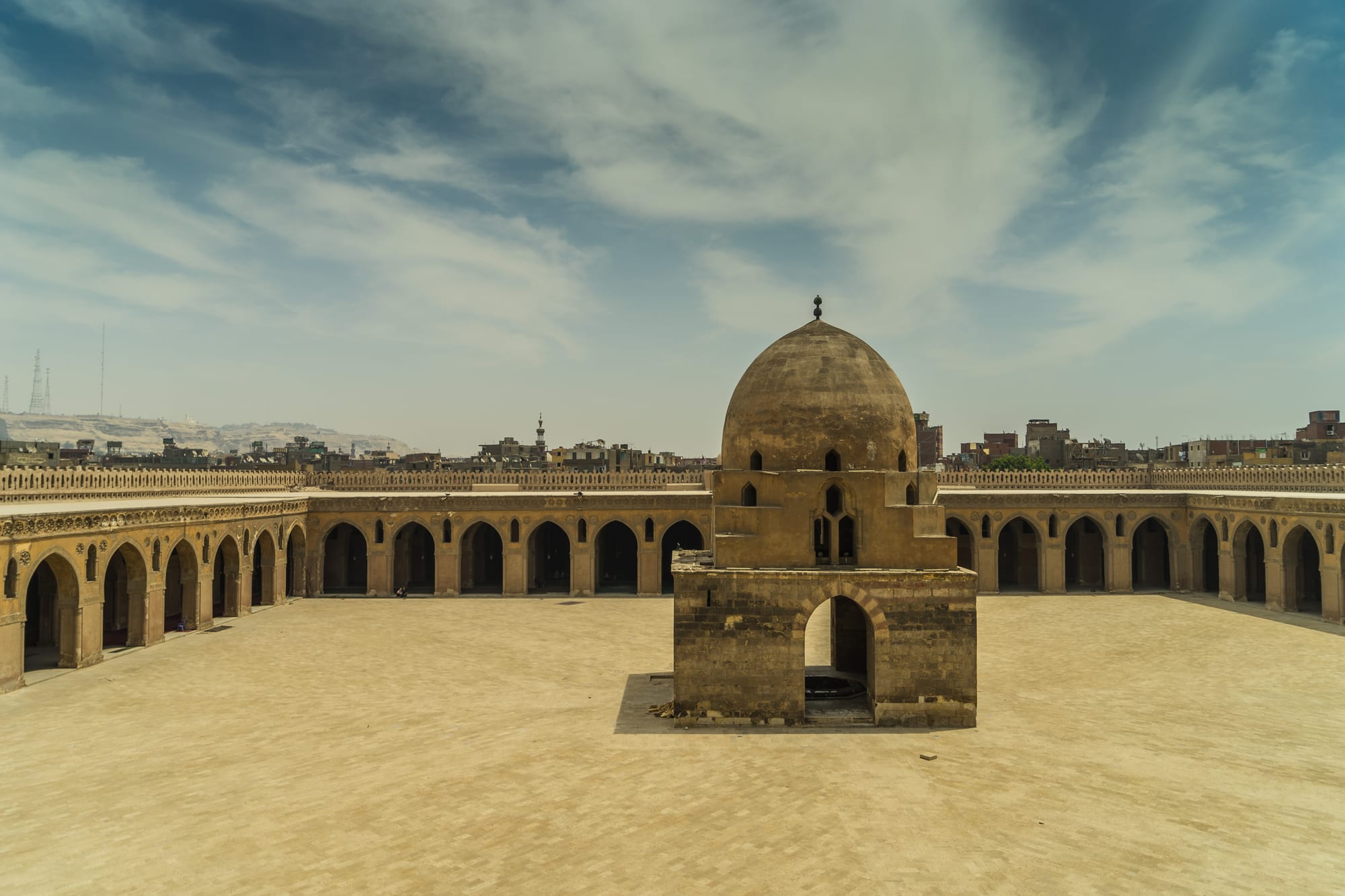
The Coptic Church belongs to the Oriental Orthodox family and is the oldest Christian tradition in the country. Its services are often held in the ancient Coptic language alongside Arabic, it keeps its own calendar, and many Copts carry a small cross tattooed on the inside of the right wrist as a mark of their faith.
Beneath religion lies honour. Sharaf, honour, is a central idea guiding behaviour, and it is understood as belonging to the family as a whole rather than to the individual: one member's conduct reflects on everyone. Today it is associated as much with modesty, loyalty, honesty and hospitality as with anything else. A person is expected to be as good as their word, and a broken promise can bring shame on a whole family. The needs of the family and community generally come before personal wishes, and pride is earned through generosity, charity and helpfulness. Education is valued at every income level as a path to a better life, and modesty in dress and behaviour is a basic sign of respectability. Many Egyptian women wear the hijab, which is not required by law and is for many a personal choice.
Greetings and meeting people
The traditional greeting is "salaam aleikum", peace be upon you, answered with "wa aleikum as-salaam", and upon you be peace. Handshakes are often prolonged, with a light grip, a broad smile and direct eye contact. Between men, a light handshake with the right hand is usual, and friends may kiss on both cheeks. Women tend to greet with a nod or a light handshake. Between a man and a woman, a handshake may be acceptable, but only if the woman offers her hand first. How people greet one another also depends on class and religion, so following the lead of the person being greeted is the safest course.
First names are generally not used until an invitation is given; titles such as Mr, Mrs or Dr are the normal form of address. Humour is part of the welcome, and a new acquaintance may well open with a joke or two, which is best returned in kind. Communication tends to be indirect: rather than a flat "no", a long and courteous answer is more likely. Same-sex friends may hold hands or kiss in greeting, while acquaintances keep an arm's length apart, and between men and women religious principles may lead people to lower their gaze.
Everyday speech is full of set courtesies, each with its proper reply. A visitor is welcomed with "menawwar", you bring light, and answers "dah nourak", the light is yours. Someone who is unwell is wished "salamtak", your health, and someone just back from a journey hears "hamdellah 'ala el salama", thank God for your safe return.
Hospitality and being a guest
Hospitality is part of honour, and being a good guest matters as much as being a good host. Shoes come off at the door of a mosque and of a home. A good box of chocolates or sweets makes a suitable gift for the host, but flowers are best avoided, since they tend to be reserved for weddings, the sick and mourning. Gifts are handed over with the right hand or both hands, and are not usually opened straight away.
At the table, communal dishes are eaten with the right hand only, since the left is associated with personal hygiene. Food should be praised with statements rather than questions, which can sound like doubts about the meal, and adding salt at the table is considered unnecessary. A little food left on the plate at the end signals abundance, a sign that the host has provided more than enough. Pork is prohibited for Muslims, and alcohol should not be offered unless it is known that a guest drinks.
Set phrases round off the meal too. A guest may thank the host with "sofra dayma", may your table always be laden, and hear in reply "yedoum 'ezzak", may your prosperity last, while "teslam 'eidak", may your hands be safe, thanks anyone for work done with their hands. Throughout, it is impolite to point the sole of a foot or shoe at anyone.
Festivals and life's big moments
The Islamic calendar sets the rhythm of much of the year. The Ramadan lantern is traced back more than a thousand years to the Fatimid era, when, according to tradition, Cairo's residents lit the path of a newly arrived caliph with candles, sheltered from the wind in the first lanterns. The mesaharaty who drums the neighbourhood awake before dawn is thought to date back even further. The charity tables, mawa'ed al-rahman, "tables of mercy", offer free iftar meals to the less fortunate. Ramadan ends with Eid al-Fitr, and some weeks later Eid al-Adha, the feast of the sacrifice, begins with prayers before families come home to prepare a festive meal together and share the meat of the sacrificed animal. The Prophet's birthday, the Mawlid, is also marked.
Christians keep their own calendar: Coptic Christmas falls on 7 January, and Coptic New Year on 11 September (12 September in the year before a leap year). The two communities come together at the festivals commemorating the Holy Family's flight into Egypt, now on UNESCO's list, when Muslims and Coptic Christians of all ages take part in large numbers in processions, music, games, re-enactments of the journey and the sharing of traditional food.
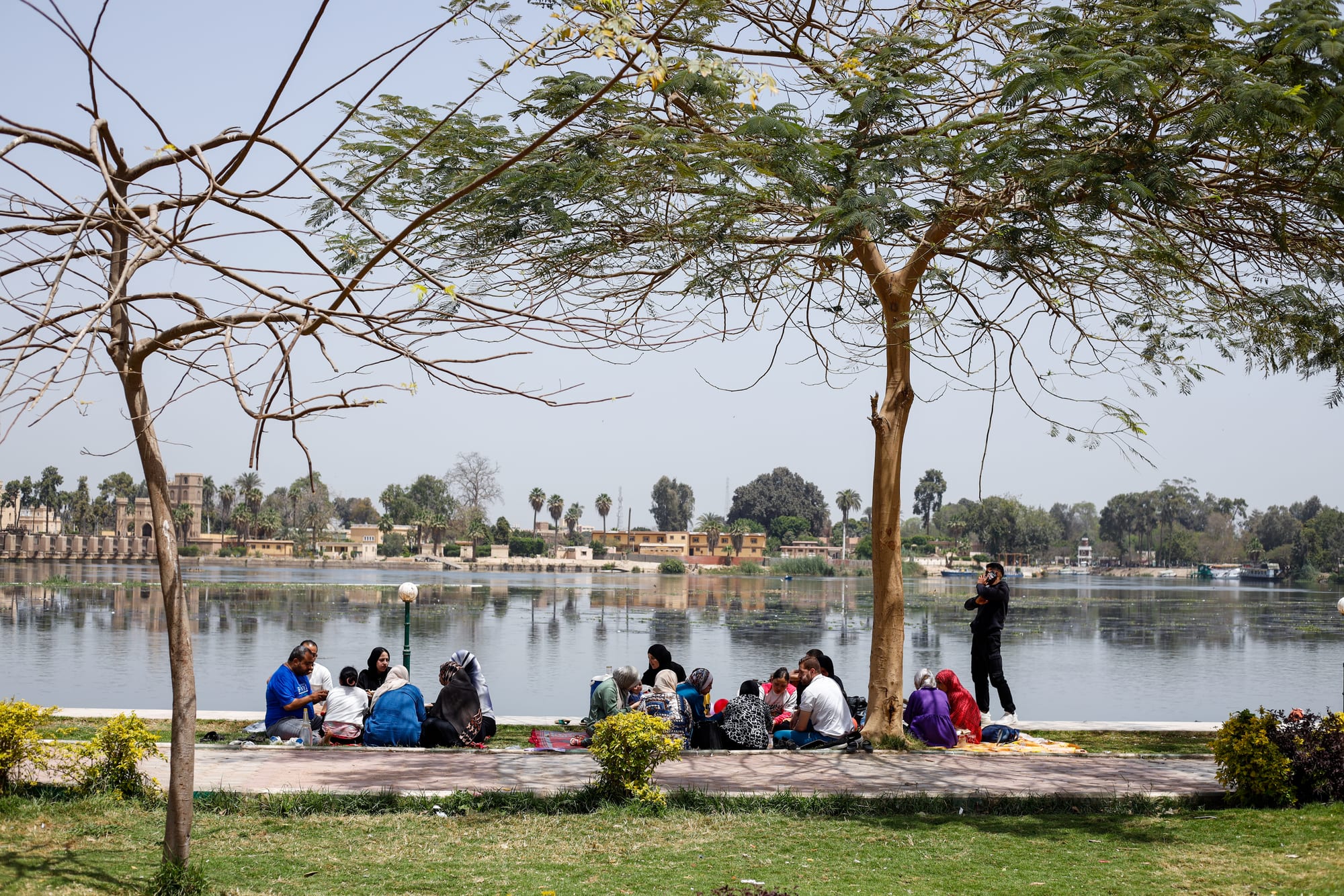
One spring festival belongs to everyone. Sham el-Nessim, a national holiday, falls on the day after Coptic Easter, but it predates both Christianity and Islam, and its roots are traced to the spring rites of ancient Egypt. Its name is thought to derive from Shemu, the ancient Egyptian harvest season, though in Arabic it has come to mean "smelling the breeze". Families of every faith head outdoors for picnics with music and games, children decorate boiled eggs as symbols of renewal, and the traditional feast centres on salted fish eaten with spring onions and lettuce.
Marriage remains a family affair, often involving negotiation between relatives and sometimes a matchmaker. Henna, used across the Arab world as a symbol of joy at weddings and births, is on UNESCO's list in a nomination Egypt shares with 15 other Arab states. The wedding itself is announced by the zaffa, a procession of drums, pipes and horns that leads the couple into married life as a public declaration of their union before family and community. Egyptian films have shown the zaffa since the early days of the industry, helping to spread the custom across the region.
Death, too, has its courtesies. Mourners offer condolences with phrases such as "al-baqaa' lillah", eternity belongs to God alone, and the bereaved thank those who come to pay their respects with "shakar Allah sa'yak", may God thank you for your effort, to which the reply is "azzam Allah agrak", may God greatly reward you.
Arts, crafts and music
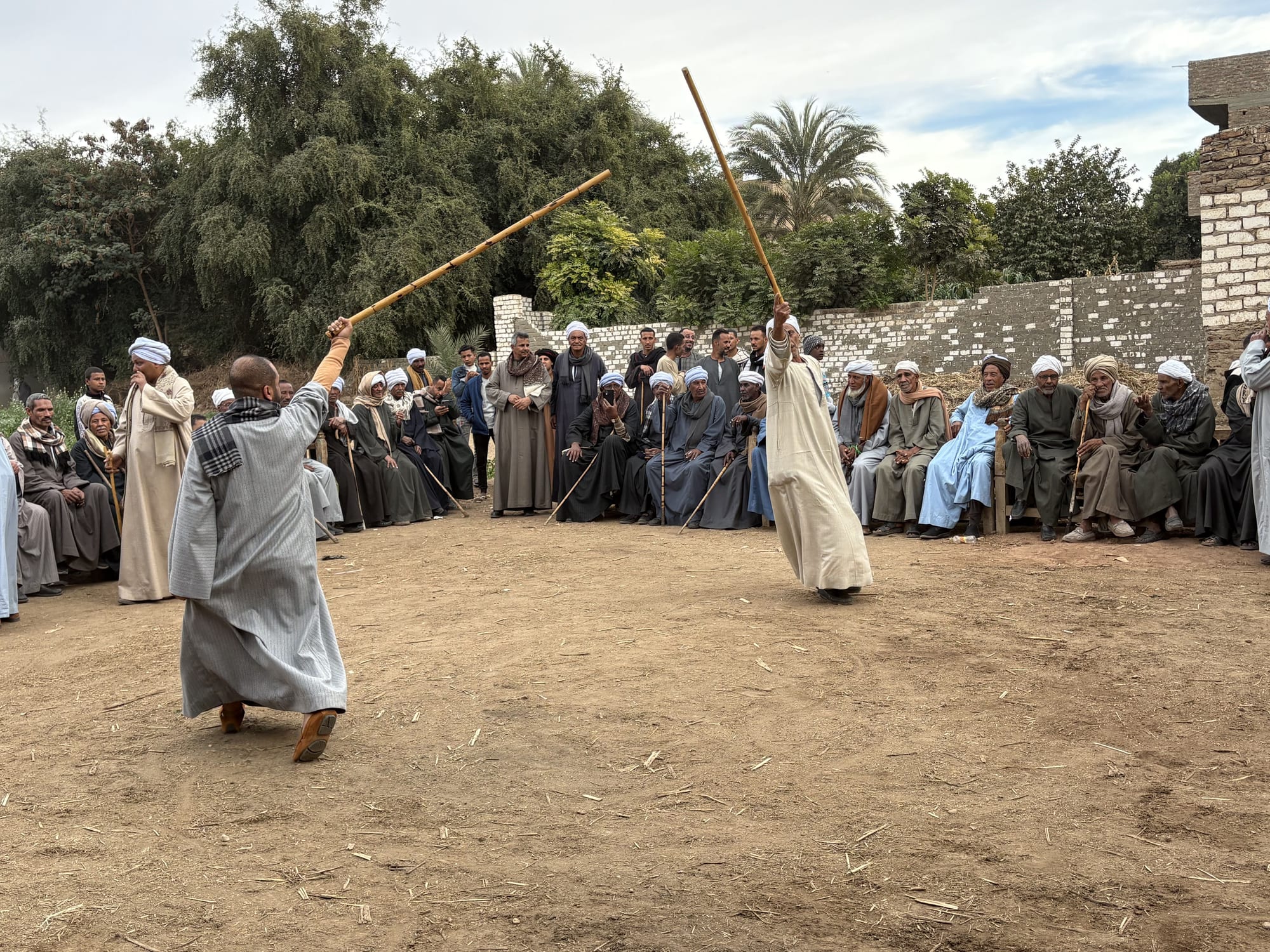
Some of Egypt's most distinctive arts are performed rather than hung on walls. Tahteeb, on UNESCO's list, began in ancient Egypt as a martial art and survives as a festive game: two men face each other with long sticks while folk music plays, in a brief exchange where complete control is required, since no actual blow may land. Practised mainly by men in rural Upper Egypt, it is meant to embody respect, friendship, courage, strength and chivalry.
The Hilali epic is sung at weddings and private gatherings, sometimes over several days, with modern performers weaving in commentary on current events, though UNESCO warns that fewer young people now take on the long training. Al-Aragoz, a traditional hand-puppet theatre, is on UNESCO's list of heritage in urgent need of safeguarding. Its hero speaks in a distinctive voice produced with a voice modifier, the puppeteer works hidden inside a portable booth while an assistant jokes with the crowd, and its comic shows about everyday life have long poked fun at corruption. Once performed by travelling puppeteers at folk festivals across the country, it now has only a small number of ageing practitioners.
The written word is an art as well. Arabic calligraphy, on UNESCO's list in a nomination Egypt shares with 15 other countries, is still practised with reed pens and traditional inks as well as modern materials, and adorns buildings, signs and objects of marble, wood, metal and cloth. Even the humble Ramadan lantern is a craft in its own right: workshops spend much of the year designing and making new models, storing them until just before the holy month, when they go on sale.
Dos and don'ts for visitors
- Do check the latest official travel advice before and during a trip: flights across the region have been disrupted by the wars nearby, and North Sinai and the western and southern border zones are off limits.
- Do answer "salaam aleikum" with "wa aleikum as-salaam", and use titles until invited to use first names.
- Do wait for a woman to offer her hand before shaking it.
- Do take off shoes on entering a mosque or a home.
- Do bring good chocolates or sweets when invited, and hand over gifts with the right hand or both hands.
- Do eat from shared dishes with the right hand, and leave a little food on the plate to show there was plenty.
- Don't give flowers as a casual gift; they are associated with weddings, illness and mourning.
- Don't point the sole of a foot or shoe towards anyone.
What to take away
Egyptian customs rest on honour, faith and generosity, and a visitor who greets people properly, accepts hospitality graciously and answers every courtesy with another will find themselves treated as someone who brings light.