History · Egypt
Egypt: Five Thousand Years on the Nile
The gift of the river — pharaohs and pyramids, Greeks and Romans, the coming of Islam, Ottoman and British rule, and the republic of the officers
By Worldlore Editorial · 19 September 2026
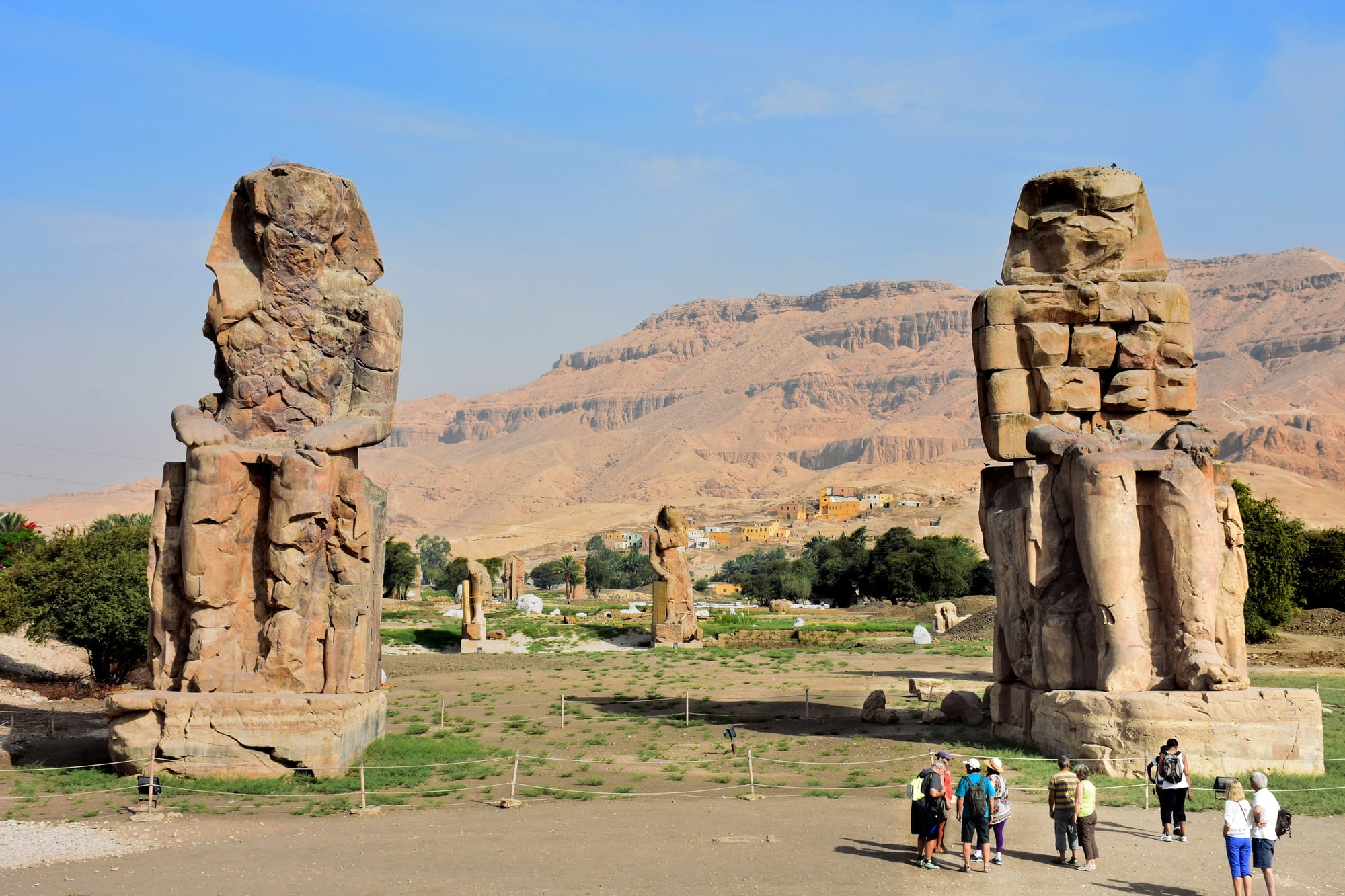
The gift of the river
Egypt is a country of about 110 million people, nearly all of them living on the four per cent of its land that the Nile makes green — a thin ribbon through the desert and a fan of delta at its mouth. That geography produced one of the first states on earth and one of the longest-lived, and it still governs Egyptian life: a fixed strip of farmland, a fast-growing population, and, since 1869, the Suez Canal cut across the isthmus to carry a large share of world trade. Egypt's history is layered — pharaonic, Greek, Roman, Coptic Christian, Arab, Ottoman, British, and finally the republic the army made in 1952 — but the river runs under all of it.
Five thousand years, in brief
- c. 3100 BCE
Unification
Upper and Lower Egypt are joined; the pharaonic state begins.
- c. 2500 BCE
The pyramids
The Old Kingdom builds the pyramids of Giza.
- c. 1550–1070 BCE
The New Kingdom
Egypt's imperial peak — Thebes, Karnak, the Valley of the Kings.
- 332 BCE
Alexander
Greek rule under the Ptolemies, from Alexandria, until Cleopatra.
- 30 BCE
Rome
Egypt becomes Rome's granary; Christianity spreads deep.
- 639–642 CE
The Arab conquest
Egypt becomes Arabic-speaking and, over centuries, Muslim.
- 969
Cairo founded
The Fatimids build al-Qahira and, soon after, al-Azhar.
- 1250–1517
The Mamluks
A slave-soldier caste makes Cairo the great city of the Islamic world.
- 1805
Muhammad Ali
An Ottoman officer founds a dynasty that modernises Egypt and rules to 1952.
- 1882
British occupation
Britain takes control to secure the Suez Canal.
- 23 July 1952
The Free Officers
Army officers overthrow the monarchy; Nasser takes power.
The land of the pharaohs
Farming villages spread along the Nile from around 6000 BCE, and about 3100 BCE the valley was unified into a single kingdom under a divine ruler, the pharaoh — one of the world's earliest states. It endured, through some 30 dynasties and repeated collapses, for roughly three thousand years. The Old Kingdom raised the pyramids of Giza; the New Kingdom, a millennium later, built an empire reaching into Nubia and the Levant and covered Thebes with temples. Egyptian religion centred on the afterlife, on the pharaoh as a god, and on the annual flood that renewed the soil.
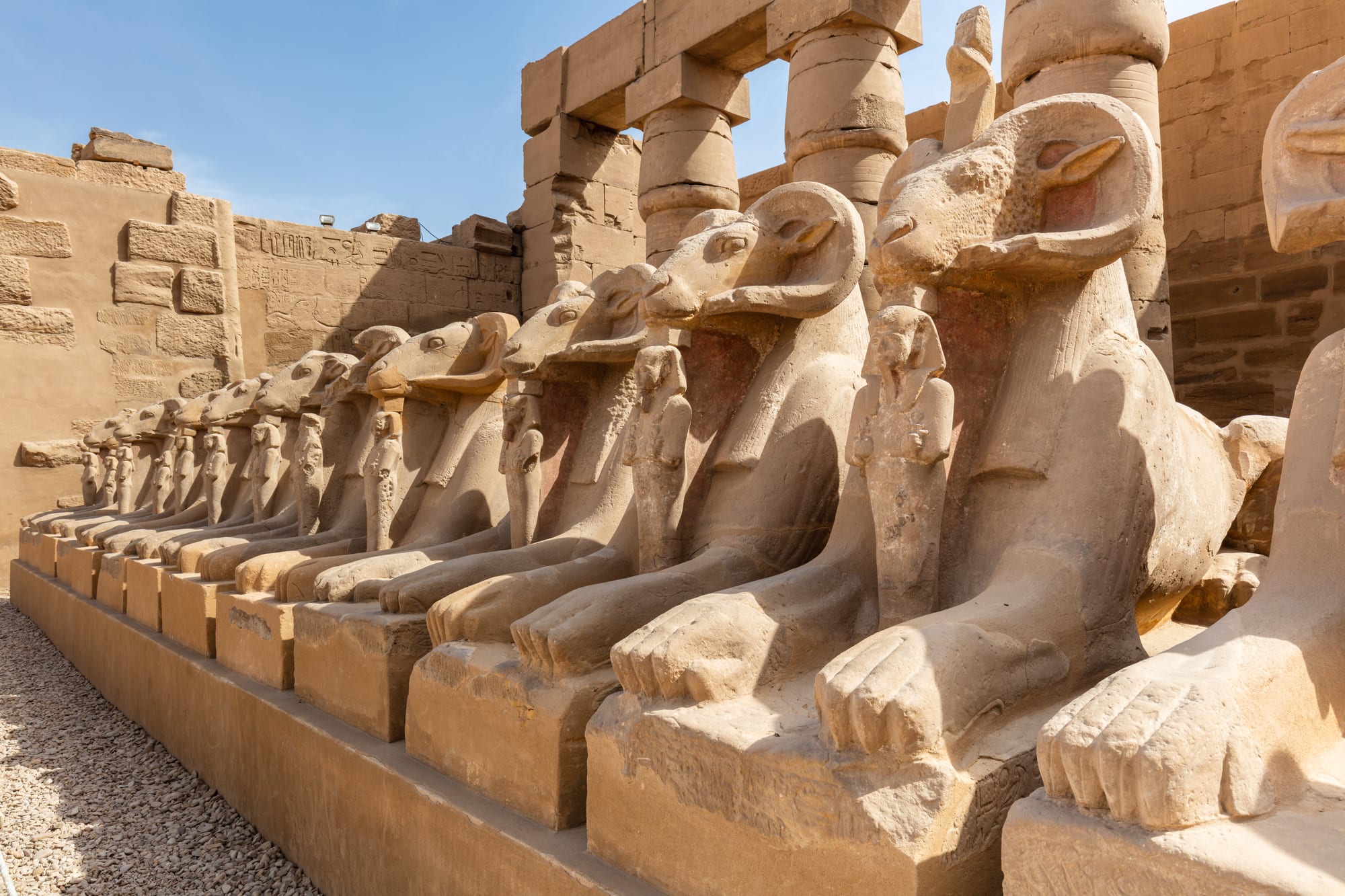
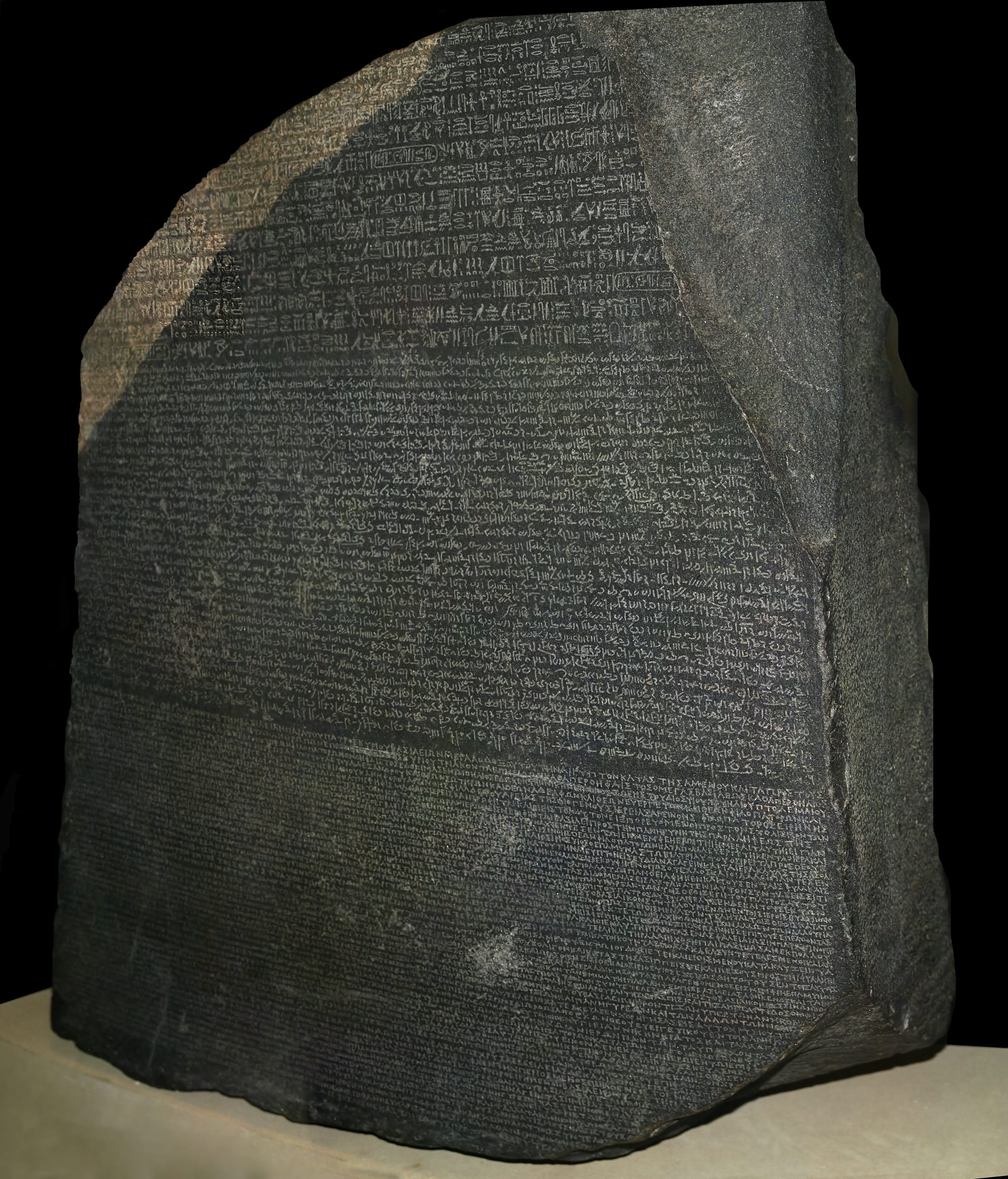
After the New Kingdom, Egypt was ruled by a succession of outsiders — Libyan, Nubian, Assyrian, and twice Persian — until Alexander the Great took it in 332 BCE. His general Ptolemy founded a Greek dynasty that ruled from Alexandria for three centuries, ending with Cleopatra VII, whose defeat alongside Mark Antony at Actium brought Egypt into the Roman Empire in 30 BCE as its most important grain supplier.
Coptic, then Arab
Christianity took hold in Egypt early and completely; the Egyptian Church invented Christian monasticism in the desert, and the Coptic language carried ancient Egyptian into the Middle Ages. Then, in 639–642, an Arab army took Egypt from Byzantium. Over the following centuries the country became Arabic-speaking and mostly Muslim, though a large Coptic Christian minority has survived to today.
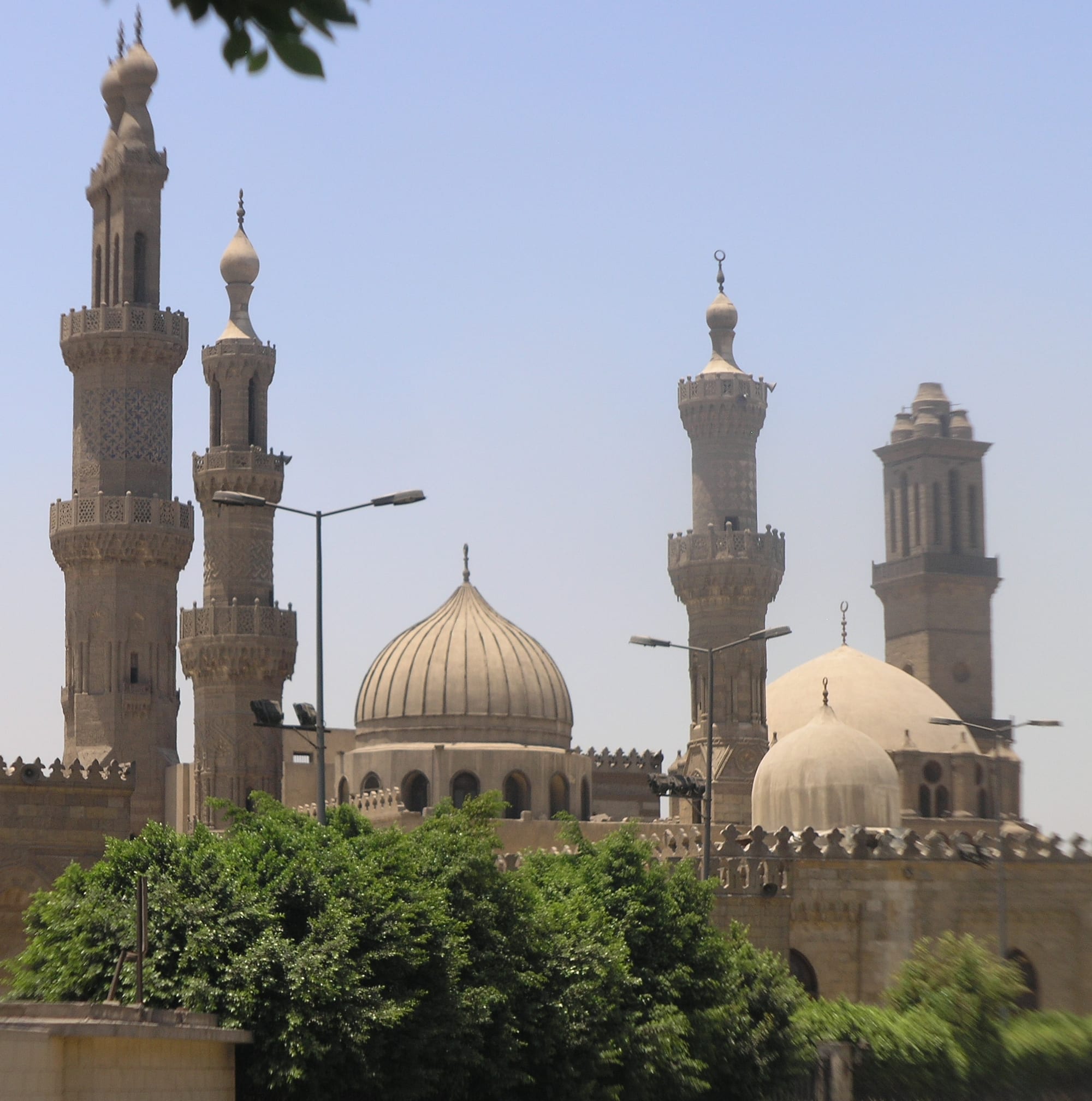
A string of Islamic dynasties ruled — the Fatimids, who founded Cairo in 969, then Saladin's Ayyubids, then the Mamluks, a self-renewing caste of slave-soldiers who governed Egypt and Syria from 1250, stopped the Mongols, ended the Crusader states, and made Cairo the largest and richest city in the Islamic world. The Ottomans conquered Egypt in 1517 and ruled it, increasingly loosely, as a province.
Muhammad Ali and the canal
Napoleon invaded Egypt in 1798 and was driven out within three years, but the disruption let an Ottoman Albanian officer, Muhammad Ali, seize power in 1805. He massacred the Mamluks, built a modern army and state, conquered Sudan, and founded a dynasty that ruled Egypt — nominally under the sultan, effectively on its own — until 1952. His grandson Ismail modernised on a grand scale: railways, boulevards, an opera house, and above all the Suez Canal, dug between 1859 and 1869 with French capital and forced Egyptian labour.
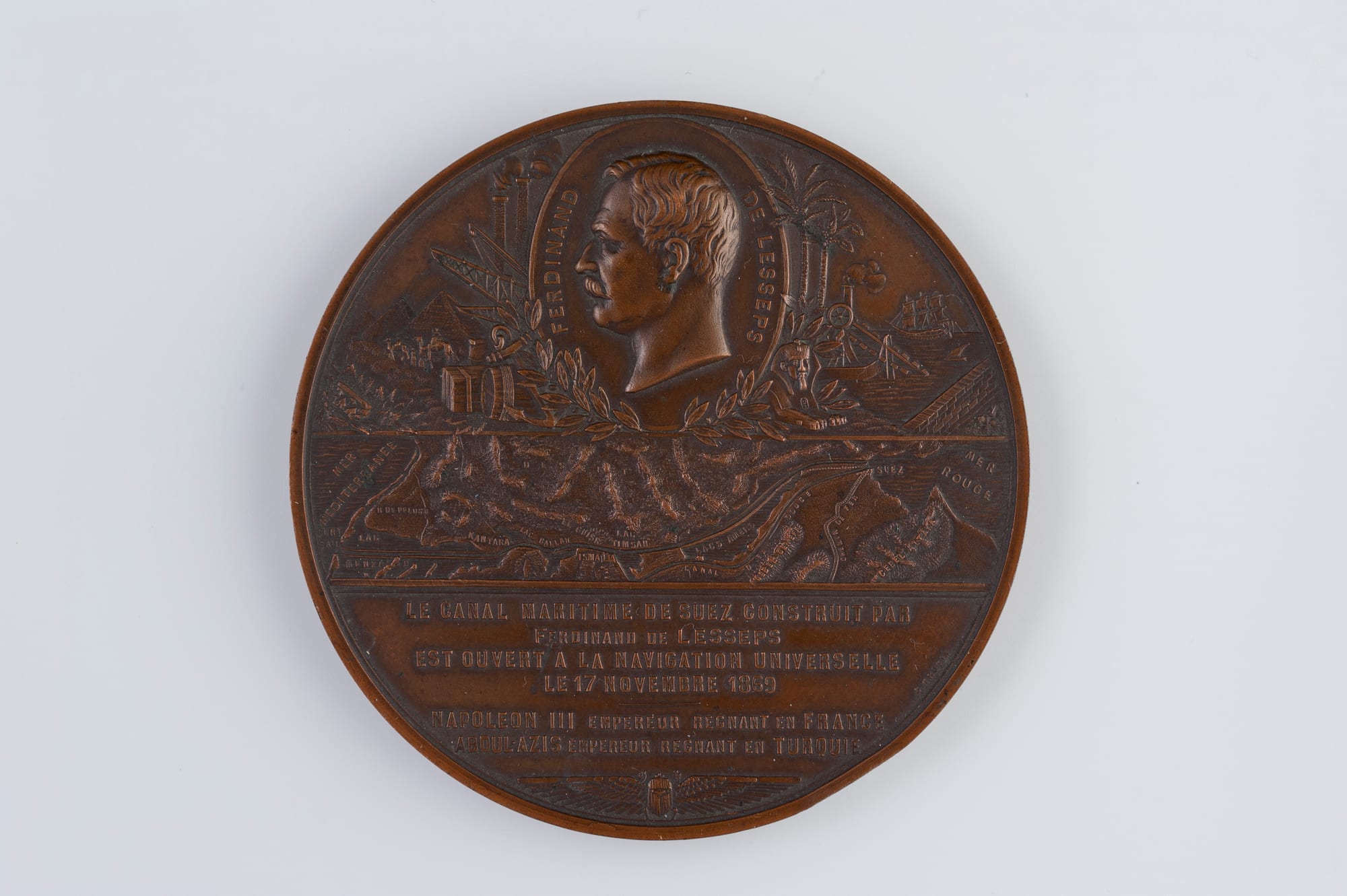
The spending bankrupted Egypt. It sold its canal shares to Britain, European controllers took over its finances, and when a nationalist army revolt broke out in 1881–82, Britain invaded and occupied the country to secure the canal and the route to India.
British rule and the kingdom
Britain governed Egypt for 70 years as a "veiled protectorate" — leaving a khedive, then a sultan, then a king in place while a British official held the real power. A mass uprising in 1919 forced Britain to grant nominal independence in 1922, as a kingdom, though Britain kept the canal, defence, and Sudan. Interwar Egypt was a three-way struggle among the palace, the nationalist Wafd party and the British, with a vibrant press, a booming film industry, and cosmopolitan cities. The Western Desert campaign of the Second World War was fought on Egyptian soil, and Egypt's defeat in the 1948 war with Israel discredited the monarchy and its generals.
The Free Officers
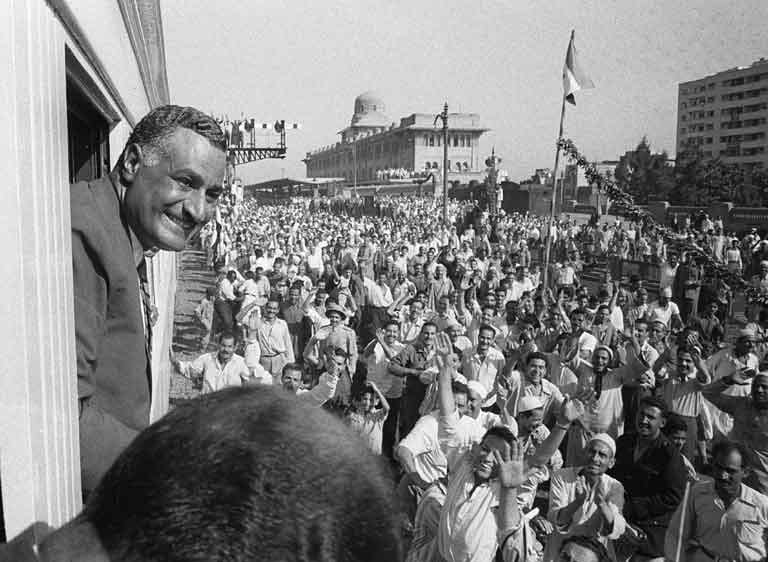
On 23 July 1952 a group of army officers overthrew King Farouk. The monarchy was abolished, and Colonel Gamal Abdel Nasser emerged as the dominant figure. Nasser carried out land reform, built a state-led economy, crushed the Muslim Brotherhood and the left, and made Egypt the standard-bearer of Arab nationalism. In 1956 he nationalised the Suez Canal; Britain, France and Israel invaded, and were forced by American and Soviet pressure to withdraw — a military defeat Nasser turned into a political triumph across the Arab world. He built the Aswan High Dam, which ended the flood and expanded farmland and power. Then came the disaster of the Six-Day War in 1967, when Israel destroyed the Egyptian army and took all of Sinai in less than a week. Nasser died in office in 1970.
The republic of the officers
Sadat, Mubarak, and the revolution
Anwar Sadat reversed Nasser's course. In October 1973 he launched a surprise attack across the Suez Canal that, though militarily inconclusive, restored enough Egyptian pride to make peace possible; he expelled the Soviet advisers, opened the economy to the West, and in 1977 flew to Jerusalem. The Camp David Accords and the 1979 peace treaty made Egypt the first Arab state to recognise Israel; Egypt recovered Sinai and gained a permanent American aid package, and Sadat was assassinated by Islamist soldiers in 1981.
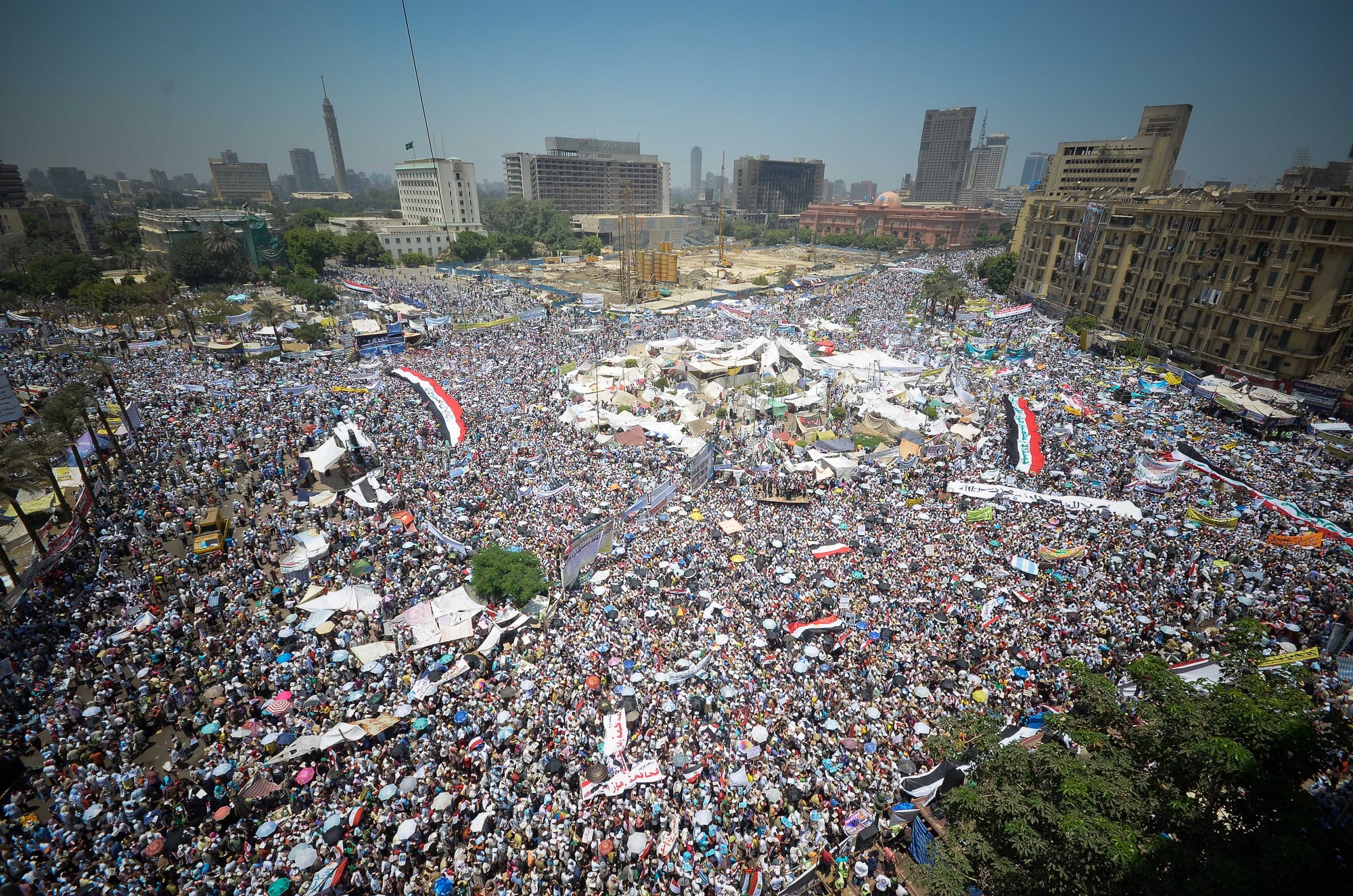
Hosni Mubarak then ruled for 30 years — stable, US-aligned, and authoritarian, under permanent emergency law, with a rigged multi-party façade, deep corruption, and a suppressed Muslim Brotherhood. On 25 January 2011, inspired by Tunisia, mass protests filled Tahrir Square and, after 18 days, the army removed him. The first free presidential election, in 2012, was won by the Brotherhood's Mohamed Morsi; after a polarising year and huge protests against him, the army, led by General Abdel Fattah el-Sisi, deposed him in July 2013 and killed hundreds of his supporters in the Rabaa massacre.
Egypt now
Sisi, president since 2014, has presided over the harshest repression in modern Egyptian history — tens of thousands of political prisoners, a silenced press, the Brotherhood banned — while defeating a jihadist insurgency in northern Sinai and pouring money into megaprojects: a new Suez Canal channel and a $50-billion administrative capital in the desert. The economy has lurched through debt crises and currency collapses, propped up by Gulf bailouts, and Egypt remains one of the world's largest wheat importers, badly exposed when the war in Ukraine cut supply. Overhanging everything is the Nile itself: Ethiopia's giant new dam upstream, which Egypt regards as a threat to its water and has been unable to stop.
What Egypt carries
Egypt is the oldest continuous civilisation most people can name, and it has spent most of the last 2,500 years under foreign rule — Persian, Greek, Roman, Arab, Turkish, British. The republic of 1952 was meant to end that, and it did end the foreign part; but it replaced the palace with the officers, and Egyptians are still governed, as they have almost always been, by a state far more powerful than they are, on a strip of land that cannot grow.