Food · Ecuador
Ecuador: Food and the National Dish
A tomato-based shrimp ceviche served with popcorn, a fish soup with its own annual world championship, and three regions — coast, mountains and Amazon — that barely eat alike
By Worldlore Editorial · 16 September 2026
Three regions that barely eat alike
Ecuador packs coastline, Andean highlands and Amazon rainforest into a small country, and each region eats quite differently: the coast (Costa) leans on seafood, plantain and rice; the highlands (Sierra) run on potato, corn and pork; and the Amazon (Oriente) draws on fish, yuca and exotic fruit largely unknown outside the region. That variety makes any single "Ecuadorian" dish something of a simplification, though two in particular are named more than any others.
The national dish: ceviche ecuatoriano
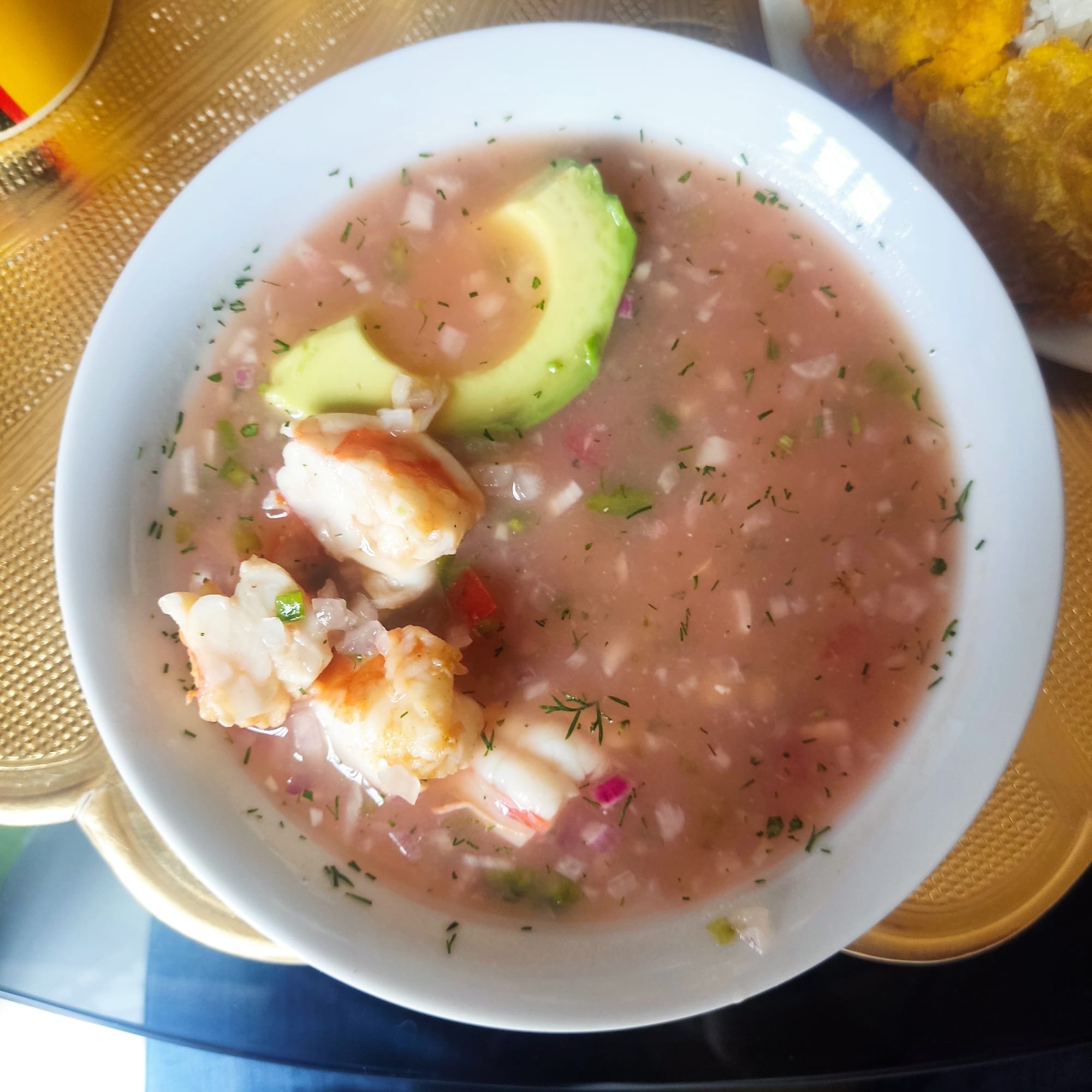
Ceviche ecuatoriano, usually made with shrimp, is marinated in a tomato-and-lime-based sauce with onion and often a little orange juice, giving it a redder colour and a softer, saucier character than the drier, tomato-free ceviche found across the border in Peru — the two countries share a friendly, long-running rivalry over which version, and which country, does it better. It's typically served with popcorn or chifles (fried plantain chips) scattered on top or on the side.
Encebollado: the other national obsession
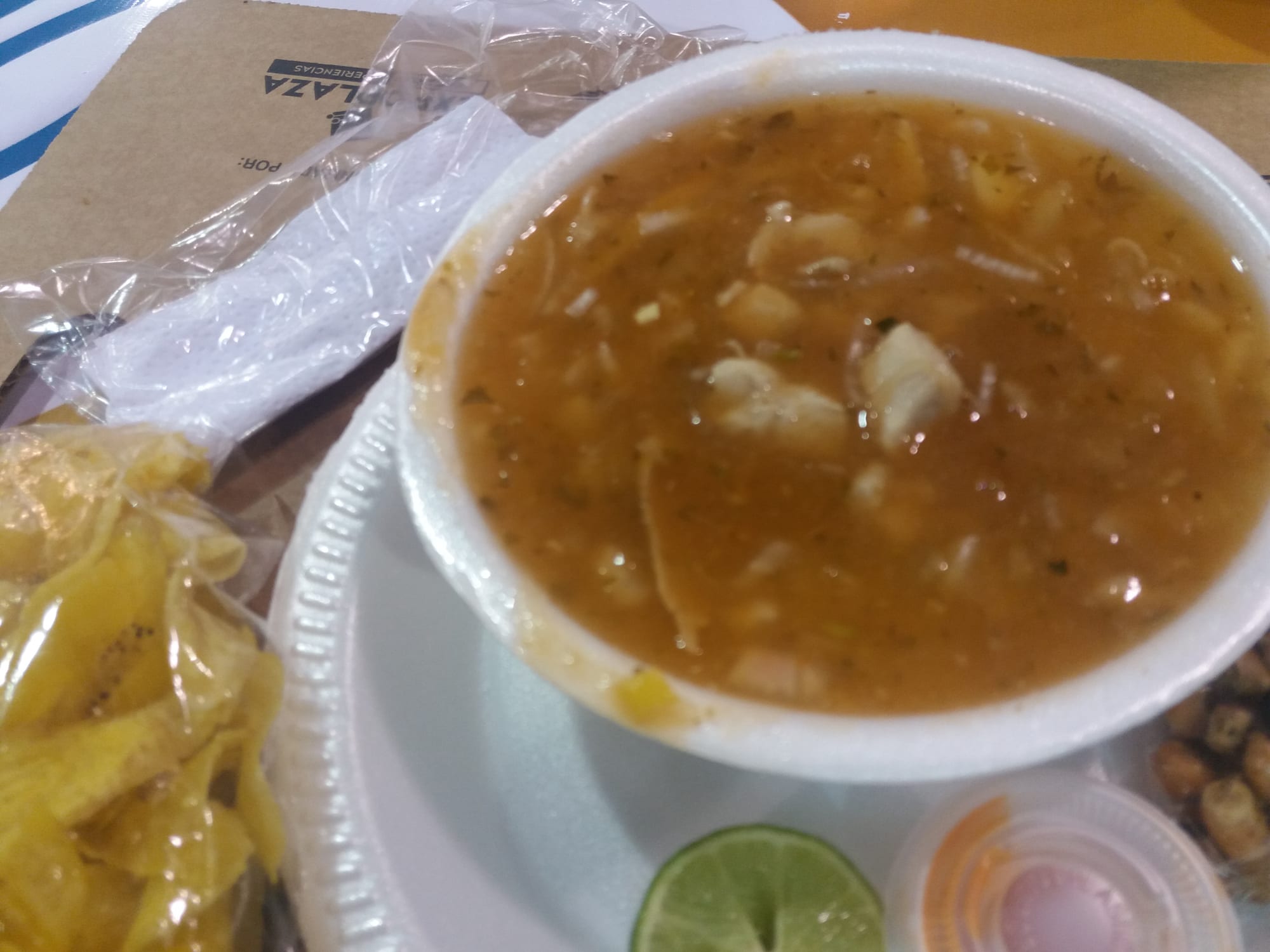
Encebollado, a fish stew (usually albacore or tuna) with yuca, pickled red onion, coriander and lime, has an equally strong claim to being Ecuador's real national dish — it's widely treated as the country's definitive hangover cure and breakfast soup, especially along the coast, and is taken seriously enough that Esmeraldas holds an annual "Mundial del Encebollado" — a genuine world championship for the dish.
Dishes to know
Five more to recognise across Ecuador's regions:
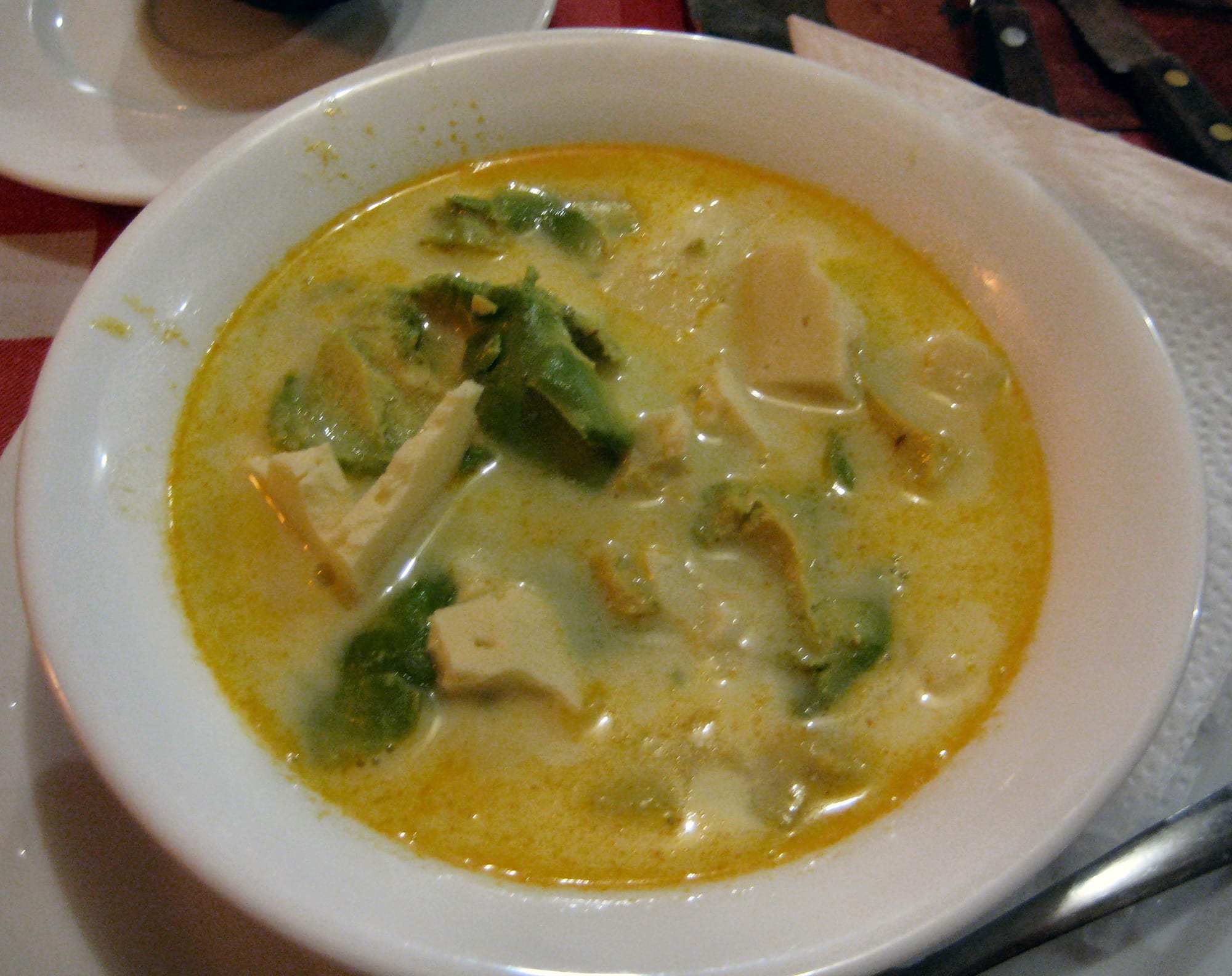
- Locro de papa — a thick potato and cheese soup, usually topped with
avocado and served with a side of hot sauce, a Sierra classic.
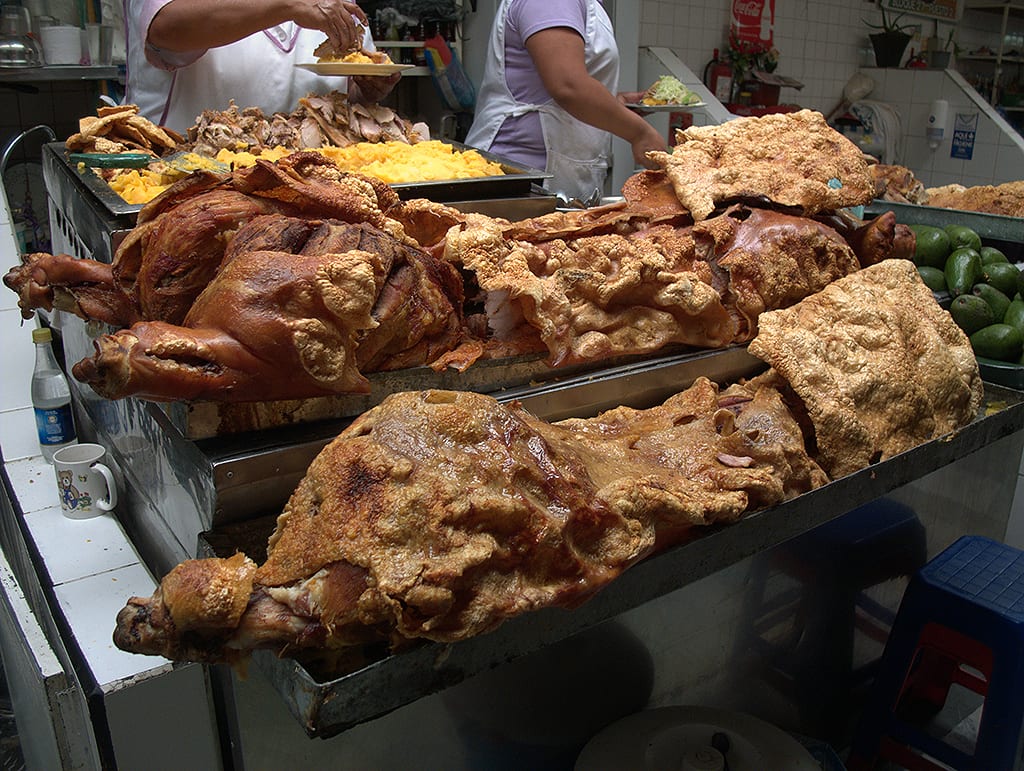
- Hornado — whole roasted pork, sold from market stalls with hominy corn
and llapingachos, an Andean market-day staple.
- Llapingachos — pan-fried potato and cheese patties, a common side dish
in the highlands.
- Fanesca — an elaborate Holy Week soup made with twelve different grains
and legumes, said to represent the twelve apostles, and salt cod.
- Bolón de verde — a fried ball of mashed green plantain, often stuffed
with cheese or pork, a coastal breakfast staple.
Cacao, and what Ecuador is quietly best at
Guinea pig, cuy, roasted whole, is a traditional Andean delicacy shared with Peru and worth knowing about even if it isn't for every visitor. Canelazo, a hot cinnamon drink often spiked with aguardiente, is a highland favourite on cold evenings, and Pilsener is the dominant domestic beer.
Eating as a traveller
Vegetarians can rely on locro de papa (ask about the stock), llapingachos and plantain-based dishes, though ceviche, encebollado and most main courses are built around seafood or meat. Tap water is not generally safe to drink; stick to bottled water. Regional markets — Iñaquito in Quito, seafood stalls on the coast — are some of the best and cheapest places to eat well.
What to take from the table
Ceviche ecuatoriano and encebollado are the two dishes to try first, and between them they say something true about Ecuador: a small country with enough coastline, mountains and rainforest to have earned two national dishes rather than settling for one.