Culture & Customs · Dominica
Dominica: The Spirit of Koudmen
A Creole island with a Catholic heart, a Kwéyòl tongue and a Kalinago people who still hold their land in common, where neighbours lend a hand and a whole season is given over to drums, madras and dance
By Worldlore Editorial · 30 September 2026
After a storm, the work of recovery in a Dominican village rarely waits for outside help. Within days of Hurricane Maria in 2017, neighbours were restoring water supplies, clearing roads, putting roofs back on houses and sharing root crops from their gardens. There is a Kwéyòl word for this: koudmen, "lend a hand", a tradition of mutual aid that the historian Lennox Honychurch has called the social glue that holds communities together. It is marked every year on 4 November, the National Day of Community Service, but it is lived far more often than that. On an island of steep mountains and small villages, being willing to turn out for one another is close to the heart of what it means to be Dominican.
Faith, identity and values
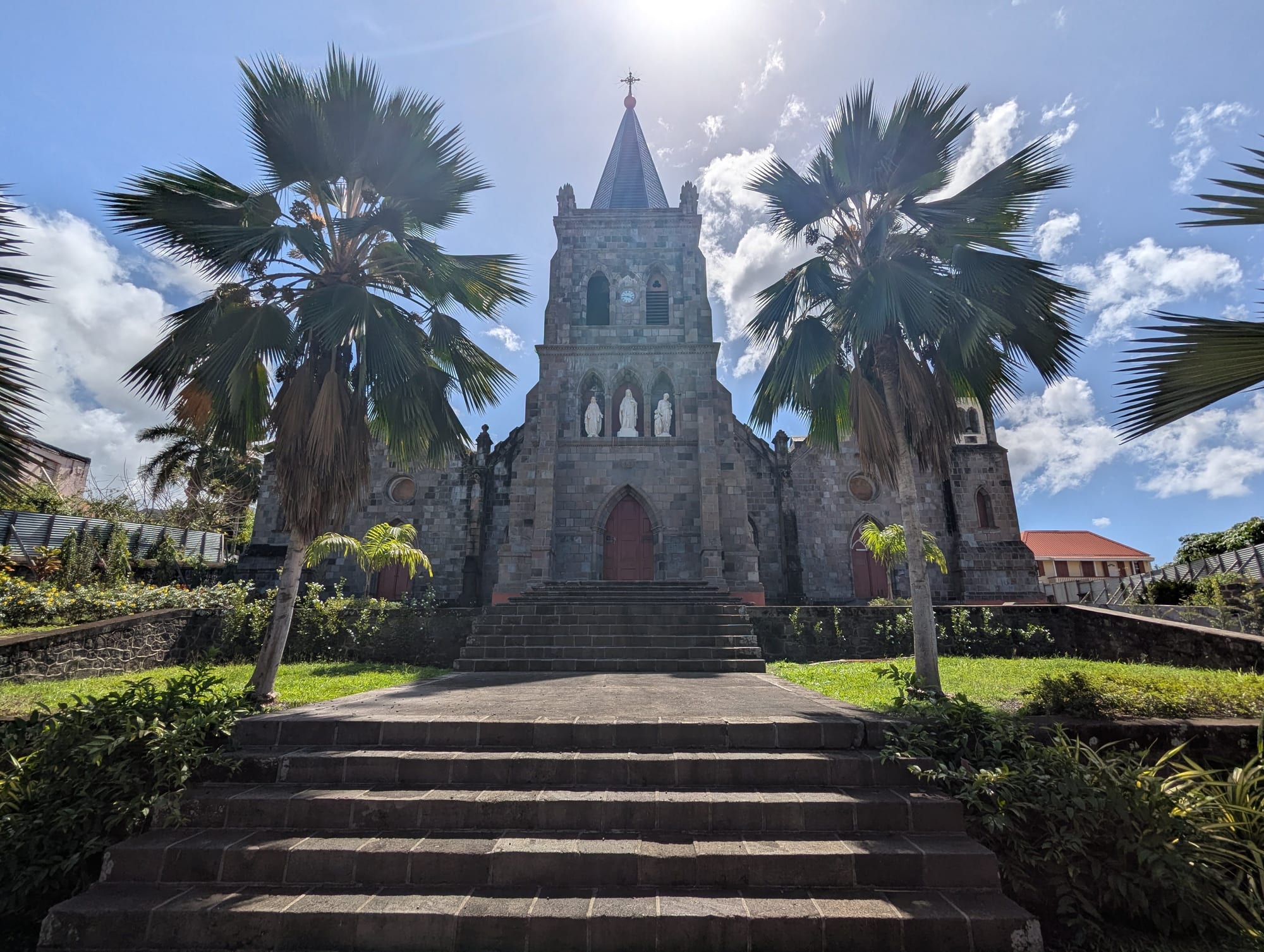
Dominica is a strongly Christian country. US government figures put Catholics at a little over half the population, around 53 per cent, and Protestants at close to 30 per cent, the largest groups among them Seventh-day Adventists, Pentecostals and Baptists. Rastafarians, Jehovah's Witnesses, Anglicans, Methodists and small numbers of Muslims and others make up the rest, and around one in ten people report no religious affiliation. The Catholic majority is an inheritance of the French planters and missionaries who shaped the island before Britain took control, while the Methodist tradition arrived with British planters and the enslaved people they brought from neighbouring British islands.
Language carries much of the island's identity. English is the language of government, but Kwéyòl, a French-based Creole, is heard everywhere. The Division of Culture describes it as a language created by Africans brought to work on the plantations in the 17th and 18th centuries, French in its vocabulary but African in its grammar. It was long dismissed as patois; today Dominicans use the name Kwéyòl, and the language shares a standard alphabet, agreed at regional workshops in the early 1980s, with neighbouring Creole-speaking islands. A second creole, Kokoy, which is English-based, grew up in a small part of the island where English-speaking overseers and enslaved people from other British colonies lived alongside Kwéyòl speakers.
The Kalinago, the Indigenous people of the Caribbean, give Dominica something no neighbour shares. Around 3,000 people live in the Kalinago Territory, a stretch of land spread across eight villages that is owned communally rather than by individuals, a status the Division of Culture describes as unique in the Caribbean. The territory is governed by a Chief and a council elected every five years, under the Carib Act of 1978. The chieftaincy itself is one of the traditions that has survived: it was suspended by the colonial authorities after a deadly clash with police in 1930 and restored only in the 1950s. The ancestral Kalinago language died out in the early 20th century, but many Kalinago words live on in the names of villages, plants, fruits and animals across the island.
Greetings and meeting people
The Division of Culture's own list of everyday Kwéyòl phrases begins with greetings for each part of the day: "bon jou" for good morning, "bon apwémidi" for the afternoon and evening, and "bon swè" for good night, while "sa kafèt?" asks how someone is. Visitors are not expected to speak Kwéyòl, but a greeting in it is an easy courtesy and a pleasure to hear returned. English serves for most exchanges with visitors.
Kwéyòl terms also run through the island's formal culture. In the quadrille, the dance most associated with Creole elegance, the man is the kavalyé and the woman his danm, and the figures carry Kwéyòl names. In the Kalinago Territory, visitors are received at a heritage village run by the community.
Respect for community, and for the ties between people, is expressed as much in action as in words. The Sun, one of the island's newspapers, describes Dominica as still principally agrarian, with villagers who pool practical skills in farming, carpentry, nursing, masonry and teaching, and who set political differences aside when a crisis comes. Asking after someone's family, and offering help without being asked, fit comfortably into that spirit.
Hospitality and being a guest
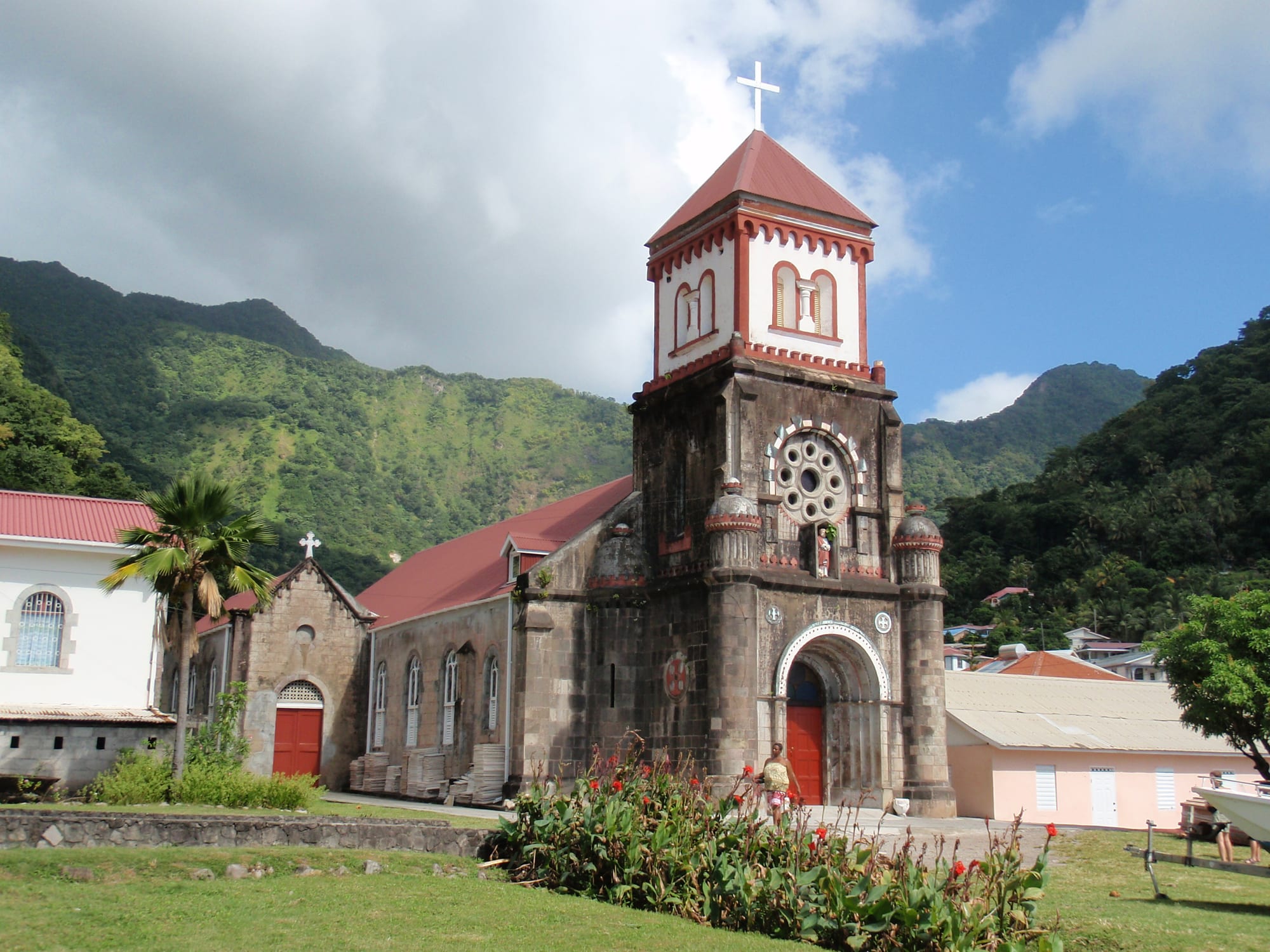
Koudmen is the clearest expression of Dominican generosity. In many villages people still come together to give their skills, time and materials to a neighbour's project or to the community as a whole, whether that means clearing a road, building a house or sharing the harvest. Village life also has its own open celebrations: almost every community keeps an annual feast, most often in honour of the patron saint of its church. Saint Peter, patron of fishermen, is honoured in a long run of villages each June and July, and other communities keep feasts for Saint Ann, Saint Isidore, Saint Theresa and more, alongside chapel feasts, fairs and flower shows. These are gatherings in which visitors are generally welcome as part of the crowd.
Visiting the Kalinago Territory calls for some thought. The Division of Culture notes that many visitors arrive expecting people to be living in traditional ways and leave disappointed: colonisation stripped away much of the old way of life, and the territory today is a working farming area producing bananas, coconuts, passion fruit and root crops. Basket weaving and canoe building are among the traditions that have survived. The best place to see older ways presented by the community itself is Kalinago Barana Autê, a heritage village where dances, drama and songs are performed daily in the main karbet, or meeting house, alongside craft demonstrations, a herbal medicine garden and canoes carved from the gommier tree.
Festivals and life's big moments
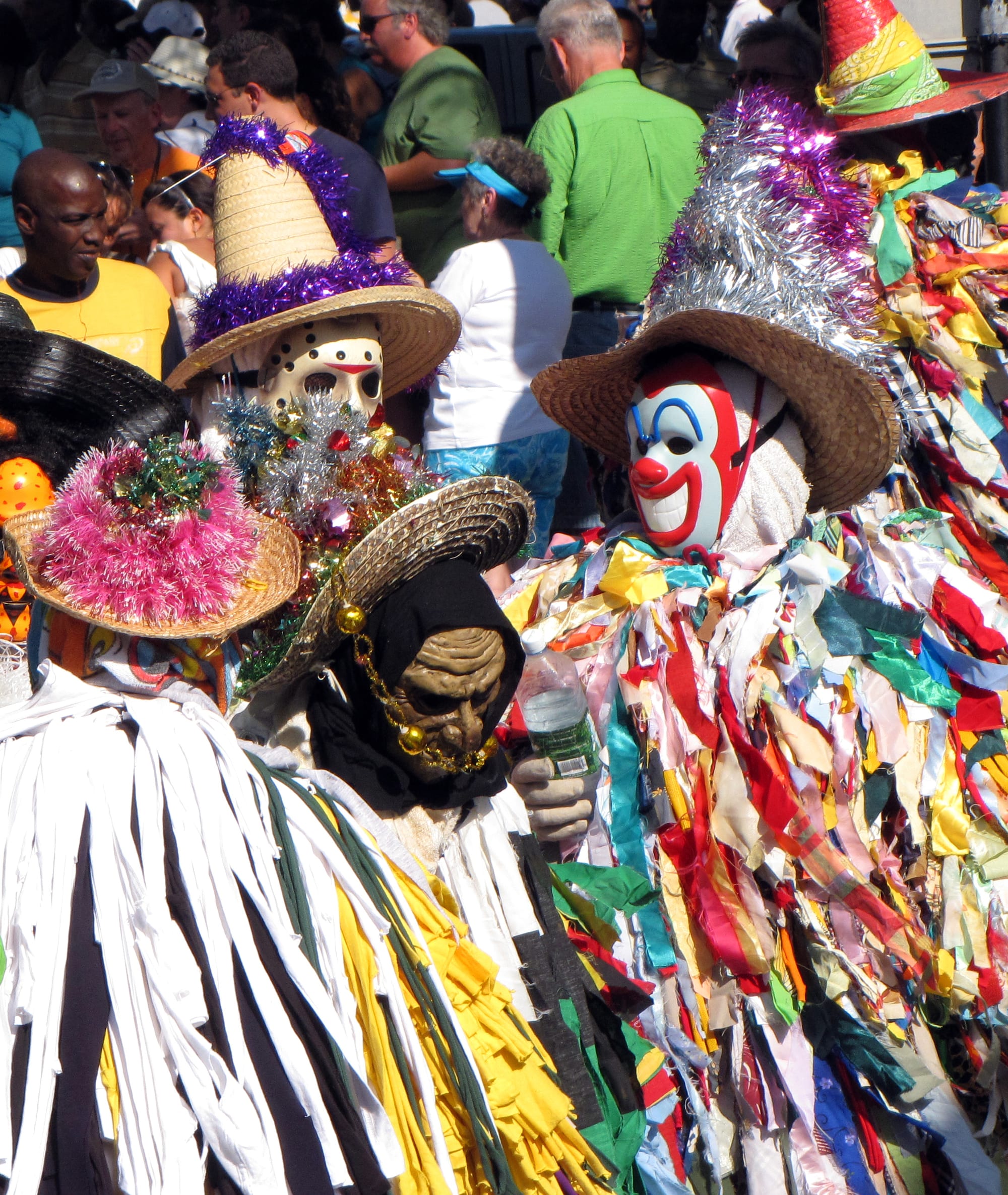
Carnival, known as Mas Domnik, is the first great festival of the year. It grew out of masquerade, when most revellers wore masks to hide who they were, and the Division of Culture traces its love of colour, costume, masks and drumming to African roots. In the weeks before Lent come the calypso and queen shows and the steelband festival, together with the Ole Mas and Sensay Festival, which is held in a different community every year. On Carnival Monday the celebrations begin at dawn with J'ouvert, followed by the parade of bands, and costume bands take over again on Tuesday, with room for everyone to "jump up" in the street. Because the two days always fall just before Ash Wednesday, the dates change every year.
The Independence season is longer still. From around mid-September to National Day on 3 November, the anniversary of independence from Britain in 1978, communities compete in the folk arts: bèlè, quadrille, flirtation, heel and toe, mazook and waltz, alongside bamboo flute, jing ping, string band, patwa song, storytelling and poetry. Heritage Day is hosted by a different community each year. Creole Day, on the last Friday in October, is the day for national wear, and it is followed by the World Creole Music Festival, three nights of bouyon, zouk, soca and other Creole music. The season ends with the National Day of Community Service on 4 November, when koudmen becomes a public holiday.
The national dress is the season's great spectacle. For women it is the wob dwiyèt, built in layers: a brightly coloured outer dress over a white bodice lining and a starched, pleated petticoat trimmed with lace and red ribbon, finished with a contrasting scarf, a madras headpiece and gold jewellery. The simpler jip pairs a white blouse and lace-edged petticoat with a patterned skirt. Men wear a white shirt, black trousers and a red sash, with a madras waistcoat, jacket or band over the shoulder. The madras cloth that gives the ensemble its colour originated in India.
The Kalinago keep their own commemoration, Kalinago Week, around 19 September, the anniversary of the 1930 clash in the territory, with a youth rally, debates and the honouring of elders. Among the Kalinago dances recorded by the Division of Culture is the Marie Marie, performed at weddings.
Arts, crafts and music
Music in Dominica was once a working art, woven into labour, play and worship. The drum is its deepest root, and the Division of Culture calls it an almost mystical link with Africa. Enslaved people were forbidden to play it, because it could carry messages and rally revolt; only after emancipation was it played openly, taken into the streets at Carnival and into the fields, where men worked to its rhythm. The tambou bèlè, its skin held tight by a system of rope and pegs, drives bèlè, the most African of the island's dances, once danced on moonlit nights.
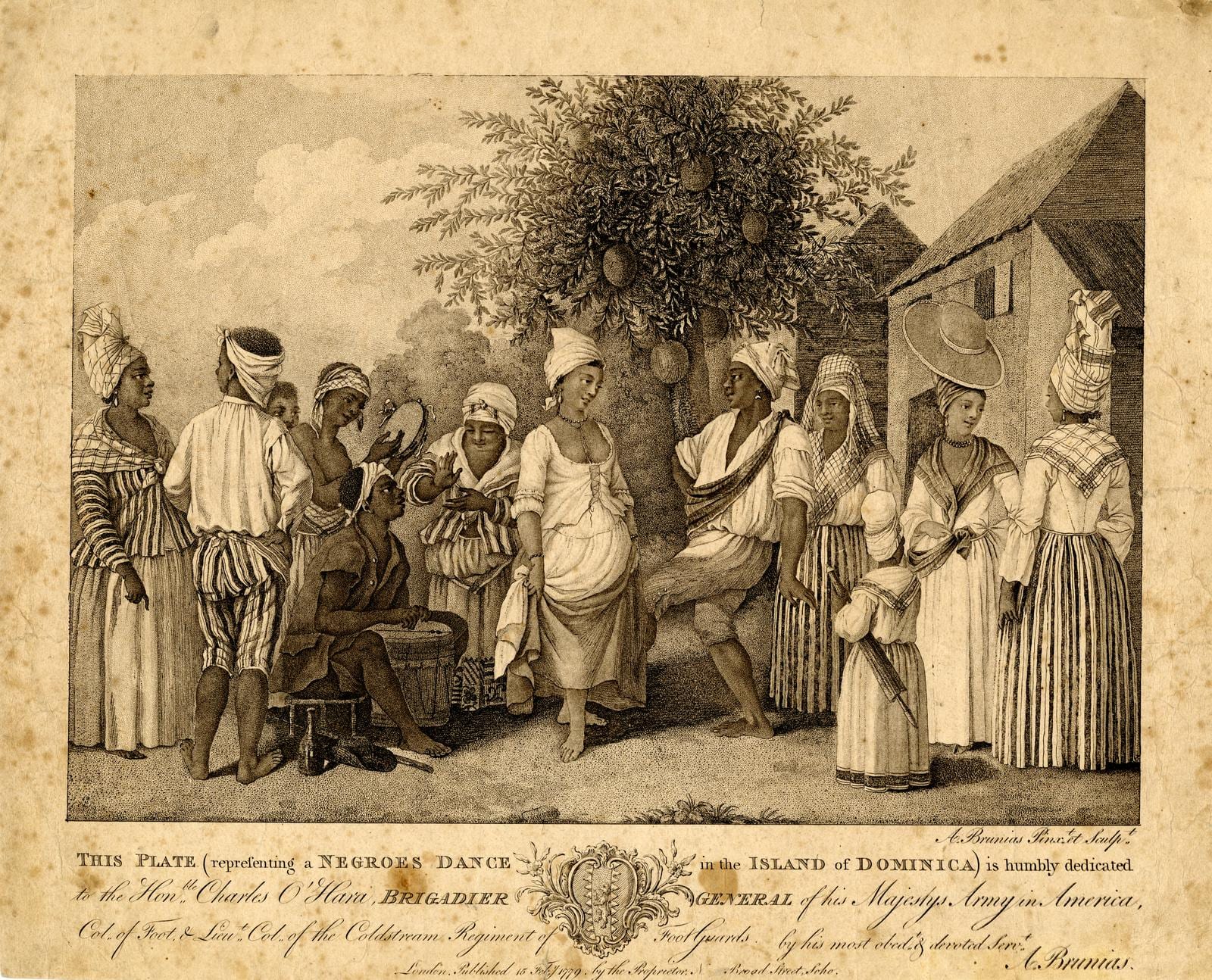
The Italian-born artist Agostino Brunias, who worked on the island in the 1770s, recorded this world in remarkable detail, and his prints are now valued as a record of the dress of the time: madras head-kerchiefs tied in different styles, pleated petticoats and silk shawls, the ancestors of today's national wear.
The jing ping band is the most popular folk ensemble. Its only melodic instrument is the accordion, a European import, set against the tambal, a large frame drum with metal jingles; the gwaj, a pierced tin scraper filled with seeds or beads; and the boom boom, a length of bamboo blown to give a deep bass. It accompanies the flirtation and the quadrille, a four-couple square dance of European origin with a strong African expressiveness. A full quadrille runs through four figures and lasts some twenty to twenty-five minutes; its dancers are meant to move with an unhurried, aristocratic grace, and the musicians must know the dance well enough to shift the rhythm with the steps. The Division of Culture counts eight distinct quadrilles on the island. The bamboo flute, often played solo, completes the traditional line-up, while bouyon and other modern Creole styles fill the festival stages.
The Kalinago keep their own music and dance, with drums of goat skin, maracas of calabash and seeds, bamboo flutes and conch shells. Their dances imitate the natural world, from the bird dance and snake dance to the sisserou dance, named after the parrot on the national flag, while others portray fishing, harvesting and the grating of cassava; the fan dance uses fans made from larouma reed. Canoes are still carved from the trunk of the gommier tree using axes, water and hot stones, a technique handed down over generations.
Dos and don'ts for visitors
- Do try a Kwéyòl greeting: "bon jou" in the morning and "sa kafèt?" to ask how someone is.
- Do join in with a touch of madras on Creole Day, when national wear fills the streets.
- Do check the dates of Carnival before travelling, since they move each year with Lent.
- Do visit the Kalinago Territory with realistic expectations; it is a modern farming community, not a living museum.
- Do agree a taxi fare before setting off, as taxis are not metered.
- Don't wear or pack camouflage clothing; it is illegal for civilians to wear it.
- Don't expect relaxed attitudes to same-sex couples in public; same-sex relations were decriminalised only in 2024 and opinion remains largely conservative, so discretion is wise.
What to take away
Dominica's culture is held together by the same instinct that sees a village rebuild its roofs after a storm, and visitors who meet it with courtesy and a willingness to join in will find themselves welcomed into it.