Food · Dominica
Dominica: Food and the National Dish
A traditional national dish now protected almost out of existence, cassava bread still made by the Caribbean's last significant Indigenous community, and a food culture shaped by one of the most biodiverse islands in the region
By Worldlore Editorial · 16 September 2026
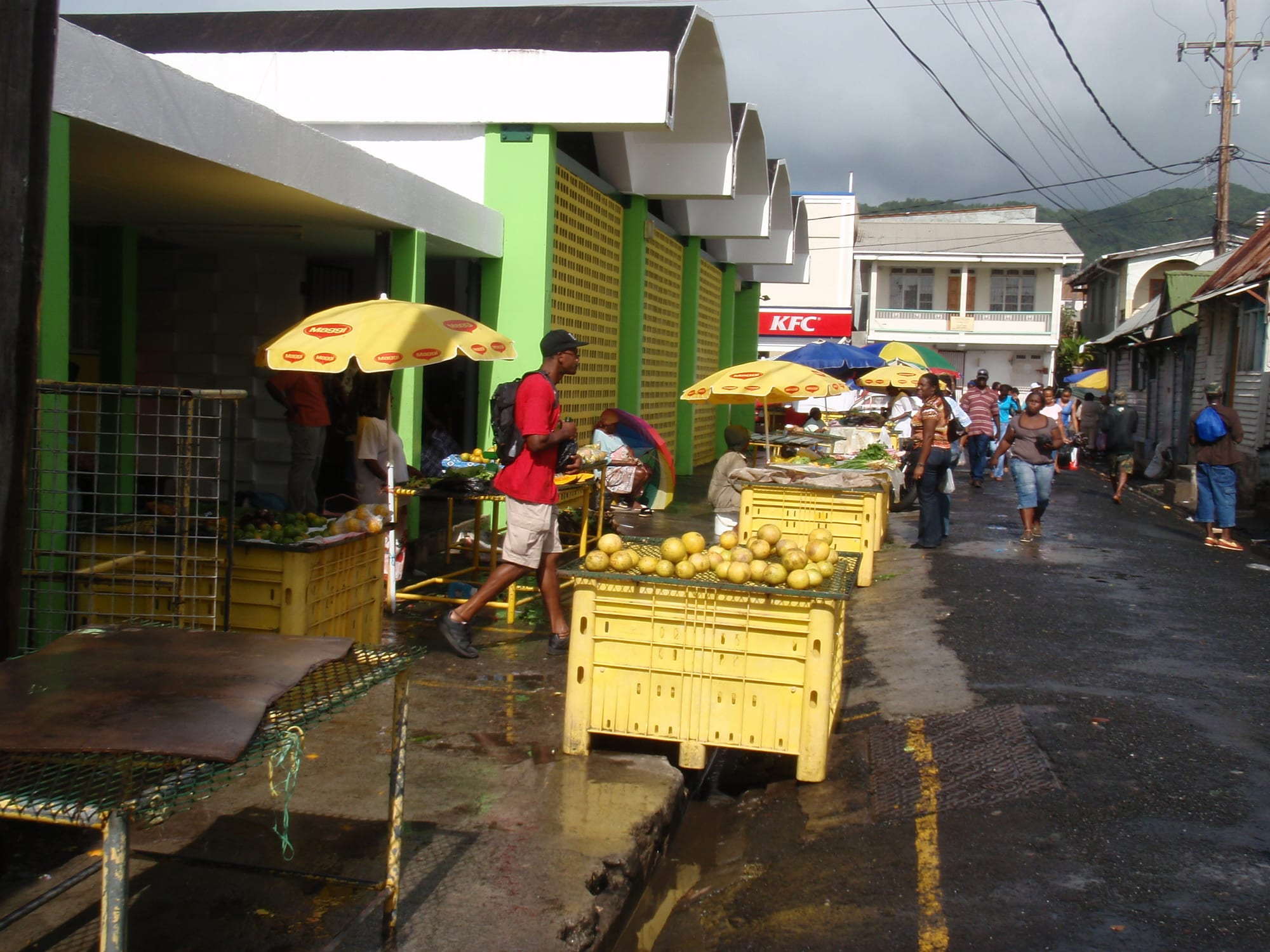
An island of exceptional biodiversity
Dominica — not to be confused with the larger Dominican Republic — is known as "the Nature Isle" for its rainforest cover, hot springs and unusually high biodiversity for such a small island. Its food culture combines the same Anglophone Caribbean staples found across the region with something rarer: a living connection to the Kalinago (Carib) people, whose descendants still hold a territory on the island's east coast and keep older cooking traditions alive.
A traditional dish now protected out of existence
Dominica's traditional national dish was "mountain chicken" — not poultry, but the meat of a large native frog, Leptodactylus fallax, whose flesh was said to resemble chicken. It is worth being direct about its status today: the species has collapsed catastrophically due to a fungal disease and past overharvesting, and it is now listed as Critically Endangered by the IUCN. Hunting and eating it is restricted, and it is not something responsible visitors should seek out or expect to find on a menu. Its history is worth knowing, but Dominica's real, current food identity lies elsewhere.
Kalinago cassava bread and everyday Creole food
In the Kalinago Territory, cassava bread is still made in the traditional way — the root grated, its bitter juice pressed out, and the resulting flour baked into large, thin, unleavened rounds on a griddle — a direct link to food practices that predate European contact with the Caribbean by centuries. Elsewhere on the island, the food is standard Eastern Caribbean Creole cooking: callaloo soup, ground provisions like breadfruit, dasheen and yam boiled and served alongside fish or meat, and saltfish with bakes (fried dough) for breakfast.
Eating as a traveller
Vegetarians can rely on ground provisions, callaloo and bean dishes, though most main courses lean on fish or meat. Tap water is generally safe, drawing on the island's abundant fresh water. Bush rum, infused with local roots and herbs and often sold informally, and a wide range of herbal "bush teas" reflect the island's plant biodiversity and its long tradition of herbal medicine.
What to take from the table
Dominica's food story today is really about what has replaced mountain chicken rather than the dish itself: Kalinago cassava bread, ground provisions and callaloo, eaten on an island whose real pride is the rainforest around the plate rather than any single dish on it.