History · Denmark
Denmark: From Viking Raiders to the Welfare State
One of the oldest kingdoms in Europe — Viking fleets, a North Sea and Baltic empire, three centuries of shrinking, and a small country's reinvention
By Worldlore Editorial · 10 September 2026
A small country with a long crown
Denmark is the smallest and southernmost of the Nordic countries — the Jutland peninsula and some 400 islands between the North Sea and the Baltic, with about six million people. Its monarchy is one of the oldest in the world, its line traced to a king of the 10th century, and its flag is the oldest still in use. The Kingdom of Denmark also still includes the Faroe Islands and Greenland, the largest island on earth, which makes a compact European state the guardian of a huge slice of the Arctic. Danish history has a clear shape: a medieval and early-modern power that dominated the North, and then three centuries of losing territory, ending as a small country that rebuilt itself from the inside.
A short history
- c. 790–1050
The Viking Age
Danish fleets raid and settle in England, Normandy and the Baltic; Cnut rules a North Sea empire.
- c. 965
Harald Bluetooth
The Jelling stone records the unification and Christianisation of Denmark.
- 1397–1523
The Kalmar Union
Denmark, Norway and Sweden are joined under a Danish-led crown.
- 1536
Reformation
Denmark becomes Lutheran; the crown seizes Church wealth.
- 1658
Roskilde
Sweden takes the eastern Danish provinces of Scania, Halland and Blekinge for good.
- 1660
Absolutism
The monarchy is made absolute and hereditary.
- 1814
Norway lost
Denmark cedes Norway to Sweden after backing Napoleon.
- 1849
The constitution
Absolute rule ends; Denmark becomes a constitutional monarchy.
- 1864
The catastrophe
Prussia and Austria seize Schleswig and Holstein; Denmark loses a third of its land.
- 1940–1945
Occupation
Germany occupies Denmark; in 1943 Danes ferry almost all the country's Jews to Sweden.
Vikings and the making of Denmark
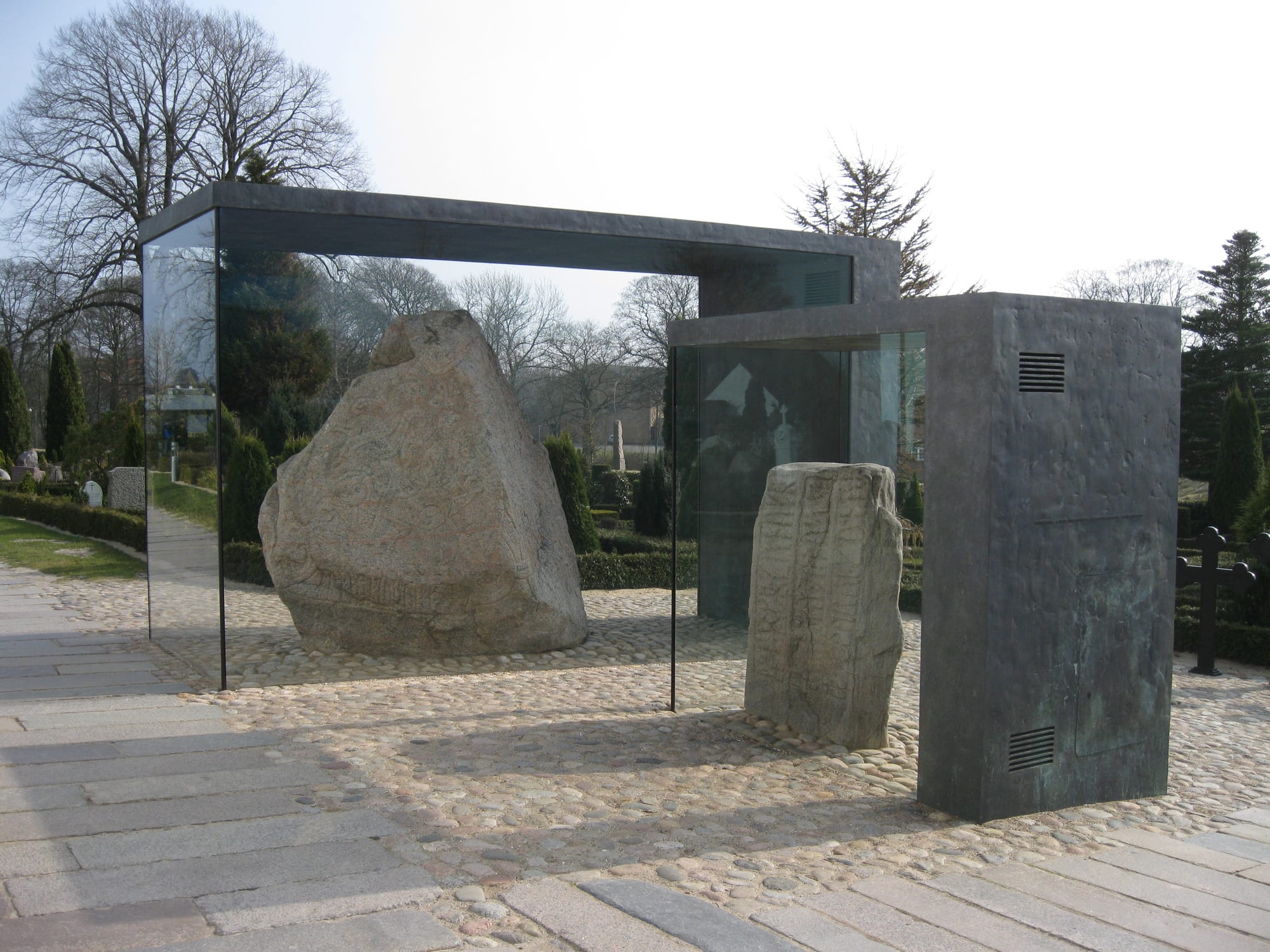
Danes were at the centre of the Viking Age. From the late 8th century their ships raided and then settled in eastern England — the "Danelaw" — and around the North Sea and the Baltic, and for two decades in the early 11th century Cnut the Great ruled Denmark, England and Norway together. Around 965, King Harald Bluetooth raised a runestone at Jelling declaring that he had "won all Denmark for himself, and Norway, and made the Danes Christian" — the stone that Danes treat as the birth certificate of the nation.
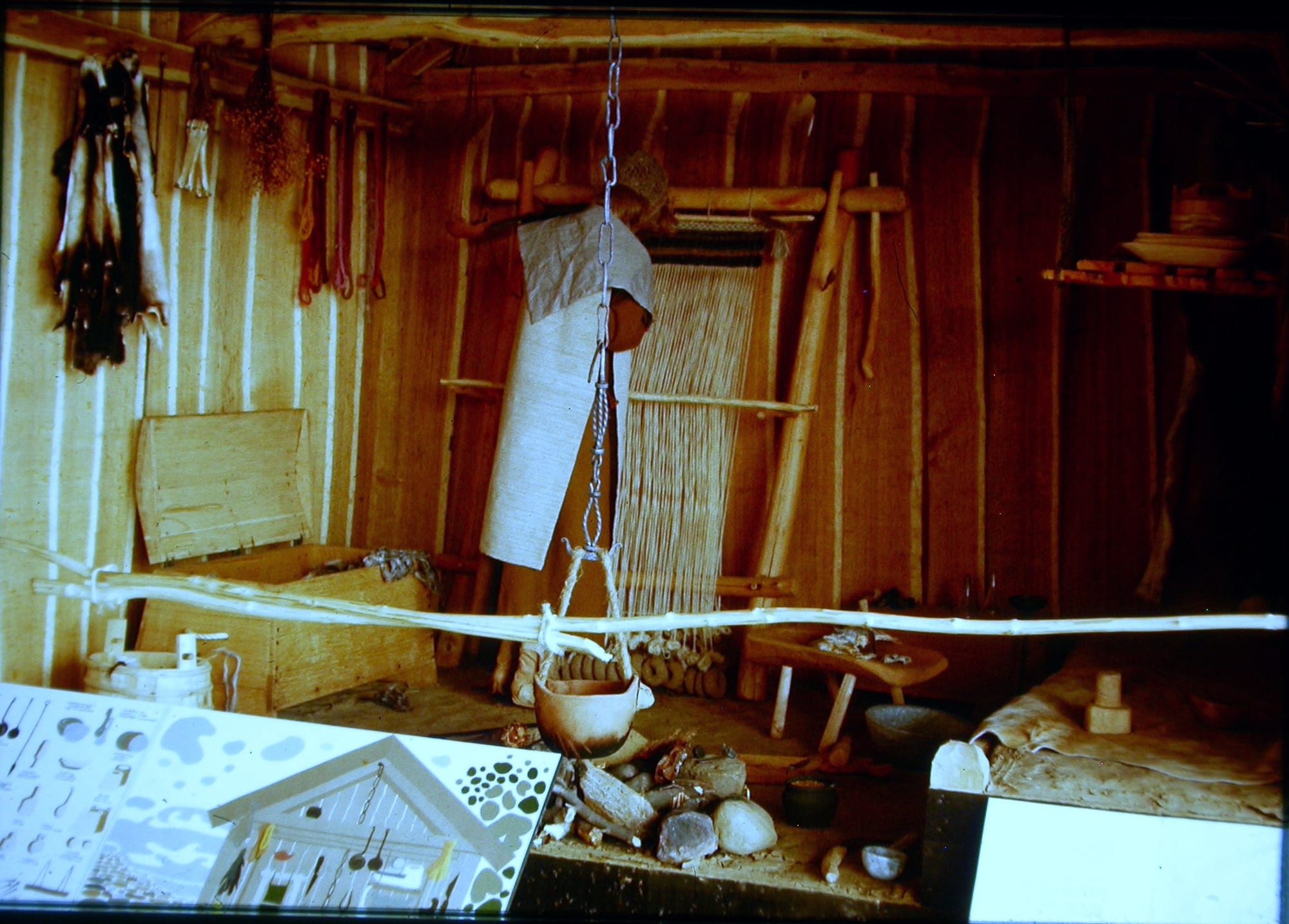
The medieval kingdom that followed expanded around the Baltic under the Valdemar kings — the Danish flag is said to have fallen from the sky during a battle in Estonia in 1219 — before German and Hanseatic pressure and internal weakness set it back.
Union, Reformation, and the Sound Dues
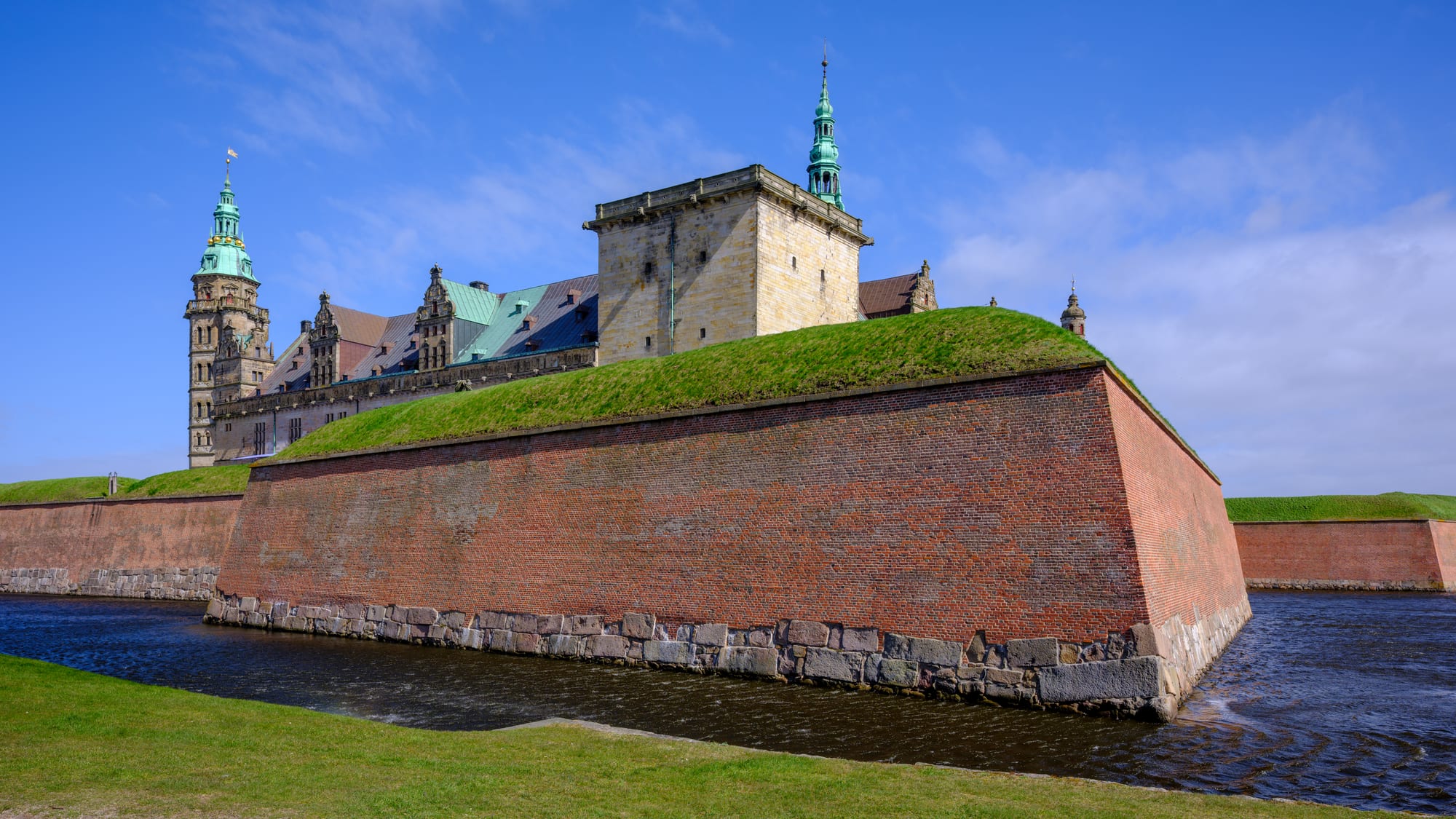
In 1397 Queen Margaret I joined the crowns of Denmark, Norway and Sweden in the Kalmar Union, under Danish leadership. Sweden broke away for good in 1523, but Denmark and Norway continued as a single realm. Denmark adopted Lutheranism in 1536, and the crown grew rich on seized Church land and, above all, on the Sound Dues — a toll levied for four centuries on every ship passing through the narrow Øresund strait, guarded by the castle of Kronborg.
Three centuries of losing ground
Denmark's decline was measured out in wars with Sweden. In the winter of 1657–58 a Swedish army marched across the frozen Danish straits, besieged Copenhagen, and imposed the Treaty of Roskilde, which handed Sweden the rich eastern provinces of Scania, Halland and Blekinge — moving the border to where it still runs. In the crisis that followed, in 1660, the king made the monarchy absolute and hereditary, a form it kept for almost two centuries. Denmark-Norway was also a small colonial and slave-trading power, with forts on the Gold Coast and sugar islands in the Caribbean; it was the first country to ban the transatlantic slave trade, in 1792, though slavery in its West Indian colonies ended only after a slave revolt in 1848.
The Napoleonic Wars brought disaster. Britain, fearing the Danish fleet, bombarded Copenhagen and seized the navy in 1807; Denmark allied with Napoleon and lost, and at the Congress of Vienna in 1814 it was forced to give Norway to Sweden, ending a union of four centuries.
The constitution, and 1864
The revolutions of 1848 reached Denmark peacefully: the king gave up absolute rule and signed the June Constitution of 1849, making Denmark a constitutional monarchy with an elected parliament. But the constitution reopened the question of Schleswig and Holstein, the duchies south of Jutland, ruled by the Danish king but ethnically mixed and, in Holstein's case, German. When Denmark tried to absorb Schleswig fully, Prussia and Austria invaded in 1864 and crushed it at Dybbøl. Denmark lost both duchies — about a third of its territory and two-fifths of its people.
What is lost without
The defeat of 1864 turned Denmark inward. A national movement of heath reclamation, folk high schools and, above all, farmers' cooperatives transformed the country into an efficient exporter of dairy, bacon and eggs, chiefly to Britain. From the late 19th century industry followed, and from the 1930s the Social Democrats began building what became one of the most comprehensive welfare states in the world: high taxes, universal public services, strong unions, low inequality, and a labour market that combines easy hiring and firing with generous benefits.
Occupation, and the rescue
Germany occupied Denmark in April 1940 against almost no resistance, and the government cooperated for three years before breaking off in 1943 as sabotage grew. That October, tipped off about an impending round-up, Danes ferried almost the entire Jewish population — around 7,000 people — across the water to neutral Sweden in fishing boats, the most complete rescue of a Jewish community in occupied Europe. Denmark was liberated in 1945; Iceland used the occupation of Denmark to declare full independence in 1944.
Modern Denmark
Denmark abandoned neutrality to join NATO in 1949, and joined the European Community in 1973 — but as a wary member, keeping its own currency and several opt-outs, and only dropping its defence opt-out in 2022 after Russia invaded Ukraine. The Faroe Islands and Greenland gained home rule, and Greenland a path toward possible independence; Greenland's Arctic strategic value, its mineral wealth, and unresolved colonial-era wrongs — brought to a head by renewed United States interest in acquiring it — are now among the Kingdom's sharpest questions. At home, Denmark has become a leader in wind power and, across the political spectrum, has adopted one of Europe's strictest immigration regimes, a marked shift from its liberal reputation.
What Denmark carries
Denmark spent its first thousand years as a power that others had to reckon with, and its last three hundred watching that power shrink — Sweden, then Norway, then Schleswig-Holstein, all gone. The response, after 1864 above all, was to stop measuring the country by its borders and start measuring it by how well it looked after the people inside them. That is the Denmark the world now knows.