Daily Life · Denmark
Denmark: A Day Built on Two Wheels
Small households, a short official working week, a standard bicycle commute in almost any weather, and hygge candles lit the moment the light starts to fade
By Worldlore Editorial · 30 September 2026
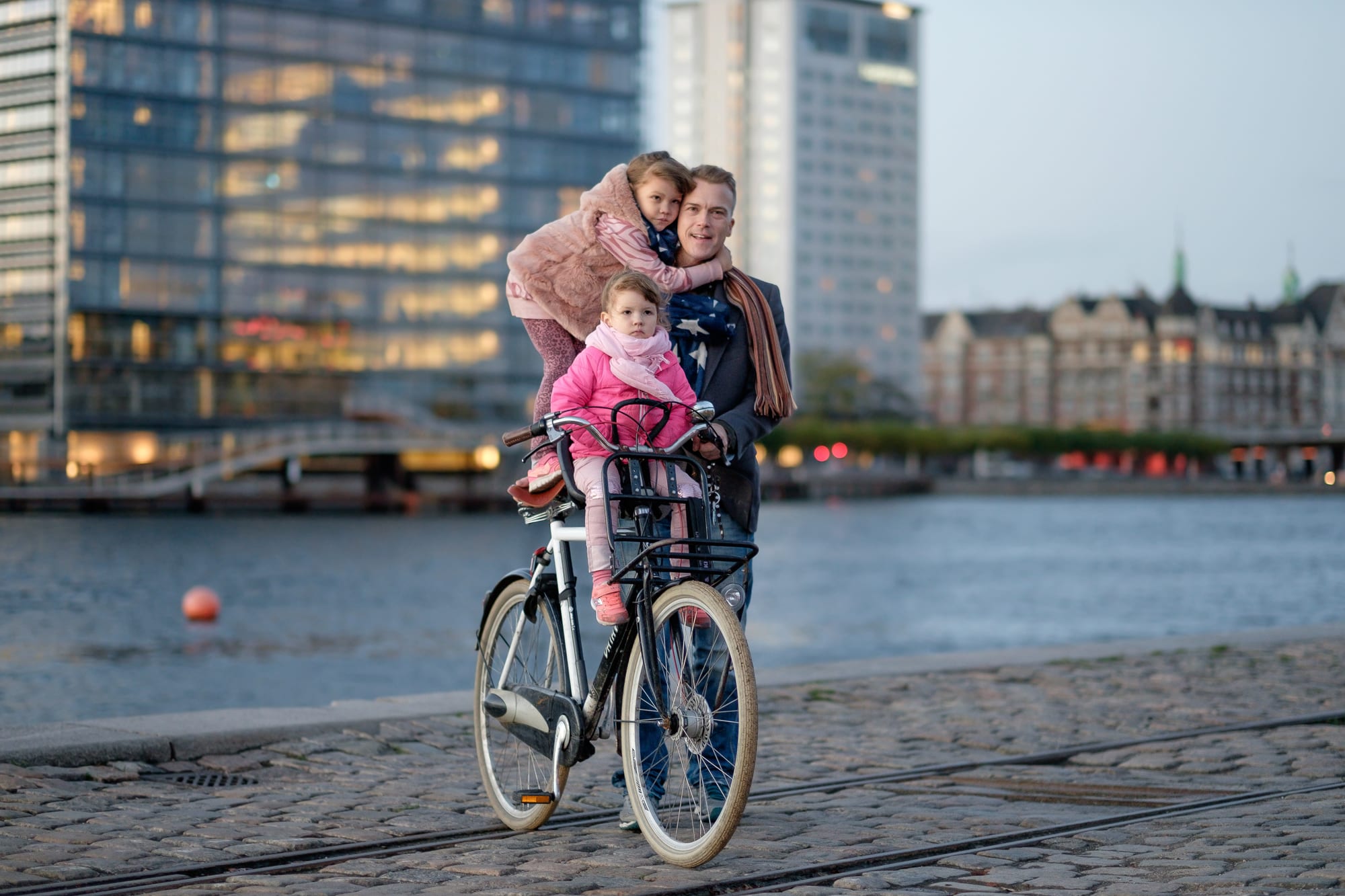
An ordinary day in Denmark tends to start and end on a bicycle. Most Danes own one, and it is used as transport rather than as a hobby, ridden to school, to work and to the shops in nearly any weather, on cycle paths that run alongside many main roads. The day itself is short by international standards and structured around getting home reasonably early, and once the light starts to fade, especially through the long winter, homes settle into hygge: candles lit, something home-cooked on the stove, and an unhurried, low-key kind of togetherness that Danes treat as a genuine daily need rather than an occasional treat.
Family and home life
Danish households are typically small, and living alone or as a couple without children in the home is common. Within families, both parents usually work, and Denmark's parental leave system is built around that: mothers are entitled to four weeks of leave before the birth, and since 2022 each parent has 24 weeks after it, 11 of them reserved for that parent alone and the rest transferable, so it is normal for a father to take a substantial block of leave with a new baby rather than a token break. Hygge is practised at home rather than performed for guests — home-cooked meals in the colder months, candles rather than overhead lighting in the evening, and a general preference for cosy, unhurried company over anything showy.
Work, school and the rhythm of the day
A standard full-time working week is commonly quoted at 37 hours, noticeably shorter than in most other developed economies, and Danish workplaces generally expect an employee to leave on time rather than stay late to show commitment. That short official week, high taxes and an extensive welfare state go together: healthcare, education through university and generous unemployment support are provided in return. Most children start cycling to and from school themselves somewhere around age eight to ten, and most Danish public schools teach traffic rules and road behaviour as part of the regular curriculum, since so much of daily life, for pupils as much as adults, plays out on two wheels.
Community life and public spaces
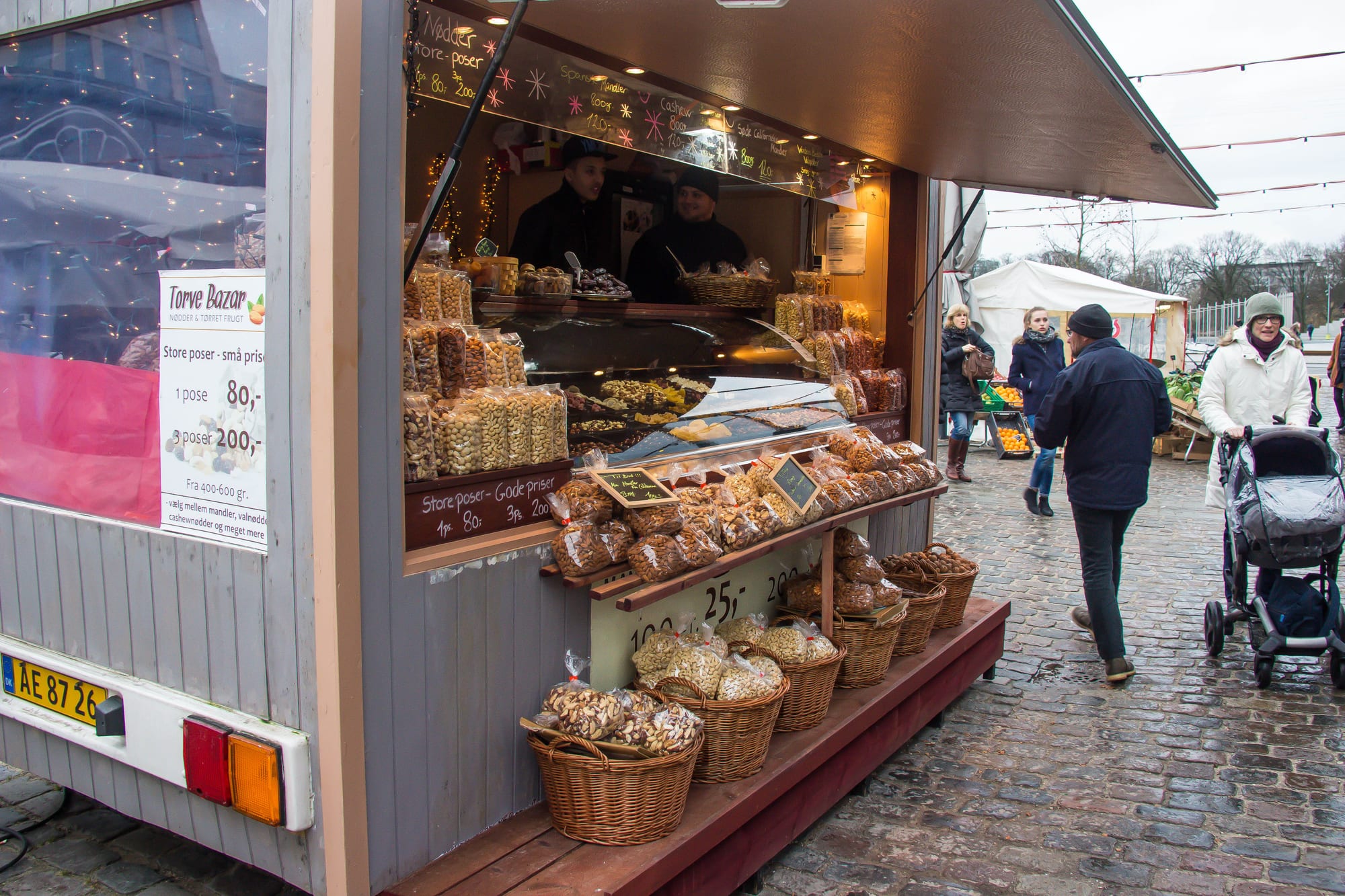
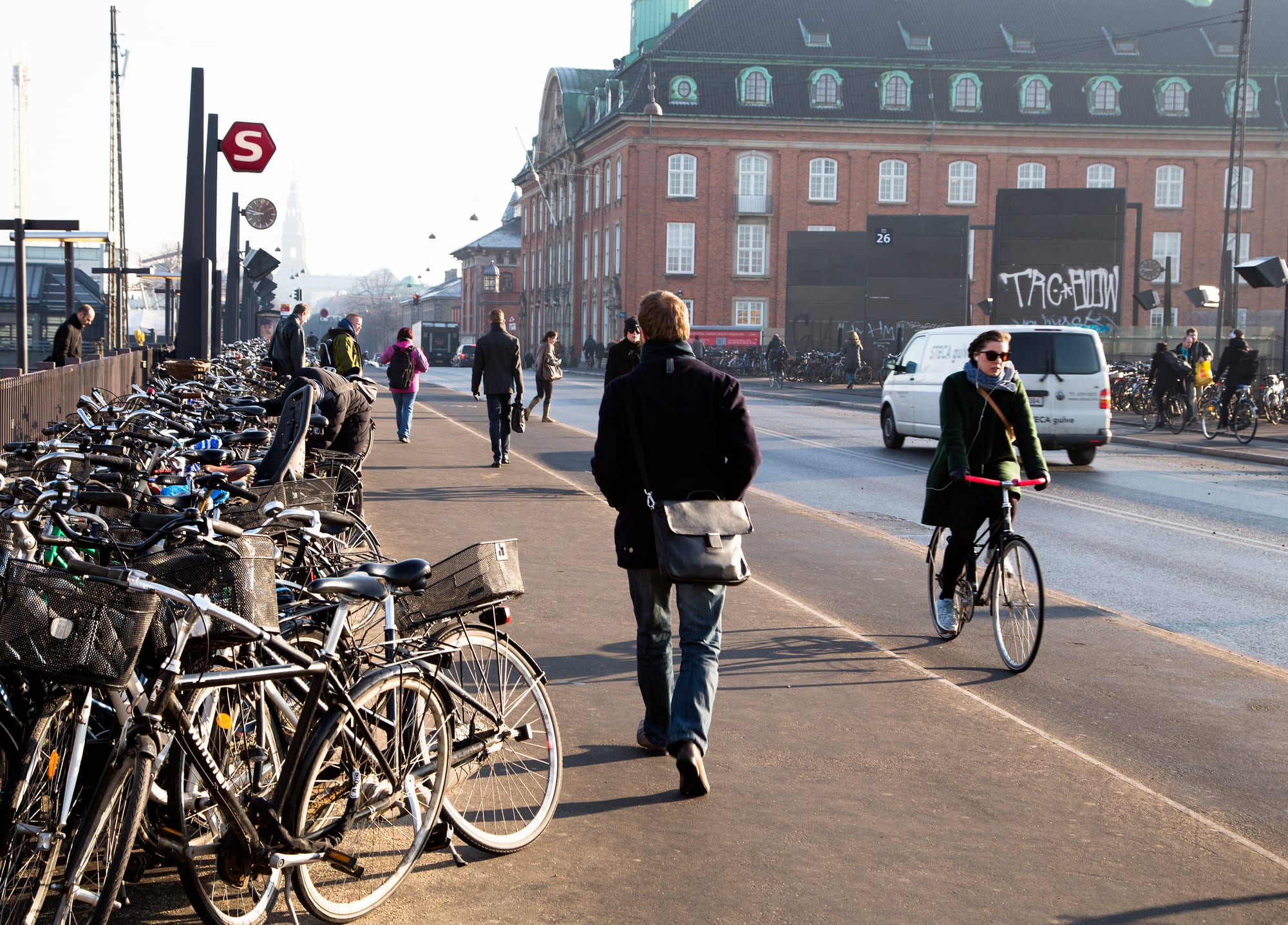
Bakeries, cafés and food markets such as Copenhagen's covered Torvehallerne halls are part of daily errands alongside the supermarket, and stopping for a coffee or a pastry on the way somewhere is a routine part of the day rather than an outing in itself. Streets and squares are built with cycling in mind: Denmark has roughly 7,000 kilometres of dedicated, physically separated cycle paths and lanes, with the biggest cities alone accounting for well over a thousand kilometres of them, and racks of parked bicycles outside stations and shops are as much a feature of public space as benches or bus stops. Public transport, trains especially, is reliable and well used for longer trips that a bike can't cover.
Free time and weekends
Weekends follow the same unhurried, home-centred pattern as weekday evenings, only longer: many families with a summer house, or sommerhus, on the coast head there as soon as the weather allows, and outdoor activity — a walk, a swim, cycling for its own sake rather than as transport — is a normal way to spend free time in every season. Evening classes and sports clubs are widely used by adults as well as children, and a slower Sunday, often with a long home-cooked meal, closes out the week. Design and craft, from furniture to Lego, remain a genuine source of everyday pride rather than a niche interest.
A visitor's ordinary day
Denmark is close to a cashless society: cards and mobile payment are accepted almost everywhere, and cash is used less and less. Renting a bicycle is often the easiest way to move around a Danish city and puts a visitor inside the same daily rhythm as everyone else, though it means learning the basic cycling signals and lane discipline quickly, since local cyclists move fast and expect predictability from those around them. Tap water is safe and free everywhere, restaurant service is included in the price rather than tipped separately, and shops in smaller towns may keep shorter hours or close early on Saturdays. Trains run frequently and reliably between the main cities for anything a bike can't cover.
What to take away
An ordinary day in Denmark runs on two overlapping habits — a short, efficiently used working day, and a genuine daily need for cosy, unhurried time at home — with the bicycle as the thread that connects almost everything in between.