History · Czechia
Czechia: The Heart of Europe
The Bohemian kingdom and its heretics, three centuries under the Habsburgs, a democracy crushed twice, and the Velvet Revolution
By Worldlore Editorial · 19 September 2026
A kingdom in the middle
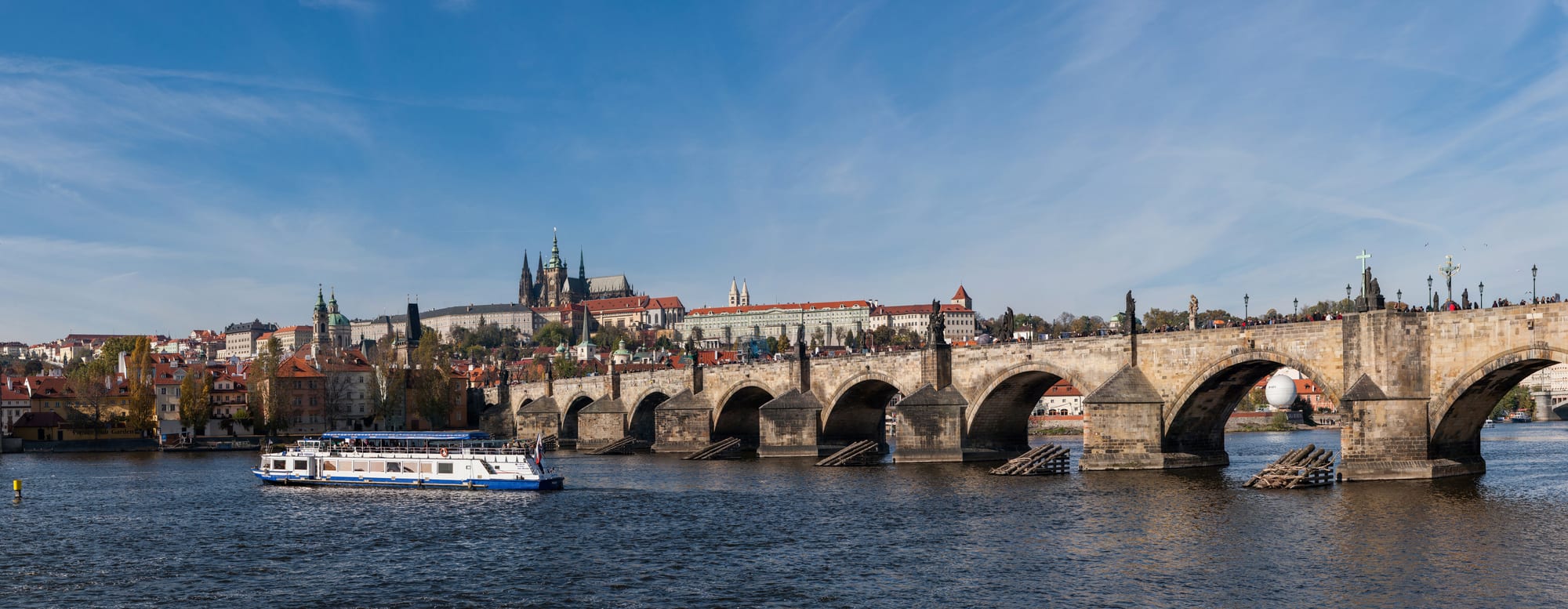
Czechia — the Czech Republic — is a landlocked country of 11 million people at the centre of Europe, made of three historic lands: Bohemia around Prague, Moravia around Brno, and a sliver of Silesia. It has one of the longest continuous state traditions in the region: a Bohemian kingdom whose ruler was one of the seven electors of the Holy Roman Empire, a Slavic realm inside a German-dominated imperial world. Its history has two recurring themes — religious and national dissent against a larger power, from Jan Hus to 1989, and the price the country has paid, in 1620, 1938 and 1968, when that larger power decided to crush it.
A short history
- 9th c.
Great Moravia
The first major Slavic state; Cyril and Methodius bring a Slavonic liturgy.
- 10th–13th c.
The Bohemian kingdom
The Přemyslid dukes, then kings, within the Holy Roman Empire.
- 1346–1378
Charles IV
Prague becomes the imperial capital; Charles University is founded.
- 1415
Jan Hus burned
His execution sets off the Hussite revolution.
- 1419–1434
The Hussite Wars
Czech armies defeat five crusades; Bohemia turns largely Protestant.
- 1620
White Mountain
The Habsburgs crush the Bohemian revolt; three centuries of "darkness".
- 28 October 1918
Czechoslovakia
An independent state under President Masaryk.
- 1938–1939
Munich and occupation
Czechoslovakia is dismembered and then occupied by Nazi Germany.
- 1948
The communist coup
The Communist Party seizes full power.
- 1968
The Prague Spring
Reform "socialism with a human face" is ended by a Soviet-led invasion.
- 17 November 1989
The Velvet Revolution
Communism falls, almost without violence.
Bohemia and its heretics
The Czech lands' first great state was Great Moravia in the 9th century, where the Byzantine missionaries Cyril and Methodius created a Slavonic church language. After it fell, the Přemyslid dynasty built the Bohemian state, which became a hereditary kingdom within the Holy Roman Empire. Its golden age came under Charles IV, King of Bohemia and Holy Roman Emperor, who in the mid-14th century made Prague the imperial capital and founded the first university in central Europe.
Then, in 1415, the Prague theologian and reformer Jan Hus — who had preached against Church corruption and for worship in Czech — was burned as a heretic at the Council of Constance, despite a safe-conduct. The Czechs rose in revolt. In the Hussite Wars, their armies, using war-wagon tactics under the blind general Jan Žižka, defeated five papal crusades, and Bohemia became a largely Protestant kingdom a century before the Reformation — an event still central to how Czechs see themselves.
White Mountain and the darkness
The Bohemian estates elected the Habsburg Ferdinand I as king in 1526, and friction between the Protestant, self-governing nobility and the Catholic, centralising dynasty grew until, in 1618, Protestant nobles threw two imperial governors out of a window of Prague Castle — the spark of the Thirty Years' War. The Bohemian revolt was crushed at the Battle of White Mountain, just outside Prague, in 1620. What followed shaped the country for centuries: the leaders executed, the Protestant nobility dispossessed and exiled, forced re- Catholicisation, German promoted over Czech, the elective throne made permanently Habsburg, and Bohemian self-government dismantled. War and plague killed perhaps a third of the population. Czechs call the era that followed temno, "the darkness".
A national revival began in the late 18th century, when scholars and writers rebuilt the Czech literary language — which had nearly died out among the elite — and forged a modern national consciousness. Bohemia industrialised into the workshop of Austria-Hungary, and Czech–German rivalry sharpened as Czechs grew in number and confidence.
Czechoslovakia, Munich, and occupation
When Austria-Hungary collapsed in 1918, Czech and Slovak leaders won Allied backing for an independent Czechoslovakia. Under President Tomáš Garrigue Masaryk, it was the only democracy in central Europe to last the whole interwar period — prosperous and free, but a multinational state with three million disaffected Sudeten Germans in its border regions.
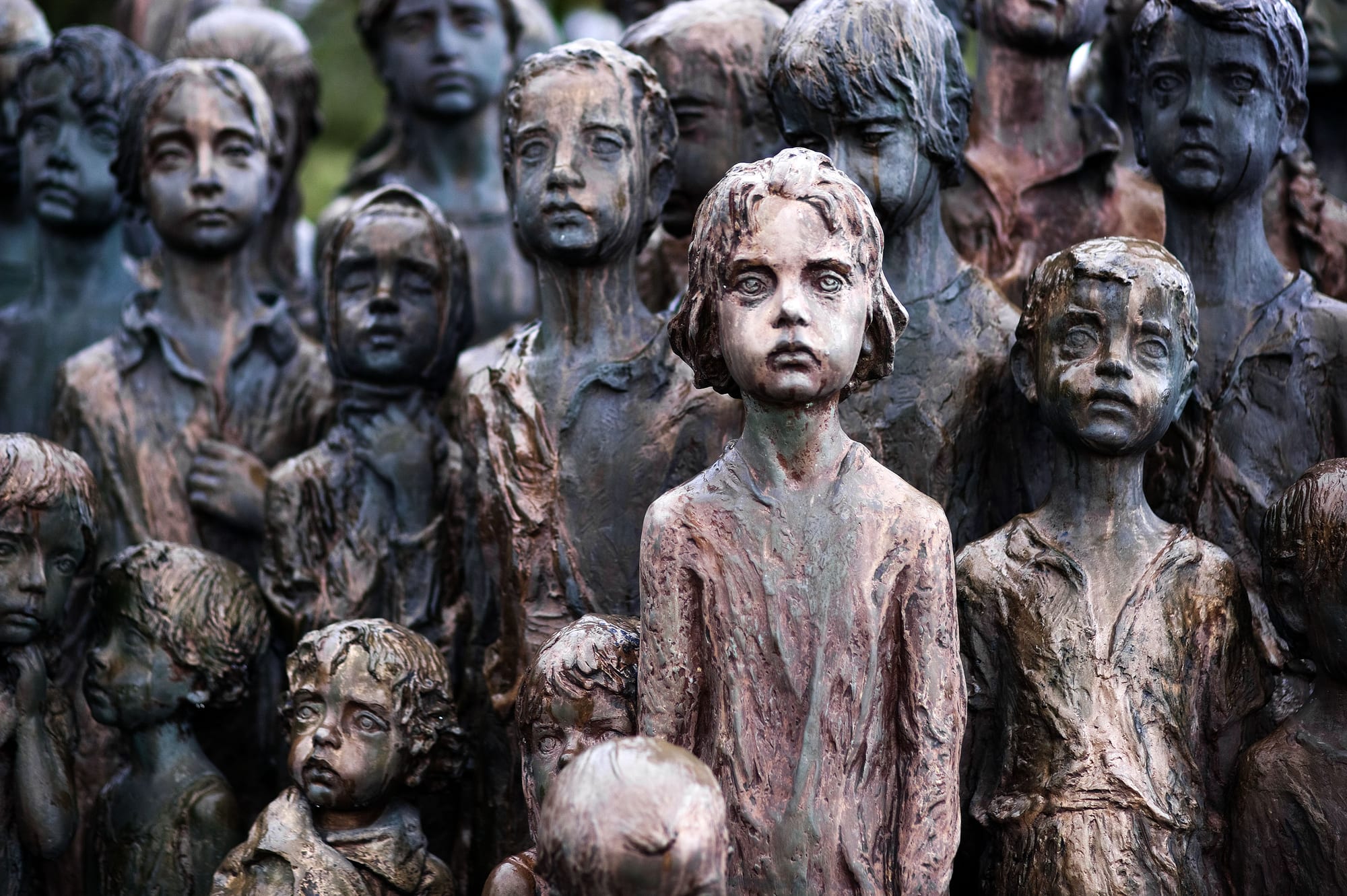
In September 1938, Britain and France, to avoid war, forced Czechoslovakia — not invited to the talks — to hand the Sudetenland to Nazi Germany. In March 1939 Germany occupied the rest. The Czech lands became a Nazi "Protectorate": universities closed, forced labour, and the near-total destruction of the Czech Jewish community. After British-trained agents assassinated the Nazi ruler Reinhard Heydrich in Prague in 1942, the Germans wiped out the village of Lidice in reprisal — the men shot, the women and children deported, the village bulldozed.
Communism, 1968, and 1989
After the war, Czechoslovakia expelled almost its entire German population — around three million people — with much violence. The Communist Party, the largest in the free 1946 election, seized full power in a coup in February 1948, and the country became a hardline Stalinist state of show trials, camps and silenced intellectuals.
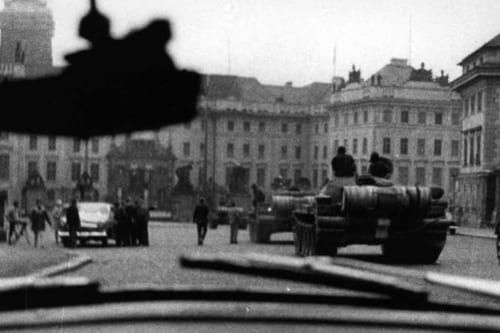
In 1968 a reform wing of the party under Alexander Dubček launched "socialism with a human face" — ending censorship, opening debate — and it was wildly popular. On the night of 20–21 August 1968, the Soviet Union and four allies invaded with half a million troops. There was no armed resistance, but widespread defiance; the reforms were reversed, and two decades of grey "normalisation" followed.
1968 and 1989
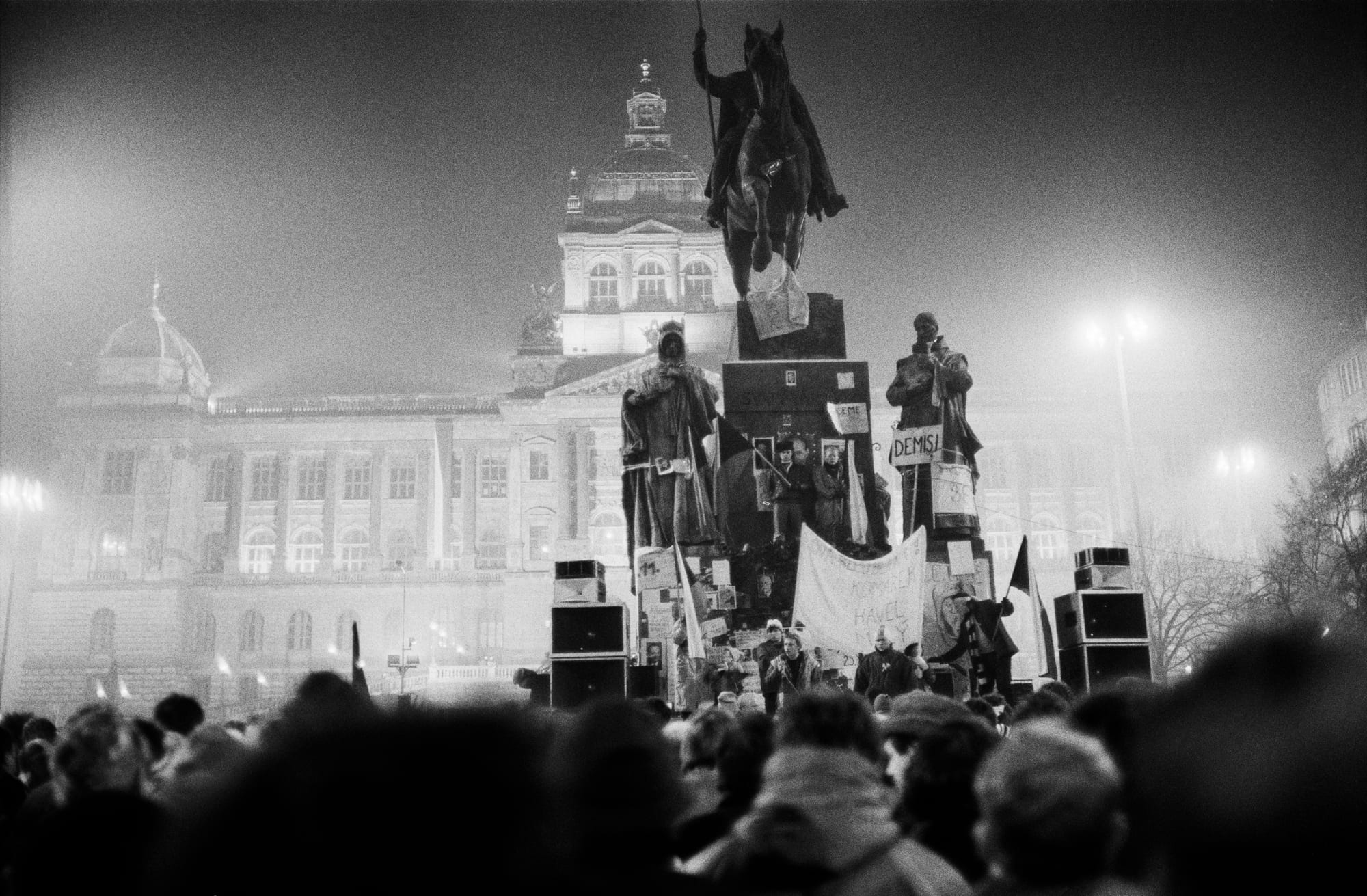
On 17 November 1989 police beat a student march in Prague; within weeks, crowds of up to three-quarters of a million filled Wenceslas Square, a general strike was called, and the Communist leadership resigned. It was almost entirely peaceful — hence "Velvet" — and the dissident playwright Václav Havel, out of prison for months, was elected president by year's end.
The Velvet Divorce, and after
Czech–Slovak tensions over the federation's future led the two republics' leaders to negotiate a split rather than hold a referendum, and on 1 January 1993 Czechoslovakia peacefully dissolved into the Czech Republic and Slovakia. Czechia joined NATO in 1999 and the European Union in 2004, and became one of the more prosperous post-communist states, its economy anchored by car manufacturing. It has kept its own currency, seen recurring corruption scandals and populist politics, and — with the memory of 1938 and 1968 close to the surface — been among the strongest supporters of Ukraine since 2022.
What Czechia carries
The Czech lands have a long habit of dissent against bigger powers — religious in Hus's day, national under the Habsburgs, democratic against the Soviet bloc — and a long experience of what happens when the bigger power pushes back. The country that emerged in 1989 got, for the first time since 1618, a state that was fully its own, and it has spent the years since trying to make sure the lessons of Munich and Prague 1968 are not forgotten.