Culture & Customs · Cyprus
Cyprus: Honour at the Open Table
Two communities with different faiths and a shared code of honour, coffee offered at every opportunity, and a year marked by candlelit Easter vigils, bayram visits and a festival of water
By Worldlore Editorial · 30 September 2026
A visitor calls on a Cypriot family, and within minutes a small cup of coffee and a plate of something sweet have appeared on the table. Refusing is not really an option; the host will offer again, and then again, and a guest who wants to stop eating may have to insist quite firmly. Everyone present is greeted on arrival, and when the visit ends, the goodbyes stretch on as conversation starts up once more at the door. The scene would play out in much the same way in a Greek Cypriot home or a Turkish Cypriot one. The island's two main communities pray differently, speak different languages and have lived largely apart since 1974, yet both take deep pride in the same things: generosity to guests, loyalty to family, and a keen sense of personal honour.
Faith, identity and values
Religion and community identity are closely intertwined in Cyprus. Most Greek Cypriots identify as Orthodox Christians, and most Turkish Cypriots identify as Sunni Muslims. Smaller communities of Maronite, Armenian Apostolic, Anglican and Catholic Christians also live on the island. Christianity is said to have arrived with the Apostle Paul in the middle of the first century, and the Orthodox Church of Cyprus is one of the oldest self-governing churches in the Christian world. It remains influential in public and cultural life, and almost all Greek Cypriots regard Orthodoxy as part of their national belonging, whether or not they attend church regularly. Easter is the high point of the religious year, preceded by the Lenten fast.
Turkish Cypriots are often described as among the most secular Muslims in the world. Most do not practise their faith regularly, turning to it mainly for the great religious holidays and for life's milestones, and women's dress generally follows European rather than Islamic conventions. Across both communities, fewer young people describe themselves as believers than their parents or grandparents.
The value that binds the island's culture together is honour, known as philotimo in Greek and onur in Turkish. It covers integrity, pride in doing the right thing and care for one's reputation, and it helps explain why people can be reluctant to admit a mistake in public. Hospitality, generosity and honesty are regarded as the measures of a person's character. Trust is built slowly, and once it is lost, it is hard to win back. People tend to be fiercely loyal to their families and communities, and friends are often spoken of as brothers or sisters.
The island's division is a constant presence. Since 1974 a UN-monitored buffer zone, often called the Green Line, has separated the Greek Cypriot and Turkish Cypriot communities. The subject stirs strong feelings on both sides, and even the words used to describe the two parts of the island can be politically sensitive.
Greetings and meeting people
A first meeting usually brings a handshake and a smile, and between men and women it is typically the man who waits for the woman to offer her hand. Close friends embrace and kiss on the cheek, while male friends are more likely to slap or pat each other's arm or back. Some devout Muslims prefer not to touch members of the opposite sex, and some Turkish Cypriots lower their gaze as a mark of respect. Elders are greeted first and with particular deference; among Turkish Cypriots, younger people may kiss an elder's right hand and then raise it to their forehead.
Greek Cypriots greet one another with "yiasou", and Turkish Cypriots with "merhaba" or "selam". English is widely spoken. In formal settings, Greek Cypriots use Kyrie (Mr) or Kyria (Mrs) with the surname, while Turkish Cypriots add Bey for a man or Hanım for a woman after the first name. Many Greek Cypriots are named after a grandparent, who was usually named after an Orthodox saint, and it is common for a first-born son to take his grandfather's name.
Conversation is direct, lively and often loud, with people talking over one another as a sign of engagement rather than conflict. Direct eye contact signals sincerity. Two gestures are worth knowing: tilting the head back with raised eyebrows and a "ts-ts" click of the tongue means "no", while holding up an open palm with fingers spread towards someone's face, the moutza, is a grave insult.
Hospitality and being a guest
Both communities are famous for their hospitality. Tea or coffee, usually with a small snack, is offered at almost every opportunity, and accepting what the host offers is the polite response, since a refusal can be taken as an insult. A guest greets and says goodbye to everyone present, removes a hat on entering the home, and on leaving makes a visible effort to show that they would have liked to stay longer.
Gifts are presented at the start of a visit and offered and received with both hands. Something edible, such as wine or a dessert, is a good choice, and flowers are welcome too, with one important exception: white lilies are associated with funerals.
At the table, no one begins eating until the host signals that it is time. A small first helping is wise, because hosts will press food on guests several times, and finishing everything on the plate shows that the meal was both plentiful and enjoyed. Alcohol is drunk slowly, keeping pace with the rest of the table. Elbows stay off the table, and leaning back with hands behind the head comes across as disrespectful.
Festivals and life's big moments
Easter is the most important religious and cultural event of the Greek Cypriot year. Holy Week brings daily church services and fasting. On Good Friday, the epitaphios, a flower-decorated bier representing the tomb of Christ, is carried through the streets. On the night of Holy Saturday, churches fill for the midnight service: the lights go out, and at midnight the priest proclaims "Christos Anesti", "Christ is risen". Candles are lit one from another, church bells ring and bonfires known as lambradjia blaze up outside. Eggs are dyed red, a colour said to represent the blood of Christ. During processions, modest dress and quiet voices are expected, and any photography should be discreet.
The Orthodox calendar also brings Green Monday, the first day of Lent, when families head out for picnics and fly kites. Fifty days after Easter comes Kataklysmos, the Festival of the Flood, which coincides with Pentecost and is linked to ancient ceremonies honouring Aphrodite and Adonis. It is celebrated by the sea with games, swimming races, folk dancing and traditional songs. The Assumption of the Virgin Mary on 15 August is another major feast of the Orthodox year.
Turkish Cypriots celebrate two religious festivals, or bayrams: Ramazan Bayramı, which lasts three days at the end of the fasting month and is often called the Sugar Festival, and the four-day Kurban Bayramı. Each opens with prayers at the mosque, followed by visits to family graves. Younger people visit their elders to show gratitude and receive blessings, and children who kiss their elders' hands are often given coins or small gifts. Homes serve baklava, lokum and other sweets to visitors.
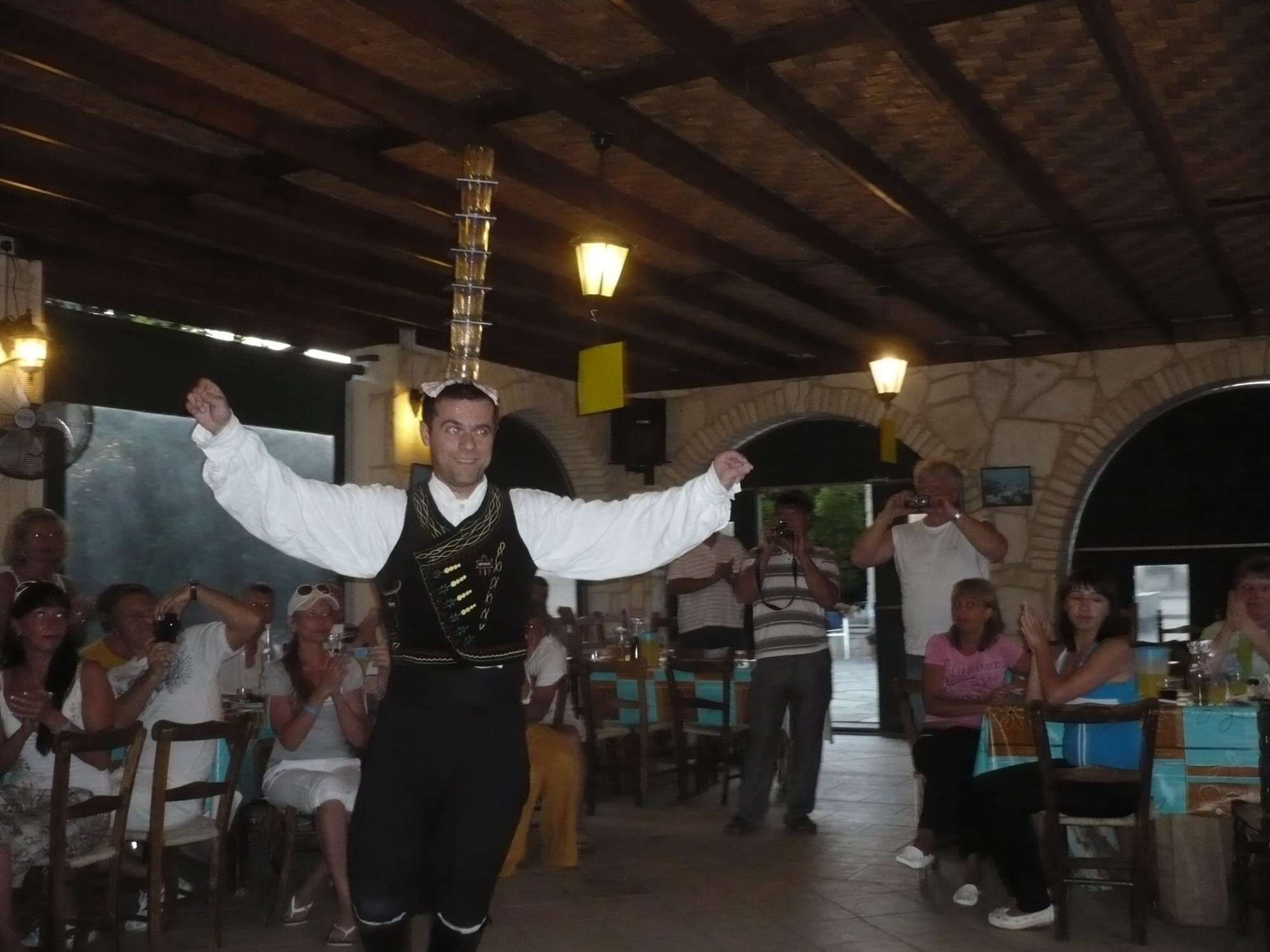
Family life stays close. Children often live at home well into adulthood, grandparents play a large part in raising grandchildren, and adult children are expected to look after their parents in old age. Weddings are big, lavish affairs, often with hundreds of guests. At one long-standing Cypriot wedding custom, guests pin money to the bride's and groom's clothes as they dance, a practice now more common at Turkish Cypriot weddings, while Greek Cypriot celebrations may include customs such as plate smashing.
Arts, crafts and music
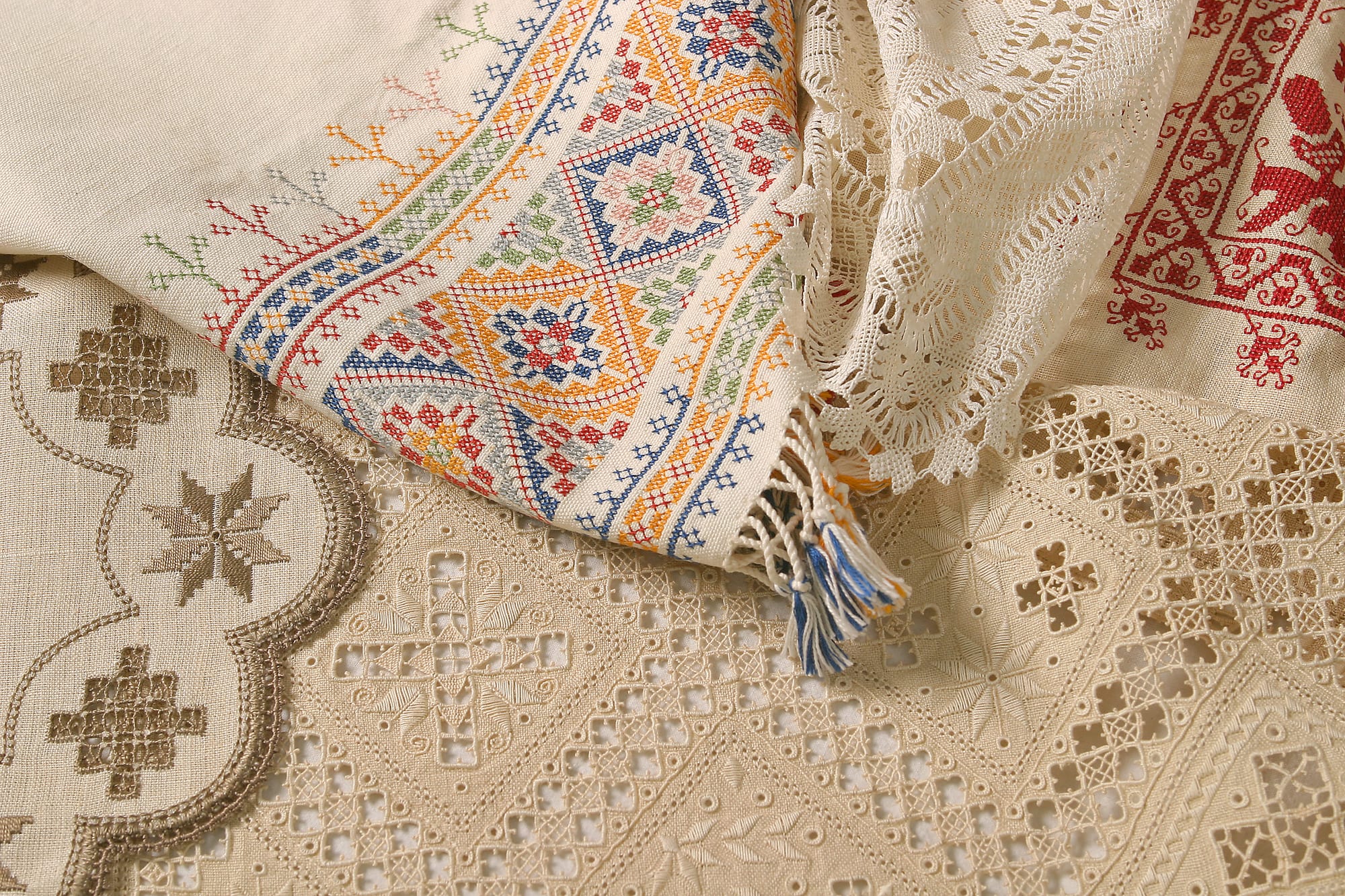
Lefkara lace, or lefkaritika, is the island's most celebrated craft and is inscribed on UNESCO's list of intangible cultural heritage. Traditionally made by the women of the village of Lefkara, it has been produced since at least the fourteenth century, and the tablecloths, napkins and display pieces are worked with cotton thread on linen using four basic elements: the hemstitch, cut-work, satin-stitch fillings and needlepoint edgings. The designs draw on local craft, Venetian court embroidery and ancient Greek and Byzantine geometric patterns. Girls learn first by watching and then from their mothers or grandmothers, and the lace-makers still often work together, talking as they sew in the lanes and shaded courtyards.
Tsiattista, also on UNESCO's list, is a form of improvised poetic duelling. Two poet-singers, accompanied by violin or lute, trade clever rhyming couplets, each trying to outdo the other with a sharper reply. The most common form is a fifteen-syllable rhyming couplet, and a good tsiattistis needs quick wit, a rich vocabulary, command of the Cypriot Greek dialect and the ability to improvise a new verse on a given theme within seconds. It has long been a highlight of wedding feasts, fairs and public celebrations, where crowds urge the poets on. The practitioners are mostly older men, though women poets have recently begun to perform.
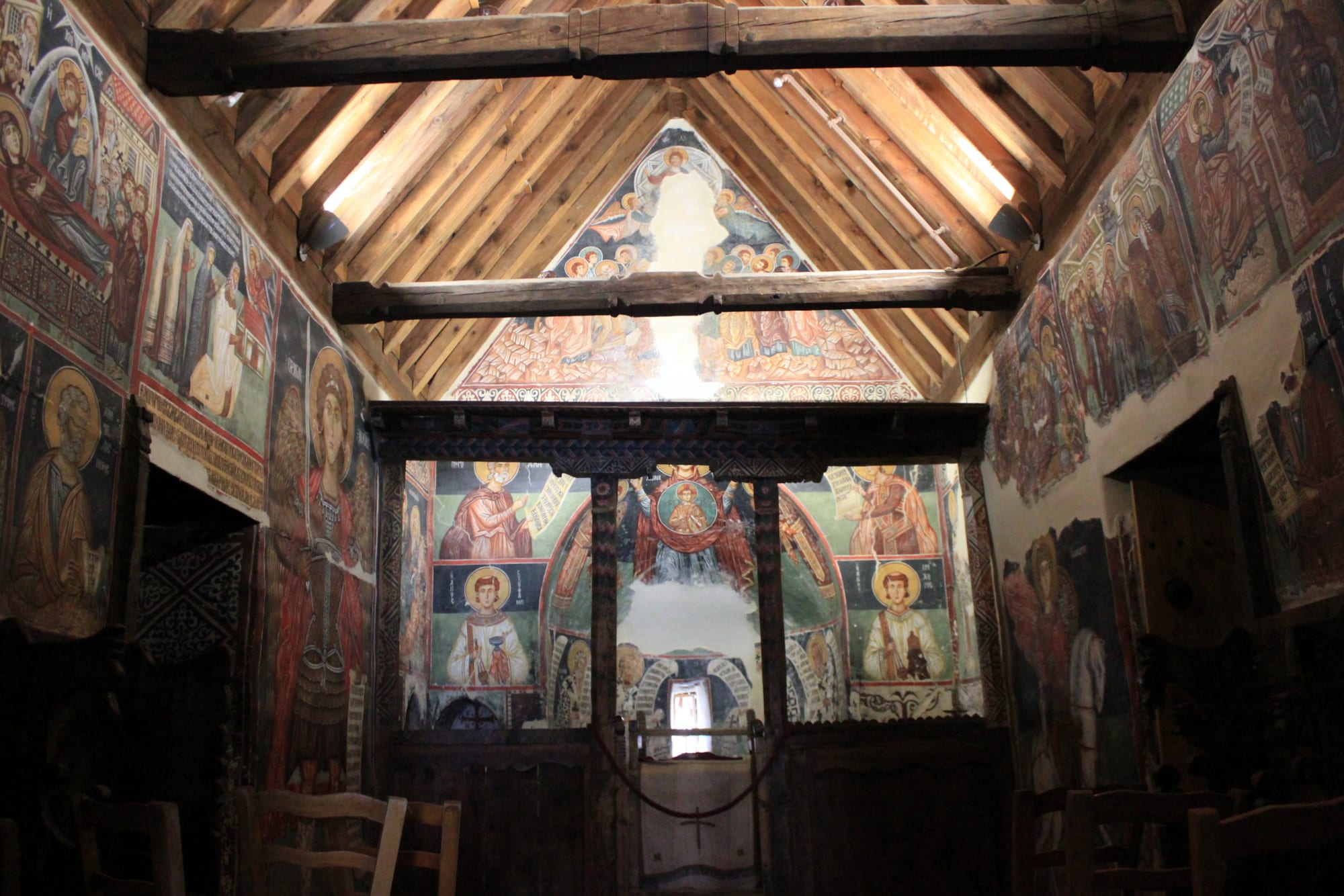
The island's religious art is just as distinctive. In the Troodos mountains, ten Byzantine churches and monasteries are inscribed on the World Heritage List. Their steep timber roofs with flat local tiles, designed to shed rain and occasional snow, shelter interiors covered in murals that trace some five centuries of Byzantine and post-Byzantine painting. Byzantine chant, the music of the Orthodox liturgy, is also on UNESCO's list, as is the art of dry-stone construction, while Commandaria, the island's sweet dessert wine, was added most recently.
Dos and don'ts for visitors
- Do check the latest government travel advice before travelling, as the regional situation linked to the 2026 Iran war can change quickly.
- Do greet and say goodbye to everyone present, and greet elders first.
- Do accept coffee, tea or food when offered; a flat refusal can offend, though insisting politely on being full is understood.
- Do bring a small edible gift or flowers (but never white lilies, which are associated with funerals) when visiting a home, and hand it over with both hands at the start of the visit.
- Do dress modestly and speak quietly in churches, at mosques and during religious processions.
- Don't make the moutza, an open palm with fingers spread towards someone's face, which is deeply insulting.
- Don't photograph military positions, and cross the buffer zone only at official checkpoints.
- Don't wade casually into talk about the island's division; it is a painful subject, and even the names used for places carry political weight.
What to take away
Cyprus is an island of two communities with different prayers and a long dividing line, but a guest will find the same welcome on both sides of it — an honour code of generosity that asks only to be met with courtesy in return.