Attractions & Natural Wonders · Cyprus
Cyprus: Ten Attractions and Natural Wonders
The rock where Aphrodite is said to have come ashore, Roman floor mosaics under a modern roof, painted mountain churches, and the last divided capital in Europe
By Worldlore Editorial · 9 September 2026
An island with two halves
Cyprus is the third-largest island in the Mediterranean, at a crossroads of Europe, the Middle East, and North Africa, and its history shows it — Greek, Phoenician, Roman, Byzantine, Crusader, Venetian, Ottoman, and British layers, one on top of the other. Since 1974 it has been divided: the internationally recognised Republic of Cyprus in the south, and a Turkish-occupied north (recognised only by Turkey), with a UN buffer zone between them and crossing points you can use on foot or by car.
The ten below are mostly in the south, with the last two in the north. Spring and autumn are ideal; summer is hot on the coast but pleasant in the Troodos mountains.
1. Paphos and its mosaics
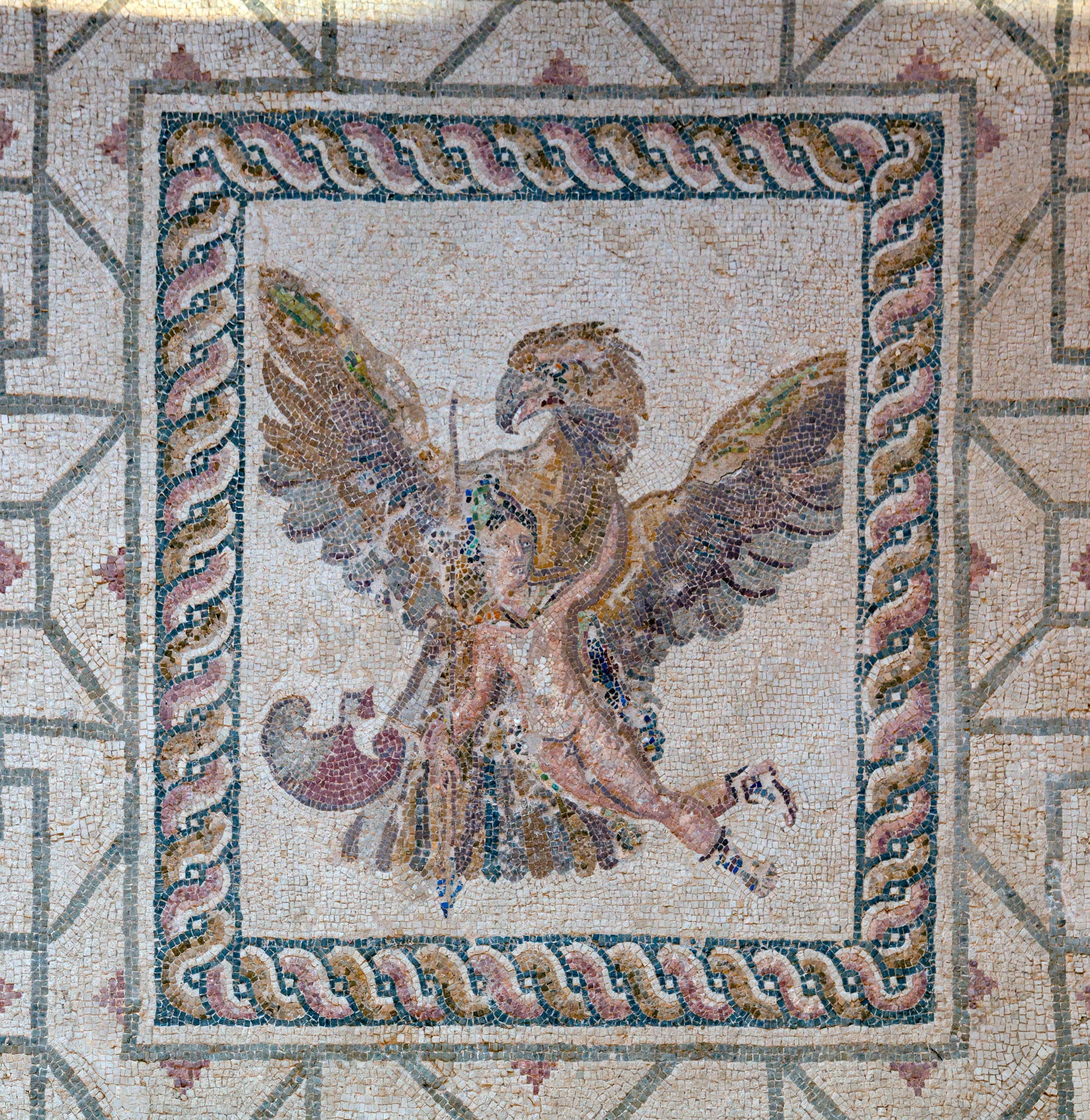
Paphos, on the southwest coast, was the Roman capital of Cyprus, and its archaeological park by the harbour has the finest Roman mosaic floors in the eastern Mediterranean — whole villa floors of gods, hunts, and myths, in the Houses of Dionysos, Theseus, and Aion, sheltered under modern roofs. It is a UNESCO World Heritage Site that also takes in an odeon, an early basilica, and a medieval fort on the pier.
The modern town has an old quarter, a lively harbour, and a strip of resorts.
2. The Tombs of the Kings
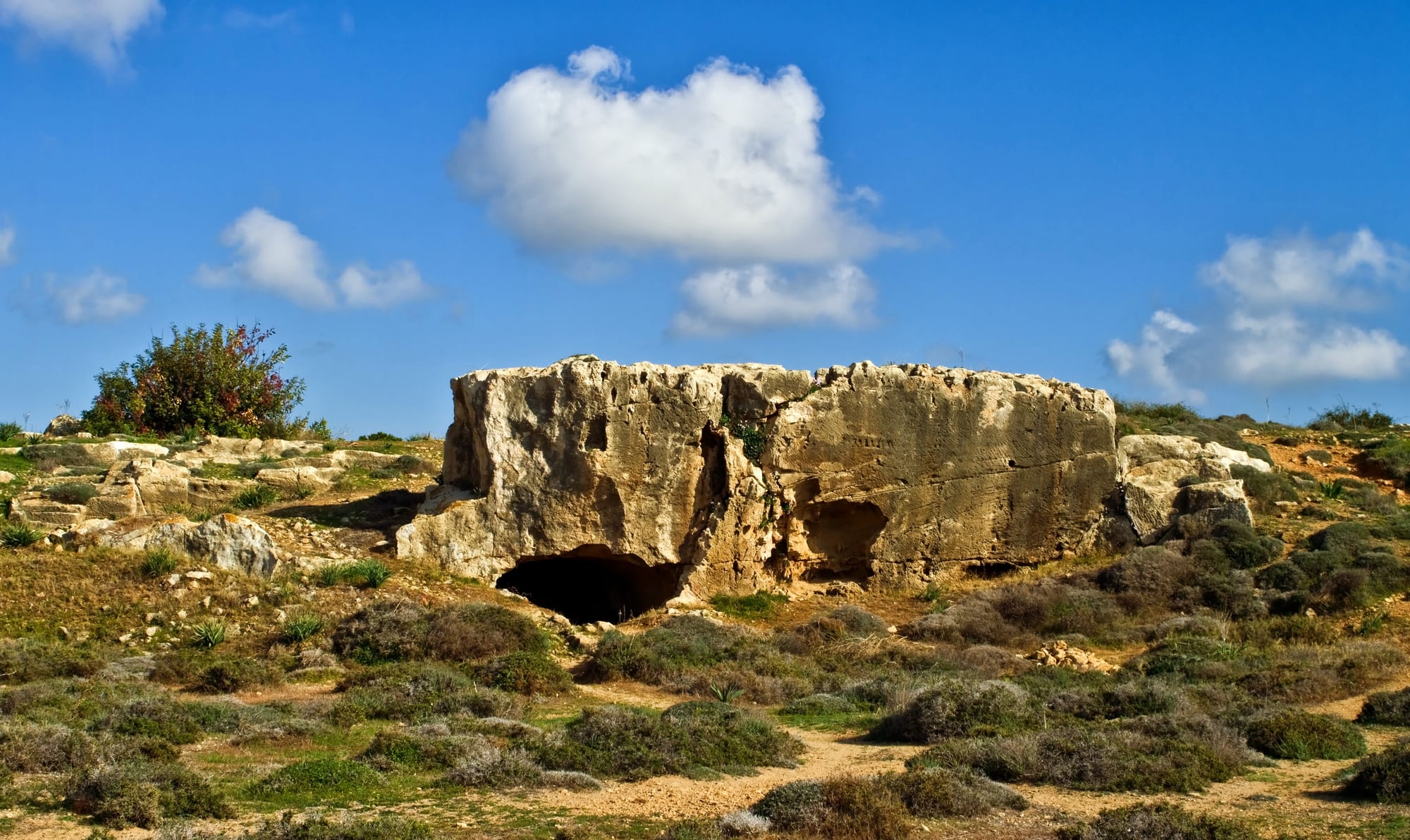
A kilometre or so up the coast from the harbour, this necropolis holds around a hundred tombs cut into the coastal rock from the 3rd century BC onward — no kings were actually buried here, but the grander tombs, carved as sunken courtyards ringed by columns in imitation of houses, earned the name. You wander freely among and into them, with the sea just beyond.
It is part of the Paphos UNESCO listing and best in the low, warm light of late afternoon.
3. Ancient Kourion
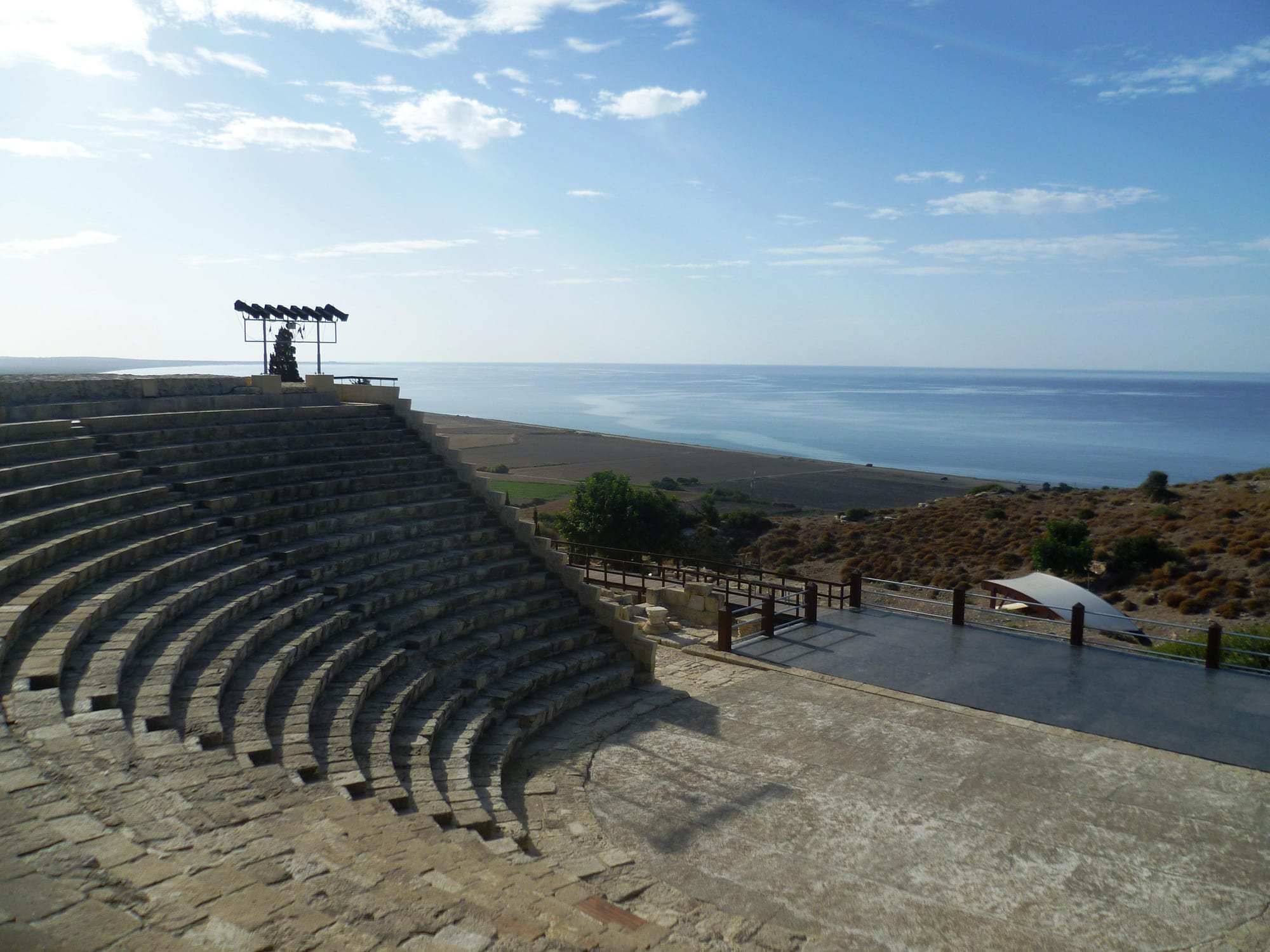
Kourion, west of Limassol, is a spectacularly sited city-state ruin on a bluff above the Mediterranean: a Greco-Roman theatre still used for summer performances, the mosaic-floored "House of Eustolios" with an early-Christian bath complex, a market square, and the stadium and Sanctuary of Apollo Hylates just down the road.
Below the cliffs is Kourion Beach; the whole area is one of the best archaeological outings on the island.
4. Kykkos Monastery and the Troodos
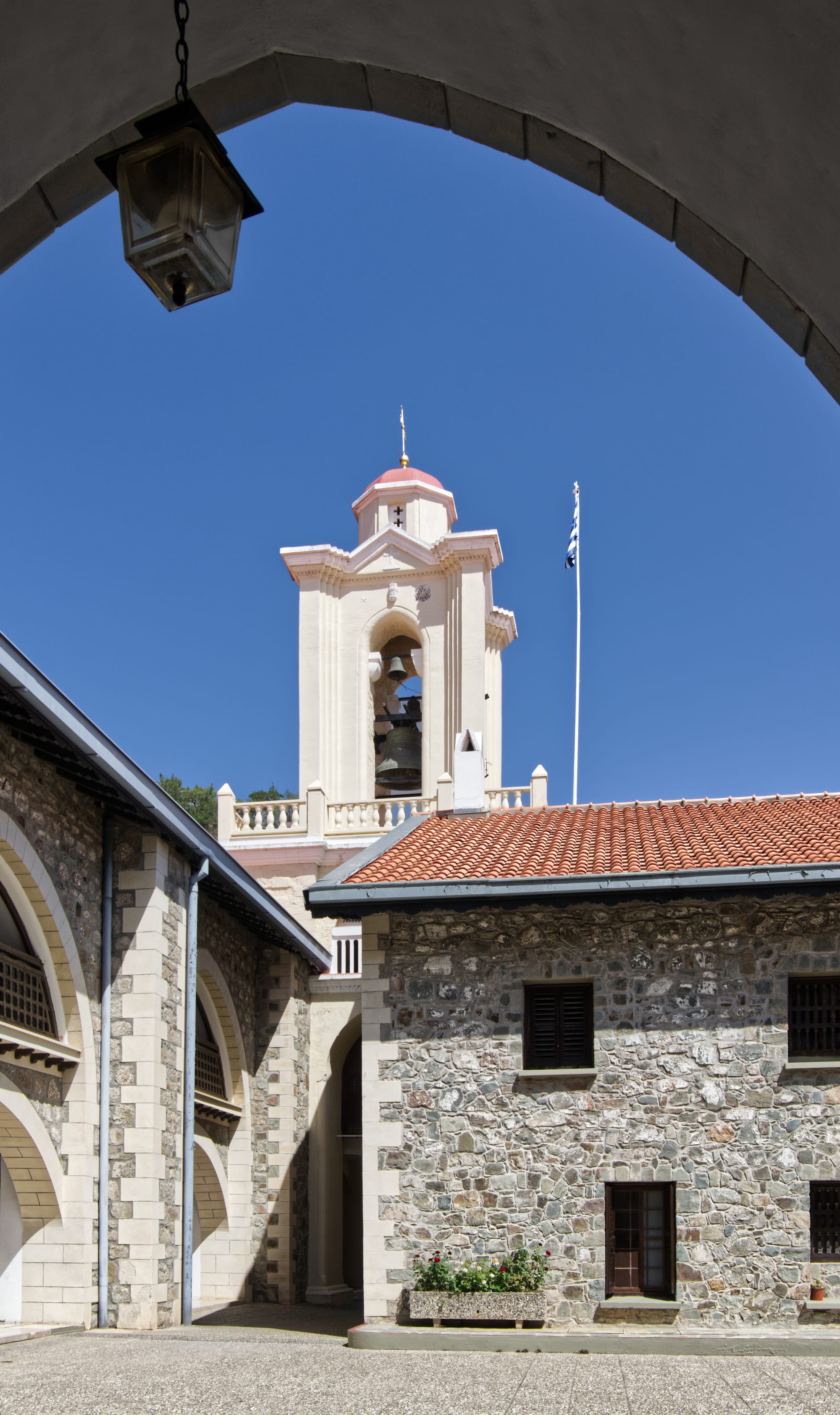
Kykkos, founded in the 11th century and rebuilt after fires, is the wealthiest and most important monastery in Cyprus, its courtyards and passages entirely covered in modern gold-ground mosaic and fresco. It holds an icon of the Virgin attributed to St Luke, kept covered, and near it is the mountaintop tomb of Archbishop Makarios, the island's first president.
It sits in the Troodos, a forested mountain range with hiking trails, the hill resort of Troodos, wineries, and — in winter — a small ski area on Mount Olympus.
5. The painted churches of the Troodos
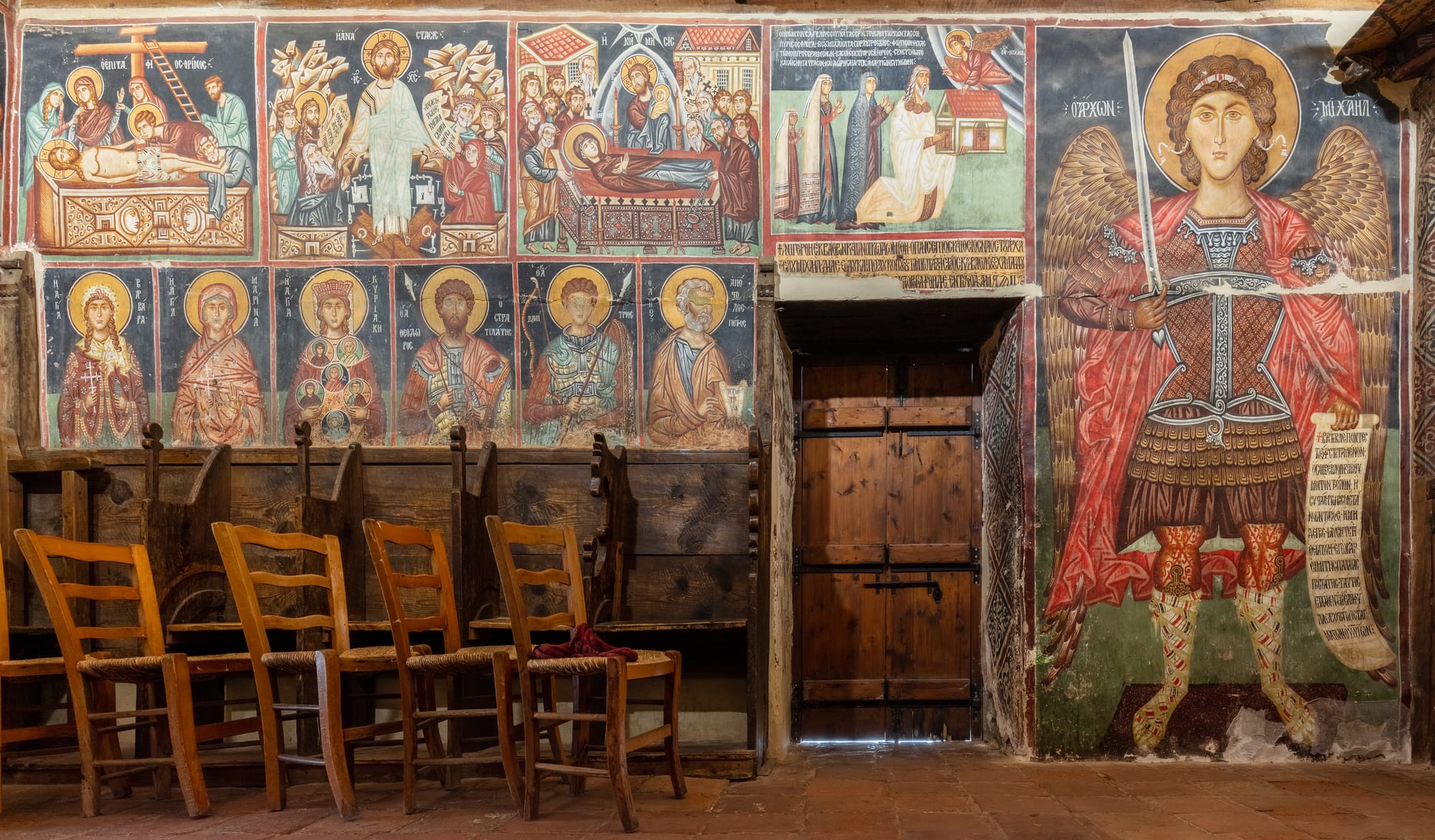
Scattered through the Troodos foothills are ten small Byzantine churches and one monastery — plain, steep-roofed barn-like buildings on the outside, but their interiors covered in some of the finest medieval wall painting in the Orthodox world, from the 11th to the 16th centuries. Together they form a UNESCO World Heritage Site.
They are in villages a short drive apart — Kakopetria, Pedoulas, Kalopanagiotis, Lagoudera — and a village keyholder usually opens them on request.
6. Larnaca and Hala Sultan Tekke
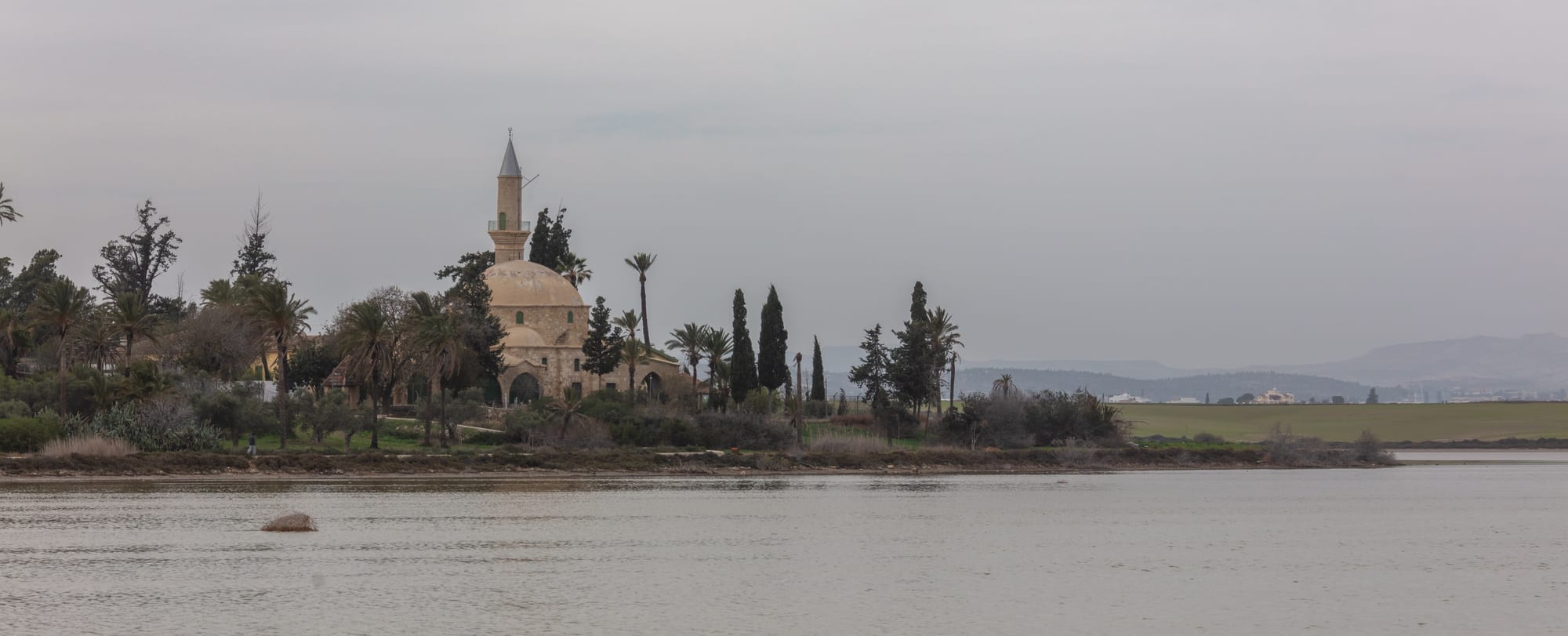
On the shore of a large seasonal salt lake by Larnaca airport stands Hala Sultan Tekke, a mosque built over the grave of Umm Haram, a relative of the Prophet Muhammad who died here in the 7th century — a major Islamic pilgrimage site, set among palms and cypresses. In winter the salt lake fills and flamingos arrive by the thousand; in summer it dries to a white crust.
Larnaca town has a palm-lined seafront and the church of Saint Lazarus, built over the tomb of the man Jesus is said to have raised from the dead.
7. Cape Greco and the southeast beaches
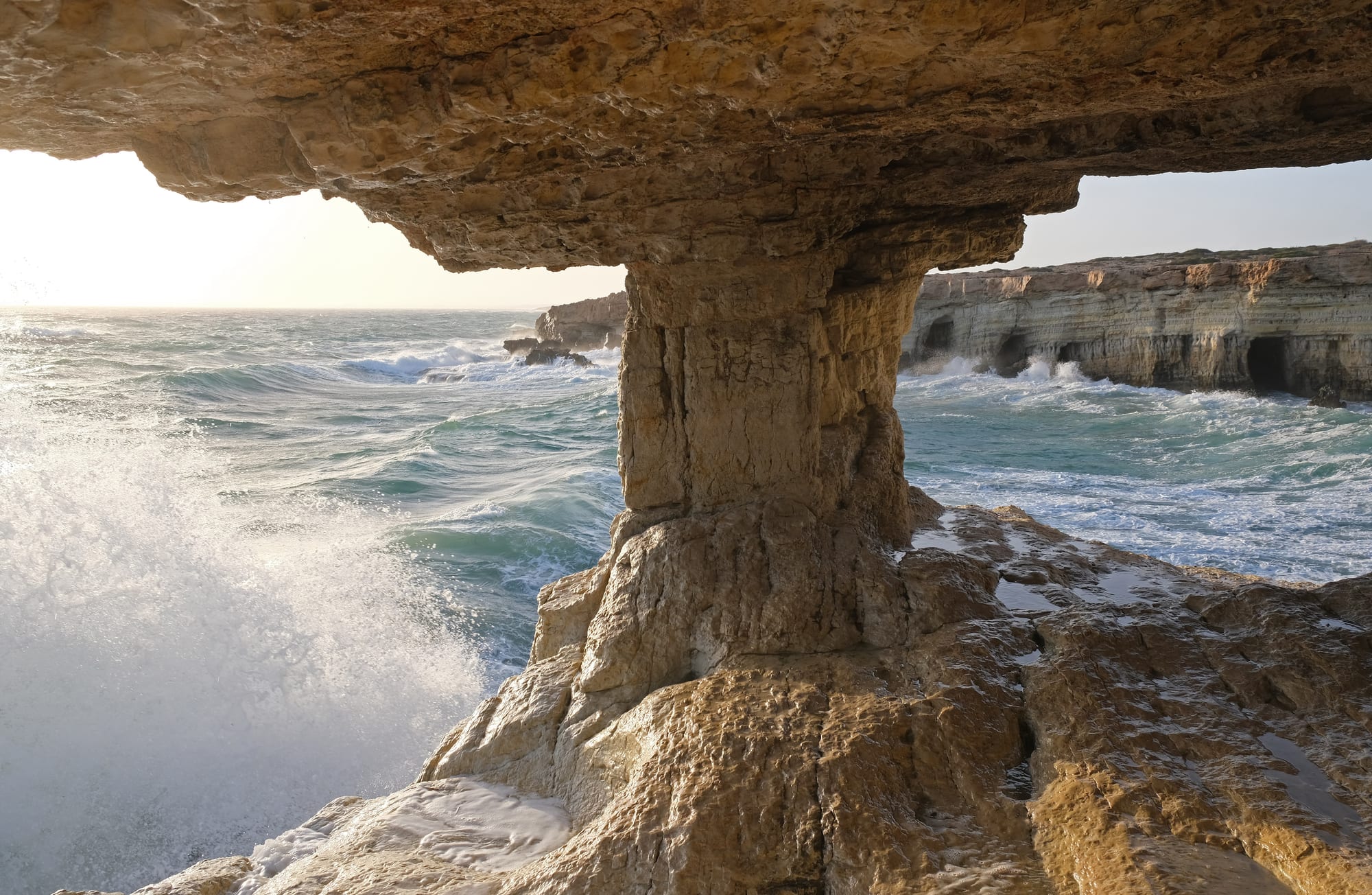
The far southeast of the island has the best beaches in the Republic — the fine white sand of Nissi Beach and Konnos Bay — and, at Cape Greco (Cavo Greko), a headland national forest park of low cliffs eroded into arches, blowholes, and sea caves, with clear water for swimming and cliff-jumping and a coastal path around the point.
The resort towns of Ayia Napa (party) and Protaras (family) bracket it.
8. Nicosia, the divided capital
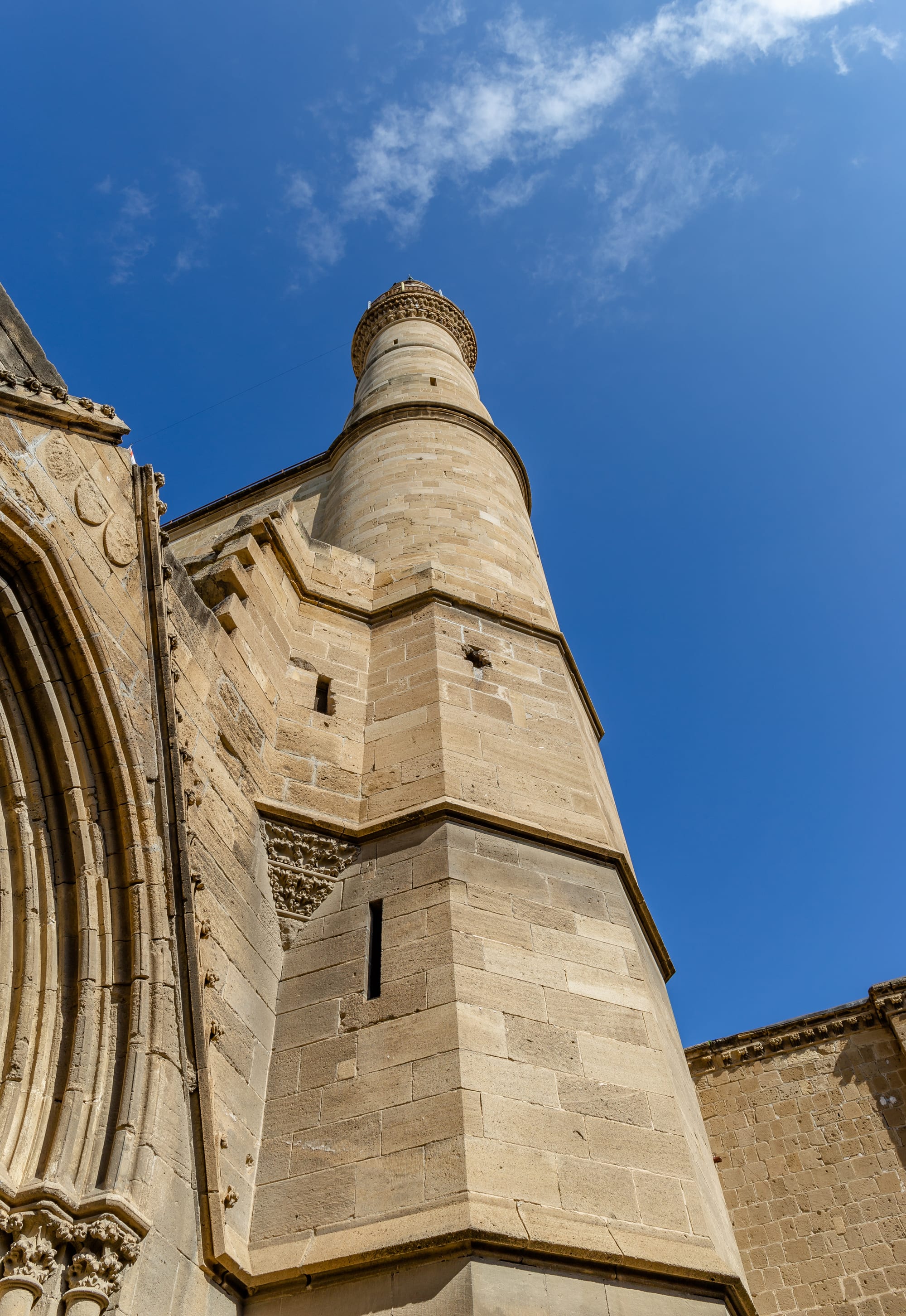
Nicosia (Lefkosia / Lefkoşa) is the world's last divided capital: a walled Venetian star-fort of a city cut in two by the UN buffer zone — the "Green Line" — which you cross on foot at Ledra Street. The south has the Cyprus Museum (outstanding antiquities) and a restored old quarter; the north has the Büyük Han caravanserai and the Selimiye Mosque, a soaring French Gothic cathedral with two minarets grafted onto its towers.
Walking from one side to the other, past sandbagged checkpoints and abandoned buildings, is a strange and instructive experience.
9. Kyrenia and the north coast
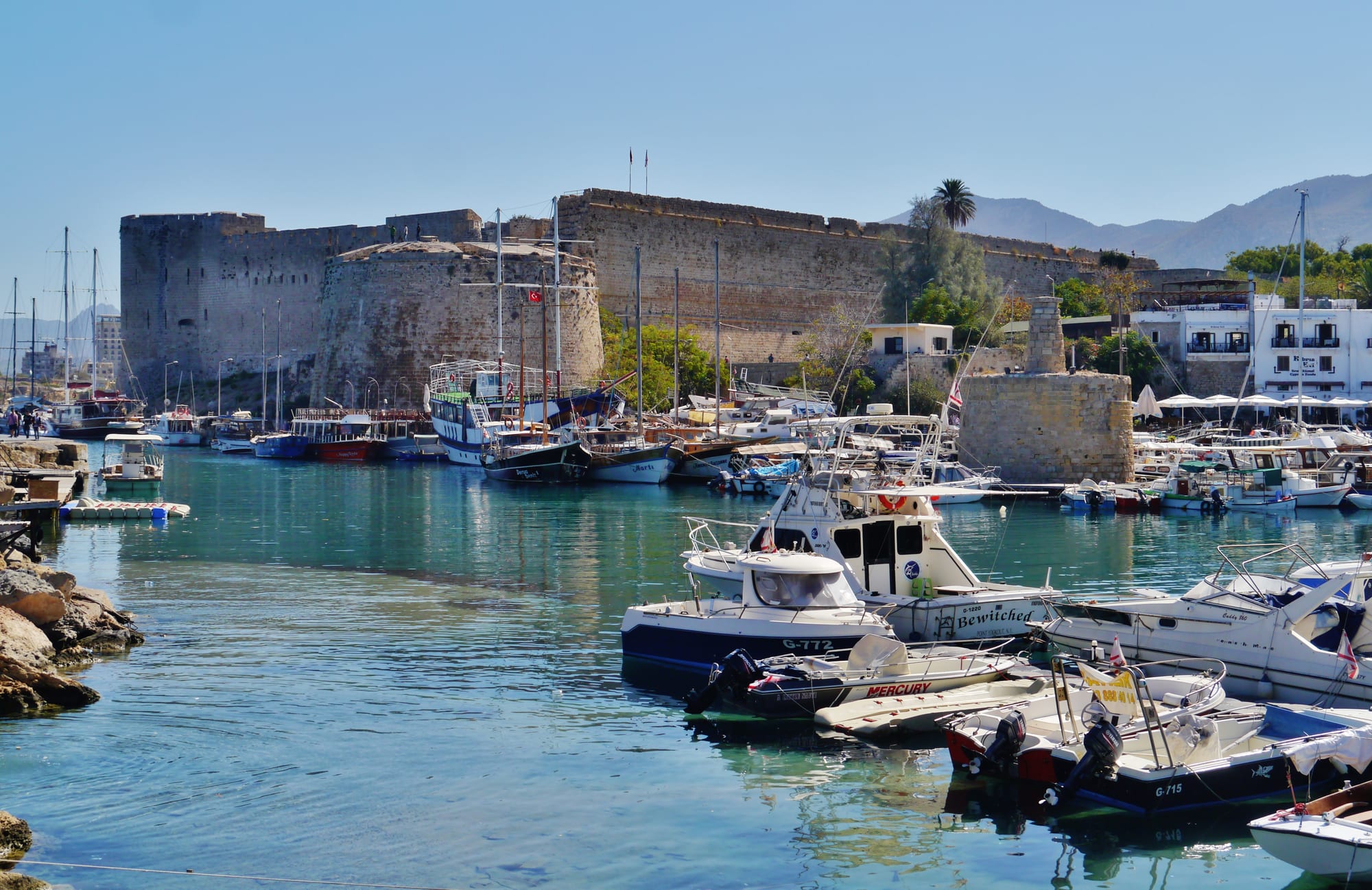
Kyrenia (Girne), in the Turkish-controlled north, has the prettiest harbour on the island — a horseshoe of old warehouses and cafés below a Byzantine-and-Venetian castle that houses the wreck of a 4th-century BC Greek merchant ship. In the mountains behind rise two of the finest Crusader castles anywhere, St Hilarion and Buffavento, and the Gothic ruins of Bellapais Abbey.
Crossing to the north is straightforward for tourists; note that some governments and insurers treat property and legal issues there differently.
10. Petra tou Romiou and the Aphrodite coast
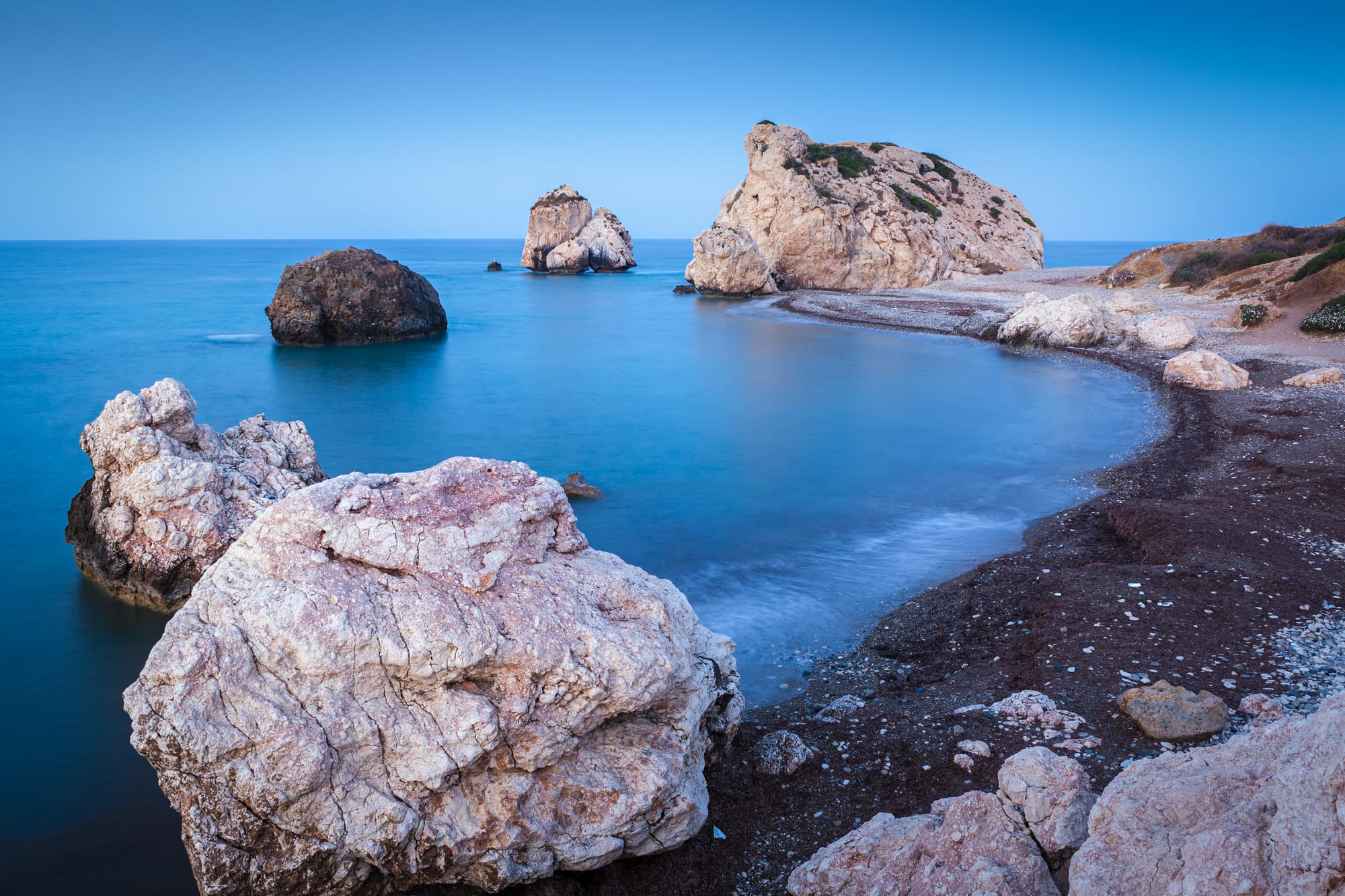
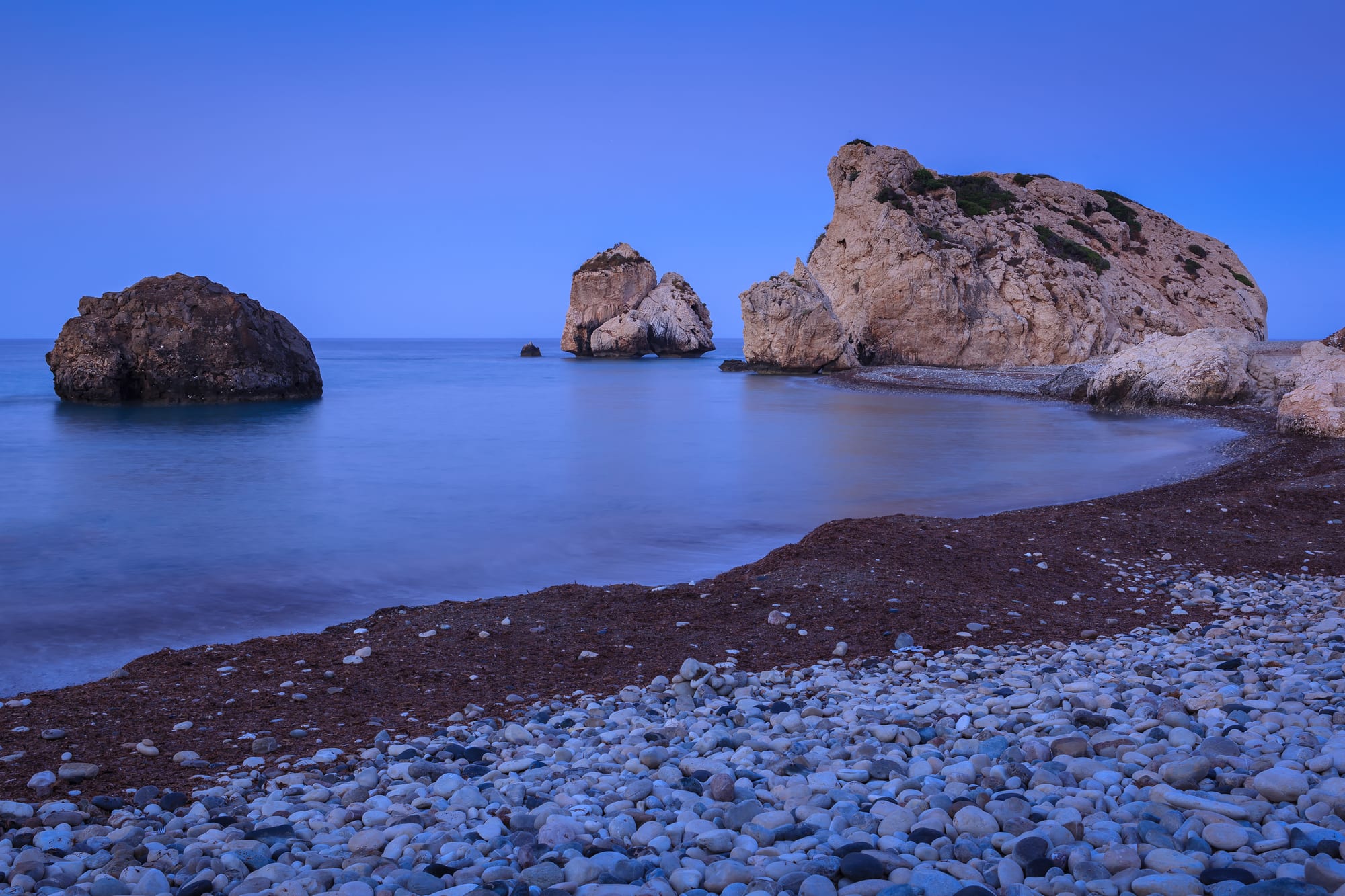
On the coast road between Paphos and Limassol, a cluster of sea stacks rises from a pebble beach — Petra tou Romiou, "the Rock of the Greek", where, in myth, Aphrodite rose from the sea foam. It is a popular photo and sunset stop, with a rough shingle beach and strong currents.
Inland, the "Aphrodite cult route" links her sanctuary at Palaipaphos (Kouklia), the Baths of Aphrodite grotto on the wild Akamas peninsula, and the villages of the Paphos hills.
Cyprus is small and easy to drive. A week based on the southwest coast covers Paphos, Kourion, the Troodos, and the Aphrodite sites; add a couple of days for Nicosia and a crossing to Kyrenia in the north.