Culture & Customs · Croatia
Croatia: Folk and Nation in One Word
Candlelit cemeteries on All Saints' Day, a courteous handshake and a formal title, flowers given in odd numbers, gingerbread hearts, a knights' tournament and close-harmony singing — in a country where the word for folk and for nation is the same
By Worldlore Editorial · 30 September 2026
On the evening of 1 November, the cemeteries of Croatia begin to glow. Shops have closed, offices have fallen silent, and much of the country has travelled home to the town or village where its family is buried. Families arrive carrying chrysanthemums and candles, and set them on the graves of their relatives until each cemetery becomes a field of small flames in the dusk. All Saints' Day is one of the most solemn and unifying days of the Croatian year, and it captures a great deal about the country at once: its Catholic faith, the pull of home and family, and a deep sense of continuity with those who came before.
Faith, identity and values
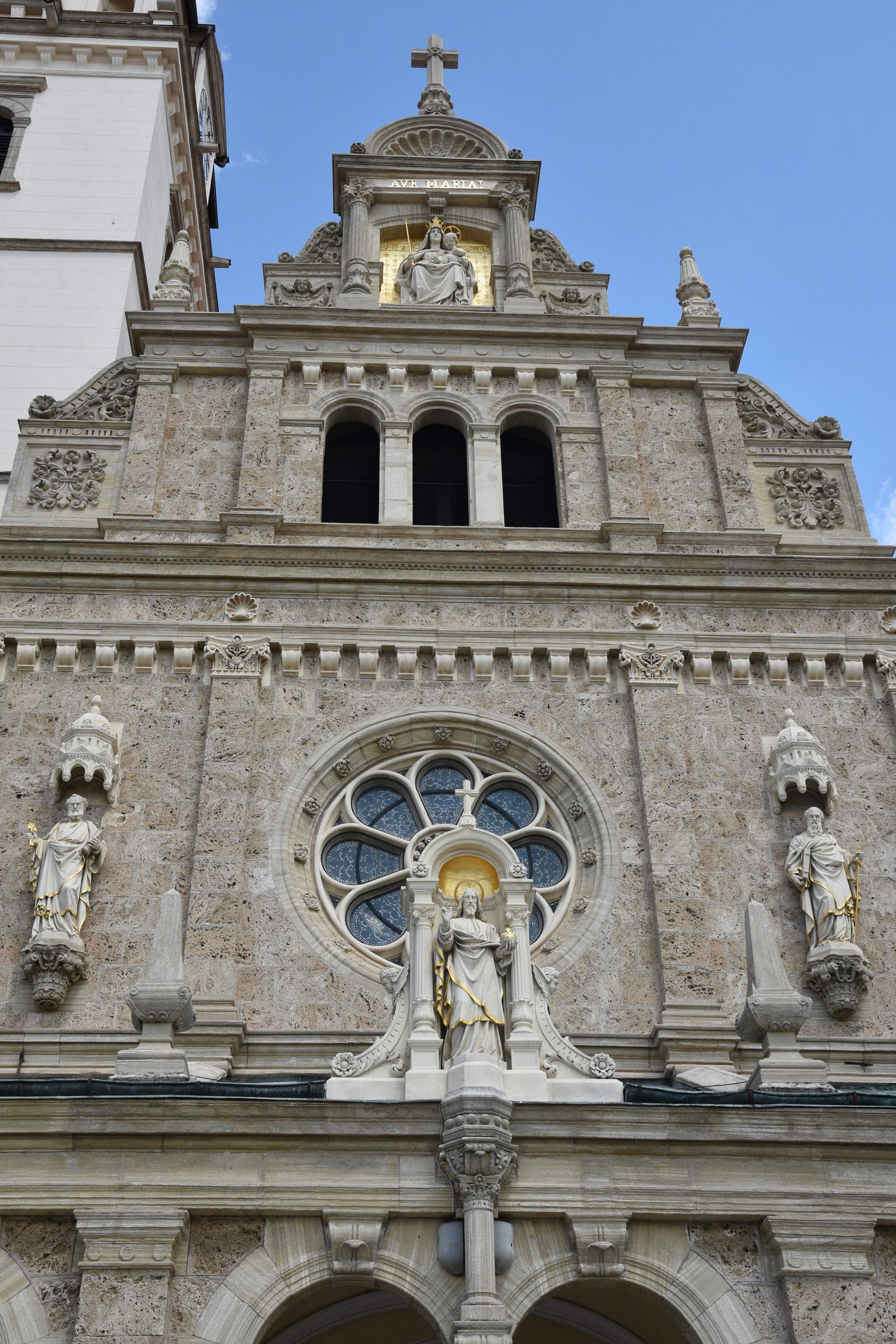
Croatia is overwhelmingly Roman Catholic — at the 2021 census, 79 per cent of the population — with small Orthodox, Muslim and other communities and a small minority of people with no religion. For most Croats, faith and national identity are closely bound together. After the end of communism, the Church regained much of its prominence in public life, and baptism, confirmation and a church wedding remain important milestones. Devotion to the Virgin Mary, known as Gospa, is especially strong, and sanctuaries dedicated to her are found across the country. The most important is the national shrine at Marija Bistrica, whose wooden Black Madonna has drawn pilgrims for centuries.
The Croatian word narod means both "folk" and "nation", and that double sense says much about how Croatians see themselves: poetry, song, dance and folklore are not museum pieces but part of what makes the nation. Pride, loyalty, honour, hard work and hospitality are the values most often named. Family comes first, captured in the saying "who will you help if not your own", and weekends are widely treated as family time. Older people are held in high regard and are generally cared for by their families. Attachment to one's own region — its dialect, its food, its customs — often runs as deep as national feeling. Many Croats identify with Central Europe and the Mediterranean, and prefer not to be described as Yugoslav. The Homeland War of the 1990s left deep marks, and it remains a subject to approach with care. Humour, by contrast, tends to be dry, ironic and dark, delivered with a straight face and often at the speaker's own expense.
Greetings and meeting people
A handshake with direct eye contact is the usual greeting. Friends and relatives often hug, and may kiss on both cheeks, particularly between women. The day's greetings are dobro jutro in the morning, dobar dan during the day and dobra večer in the evening; bok is the informal hello and goodbye among friends. Younger people are expected to greet their elders first.
In formal and professional settings, people are addressed with a title and their surname — gospodin (Mr), gospođa (Mrs), gospođica (Miss), or a professional title such as doktor — and first names are used only among close friends and family, or once someone has invited it. Proper grammar and careful speech are valued, and Croatians tend to say what they mean, choosing their words with some thought; disagreement is expressed openly but diplomatically.
Body language matters too. Direct eye contact is expected in conversation and shows that one is listening, and taking off sunglasses to talk to someone is a small mark of respect. Pointing at people with the index finger is considered rude; a nod or an open hand is preferred. One gesture should be avoided entirely: a raised thumb, index and middle finger is a Serbian nationalist symbol and is deeply offensive to Croatians. Personal space is roughly an arm's length, narrowing as people get to know one another.
Hospitality and being a guest
Croatians are warm hosts, and among friends and family, dropping in unannounced is quite normal. A guest invited to a home usually brings a small gift — wine, sweets, or flowers. Flowers are given in odd numbers, since even numbers are reserved for the dead. Gifts in general are modest and practical rather than lavish — a jar of home-made jam or honey, or a bottle of something good — and are usually opened when received.
Once inside, a guest will almost certainly be offered coffee, a drink or something to eat, and accepting is important; refusing can offend the host. At the table, hands are kept above the table rather than in the lap, since hiding them below it is considered rude. Lunch is traditionally the main meal of the day. Wine commonly accompanies food, and toasts are made with a raised glass and the word živjeli — "to life". Hosts tend to keep offering more, and a polite way to stop is to say hvala, ne mogu više — "thank you, I can't manage any more".
Appearances are taken seriously. Croatians generally dress neatly and modestly in public, and very casual clothes can look out of place in towns, churches and offices. Punctuality is strict in professional settings, but social life allows for the akademska četvrt, the "academic quarter" — a grace period of around fifteen minutes that is generally accepted.
Festivals and life's big moments
The Christmas season begins early. On 13 December, St Lucy's Day, many families sow božićna pšenica, Christmas wheat, in a shallow dish; the shoots grow several centimetres by Christmas, when the wheat, often tied with a ribbon in the red, white and blue of the flag, decorates the Christmas table. On Christmas Eve, Badnjak, the evening meal traditionally centres on fish, often salt cod; many families then go to midnight Mass. Christmas Day brings visits to extended family and long meals, and 26 December, St Stephen's Day, is also a holiday. The greeting is Sretan Božić.
Easter is prepared for with equal care. On Palm Sunday, olive twigs and spring flowers are taken to church to be blessed and kept at home for protection. On Holy Saturday or Easter morning, families bring baskets of food — ham, bread, eggs — to church for a blessing before sharing them at Easter breakfast. Eggs are dyed and decorated as pisanice, once with natural colours from onion skins and beetroot, and exchanged as tokens of friendship or affection; tapping eggs together to see whose cracks first is the most widespread Easter game. The Assumption on 15 August is a major feast and public holiday, and All Saints' Day on 1 November, followed by All Souls' Day on 2 November, is when the country returns to its family graves. National holidays include Statehood Day on 30 May and Victory and Homeland Thanksgiving Day on 5 August.
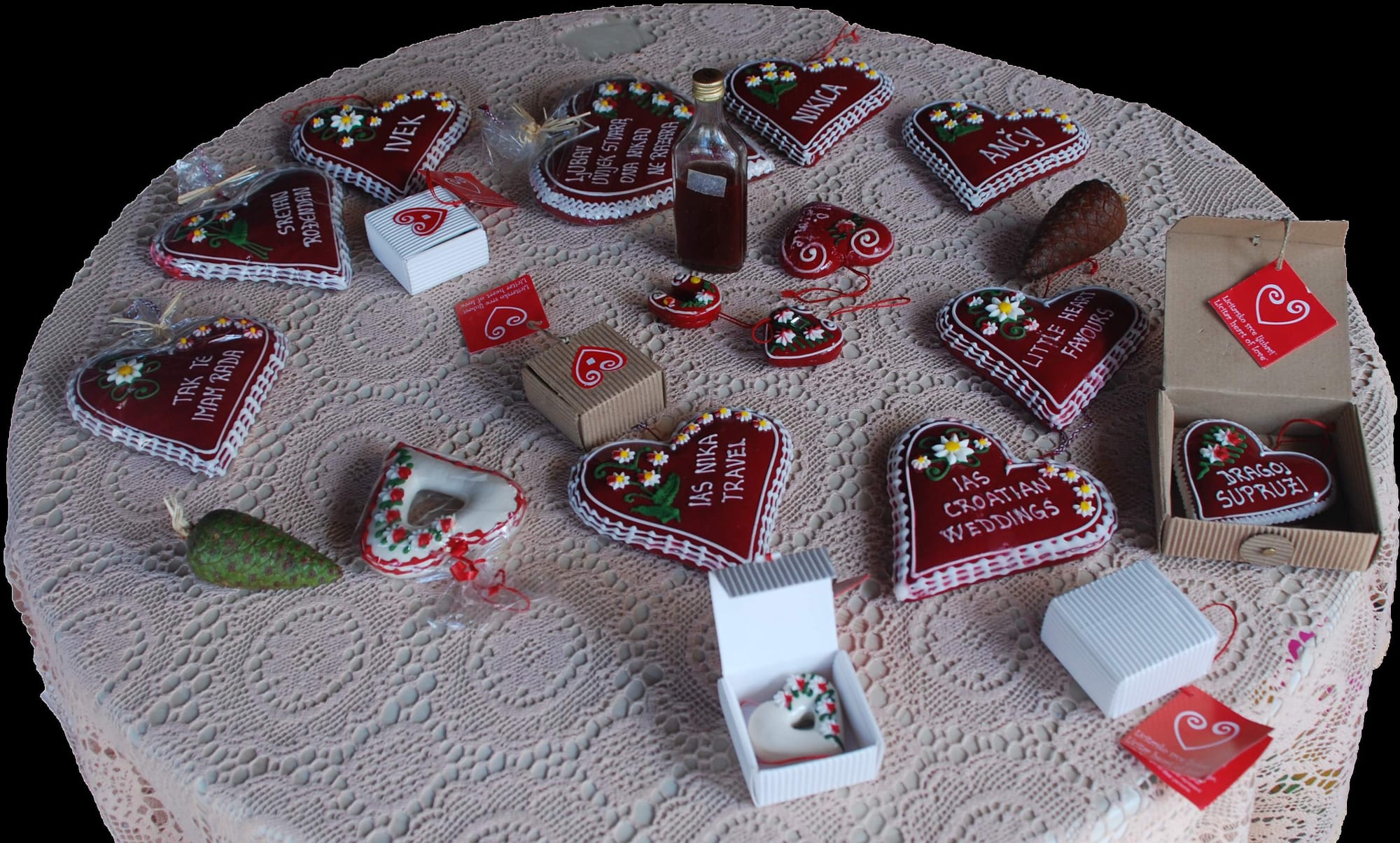
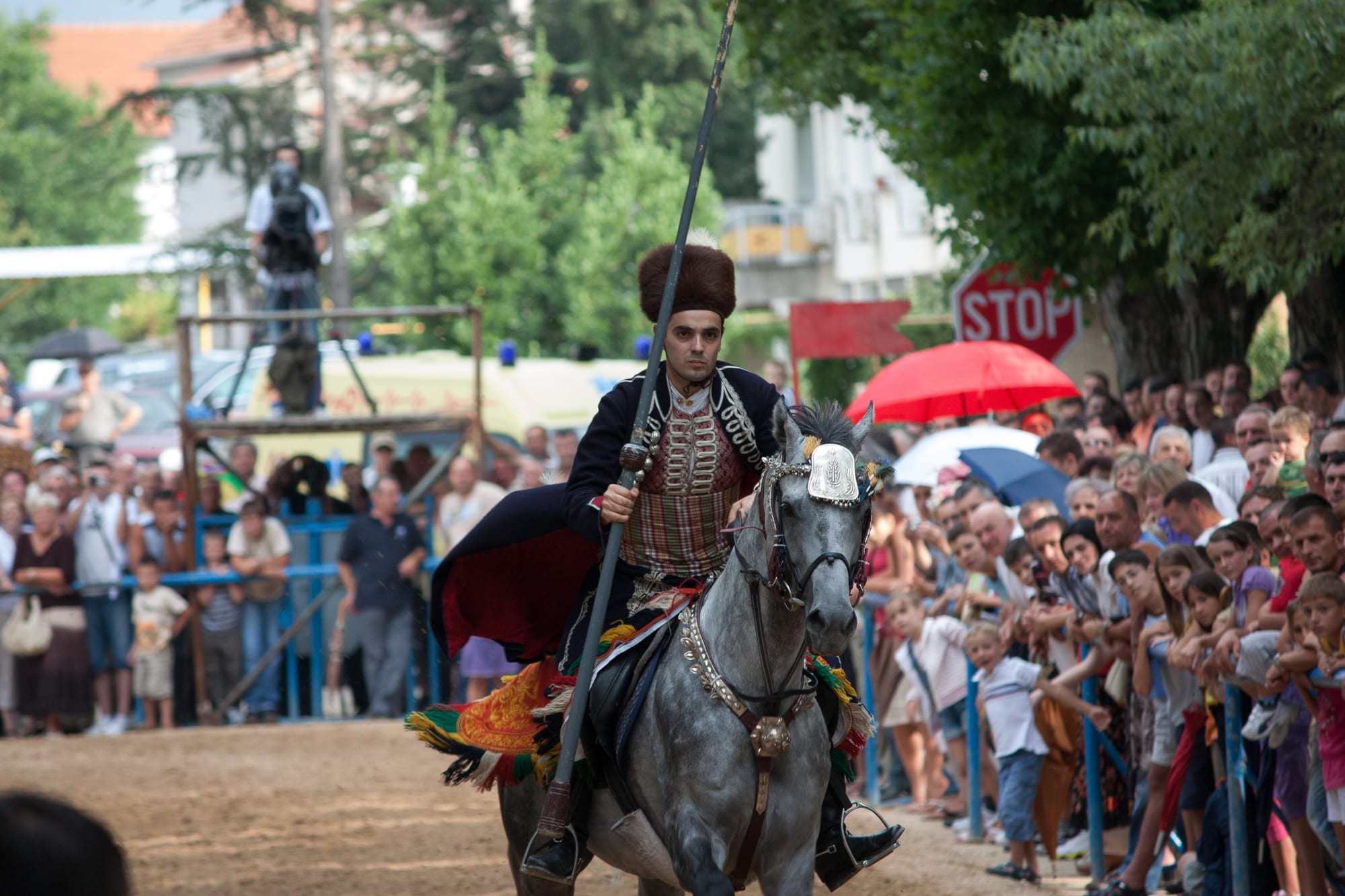
Many older traditions are still very much alive. The Sinjska Alka, held every August, is the last survivor of the knightly tournaments once common in Croatian towns: horsemen in traditional dress gallop along the main street and aim their lances at a small iron ring, the alka, hung on a rope. Fairs and pilgrimages were, for generations, where young people bought licitar hearts — brightly decorated gingerbread, often with a small mirror or a line of verse — as love tokens; today licitars are still made by traditional craftspeople, and hearts bearing a couple's names and wedding date are given at weddings.
Weddings themselves bring together church and folk custom. Traditionally a man asks the bride's father for permission to marry, and church weddings have grown more popular since independence. At many weddings, a barjaktar, a flag bearer chosen from the groom's family or friends, leads the procession with a Croatian flag and keeps the guests supplied with rakija. Funerals are quieter and more formal. Death notices, osmrtnice, are pinned to noticeboards around town and printed in the newspapers; mourners wear black or dark clothing, queue to offer condolences to the family, and attend a funeral Mass, after which close family and friends gather for a meal in memory of the dead.
Arts, crafts and music
Croatia has an unusually long list of traditions on UNESCO's list of intangible cultural heritage — more than twenty in all — ranging from lacemaking and the gingerbread craft of the north to the silent circle dance of the Dalmatian hinterland, bećarac and ojkanje singing, dry-stone walling and the Sinjska Alka itself.
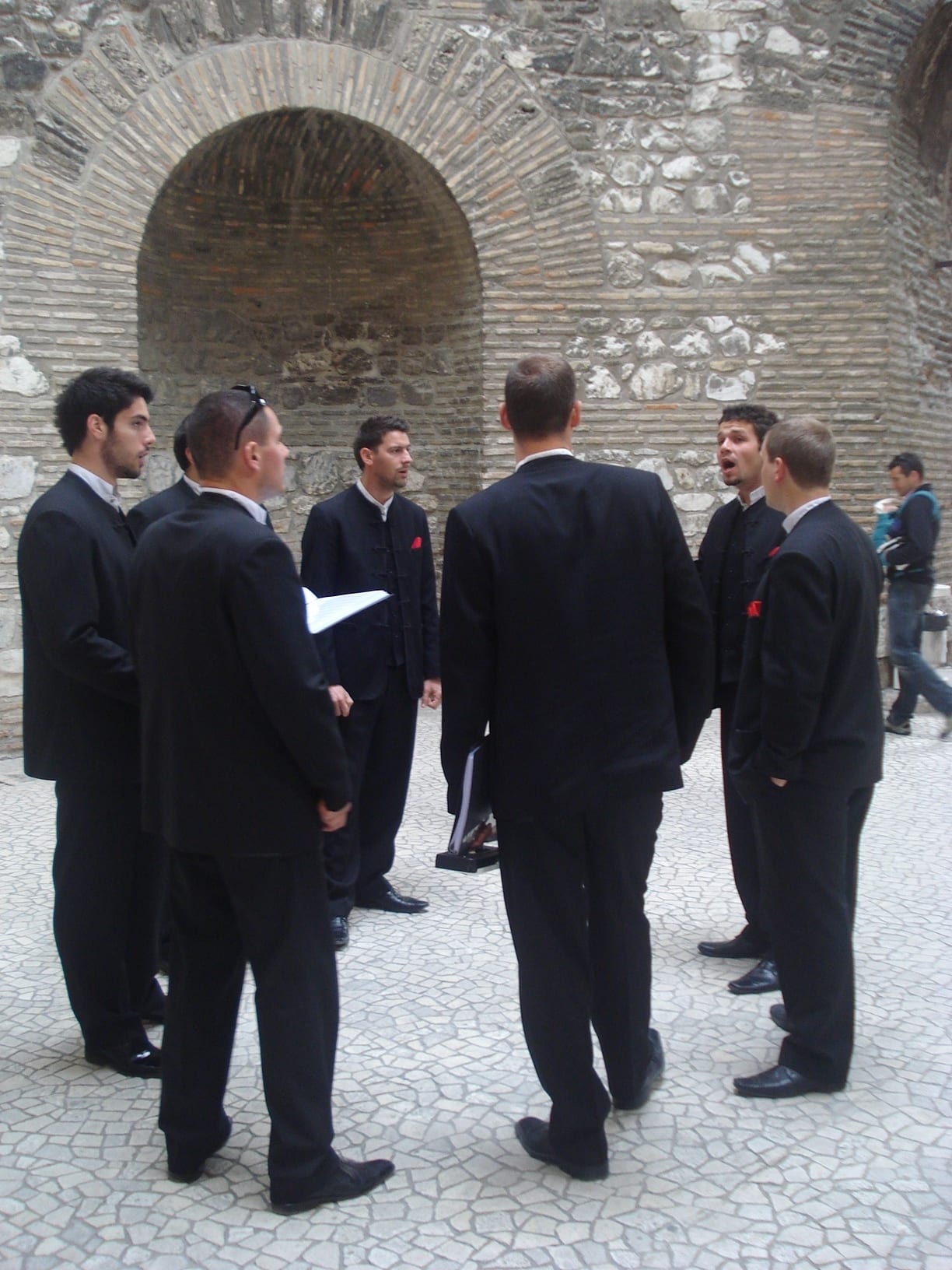
The best known is klapa, the unaccompanied close-harmony singing of Dalmatia. A klapa is a small group of singers — traditionally skilled amateurs, often mixing older and younger voices — who stand in a tight semicircle, led by a first tenor, with further tenors, baritones and basses blending around him. The aim is the most perfect possible blend of voices, sung freely without written music. The songs are about love, everyday life and the places the singers come from, and many communities regard klapa as the clearest marker of their musical identity.
The gingerbread craft shows how folk art stays alive by staying useful. Licitar makers each work in their own style, with edible colours, small pictures, mirrors and written messages, and each traditionally serves a particular area, appearing at its fairs, feasts and gatherings. Once a male trade, it is now practised by both men and women and passed on through families.
Dos and don'ts for visitors
- Do shake hands with eye contact, and use titles and surnames until invited to use first names.
- Do bring wine, sweets or an odd number of flowers when visiting a home; even numbers are for funerals.
- Do accept the coffee or food offered by a host; refusing can cause offence.
- Do keep hands above the table at meals, and raise a glass with živjeli.
- Do dress neatly, especially in churches, and take off sunglasses when talking to someone.
- Don't point at people, and never make the three-finger salute, which is deeply offensive.
- Don't describe Croatia or Croatians as Yugoslav, and approach the 1990s war with tact.
What to take away
Croatian customs combine Central European formality with Mediterranean warmth — a proper handshake, a title, flowers in odd numbers — and visitors who respect the courtesies will find themselves welcomed with coffee, food and more generosity than they can politely manage.