Culture & Customs · Cook Islands
Cook Islands: May You Live Long
A greeting that is also a blessing, white churches full of hymn singing on a Sunday morning, quilts sewn over months to be given away, and a web of family gifts that binds every wedding, haircut and funeral together
By Worldlore Editorial · 30 September 2026
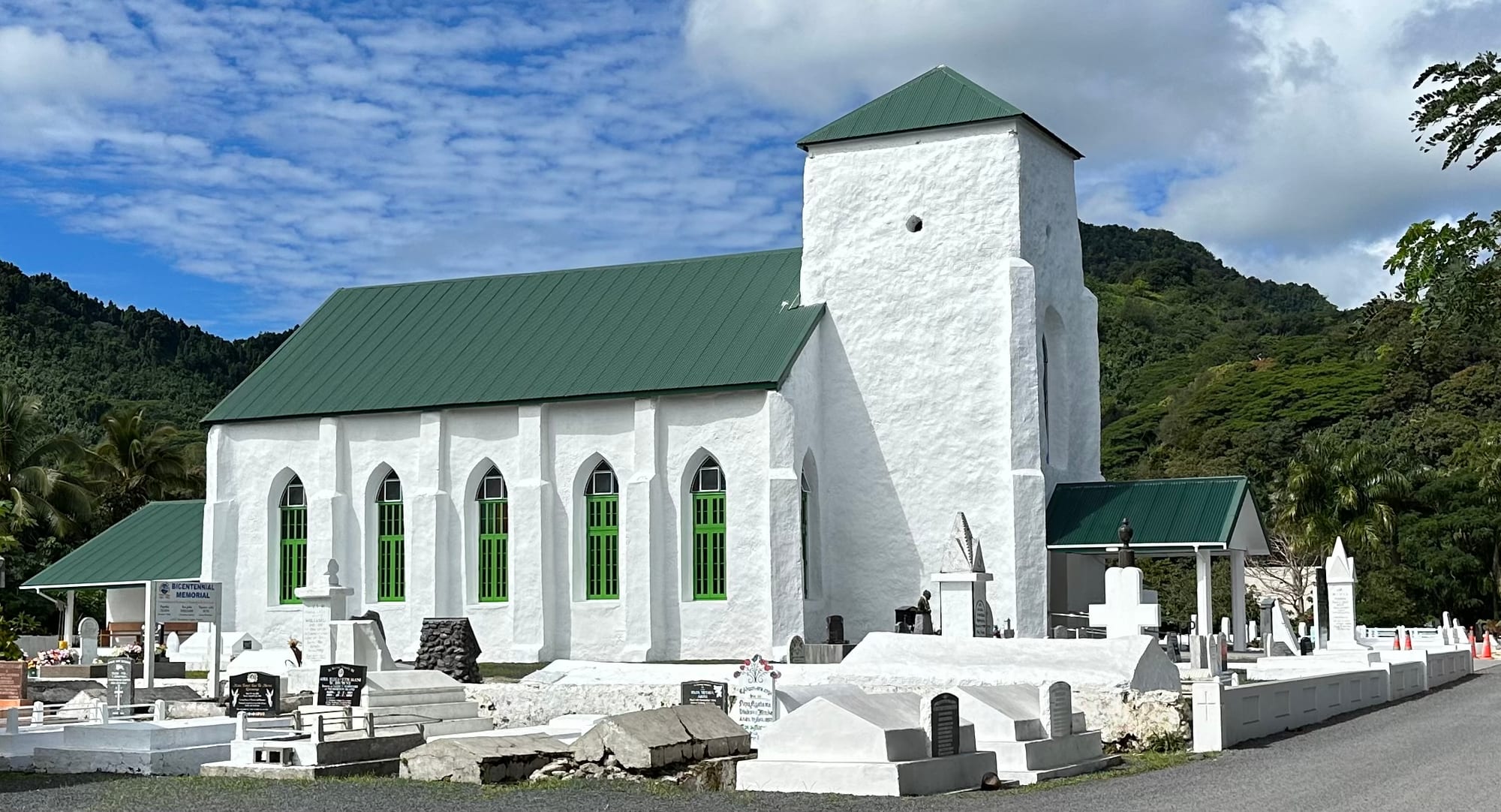
It is ten o'clock on a Sunday morning, and a whitewashed church is filling up. Women arrive in their best dresses and wide, carefully decorated hats; men come in collared shirts and long trousers. A few visitors slip into the back pews, dressed as modestly as they can manage. When the singing starts, the hymns rise in layered harmonies that fill the whole building. Afterwards, the pastor and church elders invite the strangers to join the congregation for fruit and light refreshments in the hall next door. It is a small scene, but it holds much of what matters in the Cook Islands: faith, family, song, and a warm, slightly formal welcome for anyone who turns up.
Faith, identity and values
Christianity arrived with the London Missionary Society in the early nineteenth century and was taken up so thoroughly that it is now inseparable from Cook Islands identity. The Cook Islands Christian Church, which grew out of that mission, remains by far the largest denomination, and Roman Catholics, Seventh-day Adventists and Latter-day Saints also have congregations. Churches sit at the heart of village life, and Sunday is kept as a day of worship, family and rest. As across much of the Pacific, gatherings commonly open and close with prayer, and food is blessed before it is eaten.
Beneath the church sits an older structure of family and chiefly authority. The central unit is the kōpū tangata, the extended family — the phrase joins kōpū, "stomach", with tangata, "people", so that relatives are, in effect, the people of one womb and one blood. Weddings, funerals, birthdays and haircutting ceremonies are the occasions when this wider family gathers, contributes and renews its ties. Traditional leadership runs through hereditary titles: ariki, the paramount chiefs, above mataiapo and rangatira. The House of Ariki, a council of high chiefs established in 1967, considers matters referred to it by Parliament and makes recommendations on them.
Land is the other anchor. It is held by families rather than individuals and passed down by inheritance; it may be leased but not sold to outsiders, which keeps the islands' ground in Cook Islands hands and ties people, wherever they live, to a particular piece of home. Language carries the same weight. Cook Islands Māori is described by Cook Islanders themselves as the thread that connects them to their peu Māori — their customs — through song, dance, chant and family gatherings.
Greetings and meeting people
The everyday greeting is kia orana, said to one person, a couple or a crowd alike, and returned in kind. It is usually translated simply as "hello", but its literal sense is a blessing: "may you live long", or "may you live well". It is used freely with strangers as well as friends. Meitaki, "thank you", and meitaki ma'ata, "thank you very much", are the next words worth learning.
Flowers are part of the welcome. Arriving guests, departing friends, honoured visitors and performers are presented with an 'ei — an 'ei kaki worn around the neck, made from fresh flowers or leaves, or an 'ei katu, a crown of flowers for the head. A more significant head piece woven from cordyline leaves, the rauti, is usually reserved for chiefs and very special guests. The giving of an 'ei is followed by a kia orana and a kiss on the cheek, and Cook Islands women may also ongi — lean in and gently smell the person they are greeting — which is a traditional gesture of connection rather than anything to be startled by.
For formal occasions, such as the arrival of chiefs or dignitaries, there is the turou, a loud but respectful welcome performed with dance, colourful costume, flowers and song. Respect for elders runs through ordinary encounters too: older people are addressed and listened to with deference, and kinship terms mark the difference between generations.
Hospitality and being a guest
Cook Islanders are generally described as generous and hospitable, if a little reserved at first. A guest invited to a home customarily brings a small gift for the host, and it is worth waiting before starting to eat, since a prayer of thanks is often said before the meal.
Large celebrations centre on the umukai, literally "food from the oven" — a feast that marks weddings, birthdays and other special occasions. Gift-giving at a feast follows the logic that runs through all Pacific gifting: an offering, whether money or goods, is given freely, without being asked for, but it is part of a web of reciprocity in which what goes around comes around.
Dress is the other point of courtesy. Everyday clothing is relaxed and practical, but modesty matters. Swimwear belongs on the beach or by the pool, and a cover-up is expected in town, in shops, in villages and on the bus; nude or topless sunbathing causes offence. For church, visitors are welcome at Sunday services, provided men wear a shirt and long trousers and women a longer skirt or dress, ideally with the shoulders covered. On a Sunday many Cook Islanders wear their finest — women often in white, men in shirts and ties — and women's hats are often exquisitely decorated.
Festivals and life's big moments
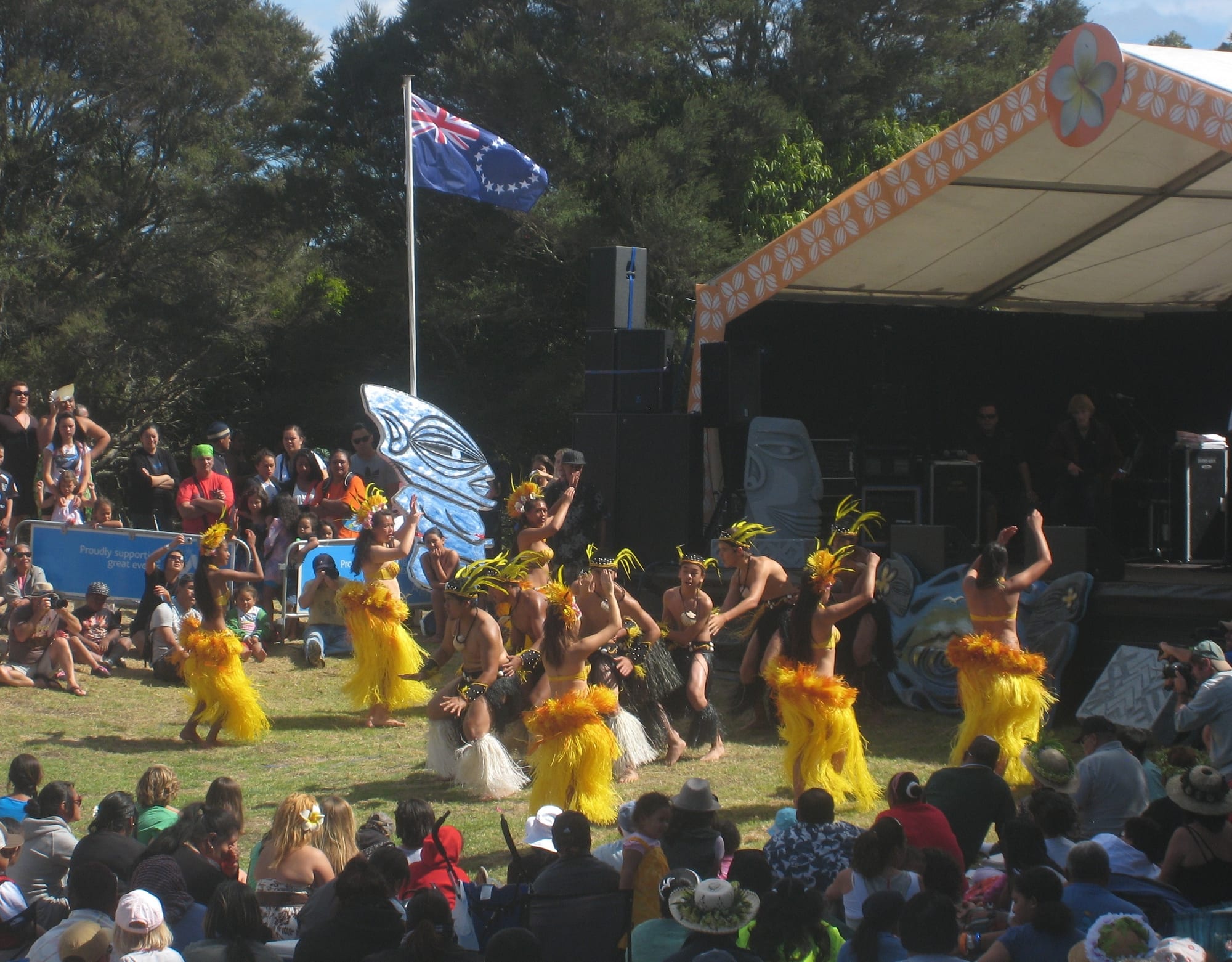
The biggest secular celebration is Te Maeva Nui, held each year in the days leading up to Constitution Day, around 4 August, to mark the anniversary of self-government in 1965. It is a festival of national pride on a large scale: a float parade, cultural teams from the outer islands, known as the pa enua, performing song and dance, and keenly fought competitions in drumming, in kapa rima and in the ura pa'u, the drum dance. Cook Islanders living in New Zealand hold their own Te Maeva Nui celebrations as well. Christmas, Easter and Gospel Day complete a calendar in which church and nation are hard to separate.
Family milestones are marked with just as much energy. The best known is the pakoti rouru, or haircutting ceremony, a rite of passage for boys. A boy's hair is left to grow from birth, often for many years, and is then cut at a large family gathering. He sits at the front with his hair divided into small plaits or ponytails, and relatives are invited up one by one to cut a lock. Each gives something in return — an envelope of money or a gift towards the boy's future — so that the ceremony both celebrates him and renews the reciprocal ties of the extended family. Among Cook Islanders in New Zealand, 21st birthdays have become occasions of a similar scale.
Weddings bring the families of bride and groom together through gifts as much as vows. In the o'ora, often held during the reception speeches, the bride's family presents the couple with bedding for their new home — sheets, blankets, pāreu and bedspreads — placing it around the newlyweds as they sit before the guests. The most precious gift is a tīvaevae, a handmade quilt.
Funerals, too, bring the whole kōpū tangata together. Tīvaevae may be used to cover the body of someone who has died, and feasts are held in their honour. Graves are frequently built close to the family home or around the church rather than in distant cemeteries, often as whitewashed concrete tombs, and families continue to clean and decorate them long after the burial, keeping the dead within sight of the living.
Arts, crafts and music
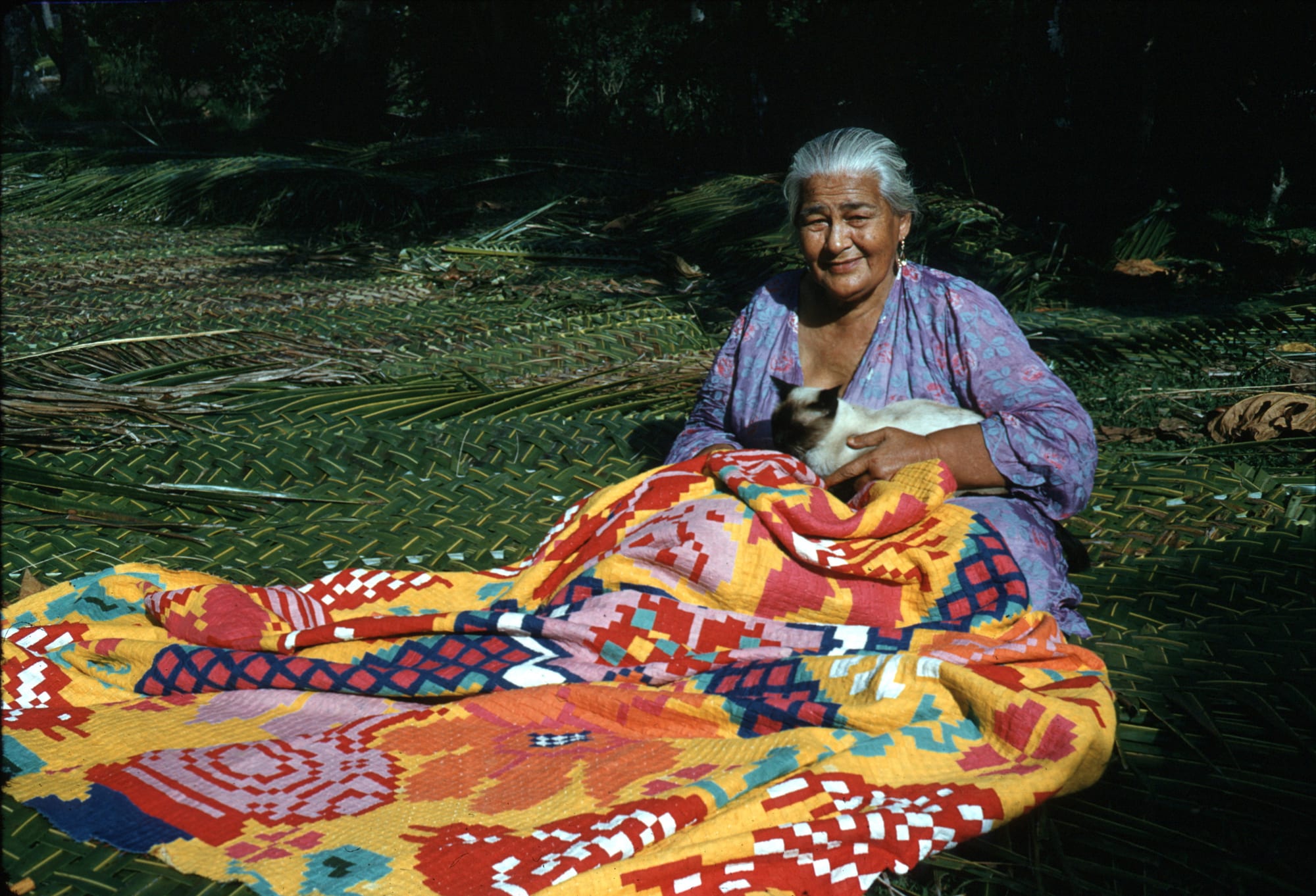
Few things say "Cook Islands" more clearly than the tīvaevae. Their origins are uncertain, and they may have been introduced by missionary women in the nineteenth century, but Cook Islands women made the craft entirely their own, and by the late 1800s it had taken over the role once played by barkcloth. There are several kinds: tīvaevae ta'orei, patchwork built from many small squares; tīvaevae manu, with bold cut-out designs, usually flowers, sewn onto a single-coloured backing; and tīvaevae tataura, which combine appliqué with embroidery. Some are made by one woman, others collectively by groups of women called vainetini, and a single quilt can take weeks or months. They are given above all as gifts — to important visitors and at birthdays and weddings — displayed at haircutting ceremonies, and rarely sold.
Music is inseparable from worship. Cook Islands singing has its own distinct forms, each with a different sound: pe'e, or chants, and several kinds of imene, or hymn — among them the imene tuki, unaccompanied many-voiced singing punctuated by rhythmic bursts of syllables, and the imene metua, the hymn "of the parents", handed down from earlier generations. Sunday services are where most visitors hear them, and the harmonies are often the thing they remember longest.
Dance is the other great point of pride. The islands are known for a fast, hip-swinging style of dance, performed in grass skirts and feathered or flowered headdresses and driven by drumming on the pate, the wooden slit drum, which underpins Cook Islands music and dance. In the ura pa'u, the drum dance, the performers' hands and hips tell a story. Visitors invited to join the dancing at a show or celebration are usually expected to take it in good humour and have a go.
Dos and don'ts for visitors
- Do greet people with kia orana, and say meitaki for thank you.
- Do accept an 'ei graciously; a kiss on the cheek, or even a gentle sniff, may come with it.
- Do attend a Sunday service if curious, dressed modestly: shirt and long trousers for men, a longer dress or skirt for women.
- Do cover up swimwear away from the beach or pool, including in shops, villages and on the bus.
- Do bring a small gift if invited to a home, and wait for grace before eating.
- Do join in with good humour if invited to dance at a show or celebration.
- Don't sunbathe nude or topless anywhere; it causes real offence.
- Don't treat graves near homes and churches as curiosities; they belong to families who still tend them.
What to take away
Kia orana is more than a hello — it is a wish that the person being greeted should live long and live well — and visitors who return that spirit of warmth, modesty and generosity will find the Cook Islands quick to welcome them in.