History · Comoros
Comoros: The Islands of the Moon
Swahili sultanates at a crossroads of the Indian Ocean, a neglected French colony, a contested fourth island, and one of the most coup-prone nations on earth
By Worldlore Editorial · 19 September 2026
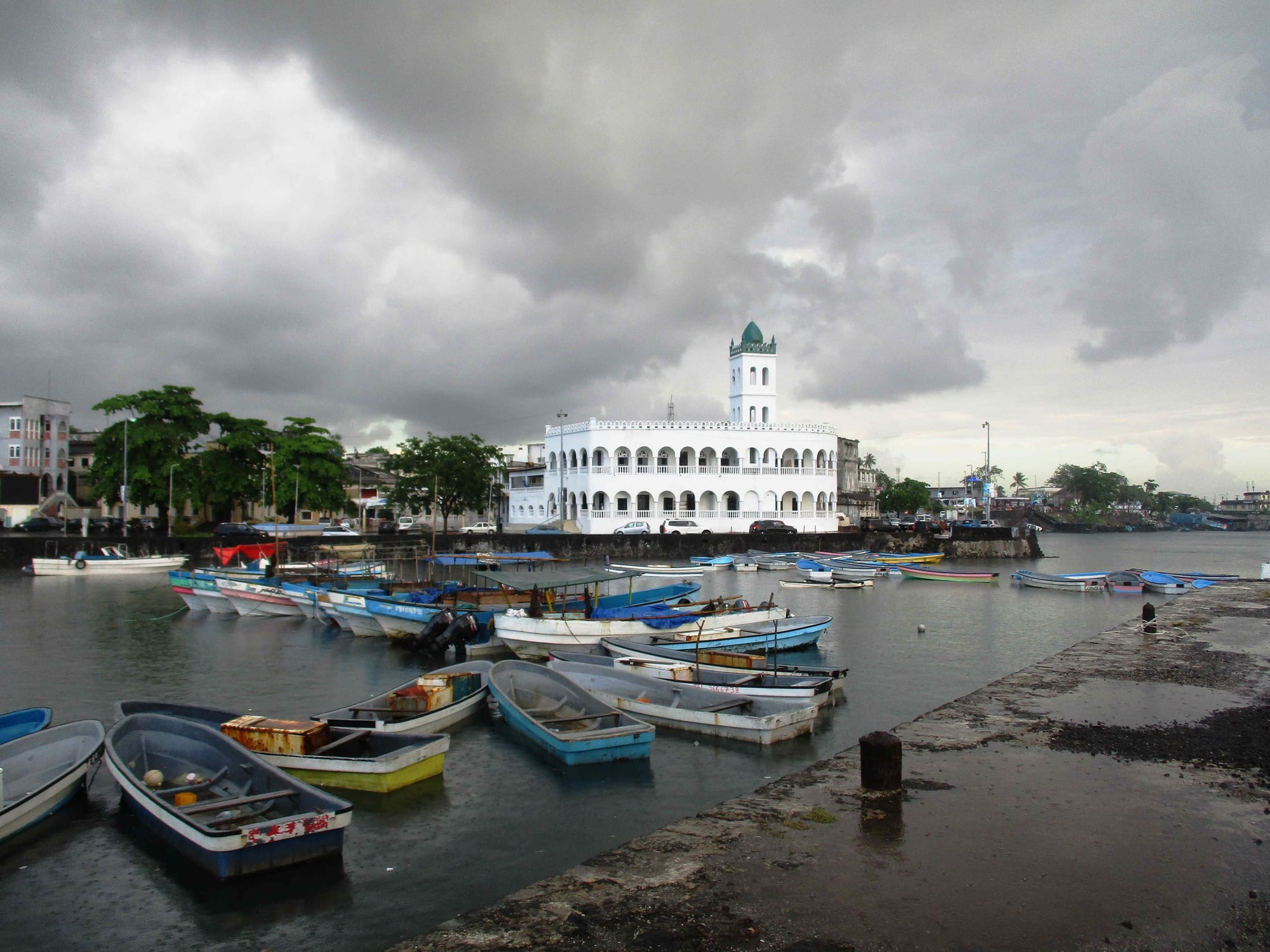
Four islands between two coasts
The Comoros are four small volcanic islands at the northern mouth of the Mozambique Channel, halfway between the African mainland and Madagascar. Three of them make up the Union of the Comoros; the fourth, Mayotte, chose in the 1970s to stay with France and is now a French department — claimed by the Comoros and by the United Nations, and never conceded by Paris. The Union's roughly 850,000 people are almost entirely Muslim, speak a Swahili-related language alongside Arabic and French, and live in one of the poorest countries in the world, on remittances from a large diaspora in France and on vanilla, cloves and the ylang-ylang the islands supply to the world's perfume industry.
A short history
- 6th–10th c.
Settlement
Bantu and Austronesian settlers reach the islands.
- 10th–15th c.
The Swahili world
The Comoros join the Indian Ocean trade; Islam takes root; sultanates form.
- 1790s–1820s
Malagasy raids
Sakalava and Betsimisaraka fleets carry off much of the population.
- 1841
Mayotte to France
A sultan cedes Mayotte; France takes the other islands by 1912.
- 6 July 1975
Independence
The Comoros declare independence for all four islands; France keeps Mayotte.
- 1975–1995
The mercenary years
The soldier of fortune Bob Denard stages or reverses several coups.
- 1997–2008
Secession crises
Anjouan and Mohéli break away, then are brought back.
- 2018 onward
Azali Assoumani
A former coup leader consolidates power by referendum.
Sultanates and the trading sea
The islands were settled in the early Middle Ages by Bantu- and Austronesian- speaking peoples, part of the same movement that populated Madagascar and the East African coast. From around the 10th century the Comoros were drawn into the Swahili trading world — Muslim merchants moving gold, ivory, enslaved people, spices and timber by dhow between the African interior, the coastal city-states, Arabia, Persia and India. Islam arrived with the trade, and by the 15th and 16th centuries the islands were divided among competing sultanates ruling from fortified coral- stone towns, under an aristocracy that claimed Arab and Persian descent.
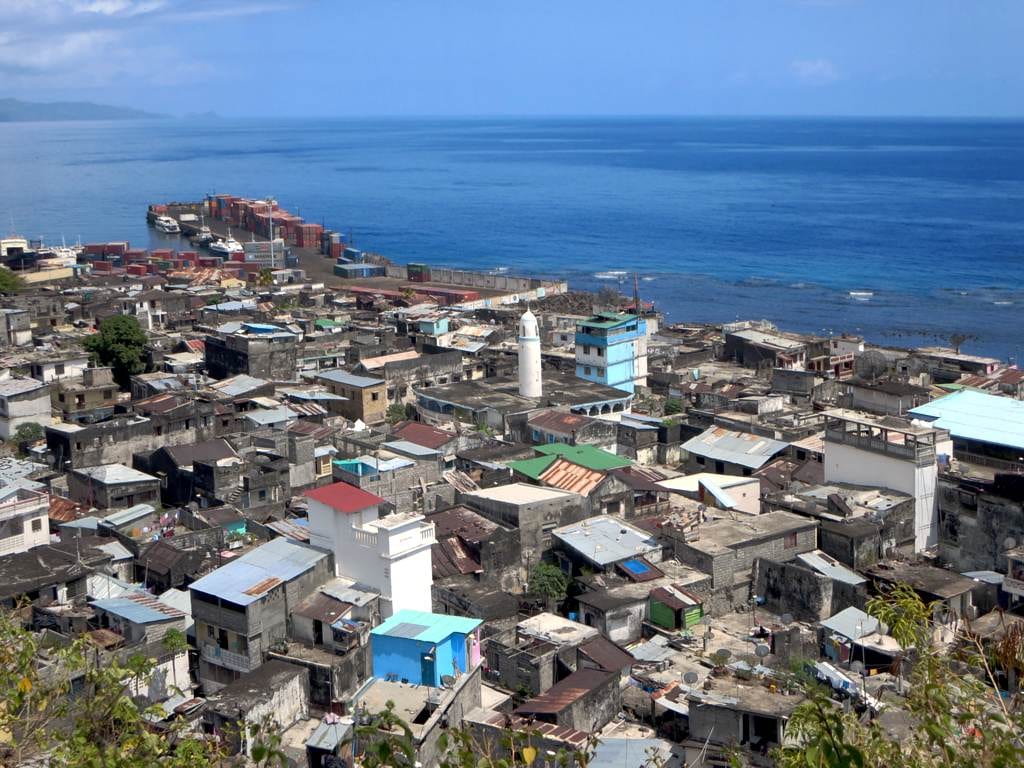
The Comoros both fed the Indian Ocean slave trade and were ravaged by it. Between the 1790s and the 1820s, huge war-canoe fleets from Madagascar raided the islands again and again, carrying off a large part of the population and driving the rest into fortified refuges — a catastrophe the islands never fully recovered from.
The French colony
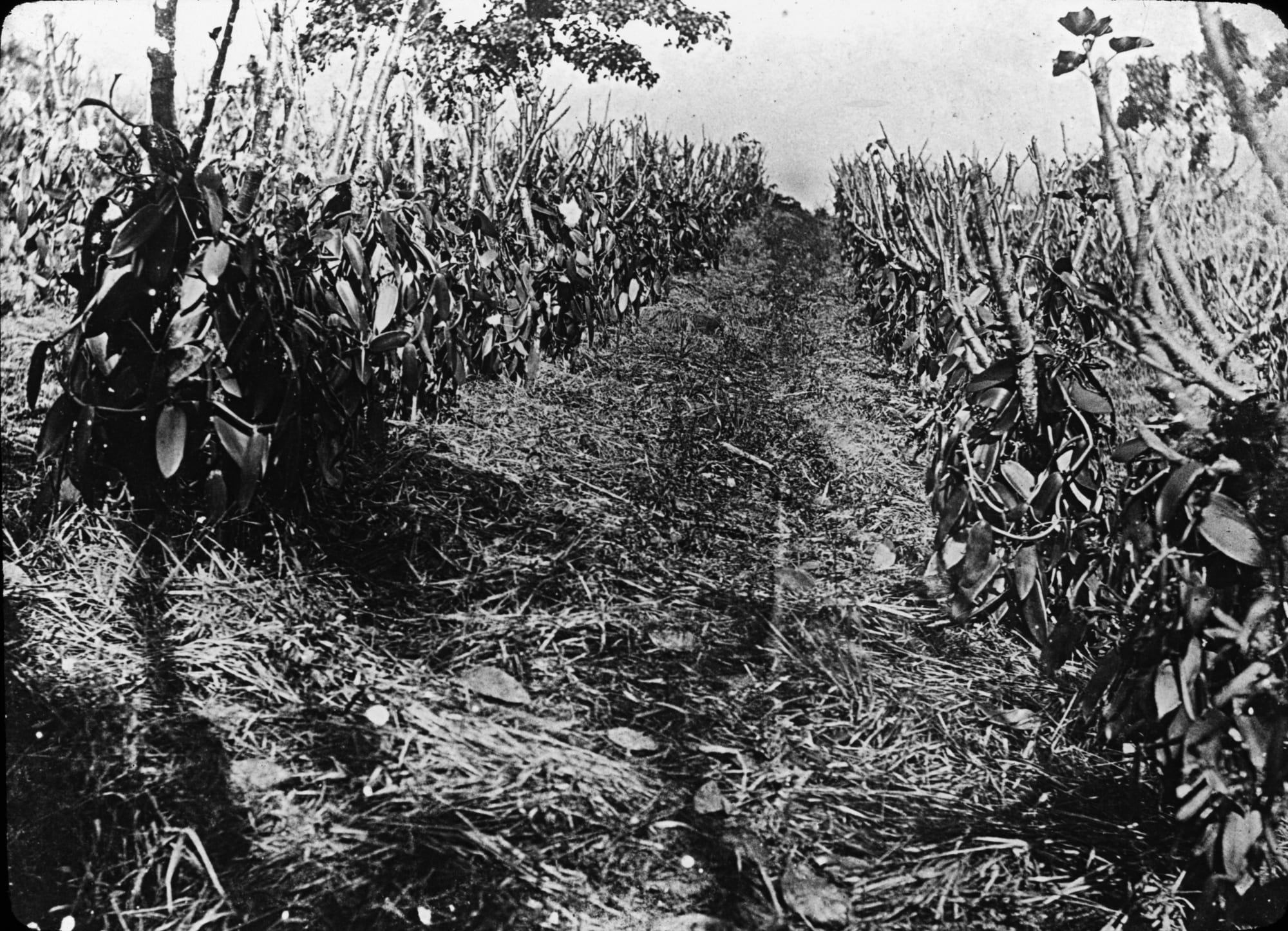
France took Mayotte in 1841, when a sultan ceded it in exchange for a pension and protection against his rivals. Over the following 70 years France established protectorates over the other three islands and then annexed them, attaching the whole group to its colony of Madagascar. Much of the land on Grande Comore and Mohéli was handed to a single French company that ran vast plantations of the perfume and spice crops, while the islands themselves stayed poor and barely governed. Labour migration — to Madagascar, and later to mainland France — became the way many Comorians survived.
Independence, and the missing island
A 1974 referendum across all four islands produced a large overall "yes" for independence — but Mayotte voted "no". France insisted on tallying the results island by island; the Comorian leadership, unwilling to lose Mayotte, unilaterally declared independence for all four islands on 6 July 1975. France kept Mayotte, held its own further votes there, and eventually made it a full French department in 2011, ignoring repeated UN resolutions affirming Comorian sovereignty over it.
The coup capital
Independent Comoros became almost a synonym for instability, with around 20 coups or attempts since 1975. The first president was overthrown within weeks; his radical young successor, Ali Soilih, was toppled and killed in 1978. Both of those coups — and several more — were the work of a French mercenary, Bob Denard, and a few dozen hired soldiers. Denard commanded the presidential guard for over a decade, effectively running the islands' security and rackets with tacit French and South African backing, and was implicated in the assassination of President Ahmed Abdallah in 1989. France forced him out that year; when he came back for one last coup in 1995, French troops reversed it within days.
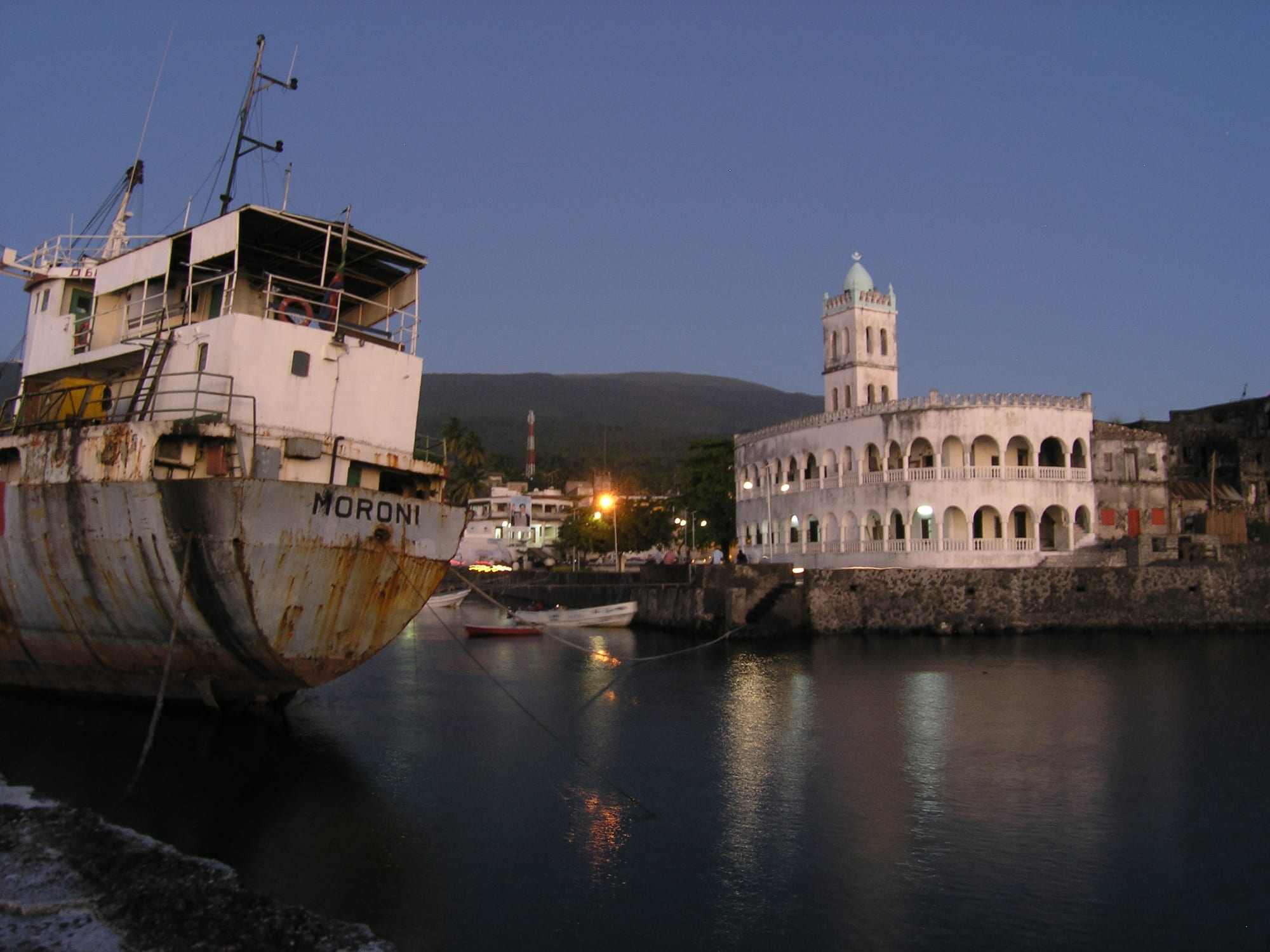
Anjouan and Mohéli declared secession in 1997, hoping to rejoin France, which refused them. A 2001 settlement created a loose federal union with a presidency rotating among the three islands — but when Anjouan's leader refused to give up power, an African Union force invaded the island in 2008 to remove him. Since 2016, Azali Assoumani, who first seized power in a 1999 coup, has dominated politics, scrapping the island rotation and term limits by referendum in 2018 to keep running.
What the Comoros carry
The Comoros' history is one of smallness and exposure: too poor and too divided to resist Malagasy raiders, French planters, or foreign mercenaries, and unable, at independence, to hold on to a quarter of its own territory. The islands' identity — Swahili, Muslim, tied by language and family to the East African coast and by migration to France — is strong; the state built on top of it has never been. The unfinished business with Mayotte, richer and French, sits at the centre of Comoran politics still.