Culture & Customs · Comoros
Comoros: Everyone Can Be a Sultan
A devoutly Sunni nation where elders are greeted first and dress is modest, and where the once-in-a-lifetime grand mariage turns an ordinary couple into dignitaries
By Worldlore Editorial · 30 September 2026
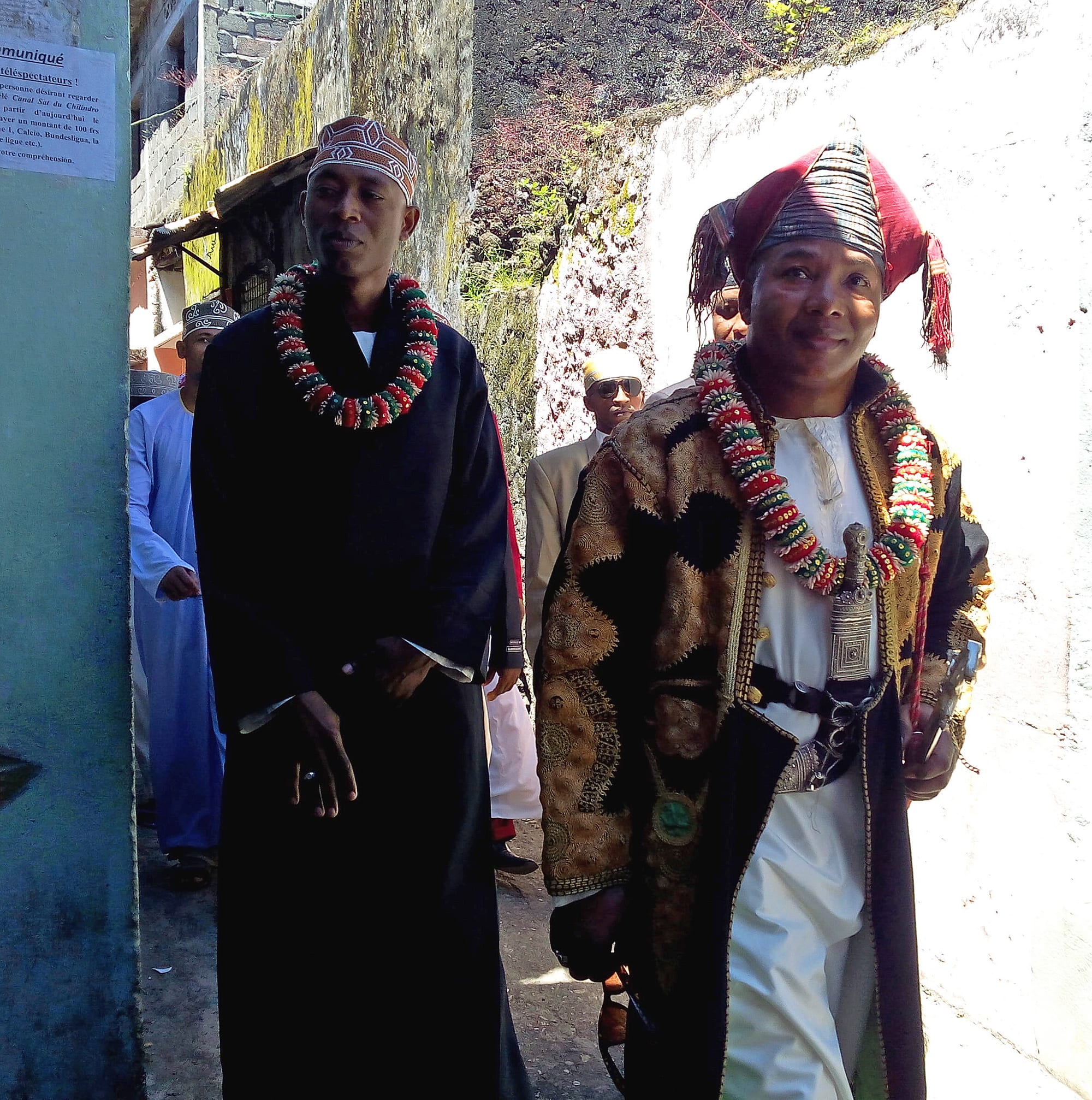
Drums sound in a narrow lane, and a procession comes into view. At its centre walks a man in a long robe and a coat heavy with gold thread, a turban on his head and an ornamental dagger at his belt, surrounded by relatives, friends and neighbours. Gold jewellery for the bride is carried before him and announced to the crowd, and the procession makes its way not to his family's house but to hers. The man may have been married for years already; this is his grand mariage, the great wedding that many Comorians spend a lifetime saving for, and after it he and his wife will be treated as dignitaries in their community. So great is the change in standing that the ceremony is often likened to a coronation: here, everyone can be a sultan.
Faith, identity and values
Islam is the foundation of Comorian life. Around 98 per cent of the population is Muslim, almost all of them Sunnis of the Shafi'i school, and the constitution, as revised in 2018, makes Sunni Islam the religion of the state, with a Grand Mufti as the country's highest religious authority. Quranic schooling is near-universal from the earliest years. The practice of other faiths is tightly restricted: proselytising for any religion other than Sunni Islam is illegal, and the country's three churches are open only to non-citizens.
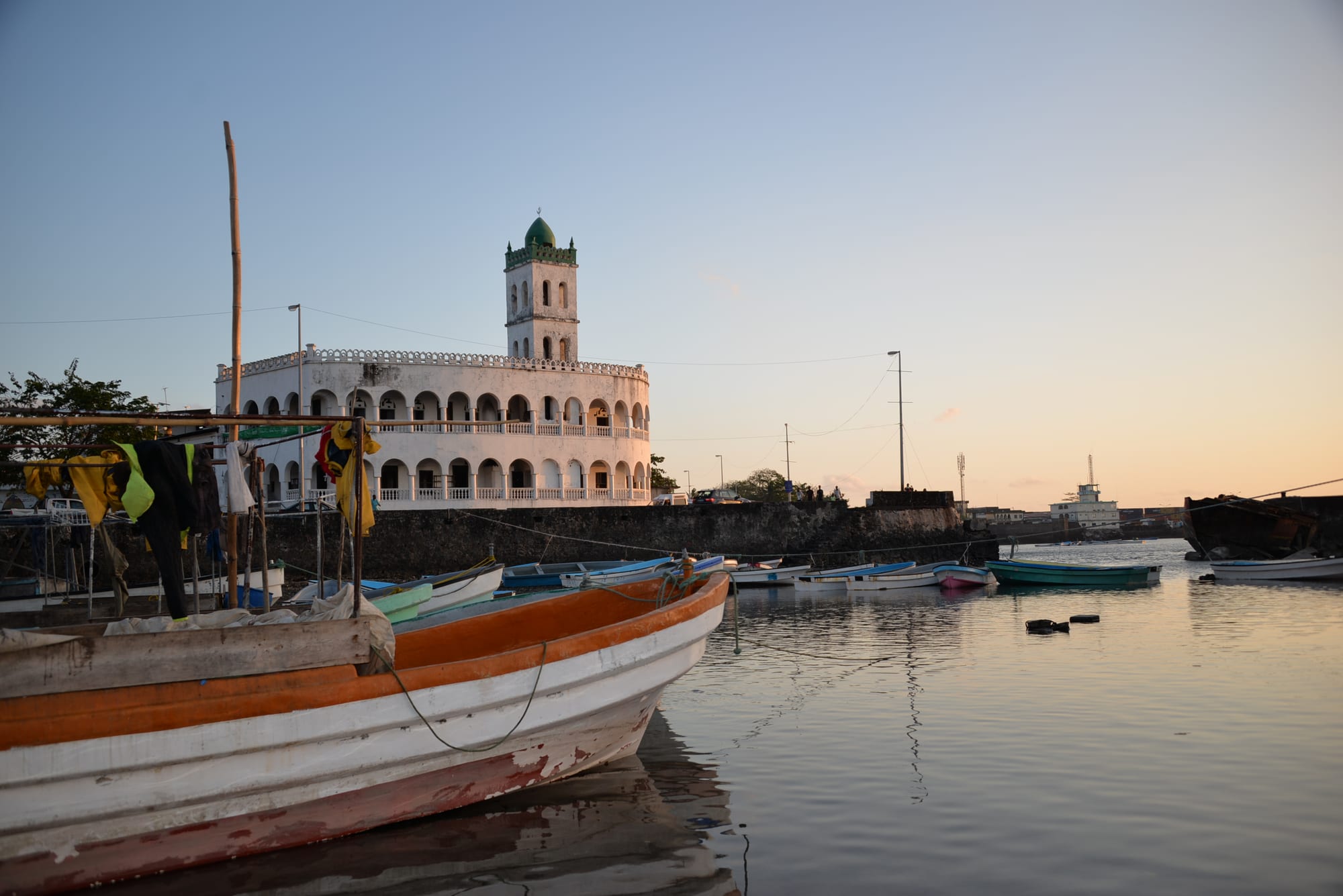
Comorian Islam is also layered with older beliefs drawn from Arab, African and Malagasy traditions. Many Comorians believe in djinn, and often consult the mwalimu, a Quranic teacher, for healing, for protection from djinn and to choose favourable days for feasts and weddings. Several Sufi brotherhoods are active on the islands, and alongside the great festivals of the Islamic year, Comorians mark Mawlid, the birthday of the Prophet.
Society is organised around respect for age and standing. Elders must be respected and greeted whatever their social position, and men's lives have traditionally been structured, above all on Grande Comore, by an age system through which they move as they grow older. The family itself is arranged differently from much of the region: lineage and land and housing have traditionally passed through the maternal line, which gives women real material security, while men are expected to provide for the household and maintain their dignity within it. The grand mariage is where all these threads come together, as the rite that marks a man's passage from youth to the ranks of the elders.
Greetings and meeting people
Greetings follow the lines of age and respect. Elders are to be respected and greeted, whatever their wealth or social position, and they are greeted with deference. Comorian is the everyday language, and the country has three official languages, Comorian, French and Arabic, a mix that reflects the pull of both Arabian Islam and the West on national identity.
Public behaviour is reserved. The UK government's travel advice notes that most islanders consider public displays of intimacy contrary to public decency, and that permission should always be asked before photographing people. The same advice warns against photographing public buildings, military sites or the police.
Hospitality and being a guest
Home life has its own hierarchy, and guests may notice it at mealtimes. In many traditional households, men and male guests may eat separately from the women and children. Visitors are best advised to follow their hosts' arrangements rather than expect everyone to sit down together.
Modest dress is expected of everyone. Clothing should cover the body loosely from the shoulders to the knees, and Comorian women customarily wear a veil or headscarf outside the home. Alcohol is sold in a few places, but drinking or being drunk in public places is illegal and can be punished with fines or imprisonment.
Ramadan changes the rhythm of daily life. During the holy month visitors should not eat, drink, smoke or chew gum in public during daylight hours, and loud music, dancing and swearing in public are best avoided. Shops and restaurants may keep shorter hours, so it is worth checking in advance.
Festivals and life's big moments
The religious year sets the calendar: Ramadan and the two Eids, the birthday of the Prophet, and the celebrations of local saints. Independence is celebrated on 6 July. But the most prestigious event in Comorian social life is the grand mariage, known on Grande Comore as anda (also written ada) and on the other islands as harusi. A couple usually marries first in a simple, inexpensive ceremony, the "petit mariage" (mna daho on Grande Comore), and then, often years later, holds the grand mariage, which seals their status in the community. Many take place in July and August, when members of the large Comorian community in France come home for the summer holidays.
The celebrations can stretch over two weeks. The groom, in an embroidered robe, turban and a velvet coat worked with gold thread, is escorted by drummers, family and friends in a procession to the bride's family home, reflecting the islands' matrilineal traditions. The gifts of gold and jewellery he brings are formally announced. Afterwards, the couple's standing changes for good: the husband joins the elders, gains the right to speak in public and take part in village and island affairs, and may wear a mharuma, a shawl across the shoulders, and enter the mosque by the door reserved for elders, while his wife is treated as a woman of standing.
The zaffa, the bridal procession at the heart of a traditional wedding, is on UNESCO's list of intangible cultural heritage, inscribed in 2025 as "The zaffa in the traditional wedding", jointly with Djibouti, Iraq, Jordan, Mauritania, Somalia and the United Arab Emirates; it was the Comoros' first element on the list. Its preparations begin well before the day, as the bride goes through cleansing rituals and her hands are decorated with henna, and special clothes and jewellery are made ready for both bride and groom. On the day itself, small protective acts, which vary from one community to the next, may include drinking milk, cracking an egg or wearing a relative's cape. The procession that follows is carried along by music, joyful shouts and showers of sweets and flowers. Elders make sure tradition is respected, mothers oversee the preparations, and young people escort the couple.
Death is marked by Islamic rites. The dead are buried quickly, as Islam requires, and prayers for the dead are held by family and neighbours during the mourning period.
Arts, crafts and music
The music most associated with celebrations is twarab, a Comorian form of the taarab sung poetry of the Swahili coast. It arrived from Zanzibar in the early twentieth century and remains the most influential genre on the islands, a fixture of grand mariage celebrations. Once sung mainly in Arabic or Swahili, it is now widely sung in Comorian, by singers such as Mohamed Hassan and Chamsia Sagaf. The oud and the violin are its most frequent accompaniment, alongside the gabusi lute and local drums, and modern electric arrangements now sit alongside the older style.
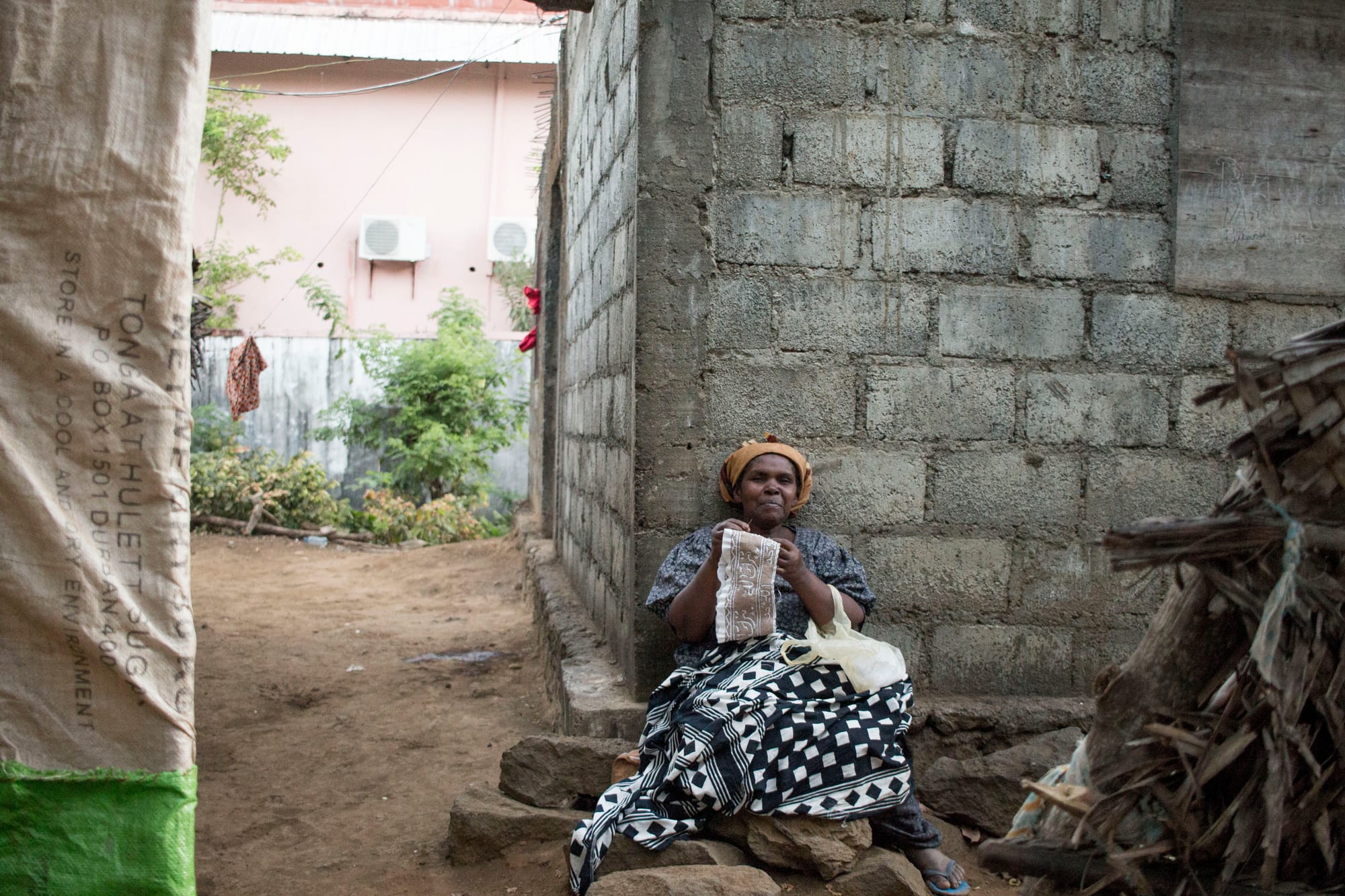
Needlework is one of the islands' most visible crafts. Comorian men wear the kofia, a white cap intricately embroidered in gold and silver thread, work that takes painstaking patience. On Anjouan women traditionally wear the chiromani, a red and white patterned wrap, while on Grande Comore and Mohéli colourful shawls called leso are worn. Other traditional crafts include woodcarving, basketry and palm weaving, and the carved wooden doors of the old towns, which link the islands to the wider Swahili world.
One custom is worn on the face. Many Comorian women apply msindzano, a yellow paste made by grinding sandalwood against coral or stone and mixing it with water, as a beauty mask, a skin treatment and a protection against the sun. It remains common, though its popularity is waning.
Dos and don'ts for visitors
- Do greet elders first and with respect.
- Do dress modestly, covering shoulders and knees, and wear loose clothing away from the beach.
- Do ask permission before photographing people, and avoid photographing public buildings, the military or the police.
- Do refrain from eating, drinking or smoking in public during daylight hours in Ramadan.
- Do accept an invitation to a grand mariage if one comes; for the hosts it is often the goal of a lifetime.
- Don't drink alcohol in public places; drinking or being drunk in public is illegal.
- Don't show affection in public, and don't attempt to promote any religion other than Islam.
What to take away
Comorian customs rest on faith, modesty and respect for elders, and a visitor who dresses and behaves with the same restraint will be well placed to share in the islands' celebrations, above all the grand mariage.