Daily Life · Comoros
Comoros: A House That Passes Through the Women
On the main island a bride is given her own house and land rather than moving into her husband's, the mosque and the market set the shape of the day, and the household budget in many families depends less on what is grown or caught locally than on money wired home from relatives in France
By Worldlore Editorial · 30 September 2026
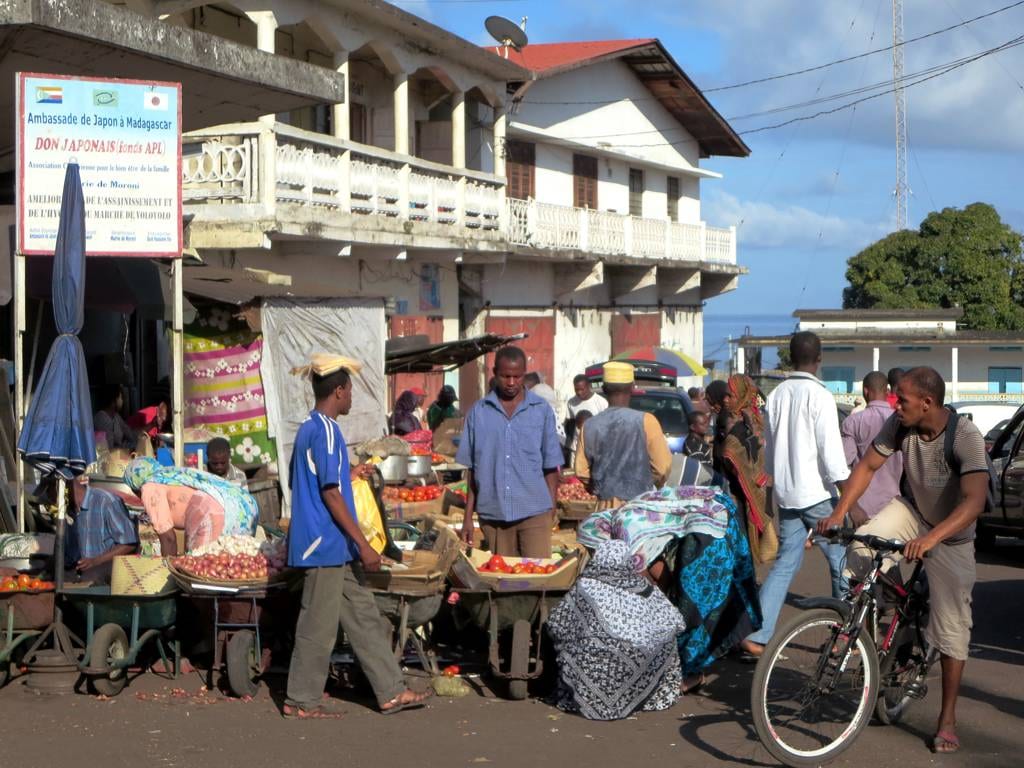
An ordinary day on the Comoros islands runs to a rhythm set by the mosque and the market rather than the office. The call to prayer marks out the hours from before dawn, stalls at the market open early with the produce brought in from small farms and the morning's catch, and by mid-afternoon the heat slows almost everything down. Beneath that daily rhythm sits a less visible one: for a great many households, the money that pays for school fees, home repairs and a share of the weekly shopping arrives not from local work but by transfer from a relative living in France, the destination of most of the Comorian diaspora.
Family and home life
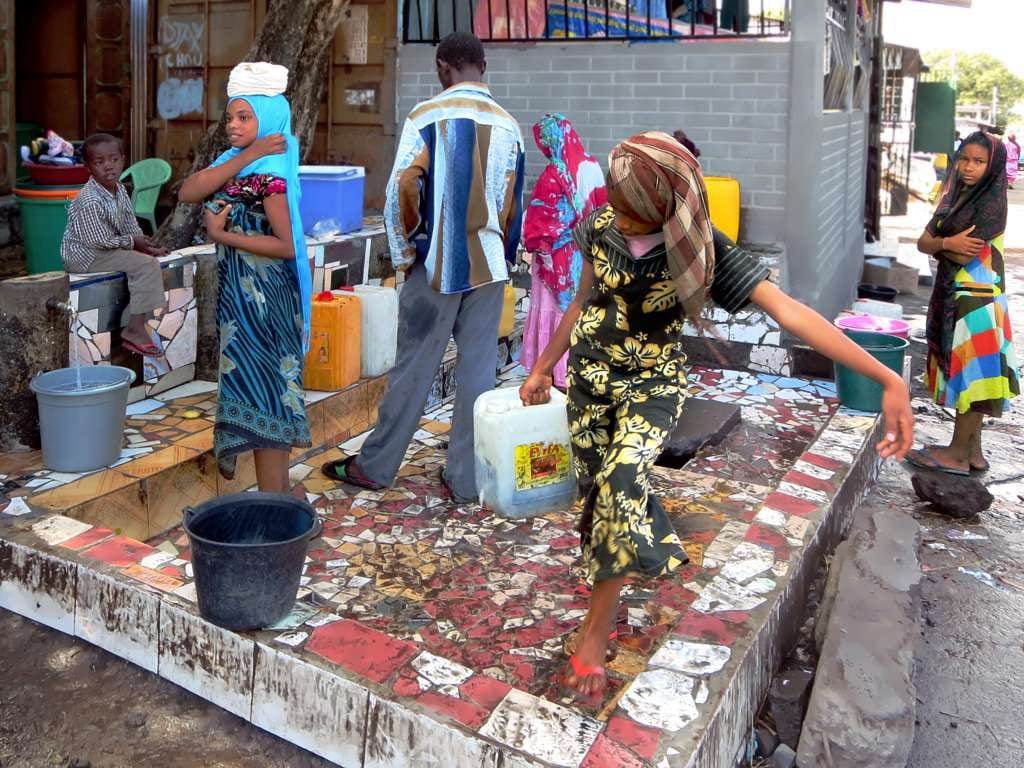
Family structure on Ngazidja (Grande Comore), the largest and most populous island, has traditionally run through the female line rather than the male one: a woman typically owns the family house and land, passing it to her daughters, and a new bride is customarily given a house of her own at marriage rather than moving into her husband's family home, a pattern different from many of Comoros's neighbours. Households are often larger and more fluid than a simple parents-and-children unit, with children sometimes living with grandparents, aunts or other relatives for periods, and men maintaining close ties to their mother's and sisters' households even after marriage. Power and water supply are inconsistent across the islands, so carrying water and managing without electricity for parts of the day are still a routine part of running a home for many families.
Work, school and the rhythm of the day
Most Comorians still make a living from small-scale farming, fishing, or trade tied to the islands' export crops — vanilla, cloves and ylang-ylang, the flower grown for its perfume oil — and the working day follows the farming and fishing calendar and the tides more than a fixed office schedule. Formal jobs are concentrated in Moroni, the capital. Nearly every Comorian child attends a Quranic school for two or three years starting around age five, studying the Arabic alphabet and the basics of the Muslim faith before or alongside starting at a separate, French-language state primary school, whose system is still based on the French model. For many households, though, the steadiest income is not local wages at all but remittances sent home by relatives working abroad, chiefly in and around Marseille.
Community life and public spaces
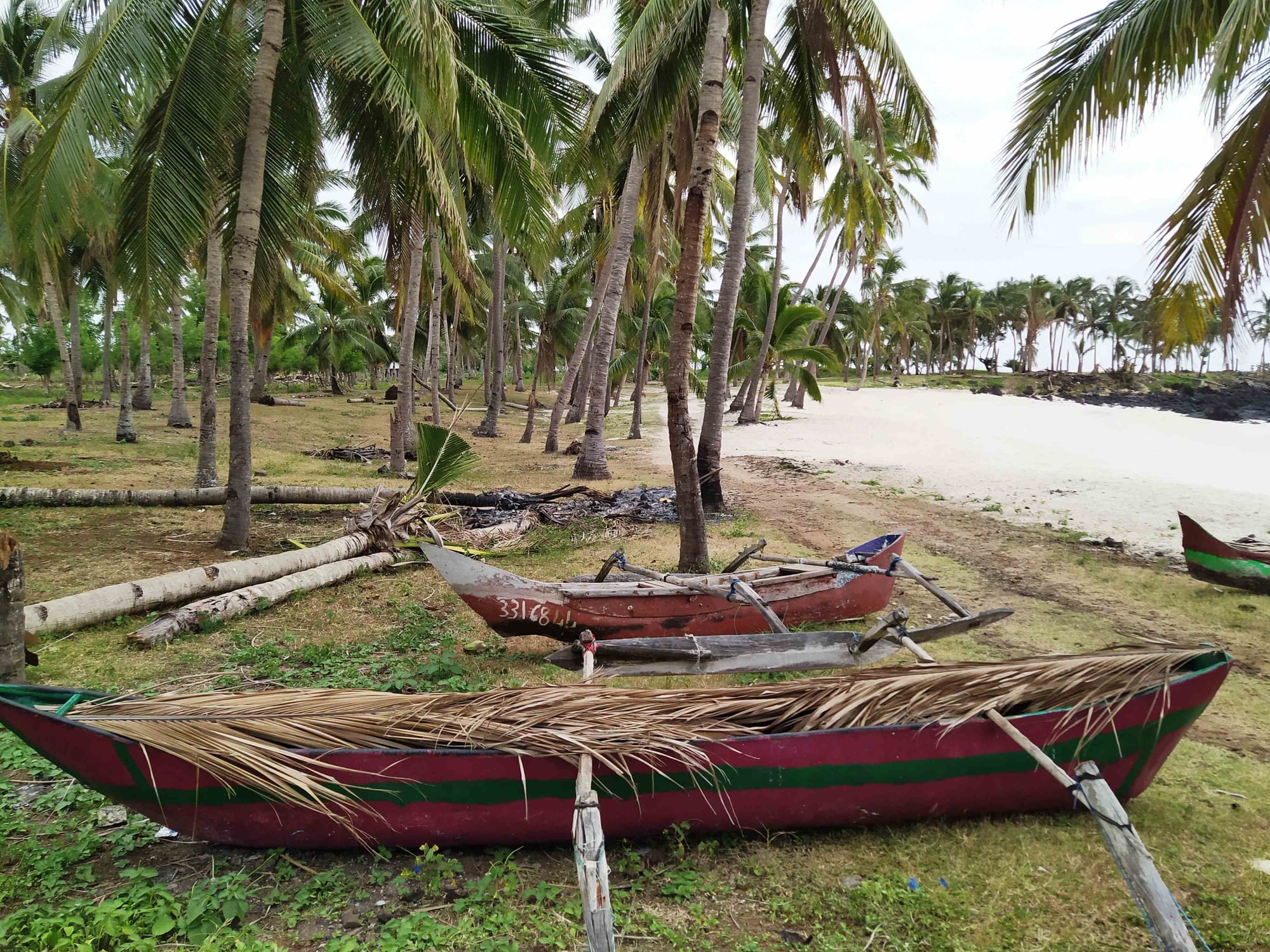
The market is the country's real public square. In Moroni, the old central market and the larger Volo Volo market to the north open early with fish, vegetables, spices and imported goods laid out on tables, carts and mats, and are as much a place to meet and exchange news as to shop. Away from the capital, village life is organised around the mosque, the market day, and the shoreline, where wooden outrigger canoes, built and painted locally, are the basic fishing boat of the islands. Inter-island transport — small planes and passenger boats between Grande Comore, Anjouan and Mohéli — is irregular and weather-dependent, and getting from one island to another is a genuine, everyday obstacle rather than a minor inconvenience.
Free time and weekends
Friday, the Muslim holy day, is the fixed point of the week, built around midday prayers at the mosque. Beyond that, free time is simple and low-cost: football played on any open patch of ground, visiting relatives, and time spent on the beach, which on most of the islands remains uncrowded even on a weekend. Life outside work and school is lived largely outdoors and within reach of home, shaped as much by the unpredictability of power cuts and transport as by choice.
A visitor's ordinary day
Comoros runs on cash: euros are the easiest currency to bring, since the local Comorian franc is pegged to the euro but cannot be obtained or exchanged outside the country, and cards are rarely usable outside a handful of hotels. Shops and market stalls generally open early and wind down by mid-afternoon in the heat. Getting between the three islands takes patience: flights and ferries are infrequent and often delayed or cancelled by weather, so it pays to build slack into any multi-island itinerary rather than book a tight connection. On land, hired cars with drivers and shared taxis are the practical way to get around, since public transport in the fixed-timetable sense barely exists.
What to take away
Daily life in Comoros is set less by the clock than by the mosque, the tide and the market stall — and, increasingly, by a transfer of money from overseas that quietly does as much to hold households together as anything grown or caught on the islands themselves.