Daily Life · Colombia
Colombia: A Sunday Built for Bicycles
Street-corner tinto poured from a thermos, an inexpensive set lunch that anchors the middle of the day, and a Sunday when the country's biggest cities close their main roads to cars and hand them over to walkers and cyclists instead
By Worldlore Editorial · 30 September 2026
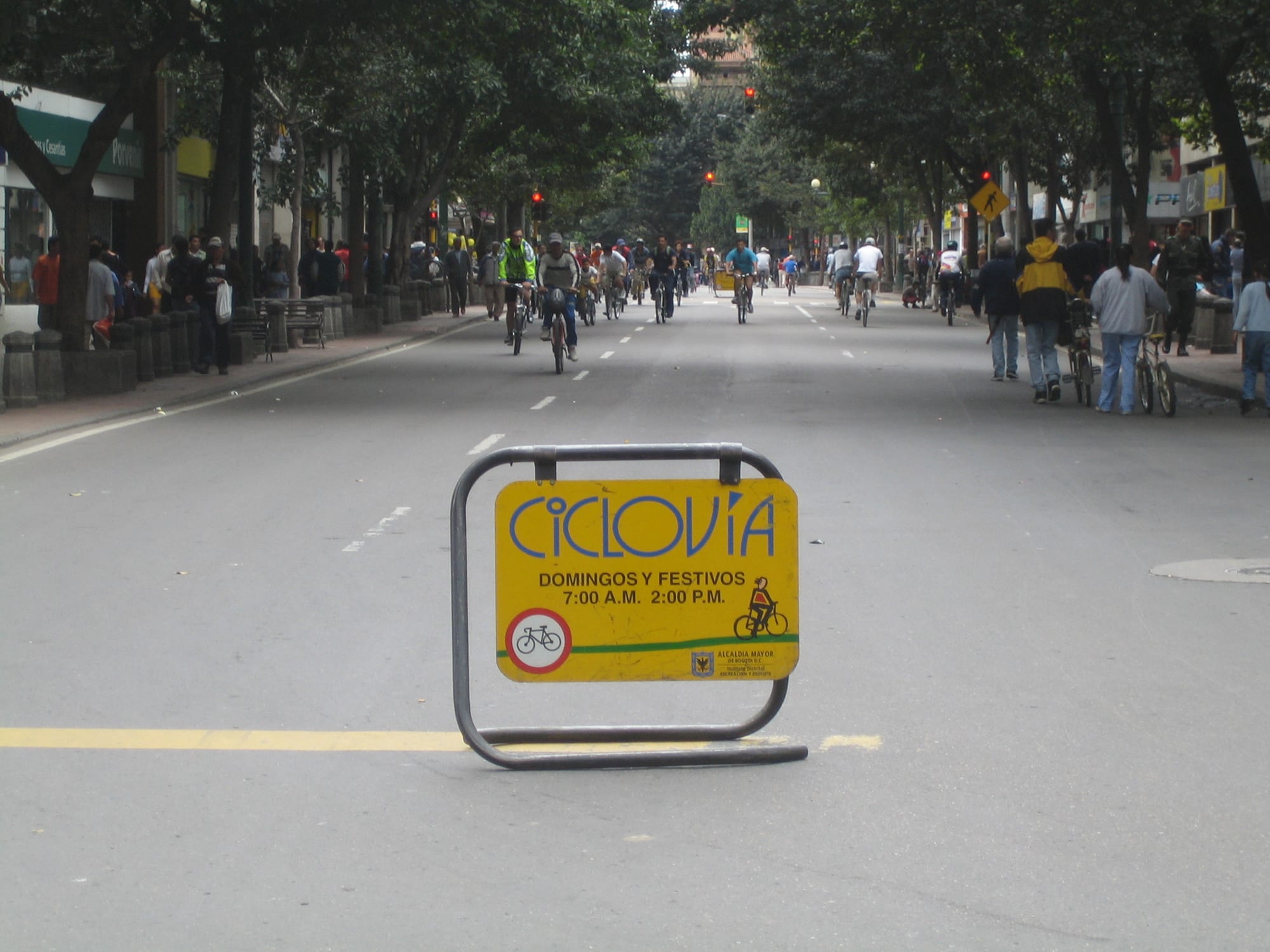
In cities and towns across Colombia, the day often starts with a small cup of sweet black coffee bought from a street vendor rather than brewed at home — a tintero working a corner with a thermos and a stack of tiny cups, refilling office workers and passers-by for small change. The middle of the day is marked by an inexpensive set lunch, and by evening the streets have filled with buses, motorbikes and the last of the day's market trade. Once a week, that rhythm is interrupted on purpose: on Sunday mornings, Bogotá and several other major cities close a network of main roads to cars and give them over to cyclists, joggers and walkers instead, an event that has run for half a century and is now copied by cities worldwide.
Family and home life
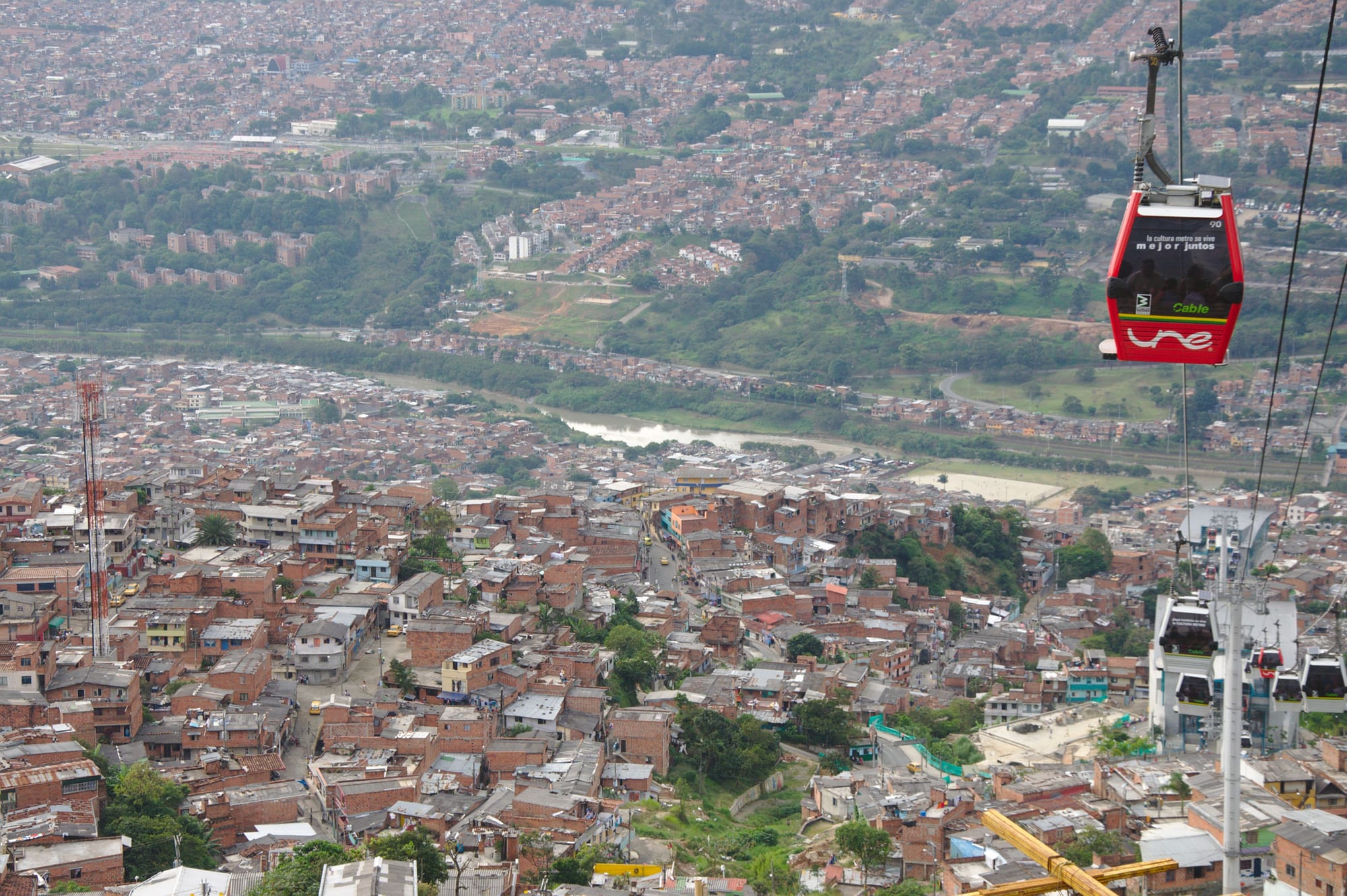
Colombian households have grown smaller and more varied than the large, multigenerational family long associated with the country. According to a 2021 government survey, the most common household size was three people, followed closely by two, with four-person households and people living alone also common; extended, multigenerational households persist, especially outside the big cities, but are no longer the norm nationwide. More than four in ten Colombian households are headed by a woman, according to the national statistics agency DANE. About three-quarters of Colombians live in cities, and a large share of that urban population lives in dense apartment blocks and hillside neighbourhoods rather than detached houses, a pattern visible above all in Medellín, where cable cars now link steep, self-built hillside comunas to the city centre below.
Work, school and the rhythm of the day
The legal working week has been getting shorter. A 2021 law began phasing down the maximum from 48 hours, cutting it a little further each July, down to 42 hours as of July 2026, without any cut in pay — a change aimed squarely at giving workers more time at home. In practice, informal work remains widespread, and many people, particularly street vendors and small traders, keep far longer and less regular hours than the legal maximum. Schooling has been undergoing a similar shift, from a long-standing system of two daily shifts, one class of children arriving in the morning and another in the afternoon, towards a single, longer full school day; the change, known as jornada única, is a national priority but is still being rolled out unevenly, and many schools, especially in poorer or more rural areas, continue to run split shifts.
Community life and public spaces
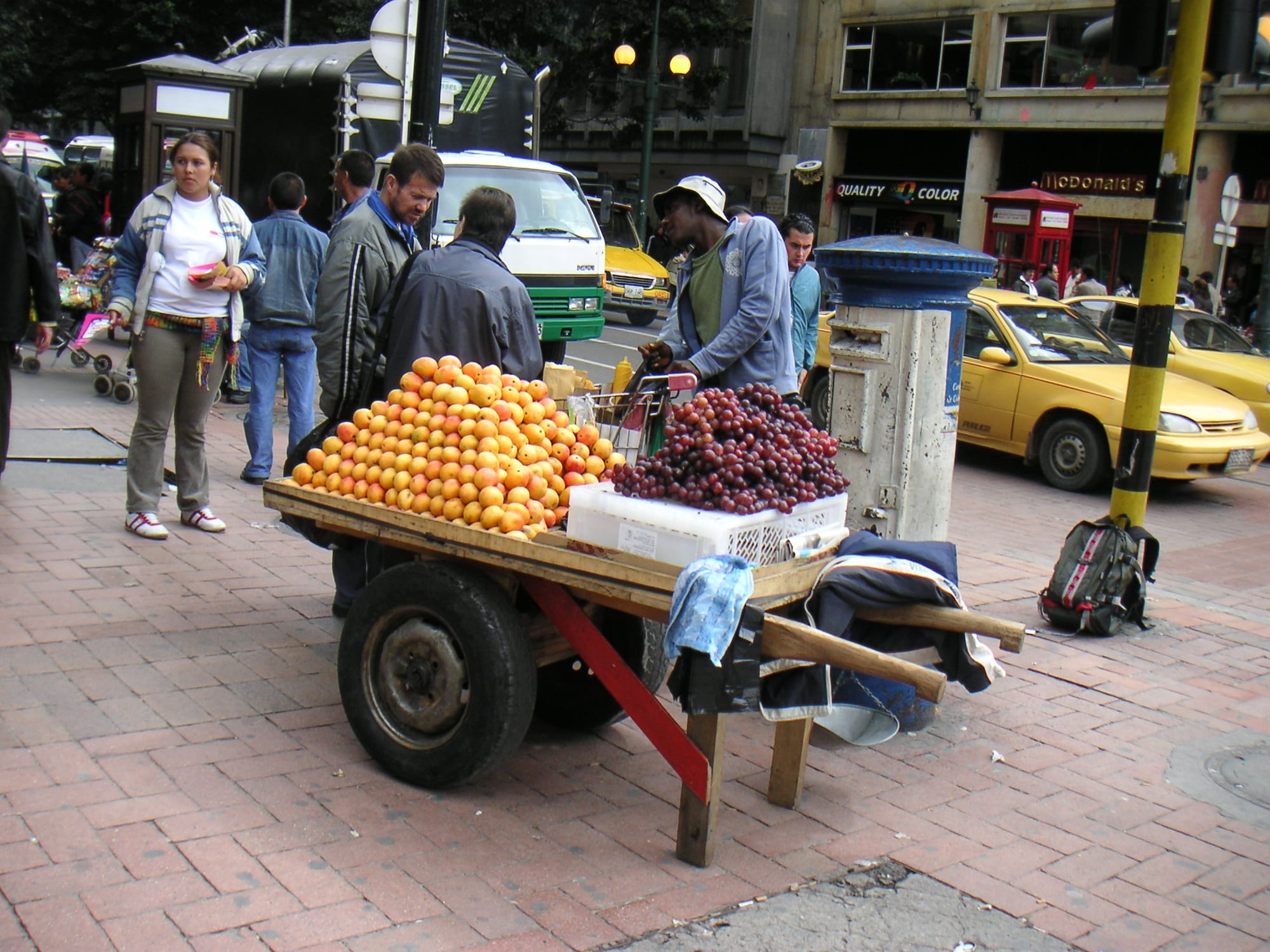
The market and the bus are where most Colombians' public day plays out. Fruit and vegetable sellers set up stalls and pushcarts on city pavements and in covered markets alike, alongside vendors of prepared street food, and a strong informal economy operates in plain sight in nearly every neighbourhood. Public transport is heavily used and, in the biggest cities, increasingly modern: Bogotá and Medellín run large bus-rapid-transit networks, and Medellín's metro and cable-car system carries commuters over terrain that used to isolate entire neighbourhoods. Long-distance travel leans on buses and, given the mountainous terrain, on domestic flights, which play a large part in getting between the main cities.
Free time and weekends
Sunday is the week's real pause, and in Bogotá, Medellín, Cali and other cities it now has a fixed shape: the ciclovía closes main roads to traffic so that people can walk, cycle or skate instead of drive, an event so established that Bogotá's bicycle culture, the ciclovía included, was added to the city's list of intangible cultural heritage in 2023. Football is followed with real intensity nationwide, watched in bars and at home as much as in stadiums, and where distance and money allow, weekends bring family lunches that run long and, for city dwellers, day trips out to a cooler mountain town or a nearby farm.
A visitor's ordinary day
Card payment is now common in Colombian cities, but cash still matters for buses, street food and small towns, and Colombian peso amounts run into the thousands, so it takes a moment to get used to the number of zeros on a price tag. A menú del día — a fixed-price lunch of soup, a main with rice and salad, and a fresh fruit juice — is the easiest, cheapest way to eat well in the middle of the day, usually served around lunchtime. Given the mountainous geography, road journeys between cities take far longer than the map suggests, so short domestic flights are often the practical choice; within cities, the bus-rapid-transit systems in Bogotá and Medellín are cheap and heavily used, and worth avoiding at the worst of the morning and evening rush.
What to take away
An ordinary day in Colombia is shaped less by any single custom than by a handful of shared institutions — the tinto vendor's thermos, the menú del día, the crowded bus — that repeat from city to city, punctuated once a week by a Sunday when several of the country's biggest cities deliberately hand their streets back to the people walking and cycling through them.