History · China
China: Four Thousand Years of the Middle Kingdom
Dynasties and reunifications, a century of humiliation, revolution and famine, and the return to the centre of the world
By Worldlore Editorial · 10 September 2026
The oldest continuous state
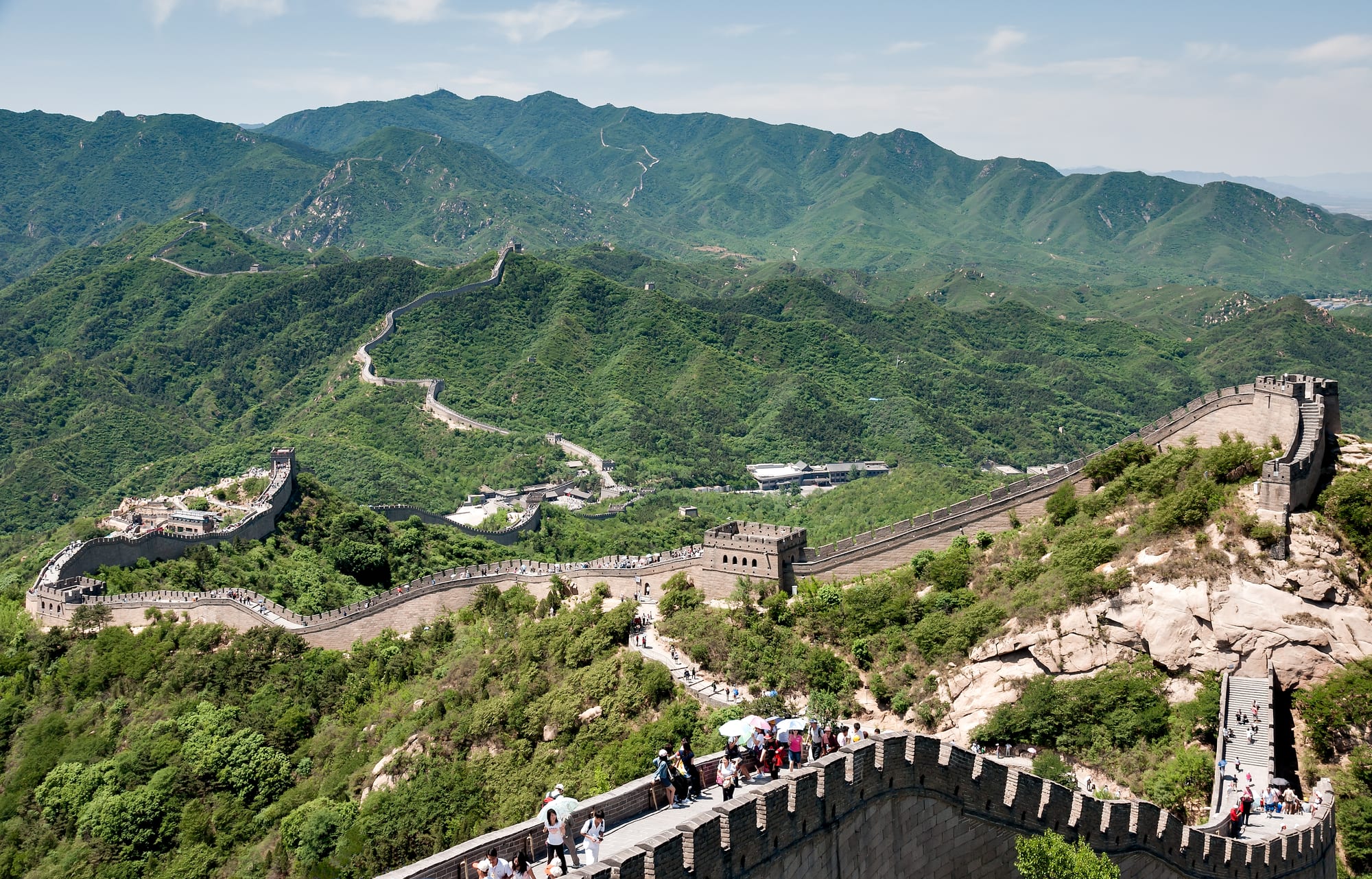
China has the longest continuous political and cultural tradition of any country: a recognisable imperial system that lasted, with interruptions, from 221 BCE to 1912, and a written language in unbroken use for more than 3,000 years. Its core is the farmland of the Yellow River and the Yangtze; its edges — steppe, desert, plateau, sea — are where its history has repeatedly been decided. The recurring pattern is a long cycle: a dynasty unifies the country, rules well, decays, loses the "Mandate of Heaven", and is replaced, often after a spell of division or foreign conquest. The modern story is the story of what happened when that cycle collided with industrial Europe and Japan.
Four thousand years, in brief
- c. 1600–1046 BCE
The Shang
The first dynasty with written records, on the North China Plain.
- 1046–256 BCE
The Zhou
Introduces the "Mandate of Heaven"; ends in the Warring States and the age of Confucius.
- 221 BCE
The first unification
The Qin conquer all rivals; the First Emperor standardises the state.
- 206 BCE–220 CE
The Han
The formative dynasty; Confucianism becomes the state creed; the Silk Road opens.
- 618–907
The Tang
A cosmopolitan golden age centred on Chang'an.
- 960–1279
The Song
The most advanced economy and technology on earth — and militarily weak.
- 1271–1368
The Yuan
The Mongols rule all of China.
- 1368–1644
The Ming
A Han restoration; Beijing, the Forbidden City, the Great Wall as it stands now.
- 1644–1912
The Qing
The Manchus rule the last dynasty; the empire doubles in size, then is battered by the West and Japan.
- 1912–1949
Republic and war
The Qing fall; warlords, the Nationalists, the Communists, and eight years of war with Japan.
- 1 October 1949
The People's Republic
Mao Zedong proclaims the PRC.
Dynasties and unifications
Chinese civilisation grew out of Neolithic farming villages along the Yellow and Yangtze rivers. The Shang dynasty, from around 1600 BCE, left the first writing — inscriptions on oracle bones — and magnificent ritual bronzes. The Zhou who overthrew it advanced the idea that a ruler governs only by the sanction of Heaven, which a bad ruler forfeits: the standard justification, ever after, for changing dynasties. When the Zhou order broke down into the Warring States, the resulting centuries of conflict also produced Confucius, the Daoists and the Legalists, the foundational schools of Chinese thought.
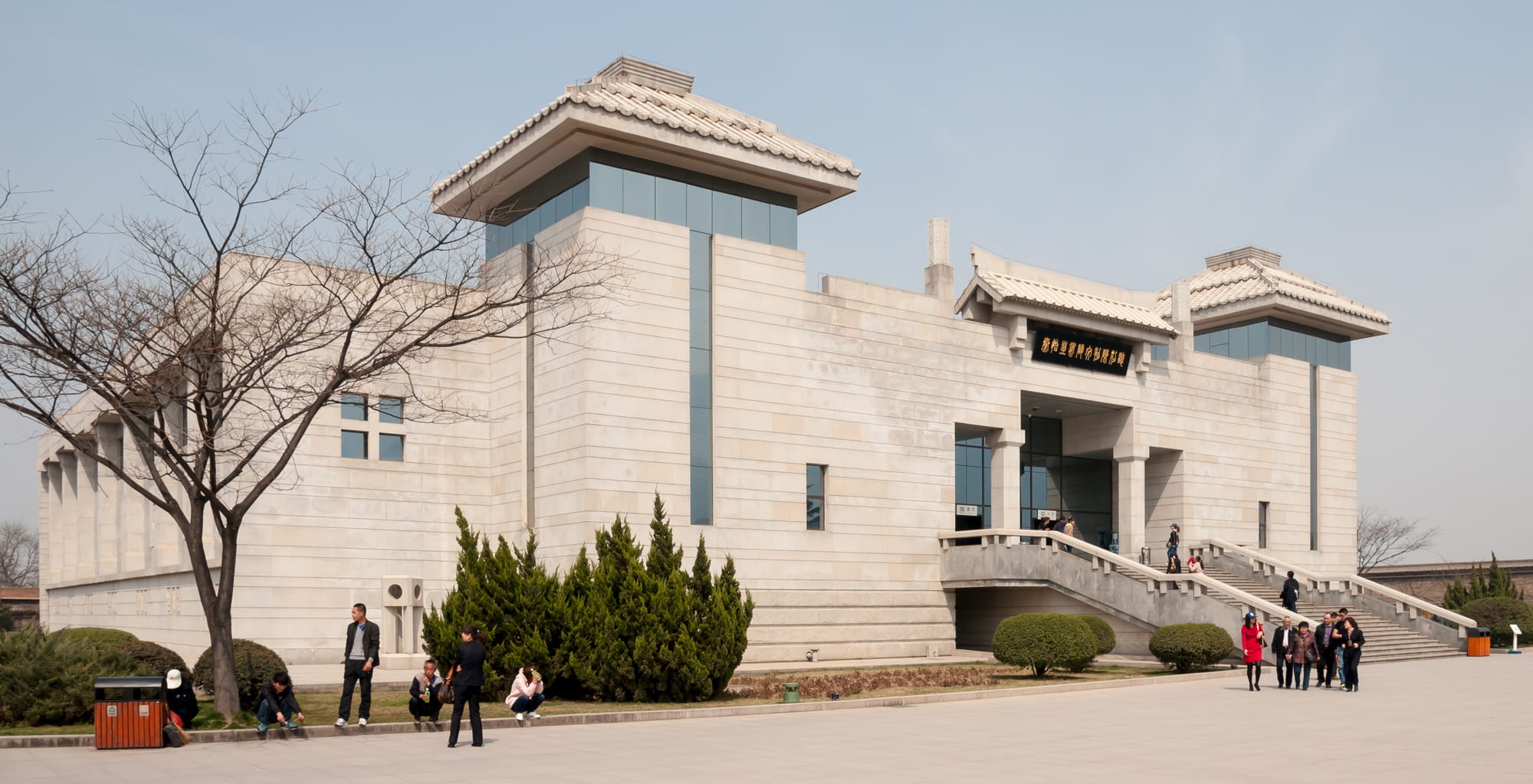
In 221 BCE the state of Qin conquered the rest and its king declared himself the First Emperor. His regime standardised the script, weights, measures and coinage, linked earlier frontier walls into one, and built the tomb complex near Xi'an guarded by a buried army of life-size terracotta soldiers. It collapsed within four years of his death, but the unified empire it created outlasted it by two millennia.
The Han dynasty that followed gave its name to the majority ethnic group, made Confucianism the ideology of a professional bureaucracy, pushed the empire into Central Asia, and opened the Silk Road. After it fell, China spent nearly four centuries divided — north China under non-Han rulers, and Buddhism spreading throughout — before the Sui and then the Tang reunified it.
The Tang, the Song, and the Mongols
The Tang (618–907) presided over a confident, outward-looking empire: Chang'an was the largest city in the world, foreign merchants and religions filled it, and Chinese poetry reached a height it is still measured against. The Song (960–1279) were different — militarily on the back foot, losing the north to invaders, but economically and technologically the most advanced society on the planet, with printing, gunpowder weapons, the compass, paper money, huge commercial cities, and the mature version of the civil-service examination.
In the 13th century the Mongols under Kublai Khan conquered the whole of China for the first time under a foreign people, ruling as the Yuan dynasty. A peasant rebellion drove them out and founded the Ming (1368–1644), a Han restoration that moved the capital to Beijing, built the Forbidden City, rebuilt the Great Wall in brick, and — after sending vast treasure fleets as far as East Africa in the early 1400s — dismantled them and turned away from the sea.
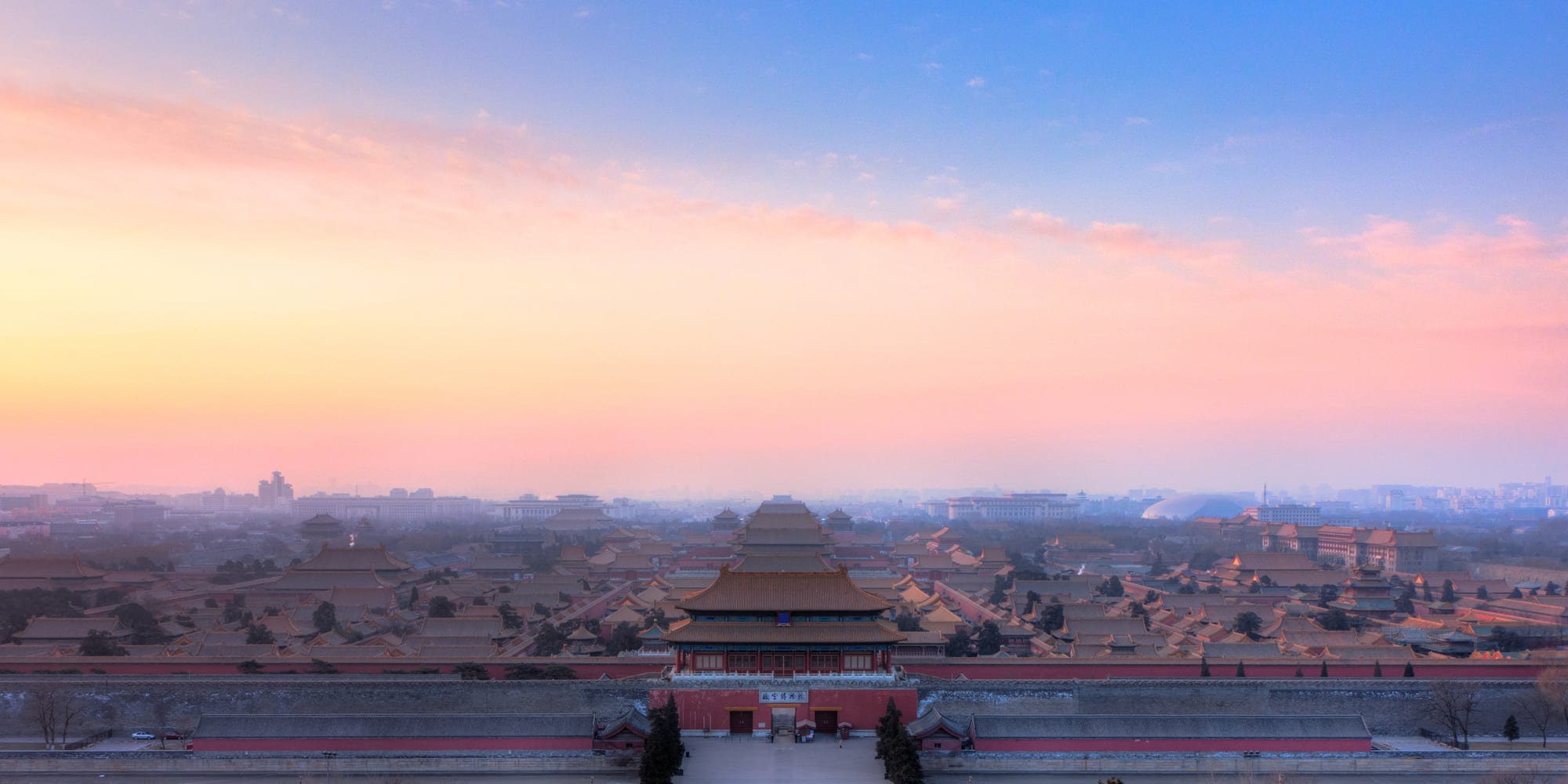
The Ming fell to the Manchus, a people from the north-east, who founded the Qing in 1644 — the last dynasty, and again a non-Han one. Under its great 17th- and 18th-century emperors the empire roughly doubled in size, absorbing Xinjiang, Mongolia, Tibet and Taiwan, while the population tripled to some 400 million. It was a self-sufficient world that saw little it wanted from Europe, and turned away a British trade mission in 1793.
The century of humiliation
That confidence was shattered in the 19th century. To fix its trade deficit with China, Britain pushed Indian opium into the country; when the Qing tried to stop it, Britain won the First Opium War of 1839–42 and imposed the first of the "unequal treaties" — indemnities, ports forced open to foreign trade, foreigners placed beyond Chinese law, and the cession of Hong Kong. A second war brought more concessions and the burning of the imperial Summer Palace. At the same time China tore itself apart internally: the Taiping Rebellion of 1850–64, led by a man who believed he was Christ's brother, cost perhaps 20 to 30 million lives, one of the deadliest wars in history, and was only one of several huge revolts.
China then lost on every front: territory to Russia, Vietnam to France, and — most woundingly — a war in 1894–95 to Japan, a country it had regarded as a junior, which took Taiwan and Korea from its orbit. An anti-foreign uprising, the Boxers, was crushed in 1900 by an eight-nation army that occupied Beijing. Reform came too late, and in 1911 the Qing dynasty, and with it the 2,000-year-old imperial system, fell.
Republic, war, and revolution
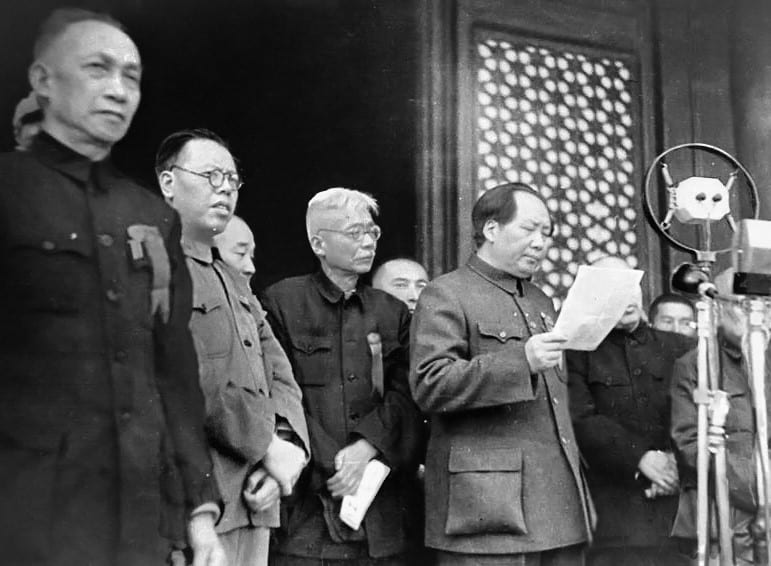
The Republic of China quickly fragmented into warlord territories. The May Fourth Movement of 1919 — student fury at the Western powers handing Germany's Chinese concessions to Japan — energised a new nationalism, and the Chinese Communist Party was founded in 1921. Sun Yat-sen's Nationalists reunified the country on paper in the late 1920s under Chiang Kai-shek, who then turned on his Communist allies and began a civil war. Japan seized Manchuria in 1931 and invaded China proper in 1937, beginning eight years of war — with atrocities including the Nanjing Massacre — that killed 15 to 20 million Chinese, gutted the Nationalist state, and gave the Communists, rebuilt around a peasant base by Mao Zedong, the room to grow. When the civil war resumed after 1945, the Communists won. Chiang's government fled to Taiwan, and on 1 October 1949 Mao proclaimed the People's Republic.
1949 and 1989
Mao's China
The first decades of the People's Republic brought land reform, the Korean War, and then two catastrophes. The Great Leap Forward of 1958–62, a forced crash industrialisation and communisation of the countryside, produced the deadliest famine in recorded history — 30 to 45 million dead. The Cultural Revolution of 1966–76, in which Mao set the young against the party and "the four olds", brought a decade of violent chaos, mass persecution, closed schools, and the destruction of cultural heritage. Mao died in 1976.
Reform, and rejuvenation
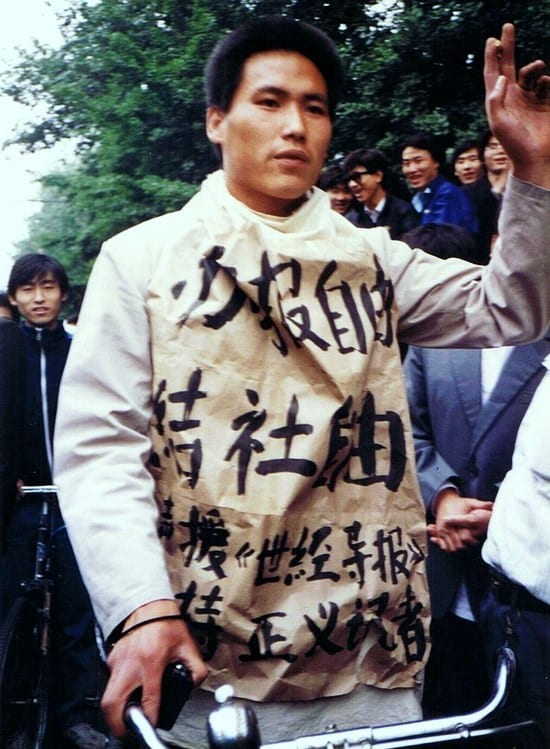
From 1978 Deng Xiaoping led "reform and opening up": family farming restored, private business and foreign investment allowed, special economic zones opened starting with Shenzhen — all while the Communist Party kept its monopoly on power. The result was the fastest sustained economic growth in history and around 800 million people lifted out of extreme poverty. The pro-democracy protests centred on Tiananmen Square in 1989 were crushed by the army; the party's answer to the contradiction was more growth and more control. Hong Kong returned from Britain in 1997 and Macau from Portugal in 1999; China joined the World Trade Organization in 2001 and became the world's factory, its largest exporter, and its second-largest economy.
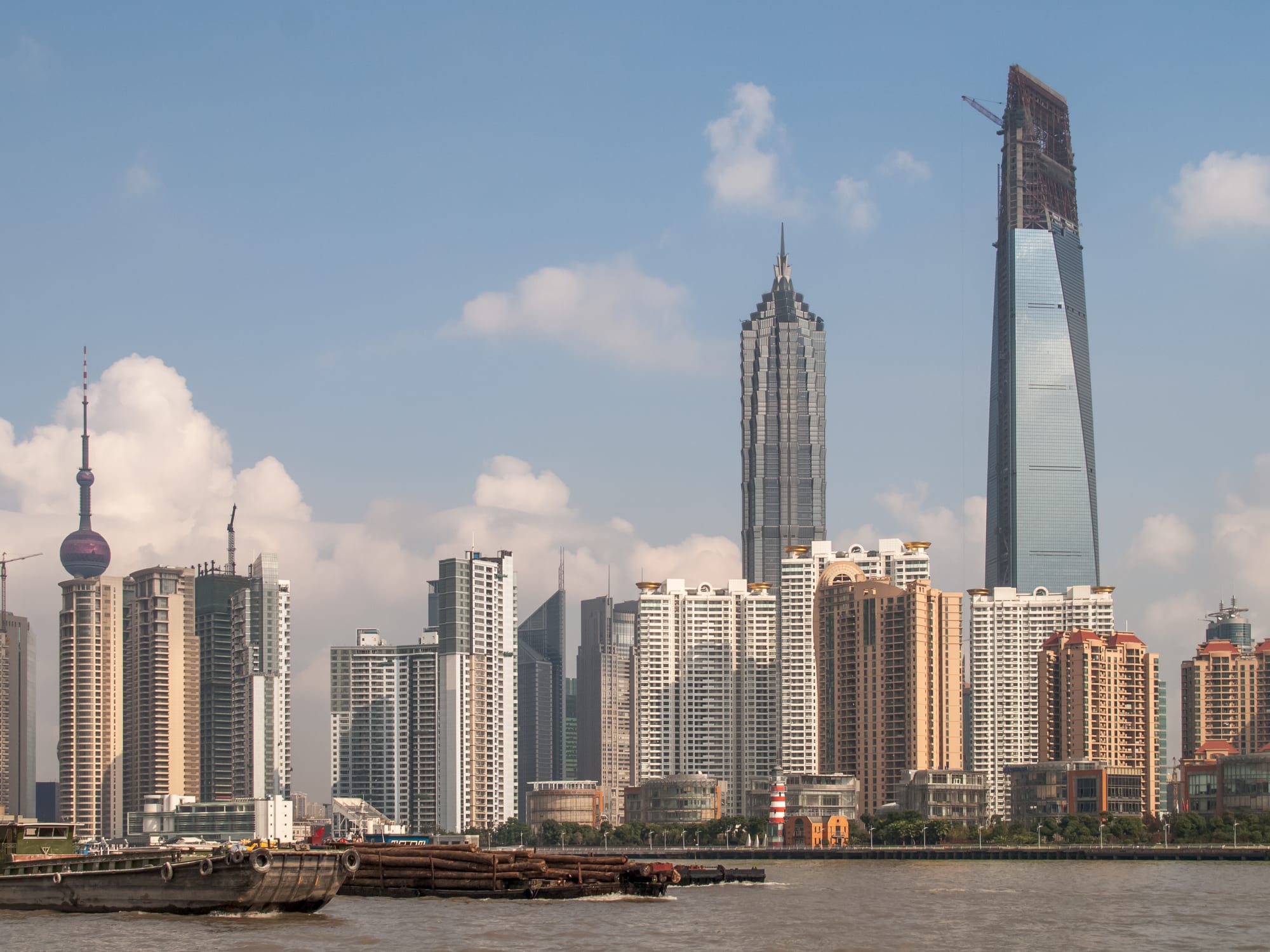
Under Xi Jinping, in power since 2012, the party has concentrated authority — removing presidential term limits in 2018 — and tightened control of the internet, civil society and religion. It has carried out the mass detention of Uyghurs and other Muslims in Xinjiang from around 2017, which several governments call genocide and which China denies, and it extinguished Hong Kong's pro-democracy movement with a security law in 2020. Abroad, China has financed infrastructure across the developing world, expanded its military, pressed its claims in the South China Sea and toward Taiwan, and settled into rivalry with the United States. At home it faces a property-debt overhang and a population that began shrinking in 2022 and is ageing fast.
What China carries
The Chinese Communist Party frames all of this as "national rejuvenation" — restoring China, after the century of humiliation, to the central place in the world it held for most of recorded history. Whether or not the framing convinces, the underlying fact is real: a state and a civilisation that have outlasted every rival, absorbed every conqueror, and are now, once again, at the centre of global affairs.