Culture & Customs · China
China: Face, Family and the Lunar Year
Confucian ideas about hierarchy and duty, a care for reputation that shapes every conversation, and a calendar of festivals in which the living keep faith with their ancestors
By Worldlore Editorial · 30 September 2026
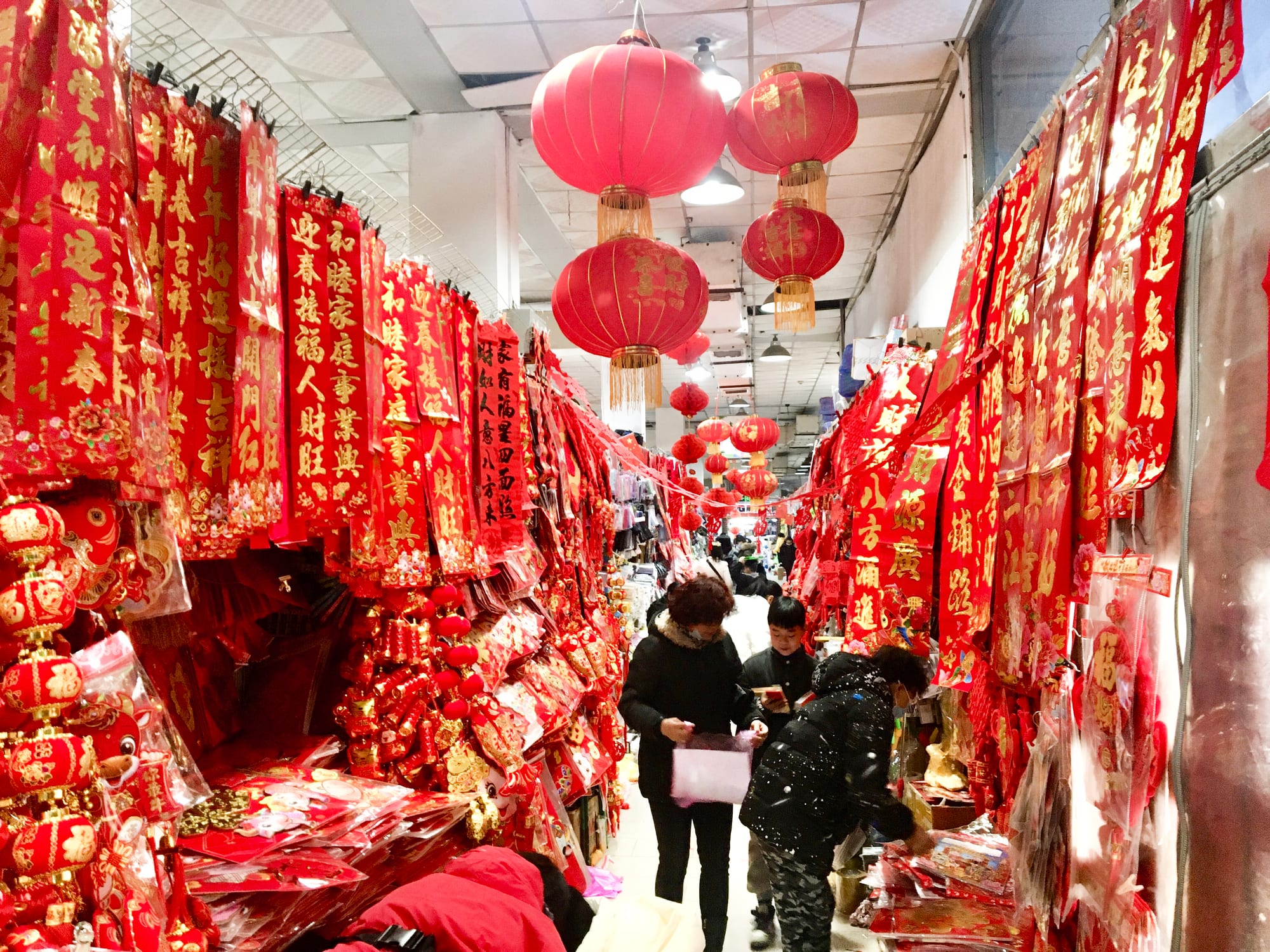
In the weeks before the lunar new year, markets across China turn red. Stalls hang floor to ceiling with paper couplets lettered in gold and with red lanterns, while at home the house is cleaned and food prepared for the days ahead. On New Year's Eve, families sit down together to a reunion dinner and stay up late to see the old year out; in the days that follow, they make offerings to their ancestors and pay calls on elders, relatives and neighbours, bringing fruit, sweets or wine. The scale is modern, but the impulses behind it are old: to honour the family, to show respect where it is due, and to begin the year with every sign of good luck in place.
Faith, identity and values
The ruling Communist Party officially espouses state atheism, and just over half of the population, by 2021 estimates from the CIA World Factbook, is unaffiliated with any religion. Around a fifth follow folk religion, and a similar share are Buddhist, with smaller Christian and Muslim communities. The state recognises five religions, Buddhism, Taoism, Islam, Catholicism and Protestantism, and religious activity is permitted in registered temples, mosques, churches and other approved venues. Within those limits, many temples, mosques and churches are open to visitors, and Buddhist and Taoist temples, with their statues and altars for offerings, draw worshippers throughout the year.
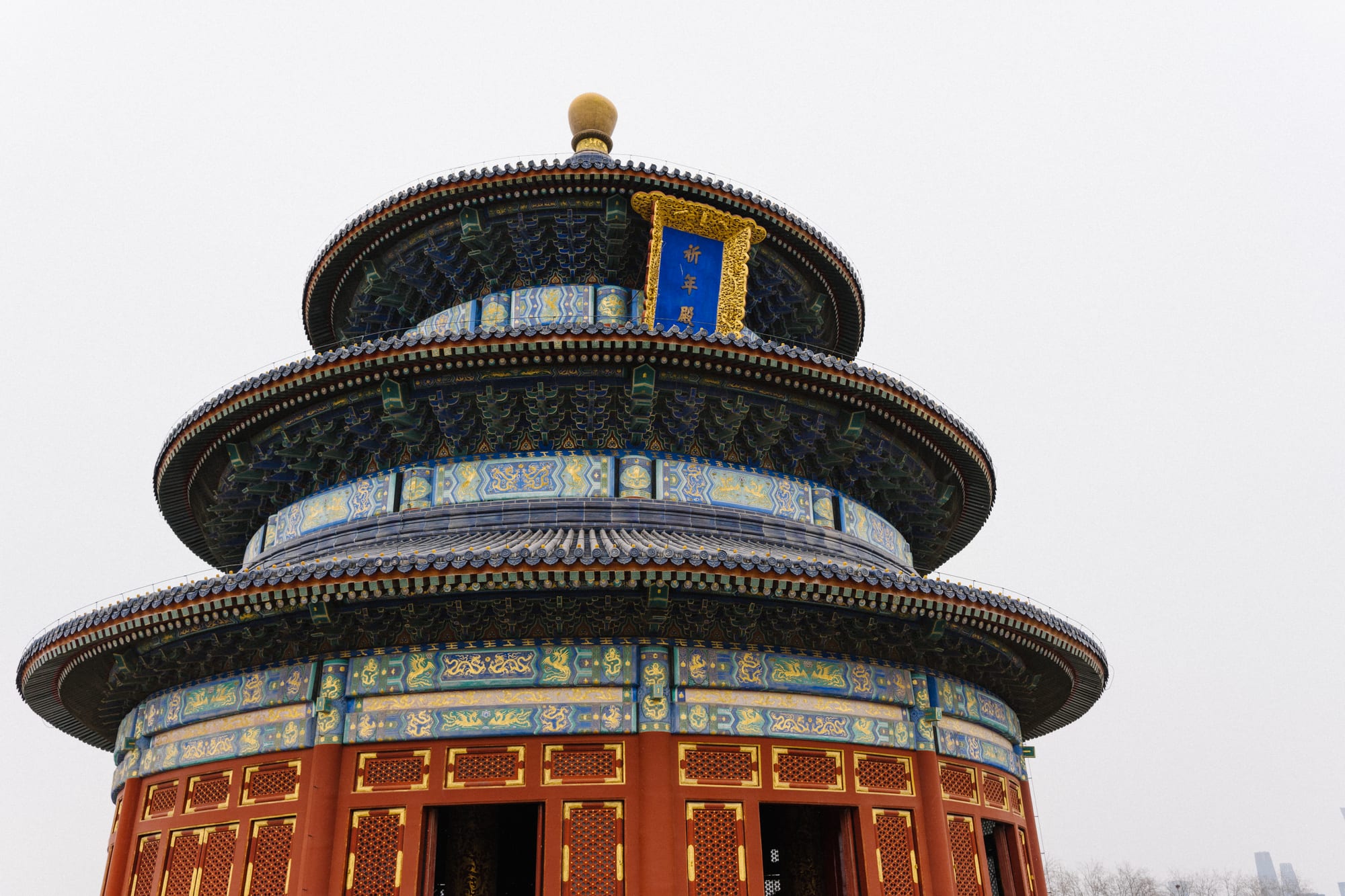
Beneath formal religion lie traditions that shape almost everyone. Ancestor veneration remains a major part of family life, with household altars in many homes honouring the dead. Taoism contributes the idea of the Way, and of yin and yang as opposites working in harmony, while Confucianism, better understood as a body of traditional practice than as a religion, teaches duty, loyalty and properly ordered relationships between people. From it comes filial piety: children are expected to show their parents and elders the utmost respect, and to care for them in old age. Sending an elderly parent to a care home can still be seen as a failing of that duty.
Two further ideas explain a great deal of everyday behaviour. Mianzi, or face, is a person's reputation, dignity and standing in the eyes of others, and it can be given, saved or lost; causing someone to lose face in public, through open criticism or contradiction, is a serious misstep. Guanxi is the web of relationships built on the exchange of favours and trust, and it separates insiders from outsiders. Society is also strongly collective and hierarchical: position, occupation, education and above all age determine how much deference a person is owed, and the interests of the family are expected to come before those of the individual.
Greetings and meeting people
A handshake is the standard greeting, usually with a lighter grip than in the West and held a little longer. In formal situations people may nod or bow slightly from the shoulders instead, bowing a little lower to someone of higher status. Older people are always greeted first, and it is polite to stand when being introduced. Physical contact between strangers is generally avoided, though friends of the same sex may walk arm in arm.
Names put the family name first, followed by a given name of one or two characters. People are addressed by family name and title, as with Laoshi, teacher, or Jiaoshou, professor, which also follow the surname; given names alone are for close friends. Business cards are offered and received with both hands, or the right hand alone, with the text turned towards the recipient, and should not be written on.
Communication tends to be indirect. A flat "no" is rare, and disagreement is more often signalled by hesitation or an ambiguous answer, so that no one is made to lose face. Silence is purposeful, a sign that something is being considered rather than a gap to be filled. Lowering the eyes when speaking to a senior person is a mark of respect, while sustained direct eye contact is more typical of casual talk or argument. Taiwan is a particularly sensitive subject, and political topics in general are best left for the host to raise.
Hospitality and being a guest
Guests are expected to show restraint, avoiding loud or boisterous behaviour. A host will press food and drink on a visitor several times, and it is polite to decline once or twice before accepting; gifts are treated the same way, with a recipient refusing two or three times before taking them. Gifts are not opened in front of the giver, and presentation matters: red and gold wrapping signals good luck, while white, blue or black carry sombre associations. Suitable gifts include fruit, sweets, flowers other than white ones, and good spirits. Clocks, sharp objects, umbrellas, handkerchiefs, mirrors and green hats are all avoided, as is anything in a set of four, since the word for four sounds like the word for death.
Numbers and colours carry meaning well beyond gift-giving. Eight is the luckiest number, six stands for progress and nine has imperial associations, while four is avoided wherever possible. Red and gold are auspicious, black is associated with death, and writing someone's name or a message in red ink is taboo, since red writing was historically used for bad news. Friends and relatives often drop in without warning, and a visitor invited for a meal is expected to bring a small gift.
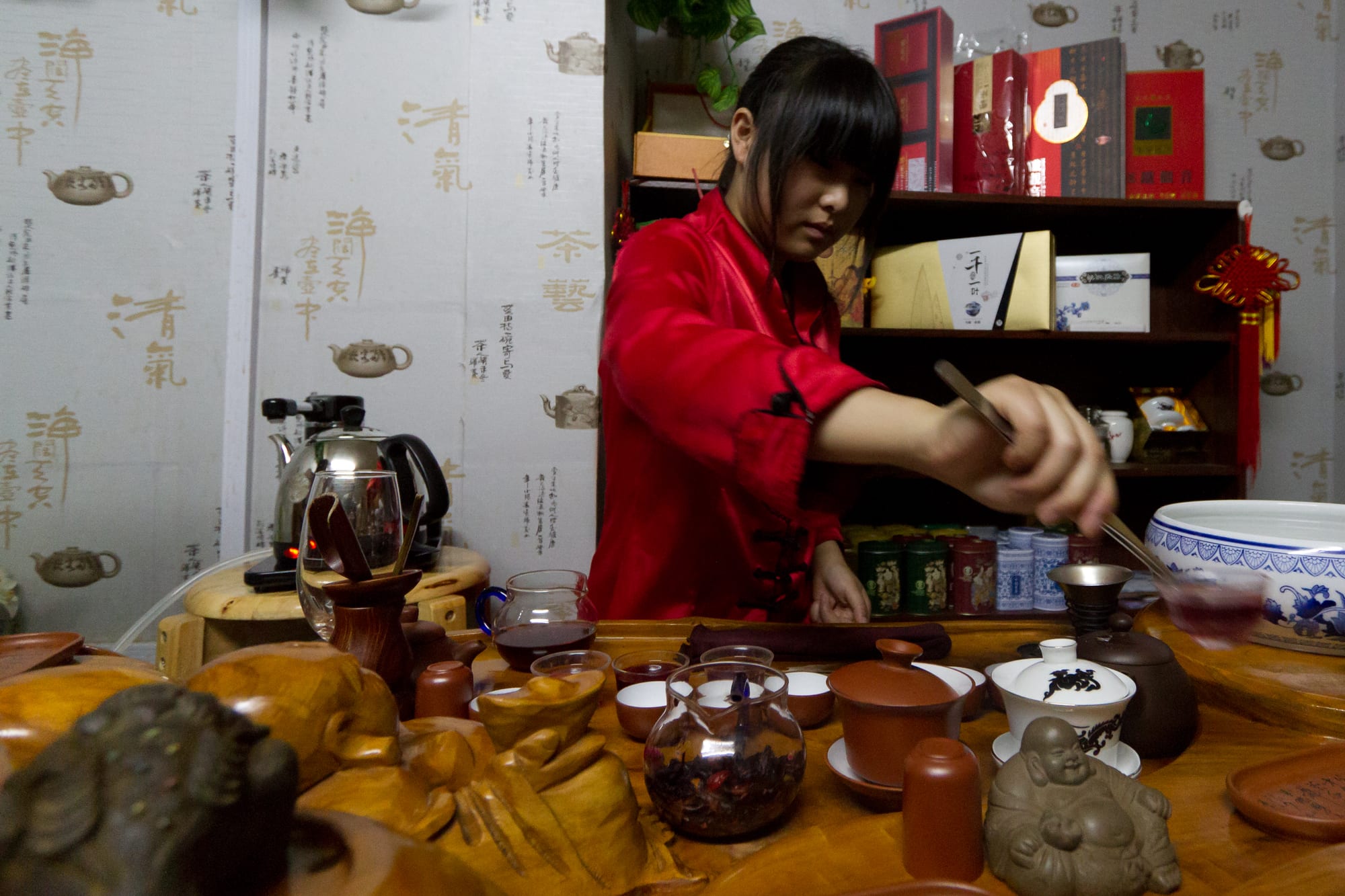
Tea runs through social life. "Traditional tea processing techniques and associated social practices in China" were inscribed on UNESCO's Representative List in 2022, and UNESCO notes that greeting guests and building relationships over tea is common to many ethnic groups, and that tea has a place in ceremonies such as weddings as well as in homes, workplaces, teahouses and temples.
At the table, dishes are shared. Chopsticks should never be stood upright in a bowl of rice, since they resemble the incense sticks burned at funerals; when not in use, they are laid on the table rather than left in the bowl. Bones and seeds go on the table beside the plate or in a dish provided for them, not back into the rice bowl. Traditionally, leaving a little food on the plate showed that the host had been generous, though finishing everything is now increasingly encouraged.
Festivals and life's big moments
The traditional calendar is lunisolar, so its festivals move against the Western calendar from year to year. Spring Festival, the lunar new year, is the most important, lasting traditionally until the fifteenth day, and was inscribed on UNESCO's Representative List of the Intangible Cultural Heritage in 2024 as "Spring festival, social practices of the Chinese people in celebration of traditional new year". Homes are cleaned and food prepared beforehand; the festival itself brings the reunion dinner, new clothes, offerings to heaven, earth and ancestors, and a round of visits to elders, relatives and neighbours. The season closes with the Lantern Festival.
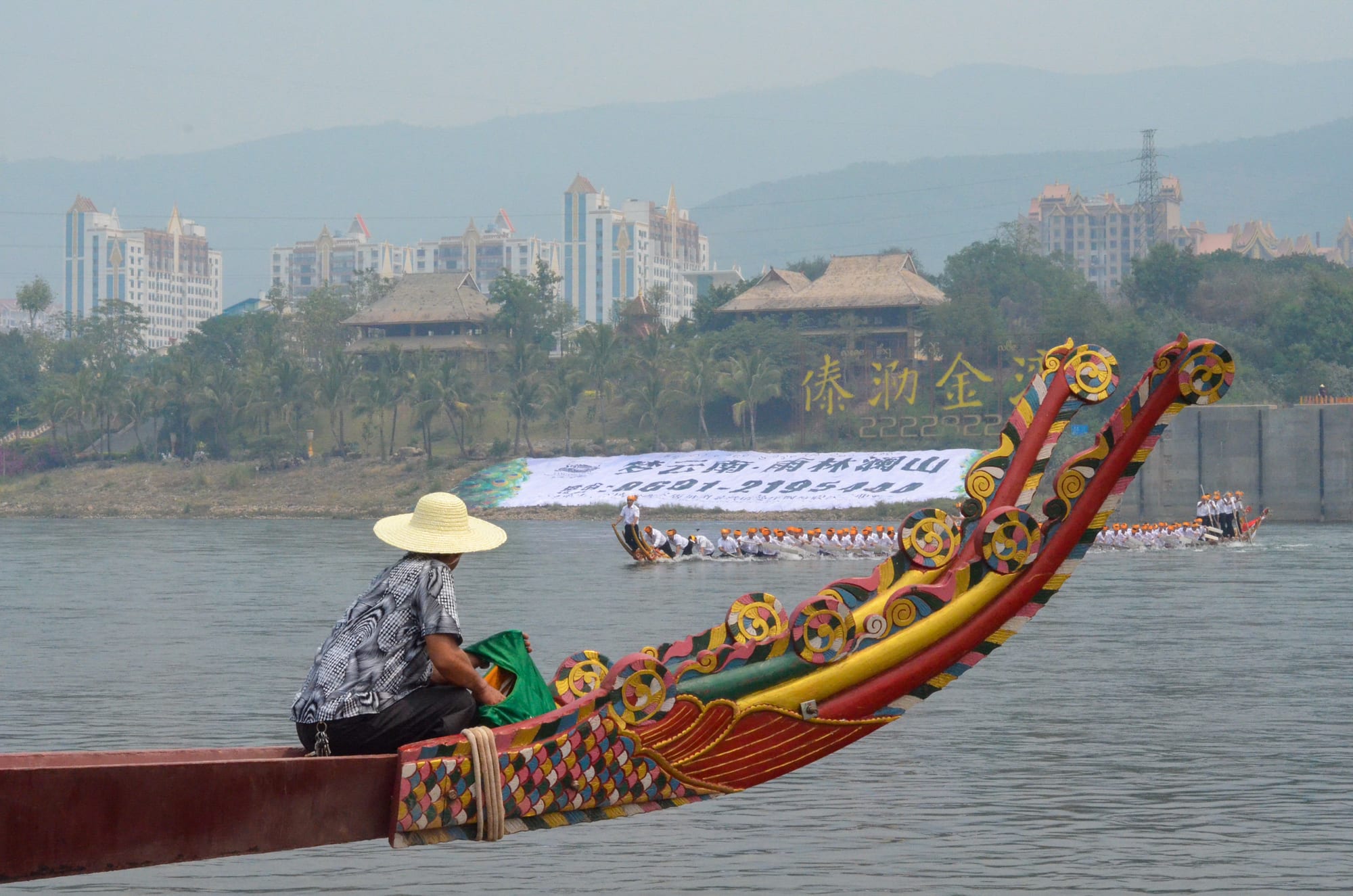
In early April comes Qingming, or Tomb-Sweeping Day, a national holiday on which families clean their relatives' graves, remove weeds, leave flowers and favourite foods, burn incense and sometimes burn joss paper made to look like money for the dead to use in the afterlife. It is also a spring outing, with picnics and kite flying. The Dragon Boat Festival, on the fifth day of the fifth lunar month and on UNESCO's list since 2009, brings boat races, rice dumplings wrapped in leaves, and plants such as moxa and calamus hung over doors for protection; in some provinces it honours the poet Qu Yuan. The Mid-Autumn Festival, with its mooncakes, celebrates family unity, and National Day on 1 October opens a week-long holiday.
Family milestones carry their own customs. The birth of a child is traditionally announced by sending red-dyed eggs to relatives and friends, and a dinner marks the baby's first month of life. At this traditional "first moon" celebration, a baby's head may be shaved in some families. Couples first sign a legal contract at a government office, without ceremony, and then hold a large reception with both families; weddings are often big, expensive affairs, though Western-style ceremonies with white gowns have grown popular. Funerals are traditionally large and elaborate too, mourners wear white, the colour of mourning, and while burial was once the norm, cremation is now usual in the cities. The dead are not forgotten afterwards: household altars and the annual visit to the grave at Qingming keep them part of family life.
Arts, crafts and music
Calligraphy has long been regarded as the highest of the arts and the deepest expression of a person's character, and Chinese calligraphy was inscribed on UNESCO's Representative List in 2009, along with Chinese paper-cut and the sericulture and silk craftsmanship of China; "Guqin and its music", the music of a plucked zither, had been inscribed in 2008. Painting, embroidery and jade carving belong to the same tradition, as does music played on instruments such as the two-stringed erhu fiddle and the vertical flute.
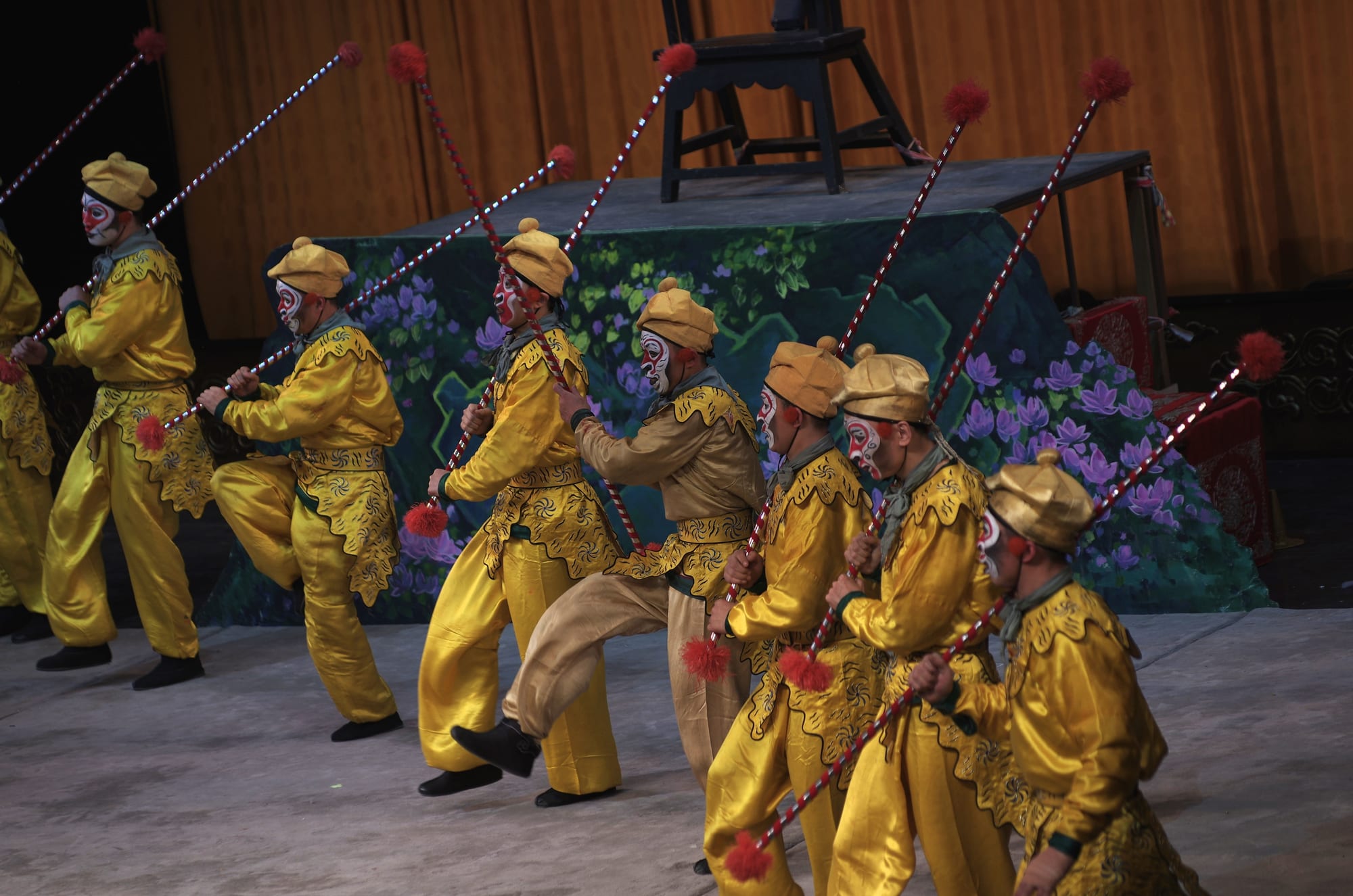
Chinese opera exists in many regional forms, several of them on UNESCO's list, including Yueju (Cantonese) opera and Tibetan opera. The best known, Peking opera, combines singing, recitation, acting and martial arts, with choreographed movements of hands, eyes, torso and feet, and exaggerated facial make-up whose colours and patterns signal a character's personality. Gentle civilian plays are accompanied by strings and winds, including the high-pitched jinghu fiddle, and military plays by percussion. Peking opera was inscribed in 2010. Kunqu, an older and more refined form, is also on the list.
Dos and don'ts for visitors
- Do greet the oldest person first, and stand up when being introduced.
- Do address people by family name and title until invited to use a given name.
- Do offer and receive business cards with both hands, text facing the recipient.
- Do decline food, drink or a gift once or twice before accepting; it is the expected courtesy.
- Do carry a passport at all times; police carry out random identity checks.
- Don't stand chopsticks upright in rice, or give clocks, sharp objects or anything in fours.
- Don't criticise or contradict anyone in public in a way that causes them to lose face.
- Don't take part in religious activity outside registered places of worship or approved venues, and don't photograph military sites, security forces or protests.
What to take away
Much of Chinese etiquette comes down to giving others face, honouring age and family, and taking care over small signs of luck and respect, and a visitor who does the same will find those courtesies warmly returned.