Culture & Customs · Chile
Chile: The Handkerchief and the Abrazo
A Catholic country in fast transition, a greeting that folds a handshake into a hug, and a national dance in which a raised handkerchief does most of the flirting
By Worldlore Editorial · 30 September 2026
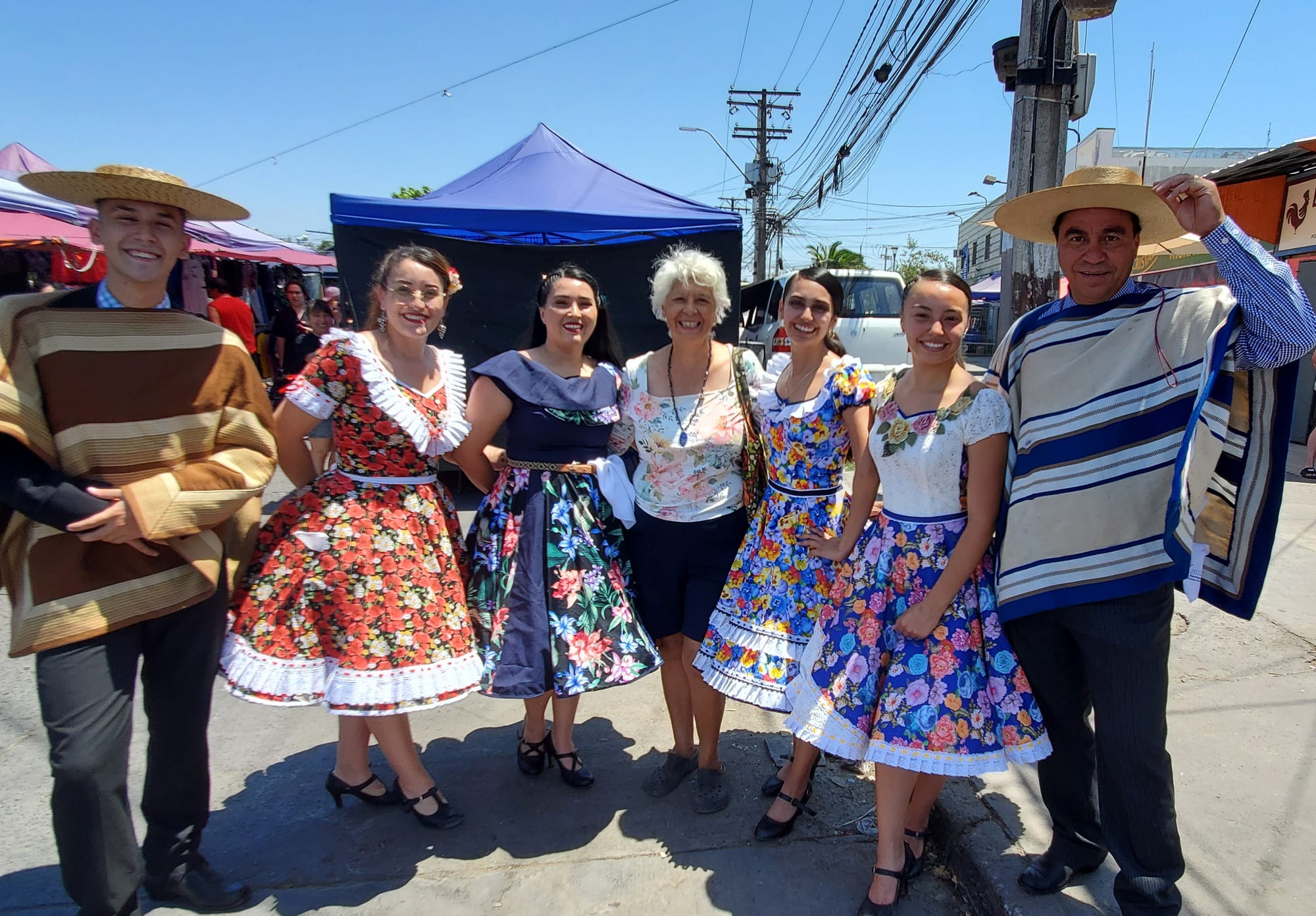
A guest arrives at a Chilean home and waits at the door until invited in. The head of the family is greeted first: a handshake folded into a hug for a man the guest knows, a light kiss on the right cheek for a woman. A bottle of wine or a box of chocolates changes hands and is opened on the spot. At the table, the host shows each person to a seat, and nobody starts eating until invited to. Glasses are raised, eyes meet, and the word is "salud". When the plates are cleared, nobody gets up to leave; the conversation, often laced with self-mocking humour, is the real point of the evening. Chilean manners are courteous and a little formal on the surface, but underneath runs a deep sense of loyalty to family and friends, and a conviction that time spent together is never wasted.
Faith, identity and values
Catholicism arrived with the Spanish in the sixteenth century and has shaped Chilean life ever since; La Tirana, the largest feast of the Virgin, alone draws 200,000 to 250,000 visitors each year. The picture today, though, is one of rapid change. At the 2024 census, 53.7 per cent of Chileans aged 15 and over identified as Catholic, 16.2 per cent as Protestant, most of them evangelical or Pentecostal, and 25.7 per cent said they had no religion at all. Cases of clergy sexual abuse have badly damaged the Church's standing. Even so, Catholic custom still marks many lives: children commonly make their First Communion, and some older Chileans still celebrate their saint's day. Hats and sunglasses come off inside a church.
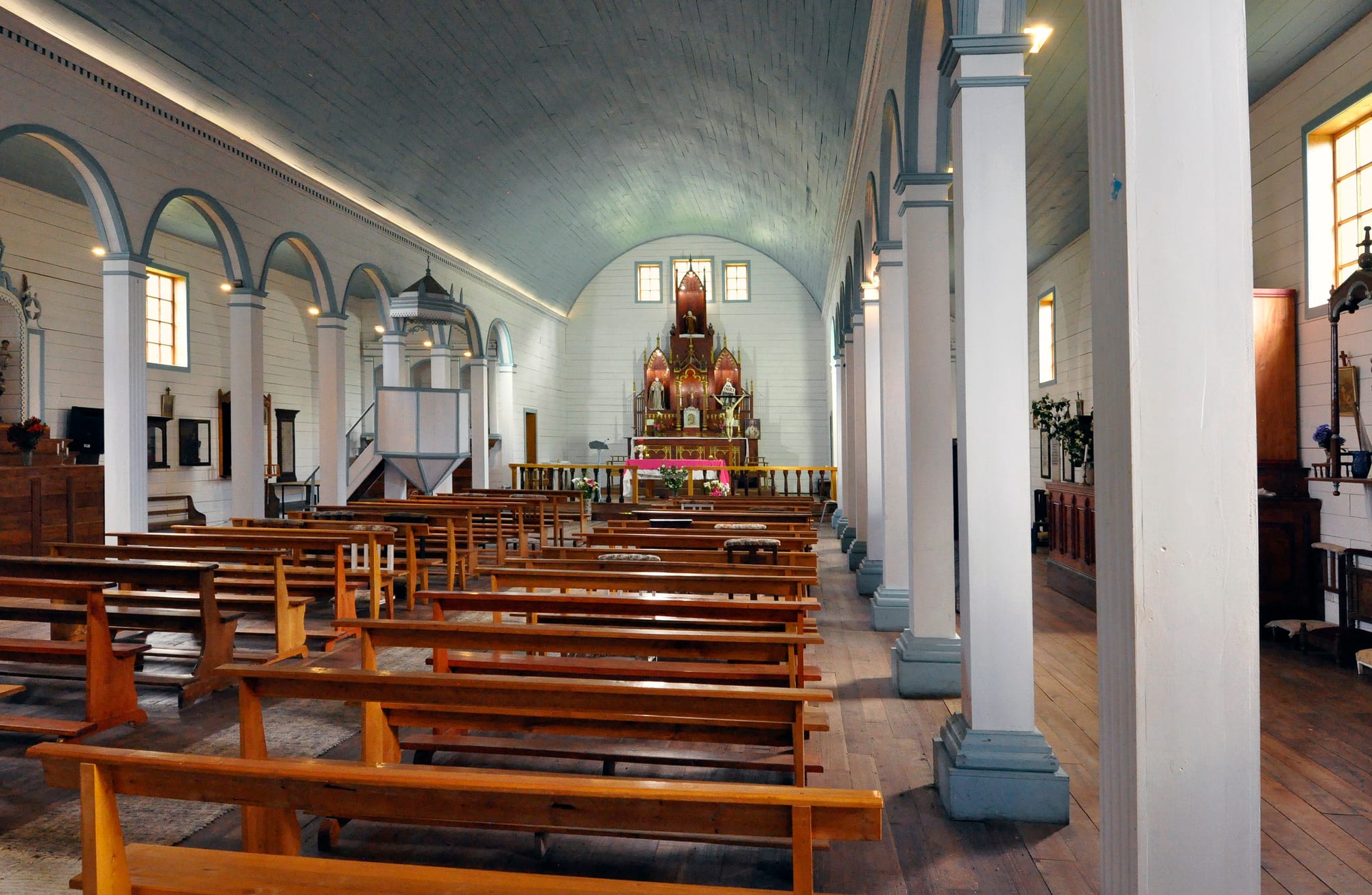
Popular faith runs alongside the official Church. Along roadsides across the country stand animitas, small shrines marking the place of a sudden or tragic death. The word refers not only to the shrine but to the soul believed to dwell there, and people leave flowers, candles and plaques thanking the dead for favours granted. Their appeal lies in their ordinariness: these were people who lived lives like those of the visitors, not perfect saints.
The Mapuche, by far the largest indigenous people in Chile, keep their own language, Mapudungun, and their own belief system, in which Ngünechen is a central divine figure. The machi, a spiritual healer who today is more often a woman than a man, conducts healing ceremonies with song and prayer, the sacred canelo tree and the kultrun, a shallow ceremonial drum. The ngillatun, the main communal prayer rite, gathers the whole community to ask for health and strength or to give thanks, and is often held before and after the harvest.
Beneath faith sit values that Chileans often describe as their own: solidarity in hard times, pride in the country, modesty, hospitality and loyalty, above all to the family, whose interests are expected to come first. Grandparents often carry real authority in family affairs. Social class is also keenly felt, and many Chileans describe their society as conservative, modest and respectful of authority, even as younger generations push steadily towards more liberal attitudes.
Greetings and meeting people
The characteristic greeting between friends and family is the abrazo, a handshake combined with a hug; male friends may add a light slap on the back. Among people who are less close, a single kiss on the right cheek is common. In formal settings or at a first meeting, people usually shake hands with those of the same gender, and a man typically waits for a woman to offer her hand. On leaving a small gathering, the abrazo is repeated with each person individually, rather than a general goodbye to the room.
Forms of address show respect. Strangers are addressed as señor or señora followed by the surname, and older people known personally as don or doña followed by the first name. First names are for friends, family and anyone who has invited their use. The most senior person present, or the head of the household, is greeted first, and direct eye contact during a greeting is taken as a sign of honesty and interest.
Conversation tends to be warm, close and indirect. Chileans generally stand less than an arm's length apart, and backing away can seem rude. Conflict is avoided where possible; an awkward subject is more likely to be steered gently aside than confronted, and humour, often at one's own expense, is used freely. A few gestures are worth knowing: a finger wagged from side to side means "no", while beckoning with a hand or a single finger, or clicking fingers at someone, is considered rude. Comparisons between Chile and other South American countries are best avoided; football, by contrast, is a reliably good subject.
Hospitality and being a guest
Chileans often drop in on one another without warning, and turning away a visiting relative or missing a family gathering without good reason can cause real offence. Social invitations run on relaxed time: arriving around half an hour after the stated hour is normal, though punctuality is expected for business or when visiting someone of higher status. A guest invited to a home usually brings wine or chocolate. Gifts are opened when received, and knives or scissors are avoided, since sharp objects suggest a wish to sever the relationship.
At the table, the host shows guests to their seats and invites them to begin. Both hands stay above the table throughout the meal, and it is polite to finish what is on the plate. A drink that is offered should be accepted if possible, since refusing can seem impolite. During a toast, people raise their glasses, look at the person being toasted and say "salud". Leaving straight after eating is considered impolite: the meal is followed by conversation, and a good guest stays for it. Loud talk in restaurants and other public places is frowned upon.
Festivals and life's big moments
The year's great celebration is the Fiestas Patrias. The 18 and 19 of September are public holidays: the first marks the First Government Junta of 1810, the second the Glories of the Army. Around them, the country fills with fondas and ramadas, temporary venues with dance floors, music and food stalls, and the cueca is danced everywhere.
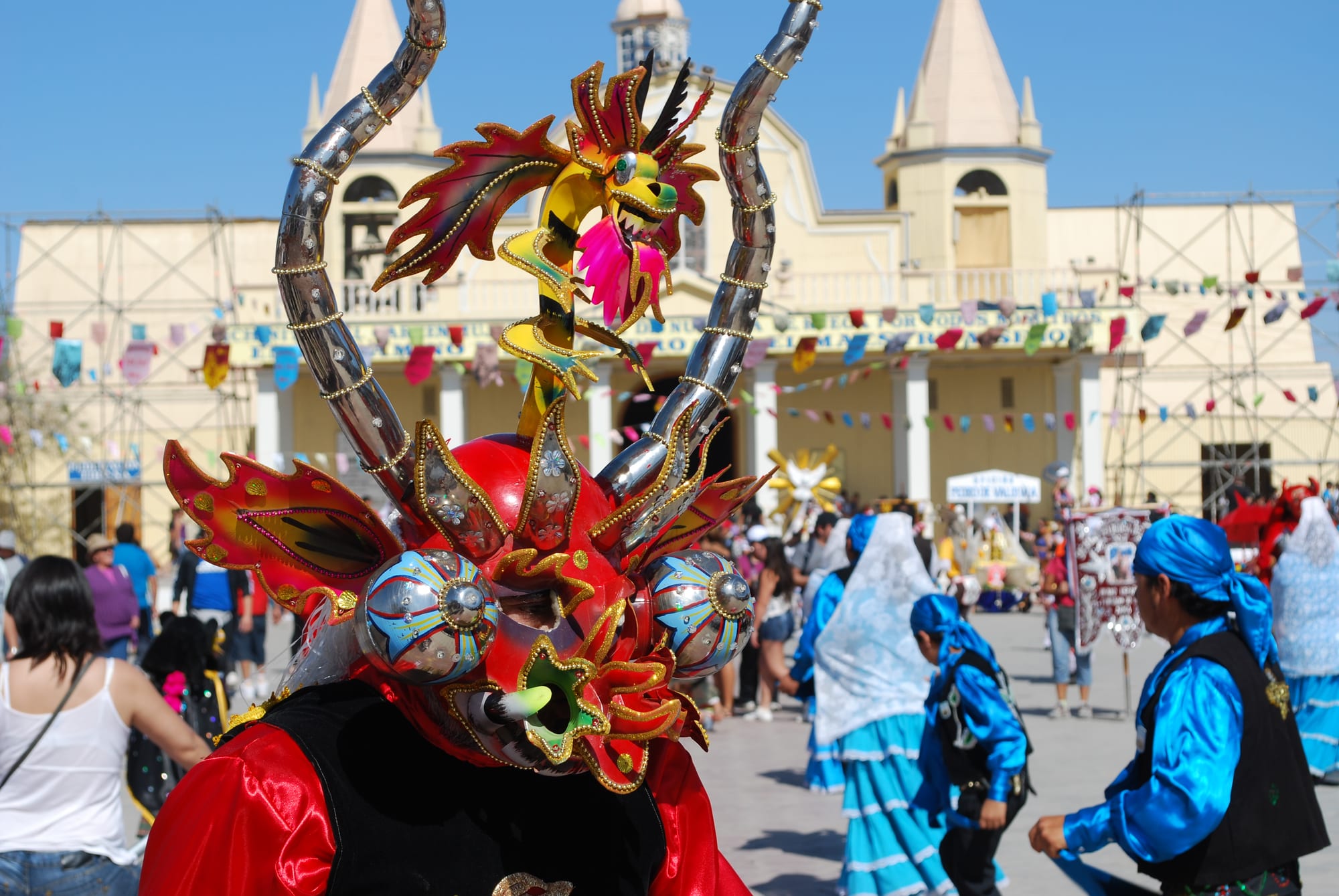
The religious calendar is dominated by feasts of the Virgin. The largest is La Tirana, a week-long feast in a small oasis town of the northern desert for the Virgen del Carmen, patron of Chile, that culminates on 16 July. Dance groups known as bailes come to sing, dance and pray before her image, many to keep a promise made to the Virgin. Masked devil dancers, the diablada, are among the most striking of them.
On the Sunday after Easter, the Cuasimodo tradition sees a priest taken out to bring Communion to the sick and elderly at home, escorted by riders called cuasimodistas. Since 2021, the winter solstice has also been a national holiday, the National Day of Indigenous Peoples. The solstice is the new year for several indigenous peoples, celebrated by the Mapuche as We Tripantu, by the Aymara as Machaq Mara and by the Quechua as Inti Raymi, as a moment of renewal for both nature and people.
Family milestones follow a mostly Catholic pattern. Children are baptised, and First Communion is a major family occasion. Many couples hold both a civil and a church wedding. Chile was one of the last countries in the world to legalise divorce, in 2004. When a death is sudden, the animita by the roadside keeps the memory of the person, and a connection with their soul, in public view.
Arts, crafts and music
Few things are as closely tied to Chilean identity as the cueca. Its origins are disputed, but the most widespread account links it to the zamacueca, which arose in Peru as a variation of the Spanish fandango, and it carries some African influences. In the Chilean form, a couple circle one another in a stylised courtship full of subtle flirtation, each waving a handkerchief, while onlookers clap out the rhythm. The dance moved from rural celebrations into the cities in the early twentieth century, reaching working-class districts of Santiago such as La Vega and Matadero, and today it is danced year-round in dedicated venues as well as in September.
Religious devotion has its own music. The baile chino, inscribed on UNESCO's Representative List of the Intangible Cultural Heritage in 2014, is performed by groups of flautists, drummers and dancers who express devotion to Jesus and the Virgin Mary, flexing their legs and hopping as they play pifilca flutes, a tradition with roots in pre-Columbian central Chile. Mapuche music has its own character and instruments, among them the kultrun drum. In 2025 the "Family tradition circus in Chile" was also added to UNESCO's Representative List.
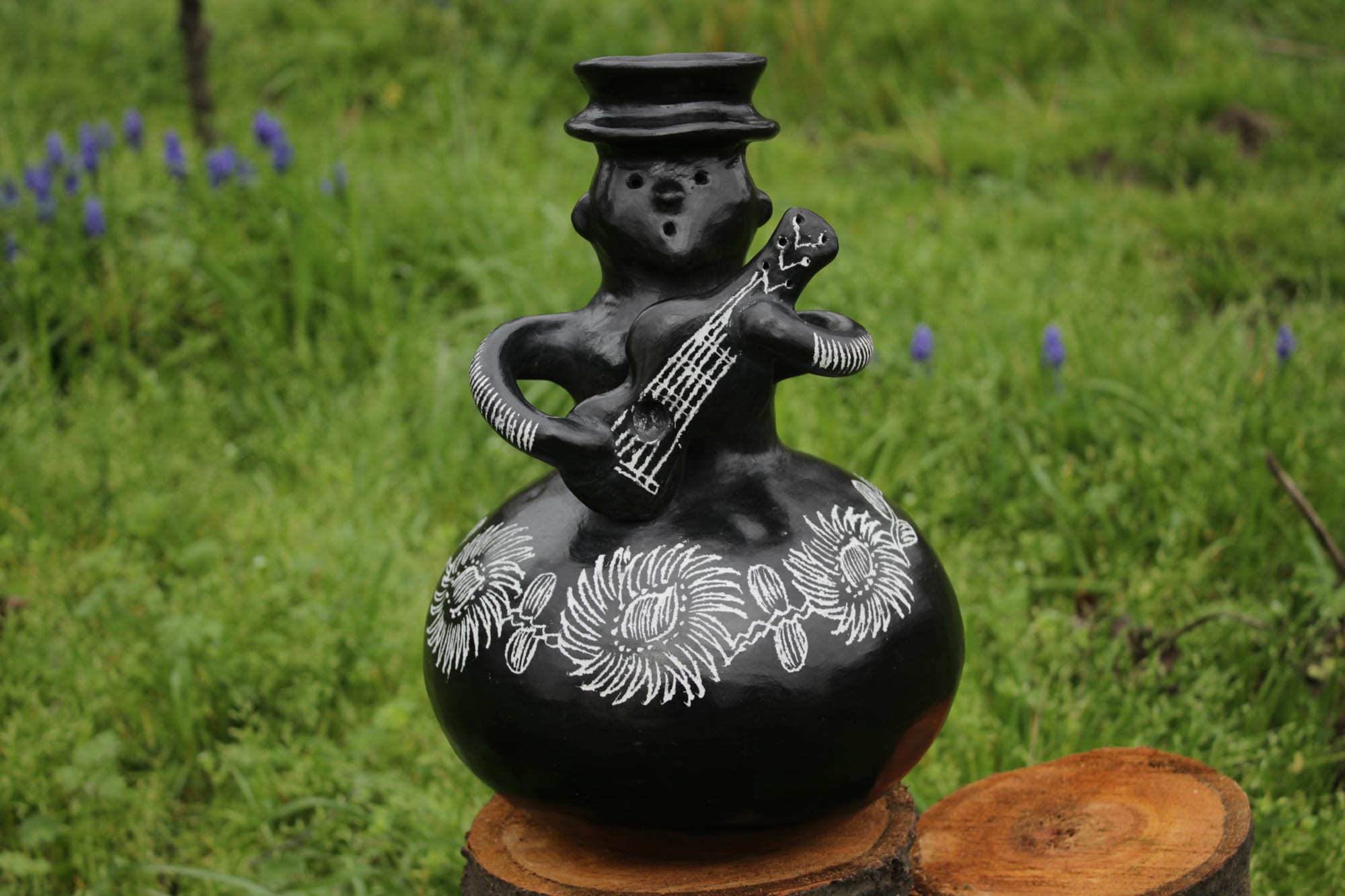
The country's best-known craft may be the black pottery of Quinchamalí and Santa Cruz de Cuca: glossy black pieces with white incised decoration, ranging from pots and cups to figures of rural life such as la guitarrera, a peasant woman with a guitar. The knowledge passes down female lineages, and the craft has given its makers social and economic autonomy. In 2022 "Quinchamalí and Santa Cruz de Cuca pottery" was inscribed on UNESCO's List of Intangible Cultural Heritage in Need of Urgent Safeguarding: raw materials are becoming harder to obtain, the work pays poorly, and fewer young people are taking it up.
Dos and don'ts for visitors
- Do greet acquaintances with a kiss on the right cheek or an abrazo, and shake hands in formal settings.
- Do use señor or señora with a surname, or don or doña with a first name for older people, until invited to use first names.
- Do bring wine or chocolate when invited to a home, and avoid giving knives or scissors.
- Do wait for the host to invite everyone to eat, keep both hands above the table and stay on for conversation afterwards.
- Do look the person in the eye and say "salud" when glasses are raised.
- Don't compare Chile with its neighbours or other South American countries.
- Don't beckon with a finger or click fingers to attract someone's attention.
- Don't talk loudly in restaurants or other public places.
What to take away
Chilean courtesy can seem reserved at first, but it rests on warmth and loyalty, and a guest who greets properly, lingers at the table and joins the clapping when the handkerchiefs come out will be treated as one of the family.