Attractions & Natural Wonders · Chile
Chile: Ten Attractions and Natural Wonders
Granite towers over a Patagonian lake, the driest desert on Earth, a row of stone giants facing inland on a remote island, and marble caves glowing blue from below
By Worldlore Editorial · 19 September 2026
A country that is all edges
Chile is 4,300 kilometres long and rarely more than 200 wide — a strip between the Andes and the Pacific that runs from the tropics almost to Antarctica. That makes it a country of extremes at either end: the world's driest desert in the north, sub-Antarctic ice fields in the south, with vineyards, volcanoes, and a temperate lake district in the middle. Its most famous single attraction sits 3,500 kilometres offshore.
The ten below run north to south. Distances are large; you fly between regions (Santiago–Punta Arenas is over three hours). The southern summer, December to March, is the season for Patagonia; the north and the Atacama are good year-round.
1. Torres del Paine
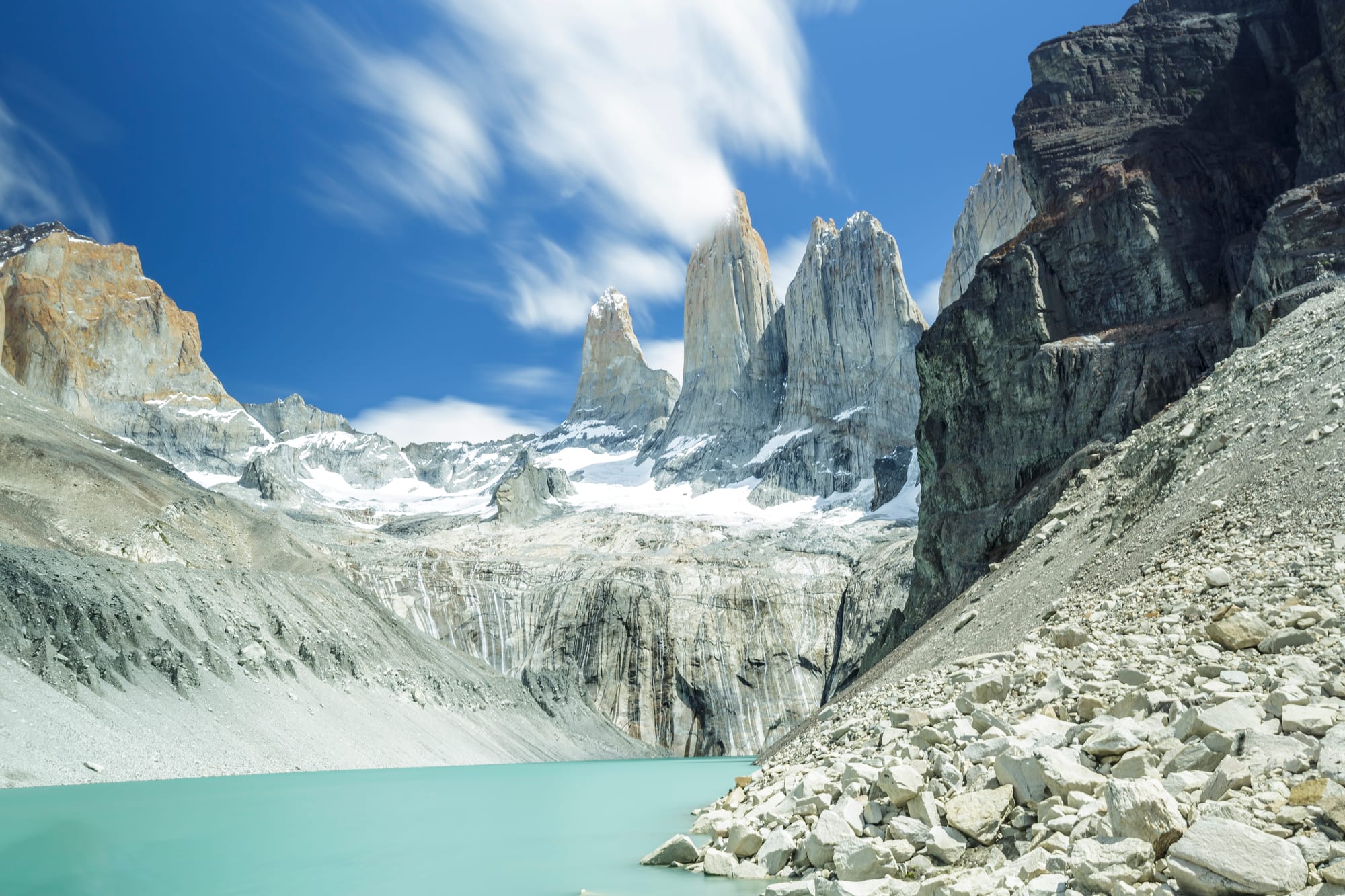
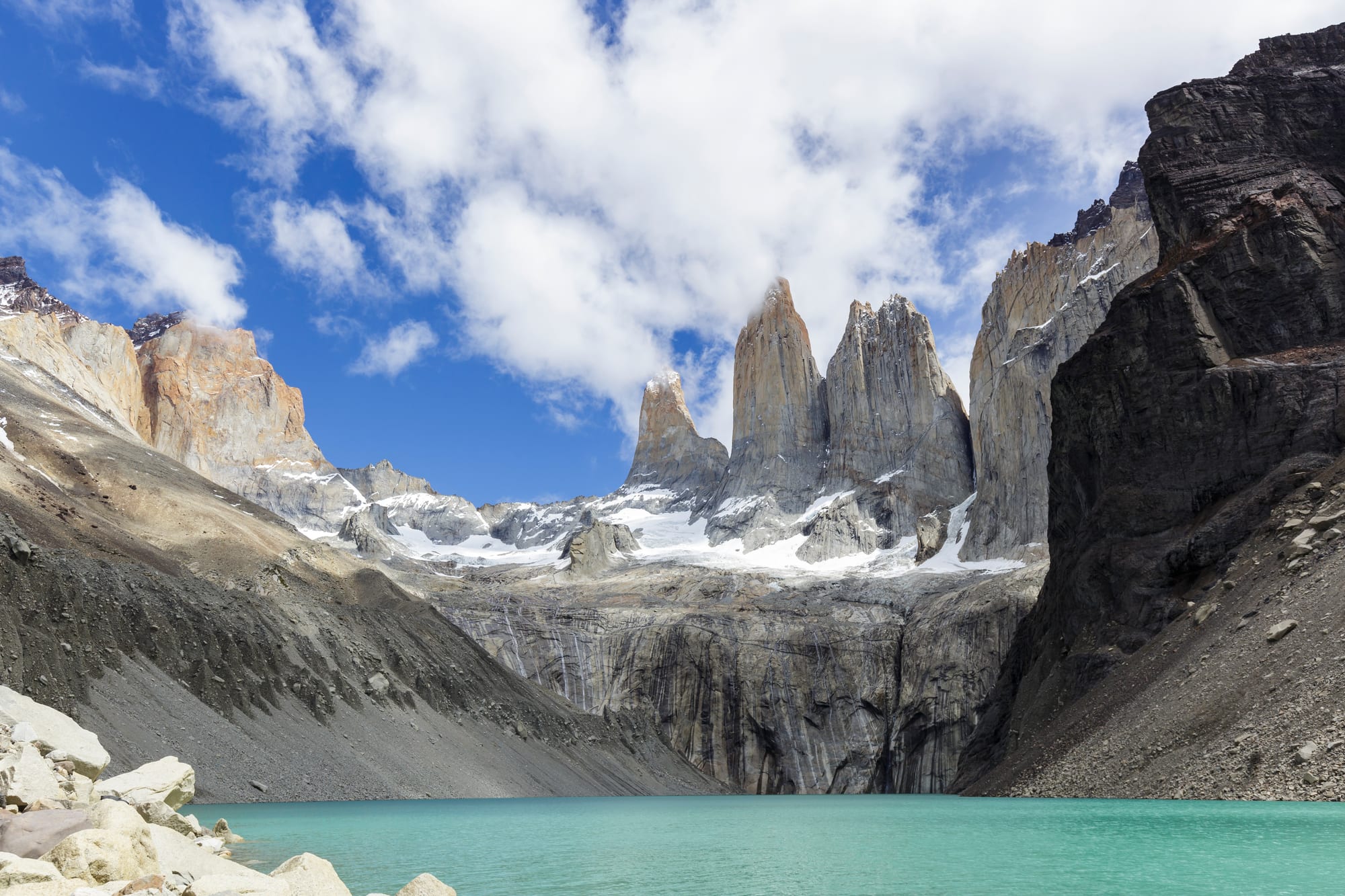
Torres del Paine, in the far south, is one of the great national parks of the world: a compact massif of granite towers and horn-shaped peaks rising straight out of the steppe, ringed by turquoise lakes, hanging glaciers, and rivers, with guanacos and the occasional puma on the plains. The classic ways to see it are the four-to-five-day "W" trek or the week-plus full circuit, staying in refuges and campsites; day visitors drive the road and do shorter walks.
The base is Puerto Natales, a few hours from Punta Arenas or from El Calafate in Argentina.
2. The Atacama Desert
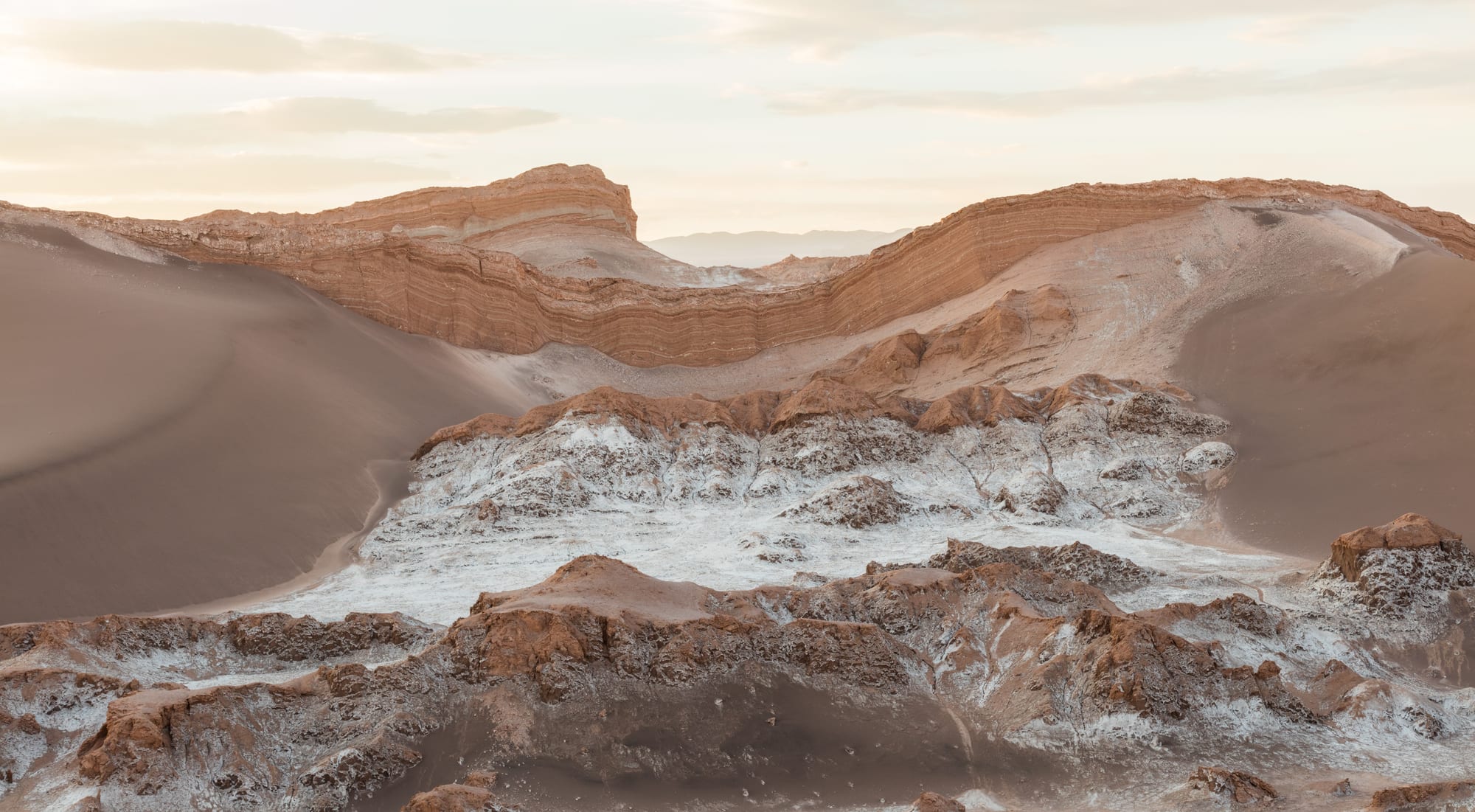
The Atacama, in the north, is the driest non-polar place on Earth — some weather stations have never recorded rain. Its hub is the adobe village of San Pedro de Atacama, ringed by an unlikely density of sights: the wind-carved Valle de la Luna, flamingo-filled salt lagoons, high-altitude turquoise lakes, hot springs, petroglyphs, and — because the skies are so clear and dark — some of the best stargazing anywhere.
The altitude (San Pedro is at 2,400 m, many excursions well above 4,000 m) needs respecting.
3. Easter Island (Rapa Nui)
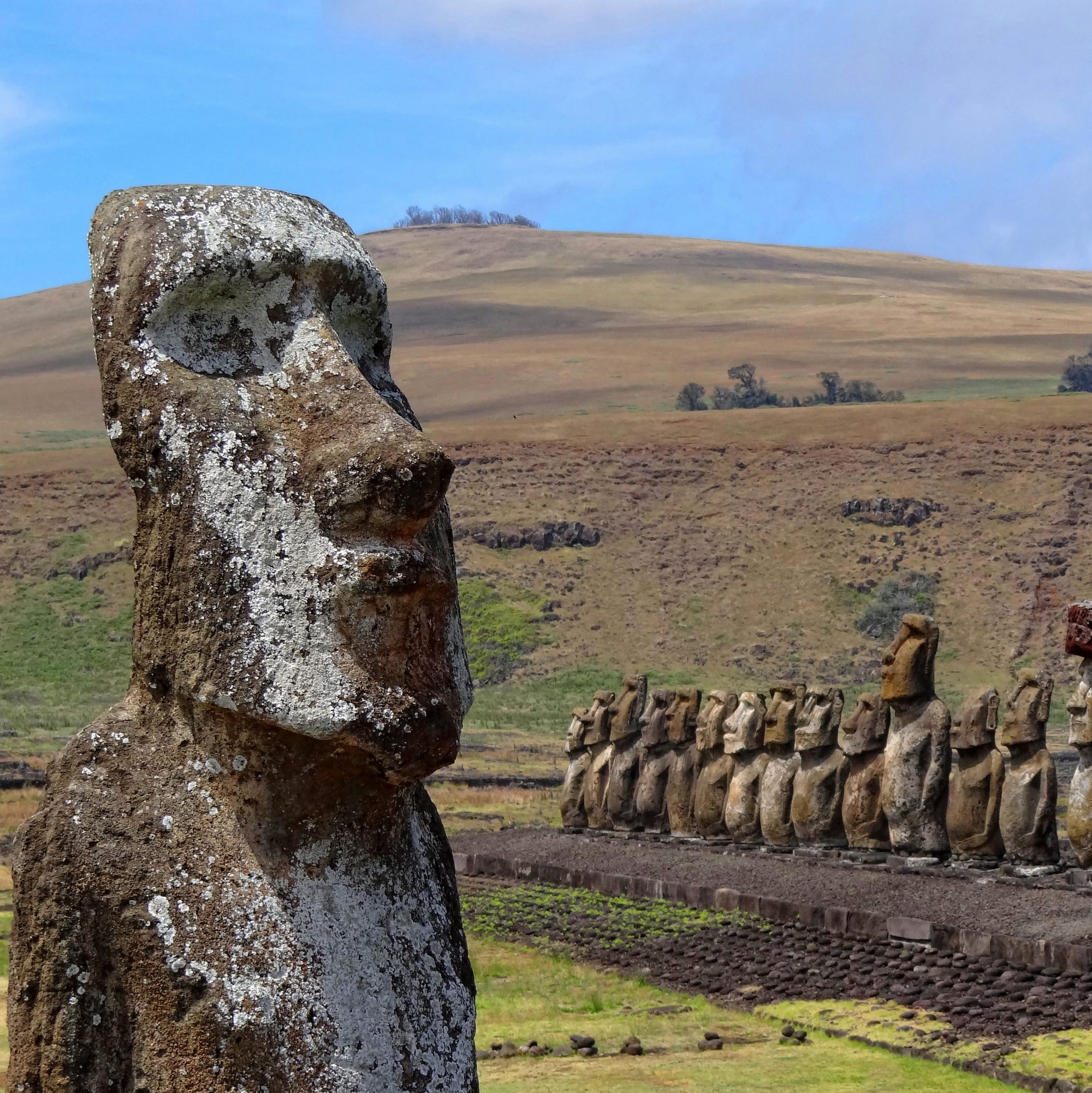
Rapa Nui, a Chilean territory 3,500 kilometres out in the Pacific, is one of the most isolated inhabited places on Earth, and it is covered in the work of the Polynesian society that settled it: nearly 900 moai, the monolithic stone ancestor figures, most toppled in the island's own upheavals and some re-erected. The whole island is a national park and a UNESCO World Heritage Site.
Key sites are the quarry at Rano Raraku, where hundreds of unfinished moai lie in the hillside; the restored platforms at Tongariki and Anakena; and the birdman ceremonial village of Orongo. Flights go from Santiago.
4. Valparaíso
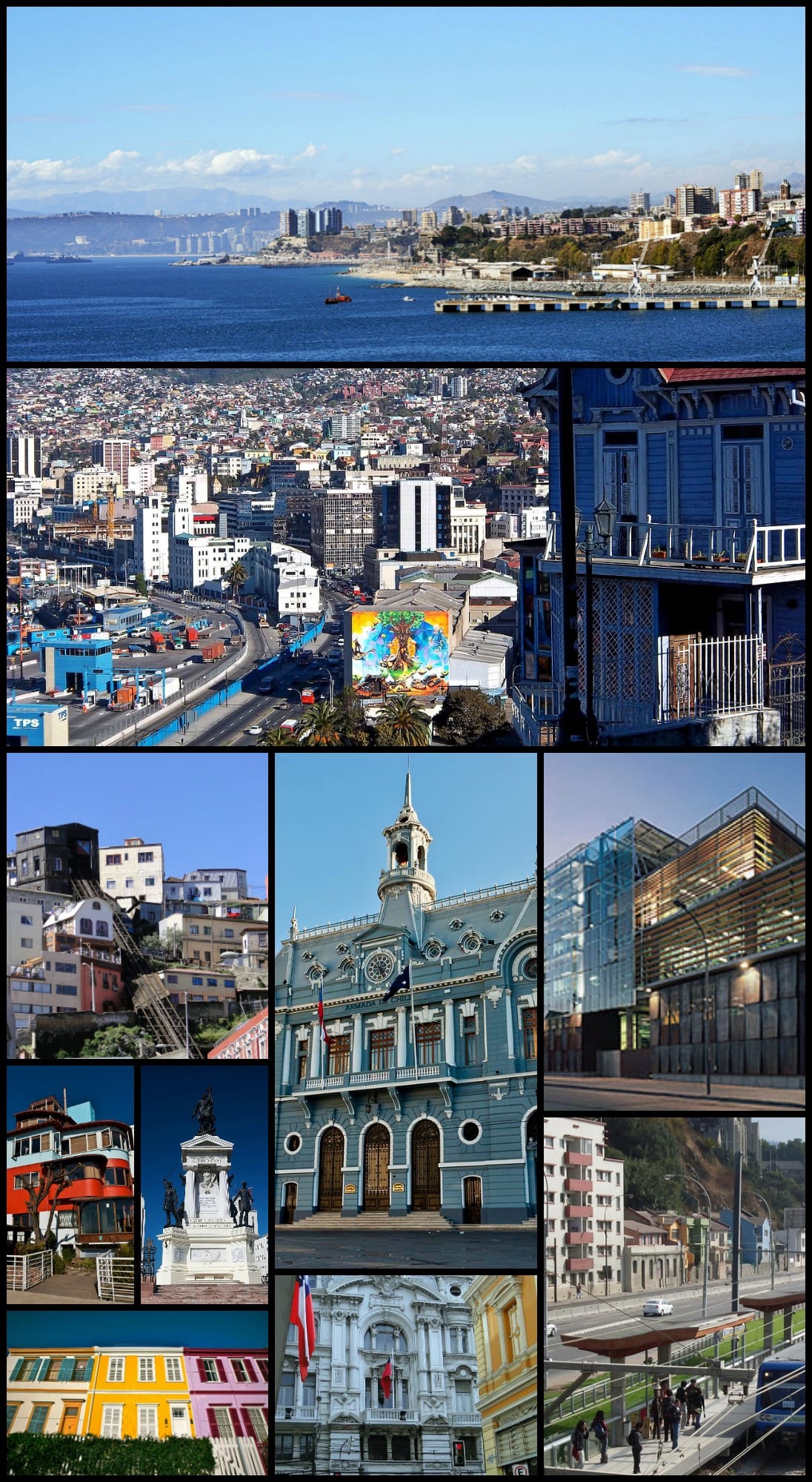
An hour and a half from Santiago, the port city of Valparaíso spills up 40-odd steep hills in a tangle of clapboard houses painted every colour, linked by alleys, staircases, and a set of century-old funicular lifts. The historic quarter is a UNESCO World Heritage Site; the city is also Chile's street-art capital and was a favourite of the poet Pablo Neruda, whose hillside house, La Sebastiana, is a museum.
The neighbouring resort of Viña del Mar is the beach counterpoint.
5. Santiago
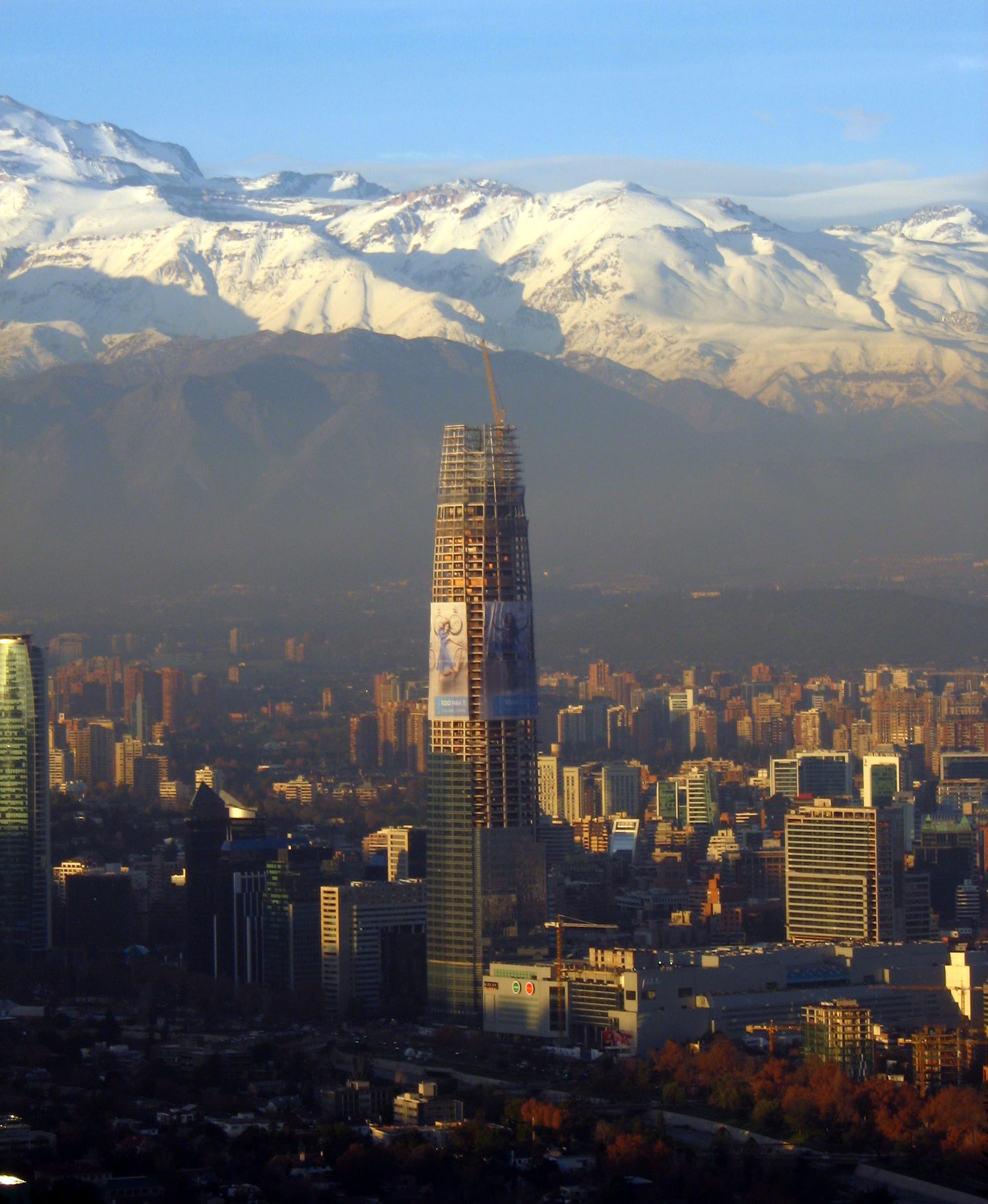
Chile's capital, home to a third of the country, sits in a bowl with the Andes rising abruptly on its eastern edge — close enough for a morning's skiing in winter. The centre has the colonial Plaza de Armas, the presidential La Moneda palace (bombed in the 1973 coup, since restored), the bohemian Bellavista and Lastarria districts, and the hills of Santa Lucía and San Cristóbal for the view.
The excellent Museum of Memory and Human Rights covers the Pinochet dictatorship; the surrounding Maipo and Casablanca valleys are wine country.
6. The Marble Caves
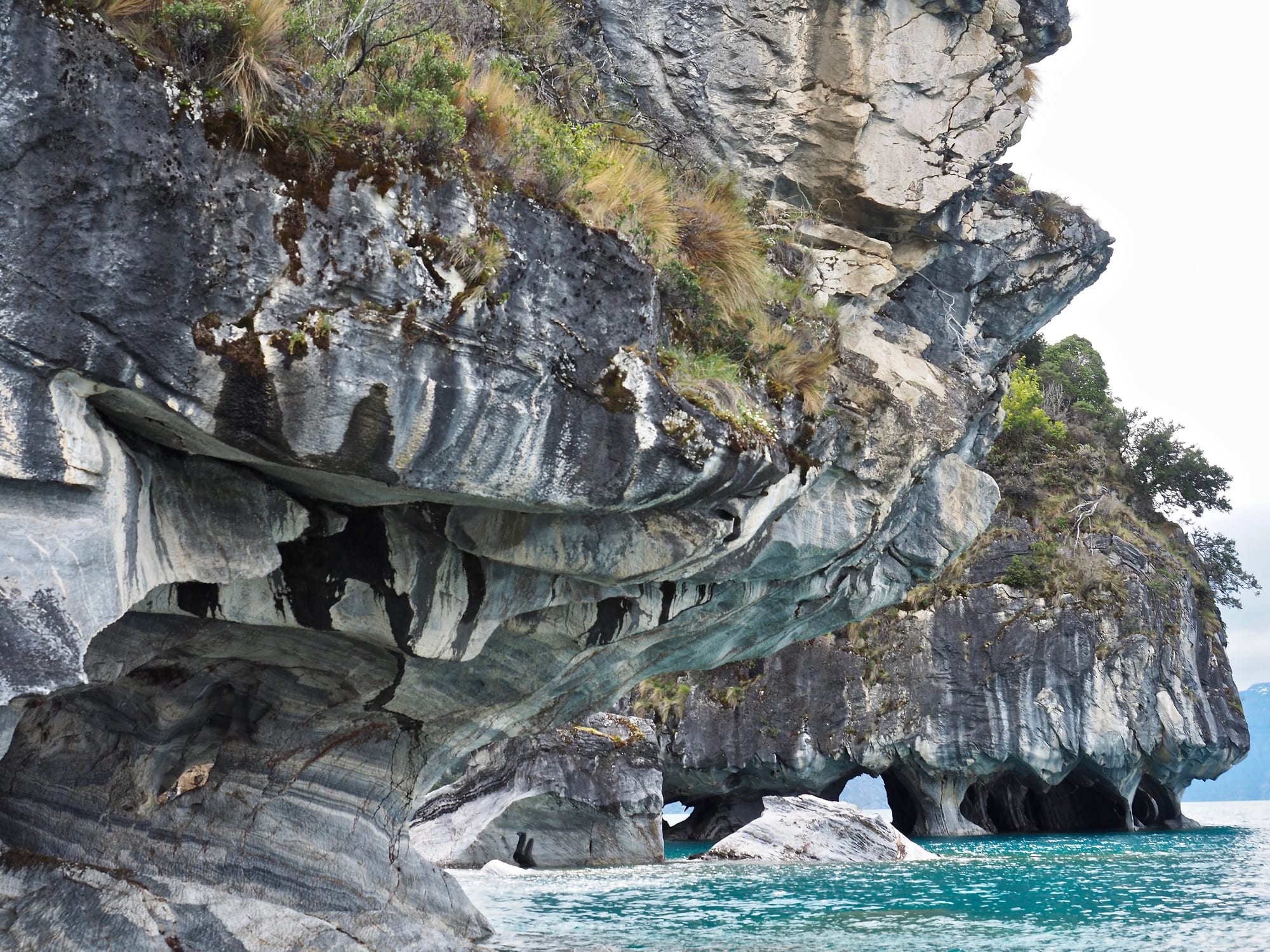
On Lake General Carrera, the second-largest lake in South America, waves have worn a peninsula of marble into a set of caves, tunnels, and columns — the "Marble Cathedral" and "Marble Chapel". The stone is swirled grey, white, and pink, and inside the caves it glows turquoise from light bouncing off the intensely blue glacial water.
You visit by small boat or kayak from Puerto Río Tranquilo, on the Carretera Austral, the rough scenic highway through Aysén — one of the wildest road trips in the Americas.
7. The Lake District
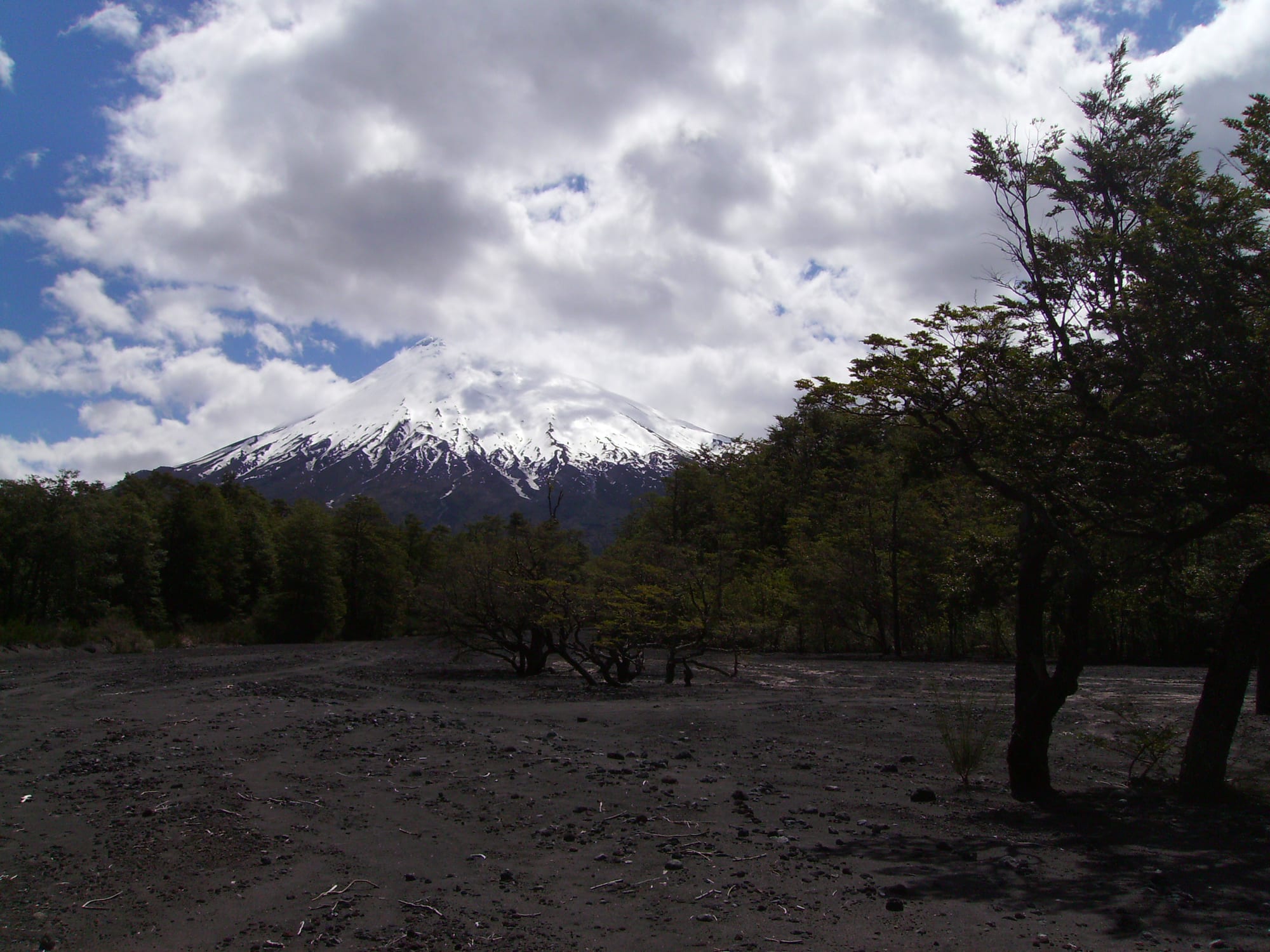
Between the central valley and Patagonia, the Lake District is a green landscape of big lakes, dairy farms, araucaria forest, and a line of snow-capped volcanoes — Osorno, Villarrica, Llaima. It is Chile's adventure-sports and hot-springs country, based on towns like Pucón (below the smoking Villarrica, which you can climb) and Puerto Varas, with its German-Chilean architecture on Lake Llanquihue.
The Petrohué waterfalls and the boat crossing to Argentina through Lake Todos los Santos are classic outings.
8. Chiloé
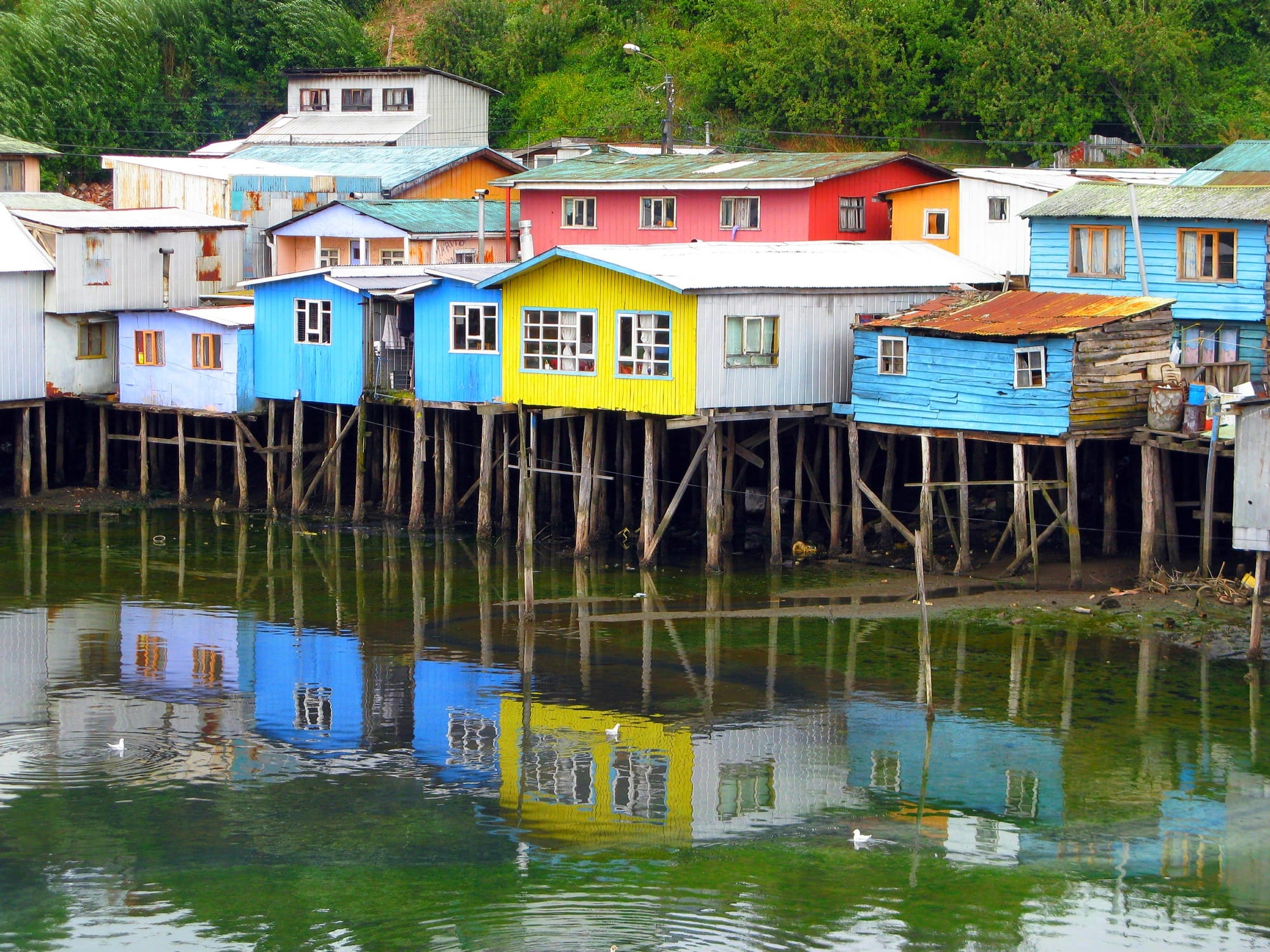
The large island of Chiloé, off the Lake District coast, has a culture of its own — a mythology of ghost ships and forest goblins, a distinctive hearty cuisine (the curanto, cooked in a pit), and, most visibly, more than 150 wooden churches built by Jesuit and Franciscan missionaries, sixteen of them a UNESCO World Heritage Site. Castro, the capital, has rows of brightly painted stilt houses (palafitos) over the water.
The island is often wet and grey, which suits it. Ferries cross from Pargua on the mainland.
9. The El Tatio geysers
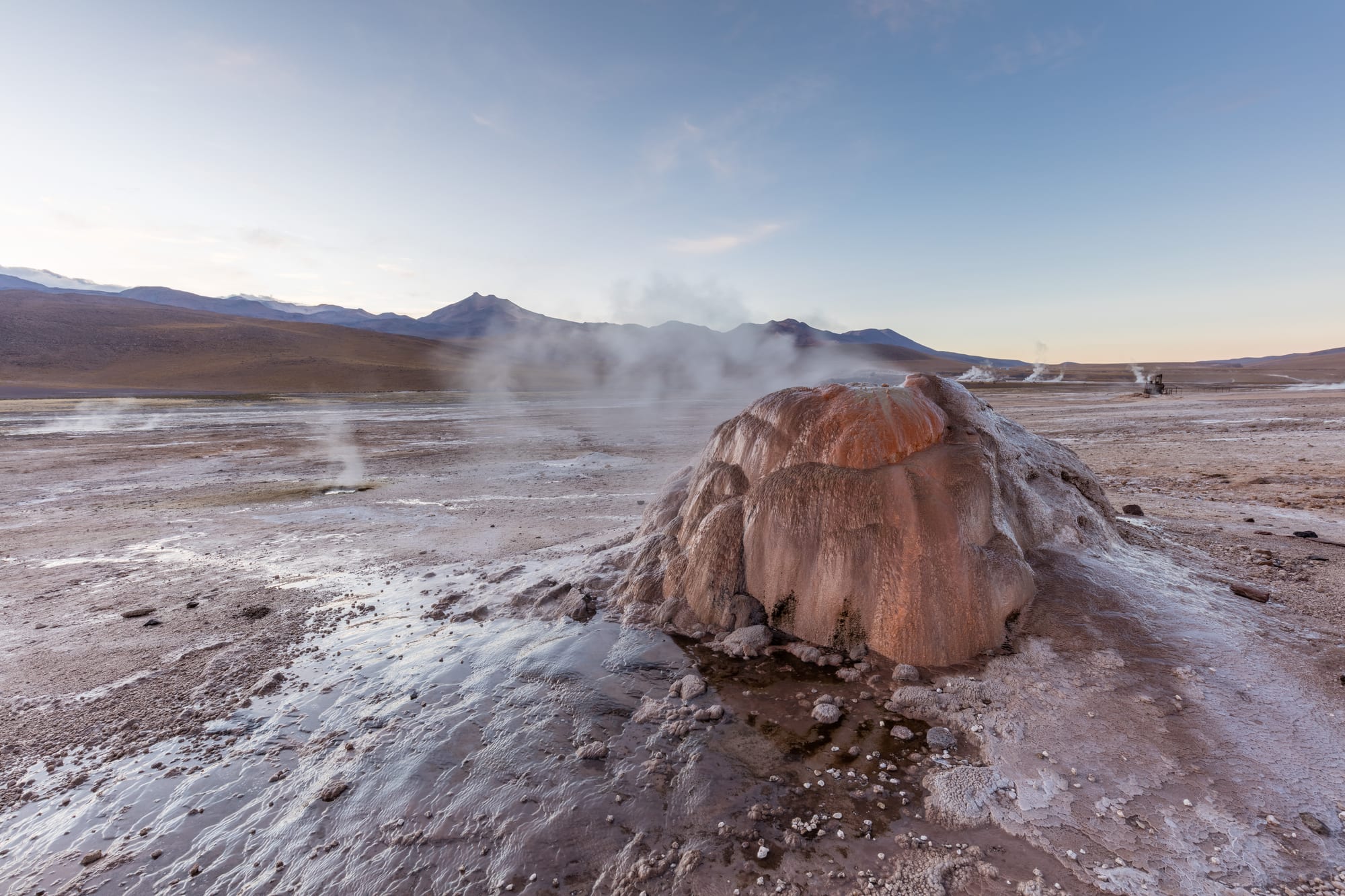
High on the altiplano above San Pedro, El Tatio is the largest geyser field in the southern hemisphere — more than 80 active geysers and fumaroles, plus bubbling mud and a hot pool. The show is best at dawn, when the cold air makes the steam columns dramatic, so tours leave San Pedro around 4am.
At over 4,300 metres it is genuinely high, and freezing before sunrise. Watch your step: the crust around the vents is thin, and people have been badly scalded.
10. The Elqui Valley
Inland from the city of La Serena, the Elqui Valley is a thin green ribbon of vines and papaya orchards between arid mountains — the home of pisco, Chile's grape brandy, and of the Nobel-winning poet Gabriela Mistral, born in the village of Vicuña. Because the skies here are among the clearest and darkest on the planet, the ridges are dotted with major international observatories, and small tourist observatories run nightly stargazing sessions.
The valley has also drawn a countercultural, new-age scene, with the town of Pisco Elqui at its centre.
Chile is a long thin country best tackled in sections: Patagonia and Torres del Paine; the Atacama and the north; the Lake District and Chiloé; and Santiago, Valparaíso, and the wine valleys as a base. Easter Island is a trip of its own.