History · Chad
Chad: The Sahel Fault Line
Ancient states around a shrinking lake, a French colony split between desert and savanna, and forty years of civil war along the line between north and south
By Worldlore Editorial · 10 September 2026
A country of three climates
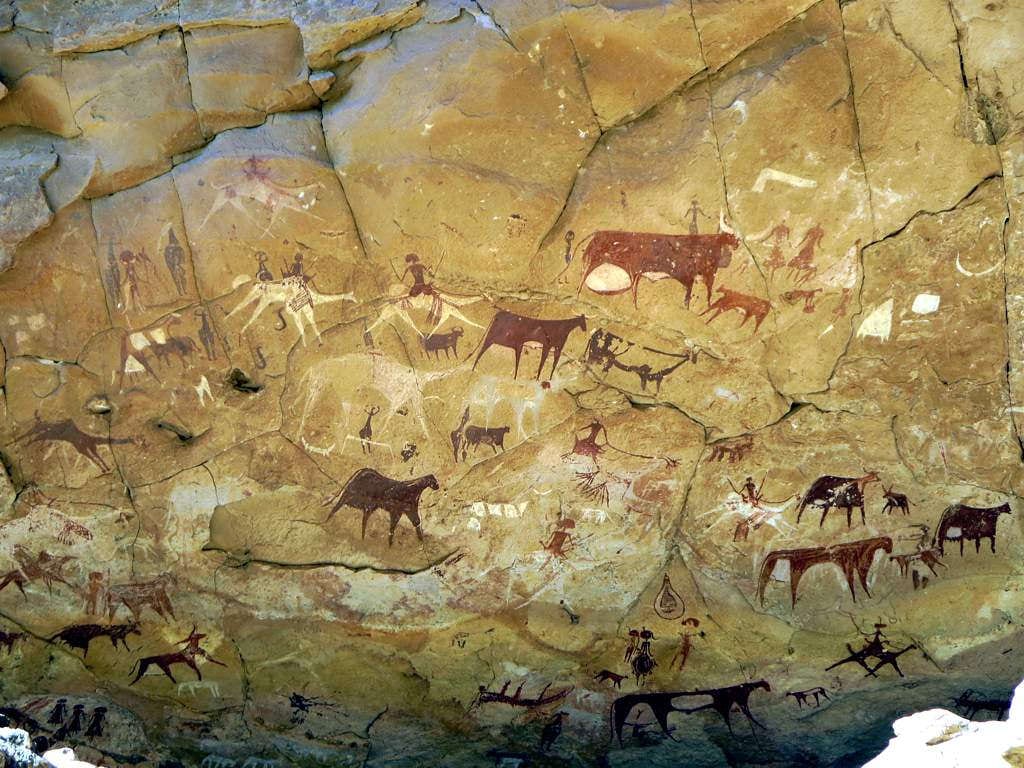
Chad is a huge landlocked country, the fifth-largest in Africa, and it is really three countries stacked north to south. The north is Saharan desert, rising to the Tibesti mountains, the highest in the Sahara. The centre is Sahelian scrub. The south is wetter farming savanna, where most of the 18 million people live. Along that gradient runs a human fault line as old as the states of the region: a Muslim, partly Arabic-speaking, often pastoralist north and centre, and a Christian and traditionalist farming south. Modern Chad's history is largely the history of conflict across that line.
A short history
- ~7 million years ago
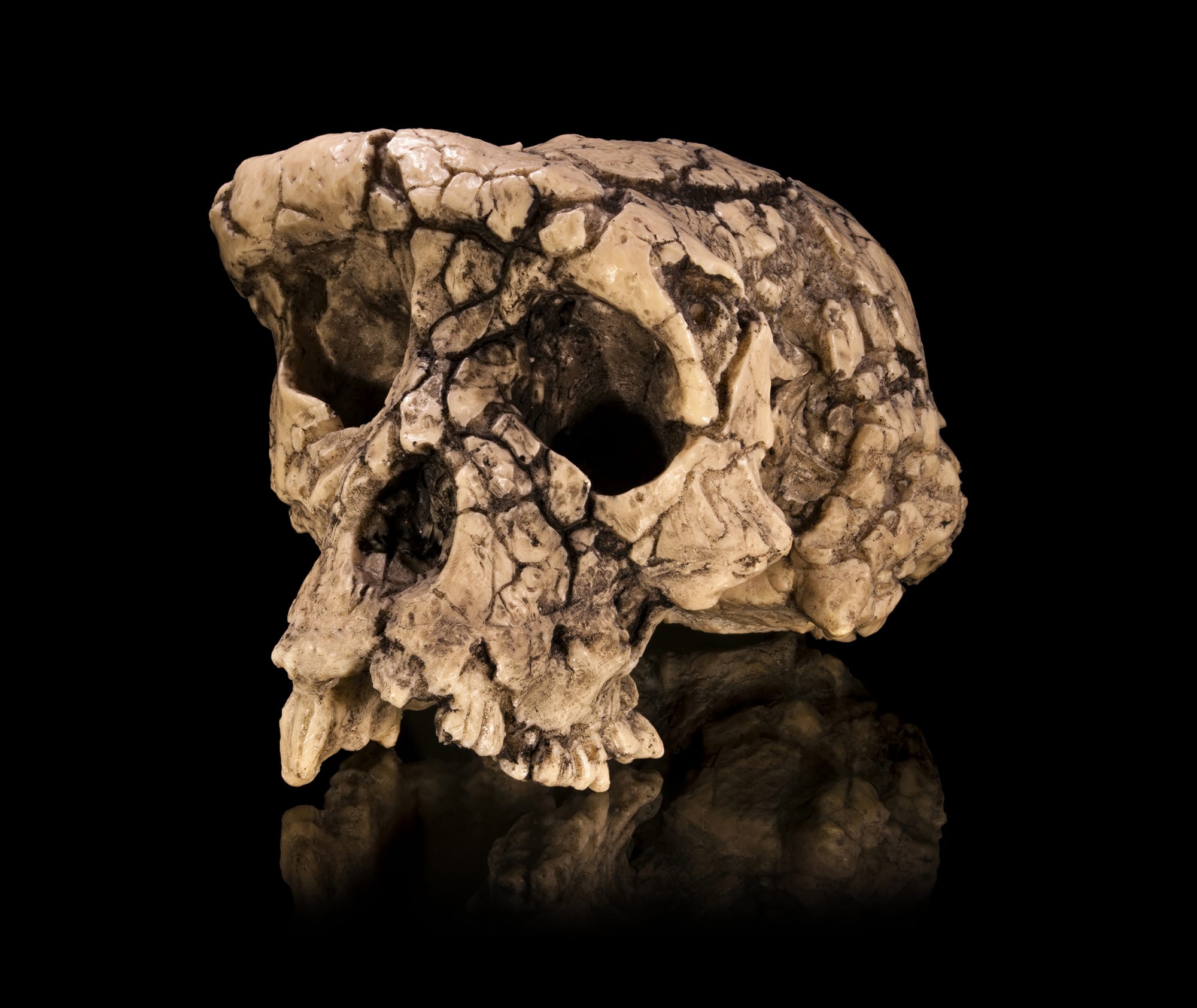
Toumaï
One of the oldest known hominins is buried in what is now the Chadian desert.
- 9th–19th c.
Kanem-Bornu
A great Saharan trading and slave-raiding empire around Lake Chad; Islam arrives in the 11th century.
- 16th–19th c.
Bagirmi and Wadai
Muslim sultanates in the east raid the stateless south for captives.
- 1900
French conquest
French columns converge on Lake Chad and defeat the warlord Rabih az-Zubayr.
- 1920s
The cotton colony
France imposes compulsory cotton farming in the south.
- 11 August 1960
Independence
Chad becomes independent under the southerner François Tombalbaye.
- 1965 onward
Civil war
Northern rebellion grows into decades of factional and foreign-backed war.
- 1982–1990
Hissène Habré
A brutal presidency; his police kill an estimated 40,000 people.
- 1990–2021
The Déby era
Idriss Déby rules for 30 years; his son takes over on his death in 2021.
Empires around a lake
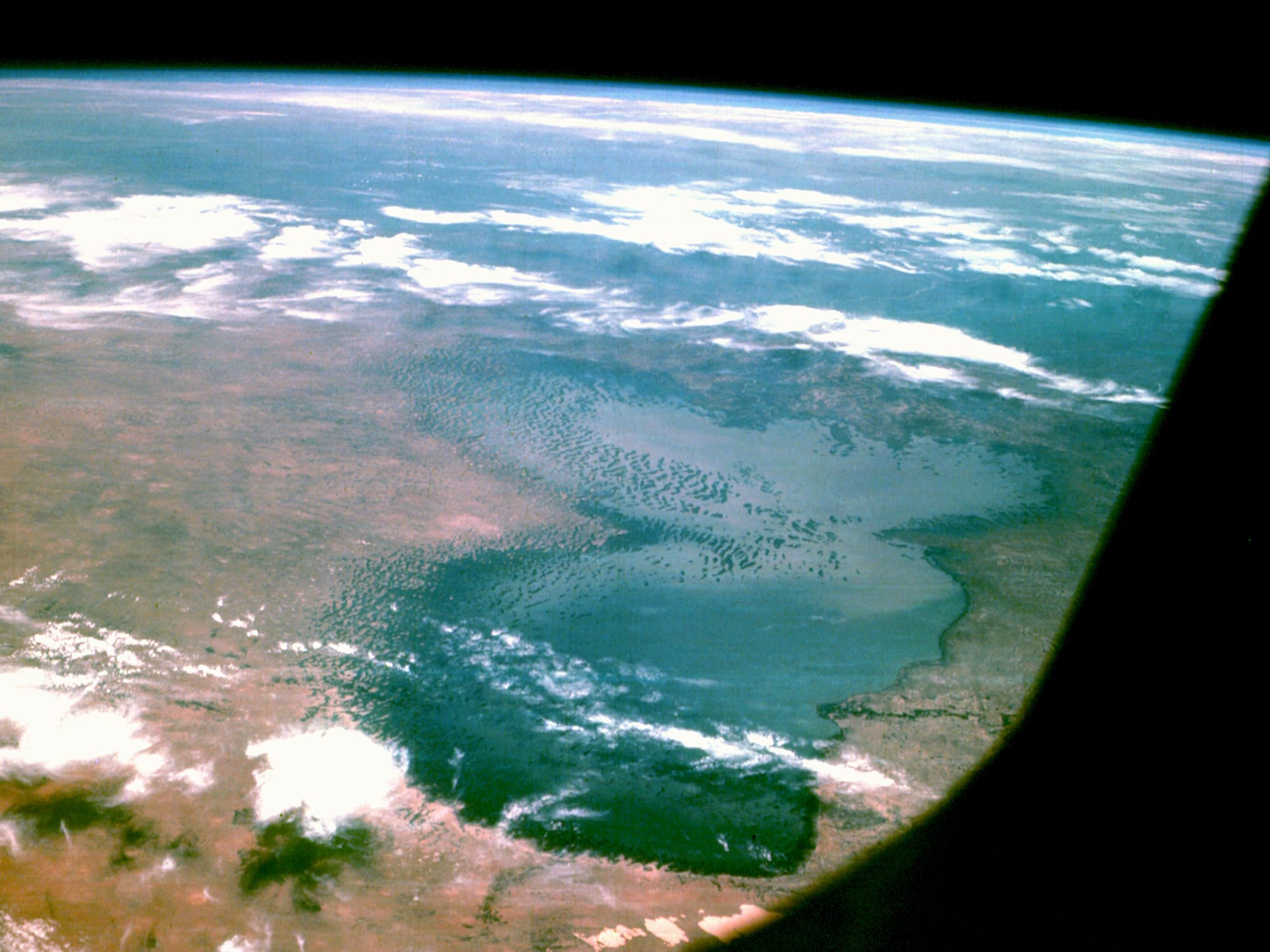
The Lake Chad basin was one of Africa's cradles of state-building. The Kanem Empire rose east of the lake around the 9th century as a Saharan trading power, exchanging salt and captives for horses and goods across the desert, and its ruling dynasty adopted Islam in the 11th century. Shifting west of the lake, it refounded itself as Kanem-Bornu and became a major power, at its height fielding musketeers supplied through Ottoman contacts. Further east, the sultanates of Bagirmi and Wadai rose in the 16th and 17th centuries — Muslim states whose wealth rested substantially on raiding the non-Muslim peoples of the south for slaves. Those states were still operating when, in 1900, French columns converging on Lake Chad defeated the Sudanese warlord Rabih az-Zubayr, who had briefly conquered much of the region himself.
The least-valued colony
Chad was the last and poorest of the French Equatorial territories, run as a "colony of soldiers and administrators" with almost no investment. The far north was not brought under control until the 1930s and was governed as a military zone. The one part France developed was the south, where it forced villagers to grow cotton — Chad's single export — under a system of taxes, quotas and coercion, and where it built the few schools and recruited its soldiers. Southerners, especially the Sara, thus became the colony's educated and administrative class, exactly reversing the precolonial order in which the northern Muslim states had dominated the south.
Independence and the long war
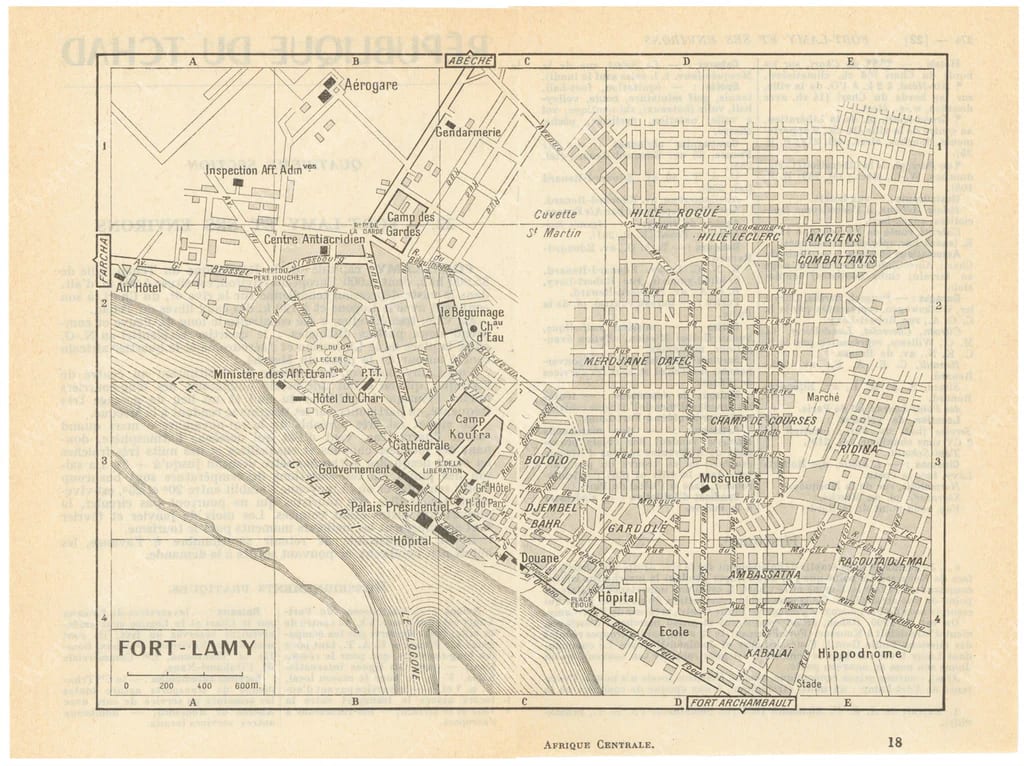
Chad became independent in 1960 under François Tombalbaye, a southern trade unionist whose government was southern-dominated, one-party and increasingly harsh. Northern and central grievances — over taxes, over southern officials, over neglect — turned into armed rebellion, and a northern liberation front took shape in 1966. France sent troops to prop the government up. Tombalbaye was killed in an army coup in 1975, and the country then descended into a civil war that ran, in various forms, for a quarter of a century.
It became a proxy conflict. Libya's Gaddafi armed northern factions and seized the Aozou Strip, a band of desert along the border, in 1973; France and the United States backed the other side. Rival northern warlords fought each other as much as the south. One of them, Hissène Habré, took the capital in 1982 with Western support and ruled for eight years. His political police tortured and killed an estimated 40,000 people — a Senegalese court convicted him of crimes against humanity in 2016 — but in the "Toyota War" of 1987 his pickup-mounted troops routed the Libyan army in northern Chad, one of the great military upsets of the era. An international court awarded the Aozou Strip to Chad in 1994.
The Déby dynasty
In 1990 Habré's own army commander, Idriss Déby, overthrew him and went on to rule for 30 years — through managed elections, the removal of term limits, and repeated rebellions, twice beaten back at the gates of N'Djamena with French help. Oil began flowing in 2003 through a pipeline to the Cameroon coast, under World Bank safeguards meant to protect the revenue for development; the safeguards collapsed within a few years and the money went largely to the army and the state. Chad's military, one of the strongest in the region, became a key Western partner against Boko Haram around Lake Chad and jihadists in Mali.
Déby was killed in April 2021, reportedly while visiting troops fighting a rebel incursion from Libya. The army immediately installed his son, General Mahamat Idriss Déby, as head of a transitional junta — a dynastic handover. A crackdown on protesters in October 2022 killed dozens; Mahamat Déby won a 2024 election the opposition rejected; and in 2024–25 Chad ended its long military partnership with France and expelled French forces, joining the wider Sahel turn away from Paris. Meanwhile the war in neighbouring Sudan has pushed more than a million refugees into eastern Chad.
What Chad carries
Chad's borders enclose a slice of desert, a slice of Sahel and a slice of savanna, and its politics have never stopped being a struggle over which of those regions runs the state. Colonial rule inverted the old hierarchy by educating the south; independence handed the south power; and the decades of war since have swung it back to armed men from the north and centre. Above it all sits a slower crisis: the lake that gave the region its first empires is disappearing.