History · Central African Republic
Central African Republic: The Empty Quarter
A landlocked, sparsely peopled country hollowed out by the slave trade, a French rubber colony run by concession companies, a self-crowned emperor, and decades of coups and rebellion
By Worldlore Editorial · 19 September 2026
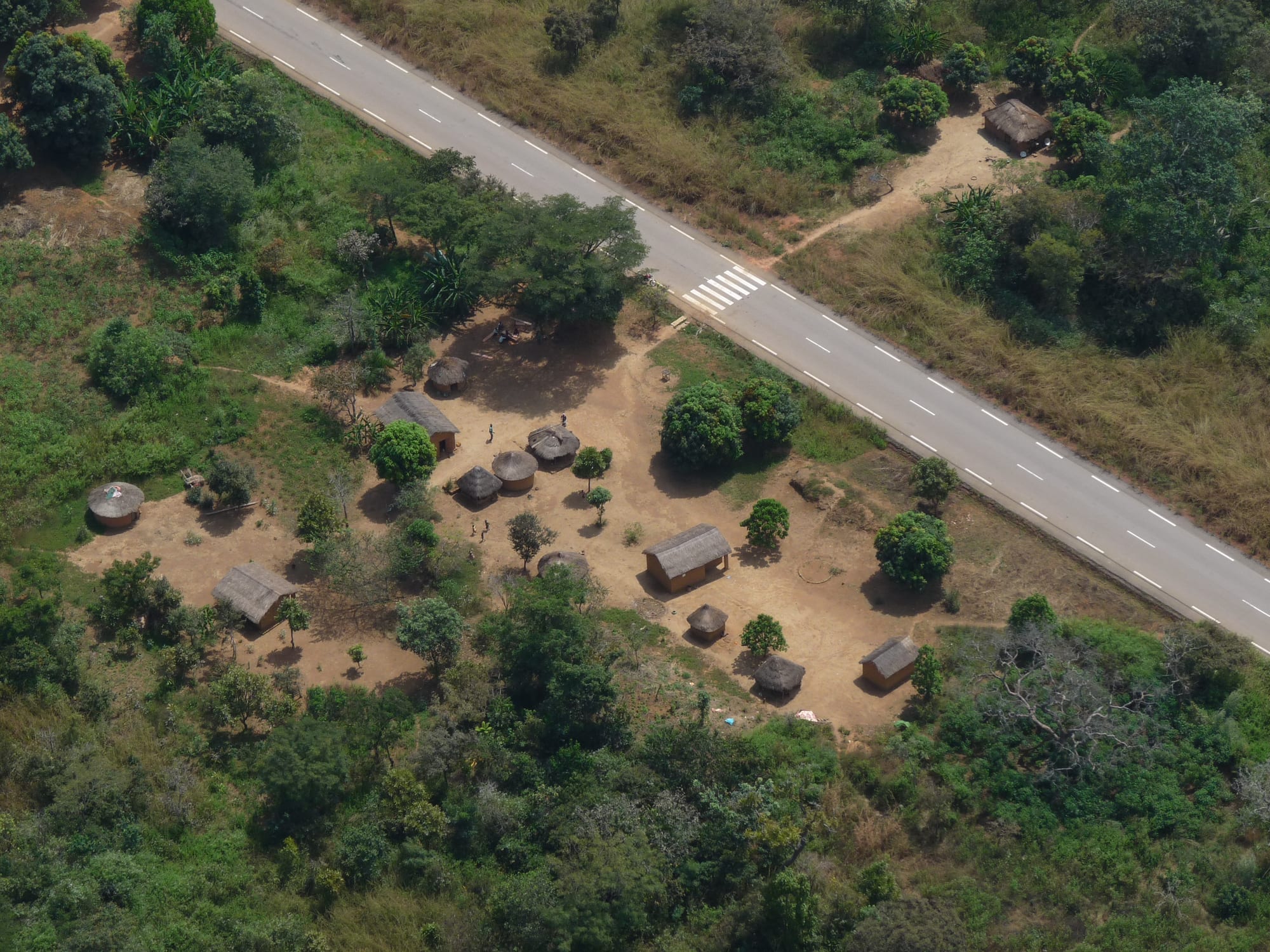
A country the slave trade emptied
The Central African Republic lies close to the middle of the African landmass — 623,000 square kilometres of savanna and forest, with a population of only about five million, one of the lowest densities on the continent. It is also one of the poorest countries in the world and one of the least at peace. Both facts have deep roots. For three centuries this region was a slave-raiding frontier, hit from the north and east by the trans-Saharan and Nile trades and from the south and west by the Atlantic trade, and the populations that survived did so by scattering into the bush. No large state ever formed here to organise a defence, and none has managed to govern the whole territory since.
A short history
- 17th–19th c.
The slave frontier
Raiders from Wadai, Darfur and the Sudan, and traders toward the Atlantic, depopulate the region.
- 1880s–1906
French conquest
France takes the Ubangi and organises the territory of Ubangi-Shari.
- 1899–1930s
Concession companies
Private firms extract rubber and ivory by forced labour; revolts are crushed.
- 13 August 1960
Independence
The Central African Republic, led at independence by David Dacko.
- 31 December 1965
Bokassa's coup
Jean-Bédel Bokassa seizes power and rules for 14 years.
- December 1977
The empire
Bokassa crowns himself emperor in a coronation costing a third of the budget.
- 1979
Operation Barracuda
France removes Bokassa after the killing of protesting schoolchildren.
- 2013
The Séléka crisis
A rebel coalition takes Bangui; sectarian violence displaces a million people.
- 2018 onward
The Russians
The Wagner Group props up the government and takes over mines.
Slave raids and no state
Precolonial Central Africa was a patchwork of small chiefdoms and stateless farming societies, and it had the misfortune to sit between the two great slaving systems of the continent. From the north and east, the Muslim sultanates of Wadai and Darfur and warlord-traders such as al-Zubayr and Rabih az-Zubayr raided the Ubangi basin for captives on an enormous scale into the late 19th century. From the south and west, captives were funnelled toward the Atlantic. The lasting effect was demographic: the region was stripped of people, and the survivors lived dispersed and defensive.
The concession colony
France reached the Ubangi River in the 1880s and 1890s, racing King Leopold's Congo Free State and the Germans, and organised the territory of Ubangi-Shari, which became part of French Equatorial Africa in 1910. French rule here was among the harshest and most neglectful in the empire. The territory was divided among around 40 private concession companies, each granted monopoly rights over a vast area to extract rubber and ivory using forced labour, hostage-taking and violence on a scale that the writer André Gide publicly denounced in the 1920s. Tens of thousands of Ubangi-Shari men were also conscripted to build a railway in the neighbouring colony, and huge numbers died. A major Gbaya-led revolt, the Kongo-Wara, was crushed and hidden from view between 1928 and 1931.
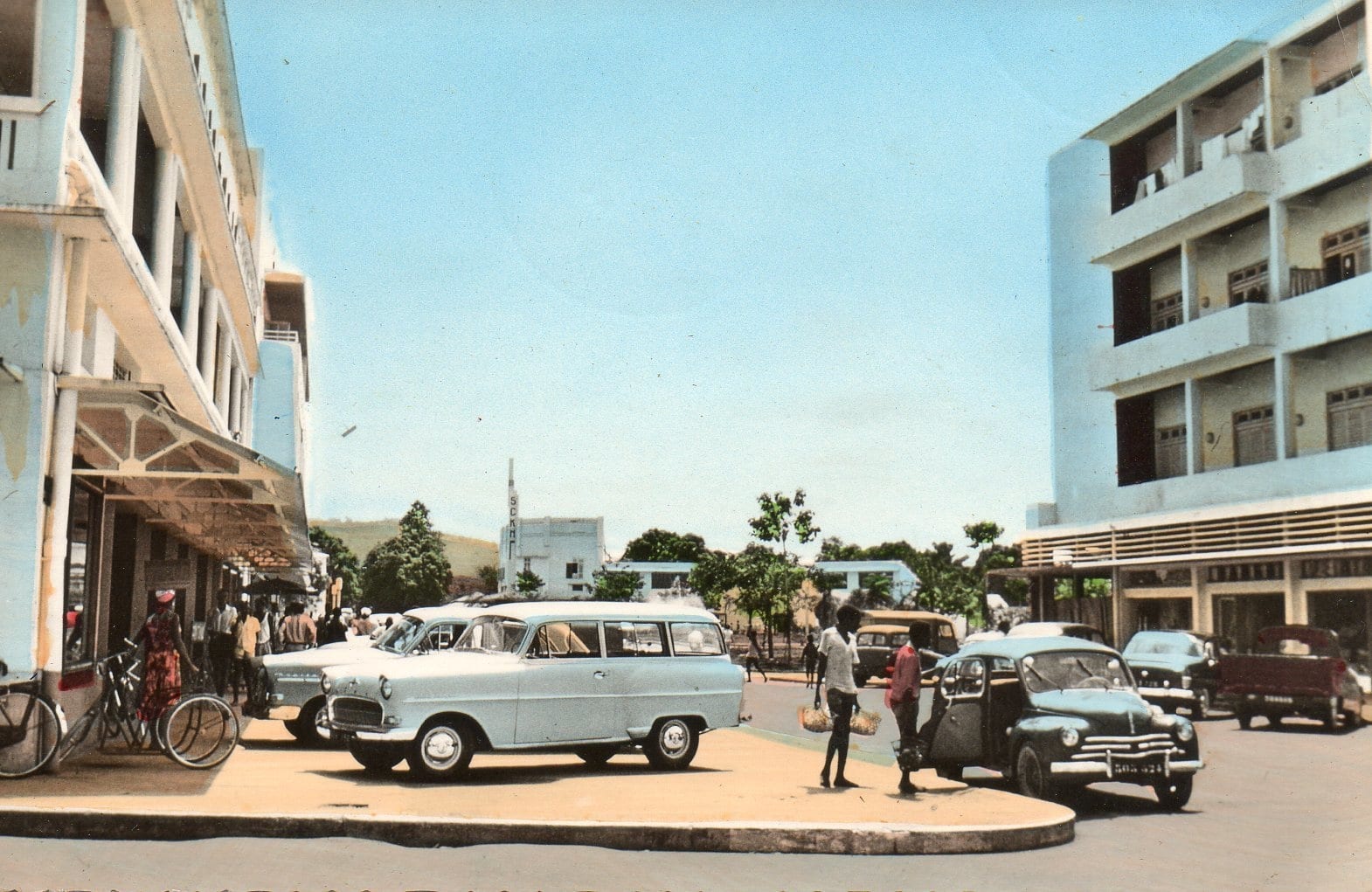
Boganda, and independence
The dominant political figure of the late colonial period was Barthélemy Boganda, the first Catholic priest from the territory, who left the church for politics, founded a mass party, and dreamed of uniting French Equatorial Africa — and more — into a single large federation. He was killed in an unexplained plane crash in March 1959, months before independence, and the smaller, weaker Central African Republic that emerged on 13 August 1960, under his cousin David Dacko, was a one-party state from the start.
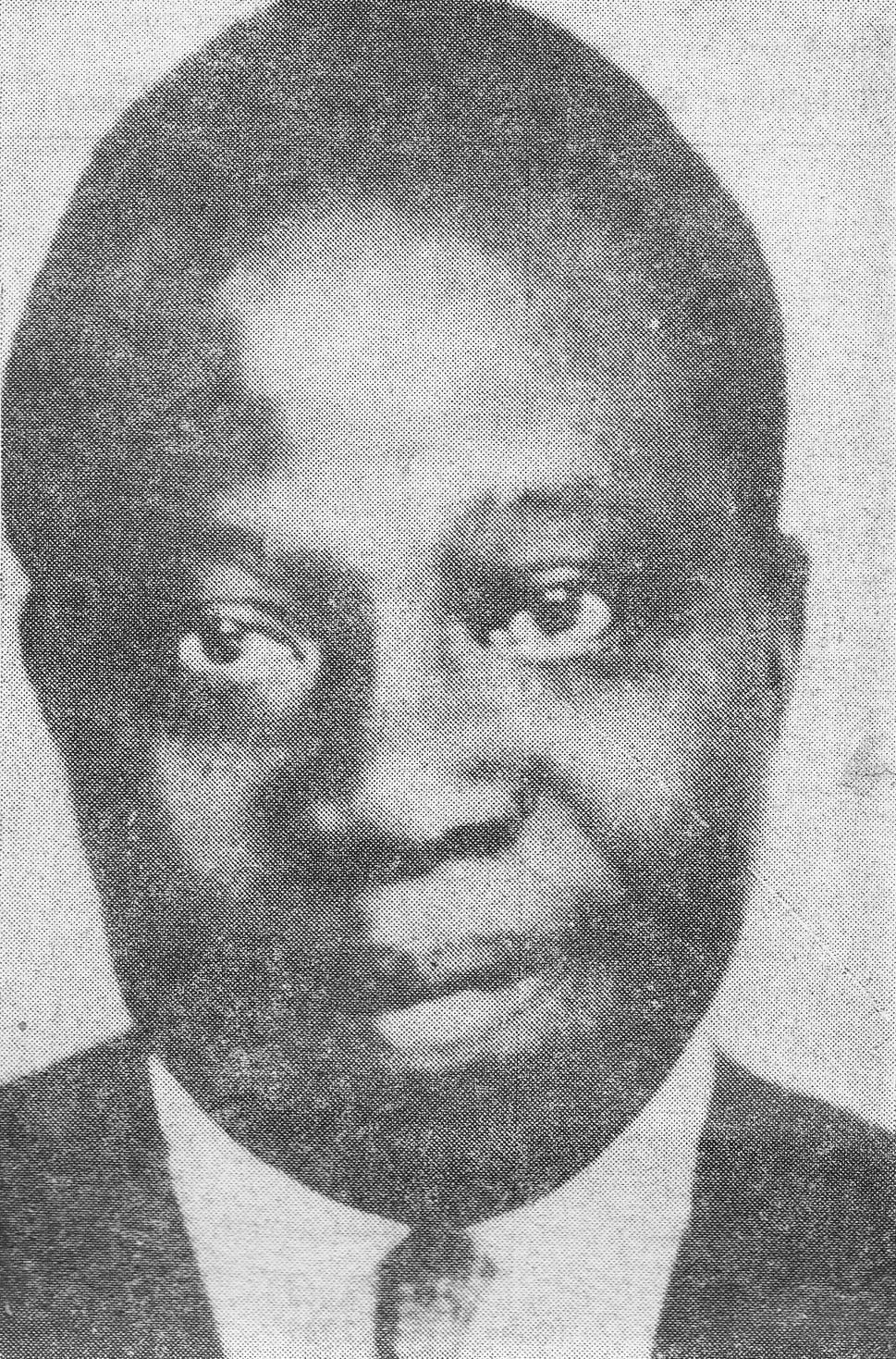
Emperor Bokassa
On the last day of 1965, the army chief of staff, Jean-Bédel Bokassa — another of Boganda's cousins — seized power. He ruled for 14 years, with rising cruelty and caprice. In 1976 he renamed the country the Central African Empire, and in December 1977 he crowned himself Emperor Bokassa I in a coronation modelled on Napoleon's, complete with a gilded eagle throne and a diamond-set crown, at a cost estimated at a third of the country's annual budget — much of it paid by France. It became the international emblem of post-colonial misrule.
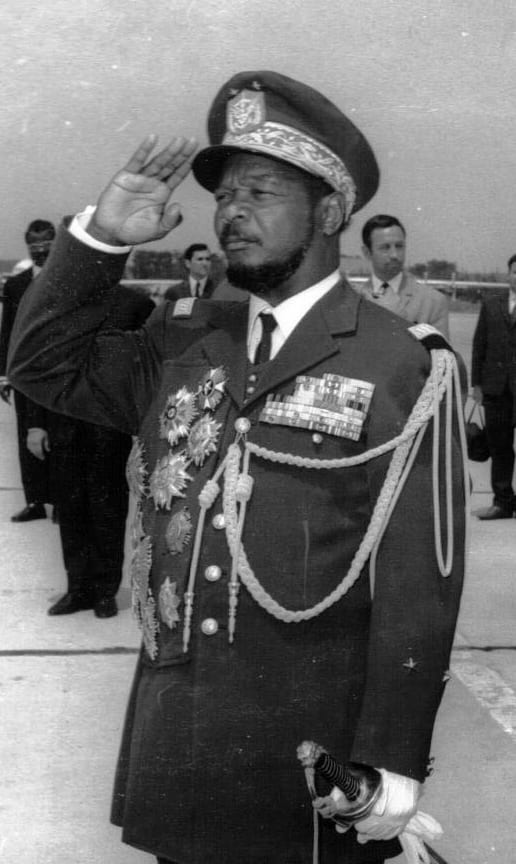
In 1979 Bokassa was implicated in the killing of around a hundred schoolchildren who had protested against a requirement to buy uniforms made by a company he owned. That September, while he was abroad, French paratroopers flew David Dacko back into Bangui and reinstalled him. Bokassa was later tried in absentia and, after returning voluntarily in 1986, convicted of murder.
Coups, rebellion, and the 2013 crisis
The decades since have been almost continuously unstable: Dacko overthrown again in 1981 by General André Kolingba; a democratic opening in 1993 followed by army mutinies and foreign interventions; and in 2003 another coup, by General François Bozizé, whose rule was punctuated by rebellions in the north-east.
In 2013 a coalition of mostly northern, mostly Muslim armed groups called Séléka swept south and took Bangui, ousting Bozizé. Séléka rule was predatory and violent, and in reaction largely Christian "anti-balaka" militias formed and carried out revenge killings against Muslim civilians. Much of the Muslim population of the west fled the country; thousands were killed and around a million displaced. France intervened, and a large United Nations peacekeeping mission followed, which is still deployed.
Since 2018 the government of President Faustin-Archange Touadéra — unable to control most of the country, where armed groups hold the diamond and gold mines — has leaned on Russia. The Wagner Group provides his security and fights rebels in exchange for control of mining and other resources, making the Central African Republic one of the clearest examples of Russian influence in Africa. Touadéra removed presidential term limits by referendum in 2023.
What the country carries
The Central African Republic's problems are old and structural: a land emptied of people by the slave trade, a colonial period that extracted rather than built, and the loss, on the eve of independence, of the one leader with a national vision. Since then it has been governed — where it has been governed at all — by a sequence of soldiers and foreign patrons, from France to Wagner, while most of its territory has been left to armed men and its people to the aid agencies.