Culture & Customs · Central African Republic
Central African Republic: Sango, Song and the Shared Dish
Some eighty peoples bound together by one everyday language, a handshake for every person in the room, and music and dance at the heart of every celebration and farewell
By Worldlore Editorial · 30 September 2026
A visitor arrives at a family gathering in the Central African Republic. Before sitting down, the newcomer looks for the most important person present, usually the eldest or an honoured guest, and shakes their hand first, then moves on around the group, shaking hands with every person in turn. Between two old friends, the handshake may end with a snap of the fingers made jointly by both. The conversation is in Sango, the language almost everyone in the country speaks day to day, and before long a common dish appears, to be shared by all, even if it holds nothing more than a few boiled peanuts. The country has lived through years of hardship and conflict, but these small courtesies of greeting and sharing remain the everyday grammar of social life.
Faith, identity and values
The Central African Republic is a largely Christian country. Figures cited by the US State Department, drawing on Pew Research data, put the population at around 61 per cent Protestant, 28 per cent Roman Catholic and 9 per cent Muslim, with other estimates placing the Muslim share at up to 15 per cent. Catholic missionaries founded their first mission at Bangui in 1894, and Protestant missions were established in the 1920s and 1930s. The state is formally secular.
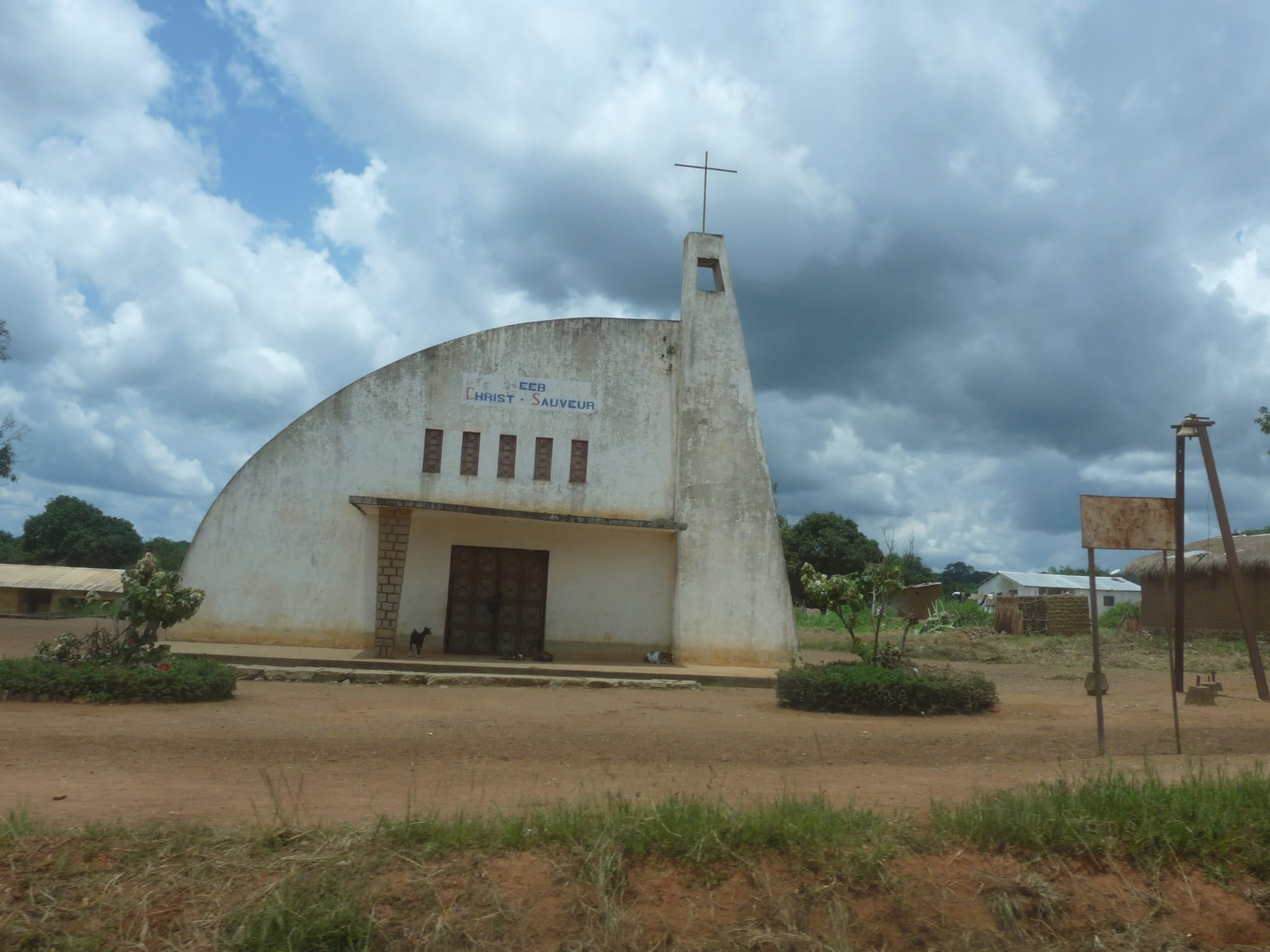
Older beliefs sit alongside the world religions rather than being replaced by them. Only a small share of people describe themselves as followers of traditional religion, but the State Department notes that some Christians and Muslims incorporate aspects of traditional faith into their practice. Belief in sorcery remains widespread, and misfortune or death is often attributed to it. Witchcraft is an offence under the penal code, and accusations of it can have grave consequences: violence against women and children accused of witchcraft has been cited as a serious human rights problem.
The conflict that broke out in 2012 and 2013 pitted armed groups drawn largely from Muslim and Christian communities against each other, and trust between the two communities has been slow to rebuild. Religious leaders have played a notable part in trying to repair it. From December 2012 the Catholic archbishop of Bangui, the president of the Islamic community and the head of the Evangelical Alliance worked together, travelling to troubled areas to calm tensions and insisting that their faiths called on Christians and Muslims to live in peace. In 2014 the three were named among Time magazine's hundred most influential people, and the interfaith platform they founded continues to promote dialogue.
The glue of national identity is language. The country is home to some eighty ethnic groups, each with its own language and stories, but Sango, an African language, is spoken day to day by nearly everyone and serves alongside French as an official language. French remains the language of government and education, which has made Sango all the more a symbol of what Central Africans share. Across the many peoples, song and story remain a shared inheritance.
Greetings and meeting people
Greeting is taken seriously. Greetings often begin at home with each member of the family. In company, a handshake is the standard greeting, and a person joining a group is expected to greet the most important person first, typically the eldest or an honoured guest, before greeting everyone else in the same way. Among close friends, especially men, the handshake may finish with the shared snap of the fingers.
Respect is also built into the way people speak. The formal plural "you" is used to show deference to people who are older or in positions of authority, although younger people in towns increasingly use the familiar singular with one another as a sign of equality and solidarity.
Hospitality and being a guest
Sharing food is one of the clearest expressions of goodwill. Sharing a meal, even if it amounts to no more than a few boiled peanuts, is an important part of Central African social life. Food is often eaten with the fingers from a central dish that everyone shares, rather than from individual plates.
Customs about who eats with whom are more conservative. In some communities men and women who are not relatives traditionally eat separately. A visitor may find that arrangements at a meal follow these lines, and the simplest courtesy is to follow the host's lead.
Festivals and life's big moments
The national calendar marks the road to independence. Boganda Day, on 29 March, honours Barthélemy Boganda, the founding leader who died in 1959. Independence from France is celebrated on 13 August, and 1 December marks the proclamation of the republic in 1958 with parades and official ceremonies. Christmas and Easter are major occasions for Christians, and the two Eids for Muslims. Mother's Day has also become an occasion in the towns, dedicated to recognising the work of women. Music and dance are part of every major holiday.
Among many peoples the most important traditional rite of passage has been initiation, which marks the move into adulthood. In the past, young people could be taken away from their villages to a camp in the forest or savanna, where they received teaching in the beliefs of their people. Such initiations have become much shorter, and in many places rare.
Marriage has traditionally been a matter between families. Customarily the man's family pays a bride-price to the bride's family, and the agreement between the two families matters as much as any ceremony.
Funerals are the most public of life's moments. In many communities a vigil is held around the body, often through the night and with singing and dancing, and mourning at a wake can continue for several days.
Arts, crafts and music
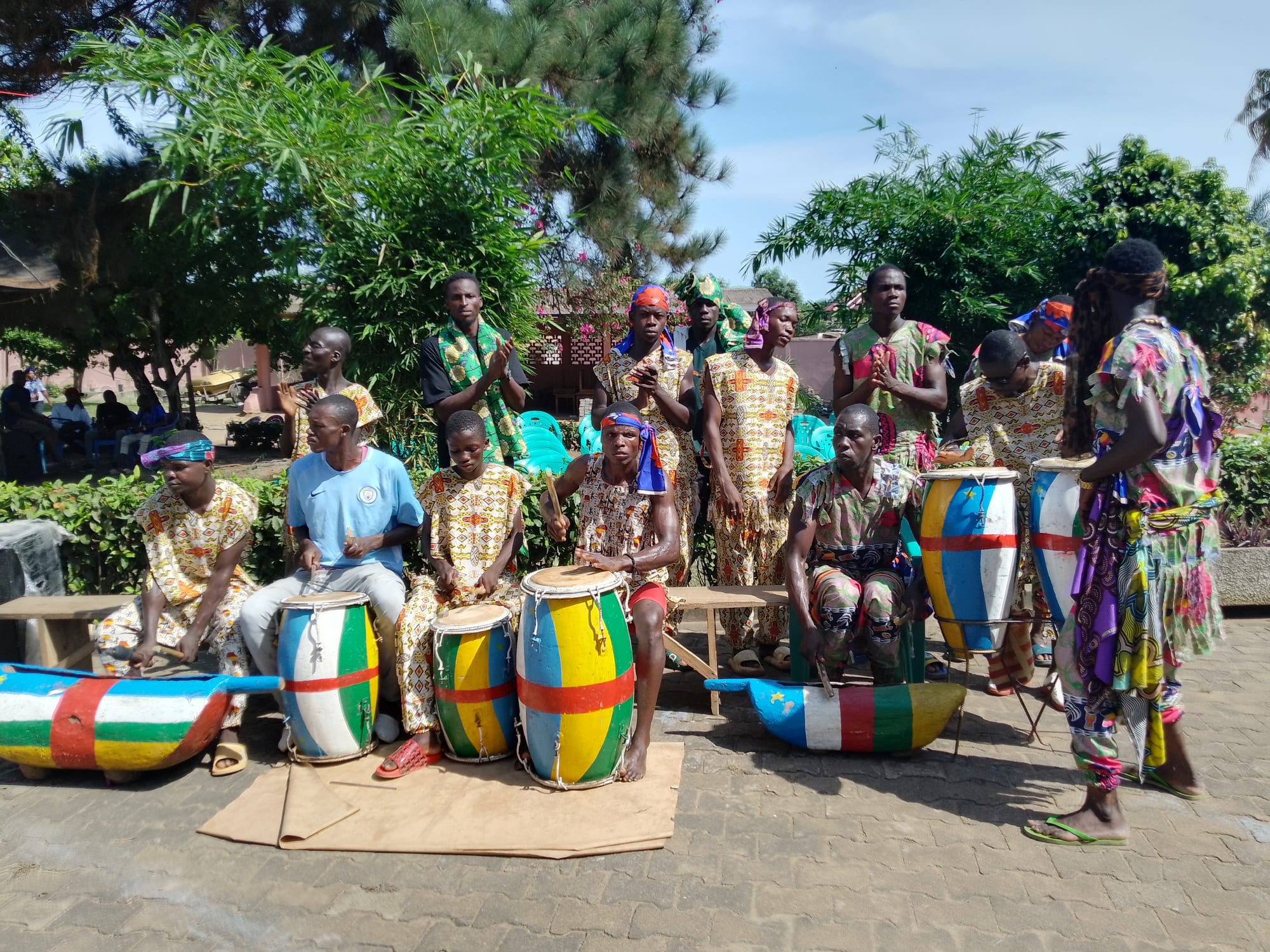
Music and dance accompany almost every important event. The drum is the central instrument, joined by xylophones made of wood and gourds, while in the towns popular dance music, closely related to the styles of Kinshasa and Brazzaville, is recorded and played on the radio. The country is predominantly oral in its culture, and song and story carry much of what is remembered.
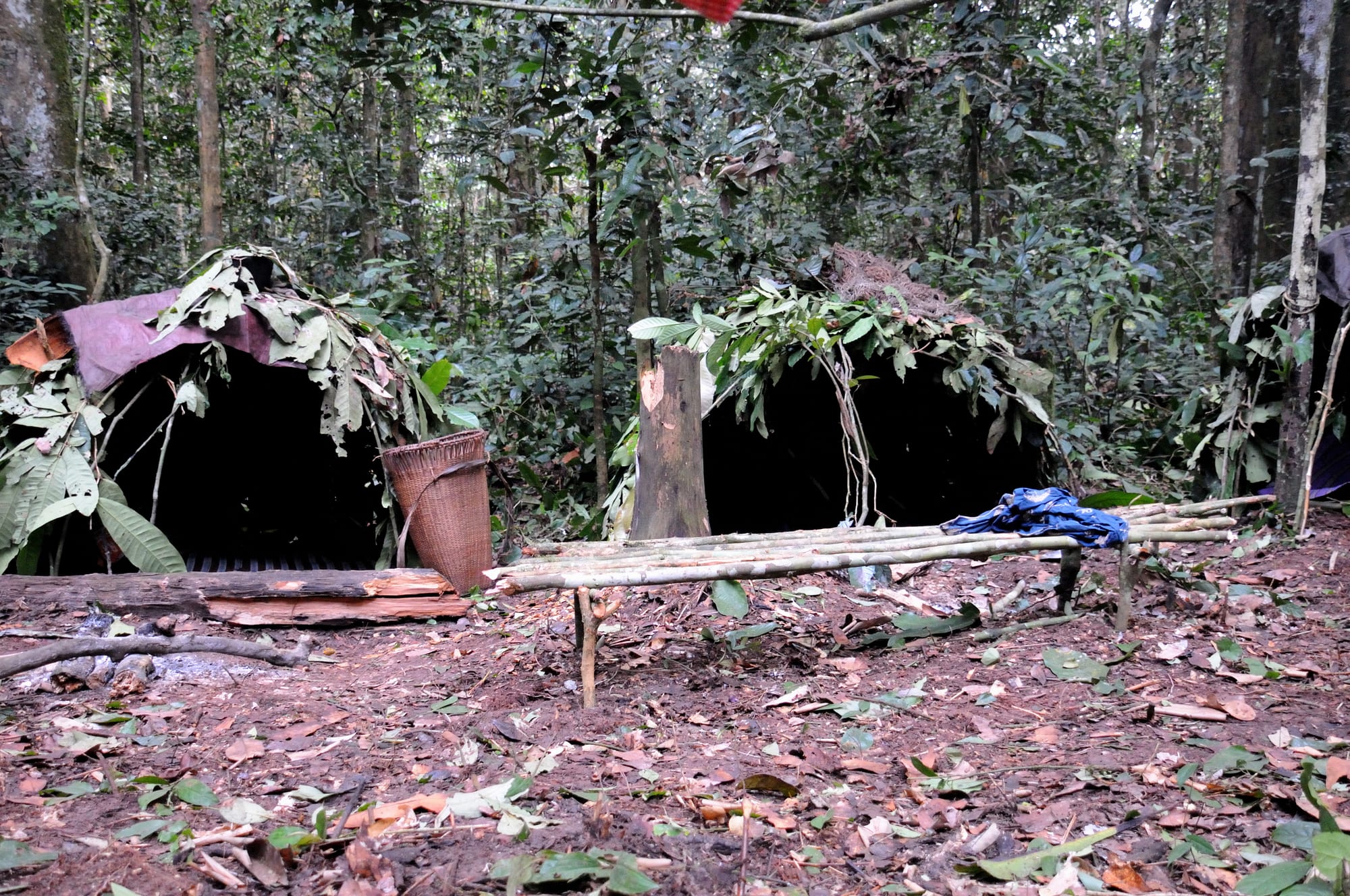
The country's best-known musical tradition belongs to the Aka, forest people of the south-west, whose polyphonic singing UNESCO proclaimed a Masterpiece of the Oral and Intangible Heritage of Humanity in 2003 and inscribed on its Representative List in 2008, as the Polyphonic singing of the Aka Pygmies of Central Africa. It is a complex, four-part contrapuntal singing mastered by every member of the community, in which each singer is free to vary their part as the performance goes on, so that the music is constantly renewed without ever being written down. The songs accompany the opening of a new camp, hunting and funerals, and carry knowledge central to the life of the group. They may be accompanied by a drum called the enzeko, a harp-like instrument called the geedale-bagongo, the single-string bow called the mbela, and some dances are for men only, others for couples or solo dancers. UNESCO notes that deforestation, the drift to towns and folklorised performances for tourists all put the tradition at risk.
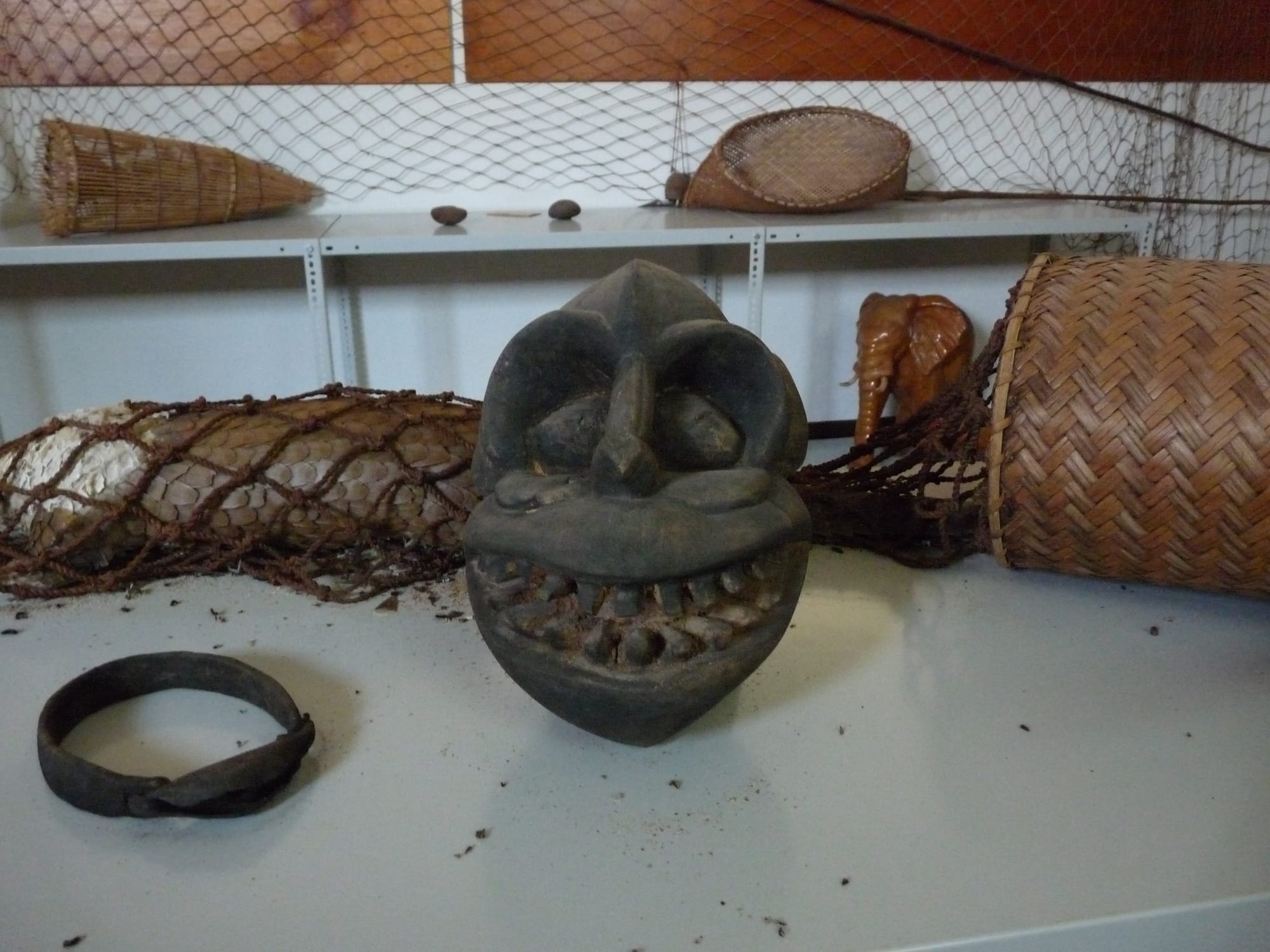
Traditional crafts include ebony carving, pottery, mat and basket weaving in dyed patterns, and hair braiding, an art in itself. The most distinctive craft, though, is the butterfly-wing picture. Artists first design the image and cut out its pattern, then fill it by gluing on butterfly wings, their natural colours standing in for paint. The pictures typically show African wildlife, such as elephants, giraffes, antelopes and birds, or scenes of women at work, and they have found buyers far beyond the country.
Dos and don'ts for visitors
- Do check the latest government travel advice before any trip; several governments advise against all travel to the country, and consular support in an emergency is minimal to none.
- Do shake hands with everyone present, starting with the eldest or most important person.
- Do greet people properly before anything else; greetings are taken seriously.
- Do use the formal "vous" with older people and officials.
- Do accept a share of food when it is offered; eating together matters.
- Do learn a few words of Sango, the language almost everyone speaks.
- Don't assume men and women who are not related will eat together; follow the host's lead.
- Don't treat religion or the recent conflict as casual topics; relations between communities remain sensitive.
What to take away
In a country of many peoples and a hard recent history, the handshake offered to everyone and the dish shared by all remain the surest signs of respect, and visitors who honour them will be treated as guests rather than strangers.