Daily Life · Central African Republic
Central African Republic: A School Day That Rarely Finishes
Subsistence farms and a market carried in on someone's head, a household built around the extended family, and an ordinary day still shaped by more than a decade of conflict
By Worldlore Editorial · 30 September 2026
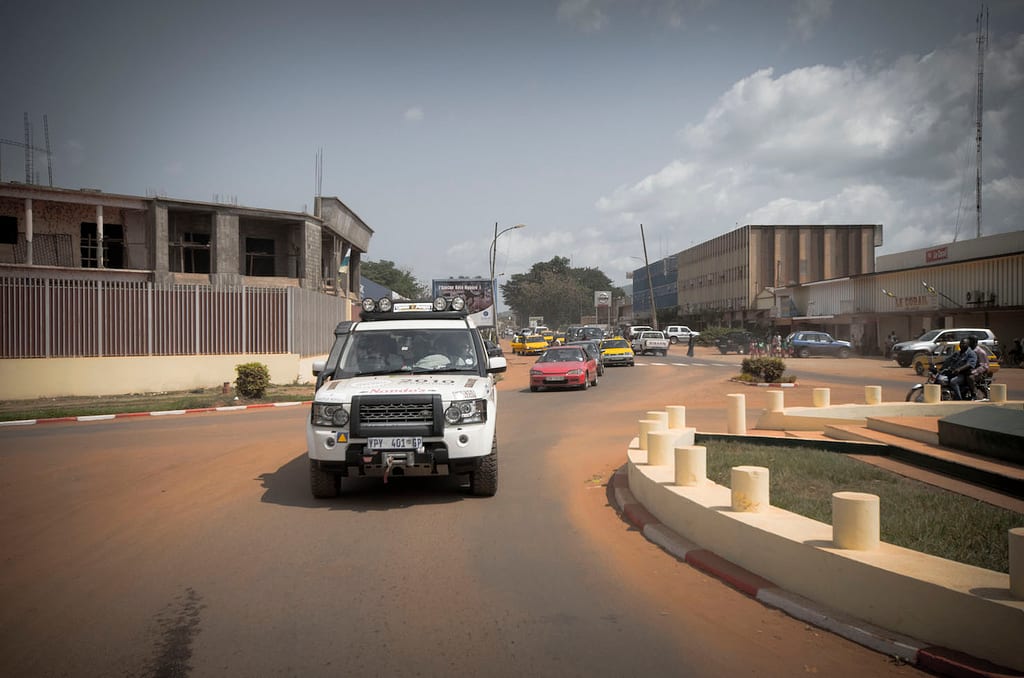
An ordinary day in the Central African Republic is built around what the land and the market can provide, not around a clock. Most households grow their own food, a market stall or a headload of goods carried to sell is how cash enters the house, and the extended family, rather than any single wage earner, is what a household actually relies on. Over a decade of armed conflict has left large parts of the country without functioning schools, clinics or roads, so alongside farming and trading, daily life nationwide is also shaped by displacement, insecurity and the constant, practical work of simply getting by.
Family and home life
Households are typically large and extend well beyond parents and children, with grandparents, cousins and in-laws often sharing the same compound or close by, and childcare and domestic work spread across several adult women rather than falling on one. Polygamous marriage remains legal, with a man permitted up to four wives, and is still practised in many communities, though it is more common in rural areas than among educated, urban households, where opinion has shifted toward monogamy. Marriage can involve a bride price paid to the bride's family, and, particularly in poorer rural households, girls are sometimes married in their teens. Within the home, men are traditionally expected to represent the household to the outside world, while women manage the domestic sphere, cooking, water and firewood collection, and raising children.
Work, school and the rhythm of the day
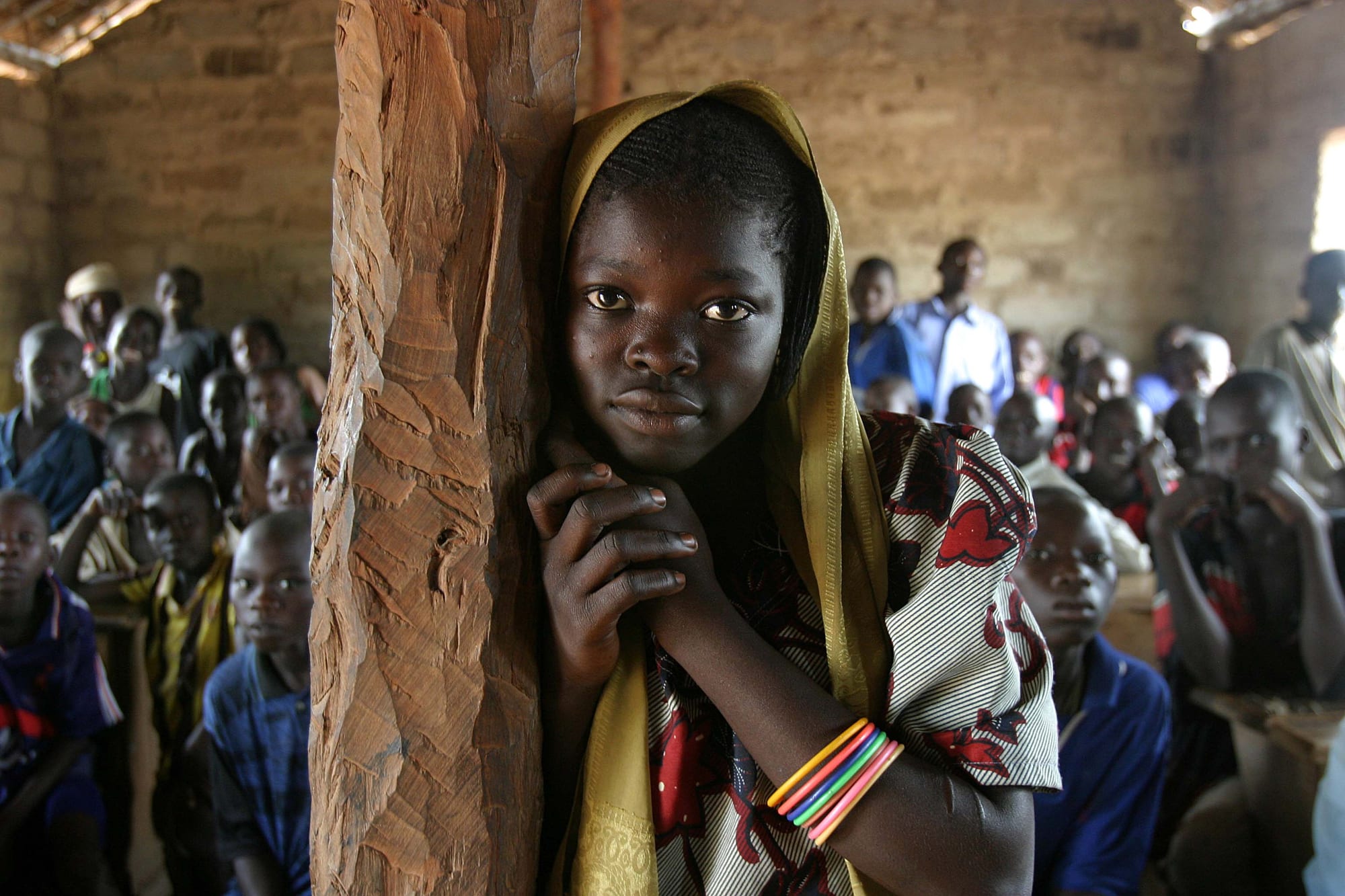
Most Central Africans live by subsistence farming, growing cassava, plantain, groundnuts and maize, with fishing, hunting and small-scale trade supplementing what a household grows. Very little of this work runs on fixed hours; the working day follows daylight and the season, and is punctuated for many families by a walk to a garden plot outside the village or town. Diamonds, timber, cotton and coffee are the main exports, though most of that income never reaches ordinary households. Schooling has been badly disrupted by the conflict that began in 2013: according to UNICEF, roughly seven in ten Central African children and adolescents do not complete school, fewer than three in five finish primary level, and just six percent complete the equivalent of secondary school, with insecurity, school closures and the cost of fees and supplies among the main reasons.
Community life and public spaces
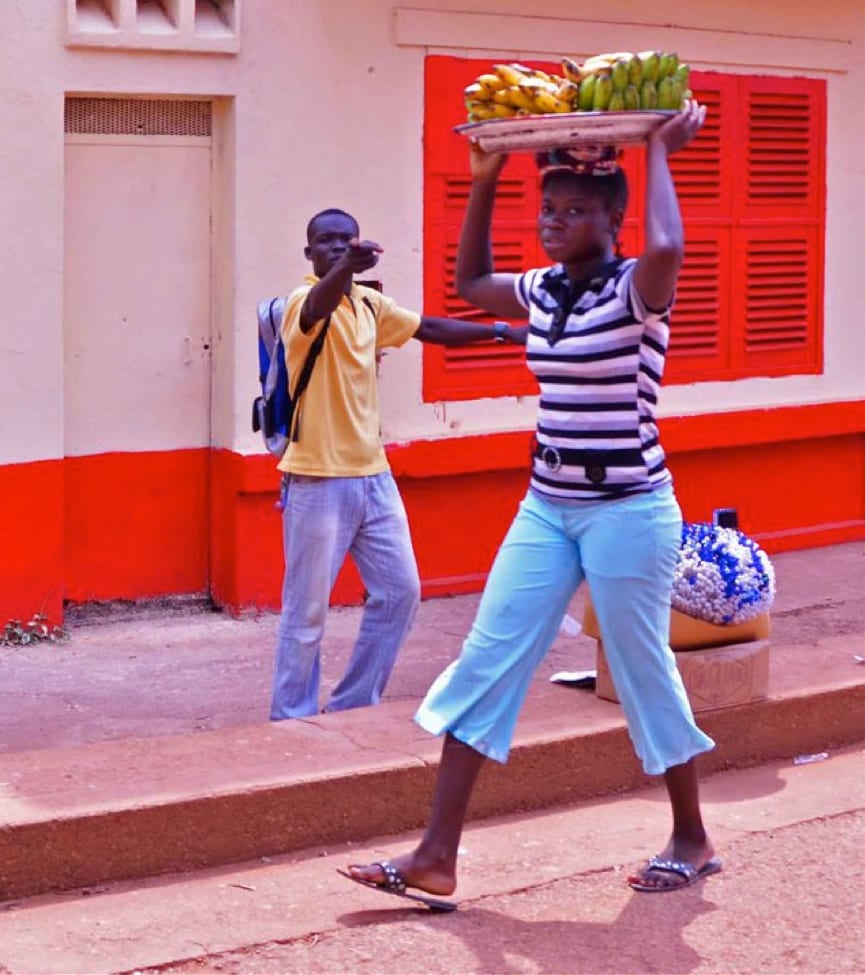
The market is the real centre of public life, in Bangui and in smaller towns alike: produce, cloth, tools, charcoal and prepared food are laid out on the ground or on stalls, and goods are as often carried to and from market balanced on the head as in a vehicle. Streets in Bangui are dense with foot traffic, handcarts, motorbike taxis and minibuses, since private cars remain out of reach for most households. Churches and mosques anchor community life beyond the market, and in much of the interior they, alongside aid agencies, now provide services that a stretched or absent state cannot. Displacement has reshaped community life in many areas, with many families forced from their homes by the fighting, some of them into camps.
Free time and weekends
Sunday is the shared day of rest nationwide, reflecting a population that is predominantly Christian, and church attendance is a central part of many people's week. Where security allows, weekends and evenings are given over to visiting extended family, communal meals and, in Bangui, football, which is followed closely and played informally on any open patch of ground. Music, dance and oral storytelling remain a genuine part of everyday leisure rather than a performance for outsiders, and among the country's forest peoples in the southwest, distinctive polyphonic singing accompanies communal gatherings.
A visitor's ordinary day
Cash is essential outside a handful of hotels in Bangui; banking and card payment are effectively unavailable elsewhere in the country. Electricity and running water are unreliable even in the capital and largely absent in rural areas, so households and small businesses plan around their absence rather than their presence. Markets generally get going early in the morning, before the heat of the day. Given the security situation across most of the country, any travel is arranged through a specialist operator, and moving around independently, even locally, is not realistic outside Bangui and the handful of areas operators currently consider workable.
What to take away
What defines an ordinary day in the Central African Republic is less any single custom than how much of it is still spent simply securing food, schooling and safety that, in most countries, would be taken for granted.