Culture & Customs · Canada
Canada: The Polite Mosaic
Two official languages, Indigenous nations reclaiming their ceremonies, and newcomers from everywhere, held together by a quiet code of courtesy, fairness and not making a fuss
By Worldlore Editorial · 30 September 2026
A crowded doorway, somewhere in Canada. One person steps aside to let another through, the second person says "sorry" for being in the way, the first says "sorry" back, and both move on, faintly amused. It is a small and much-joked-about moment, but it captures something real about a country that prizes courtesy, fairness and a certain modesty in public life. Behind that everyday politeness sits a far more complicated picture: a nation of two official languages, of First Nations, Inuit and Métis peoples whose cultures long predate it, and of newcomers from every part of the world who have been encouraged to keep their own traditions rather than set them aside.
Faith, identity and values
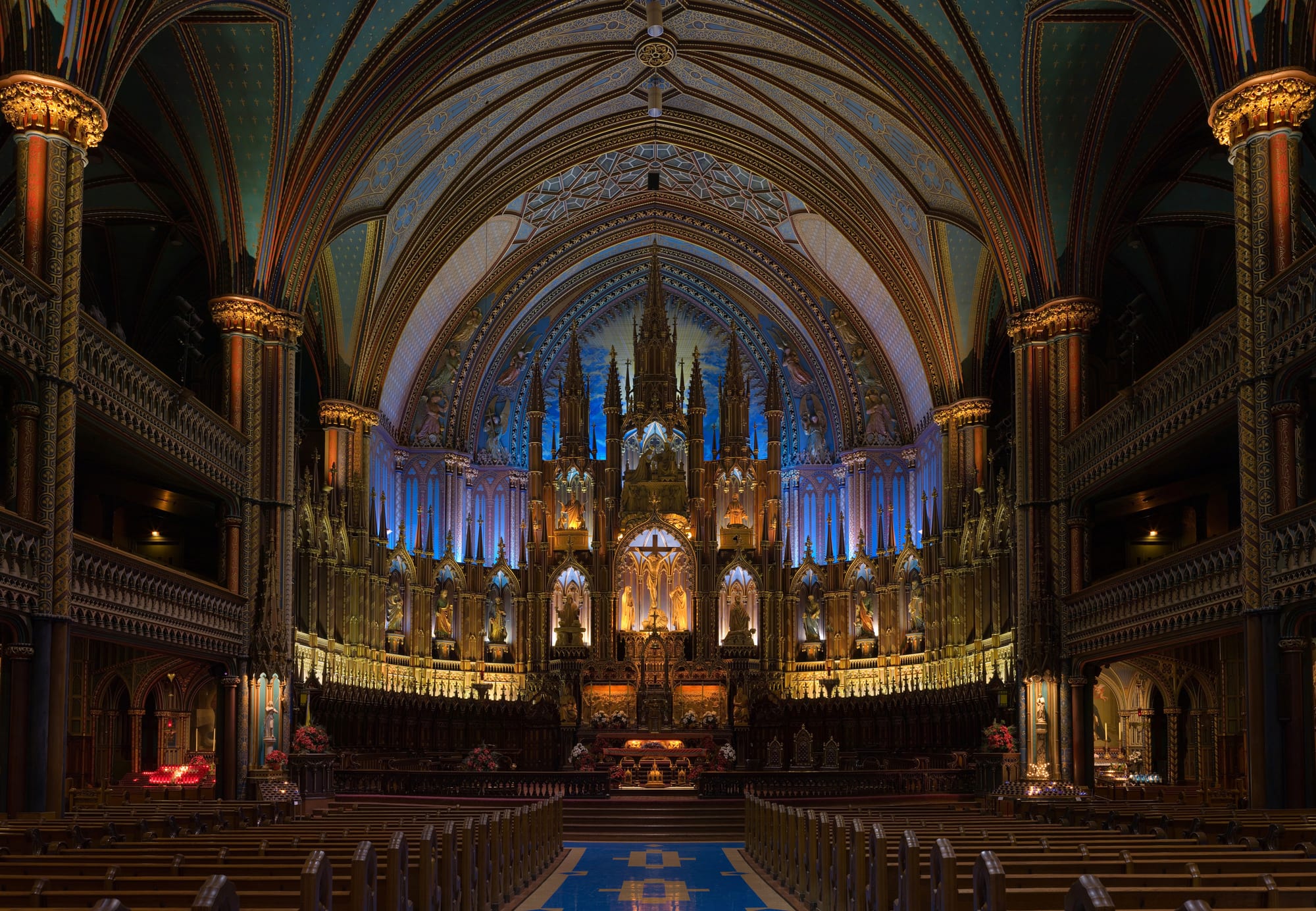
Canadians tend to describe their country as a mosaic rather than a melting pot. Multiculturalism is part of the national self-image: people are expected to hold on to their heritage, languages and customs while also being Canadian, and parallel identities — Québécois and Canadian, Italian and Canadian, Chinese and Canadian — are broadly accepted rather than seen as divided loyalties. The core values most often named are honesty, tolerance and fairness, together with an egalitarian streak that frowns on showing off. Canadians are also often keen to distinguish themselves from their southern neighbours, and tend to see themselves as more modest, more indirect and more considered.
The oldest divide in national life is between English and French. English speakers are the majority in every province except Quebec, where French is the language of daily life and where a strong, distinctive identity has fuelled long-running debates about the province's place in the federation. Relations with Indigenous peoples are the other great unresolved question. Much of the country now openly acknowledges historical injustices, and one visible sign of this is the land acknowledgement: a short statement, heard at the start of meetings, conferences, school assemblies and even hockey games, recognising the Indigenous nations whose traditional territory the event is taking place on. The practice has spread widely since the Truth and Reconciliation Commission published its calls to action in 2015.
Religion has become a private and increasingly optional part of life. In the 2021 census, 53.3 per cent of Canadians reported a Christian religion, down from 77.1 per cent in 2001, while 34.6 per cent reported no religion at all — more than double the share of twenty years earlier. A further 12 per cent follow other faiths, among them Islam, Hinduism, Sikhism, Judaism and Buddhism, largely reflecting immigration. Many recent arrivals are more observant than people born in Canada. Faith is rarely discussed in public, and attempts to convert others are generally viewed with suspicion.
Greetings and meeting people
A firm handshake with steady eye contact is the usual greeting between people meeting for the first time, and first names are used almost at once, even in professional settings. Among friends, greetings become warmer — hugs, a pat on the back — and younger people may use fist bumps or more elaborate handshakes, though rarely with strangers, older people or in formal situations. In French-speaking Canada, friends and acquaintances often greet each other with a light kiss on each cheek. Since the pandemic, some Canadians have kept up contact-free alternatives such as an elbow bump or a wave, and a smile and a nod are always acceptable.
Canadians keep roughly an arm's length of personal space and avoid unnecessary physical contact, especially in professional settings. Eye contact is direct but not unbroken; a fixed stare can feel intense. Conversation is polite and generally indirect, with disagreement expressed openly but carefully and a clear preference for avoiding conflict. Someone who comes across as combative or who argues too hard is likely to be quietly avoided afterwards. Humour leans towards irony, wit and self-deprecation, and jokes that are crude or aimed at minority groups tend to fall flat. When referring to the peoples of the Arctic, the correct term is Inuit (singular Inuk); the older word "Eskimo" is considered inappropriate because of its colonial associations.
Hospitality and being a guest
Visits to someone's home are arranged in advance, and turning up unannounced is generally frowned on. Punctuality matters: arriving on time is expected, and anyone likely to be more than ten or fifteen minutes late is expected to let the host know. Households differ on whether shoes come off at the door, so it is polite to ask on arrival. A small gift — a bottle of wine, flowers or chocolates — is a good gesture when invited for a meal; in Quebec, some guests send flowers ahead of a dinner party instead. Gifts usually come with a card and are often opened in front of the giver.
At the table, dishes are frequently passed around for people to serve themselves. Declining a particular food is perfectly acceptable, and talking with a full mouth is regarded as impolite. Offering to help clear up afterwards is appreciated, even if the host declines.
Tipping is firmly part of the culture. In restaurants with table service, 15 to 20 per cent of the bill before tax is standard for good service, and tips are also expected for taxis, hairdressers, food delivery and hotel staff. At counter-service cafés and fast-food outlets, the tip prompts on card machines can be declined without offence.
Festivals and life's big moments
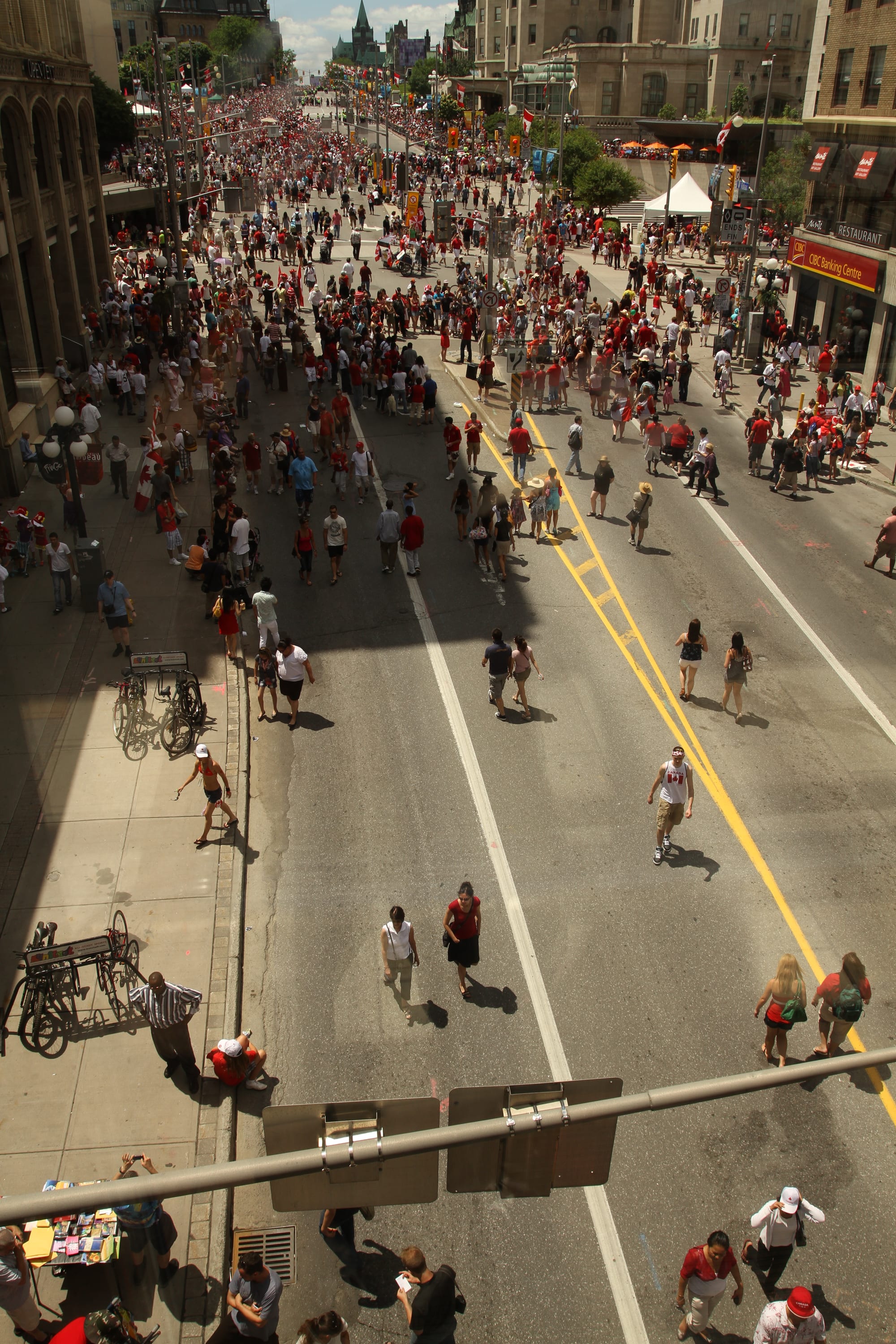
Canada Day on 1 July marks the anniversary of Confederation, and in Ottawa the streets around Parliament Hill fill with crowds dressed in red and white. In Quebec, 24 June — the Fête nationale, or Saint-Jean-Baptiste Day — is the province's own national holiday. Thanksgiving falls in October, and Christmas, Good Friday and Easter Monday are public holidays across the federal calendar.
Two autumn days are given over to remembrance. On 30 September, the National Day for Truth and Reconciliation, a federal statutory holiday since 2021, honours the survivors of residential schools and the children who never came home; many Canadians wear orange that day, following the grassroots Orange Shirt Day movement. On 11 November, Remembrance Day, the country stops for two minutes of silence at 11 o'clock in the morning, the hour the First World War ended, and ceremonies are held at war memorials. From late October, many Canadians wear a red lapel poppy, pinned on the left side, over the heart. The tradition was inspired by "In Flanders Fields", the poem written in 1915 by the Canadian army doctor John McCrae, and the Royal Canadian Legion's poppy campaign raises money for veterans and their families.
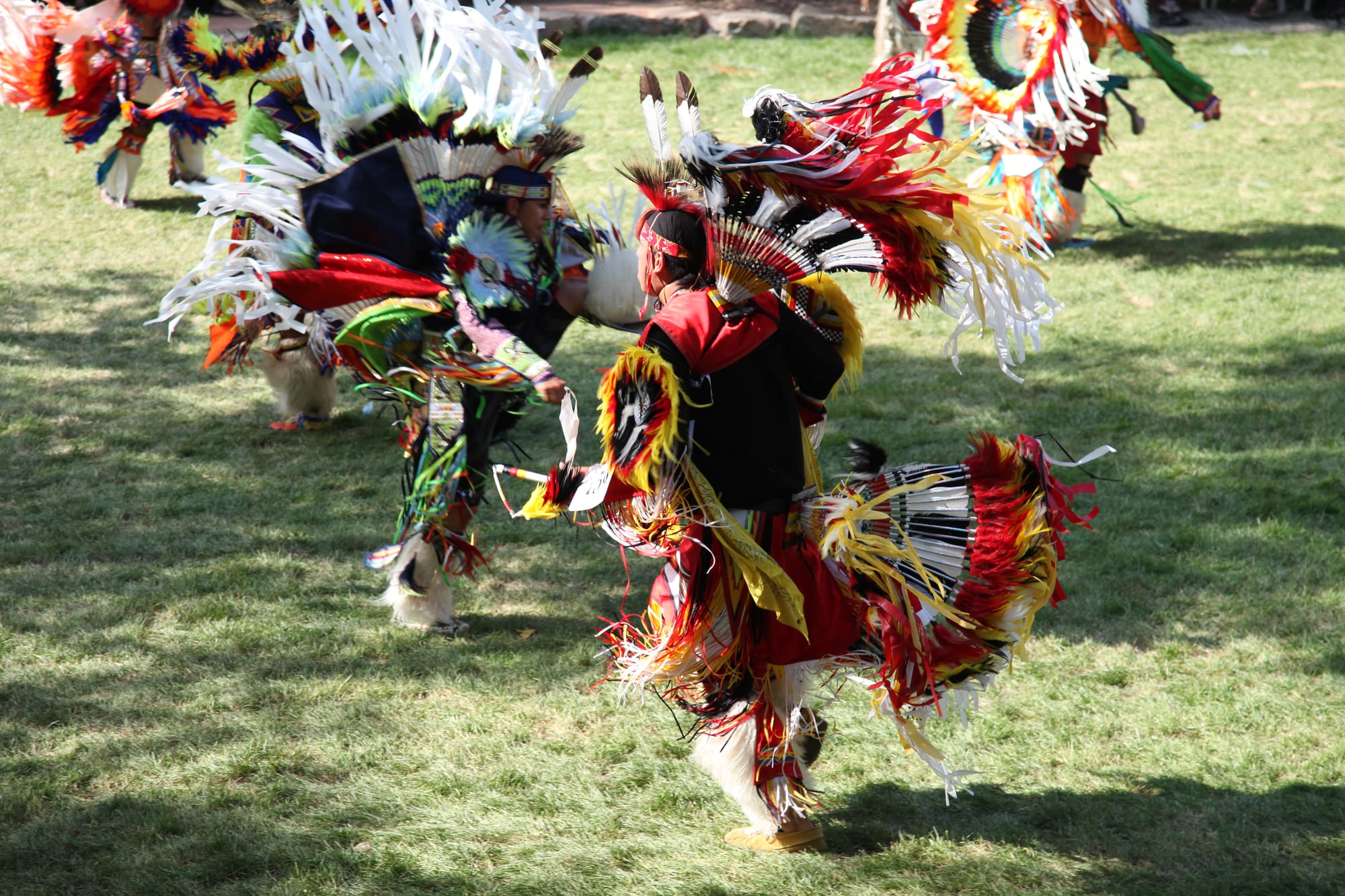
Indigenous gatherings are among the country's most memorable events. A powwow is a celebration of culture through dance, song, art and food, some ceremonial, some competitive, many open to the public. It opens with the Grand Entry, when dancers in regalia of beadwork, jingles, ribbons, feathers and hide enter the arena behind flag carriers, veterans and head dancers, and the host drum provides the heartbeat of the whole event. On the Northwest Coast, the potlatch — a ceremony of feasting, dancing, singing and gift-giving that marks names, marriages, deaths and other important events before invited witnesses — remains central to community life and governance. Both were restricted under the Indian Act: the potlatch was banned from 1885 until 1951, and many communities kept it alive in secret.
Family milestones are marked in ways as varied as the population, but some patterns are common. Canadians marry later than earlier generations, and living together before marriage is widespread; same-sex marriage has been legal nationwide since 2005. Weddings are often preceded by a shower, and guests give practical or meaningful gifts, with cash and gift cards widely accepted. Funerals are changing too. Most Canadians are now cremated, and many families choose a relaxed "celebration of life" — held in a community hall, a park, a pub or a backyard, with photographs and stories — instead of, or as well as, a formal funeral service.
Arts, crafts and music
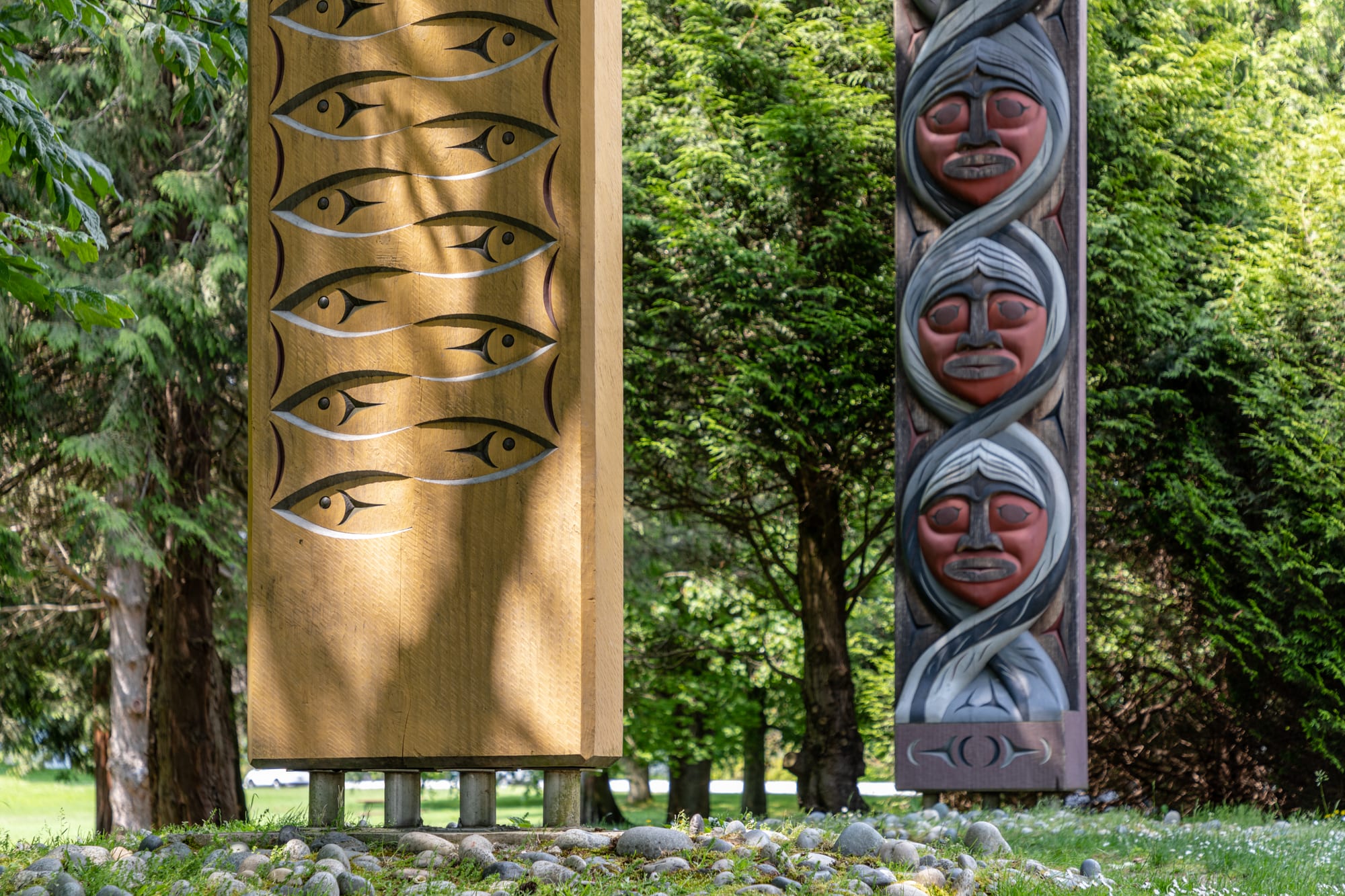
Some of the country's most striking art comes from its Indigenous peoples. Totem poles, carved from red cedar by Northwest Coast nations such as the Haida, Kwakwaka'wakw, Tsimshian and Nuxalk, record a family's or nation's history and display its crests — beaver, bear, wolf, killer whale, raven, eagle and others — along with rights to territory, songs and dances. They are traditionally raised at potlatches. During the ban, many were taken to museums and parks far from their communities, and from the mid-twentieth century came a revival of carving and pole raising, along with efforts to bring old poles home.
In the Arctic, the drum dance, performed with a wide frame drum struck on its rim, remains central to Inuit music. Better known outside the North are Inuit vocal games, often called throat singing, and known in Arctic Quebec and southern Baffin Island as katajjaq. Two women stand face to face, very close together, and trade short rhythmic patterns of breathy, throaty sounds, often imitating geese, caribou or other animals, until one runs out of breath or bursts out laughing. Discouraged by Christian missionaries, the games have enjoyed a strong revival since the 1980s among elders and young people alike.
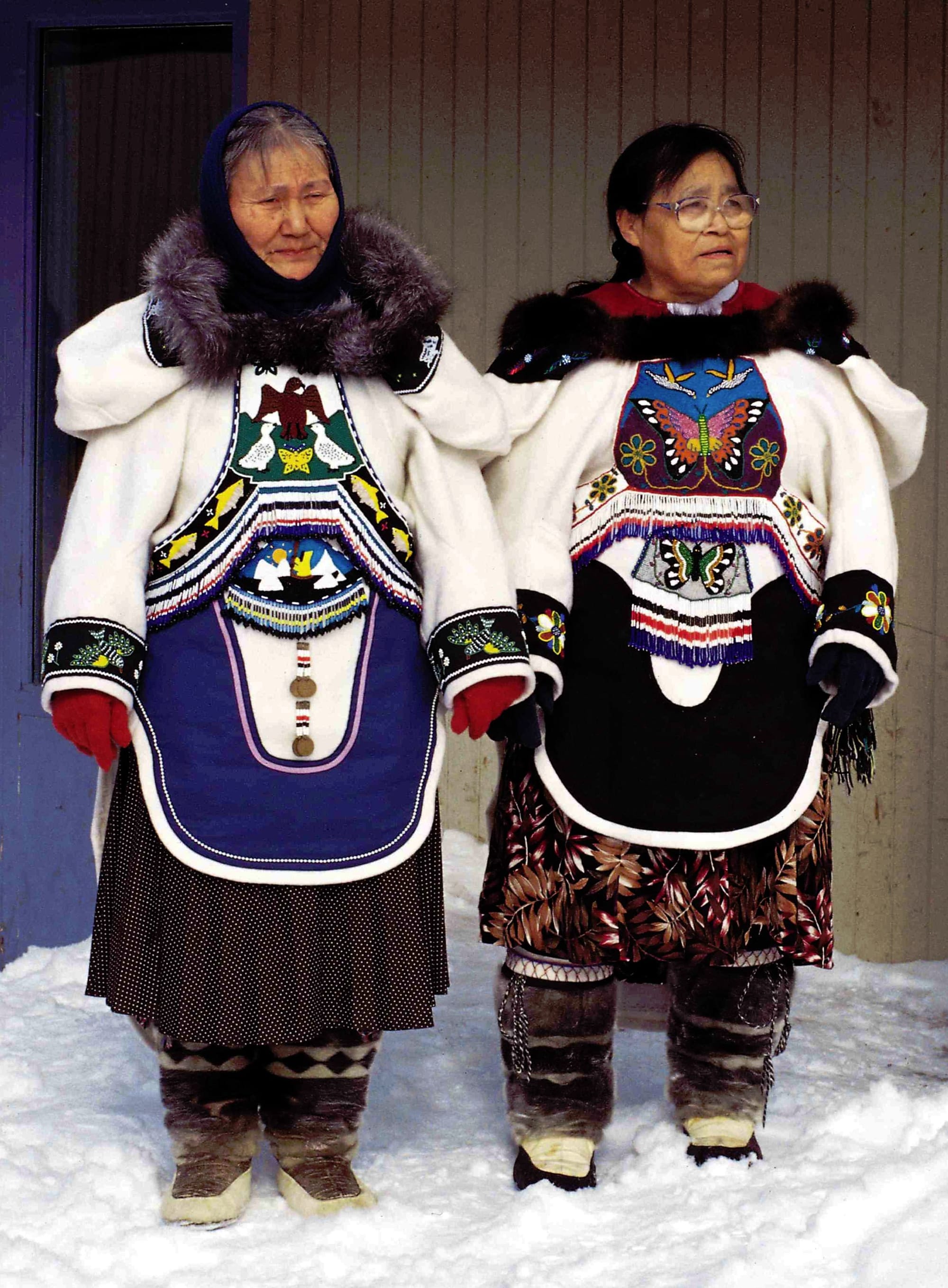
These traditions sit alongside the cultures that settlers and migrants brought with them, from the French-language songs, films and literature of Quebec to the music, food and festivals of communities from every continent. Much of Canada's contemporary cultural life, in both official languages, happens where these streams meet.
Dos and don'ts for visitors
- Do greet with a handshake and eye contact; in Quebec, expect a kiss on each cheek among friends.
- Do arrange visits in advance, arrive on time, and ask whether to take off your shoes at the door.
- Do tip 15 to 20 per cent in sit-down restaurants, and for taxis, hairdressers and hotel staff.
- Do stand during the Grand Entry at a powwow, follow the announcer's guidance, and join in when intertribal dances are opened to all.
- Do keep two minutes of silence at 11 a.m. on Remembrance Day, and wear a poppy on the left if you choose to.
- Don't photograph dancers or their regalia at close range without asking, and never call regalia a "costume".
- Don't use the word "Eskimo"; the correct term is Inuit (singular Inuk).
- Don't be loud or argumentative in debate; Canadians value calm, polite disagreement.
What to take away
Canadian manners are built on quiet consideration — for other people's time, space and differences — and a visitor who matches that courtesy will find it returned many times over, often with an apology attached.