Daily Life · Canada
Canada: A Big Country Lived in a Narrow Strip
The second-largest country on earth, where about eight in ten people live within 150 kilometres of the US border, and where winter, more than any single custom, sets the shape of the year
By Worldlore Editorial · 30 September 2026
Canada is the second-largest country on earth by area, yet daily life for most of its people is surprisingly concentrated: about eight in ten Canadians live within 150 kilometres of the US border, clustered into a handful of metropolitan areas strung out from the Atlantic to the Pacific, while the vast northern majority of the country's landmass is sparsely populated. Winter, more than any single tradition, sets the rhythm of the year across nearly all of that populated strip, shaping everything from how people commute to what a weekend looks like. Add official bilingualism and one of the most immigrant-heavy populations of any wealthy country, and an ordinary Canadian day carries more regional and cultural variety than the country's quiet, orderly reputation suggests.
Family and home life
Households have grown smaller over recent decades, though most Canadians still live in family households. Many Canadians live in a detached or semi-detached house with a driveway and a small garden if they are outside a downtown core, or in an apartment or condominium if they are in one; housing cost, especially in Toronto and Vancouver, is one of the most discussed pressures on ordinary family life nationwide. Roughly a quarter of the population was born outside Canada (23 per cent in the 2021 census), one of the highest shares among industrialised Western countries, so a household's language, food, and traditions at home varies enormously from one street to the next, especially in the larger cities.

Work, school and the rhythm of the day
The standard office week runs Monday to Friday, around 40 hours, with Saturday and Sunday off for most office workers; overtime rules and paid leave are set by federal or provincial employment standards depending on the job. The school year runs roughly from September to June, with a break around Christmas and a shorter one in spring, and children typically start kindergarten around age five. Winter reshapes the working day itself: snow tyres and block heaters for cars, earlier starts to clear driveways and walkways, and, in the coldest cities, indoor pedestrian skyways and underground concourses that let people move between buildings without going outside at all. The economy varies sharply by region, from oil and gas work in Alberta to fishing on the coasts, farming on the Prairies, and finance, technology, and manufacturing concentrated in central Canada.
Community life and public spaces
Local markets, from year-round indoor market halls to seasonal farmers' markets, are a genuine weekly fixture in most cities and larger towns, combining produce, prepared food, and small stalls under one roof. Coffee-and-doughnut shops, above all Tim Hortons, function as an everyday meeting point in towns of every size, often more central to daily routine than any bar or pub. Public libraries and community centres host much of the organised local activity outside school and work, from children's programmes to adult classes. Public transit is comprehensive in the largest cities but far more limited elsewhere, so a car is the practical default for most day-to-day life outside downtown cores.

Free time and weekends
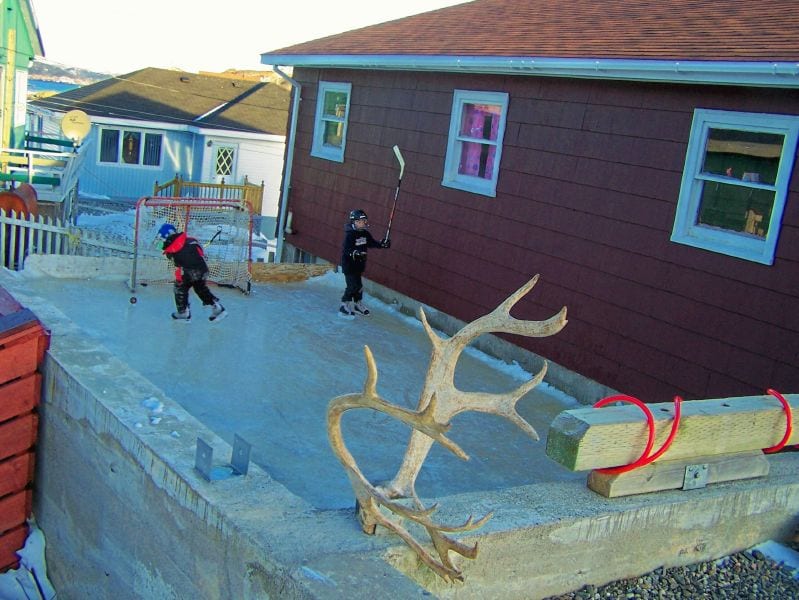
Ice hockey remains the closest thing to a national religion, played informally on backyard and neighbourhood rinks as much as watched at the professional level, and Saturday night hockey on television, a fixture since the 1950s, has long been a household ritual in winter. Weekends and holidays frequently mean heading to a lake, a cottage, or the mountains, a habit strong enough that "cottage country" is a recognised feature of life near most major cities. Summer flips the season's habits entirely: patios, festivals, and outdoor recreation fill the same weekends that were built around skating and skiing months before. Thanksgiving in October and Canada Day on 1 July are the two anchor points of the national calendar outside the winter holidays.
A visitor's ordinary day
Cards and contactless payment are accepted almost everywhere, and cash is rarely necessary even in small towns. Sales tax is added at the till rather than shown on the shelf price, and a tip of 15 to 20 percent is expected in restaurants and taxis. Given the distances involved, flying or a long drive is normal for moving between regions; passenger rail exists but is slow and limited outside the Toronto-Montréal-Ottawa corridor. Winter driving requires real caution, including snow tyres and extra travel time, and rural highways can have long gaps between fuel and services, so it is worth planning accordingly outside the main cities.
What to take away
An ordinary Canadian day is less about any single unifying custom than about two constants working on nearly everyone at once: a population packed close to one border, and a winter that quietly reorganises the year around it.