Food · Cameroon
Cameroon: Food and the National Dish
A bitter-leaf and groundnut stew that unites a country of 250 ethnic groups, a chicken dish named for company directors that became everyone's celebration food, and cuisine split by a colonial language line
By Worldlore Editorial · 16 September 2026
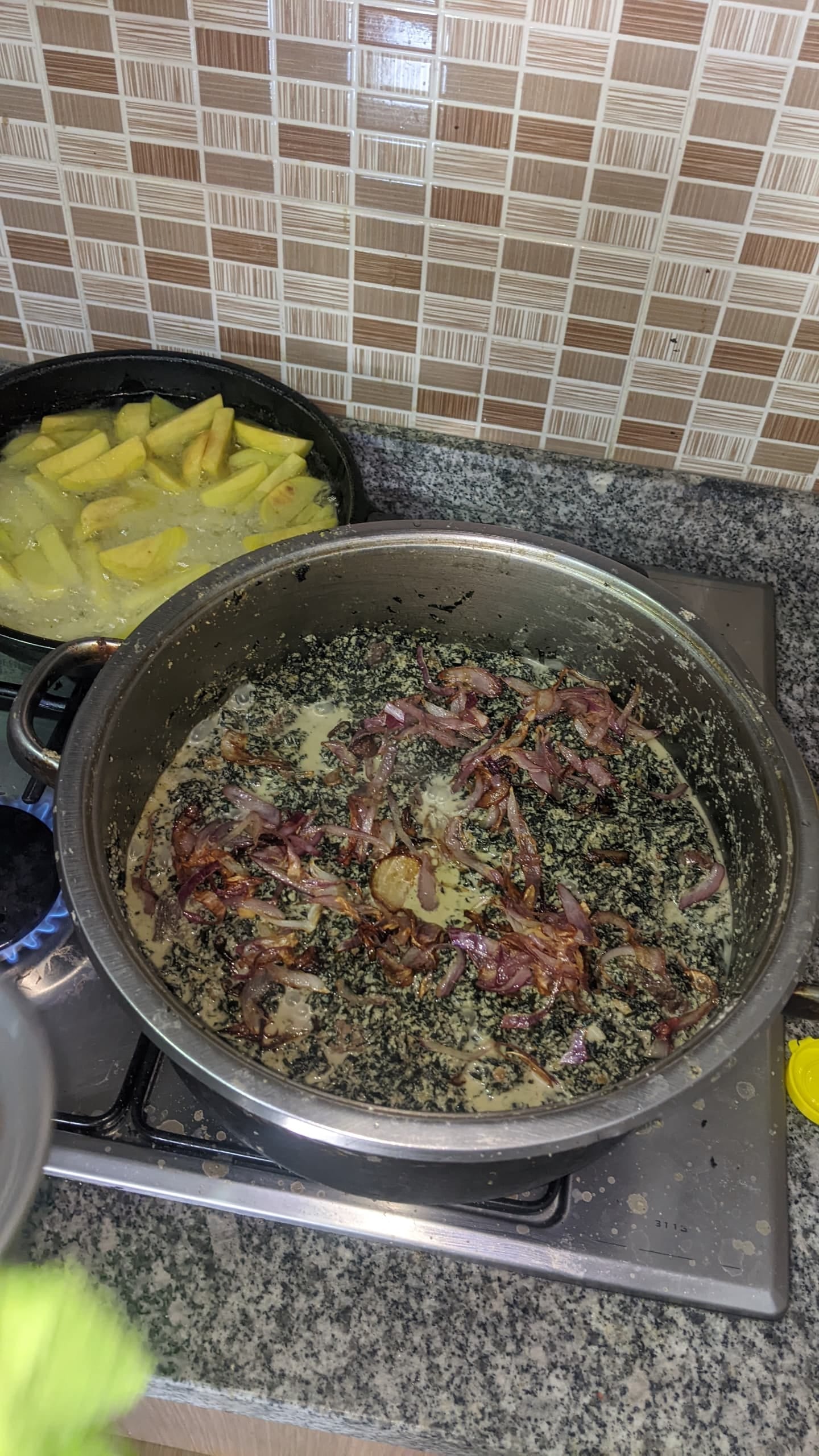
Africa's most diverse small kitchen
Cameroon calls itself "Africa in miniature", and the description holds up at the table as much as anywhere: more than 250 ethnic groups, a split between former French and British colonial territories that still shapes everyday language and habits, and climate zones running from tropical coast to Sahelian north all feed into a genuinely varied national cuisine. Cassava, plantain, cocoyam, corn and groundnuts carry most meals, cooked into a wide range of thick, well-seasoned soups and stews eaten with a starchy paste rather than plated separately.
The national dish: ndolé
Ndolé is a stew of ndolé leaves — a bitter green related to spinach — cooked down in a rich groundnut (peanut) paste with smoked fish, meat or shrimp. Associated originally with the Sawa people of the coastal Douala region, it has become Cameroon's most widely recognised dish nationwide, served with plantain, rice, or miondo — fermented cassava sticks steamed in leaves.
Poulet DG and celebration food
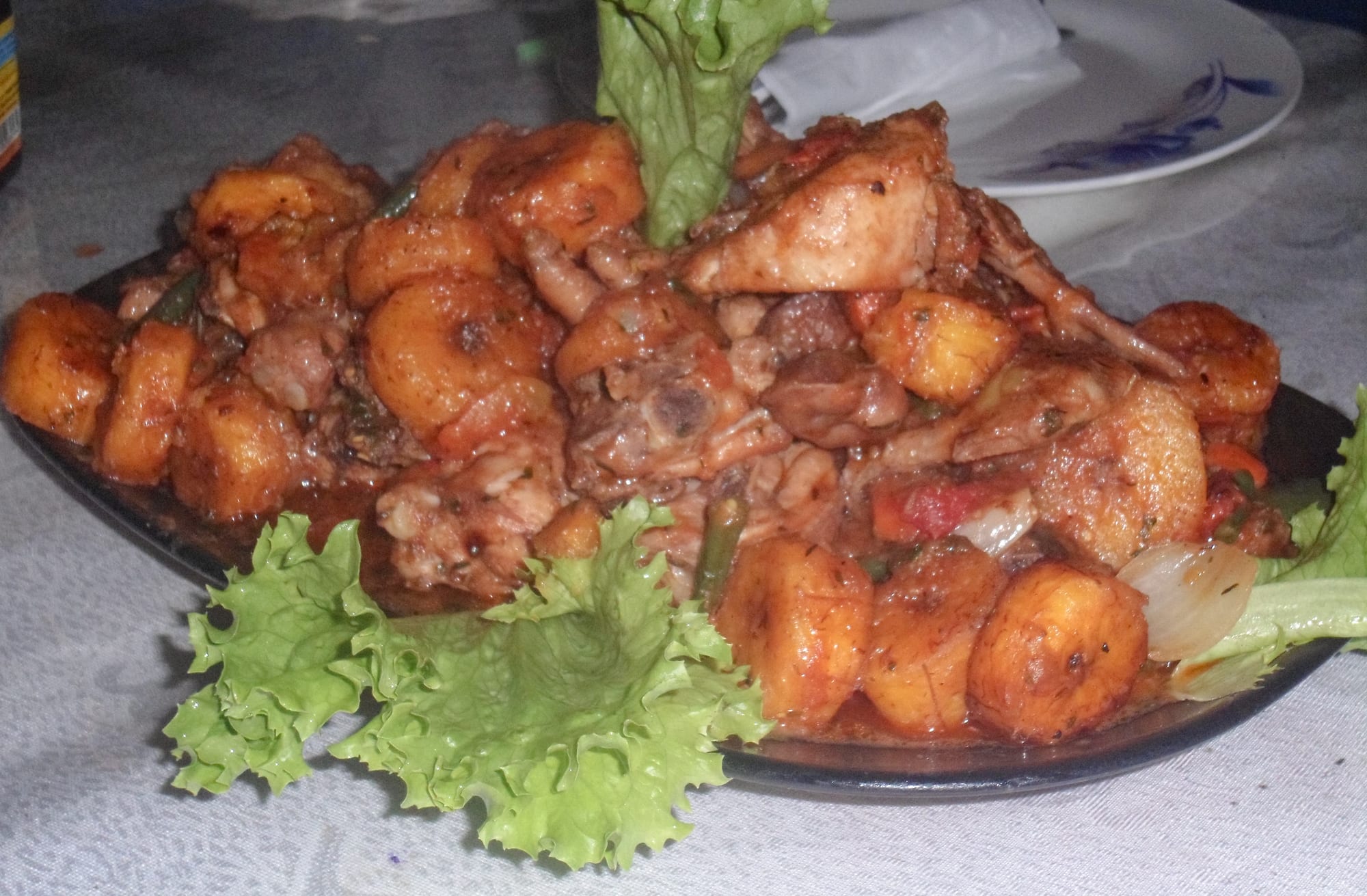
Poulet DG (chicken with plantain, vegetables and spices, fried and simmered together) has an unusually specific origin story: the name stands for "Directeur Général," and the dish is said to have gained its name as food aspirational and prestigious enough for a company director, in the era when chicken itself was a comparative luxury. It has since become one of Cameroon's most popular celebration dishes, cooked for weddings and parties across all levels of society rather than staying an elite dish.
Dishes to know
Five more to recognise across Cameroon's regions:
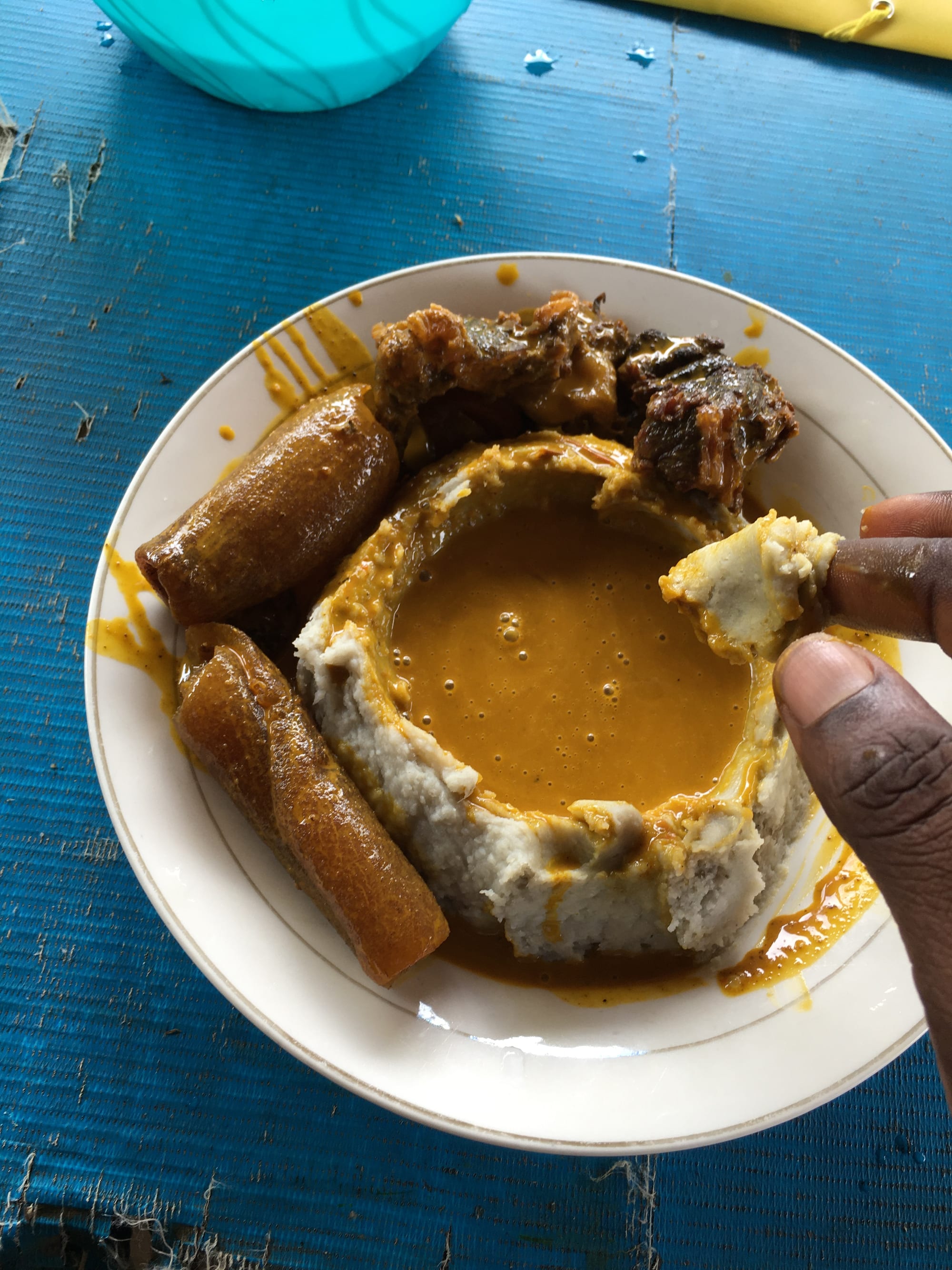
- Achu — pounded cocoyam (taro) served with a vivid yellow soup made from
palm oil and spices, a speciality of the Grassfields region in the Northwest.
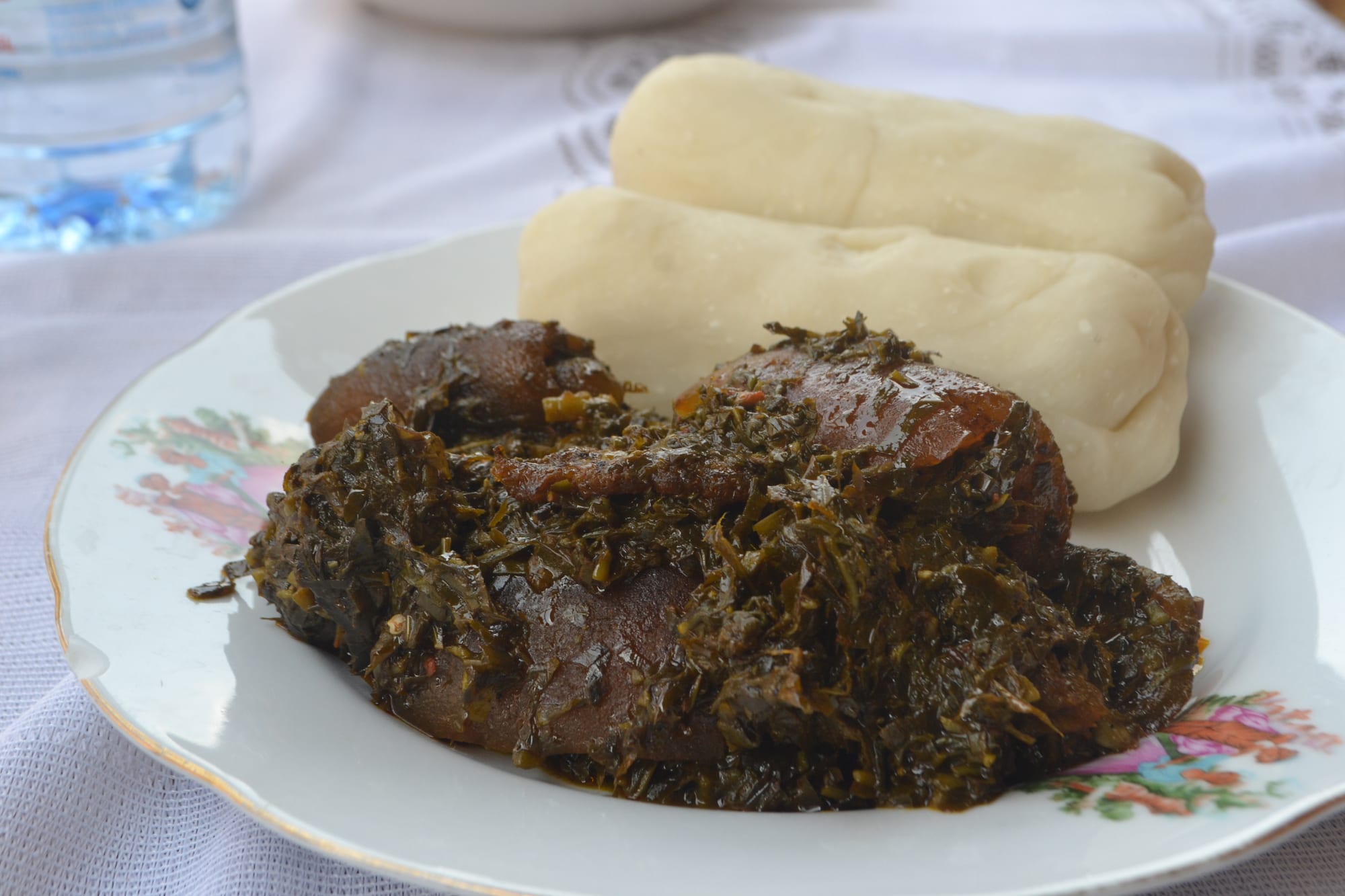
- Eru — another bitter leafy-green soup, closely related to ndolé but made
with a different leaf, a Southwest (Anglophone) region staple usually eaten with water fufu.
- Koki — a steamed pudding of ground black-eyed peas wrapped and cooked in
leaves.
- Miondo (also called bobolo) — fermented cassava, formed into sticks and
steamed in leaves, a coastal accompaniment to grilled fish.
- Suya — spiced, skewered grilled meat, more associated with the largely
Muslim, Sahel-influenced north, shared with neighbouring Nigeria.
Palm wine and drinks
Palm wine, tapped fresh from palm trees and drunk while still lightly fermented and cloudy, carries real social and ceremonial weight in Cameroon, offered at gatherings much as a fine wine might be elsewhere. Cameroon is also a significant cocoa and coffee producer, and locally brewed beers — 33 Export among the best known — are widely drunk alongside grilled meat and street food.
Eating as a traveller
Vegetarians will find the going difficult, since ndolé, eru and most soups are traditionally built around fish, meat or their stock; plain plantain, rice and bean-based koki are the more reliable options. Tap water is not safe to drink; stick to bottled or boiled water. Food differs noticeably between Cameroon's Francophone majority and its Anglophone Northwest and Southwest regions, so a trip that crosses that line will genuinely taste like two different culinary traditions.
What to take from the table
Ndolé, made properly with its bitter leaf and rich groundnut base, is the dish to try first — and poulet DG, if you're lucky enough to be invited to a celebration, shows how a once-aspirational dish became everyone's party food.