Culture & Customs · Cameroon
Cameroon: Every Hand Shaken, Elders First
Hundreds of peoples, two official languages and three great faith traditions, held together by an unhurried greeting, deep respect for age, and kings who still answer to their subjects
By Worldlore Editorial · 30 September 2026
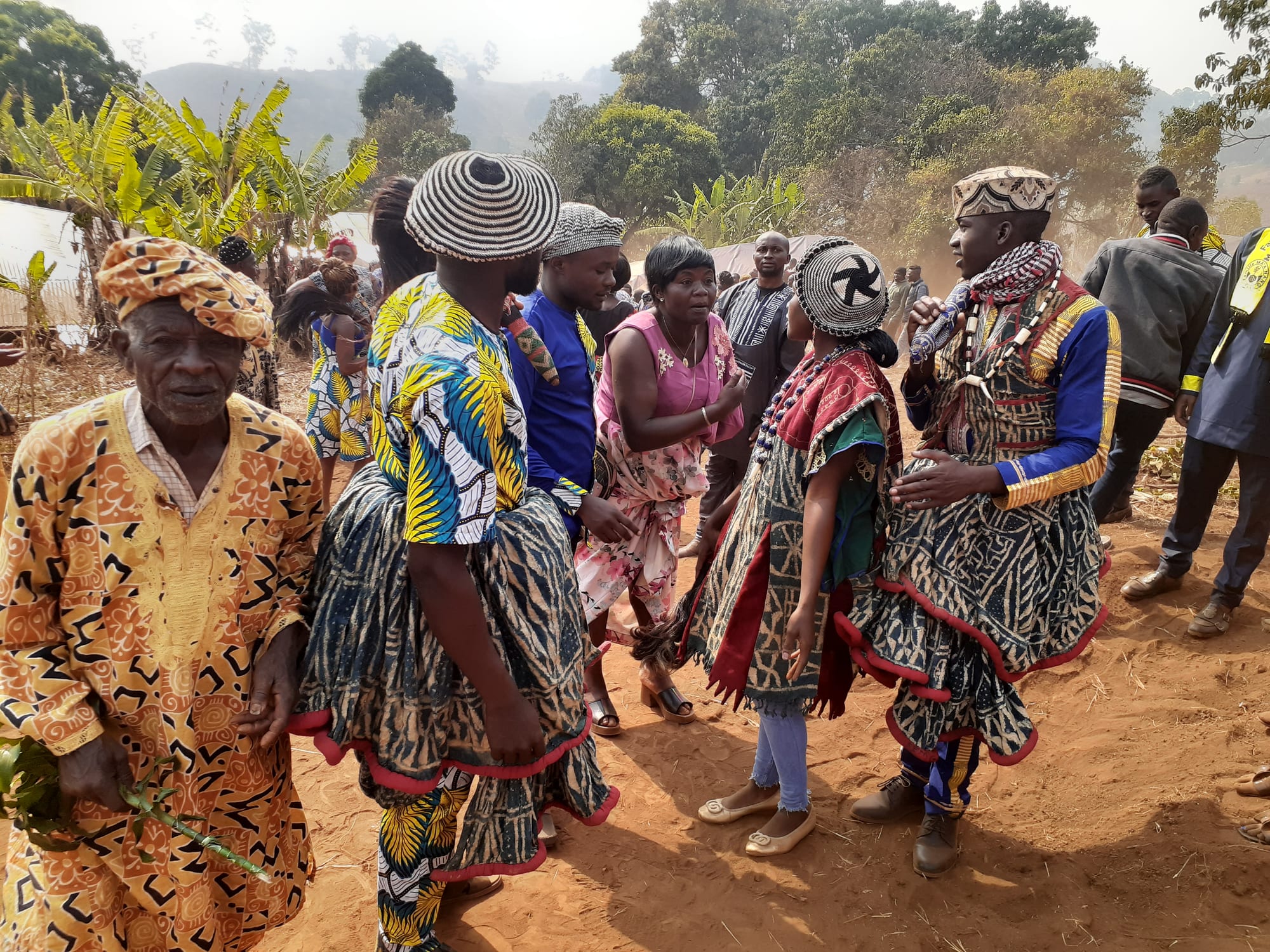
A visitor walks into a family gathering in Cameroon. Before sitting down, before accepting a drink, before anything else, there is a round of handshakes to be made — every person in the room, one by one, beginning with the oldest. Each greeting takes a moment longer than a newcomer might expect. There are questions about health, about the family, about the journey and the news of the day, and a younger man may lower his head and eyes a little as a mark of respect. Only when the circle is complete does the conversation really begin. In a country of some 250 ethnic groups and two official languages, this unhurried courtesy is one of the few customs that almost everyone shares.
Faith, identity and values
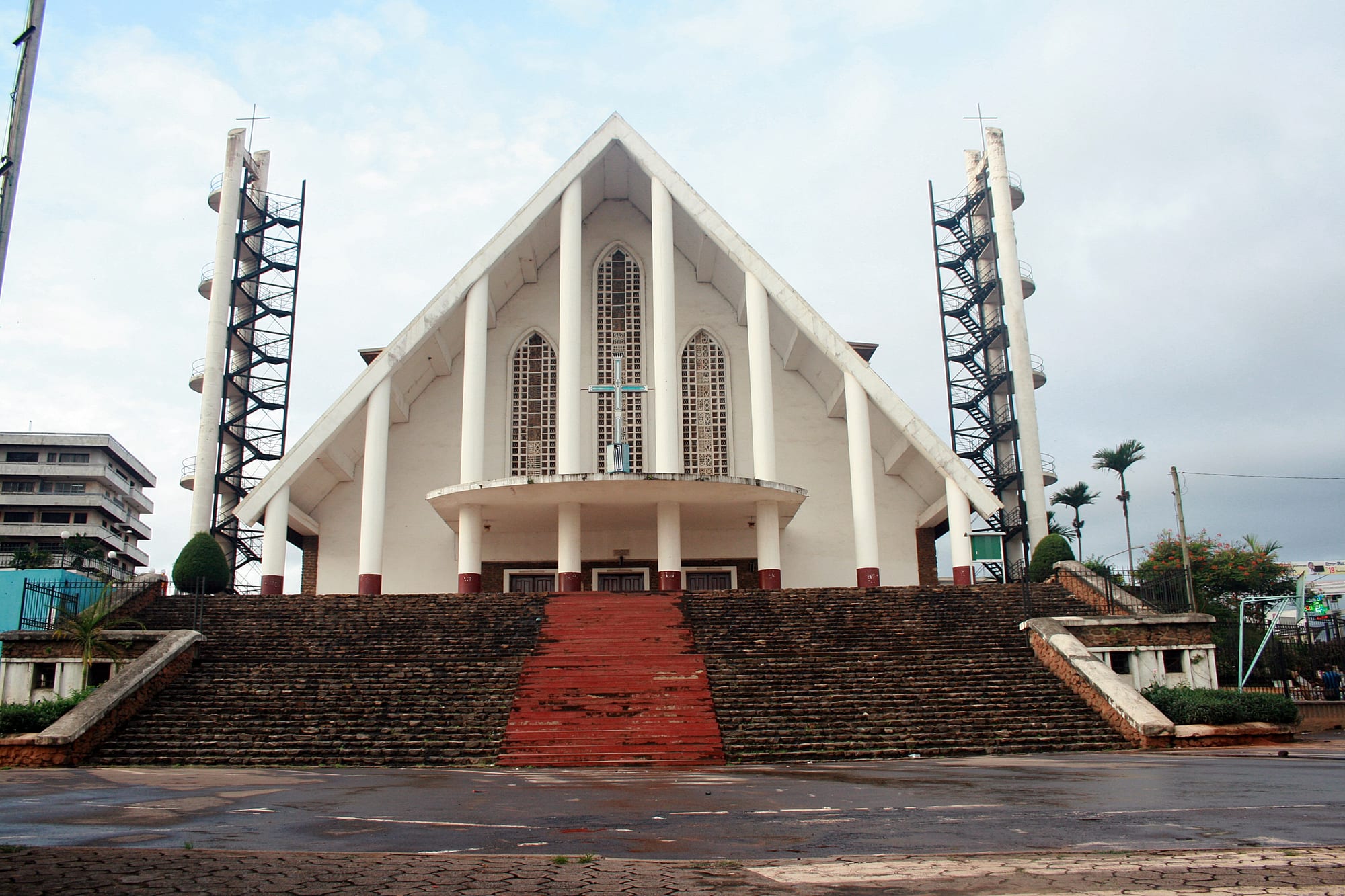
Cameroon is often called "Africa in miniature", and its religious map is as varied as its landscape. Estimates vary, but roughly a third of the population is Roman Catholic, about a quarter Protestant and a few per cent members of other Christian churches, while between a quarter and a third is Muslim. Christians live mainly in the south and west, and Muslims are most numerous in the north and among certain peoples of the west, such as the Bamoun. Only a small share of people describe themselves as followers of traditional religion alone, but many Christians and Muslims also hold on to aspects of older beliefs — about ancestors, healing, land and the moral order — which the state treats as a private matter for each ethnic or kinship group. Christian and Islamic services are both broadcast on state radio and television on national occasions, and interfaith councils of clergy and imams work together on peace-building.
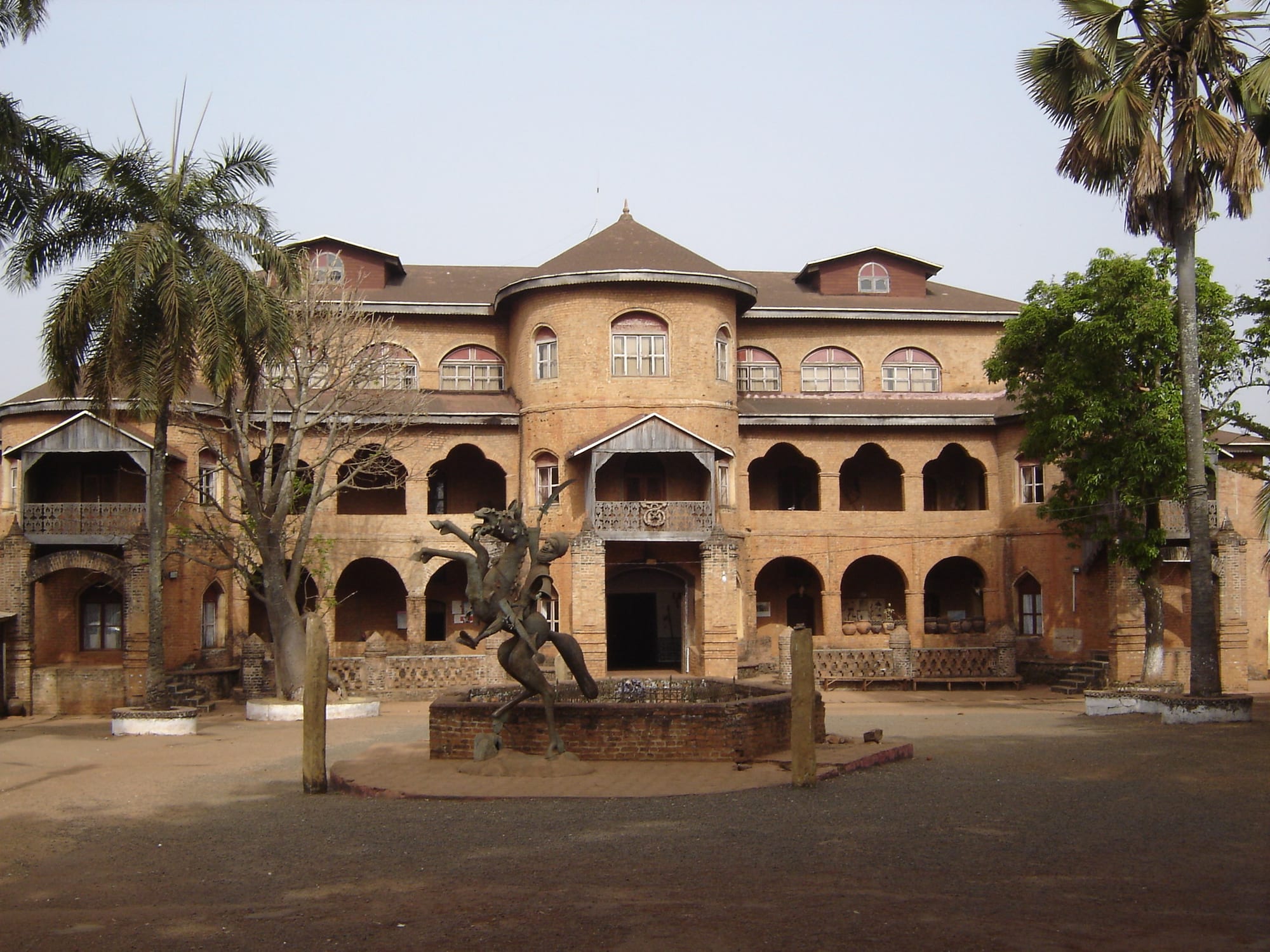
Alongside the churches and mosques, traditional authority remains a living part of public life. Across much of the country, chiefs, kings and sultans preside over chiefdoms and kingdoms that long predate the modern state, and their palaces are centres of ceremony, justice and art. The Bamoun kingdom, whose kings reside at Foumban in the West Region, traces its founding to the late fourteenth century and is often counted among the oldest surviving kingdoms in sub-Saharan Africa. Its most celebrated ruler, Ibrahim Njoya, who reigned from the late 1880s until 1933, devised a writing system for his people's language whose first form had some 500 signs.
Beneath this diversity sit values that most Cameroonians would recognise. The extended family comes first, with obligations stretching well beyond parents and children, and a family's reputation shapes how its members are seen. Age commands respect: elders are greeted first, served first and listened to carefully, and younger relatives are expected to look after their parents in old age at home. Conversation can be lively and full of energy, with people talking over one another as a sign of engagement rather than rudeness, yet advice and criticism are often wrapped in proverbs rather than stated bluntly. Hospitality to guests is a point of pride, even in households with very little to spare.
Greetings and meeting people
The handshake is the standard greeting, and on arrival at any gathering it is expected that every guest's hand will be shaken, starting with the eldest. Greetings are never a formality to be rushed. Asking after someone's family and exchanging a little news is part of saying hello, and skipping straight to business can come across as cold. Where elders or seniors are concerned, respect is shown physically as well as in words: men in particular lower the head and avert the eyes when greeting someone older or of higher standing, and women often avoid direct eye contact during greetings.
Styles vary with language and faith. In French-speaking areas, close friends often greet each other with an embrace and kisses on the cheek, while in English-speaking areas friends may use a special handshake that finishes with a snap of the fingers as the hands pull apart. Many Muslim men do not shake hands with women, so it is courteous to wait and see whether a hand is offered.
Titles matter. People are addressed by title and surname — Monsieur, Madame or a professional title — until they invite a move to first names, and in professional settings smart, formal dress is read as a sign of respect for the people being met. Items are given and received with the right hand or with both hands, never with the left hand alone.
Hospitality and being a guest
Cameroonians have a reputation for generosity towards visitors, and an invitation to a home is a real mark of welcome. It is good manners to dress well for the occasion and to bring a modest gift: fruit is a safe choice, and something small for the children, such as sweets or school supplies, is appreciated. Wine can suit many hosts, but alcohol should not be brought to a Muslim household.
In many homes, food is served communally from shared dishes, and guests wash their hands before the meal begins. Where people eat with their fingers, only the right hand is used. Seniority shapes the table: it is polite to wait for the eldest person present to begin, and in more traditional households men are served first, followed by women and children. A guest is expected to accept what is offered graciously, and to follow the host's lead on what to talk about.
Festivals and life's big moments
The national calendar turns on two civic holidays. National Day on 20 May commemorates the 1972 referendum that created a unitary state, and is marked with a large military and civilian parade in Yaoundé presided over by the head of state. National Youth Day on 11 February is dedicated to the country's young people, and the president marks it each year with a message addressed to them. Christmas and Easter are the great festivals of the Christian majority, and the Muslim feasts that end Ramadan and mark the sacrifice of Abraham are celebrated widely, especially in the north.
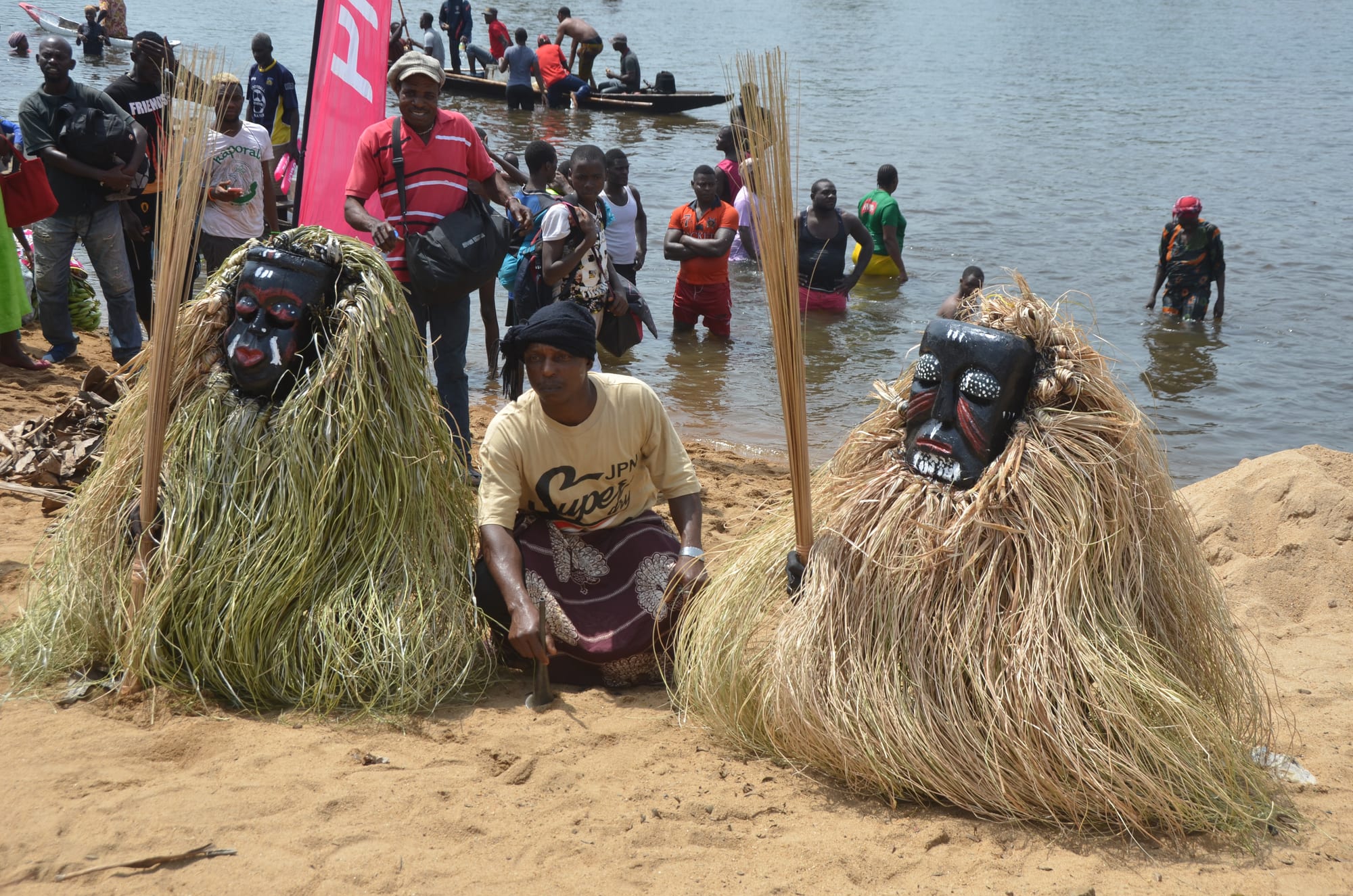
Many of the country's most striking festivals belong to particular peoples. Every year the Sawa peoples of the coast celebrate the Ngondo, a tradition centred on the worship of water spirits. In the weeks before the main ceremony come performances, traditional wrestling, canoe races, a crafts fair and a beauty pageant. In early December, crowds gather on the banks of the Wouri to watch a sacred canoe set out; an initiate dives into the water carrying a vessel holding the community's wishes and grievances, and returns with a message from the spirits. Among the Bamoun, the Nguon, held every two years in early December, brings days of ritual and public celebration. Both are on UNESCO's list of intangible cultural heritage (the Nguon since 2023, the Ngondo since 2024), as is, since 2025, the Guruna of the Massa people, a pastoral retreat in which young men take the herds to a distant camp and learn wrestling, music, dance, crafts and the community's history.
Marriage is a matter between families as much as between two people. The process traditionally begins with the "knock door", a formal visit by the groom's relatives to the bride's family to announce their intentions, often bearing gifts. A bride price is then negotiated, sometimes in livestock or money, and set out as a list of items the groom's side must provide; it is understood as thanks to the bride's family for raising her. Many couples also hold a civil and a church ceremony, but in the eyes of elders a marriage without the customary rites is not complete.
Death is marked with particular care. In the western highlands, the dead are generally buried soon after they die, followed by a period of public mourning known as the cry-die, but the most important rites come later. "Death celebrations" are held a year or more afterwards, once the family, friends and the savings, church and other associations they belong to have gathered the means to honour the person properly, with music, masked dances, traditional dress and large gatherings. The anthropologist Michael Jindra has described these as the most significant cultural events across much of the region, marking the passage of the deceased into the ranks of the ancestors.
Arts, crafts and music
Cameroon's courts have long been centres of artistic production. The kingdoms and chiefdoms of the western highlands are known for carved thrones, beaded objects, masks and ndop, a royal cloth of cotton strips decorated with designs stitched in raffia and then dyed indigo, which leaves the stitched patterns pale against the blue. Ndop is hung as a backdrop behind rulers' thrones, spread on palace walls and worn at ceremonies and dances as a display of power and wealth. At Foumban, the Museum of the Bamoun Kings, opened in 2024, holds thousands of objects from the kingdom's history, among them weapons, pipes, musical instruments and manuscripts in King Njoya's script.
The mvet is one of the region's great oral arts. The name refers both to a stringed instrument, a long stick fitted with strings and gourd resonators, and to the epic tales sung to its accompaniment by the storytellers of the Ekang peoples of the southern forests. In performances of the Mvet Oyeng, recognised by UNESCO in 2025 and shared with neighbouring Ekang communities in Gabon and beyond, the audience takes part by clapping, beating sticks and answering the singer, while the epics carry the community's history, language and values of justice and cooperation. Sacred performances require initiation; popular ones appear at public celebrations and on modern stages.
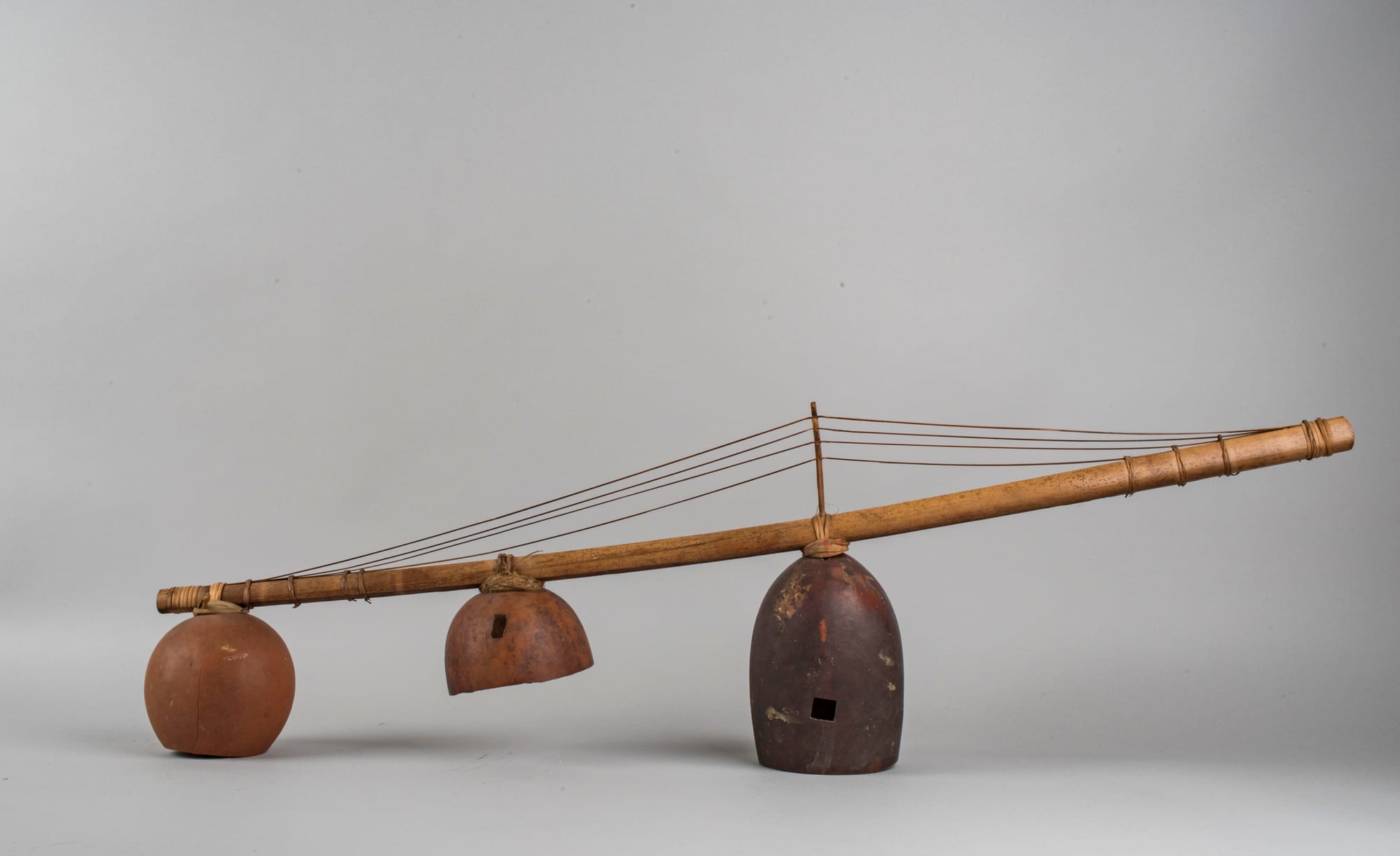
Modern Cameroonian music has travelled far beyond the country's borders. Makossa, a dance music that took shape in the 1950s, reached an international audience in the 1970s through Manu Dibango's much-sampled "Soul Makossa" of 1972, and artists such as Eboa Lotin and François Missé Ngoh helped shape it. Bikutsi is the other great popular style, and Cameroonian musicians have long mixed both with styles from abroad.
Dos and don'ts for visitors
- Do check the latest government travel advice first: most governments advise against all travel to the Far North and to the Northwest and Southwest regions.
- Do shake hands with everyone present on arrival and departure, starting with the eldest, and take time over the greeting.
- Do use titles and surnames until invited to use first names, and dress smartly for formal visits.
- Do give, receive and eat with the right hand, or offer items with both hands, and wait for the eldest to begin eating when food is shared.
- Don't bring alcohol to a Muslim household, and wait to see whether a Muslim man offers his hand before offering yours.
- Don't photograph military sites, government buildings, airports or ports, or wear camouflage clothing, which is prohibited for civilians; carry identification and ask before photographing people.
- Don't show same-sex affection in public: same-sex sexual relations are a criminal offence in Cameroon, punishable by up to five years in prison.
- Don't buy souvenirs made from protected wild animals; the trade is illegal without a licence.
What to take away
In Cameroon, respect is shown through time and attention — a greeting that is never rushed, an elder who is always served first — and visitors who slow down to match that rhythm will find a warm welcome in every part of this many-sided country.