Daily Life · Cameroon
Cameroon: A Day Lived in Two Languages
A country of some 250 ethnic groups split between French and English schooling, now more than half urban, where the market, the church or mosque, and Sunday football still anchor an ordinary week
By Worldlore Editorial · 30 September 2026
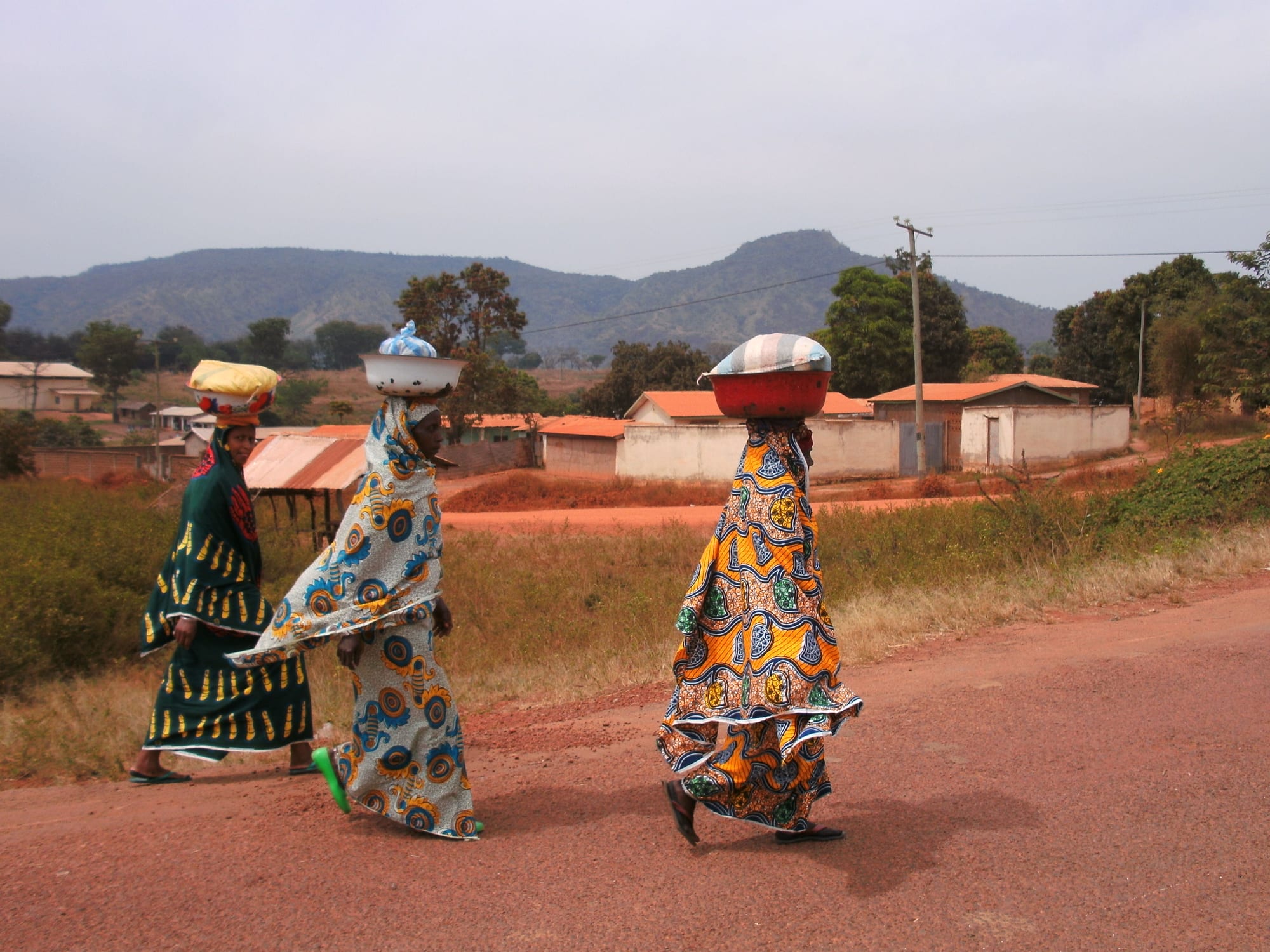
Cameroon packs an unusual range of daily life into one country: equatorial farms in the south, cool highland market towns in the west, and dry savanna in the north, home to roughly 250 ethnic groups and divided between French- and English-language schooling, a legacy of the country's division between French and British rule after the First World War. More than half the population now lives in a town or city, yet farming still shapes the rhythm of life for millions, and the market, not the office, remains the place where most people's day actually happens. Since 2016, a separatist conflict in the English-speaking Northwest and Southwest regions has also uprooted daily life there specifically, closing schools and displacing hundreds of thousands of people.
Family and home life
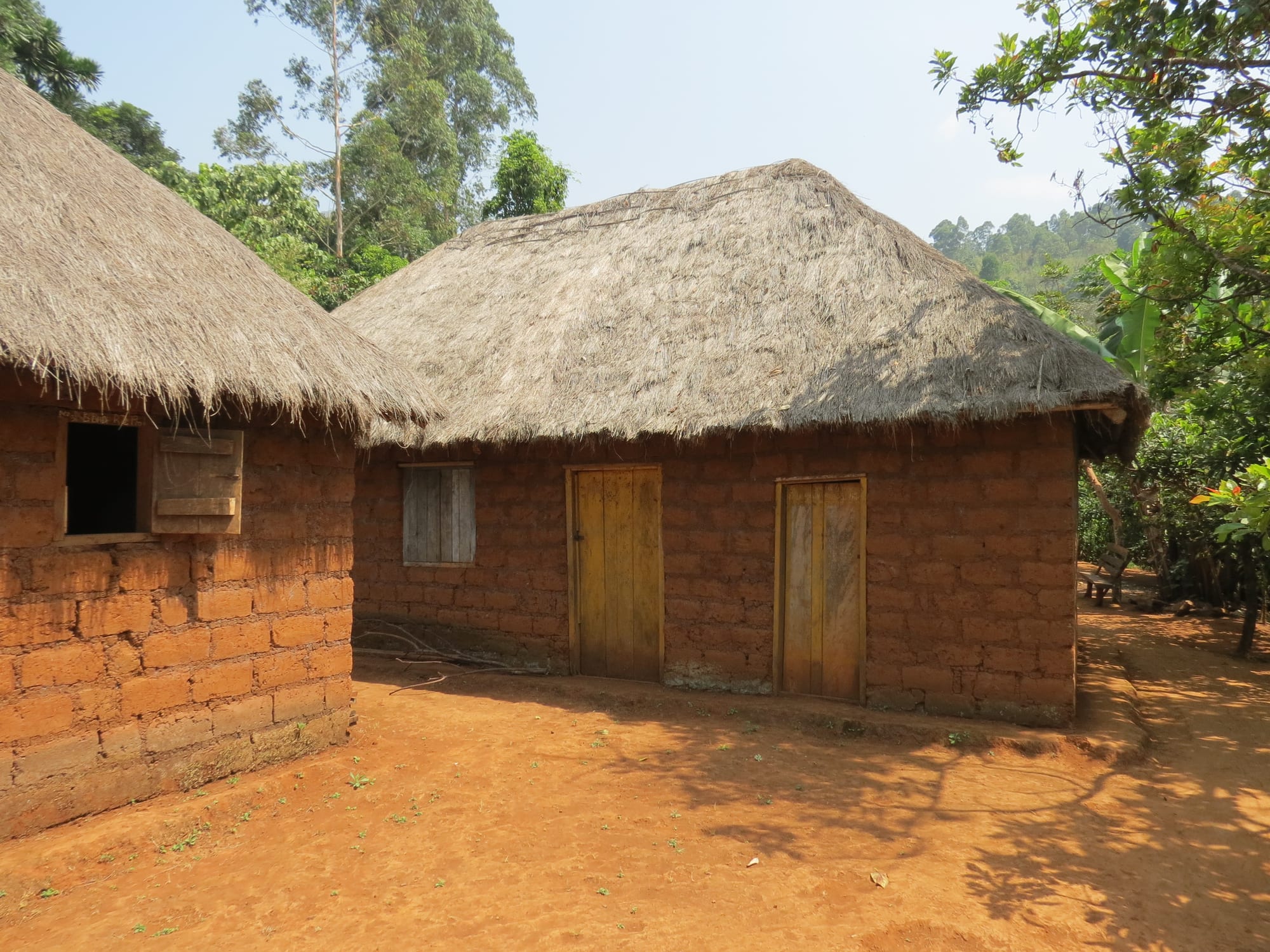
Extended family ties run deep, and it is common for grandparents, cousins, and in-laws to live nearby or within the same compound, with child-rearing shared more widely than just between parents. Polygamy is legal and still practised, most often in rural areas. Housing varies sharply with region and income: mud-brick houses with a thatched or corrugated-metal roof remain typical in villages and small towns, while concrete-block housing is standard in Douala, Yaoundé, and other cities, where many households now live in growing peri-urban neighbourhoods rather than a traditional compound.
Work, school and the rhythm of the day
Most Cameroonians outside the cities still farm: cocoa and coffee in the south and west, cotton and livestock in the north, and plantain, cassava, and maize nearly everywhere for the household table. In Douala and Yaoundé, offices keep a conventional weekday schedule, though the informal economy of trading, driving, and small services employs far more people than formal offices do. Schooling follows one of two separate systems depending on region: a French-medium track in most of the country and an English-medium track, modelled on the British system, in the Northwest and Southwest, a divide that has become one of the country's most consequential daily-life facts since the conflict between separatists and the government began there in 2016, closing schools for extended periods and pushing many rural families to relocate to safer towns.
Community life and public spaces
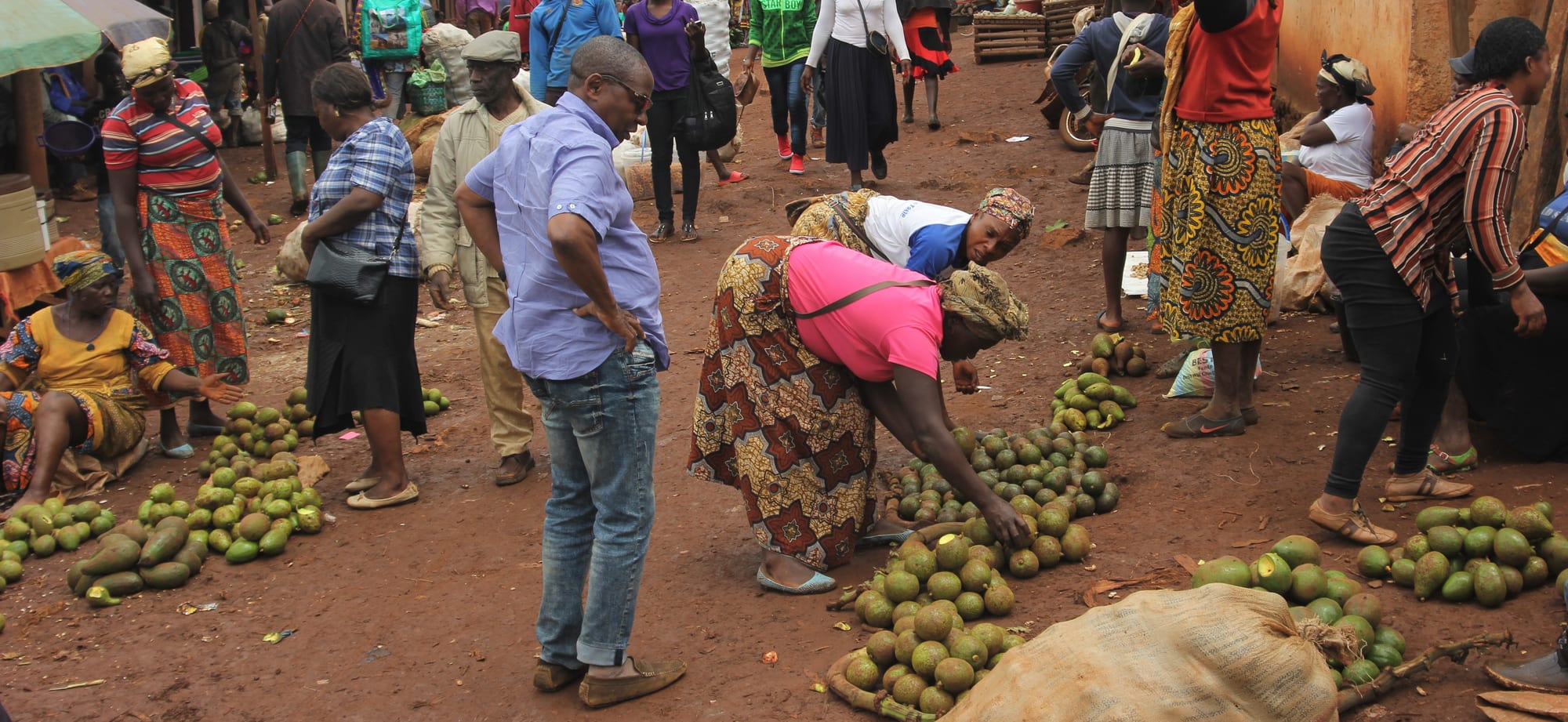
The market is the true daily gathering point in towns and cities alike, with produce, cloth, and household goods laid out on the ground, on tables, or under umbrellas, usually busiest in the morning. Motorcycle taxis are the standard way to get around a town quickly, weaving through traffic and market crowds far more nimbly than a car. Police and gendarmerie checkpoints are a routine part of road travel between towns, a fact of daily life for anyone moving around the country by road. Churches and mosques anchor community life, broadly following the country's geography: Christians are chiefly in the south and west and Muslims are the majority in the north, though both are found in every region.
Free time and weekends
Football is close to a national obsession, followed on television, radio, and in packed neighbourhood viewing spots whenever the Indomitable Lions play, and informal matches on any open patch of ground are a constant sight in towns and villages alike. Sunday is the main day of rest for the Christian majority, built around church in the morning and family time after, while Friday prayers play the same role for Muslim communities in the north. Where money allows, a weekend trip to a beach near Kribi or Limbe, or into the cooler western highlands, is a popular escape from the heat of Douala or Yaoundé.
A visitor's ordinary day
Cash, in Central African CFA francs, is essential outside Douala and Yaoundé, where ATMs and card payments are more limited. Shared bush taxis and motorcycle taxis cover most short journeys between and within towns, generally negotiated rather than metered, and it is worth agreeing a fare before setting off. Expect frequent police and gendarmerie checkpoints on intercity roads, where carrying a passport and vaccination card, including proof of yellow fever vaccination, is standard practice. Most governments currently advise against all travel to the Far North and to the Northwest and Southwest regions, so any itinerary should be checked against current advisories before travel.
What to take away
An ordinary day in Cameroon runs on remarkable variety, a market economy, and two languages that quietly sort which school, which paperwork, and which part of the country a person's day belongs to.