Food · Cambodia
Cambodia: Food and the National Dish
A fish curry steamed into a soft custard inside a banana leaf, a fermented fish paste that underlies almost everything, and a pepper prized enough to be exported to French kitchens
By Worldlore Editorial · 16 September 2026
A quieter cuisine between two famous neighbours
Khmer food sits between Thailand and Vietnam geographically and gets far less international attention than either, but it has its own clear identity: milder and less sweet than Thai cooking, built on a herb paste called kroeung rather than a curry powder, and grounded in prahok, a pungent fermented fish paste that gives Cambodian food its most distinctive underlying flavour. Rice and freshwater fish from the Tonle Sap, one of the world's richest inland fisheries, carry most meals.
The national dish: fish amok
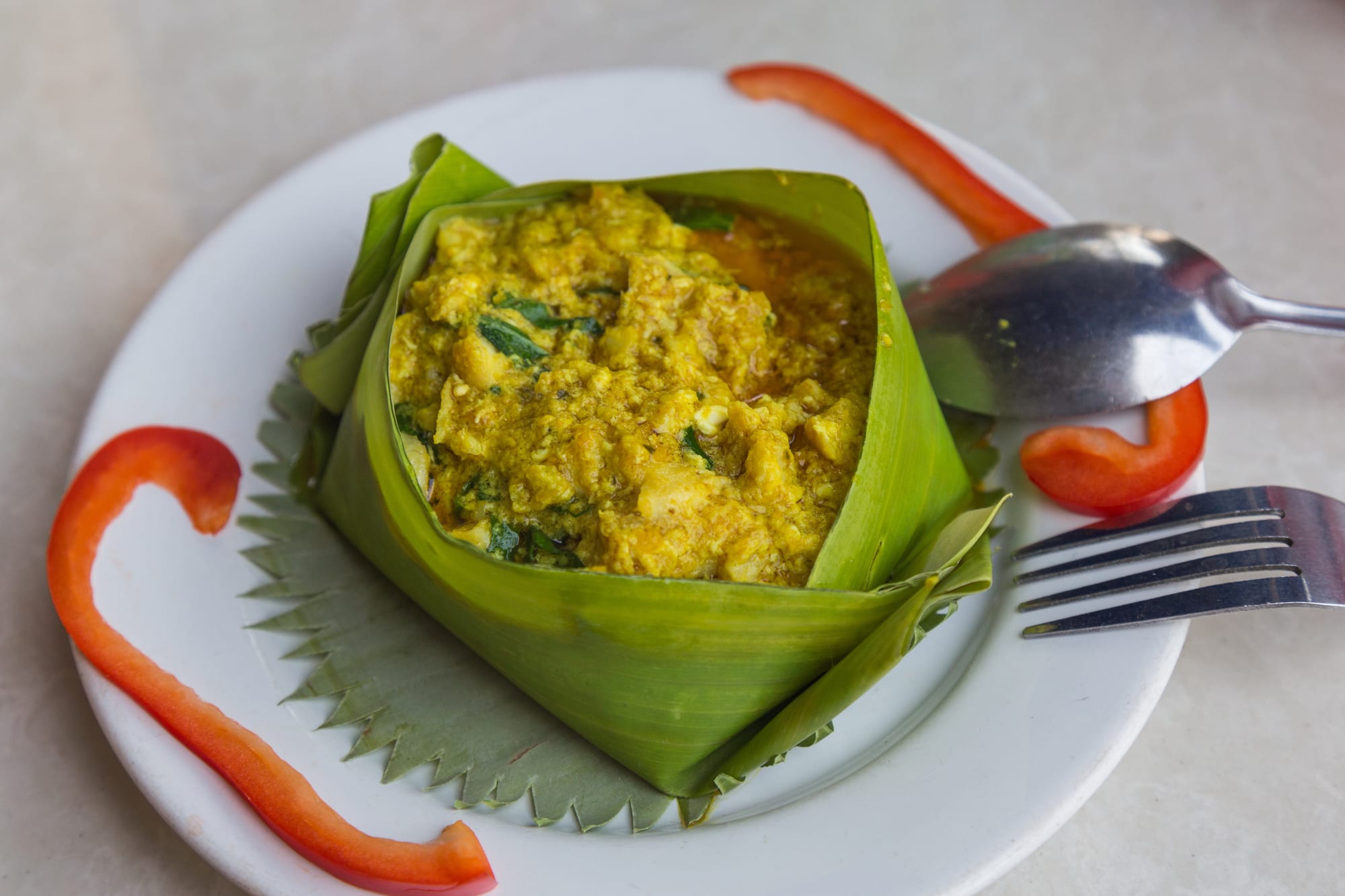
Fish amok is freshwater fish mixed with kroeung — a paste of lemongrass, galangal, turmeric, garlic and kaffir lime — and coconut milk, then steamed, often in a folded banana leaf, until it sets into a soft, custard-like texture somewhere between a curry and a mousse. It is Cambodia's best-known dish abroad and the one most consistently pointed to as the national dish at home as well.
What Khmer cooking is built on
Kroeung is to Khmer cooking what curry paste is to Thai food: a pounded mix of aromatics that changes slightly by region and dish but always supplies the backbone of flavour. Prahok, fermented fish paste, does similar work from the savoury, pungent end of the spectrum, stirred into dips, soups and sauces in small amounts — intense on its own, but foundational rather than overwhelming once cooked into a finished dish.
Dishes to know
Five more to recognise across Cambodia:
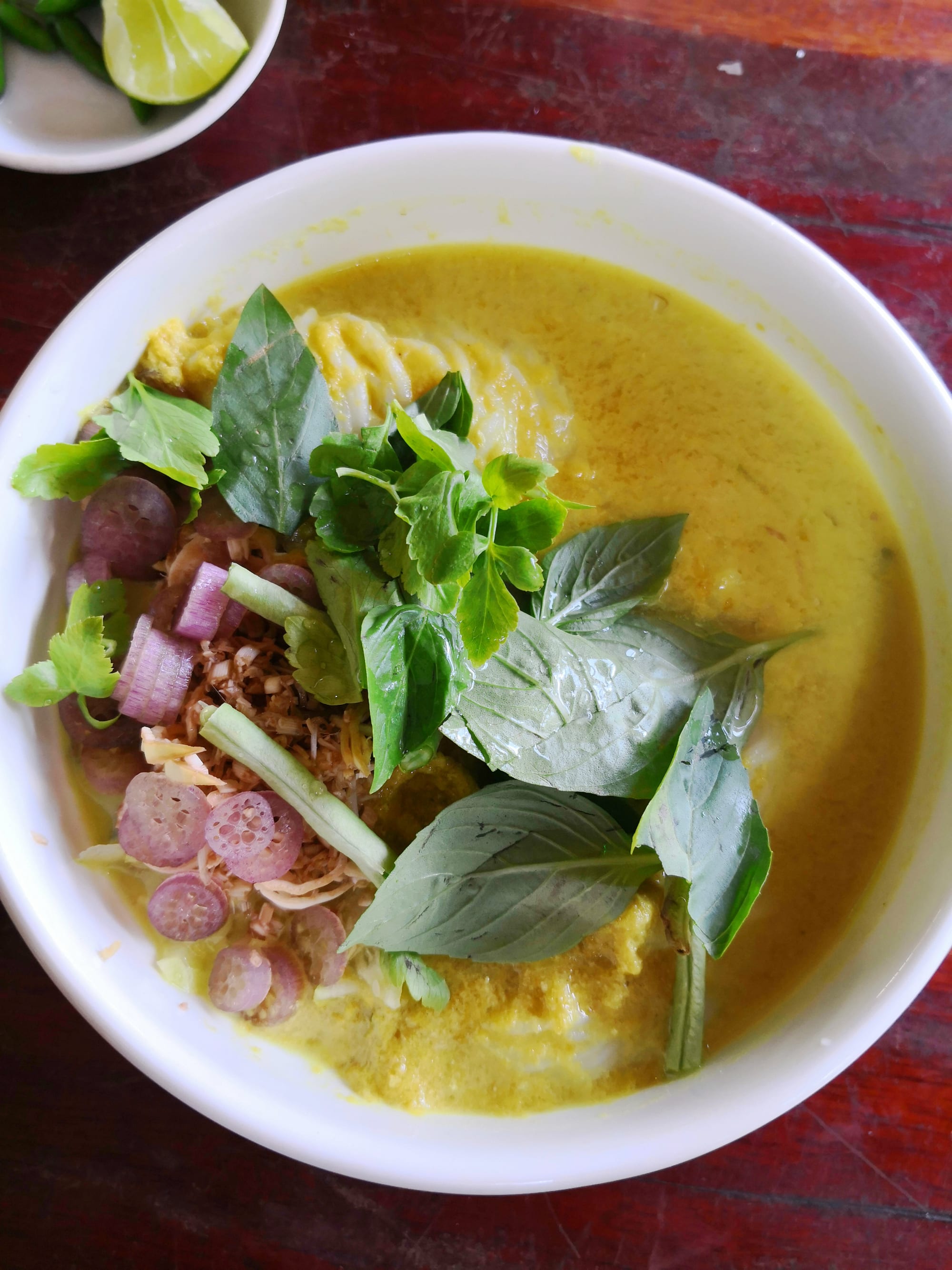
- Nom banh chok — thin rice noodles served with a green, herb-and-fish-based
curry sauce, often eaten for breakfast and considered by many Cambodians as just as central to Khmer identity as amok.
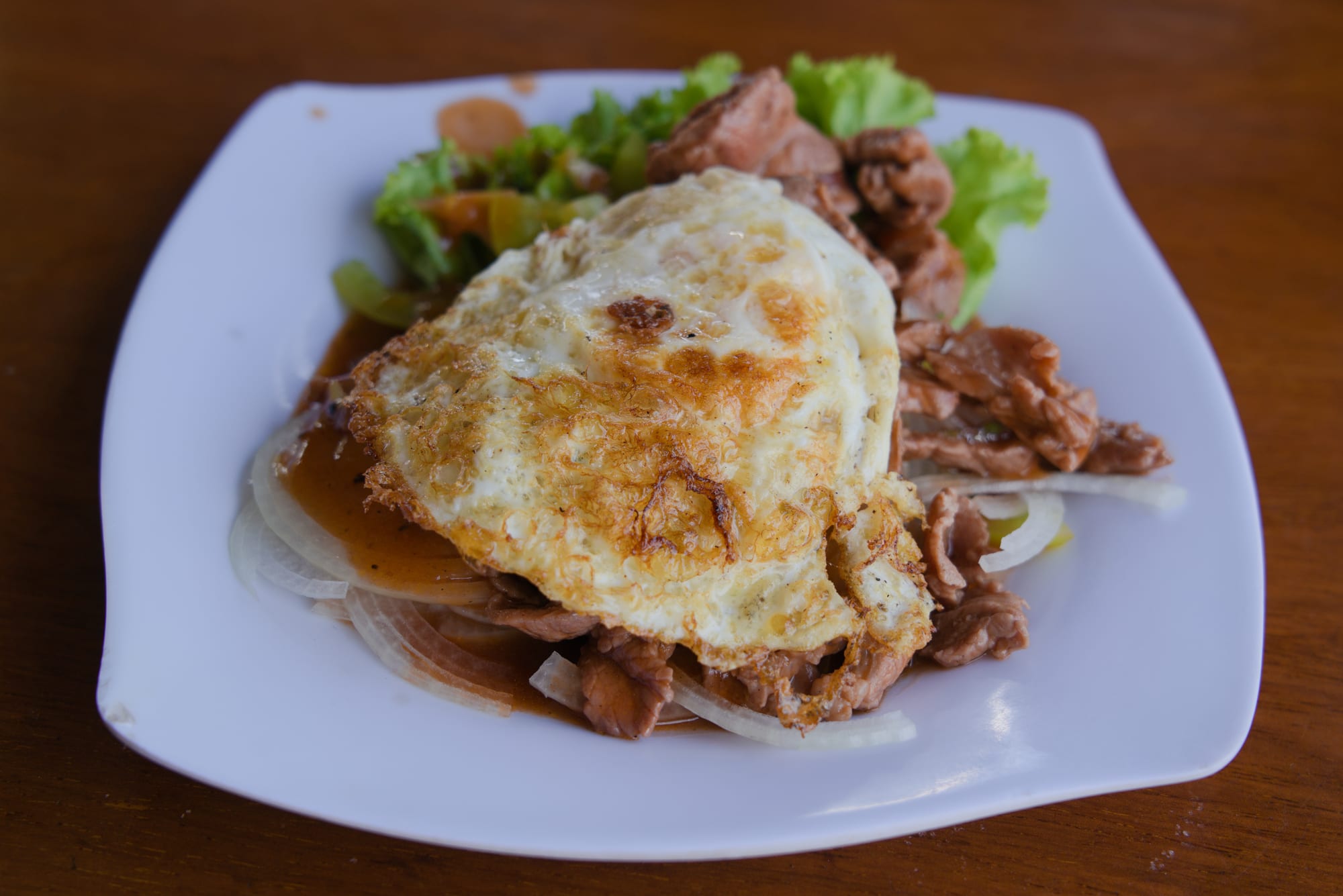
- Lok lak — marinated, stir-fried beef served over lettuce and tomato with
a lime-and-pepper dipping sauce, a popular restaurant staple.
- Bai sach chrouk — grilled marinated pork served over rice, a common
breakfast street food.
- Kuy teav — a noodle soup with Chinese-Cambodian roots, another common
breakfast choice, especially in Phnom Penh.
- Kep crab — fresh crab from the coastal town of Kep, traditionally cooked
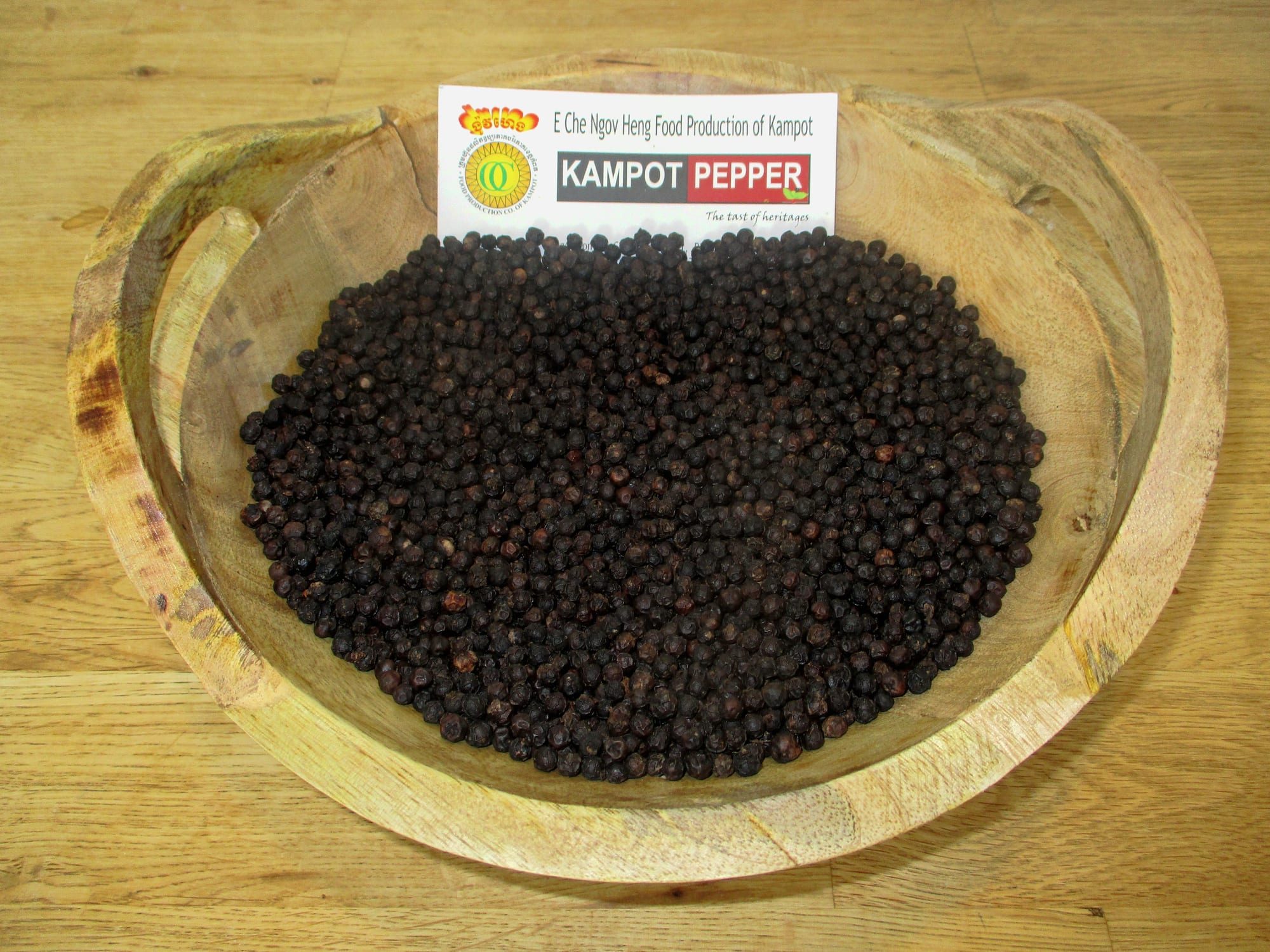
with Kampot pepper, a well-known regional pairing.
Drinks and French leftovers
Coffee, often served strong with sweetened condensed milk over ice, is a French colonial legacy that Cambodia kept and made its own, alongside num pang, a Cambodian take on the French baguette sandwich. Angkor, the country's dominant domestic beer, and palm wine or palm sugar, a major product of Kampong Speu province, round out the everyday drinks list.
Eating as a traveller
Vegetarians can rely on rice, vegetable-based soups and tofu dishes, though prahok and fish sauce find their way into a great deal of Khmer cooking even when a dish looks vegetarian, so it is worth asking directly. Tap water is not safe to drink; stick to bottled or boiled water. Street food around markets in Phnom Penh and Siem Reap is generally an excellent, inexpensive way to try a wide range of dishes in one visit.
What to take from the table
Fish amok, made properly with real kroeung and steamed until it sets soft, is the dish to seek out first — and a bowl of nom banh chok from a morning market stall is the truer, everyday face of how Cambodians actually eat.