Attractions & Natural Wonders · Cambodia
Cambodia: Ten Attractions and Natural Wonders
The largest religious monument ever built, stone faces staring out of the jungle, a temple being pulled apart by tree roots, and villages that float on a lake that changes size
By Worldlore Editorial · 19 September 2026
The Khmer heartland
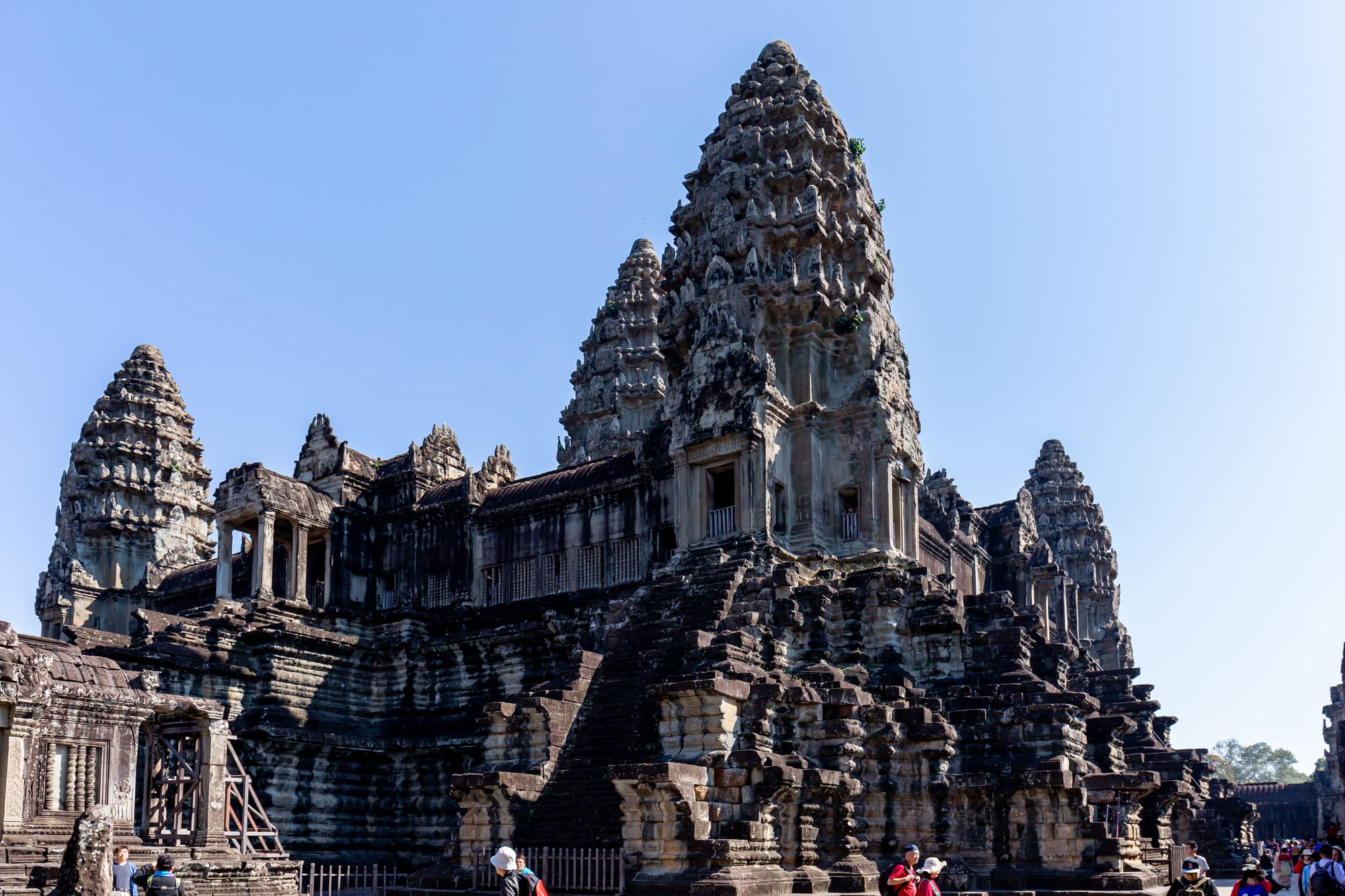
Cambodia's identity is bound up with Angkor — the capital of the Khmer Empire, which for six centuries was the most powerful state in Southeast Asia and left behind hundreds of stone temples in the forest north of the Tonlé Sap lake. The 20th century was cruel to the country: French colonialism, US bombing, and then the Khmer Rouge, whose 1975–79 rule killed around a quarter of the population. Both stories — the ancient grandeur and the recent horror — are part of any visit.
The ten below run from Siem Reap and Angkor to the capital, the great lake, and the coast. It is hot year-round; November to February is the cool, dry season, and the best time to go.
1. Angkor Wat
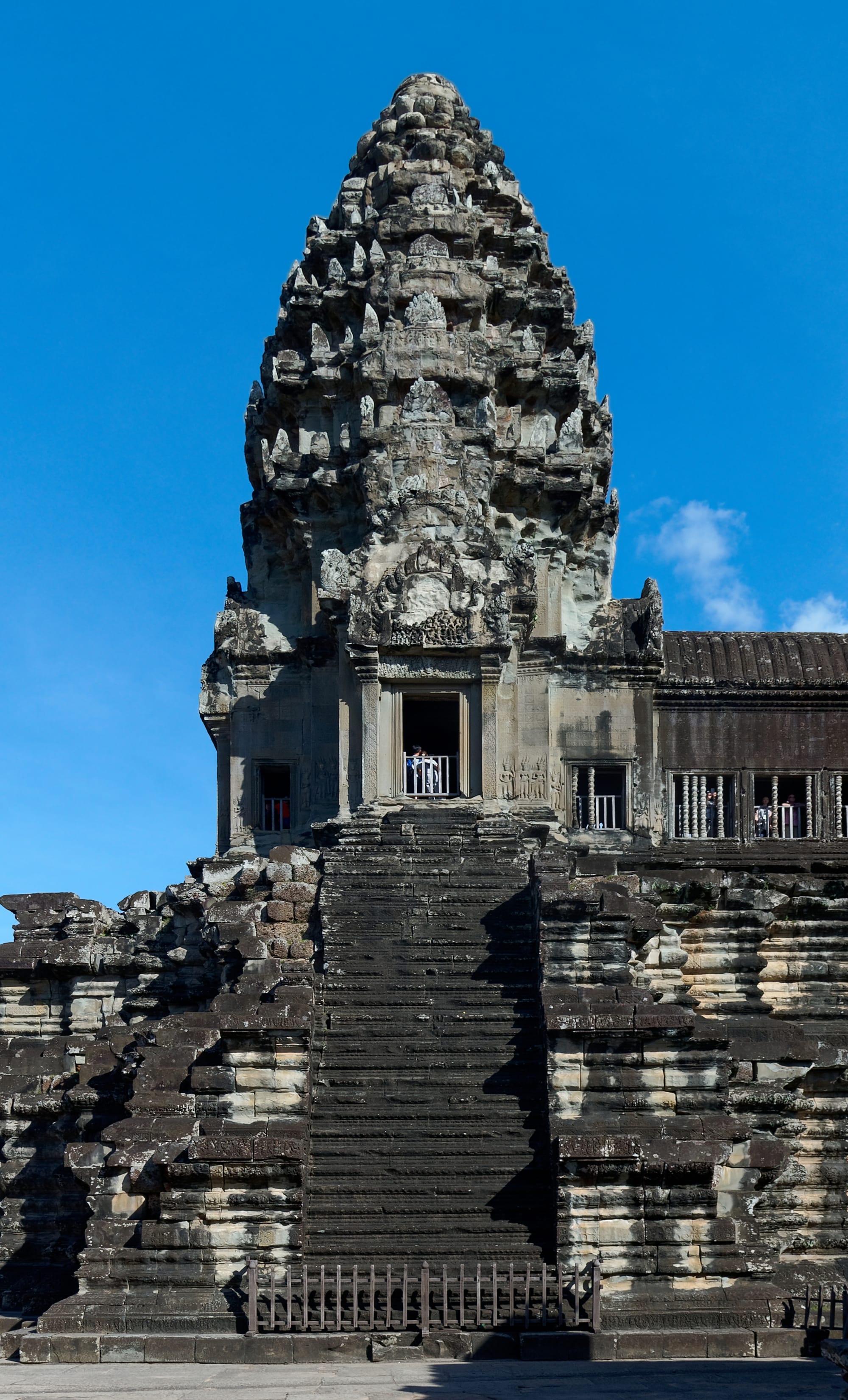
Built by Suryavarman II around 1113–1150 as a temple-mountain to Vishnu, and later converted to Buddhist use, Angkor Wat is the largest religious structure ever built — a moated complex nearly 200 hectares in area, its central quincunx of towers representing the peaks of Mount Meru. The walls of the third enclosure carry 600 metres of bas-relief, including a famous panel of the "Churning of the Sea of Milk".
It appears on the national flag. Sunrise over the towers, from the northern reflecting pool, is the classic (and crowded) view.
2. Angkor Thom and the Bayon
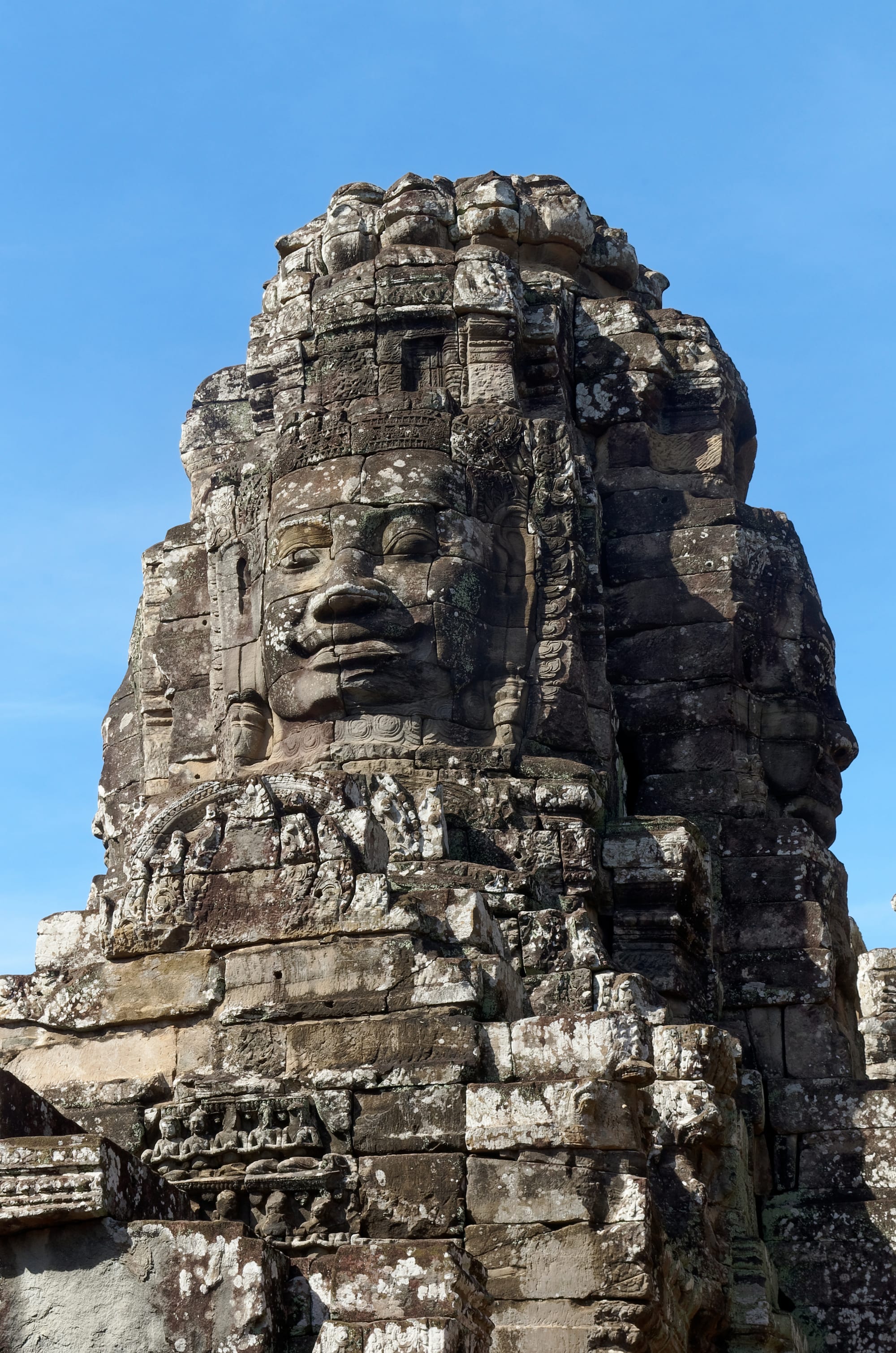
Angkor Thom, the last great capital, is a walled city of nine square kilometres entered through monumental gates topped with faces. At its exact centre stands the Bayon, the temple of the Buddhist king Jayavarman VII (ruled c. 1181–1218): a pile of towers carrying more than 200 huge, half-smiling stone faces, and lower galleries of bas-relief showing everyday Khmer life and battles with the Cham.
Also inside the walls: the Terrace of the Elephants, the Terrace of the Leper King, and the pyramid-temple of Baphuon.
3. Ta Prohm
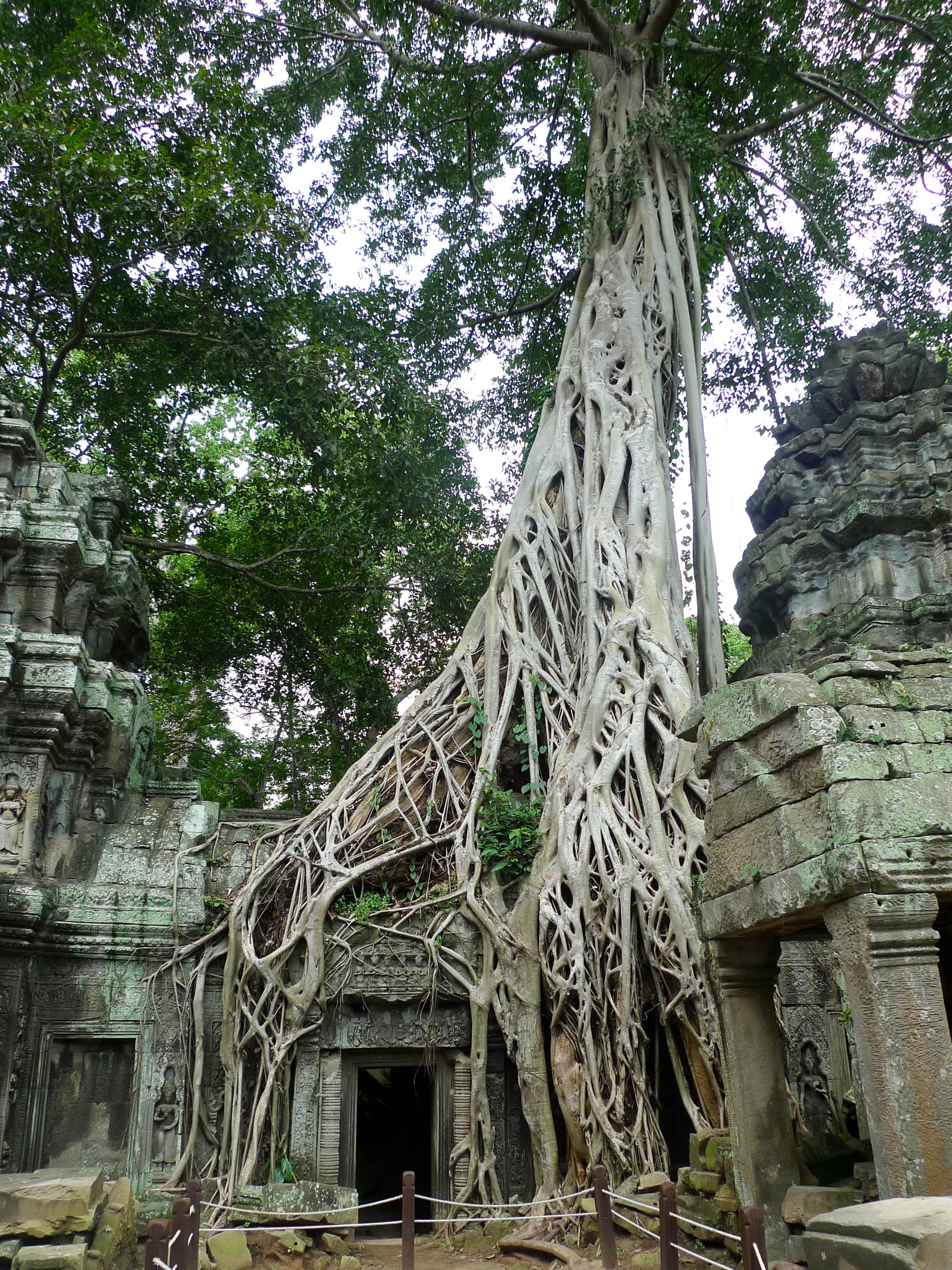
Ta Prohm, a sprawling monastery-temple of the late 12th century, was deliberately left by its restorers in a semi-collapsed state, with giant trees growing out of its towers and their roots prising the masonry apart — the image most people carry of Angkor, helped by its appearance in the Tomb Raider film.
It is on the "small circuit" of temples and best visited early or late; the famous root-draped doorways get very crowded midday.
4. Banteay Srei
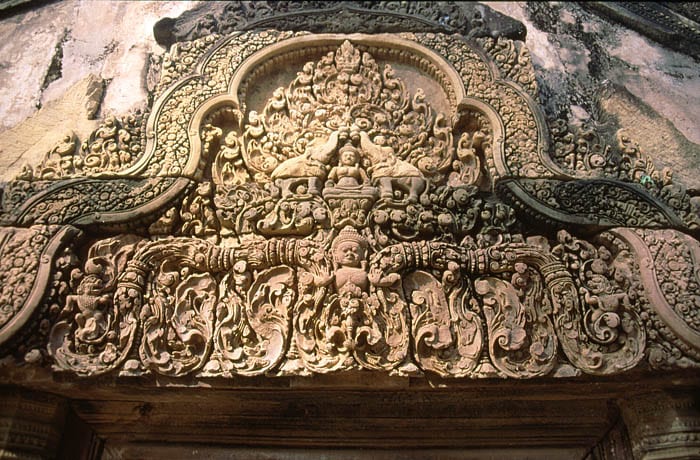
About 25 kilometres northeast of the main Angkor group, Banteay Srei ("citadel of the women") is small but exquisite — a 967 CE temple built not by a king but by a courtier, in a hard rose-pink sandstone that holds astonishingly fine, deep carving: dancing figures, guardian monkeys, and scenes from Hindu epics over every lintel and pediment.
It is usually combined with Kbal Spean, a river upstream carved with hundreds of underwater lingas and deities.
5. Phnom Penh and the Royal Palace
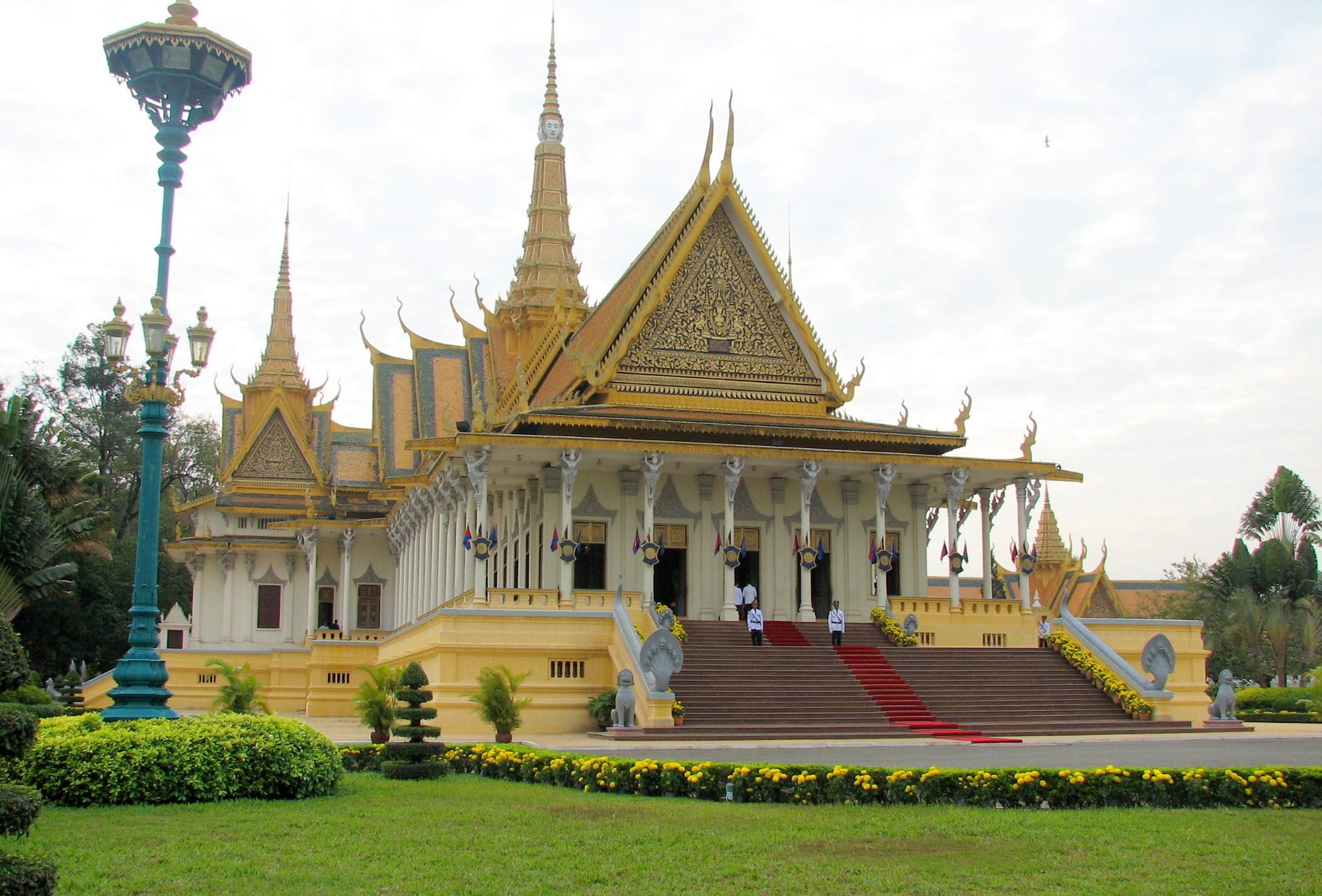
Cambodia's capital sits at the meeting of the Mekong, the Tonlé Sap, and the Bassac rivers. Its centrepiece is the Royal Palace compound, with the ornate Throne Hall and the Silver Pagoda, whose floor is laid with more than 5,000 silver tiles and which holds a life-size gold Buddha set with diamonds. Next door, the National Museum has the world's best collection of Khmer sculpture.
The riverfront promenade, the Art Deco Central Market, and Wat Phnom round out the city.
6. Tuol Sleng and the Killing Fields
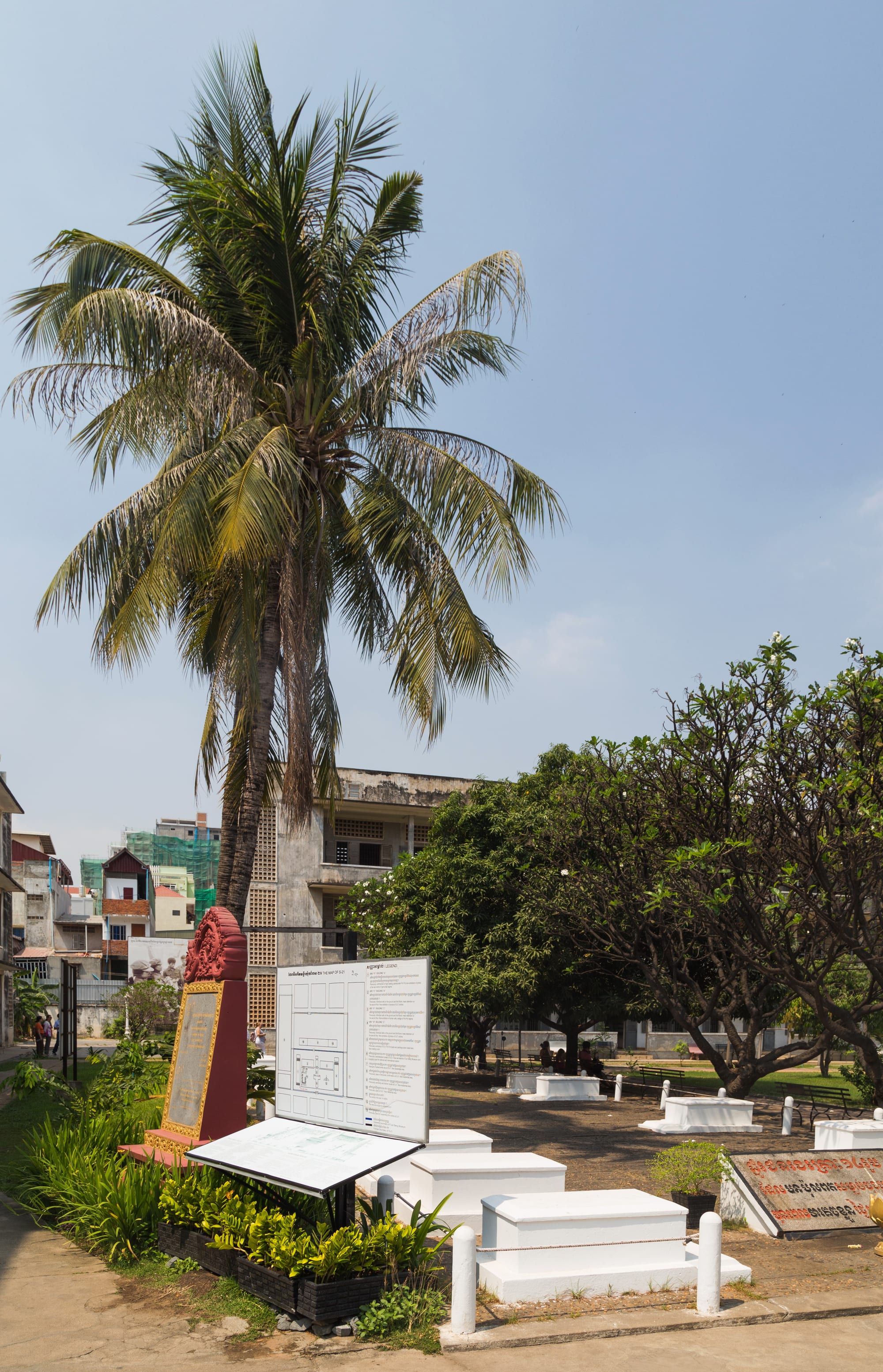
Between 1975 and 1979 the Khmer Rouge turned a Phnom Penh high school into S-21, a torture and interrogation centre through which some 12,000–20,000 people passed; almost none survived. It is now the Tuol Sleng Genocide Museum, kept largely as it was found. Fifteen kilometres out of town, the Choeung Ek "Killing Fields" — one of many execution sites — has a memorial stupa filled with skulls.
Both are harrowing and essential to understanding modern Cambodia. The audio guides are excellent and unflinching.
7. The Tonlé Sap
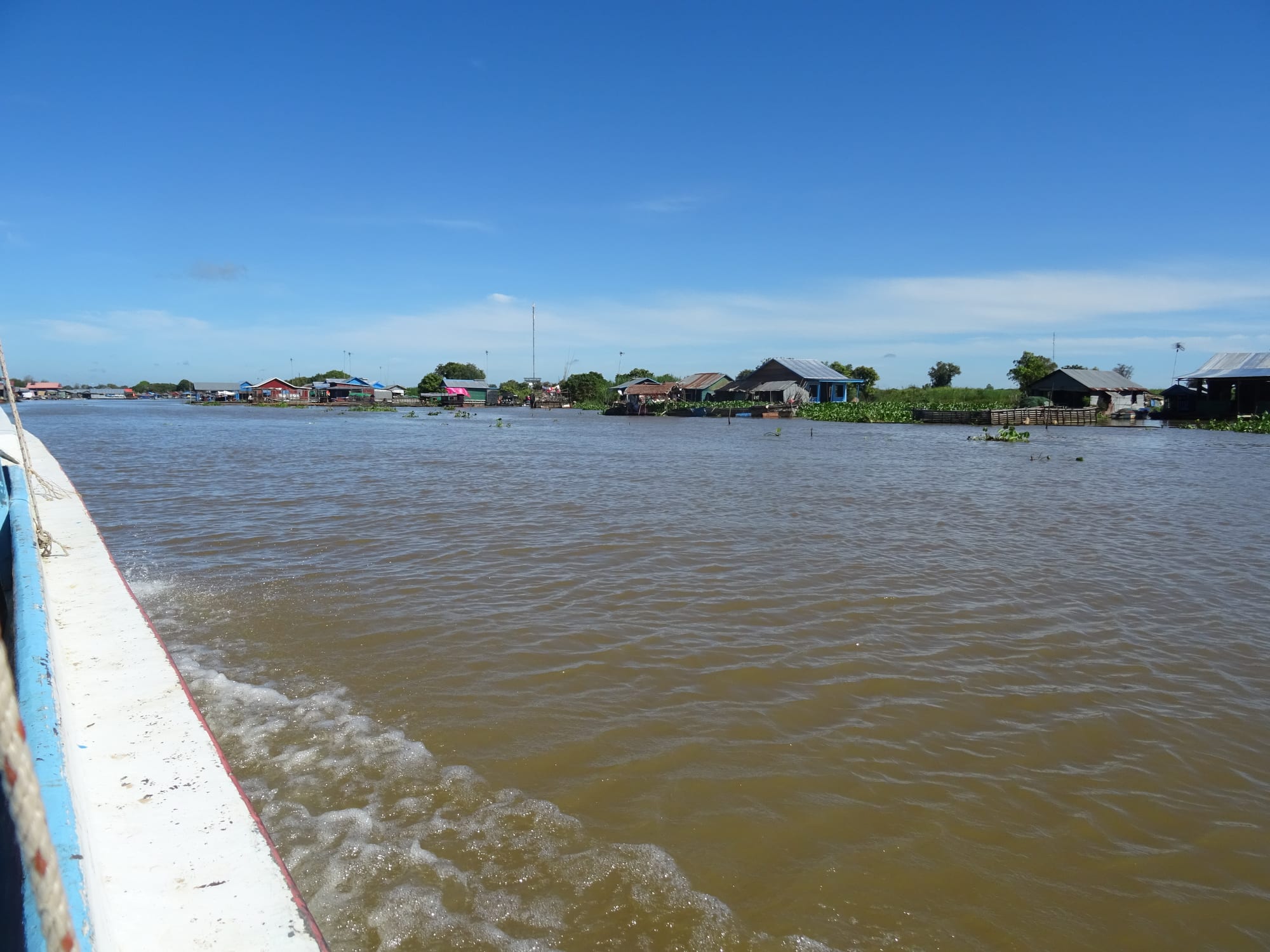
The Tonlé Sap is a unique piece of hydrology: in the wet season the Mekong pushes so much water up its connecting river that the flow reverses and the lake expands from about 2,500 to over 15,000 square kilometres, flooding a vast forest and fuelling one of the most productive inland fisheries on earth. Whole communities live on it — in houses on stilts, and in genuinely floating villages that move with the water.
Kampong Phluk (stilt houses, flooded forest) is a better, less touristy choice than the much-visited Chong Kneas near Siem Reap.
8. Battambang
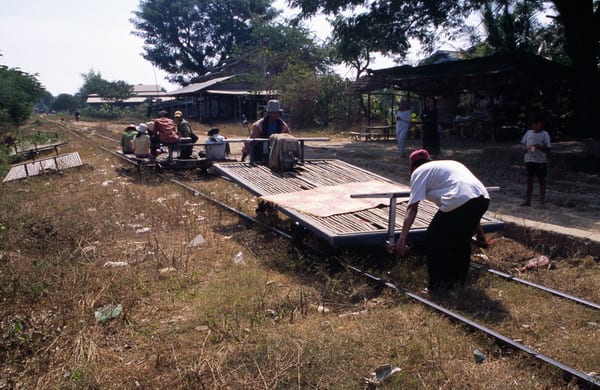
Cambodia's second city, on the road between Siem Reap and Phnom Penh, is a relaxed place of French-colonial shophouses and a strong arts scene (the Phare circus trains and performs here). Its signature attraction is the "bamboo train", a makeshift flatbed that runs along a warped section of old track — when two meet, the lighter one is lifted off and set aside.
Nearby are hilltop temples, a cave that was a Khmer Rouge killing site, and, at dusk, a cave from which millions of bats stream out in a ribbon.
9. Preah Vihear
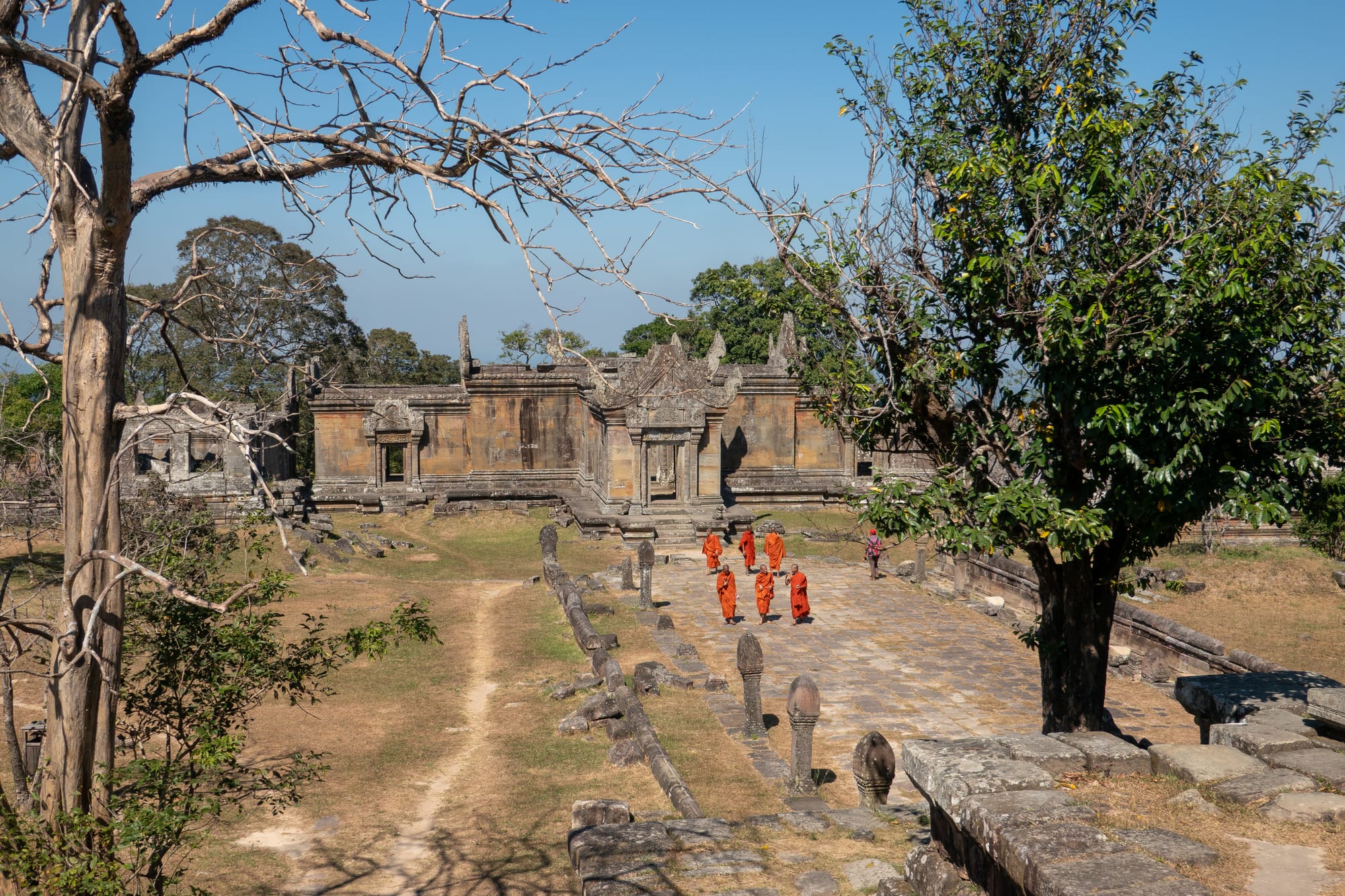
Preah Vihear is a Khmer temple built over two centuries along an 800-metre spine of rock at the top of a cliff, with a staircase of pavilions climbing to a sanctuary at the highest point and a sheer drop to the Cambodian plain beyond. It is a UNESCO World Heritage Site, and its ownership was disputed with Thailand for decades — including armed clashes as recently as 2011 — so check the current situation before visiting.
The remote jungle temples of Koh Ker (a 10th-century pyramid) and Beng Mealea (unrestored, collapsed) lie on the way from Siem Reap.
10. The southern coast
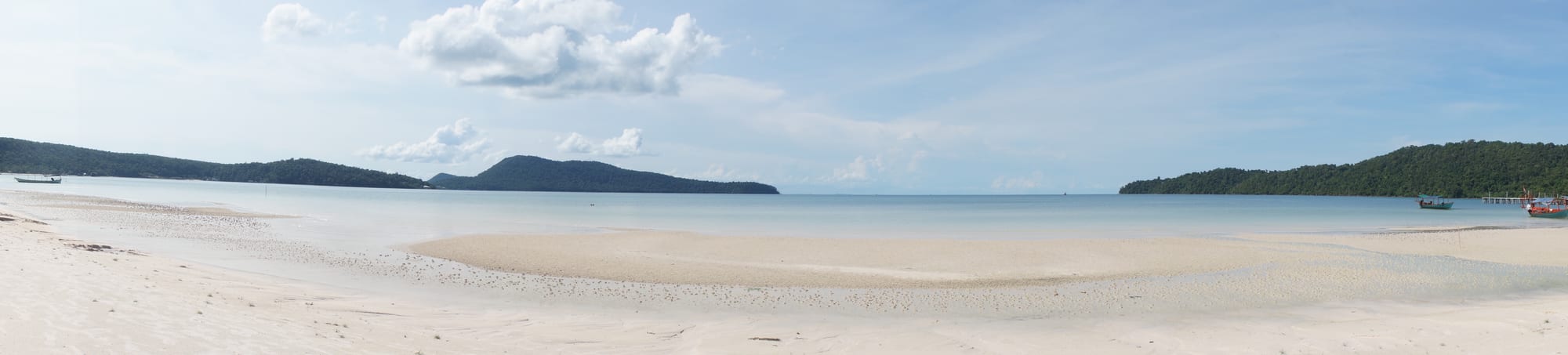
Cambodia's short coast has been overshadowed by Thailand's and Vietnam's, and Sihanoukville itself has been transformed by casino development, but the islands offshore — Koh Rong and the quieter Koh Rong Sanloem — still have white-sand bays, bungalow guesthouses, and bioluminescent plankton at night. Inland, the old French hill station of Bokor above Kampot, the pepper farms around Kampot, and the small seaside town of Kep with its crab market make a gentler alternative.
It is where many travellers unwind after the temples.
Cambodia's classic trip pairs three or four days at Angkor from Siem Reap with a couple in Phnom Penh; adding Battambang, the lake, and the southern coast makes a comfortable two weeks.