History · Cambodia
Cambodia: Angkor and After
The empire that built Angkor, five centuries of decline between Siam and Vietnam, a French protectorate, and the Khmer Rouge catastrophe
By Worldlore Editorial · 19 September 2026
A country in the shadow of an empire
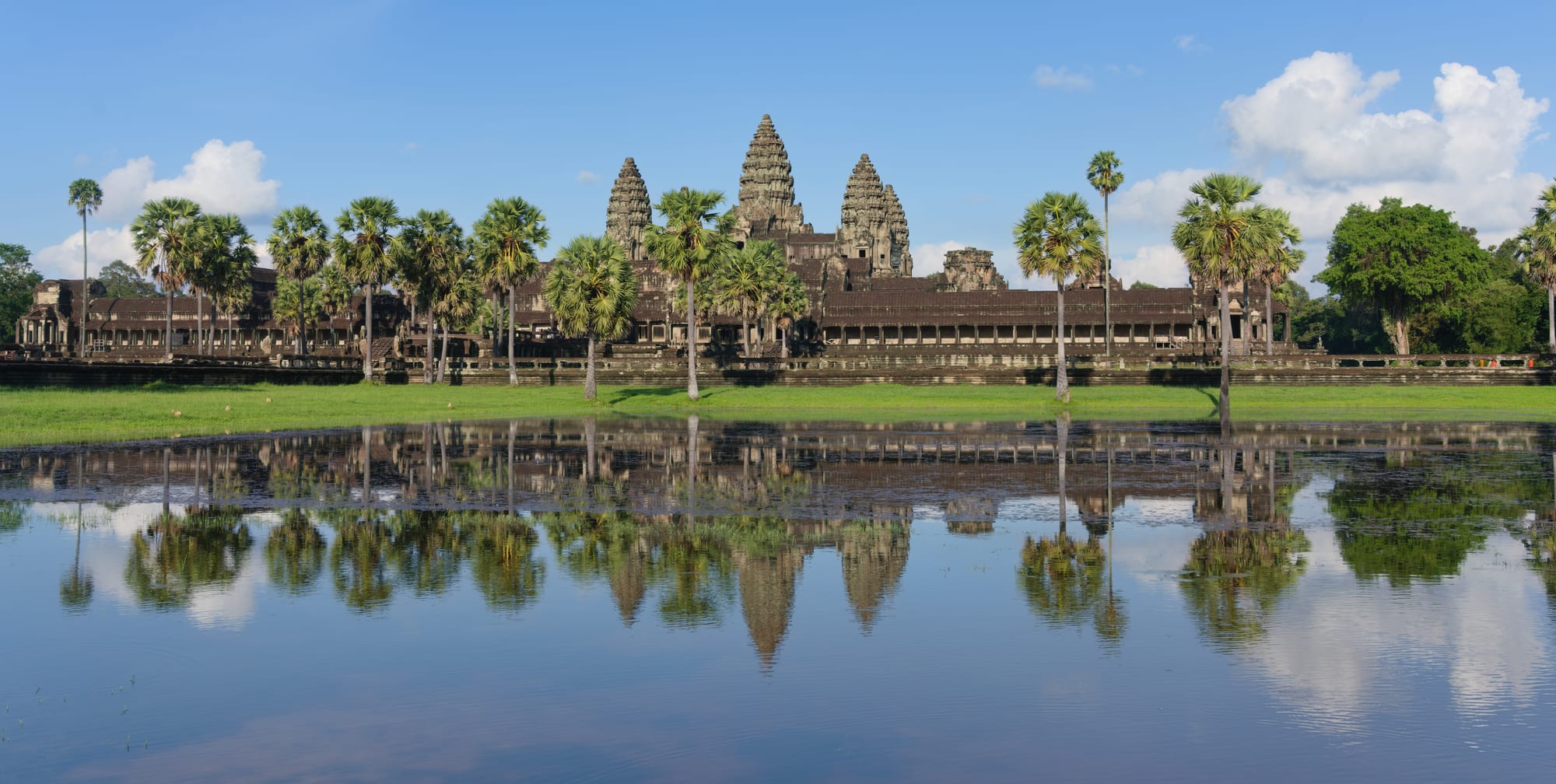
Cambodia occupies the low, well-watered plain around the lower Mekong River and the Tonlé Sap, a lake that swells enormously in the monsoon and feeds one of the richest inland fisheries on earth. Its 17 million people are overwhelmingly Khmer and Theravada Buddhist. For three centuries, from around 900 to 1200, the Khmer ruled the most powerful empire in mainland Southeast Asia and built Angkor. Almost everything since has happened in the long shadow of that height: a slow squeeze between two larger neighbours, colonial rule, and in the 1970s one of the worst episodes of mass killing in modern history.
A short history
- 1st–8th c. CE
Funan and Chenla
Indianised trading and agrarian states in the Mekong region.
- 802–1431
The Khmer Empire
Centred on Angkor, dominant across the mainland; Angkor Wat and the Bayon are built.
- 15th–19th c.
Decline
A shrunken kingdom loses land to Siam and Vietnam and is fought over as a buffer.
- 1863
French protectorate
King Norodom accepts French protection to avoid partition.
- 9 November 1953
Independence
Sihanouk wins independence from France.
- 1970
The coup and the war
Sihanouk is deposed; US bombing and civil war ravage the countryside.
- 17 April 1975
The Khmer Rouge take Phnom Penh
Pol Pot's regime empties the cities and abolishes money, schools and religion.
- 1975–1979
The genocide
Around a quarter of the population dies.
- 7 January 1979
Vietnamese invasion
Vietnam ousts the Khmer Rouge and installs a client government.
- 1991–1993
Peace and the UN
The Paris agreements and a huge UN mission lead to elections.
Angkor
The Khmer Empire is traditionally dated from 802, when a king proclaimed independence and a god-king cult on a sacred mountain. From a capital region north of the Tonlé Sap, the Khmer came to rule much of what is now Thailand, Laos and southern Vietnam. Their power rested on water: a vast engineered system of reservoirs and canals that supported intensive rice farming and one of the largest cities of the pre-industrial world — greater Angkor sprawled across roughly a thousand square kilometres. Suryavarman II built Angkor Wat, the largest religious building ever raised, in the early 12th century; Jayavarman VII, after driving out a Cham invasion, built the walled city of Angkor Thom with the face-towers of the Bayon, along with hospitals and roads across the empire.
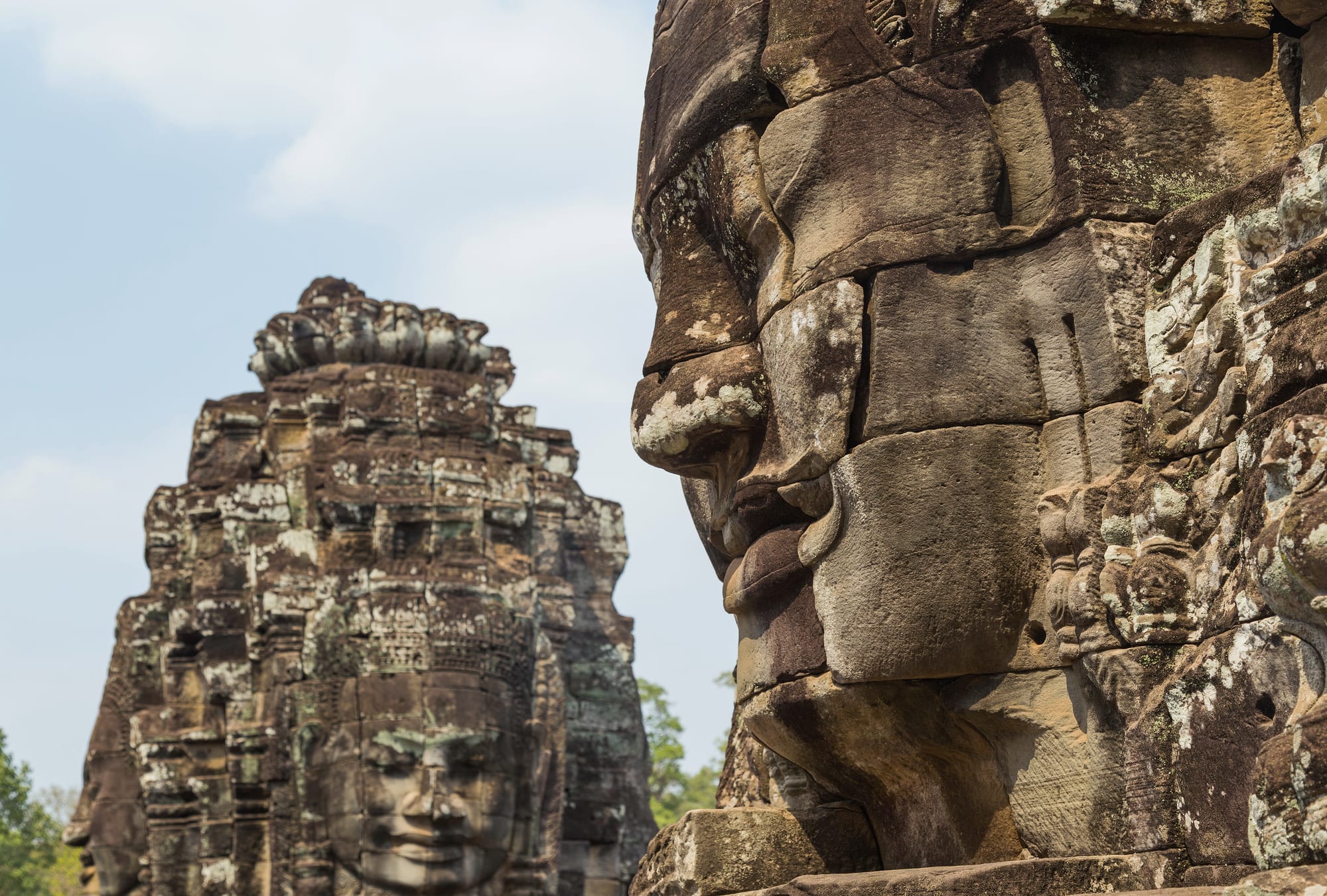
Angkor declined over the 13th to 15th centuries — a shift to Theravada Buddhism that undercut the temple-building royal cult, decades of climate extremes that damaged the water network, and the rise of a Siamese rival at Ayutthaya, which sacked Angkor more than once. Around 1431 the court abandoned the city and moved south toward the Mekong.
Squeezed between two neighbours
For the next four centuries Cambodia was a much smaller kingdom caught between two expanding powers: Siam to the west and Vietnam to the east. It lost the Mekong delta, including the site of Saigon, to Vietnamese settlement, and its western provinces — Battambang and Siem Reap, Angkor itself — to Siam. Cambodian kings became vassals of one court or the other, and in the 1830s and 40s Vietnam occupied the country outright and tried to absorb it, provoking revolt and Siamese intervention.
In 1863 King Norodom, facing the real prospect of being partitioned out of existence, accepted a French protectorate. France, building its colony in southern Vietnam, wanted Cambodia as a buffer; it kept the monarchy as a figurehead, ran the country through a Resident, developed rubber and rice for export, and pressed Siam to hand Battambang and Siem Reap back in 1907. French archaeologists also began clearing and restoring Angkor, turning it into a symbol both of Khmer identity and of French guardianship.
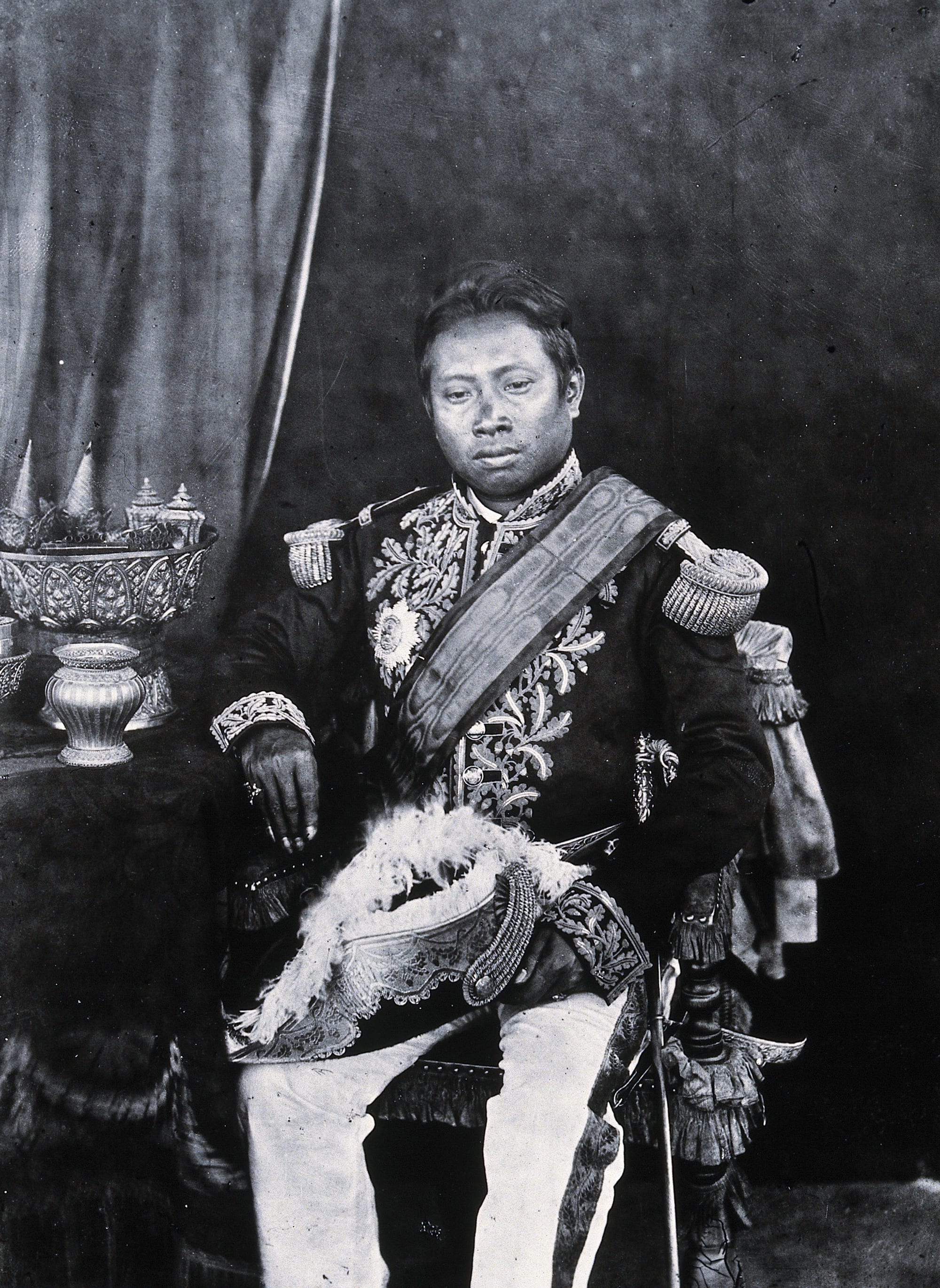
France also kept the country's boundary intact against its neighbours, and the map of Cambodia today is essentially the one the protectorate drew.
Sihanouk and independence
The French put the young Norodom Sihanouk on the throne in 1941 expecting him to be pliable. Instead he became the dominant political figure of the century. He led a "Royal Crusade for Independence" in 1953, and France, exhausted by the war in Vietnam, granted Cambodia full independence that November. Sihanouk abdicated in 1955 to rule as a prince through his own political movement, steering a neutralist course in the Cold War while quietly letting Vietnamese communist forces use Cambodian border areas to supply the war next door.
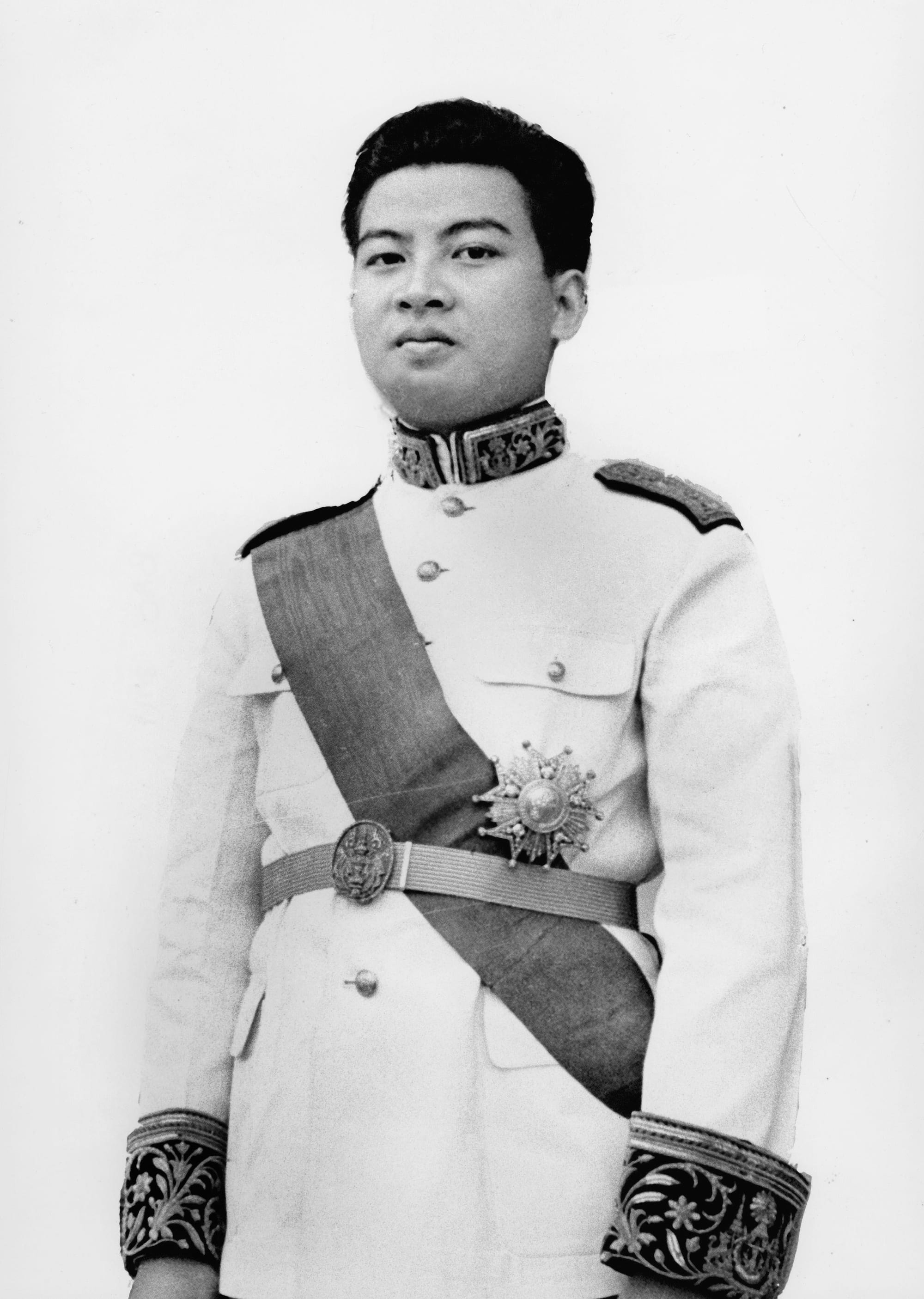
In 1970 his own prime minister, Lon Nol, deposed him while he was abroad, abolished the monarchy, and declared a pro-American republic. Sihanouk, from exile in Beijing, allied with his former enemies, the Cambodian communists known as the Khmer Rouge. The United States, already bombing Cambodian territory to hit Vietnamese bases, escalated to a massive campaign that dropped hundreds of thousands of tons of ordnance on the countryside, killing many tens of thousands of civilians and driving recruits to the Khmer Rouge. On 17 April 1975 the Khmer Rouge took Phnom Penh.
Democratic Kampuchea
The regime of Pol Pot attempted the most extreme social experiment of the 20th century. Within days it forced the entire population of Phnom Penh and every other town into the countryside to grow rice. It abolished money, markets, private property, schools and religion, broke up families, declared "Year Zero", and sealed the borders. City people, the educated, ethnic and religious minorities — Cham Muslims, ethnic Vietnamese, monks — were worked, starved and murdered. A paranoid leadership then turned on itself in waves of purges, sending victims to torture centres and then to mass execution sites.
The killing
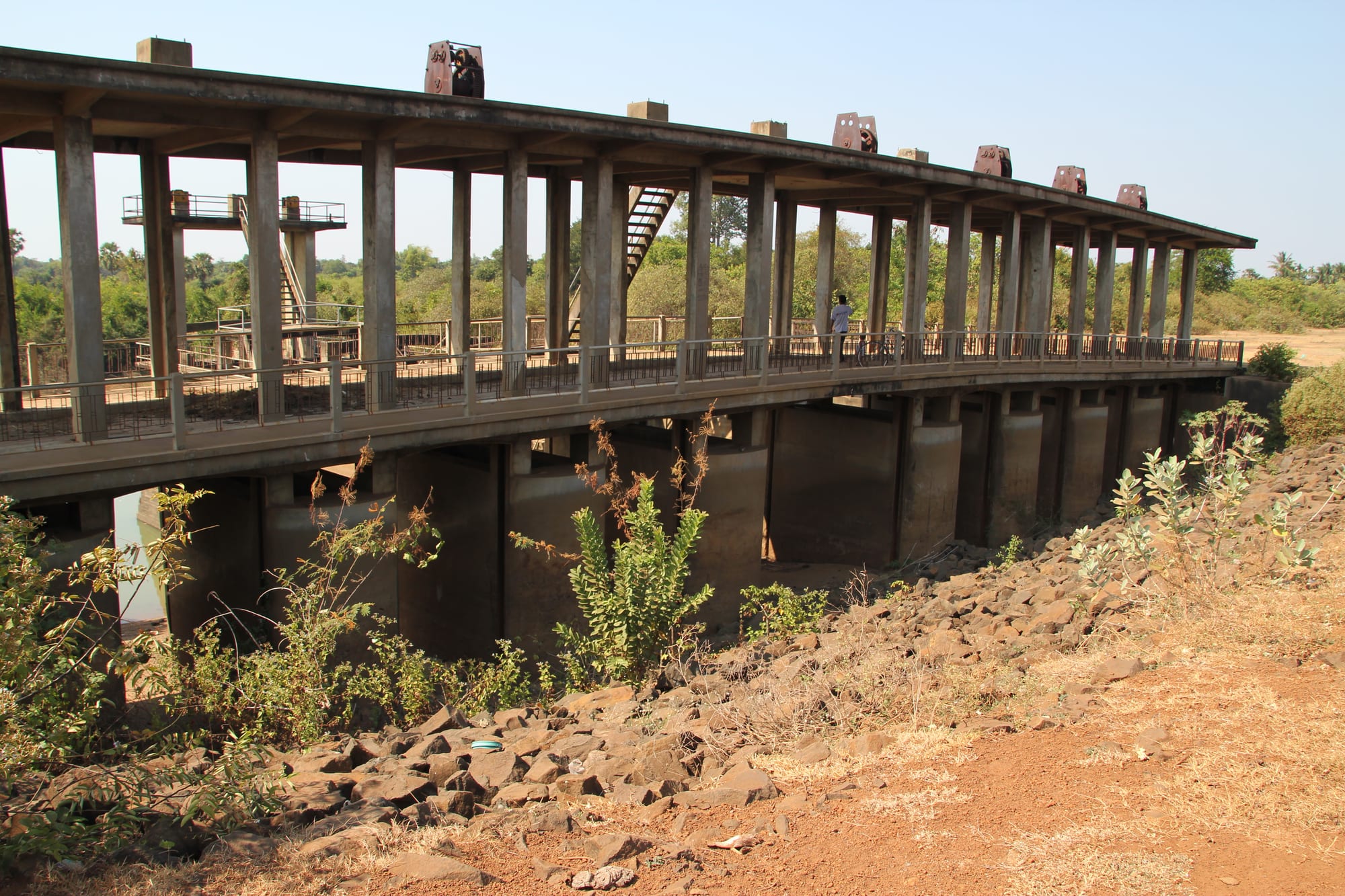
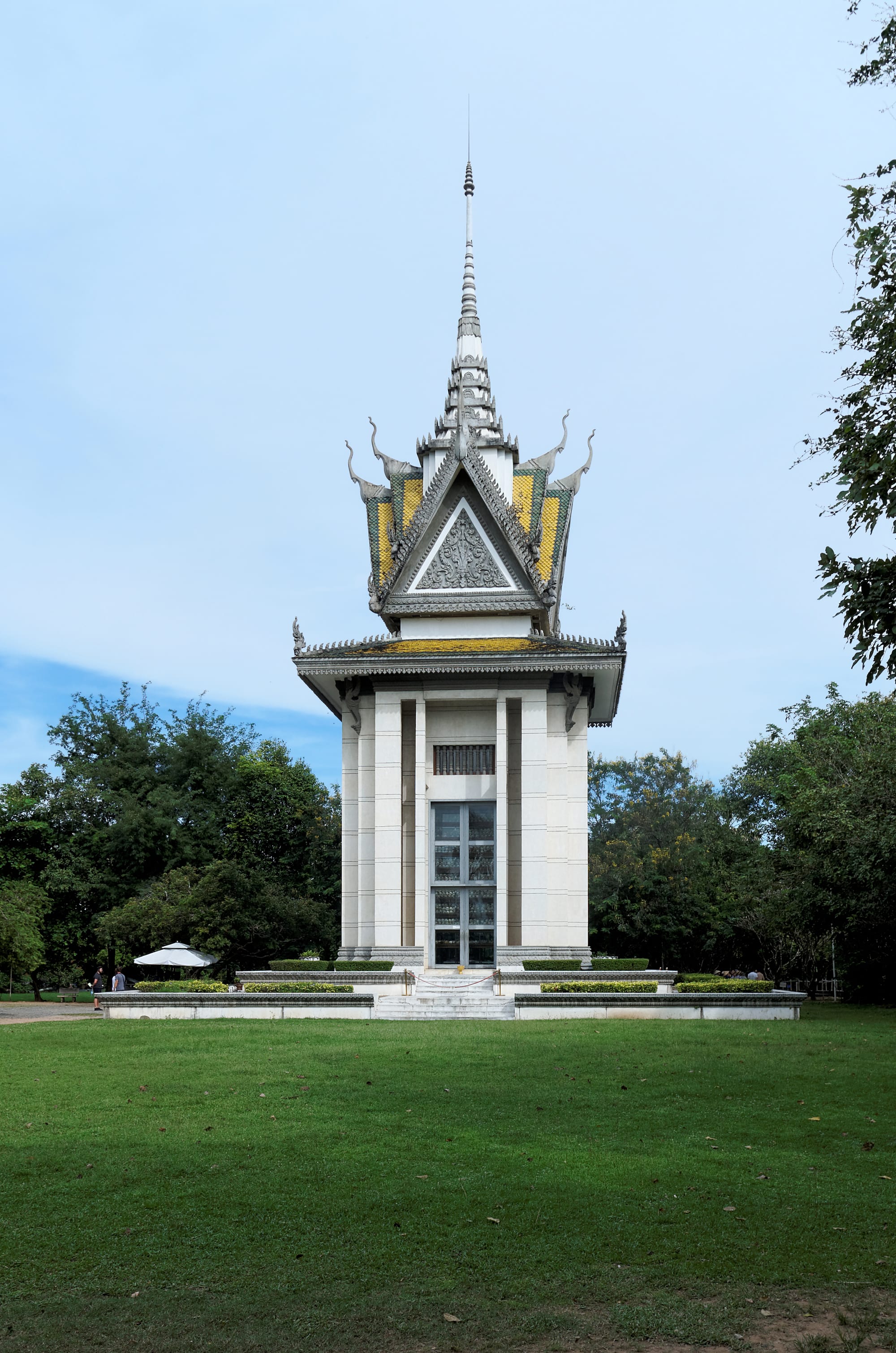
In under four years, between roughly 1.5 and 2 million people — about a quarter of Cambodia's population — died from execution, starvation, overwork and disease.
Invasion, isolation, and peace
After Khmer Rouge cross-border raids and massacres, Vietnam invaded in December 1978 and took Phnom Penh in January 1979, installing a government of Khmer Rouge defectors that included the future prime minister Hun Sen. The Khmer Rouge fled to the Thai border and — backed by China, the United States and the West against the Vietnamese-installed government — kept Cambodia's United Nations seat and fought a guerrilla war all through the 1980s, while the country stayed devastated and cut off.
The Cold War's end brought a settlement: Vietnam withdrew, the Paris Peace Agreements were signed in 1991, and the United Nations ran a huge mission that organised elections in 1993 and restored Sihanouk as a constitutional king. Sihanouk's party won the vote, but Hun Sen's party refused to accept it and forced its way into government. Hun Sen removed his coalition partner in a violent coup in 1997 and has held power ever since — dissolving the main opposition party in 2017, winning every seat in 2018, and handing the premiership to his son in 2023. Cambodia today is effectively a one-party state, closely tied to China. A UN-backed tribunal convicted three surviving Khmer Rouge leaders, two of them for genocide, before closing in 2022; Pol Pot had died in 1998.
What Cambodia carries
Angkor is on the flag, the currency and the beer bottles: the memory of the empire is the fixed point of Khmer identity, and the reference against which every later loss is measured. Set against it is the more recent past — a countryside still sown with landmines, a generation with missing parents and grandparents, and a society that has never fully reckoned in public with how the catastrophe of the 1970s came about.