Daily Life · Cambodia
Cambodia: A Day Tuned to the Rice and the Lake
A still mostly rural country where the working day follows the flooded rice paddy and the rise and fall of the Tonlé Sap, even as Phnom Penh grows fast around new towers and old markets
By Worldlore Editorial · 30 September 2026
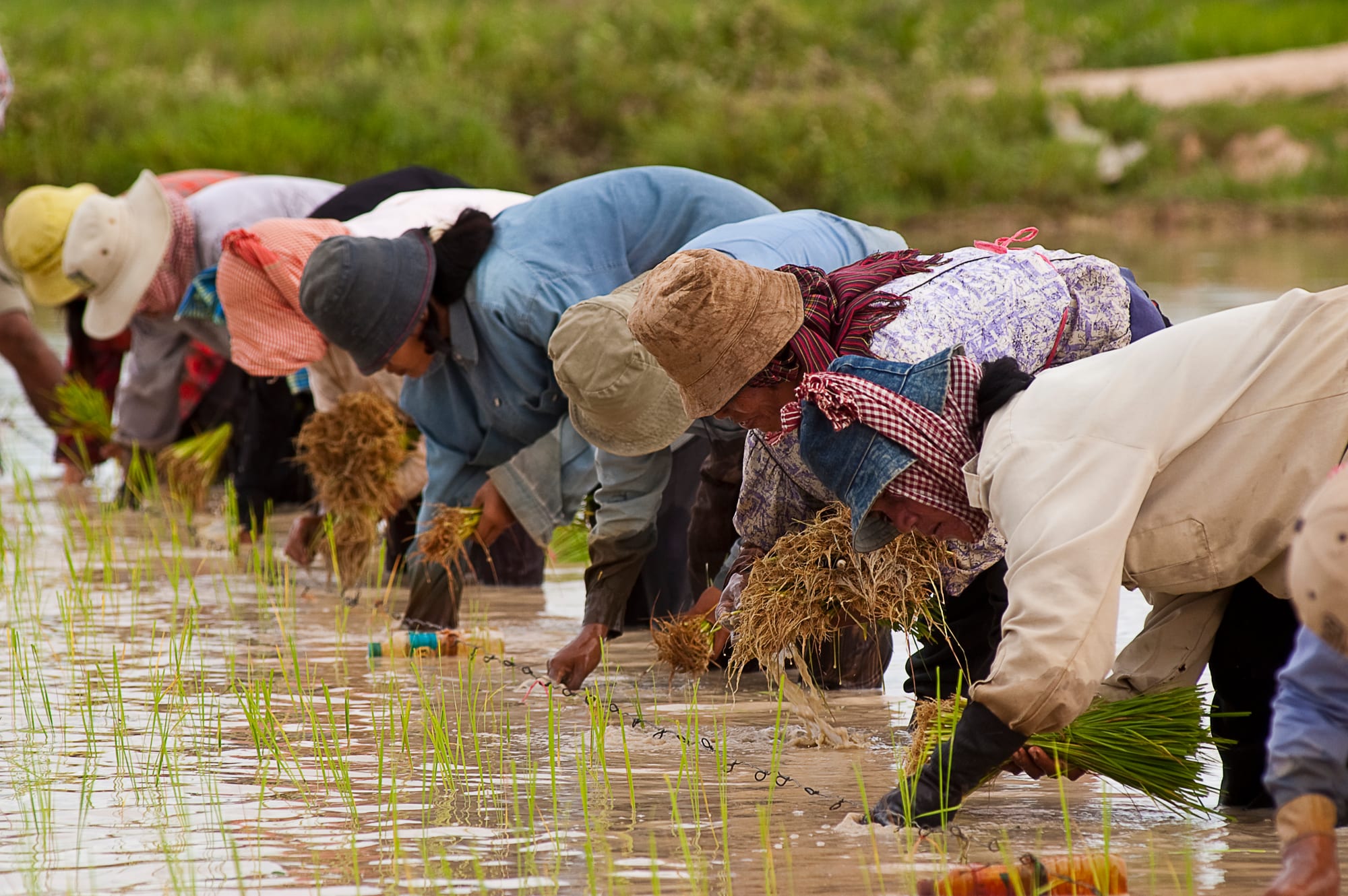
Cambodia is still, at heart, a rural and agricultural country, and an ordinary day for most people begins early and outdoors: in the rice paddies of the plains around the Mekong and the Tonlé Sap, on a fishing boat, or on the road into a market town. In Phnom Penh, the pace is faster and increasingly urban, with new towers rising beside older markets and monasteries, but even there the day still runs on an early start, since the worst of the heat sets in by mid-morning. Whatever the setting, the rhythm of the wider country still bends around water — the flooding and retreat of the rice paddies, and the enormous seasonal swelling of the Tonlé Sap, the lake that dominates Cambodia's geography and feeds one of the world's most productive inland fisheries.
Family and home life
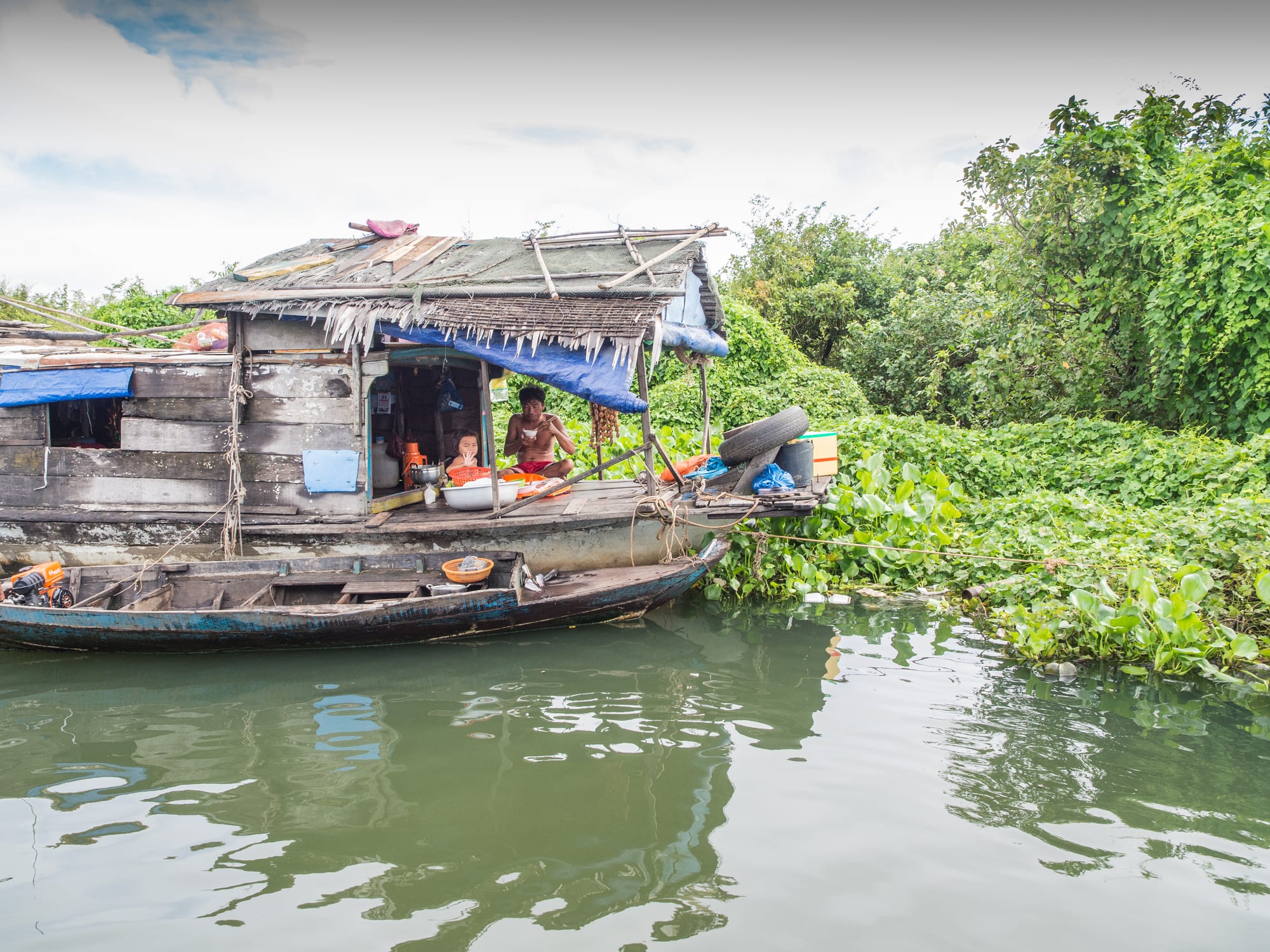
Most Cambodian households are rural and built around farming or fishing as a shared family enterprise, with children commonly expected to help with chores and younger siblings from an early age. On the Tonlé Sap itself, many thousands of people live in floating or stilted villages that rise and fall with the water level, in wooden houses built directly onto boats or on stilts tall enough to clear the wet-season flood; whole families live, cook, and often work from the same small platform, with schools, shops, and even places of worship built to float alongside the houses. Incomes in these lake communities are often low, poverty is a persistent problem, and, as across rural Cambodia, child mortality is higher than in the towns. Elsewhere, rural houses are traditionally raised on stilts as protection against flooding, with the space underneath used for storage, shade, or livestock.
Work, school and the rhythm of the day
Rice farming and freshwater fishing remain the two livelihoods that shape daily life for the largest share of the population, timed to the wet and dry seasons rather than a fixed weekly schedule — planting, tending, and harvest each bring a burst of hard, communal labour. In and around the cities, the garment industry, the country's largest manufacturing sector, employs hundreds of thousands of workers, about nine in ten of them women, on production-line hours that are longer and more fixed than farm work. Government offices and schools keep more regular hours, while shops, markets, and food stalls run longer and later, often into the evening, seven days a week.
Community life and public spaces
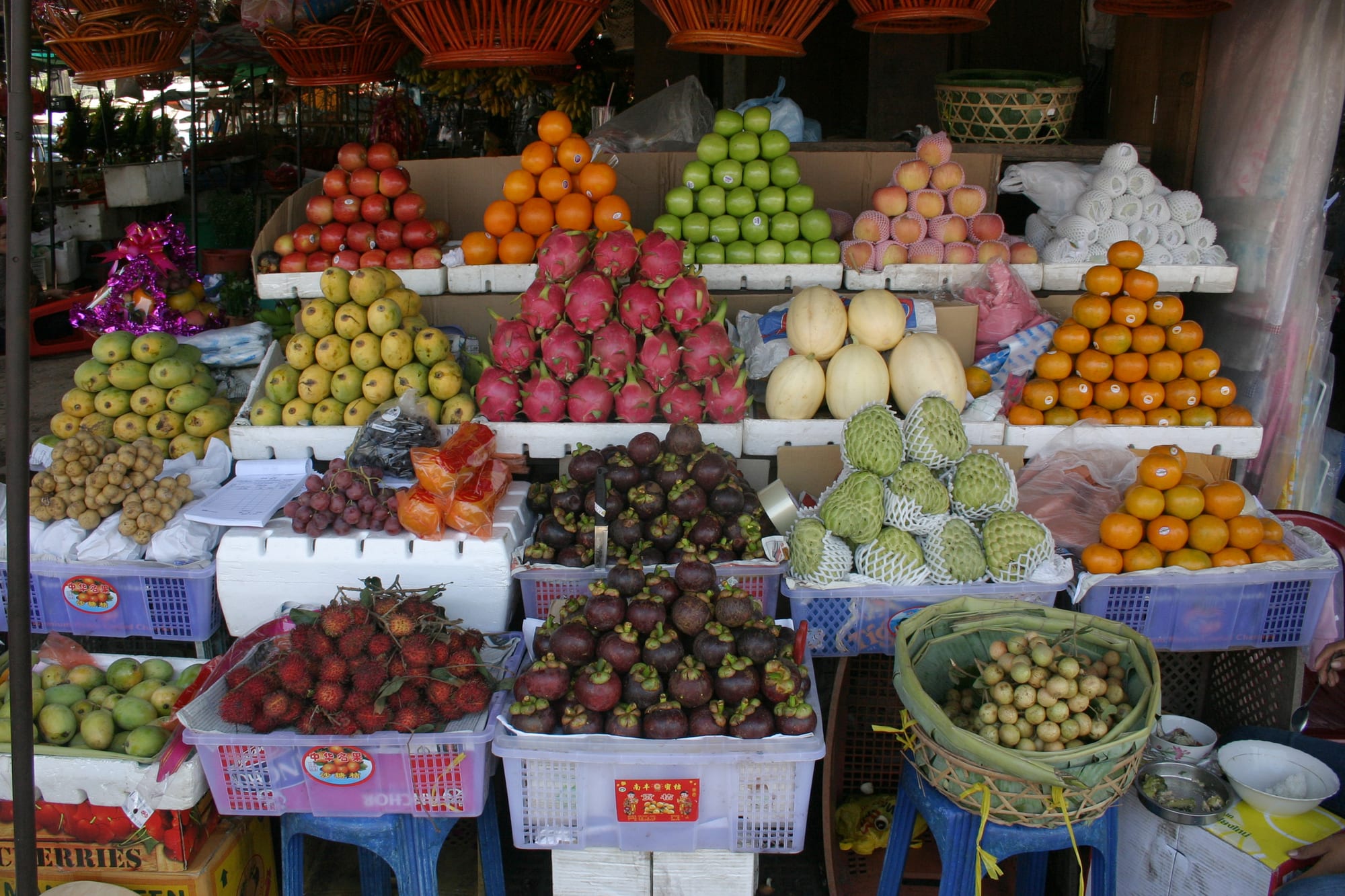
The market is the centre of daily public life in every Cambodian town, from the great domed Art Deco hall of Phnom Penh's central market to small daily produce markets in provincial towns, and it is where most households do their everyday shopping and much of their socialising. Streets fill early with vendors setting up and motorbikes, which remain the dominant way to get around for people and goods alike, often loaded well beyond what looks possible. On the Tonlé Sap, the lake itself functions as the public space — boats serve as the street, and floating villages have their own floating shops, schools, and gathering points that shift position as the water rises and falls through the year.
Free time and weekends
Weekend and evening leisure in the cities increasingly centres on riverside promenades, parks, and, for those who can afford it, shopping malls and cafés, while karaoke and casual gatherings over food remain popular family and friend group activities nationwide. In rural areas, free time is shaped more by the farming calendar than by a fixed weekend, with the slacker periods between planting and harvest allowing more time for visiting family, festivals, and local celebrations. Football and volleyball are widely played and watched, and television, now increasingly supplemented by smartphones even in modest households, is a common way to spend a quiet evening.
A visitor's ordinary day
Cambodia runs on the US dollar for almost all everyday transactions, with the Cambodian riel used mainly for small change under a dollar — bring clean, undamaged dollar bills, since torn or heavily worn notes are often refused. Cards are accepted in Phnom Penh and Siem Reap hotels and restaurants but far less so elsewhere, so carrying cash is standard practice outside the two main cities. Shops and markets typically open early and stay open into the evening every day of the week; tuk-tuks and ride-hailing apps are the practical way to get around towns, since distances and heat make walking impractical for most of the day. A common visitor mix-up is assuming Sunday is a quiet day off, as it is in much of the West — in Cambodia, markets and most businesses run on much the same schedule seven days a week.
What to take away
However fast Phnom Penh grows, an ordinary day for many Cambodians is still set by the same two things it always has been: the state of the rice paddy, and the level of the lake.