Culture & Customs · Bulgaria
Bulgaria: Red Thread and Ringing Bells
An Orthodox calendar layered over far older customs, a handshake and a formal title for new acquaintances, and a year marked by red-and-white tokens, masked dancers and name days on which the celebrant plays host
By Worldlore Editorial · 30 September 2026
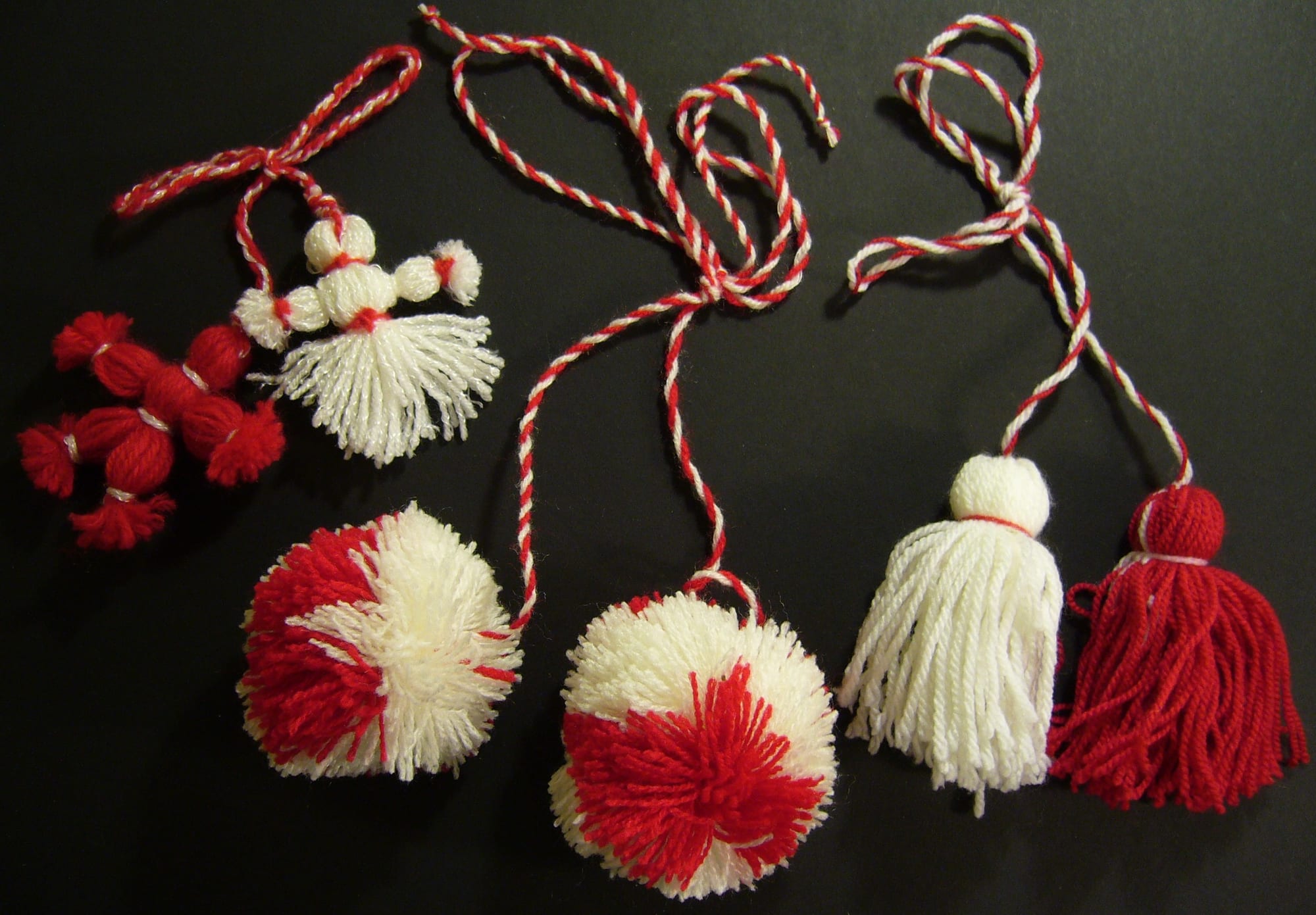
On the first morning of March, Bulgarians greet one another with a small twist of red and white thread. It might be a simple bracelet, a pair of woollen tassels or a little doll pinned to a coat, and it is handed over with a wish for health and a good spring. Colleagues give them to colleagues, grandparents to grandchildren, friends to friends. The token, a martenitsa, is worn for days or weeks, until its owner spots the first stork, the first swallow or the first tree in blossom. Then it comes off and is tied to a branch, which is why so many trees in early spring are hung with faded scraps of red and white. The custom is a small one, but it captures something essential about Bulgaria: a modern, largely urban country that still marks the turning of the year with gestures far older than the calendar it lives by.
Faith, identity and values
Bulgaria is an Orthodox Christian country by tradition and by law. The constitution names Eastern Orthodoxy as the country's "traditional" religion, and in the 2021 census around 63 per cent of the population described themselves as Eastern Orthodox. Muslims form the second-largest group, at around 10 per cent in the census, made up mainly of ethnic Turks and Bulgarian-speaking Pomaks. For many Bulgarians, Orthodoxy is as much a matter of heritage and national feeling as of weekly worship: the church is where children are baptised, couples are married and the dead are remembered, and its feast days still set the rhythm of the folk calendar.
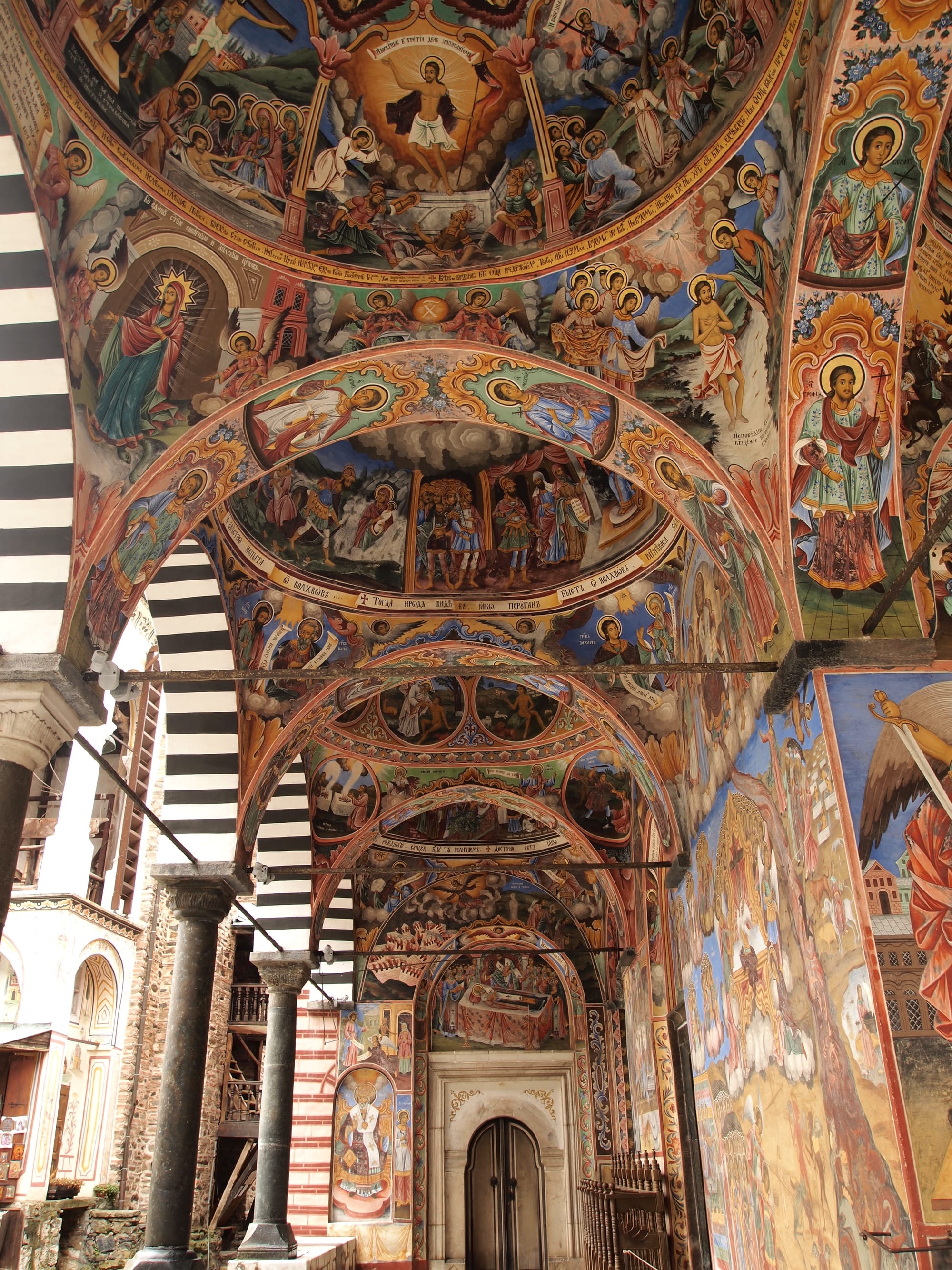
That calendar carries a great deal from before Christianity. Official tourism literature describes Bulgarian customs as rooted in antiquity and bound up with the country's own expression of Orthodoxy, and many of the best-loved rituals, from masked winter processions to spring songs sung by young women, sit comfortably alongside the saints' days to which they have been attached. Churches and monasteries themselves are treated with quiet respect. Modest dress, covering shoulders and knees, is expected, voices are kept low, and photography inside is best checked first.
Social life runs on a strong sense of family and of mutual obligation between relatives, godparents and close friends. First meetings tend to be formal, and business guides to the country make the point that this formality is a way of showing respect rather than coldness. Once a relationship is established, it becomes warmer and more expressive, and Bulgarians are generally generous with their time and their tables.
Greetings and meeting people
The handshake is the standard greeting, used on meeting and on leaving, and it comes with direct eye contact, which is read as a sign of sincerity. People are addressed by title and surname until they suggest otherwise; where no professional title applies, Gospodin (Mr) and Gospozha (Mrs) are used. It is polite to let the Bulgarian side decide when to move to first names. Greetings change with the time of day, and a simple "good morning" or "good day" in Bulgarian is always welcomed.
The best-known pitfall is the head. Bulgarians traditionally shake the head to mean "yes" and nod to mean "no", the reverse of much of Europe. To complicate matters, some people switch to the foreign convention when they know they are talking to a visitor. The safest course is to say the words aloud: da for yes and ne for no.
Name days matter as much as birthdays, and often more. Most Bulgarian first names are linked to a saint, and on that saint's feast everyone who bears the name celebrates. On Ivanovden, 7 January, well over 300,000 people named Ivan or a variant of it mark their name day at once. The custom reverses the usual idea of a celebration: the person whose day it is plays host, bringing treats to the office and opening the house in the evening, and by tradition guests do not need an invitation. The greeting for the day is "Chestit imen den", a happy name day.
Hospitality and being a guest
A guest invited to a Bulgarian home brings something with them. Flowers for the hostess and a bottle for the host are both usual, and a small gift from the visitor's own country is particularly appreciated. Flowers carry their own rules. Bouquets for the living are given in odd numbers, while even numbers are reserved for the dead, and chrysanthemums, lilies and gladioli are avoided because of their association with funerals. Gifts are normally opened when received.
At the table, guests wait to be shown where to sit and follow the host's lead before starting to eat; in many homes the eldest person begins first. Hands are kept visible, but elbows stay off the table. Hosts are generous and will keep offering more, so a modest first helping leaves room to accept a second, which is taken as a compliment. A glass left with a little still in it signals that no more is wanted; an empty one is likely to be refilled. Toasts are made with "nazdrave", "to health", and glasses are touched while looking the other person in the eye. In restaurants, a tip of around ten per cent is appreciated but not obligatory.
Festivals and life's big moments
The year opens with a run of winter rites. On Christmas Eve, bands of young unmarried men known as koledari traditionally went from house to house through the night, singing carols that wished each household wealth, health and success. They were led by an elder, the stanenik, and were rewarded with coins, wine and a ring-shaped festive loaf. The custom was once a rite of passage: a young man who had never been a koledar, it was said, could not marry. A week or so later, on 6 and 7 January, the feasts of Epiphany and Ivanovden are closely tied to water, and ritual bathing and the collection of water from springs are believed to bring good health for the year.
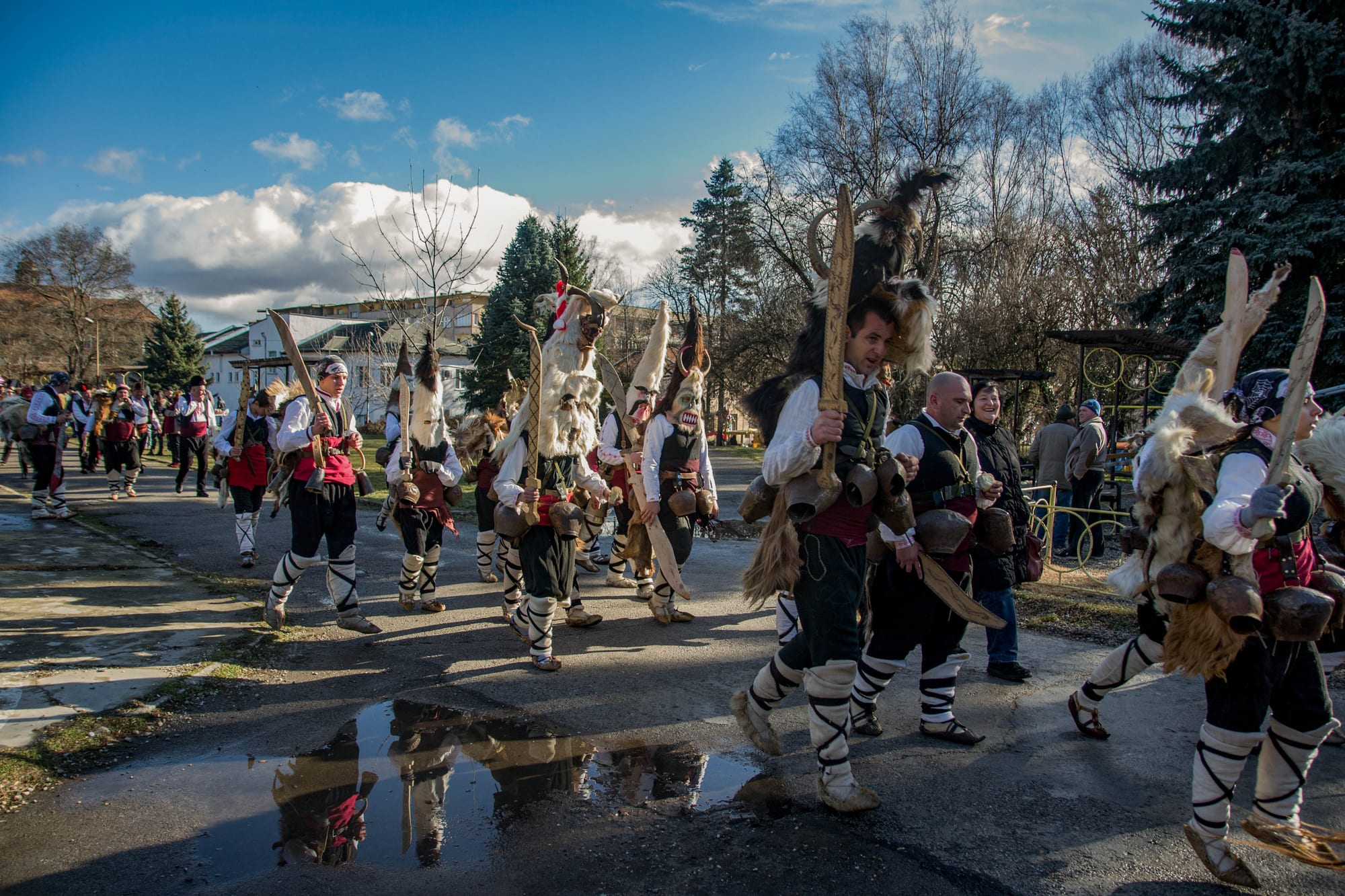
Masked processions follow. Across the country, kukeri, men in shaggy costumes, tall masks and belts of large bells, perform ritual dances at New Year and before Lent to chase away evil spirits at the start of the year. The best-known form, the Surova feast held on 13 and 14 January to mark New Year by the old calendar, is on UNESCO's list: masked groups light fires, tease the crowd, visit homes where a mock wedding is staged, and include a "bear" who mauls people for their health. Hosts wait with a meal and gifts, and money collected is often passed to the poor.
Spring brings gentler rites. Trifon Zarezan, kept on 14 February or, in some places, on 1 February, honours the patron of vine growers: the first pruning of the vines is made, and young wine from the previous harvest is poured over the vines for a good year before the drinking and dancing begin. Then comes 1 March and the martenitsa, a practice UNESCO lists as shared with Romania, North Macedonia and Moldova. At Easter, eggs are dyed on Maundy Thursday, traditionally by the oldest woman of the household, and the first is always red. It was once rubbed on the cheeks of children and young women for health and beauty, and is often kept by the icons until the next Easter. "Hristos voskrese", Christ is risen, is the greeting of the season, answered with "Voistina voskrese", truly he is risen.
Weddings bring in the kum and kuma, the sponsors of the marriage, who enter a lifelong ritual relationship with the couple. The bond is renewed on Ivanovden, when young couples traditionally call on their kum bearing round bread, banitsa, wine and rakia. The same families often go on to act as godparents to the couple's children.
Death is marked in public as well as in private. Families print obituary notices with a photograph and a few lines about the person and paste them on doors, walls and lamp posts in the neighbourhood, so that passers-by learn of a death and of the memorial services that follow. Orthodox custom holds further memorials after the funeral, most importantly on the fortieth day. Several times a year, on the All Souls' Saturdays of the church calendar, families go to the cemetery to clean the graves, pour water and red wine over them and light candles. Boiled wheat, bread, wine and fruit are shared with anyone nearby, and what is left over goes to those in need.
Arts, crafts and music
Bulgarian folk music is best known abroad for its singing. Women's voices, often in close and deliberately rough-edged harmony, carry a tradition that UNESCO has recognised more than once. The Bistritsa Babi, a group of village women from the west of the country, preserve an archaic form of diaphony, in which one or two voices shout and bend the melody while the others hold a steady drone. A separate multipart singing tradition from the south-west is also on the list, and so, most recently, in 2025, are the gaida, the bagpipe, and the playing of it. The fiddle, the kaval, a long end-blown flute, and the drum are the other classic sounds of a village band.
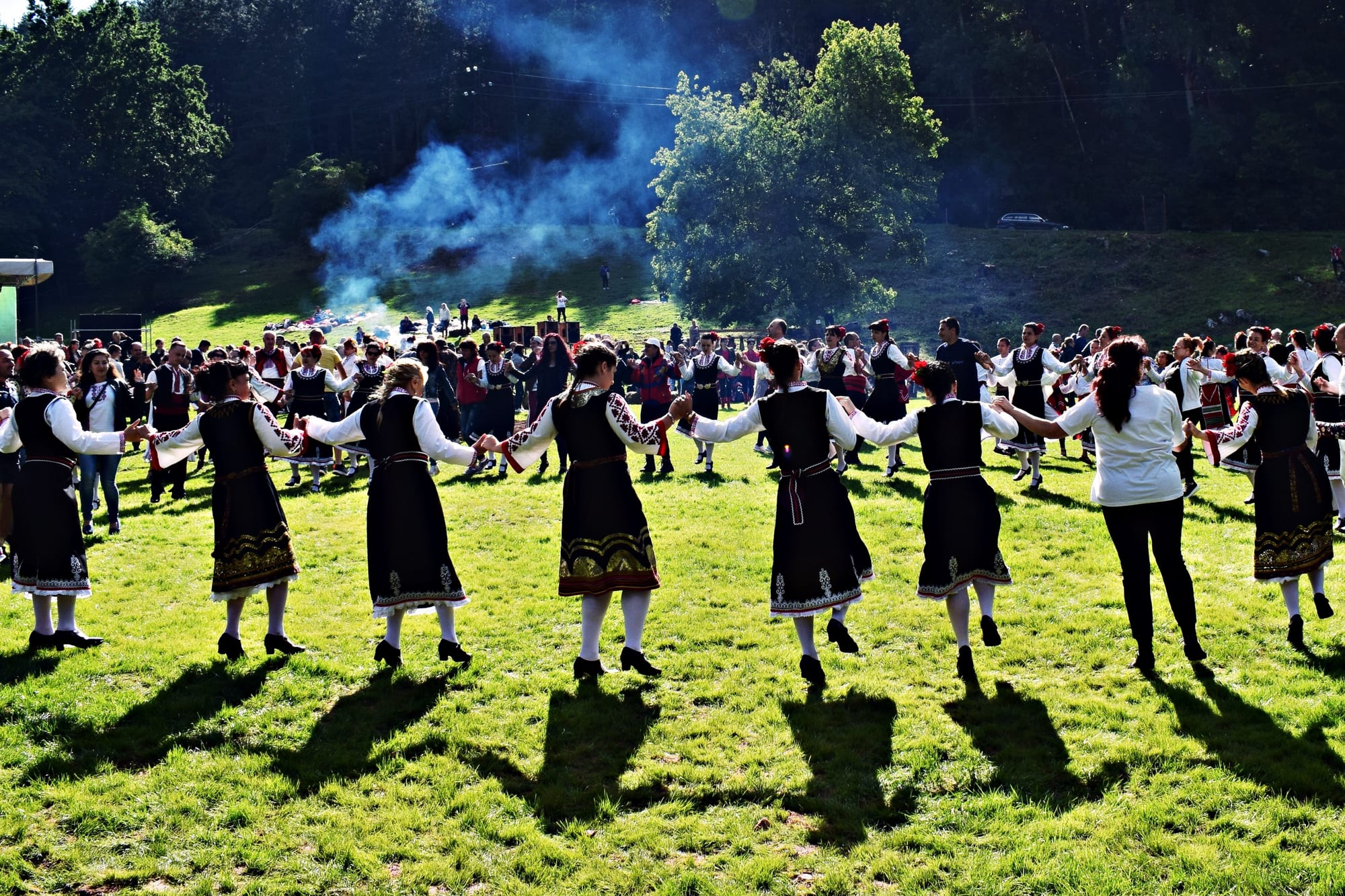
The dance that goes with them is the horo, a chain or circle of dancers holding hands or one another's belts and moving in unison to a particular melody, with steps and gestures that differ from one area to the next. It belongs to celebrations of every kind, and on Trifon Zarezan, as on many other feast days, towns and villages have traditionally come together to dance the horo and drink wine.
Much of this is kept alive by the chitalishte, the community cultural centre found in towns and villages throughout the country. Founded and run by local people and open to everyone, chitalishta host libraries, choirs, dance groups and craft classes, and UNESCO lists them as a model of good practice in safeguarding living heritage. Crafts include icon painting, woodcarving and weaving, and the flat-woven carpets of Chiprovtsi, with their bold geometric patterns, are also on UNESCO's list. So is nestinarstvo, a rare fire-dancing rite held on the feast of Saints Constantine and Helena, in which dancers carrying icons step barefoot across glowing embers.
Dos and don'ts for visitors
- Do shake hands with eye contact and use titles and surnames until invited to use first names.
- Do say da or ne out loud, since a shake of the head may mean yes and a nod may mean no.
- Do bring flowers in an odd number when visiting a home; even numbers are for funerals.
- Do look people in the eye and say "nazdrave" when glasses are raised.
- Do accept a martenitsa if one is offered on 1 March, and wear it until spring's first stork or blossom.
- Do dress modestly and keep voices low in churches and monasteries, and ask before taking photographs.
- Don't bring chrysanthemums, lilies or gladioli as a gift; they are associated with the dead.
- Don't mistake the photographs posted on doors and lamp posts for anything but obituary notices, and treat them with respect.
What to take away
Bulgaria's customs reward the visitor who notices the small things, a red thread on a wrist, a notice on a door, a nod that means no, because behind each of them lies a culture that has carried its oldest habits into modern life with remarkable care.