Attractions & Natural Wonders · Bulgaria
Bulgaria: Ten Attractions and Natural Wonders
A striped mountain monastery, a hillside old town lived in for 6,000 years, sandstone towers shaped like faces, and a flying-saucer monument to a vanished ideology
By Worldlore Editorial · 9 September 2026
The Balkans' quiet corner
Bulgaria sits between the Danube and the Aegean, with a Black Sea coast, high mountains down its spine, and a history layered with Thracians, Greeks, Romans, Byzantines, and five centuries of Ottoman rule. It is one of the least expensive countries in the EU, and outside the summer beach resorts it stays uncrowded — Roman ruins, painted monasteries, and hiking trails that you often have to yourself.
The ten below run from Sofia and the Rila Mountains across to the Black Sea and up to the northwest. Late spring and early autumn are ideal; the mountains are for summer, the coast for July–August, and the ski resorts for winter.
1. Rila Monastery
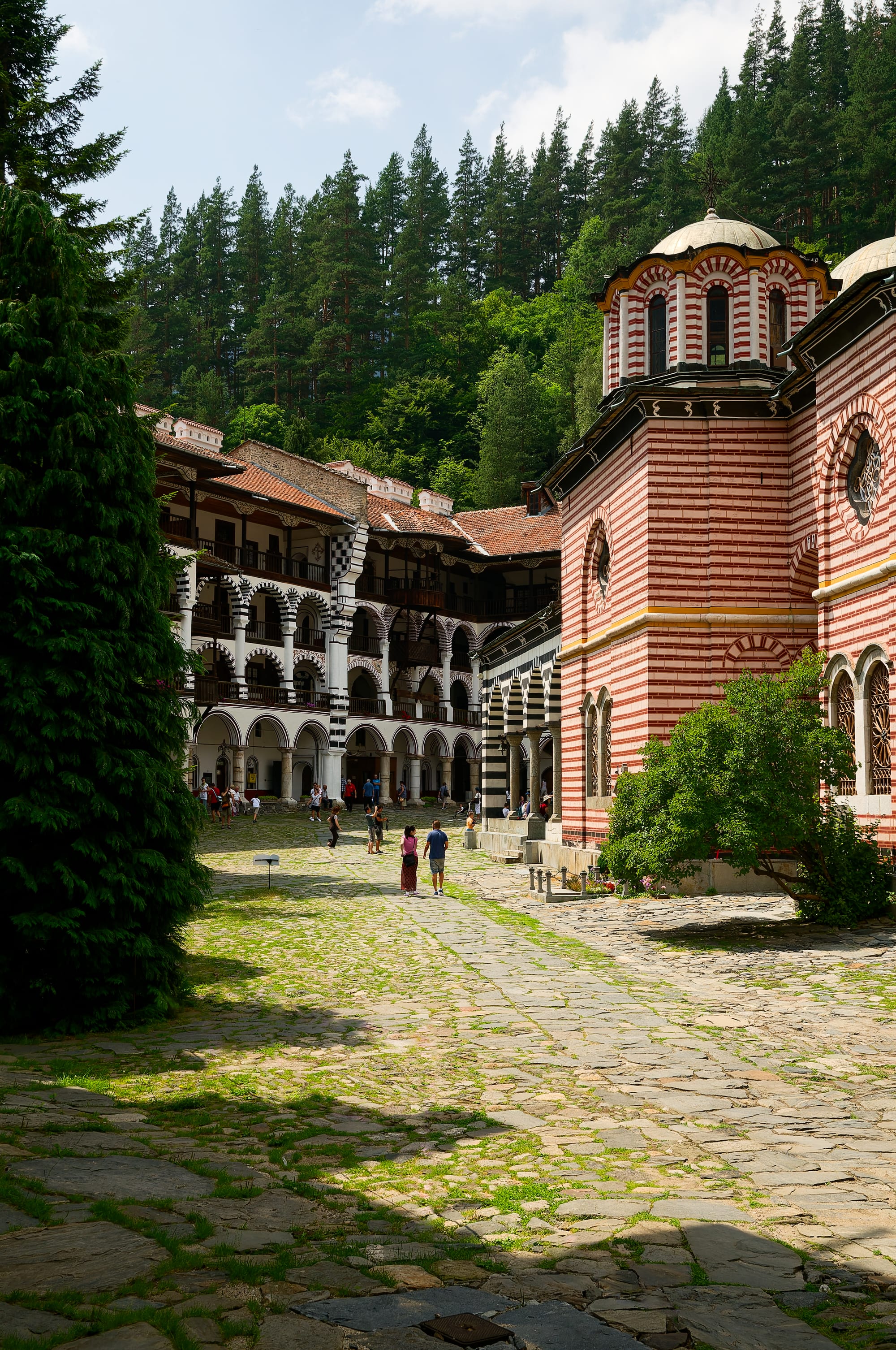
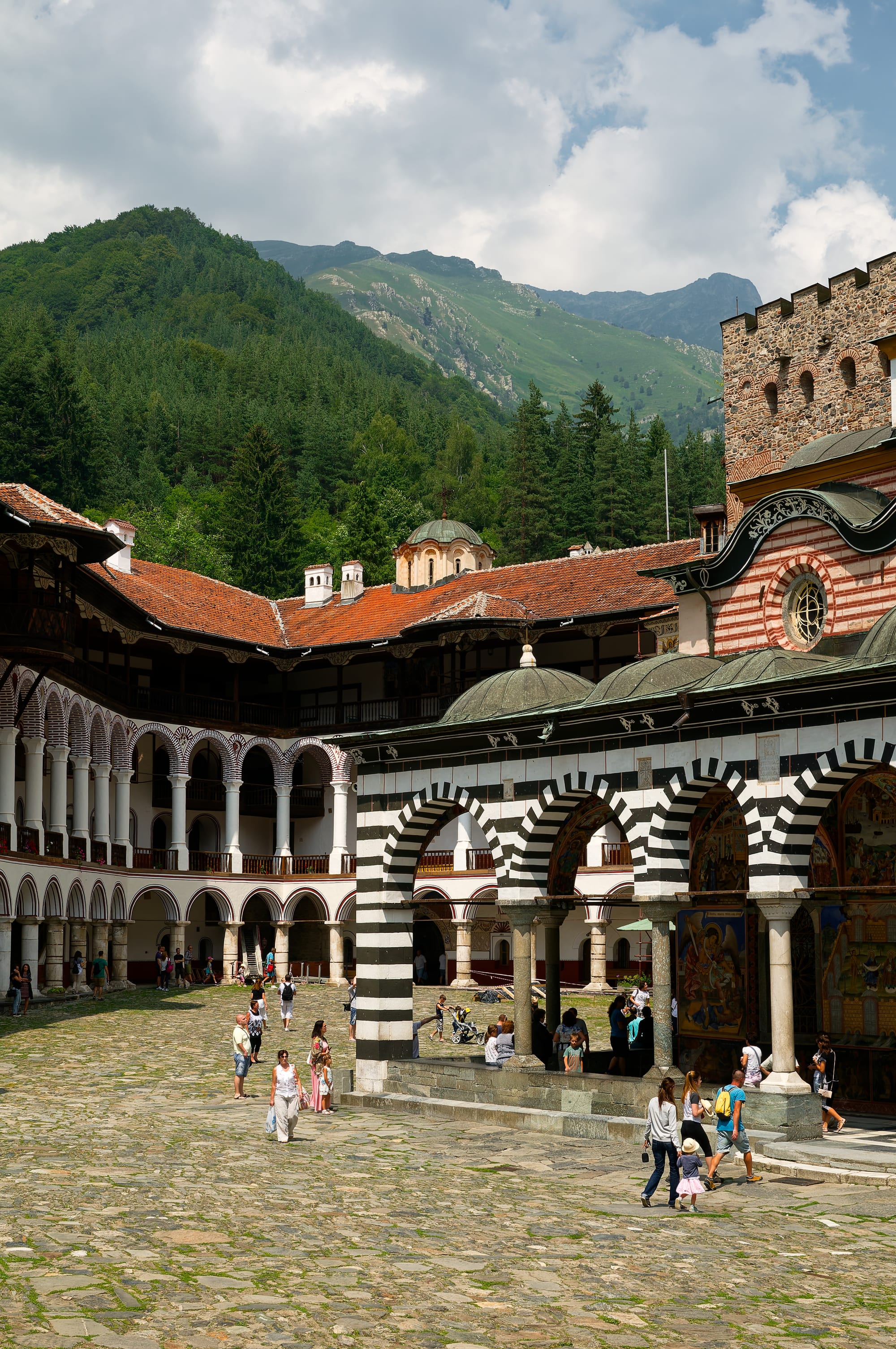
Founded in the 10th century by the hermit Ivan of Rila and rebuilt after a fire in the 1830s, Rila is the largest and most important monastery in Bulgaria — a fortress-like ring of striped, arcaded lodgings around a boldly painted church, set in a forested mountain valley about two hours south of Sofia. It is a UNESCO World Heritage Site and was a keeper of Bulgarian language and identity through the Ottoman centuries.
The frescoes on the church porch — heaven, hell, and a crowded Last Judgement — are the highlight. You can stay overnight in a spartan monk's cell.
2. Plovdiv
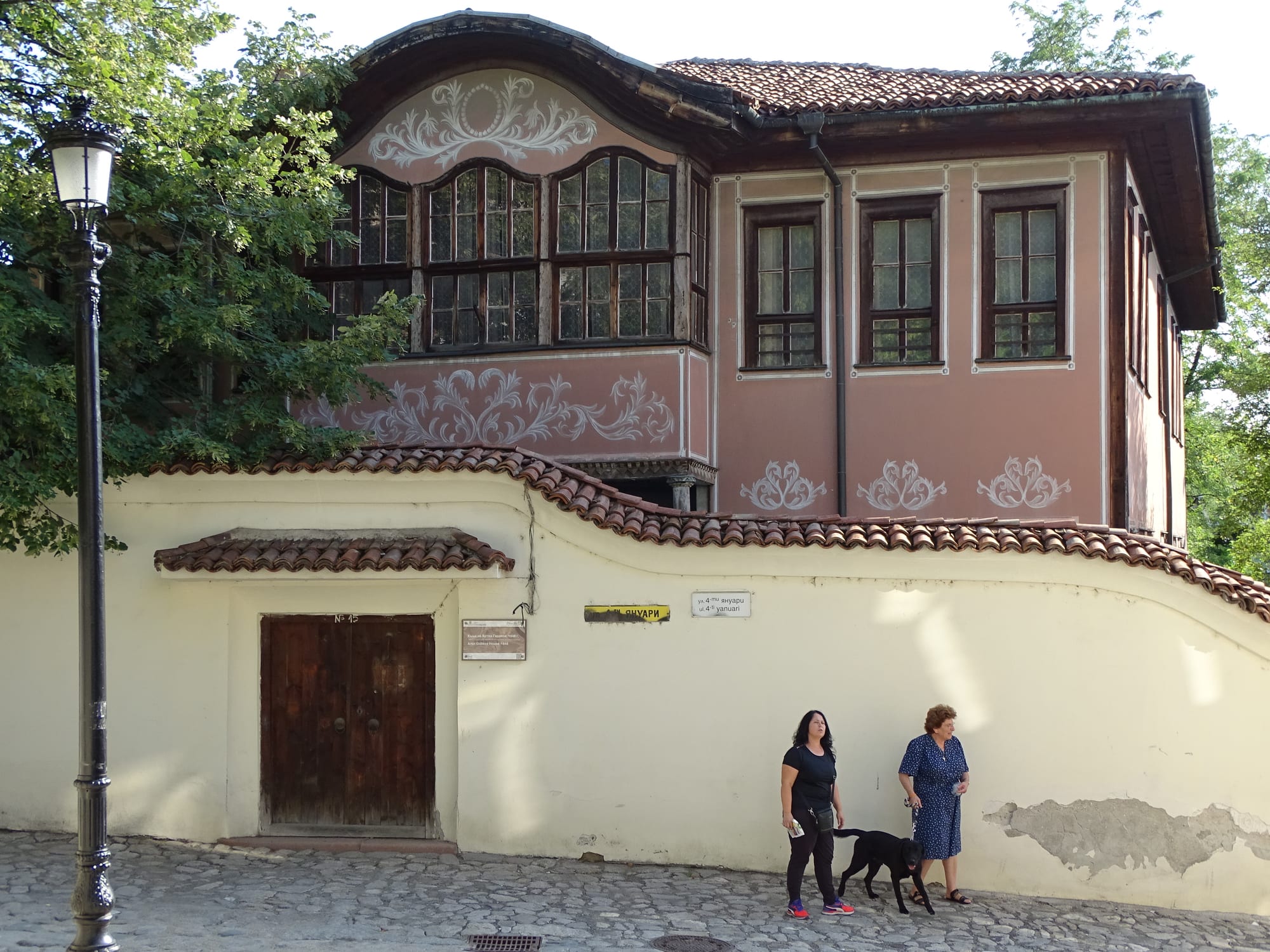
Plovdiv claims to be one of the oldest continuously inhabited cities in Europe — around 6,000 years of it — and it wears the layers well: a beautifully preserved Roman theatre still used for concerts, a Roman stadium under the main shopping street, and a cobbled old town of grand, top-heavy painted houses from the 19th- century National Revival, several open as museums.
The formerly derelict Kapana ("the trap") district is now the arty quarter of galleries and bars. Plovdiv was a European Capital of Culture in 2019.
3. Nesebar
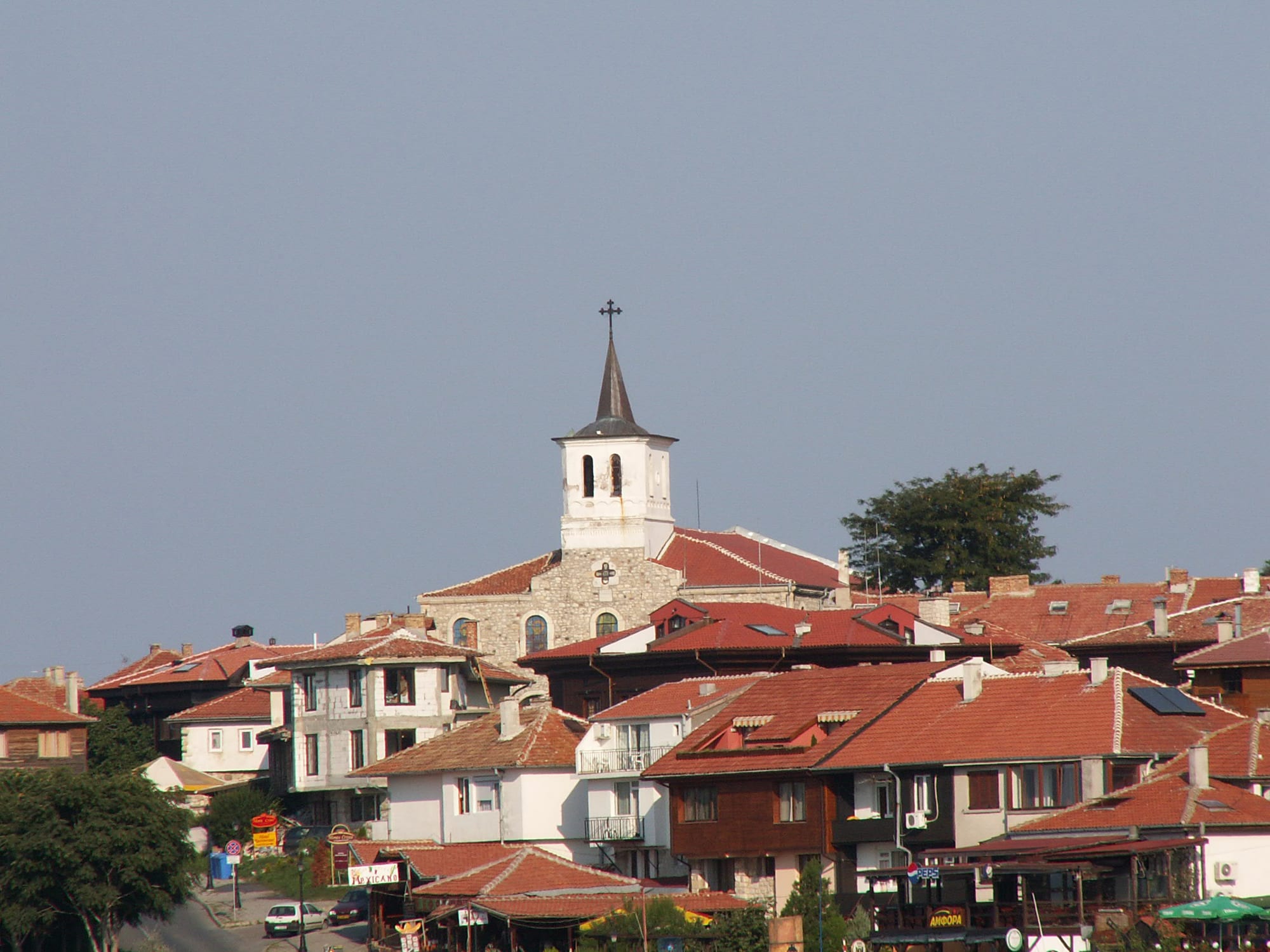
Nesebar sits on a rocky peninsula linked to the coast by a narrow causeway, and it has been a town for 3,000 years — Thracian, then a Greek colony, then Byzantine. Its old town, a UNESCO World Heritage Site, is a dense cluster of ruined and surviving medieval churches (there were once around 40) and 19th-century wooden houses on stone bases.
It is very touristy in summer, hemmed in by the huge Sunny Beach resort next door, but out of season it is atmospheric and quiet.
4. Sofia
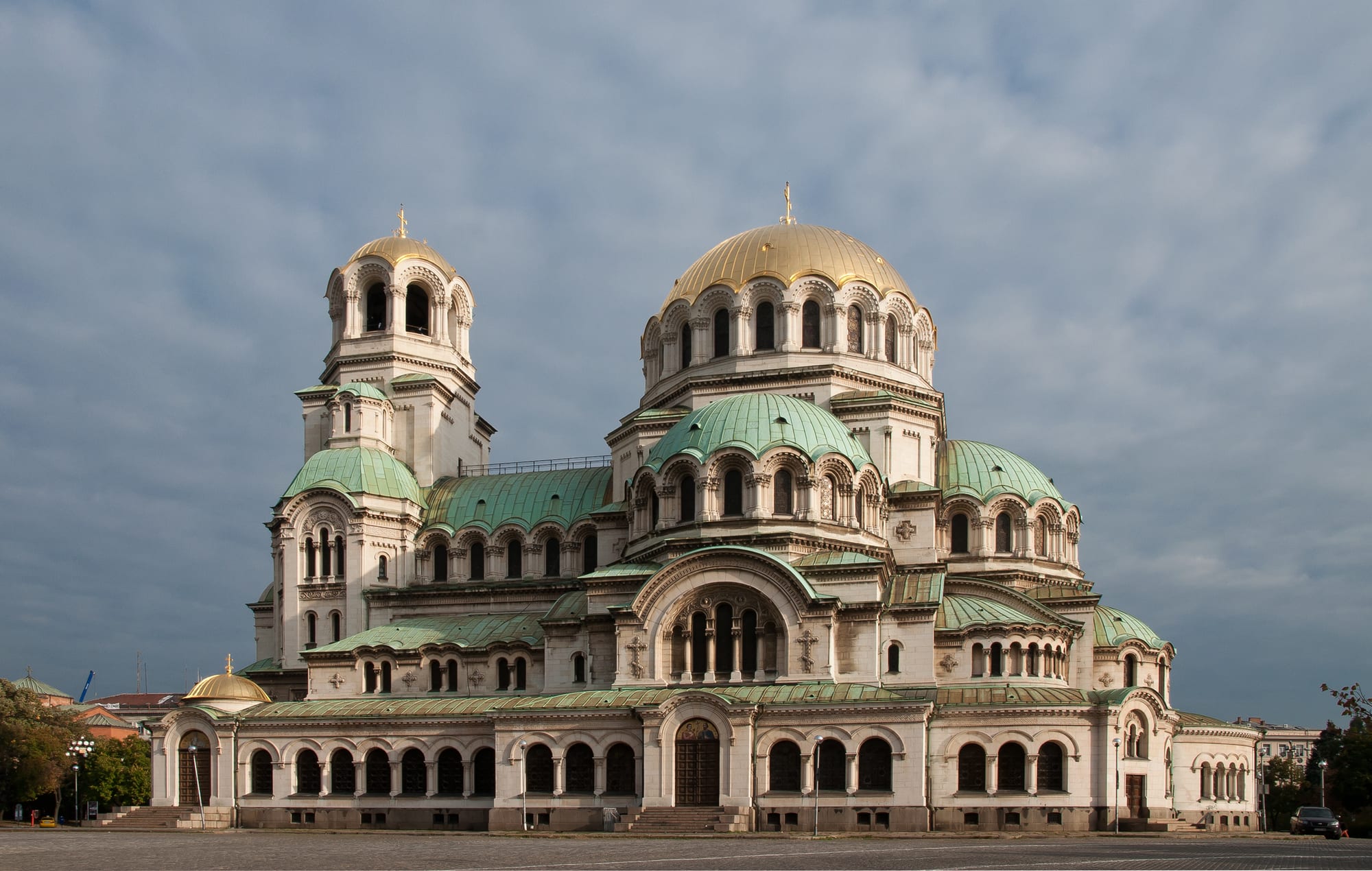
Bulgaria's capital is a walkable, low-key city where a Roman street lies exposed under the metro, an Ottoman mosque, a synagogue, and Orthodox and Catholic cathedrals stand within a few hundred metres, and the gold-domed Alexander Nevsky Cathedral dominates the centre. The National Archaeological Museum, in a former mosque, holds Thracian gold; the crypt of the cathedral has a superb icon collection.
Mount Vitosha rises straight behind the city, close enough for an afternoon hike or a winter ski.
5. Veliko Tarnovo
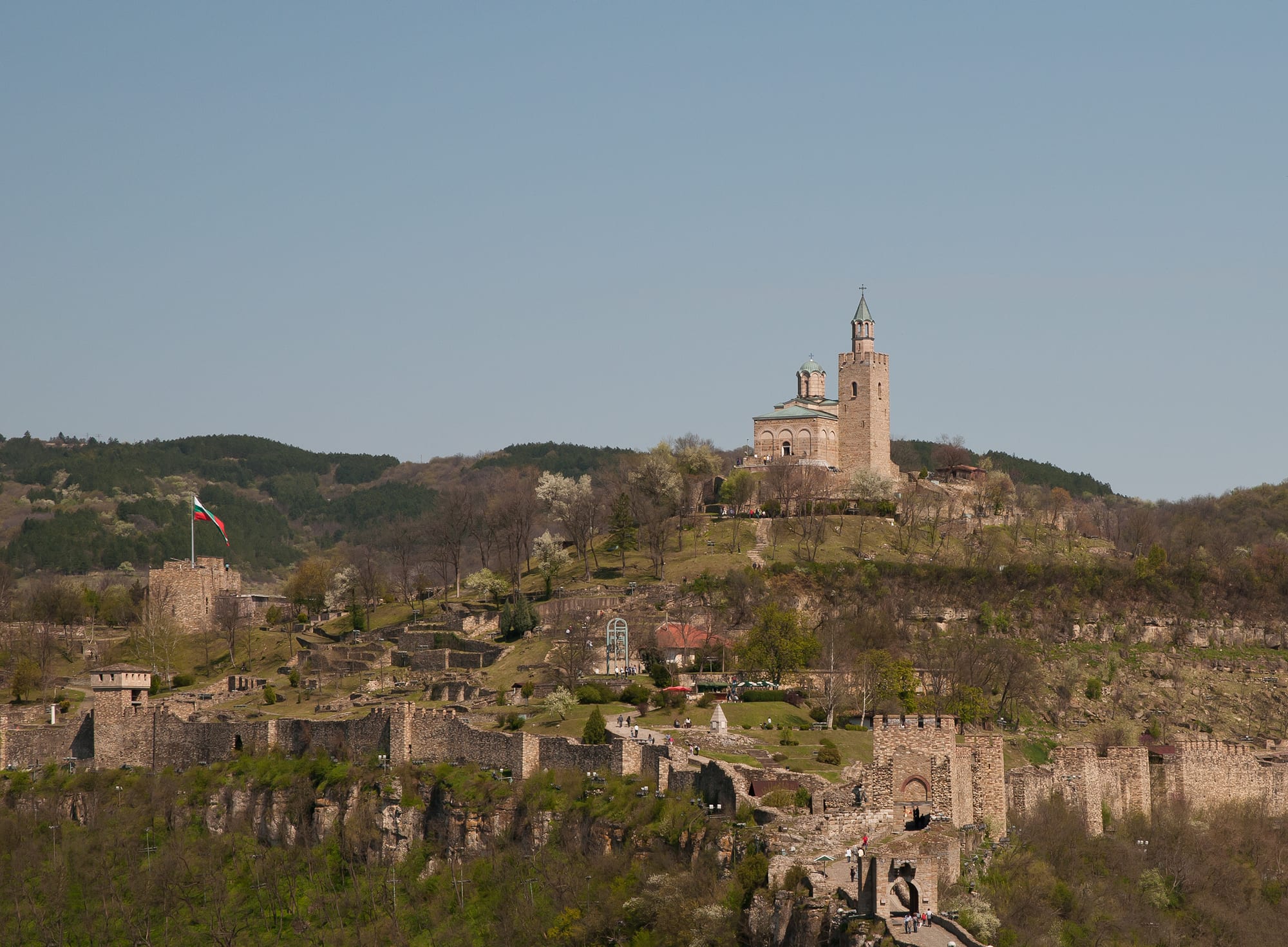
Veliko Tarnovo, in the central hills, was the capital of Bulgaria from 1185 to 1393, and its old town spills down steep slopes above a tight loop of the Yantra river. The restored Tsarevets fortress crowns one hill, with a modernist-frescoed church on top and a summer sound-and-light show projected onto the walls.
The Samovodska Charshia craft street, the nearby village of Arbanasi with its painted churches, and the huge Communist-era "Founders of the Bulgarian State" monument on the ridge opposite round out a visit.
6. The Belogradchik Rocks
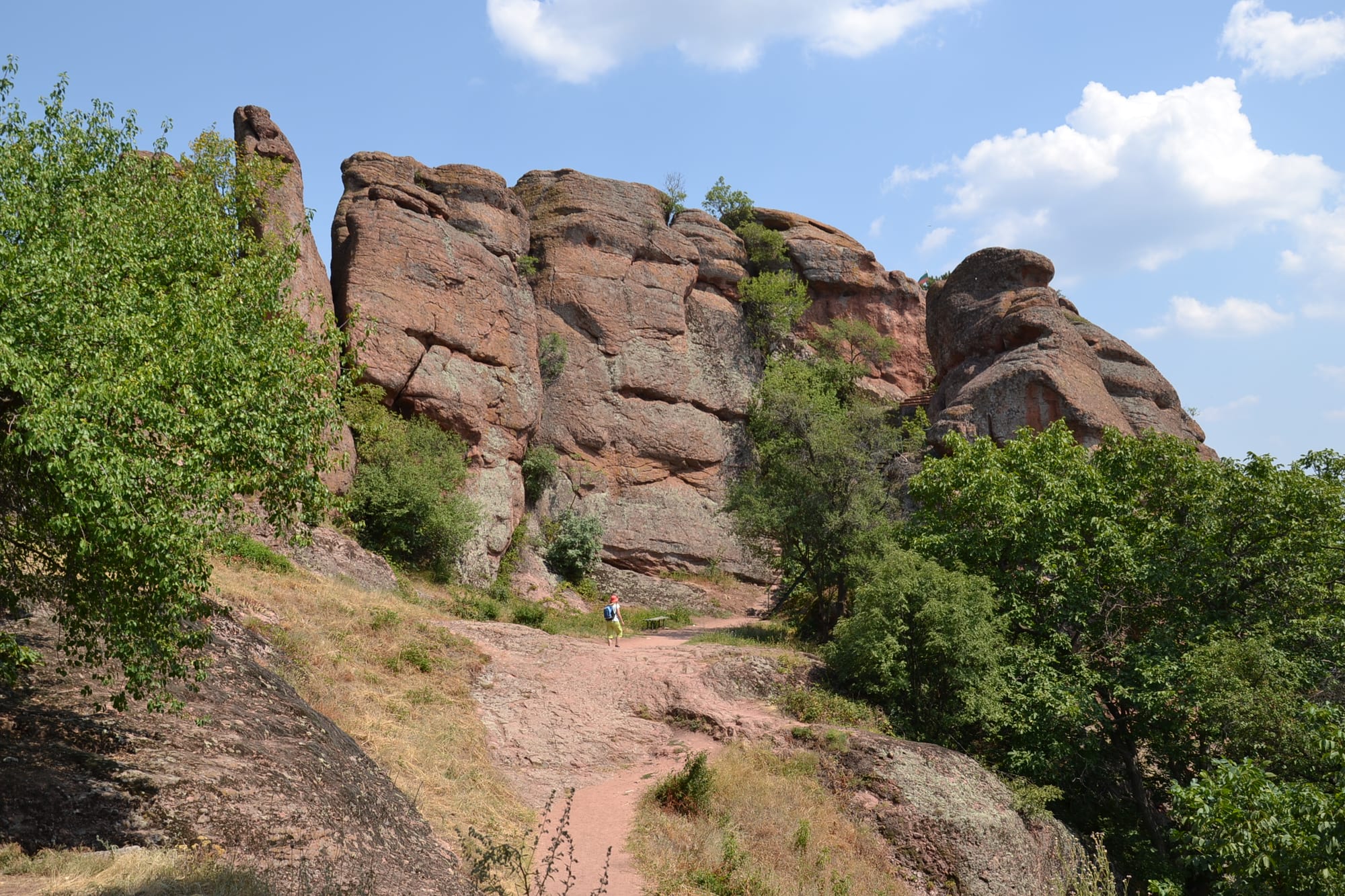
In the far northwest, near the Serbian border, wind and water have carved a range of soft red rock into a landscape of pillars, walls, and towers, many with names and folk tales attached — "the Horseman", "the Schoolgirl", "the Madonna". A Roman-and-Ottoman fortress, Kaleto, is built into the rocks and gives the best overview.
The Magura cave nearby has prehistoric bat-guano paintings. The region is remote and little-visited, which is part of the appeal.
7. The Seven Rila Lakes
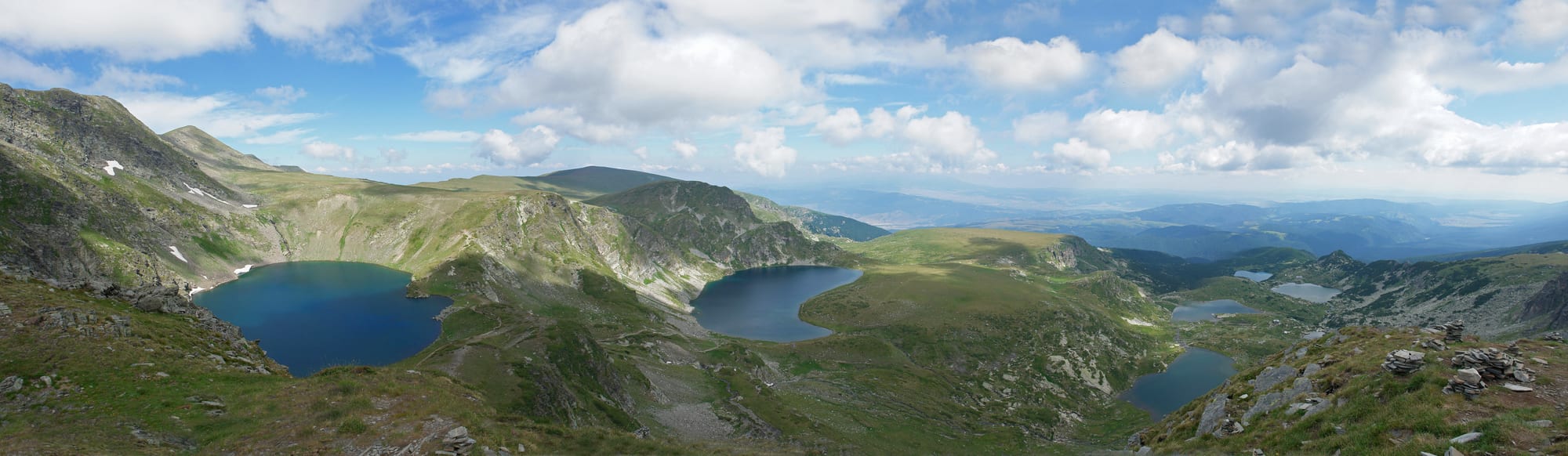
High above Rila Monastery, seven glacial lakes are strung down a stair-stepped cirque, each with a shape-based name — "the Tear", "the Eye", "the Kidney". A chairlift from the Pionerska hut cuts out the first climb; from the top station a loop trail of three to five hours links viewpoints over all seven.
It is Bulgaria's most popular mountain walk and busy on summer weekends. A white- robed spiritual movement, the Dunovists, holds a large gathering and circle dance here every August.
8. Boyana Church
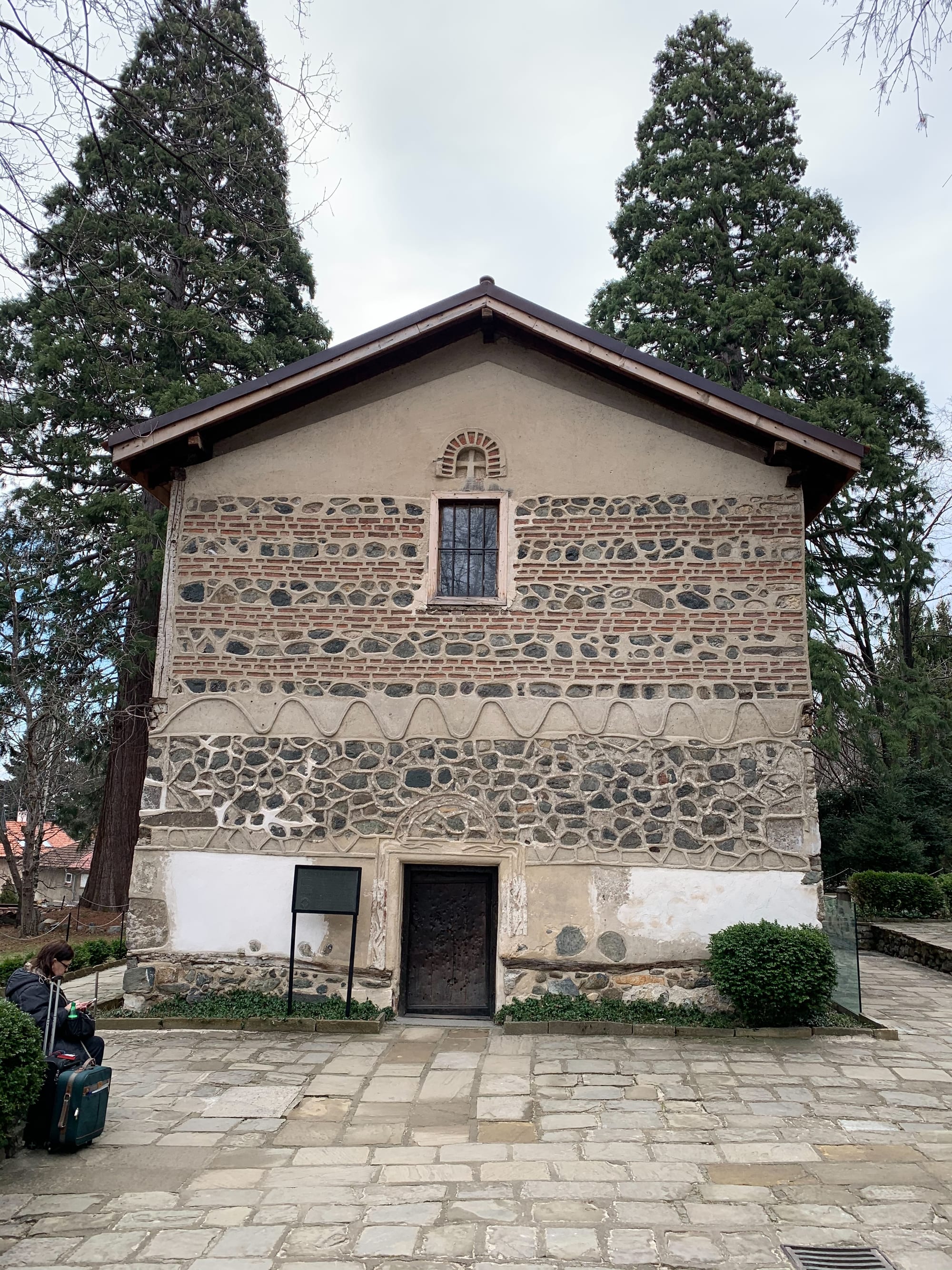
On the lower slopes of Vitosha, this modest three-part stone church holds a layer of frescoes painted in 1259 that art historians see as a precocious step toward the Renaissance — individualised faces, real emotion, and one of the earliest portraits of ordinary donors. It is a UNESCO World Heritage Site.
Only a small number of visitors are let in at a time, for about ten minutes, to protect the paintings. It pairs with the National History Museum next door.
9. Melnik and the Pirin
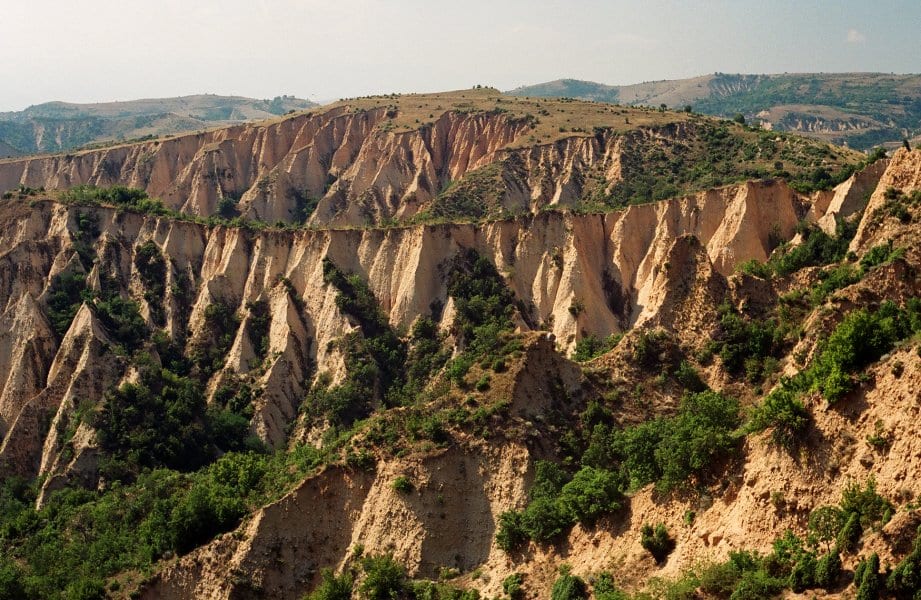
Melnik, tucked into a ravine of eroded sandstone cliffs in the southwest, has about 200 residents and calls itself the smallest town in Bulgaria — but it was once a rich centre of the wine trade, and cellars dug into the soft rock still age a dark local red. National Revival mansions, a ruined "Byzantine house", and the nearby Rozhen Monastery are the sights.
It sits at the foot of the Pirin, a granite range and national park with sharp peaks, glacial lakes, and the ski resort of Bansko.
10. The Buzludzha Monument
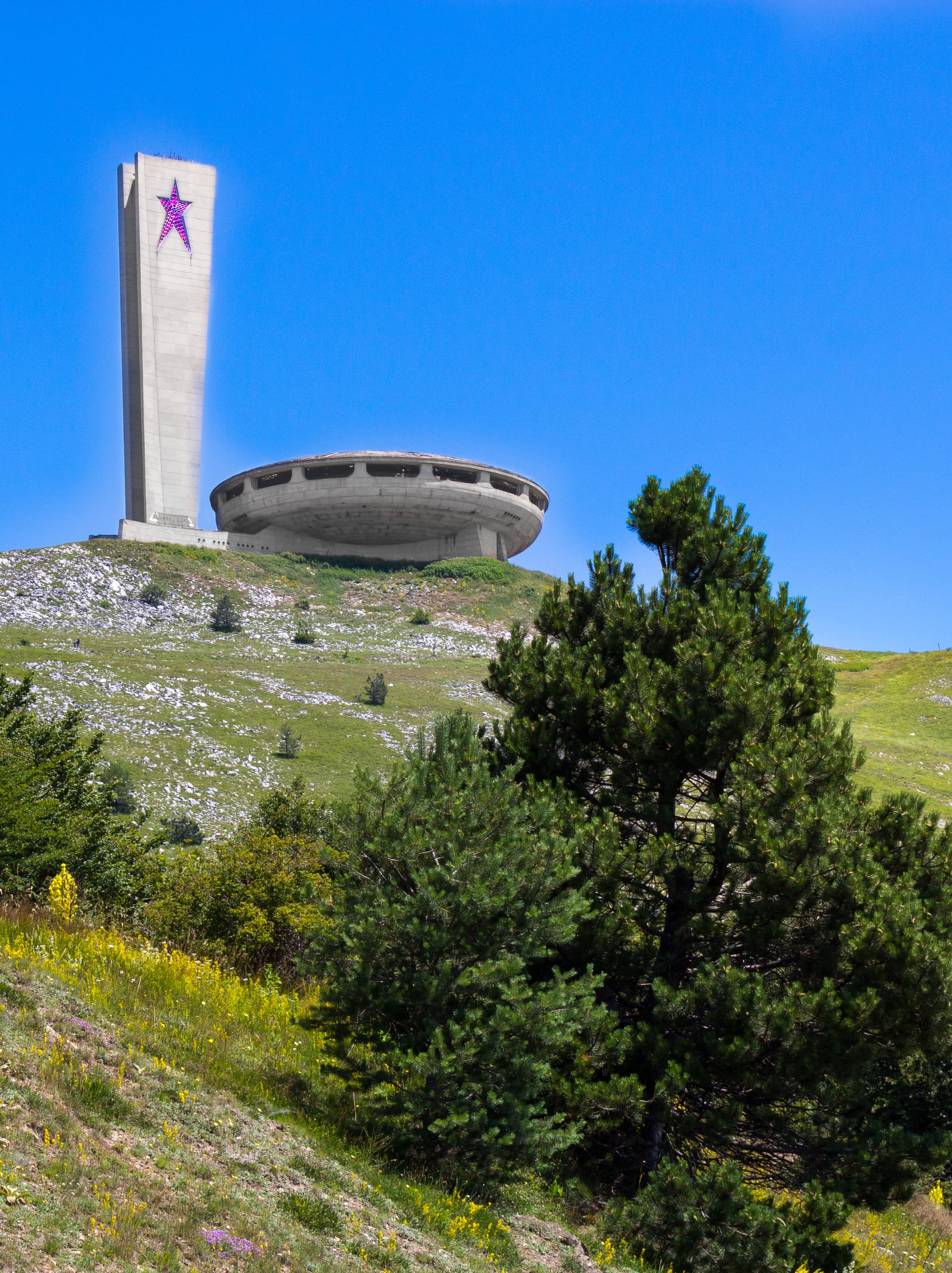
On a 1,400-metre summit in the central Balkan range stands one of the strangest buildings in Europe: a saucer-shaped concrete hall, built in 1981 as a monument to the Bulgarian socialist movement, with a 70-metre tower beside it. Its interior was once lined with mosaics of Marx, Lenin, and Bulgarian leaders; since 1989 it has been left to rot, stripped and graffitied, though a conservation project has begun stabilising it.
The interior is officially closed and unsafe, but the exterior — reached by a good road up from Shipka — is a magnet for photographers, especially in mist or snow.
Bulgaria is easy and cheap to travel by bus, train, or hire car, and a week from Sofia — Rila, Plovdiv, Veliko Tarnovo, and one wild card — covers most of this list, with the Black Sea coast and the northwest for a longer trip.