Food · Brunei
Brunei: Food and the National Dish
A sago starch eaten by twirling it onto a bamboo fork, cheap rice parcels sold from a window you literally knock on, and a country where no restaurant serves alcohol at all
By Worldlore Editorial · 16 September 2026
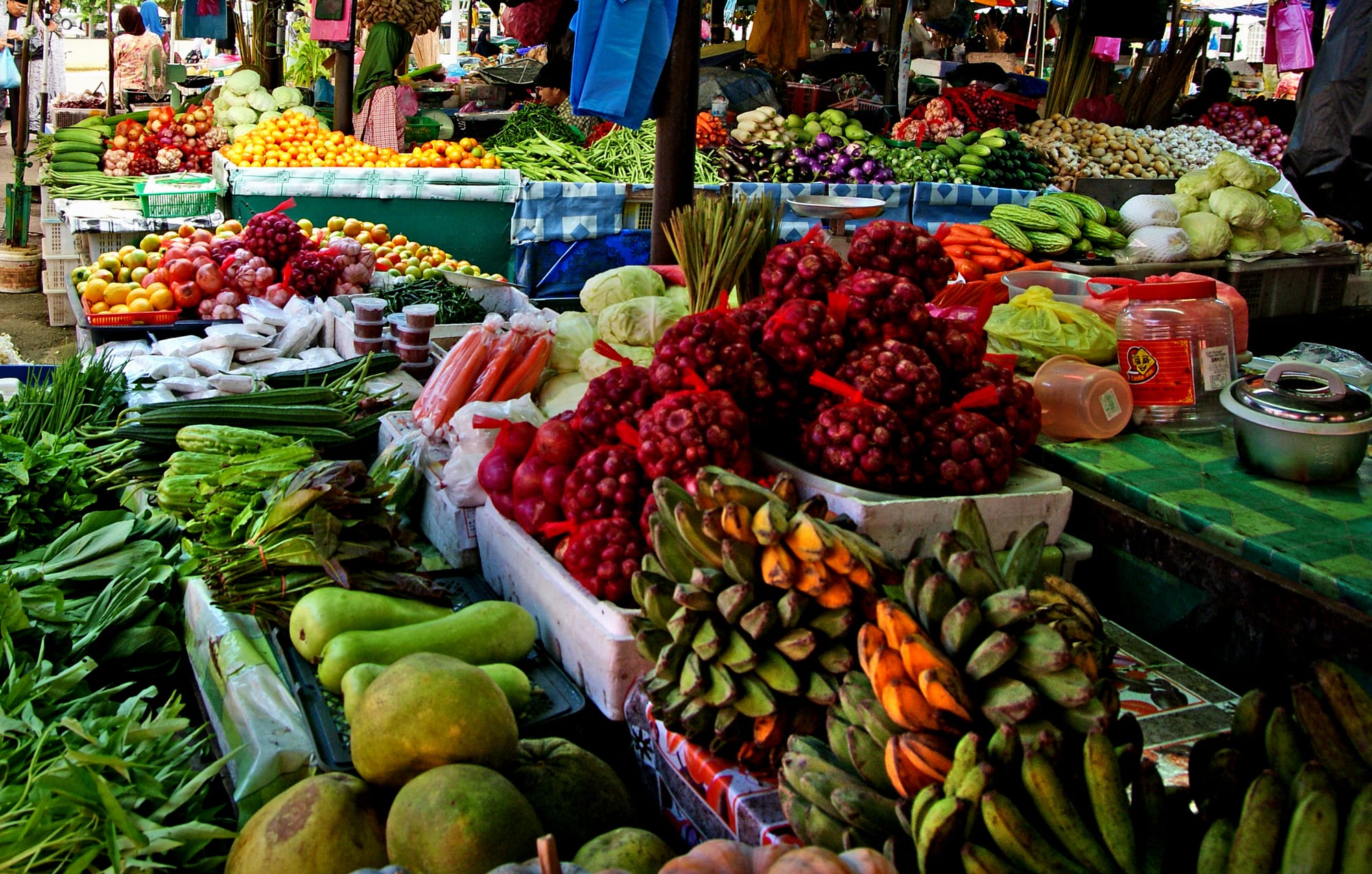
A small, wealthy sultanate on Borneo
Brunei's food shares deep roots with Malaysia and Indonesia — rice, satay, coconut-based curries, and a Malay Muslim culinary tradition — but the country's position on the island of Borneo has also kept alive a genuinely distinct, older dish that predates most of that shared Malay cooking. Islam and Sharia law shape the food culture strictly here: everything is halal, and Brunei has banned the sale of alcohol entirely, one of the strictest such policies anywhere in the world.
The national dish: ambuyat
Ambuyat is a thick, glue-like paste made from the starch of the sago palm, almost flavourless on its own, eaten by twirling a portion onto a special forked bamboo tool called a chandas and dipping it into a sour, often chilli-spiked sauce called cacah before swallowing it without chewing. It is served alongside a spread of side dishes — grilled or fried fish, vegetables, sambal — that provide most of the actual flavour in the meal, with the ambuyat itself acting mainly as a neutral, filling base.
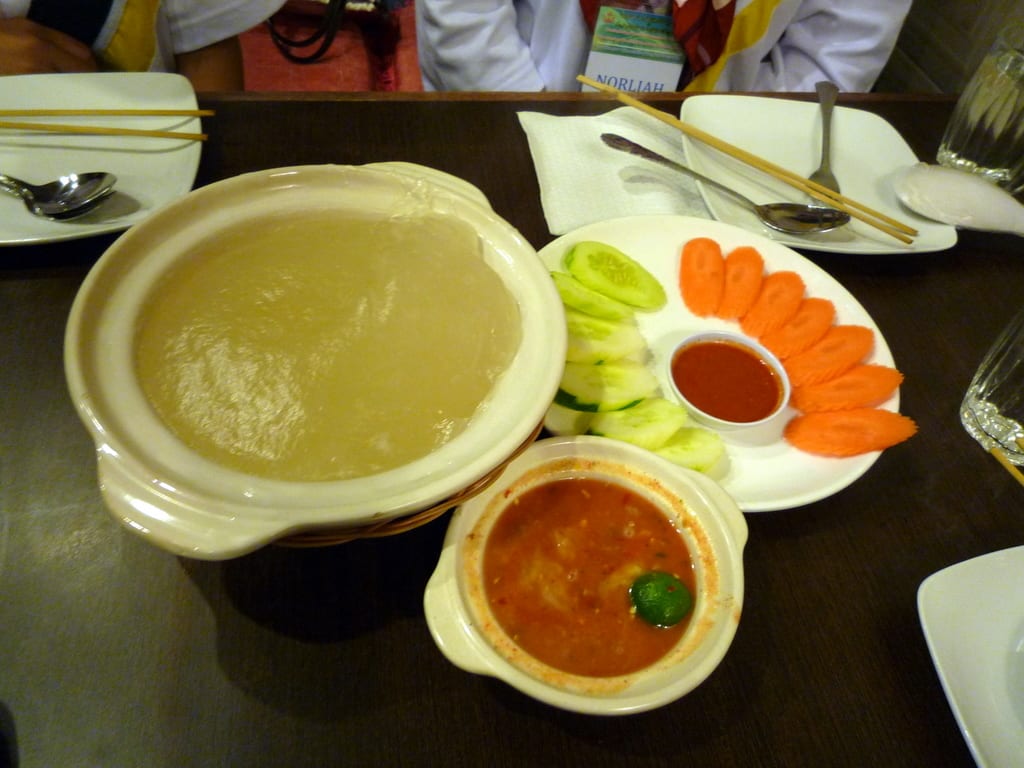
Ambuyat is also eaten in the neighbouring Malaysian states of Sarawak and Sabah on the same island of Borneo, reflecting a shared indigenous Bornean food tradition older than the modern national borders — but Brunei has adopted it most fully as a specifically national symbol.
Dishes to know
Five more to recognise in Brunei:
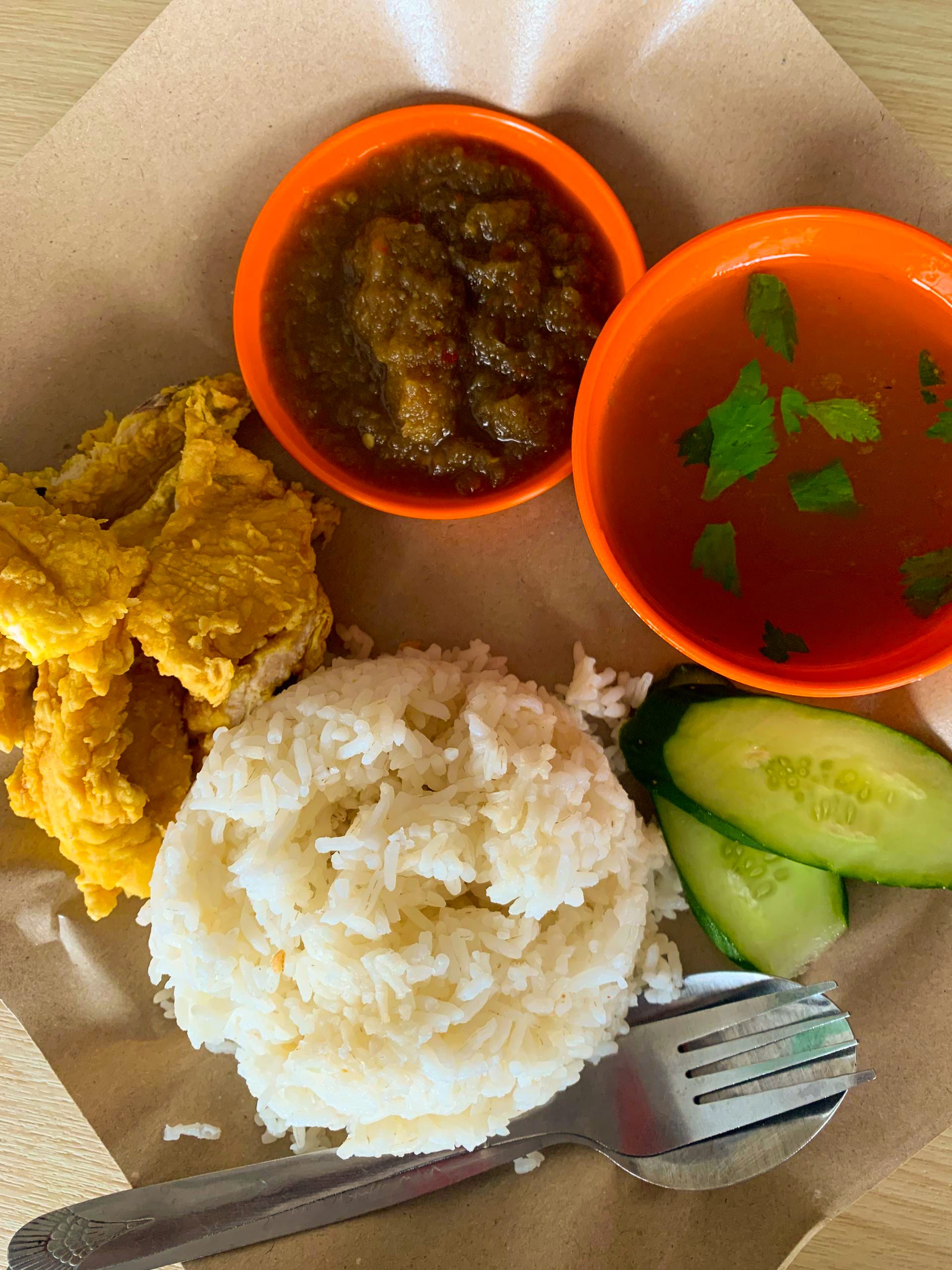
- Nasi katok — a simple plate of rice, fried chicken and sambal, sold
cheaply from small roadside stalls; the name literally means "knock rice", from customers once knocking on a seller's window or door to place an order.
- Satay — grilled skewered meat with peanut sauce, shared across the wider
Malay world.
- Sup tulang — a rich, hearty bone marrow soup.
- Pulut panggang — glutinous rice grilled in banana leaf around a spiced,
dried-shrimp-and-coconut filling.
- Kelupis — glutinous rice wrapped and steamed in leaves, a portable snack.
Wealth, imports and the everyday diet
Brunei's oil and gas wealth means the country can afford to import heavily, and much of what fills its supermarkets and restaurants beyond the traditional dishes above comes from Malaysia, Singapore and further afield. That mix of an older, subsistence-based Bornean tradition (sago, jungle produce, river and coastal fish) sitting alongside imported convenience and international dining options is a genuine, visible feature of how Brunei eats today, especially in the capital, Bandar Seri Begawan.
Eating as a traveller
Brunei sells no alcohol at all in its restaurants, bars or shops — there simply aren't any bars — so visitors expecting a drink with dinner should plan around that entirely. All food is halal and pork is essentially unavailable. Vegetarians can rely on vegetable and tofu-based side dishes alongside rice, though ambuyat is traditionally served with fish or meat sides. Tap water is generally safe in Bandar Seri Begawan. Nasi katok stalls are the best way to eat well and very cheaply, and are a genuine part of everyday Bruneian life rather than a tourist novelty.
What to take from the table
Ambuyat is worth trying at least once for the experience of eating it properly — twirled, dipped, swallowed without chewing — and nasi katok is the dish that shows how Bruneians actually eat on an ordinary day.