Daily Life · Brunei
Brunei: A Capital Built on Stilts
Free healthcare, subsidised housing and a Friday-Sunday weekend funded by oil wealth, lived out partly in a water village centuries old that still houses around ten thousand people in the middle of the capital
By Worldlore Editorial · 30 September 2026
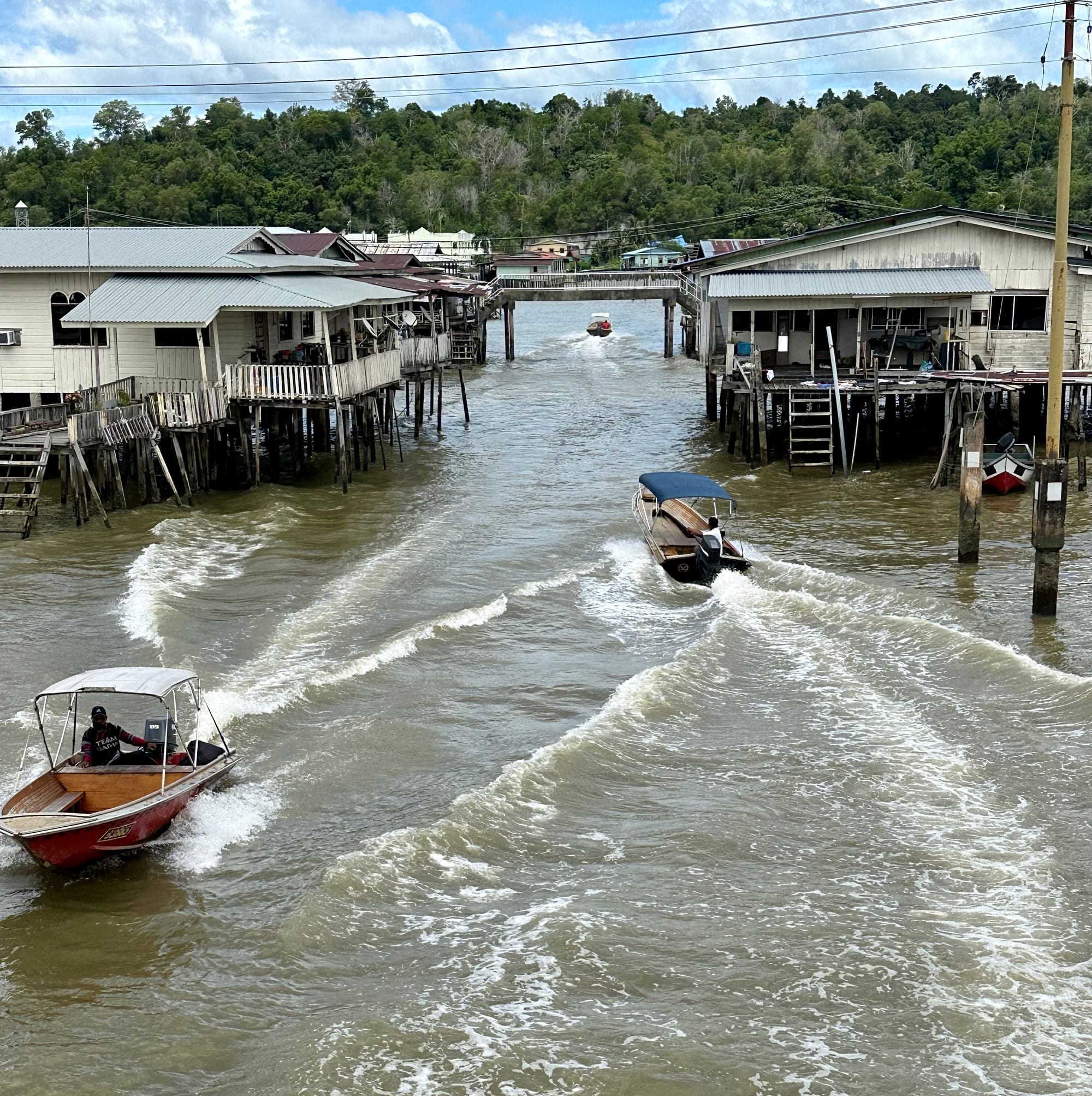
Brunei is a small, extremely wealthy, strictly Islamic sultanate, and its version of an ordinary day reflects both at once: free or nearly free healthcare, subsidised housing and cheap fuel funded by oil and gas revenue, set against a working week built around five daily prayers and a Friday that functions as the country's real day of rest. Right in the middle of the capital, Bandar Seri Begawan, around ten thousand people still live in Kampong Ayer, a cluster of stilt villages on the Brunei River that has been inhabited for centuries.
Family and home life
Extended Malay family ties remain strong, and frequent visits between relatives, along with kampong, or village-based, community life, are still a real part of an ordinary week. Housing is heavily subsidised by the state: citizens can receive land or long-term, low-interest loans to build a home, and government housing schemes let many buy a house through decades-long instalments rather than a conventional mortgage. Not every Bruneian household has left the water: Kampong Ayer, the historic stilt settlement in the capital, is still home to around ten thousand people, in houses with modern utilities but built, as they have been for centuries, entirely over the river.
Work, school and the rhythm of the day
Brunei levies no personal income tax and no sales tax, and government offices keep Monday-to-Thursday and Saturday hours, with Friday and Sunday forming the weekend. Every business is required to close between noon and two in the afternoon on Fridays for communal prayer, effectively splitting the day in two nationwide. The five daily Islamic prayers, from before dawn to after sunset, structure the day more generally as well, audible from mosques across every town.
Community life and public spaces
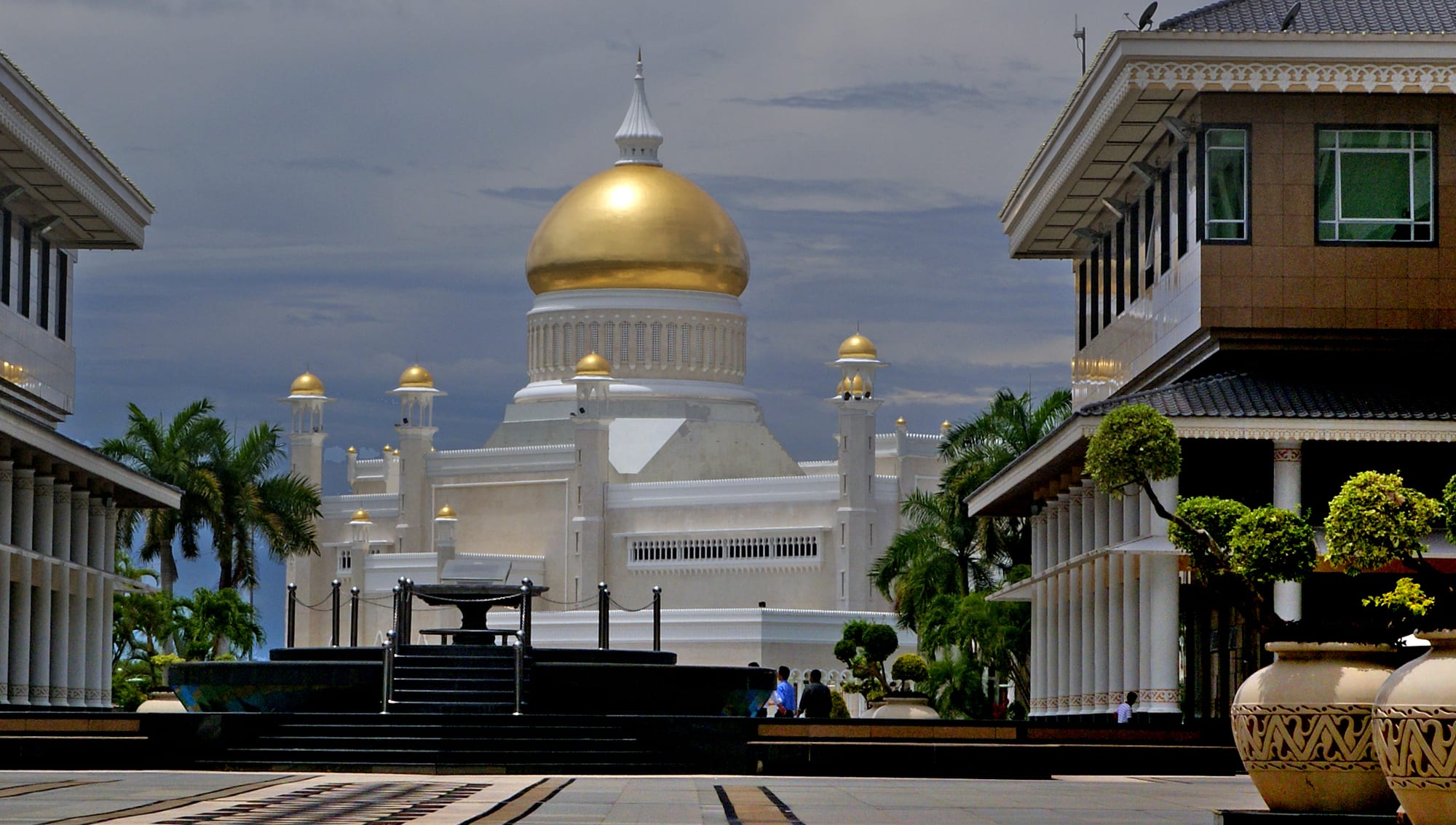
The Sultan Omar Ali Saifuddien Mosque, its gold dome visible across much of the capital, stands beside Kampong Ayer and anchors much of the city's public and religious life. Getting around the water village still depends on stilt walkways and small motorised boats rather than roads, ferrying residents and visitors alike along channels lined with houses, schools, and a fire and police post of their own. Markets, including the riverside Kianggeh market and Gadong's busy night market, remain genuine daily and weekly gathering points for food and produce.
Free time and weekends
With Friday and Sunday as the shared days off, weekends are typically spent with extended family, at shopping malls in the capital, or, for many, at one of the country's parks or beaches along the South China Sea coast. The sale of alcohol is banned nationwide, so socialising outside the home centres on cafes, restaurants and family gatherings rather than bars.
A visitor's ordinary day
Brunei uses the Brunei dollar, pegged to and interchangeable with the Singapore dollar, and card payments are widely accepted in the capital. Public transport is limited, and a rental car or taxi is the practical way to get around outside central Bandar Seri Begawan, though water taxis remain the usual way into Kampong Ayer itself. Expect businesses to close for the Friday midday prayer break, and expect no alcohol to be on sale anywhere in the country, including in hotels and restaurants.
What to take away
What defines an ordinary day in Brunei is the coexistence of two things that rarely sit together elsewhere: one of the world's more generous welfare states, and a way of life, in Kampong Ayer, that has barely changed its basic shape in centuries.