Attractions & Natural Wonders · British Virgin Islands
The British Virgin Islands: Seven Attractions and Natural Wonders
House-sized granite boulders forming grottoes on a beach, a bar where the currency is a soggy dollar, and one of the great sailing grounds of the world
By Worldlore Editorial · 19 September 2026
A sailor's archipelago
The British Virgin Islands are a scatter of about 60 small islands and cays east of Puerto Rico, most of them uninhabited. There is no mass tourism and no big airport; people come to sail. The islands sit around the Sir Francis Drake Channel, a sheltered strip of water with steady trade winds, short hops between anchorages, and good holding — which makes it one of the best and easiest places in the world to charter a yacht.
The seven below are the landmarks, whether you arrive by boat or by the small ferries that link the main islands. It is a dry-season destination; hurricane season runs June to November, and the territory was hit hard by Irma in 2017.
1. The Baths, Virgin Gorda
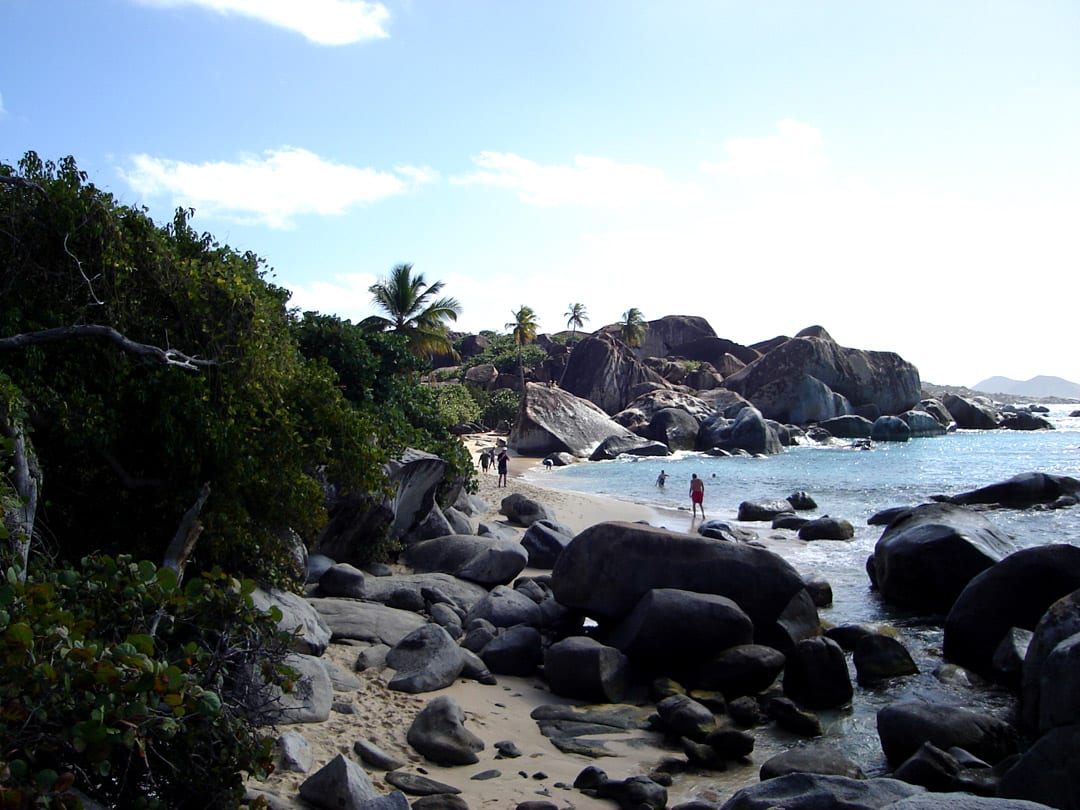
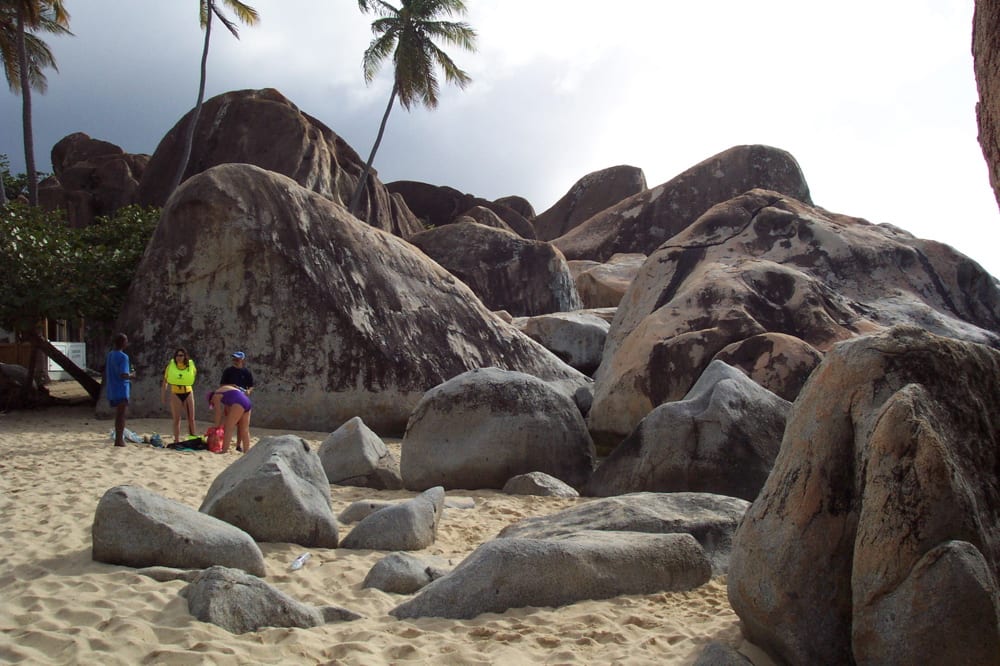
At the southern tip of Virgin Gorda, a jumble of granite boulders the size of houses — geologically unusual for the Caribbean, the eroded remains of an old molten intrusion — forms a beach-level labyrinth of shaded caverns, tidal pools, and sandy chambers. A marked scramble, "the Baths to Devil's Bay", squeezes through the gaps with the help of ladders and ropes.
It is the BVI's single most famous sight, and busiest mid-morning when the boat tours arrive; go early or late. It is protected as a national park.
2. Jost Van Dyke and White Bay
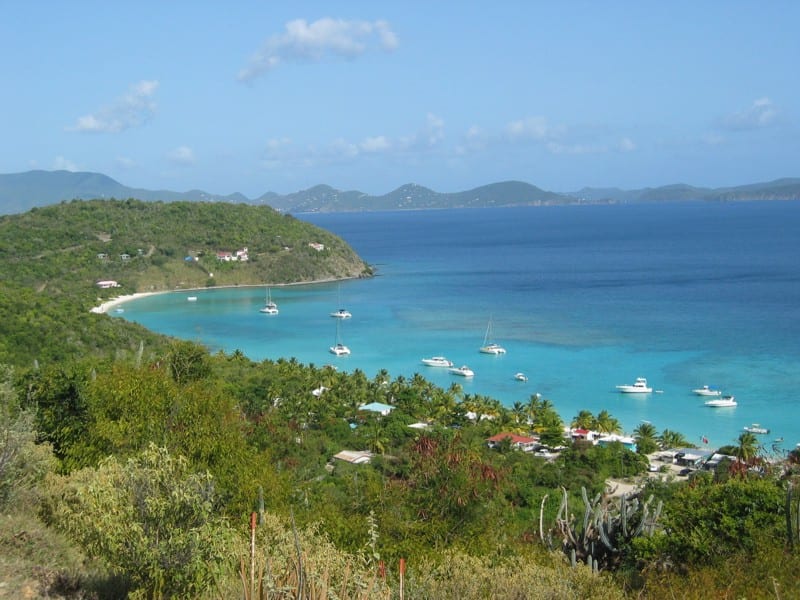
Jost Van Dyke is a small, hilly island with fewer than 300 residents and a large reputation as the party stop of the BVI. White Bay, its main beach, is a postcard-perfect strip of sand behind a reef, lined with beach bars — the Soggy Dollar among them, named because sailors used to swim ashore and pay with wet banknotes, and the claimed birthplace of the rum "Painkiller".
Great Harbour, around the headland, has Foxy's, another legendary bar, whose New Year's Eve party draws hundreds of boats.
3. Tortola and Cane Garden Bay
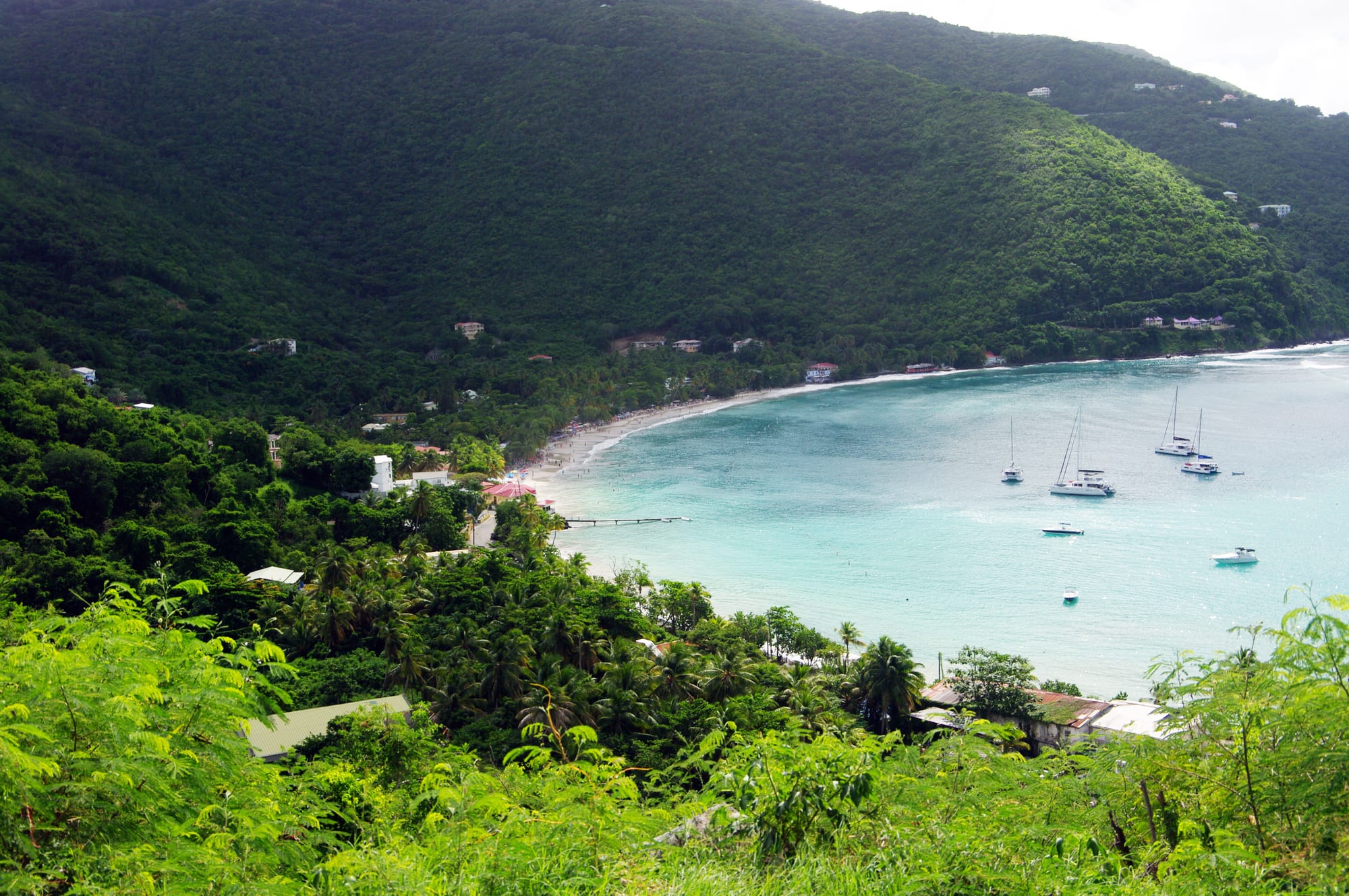
Tortola is the main island and home to most of the territory's people. Its north-coast beaches are the draw: Cane Garden Bay, a broad palm-lined crescent with beach bars and calm water; Smuggler's Cove and Apple Bay beyond it. Inland, Sage Mountain National Park protects a patch of higher-elevation forest around the territory's highest point (523 m), with short trails and views over the whole archipelago.
The Callwood rum distillery near Cane Garden Bay has been making rum in the same stone building for some 200 years.
4. Anegada
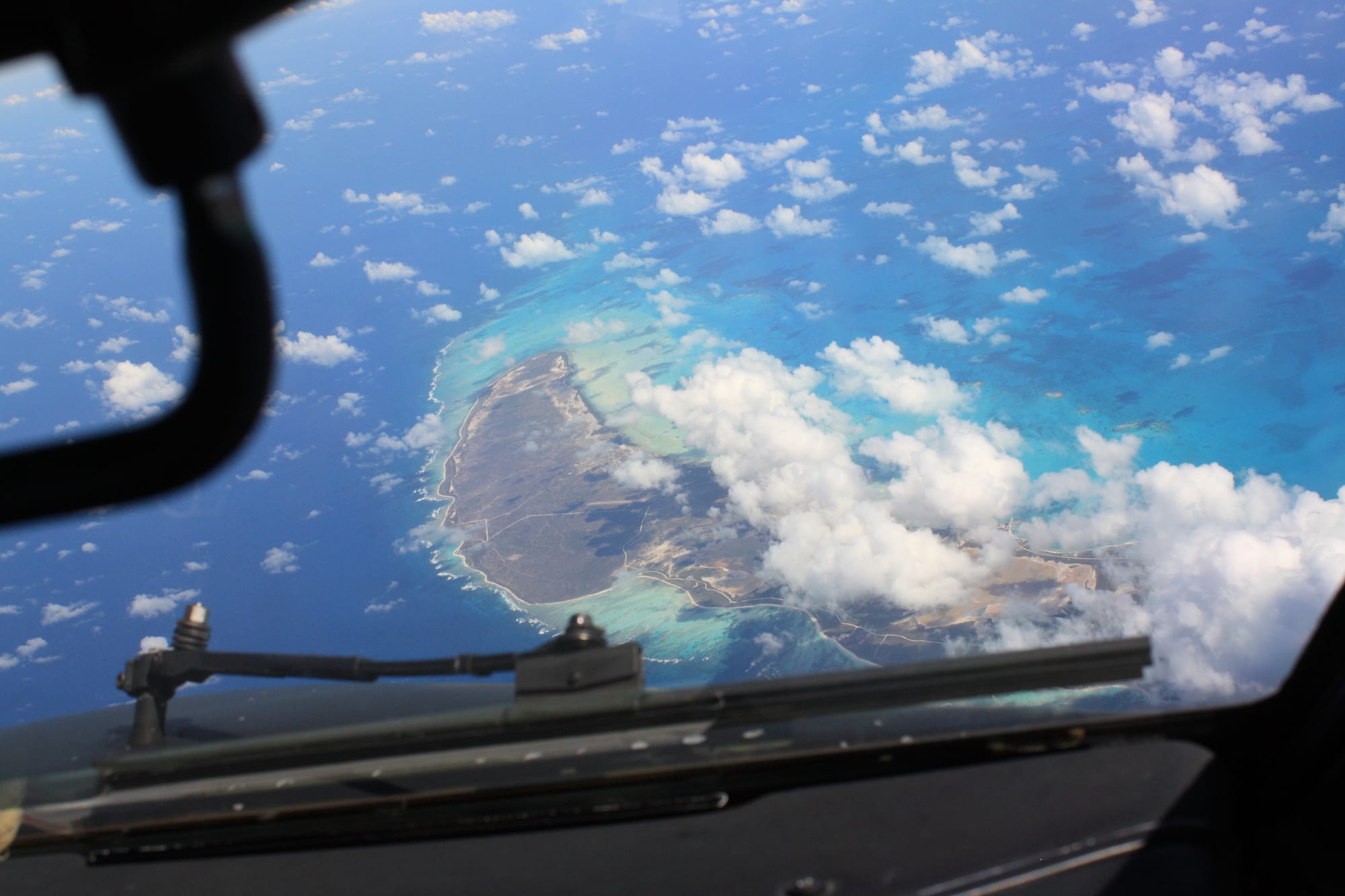
Anegada is the odd one out — flat (its highest point is about 8 metres), coral-and-limestone rather than volcanic, and ringed by Horseshoe Reef, one of the largest in the Caribbean and a graveyard of hundreds of wrecks. It has miles of near-empty white beaches (Cow Wreck, Loblolly), a salt-pond colony of flamingos that were reintroduced in the 1990s, and a famous fresh-caught spiny lobster grilled at the beach restaurants.
Because of the reef, sailors often reach it by ferry or a guided charter rather than navigating in themselves.
5. Norman Island
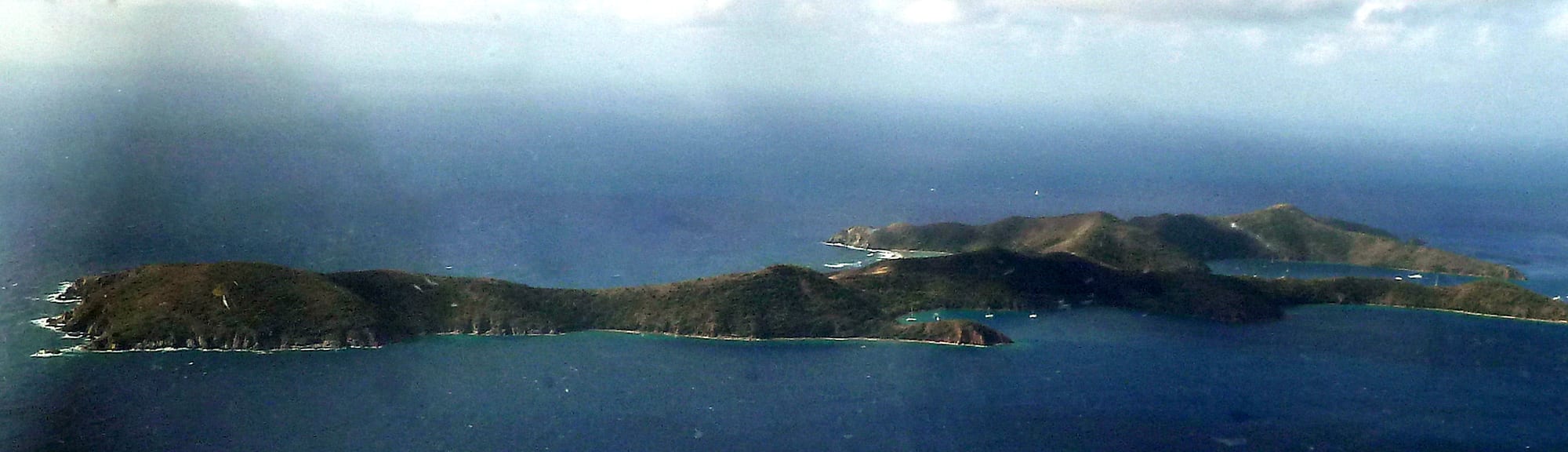
Uninhabited Norman Island, at the southern end of the channel, is popularly linked to Robert Louis Stevenson's Treasure Island — treasure was genuinely recovered from a cave here in the 18th century. Its big sheltered bay, the Bight, is one of the most popular overnight anchorages in the BVI, with a floating bar (the "Willy T"). At the western tip, a set of sea caves at the base of the cliffs makes for excellent snorkelling.
Nearby, the wreck of the RMS Rhone, sunk in an 1867 hurricane off Salt Island, is the territory's best-known dive.
6. Sandy Spit and Sandy Cay
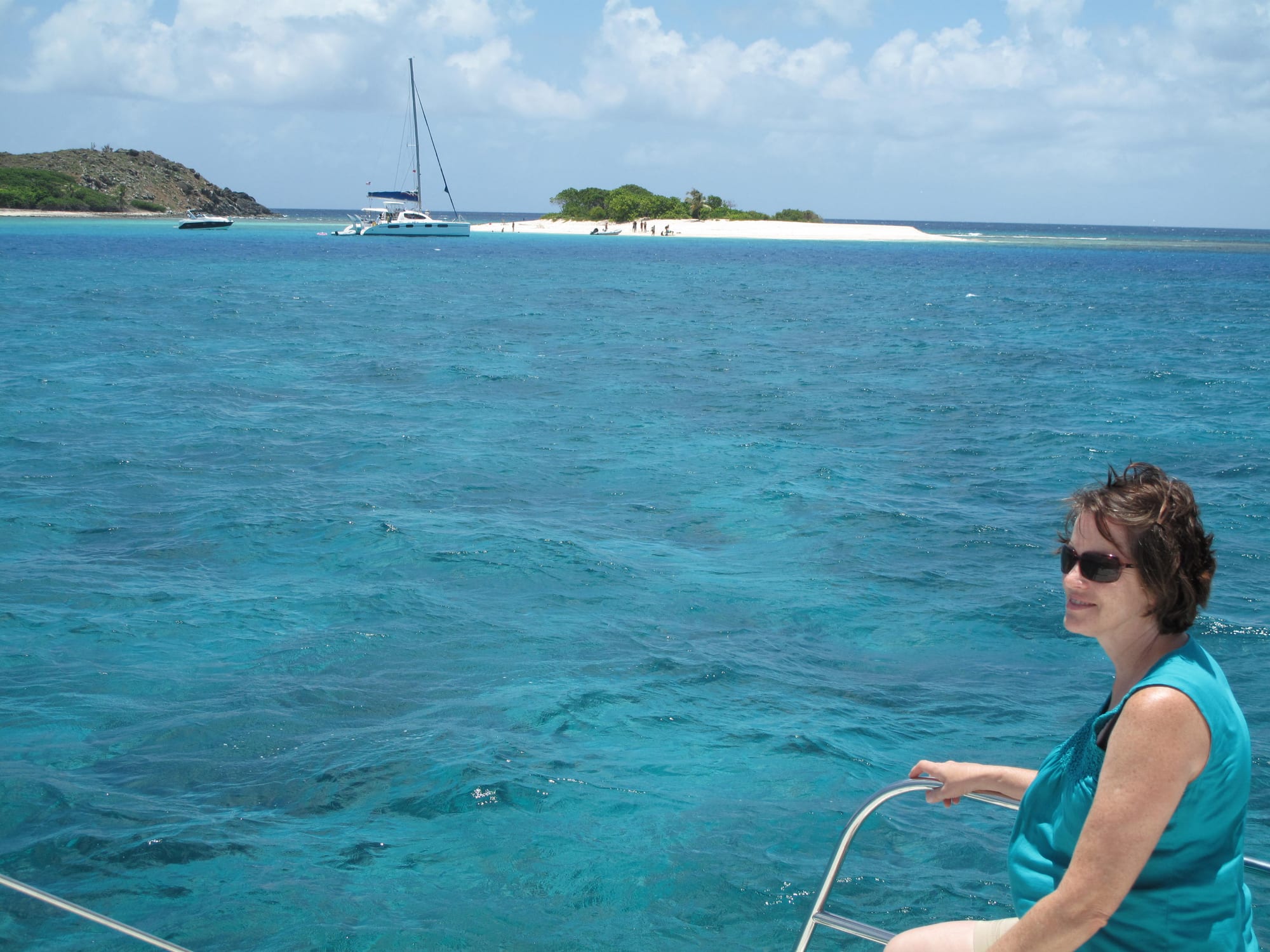
Sandy Spit is barely more than a sandbar with a topknot of palms — the kind of place cartoonists draw when they draw a desert island. It and the slightly larger Sandy Cay (a protected area with a short nature loop) sit off Jost Van Dyke and are favourite lunch and swim stops for charter boats.
There is nothing on either but sand, sea, and — on Sandy Cay — a walking trail and nesting seabirds. Bring your own everything.
7. Road Town
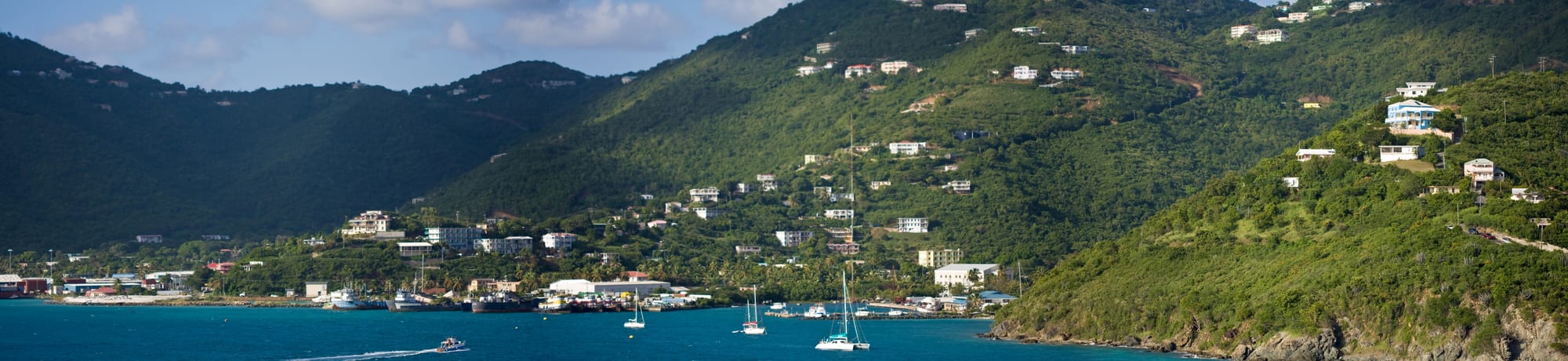
Road Town, on Tortola's south coast, is the small, workaday capital — the seat of government, the cruise pier, and the marinas where most bareboat and crewed charters begin and end. Main Street has a few surviving 19th-century wooden buildings, the old prison, and the little Virgin Islands Folk Museum; the J.R. O'Neal Botanic Gardens offer a shady hour.
For most visitors it is a start and finish point rather than a destination — the BVI's appeal is out on the water.
The BVI is essentially a sailing holiday, and the classic trip is a week's charter — bareboat if you're qualified, crewed if not — hopping the anchorages from Tortola to Virgin Gorda, Jost Van Dyke, and back.