History · Botswana
Botswana: The Kalahari Success Story
San hunters and Tswana chiefdoms, a British protectorate almost by accident, and the diamond-rich democracy that became Africa's development model
By Worldlore Editorial · 19 September 2026
A big, empty country
Botswana is the size of France with the population of a mid-sized city — about 2.6 million people in 582,000 square kilometres, most of it the Kalahari, a semi-arid sandveld rather than a true desert. Water gathers in two spectacular places: the Okavango Delta, where a river spreads out and vanishes into the sand in a maze of wildlife-rich channels, and the vast salt pans of an ancient dried lake. Almost everyone lives along the eastern edge, where the rainfall, the railway and the cities are. It is one of the quieter histories in Africa — no war of independence, no coup, no civil war — and one of the more surprising: a country that was among the poorest in the world in 1966 and is upper-middle-income today.
A short history
- deep past
The San
Hunter-gatherer peoples occupy the Kalahari for tens of thousands of years.
- 1st millennium CE
Bantu farmers
Cattle-keeping, iron-working Bantu speakers move in from the north and east.
- 17th–18th c.
The Tswana chiefdoms
Large cattle-based chiefdoms form around central towns and their assemblies.
- 1830s onward
Missionaries and Boers
The London Missionary Society arrives; Boer trekkers press on Tswana land.
- 1885
The Protectorate
Britain declares Bechuanaland a protectorate to block Boer and German expansion.
- 1895
The chiefs go to London
Three Tswana kings lobby successfully to stay under the Crown, not Cecil Rhodes's company.
- 1948–1956
The Seretse Khama affair
Britain exiles the Bangwato heir over his marriage to a white Englishwoman.
- 30 September 1966
Independence
Botswana becomes a republic under Seretse Khama.
- 1967 onward
Diamonds
Huge diamond finds fund a long boom, prudently managed.
San, cattle, and chiefdoms
The oldest inhabitants of the region are the San and related Khoe peoples, hunter-gatherers and herders who have lived in and around the Kalahari for tens of thousands of years; the painted rocks of the Tsodilo Hills are one record of that presence. Bantu-speaking farmers with cattle and iron arrived over the first millennium CE, and the eastern parts of Botswana were linked into the cattle-, gold- and ivory-trading world of Mapungubwe and Great Zimbabwe.
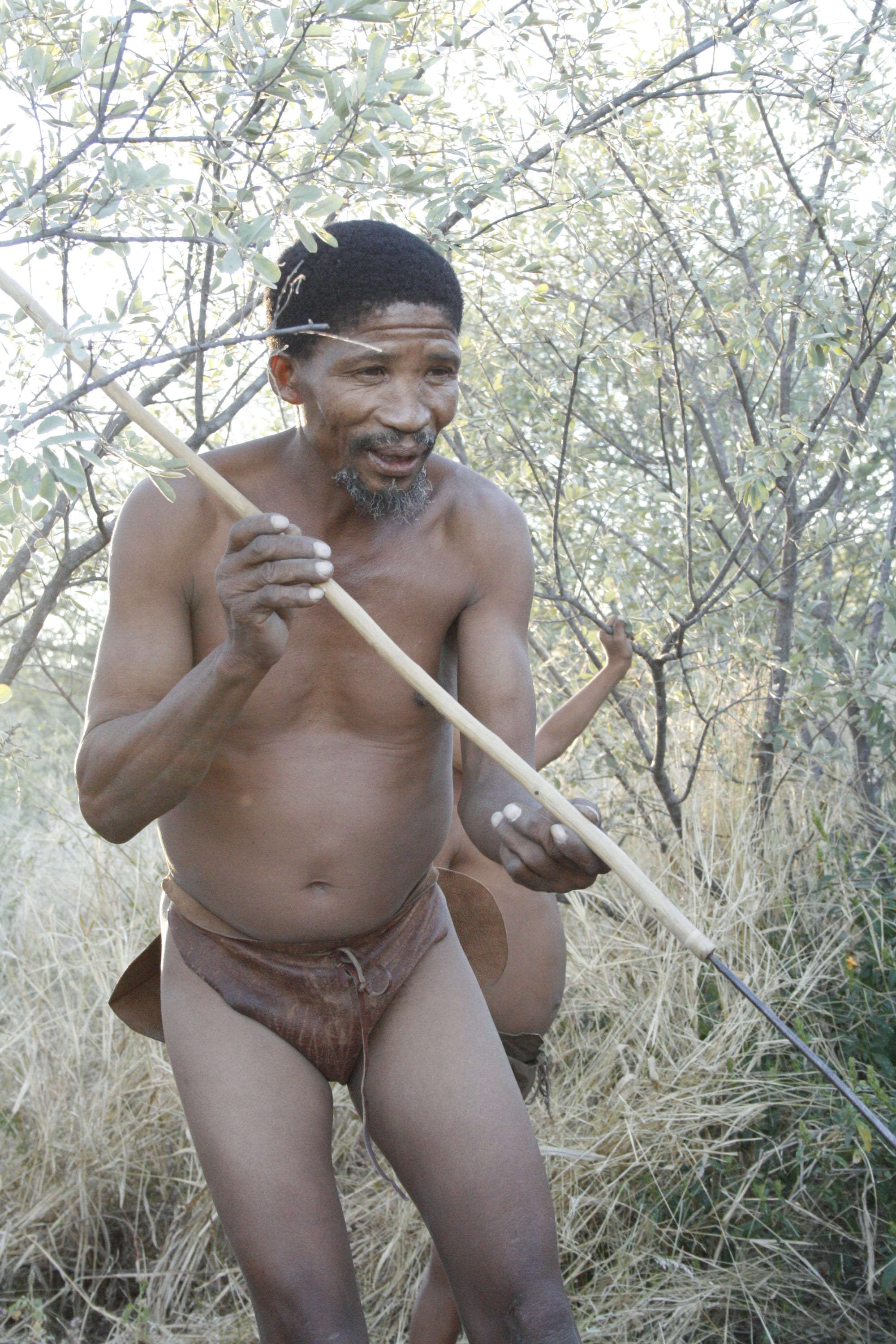
From around the 17th century the Tswana, a Sotho-Tswana people, organised into large chiefdoms — the Bangwato, Bakwena, Bangwaketse and others — each built around a big central town, a paramount chief, a public assembly called the kgotla, and herds of cattle whose loaning bound patrons and clients together. Many San were absorbed into Tswana society as a subordinate underclass, a status that still shadows their position today.
Missionaries, Boers, and the Protectorate
The 19th century brought pressure from the south. The wars set off by the rise of the Zulu kingdom sent raiders through the region in the 1820s and 30s; then came the missionaries of the London Missionary Society — David Livingstone set out from a station near modern Gaborone — who converted several Tswana chiefs; and then Boer trekkers from the Transvaal, who wanted Tswana land and cattle. Several chiefs sought British protection against the Boers.
In 1885 Britain obliged, declaring the Bechuanaland Protectorate over the Tswana chiefdoms — partly to keep the Boers and the Germans in South West Africa apart, and partly to secure the road north to Central Africa. Britain then governed it as cheaply as possible: no significant white settlement, almost no development, and an administration run from a town in South Africa, outside the territory altogether.
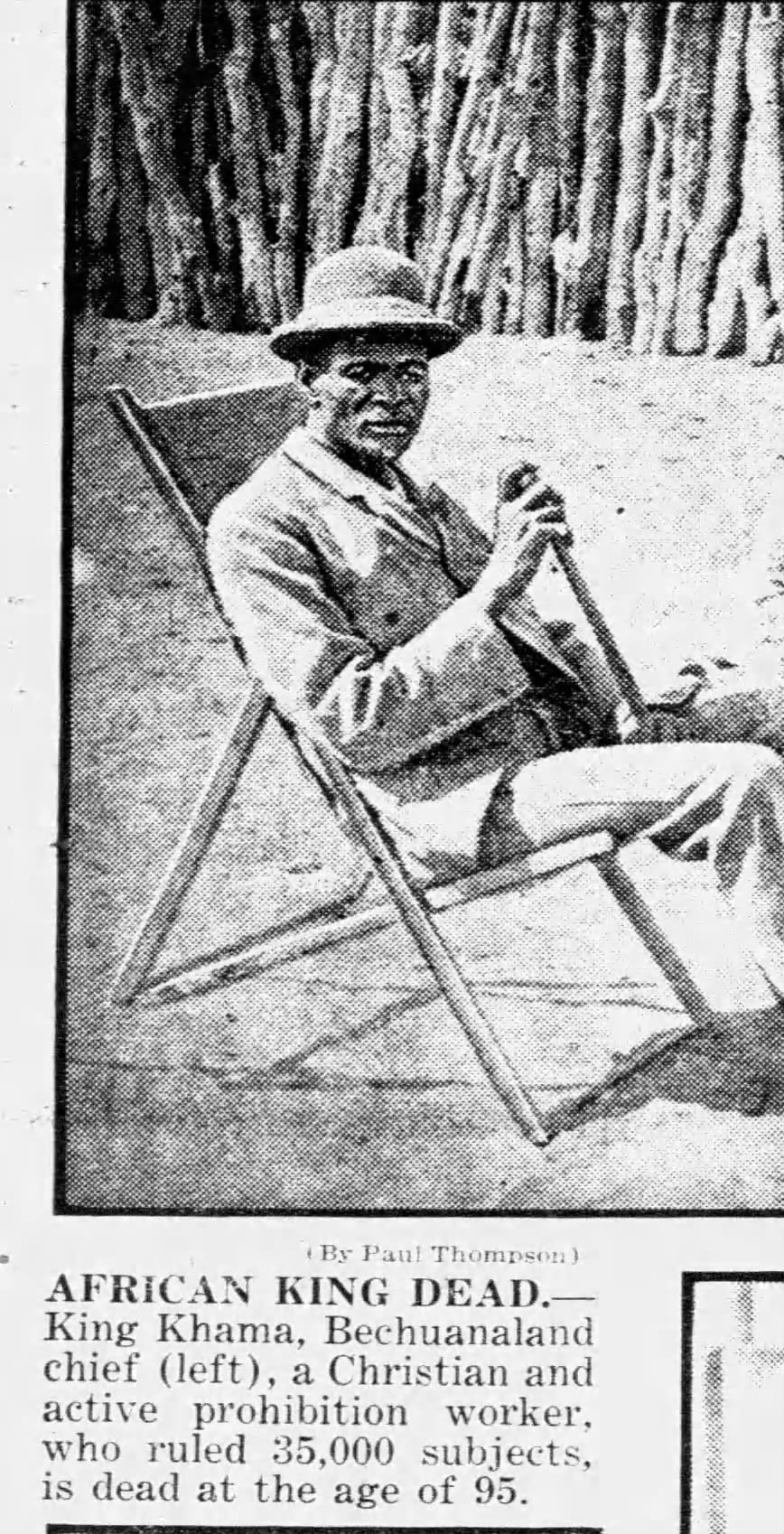
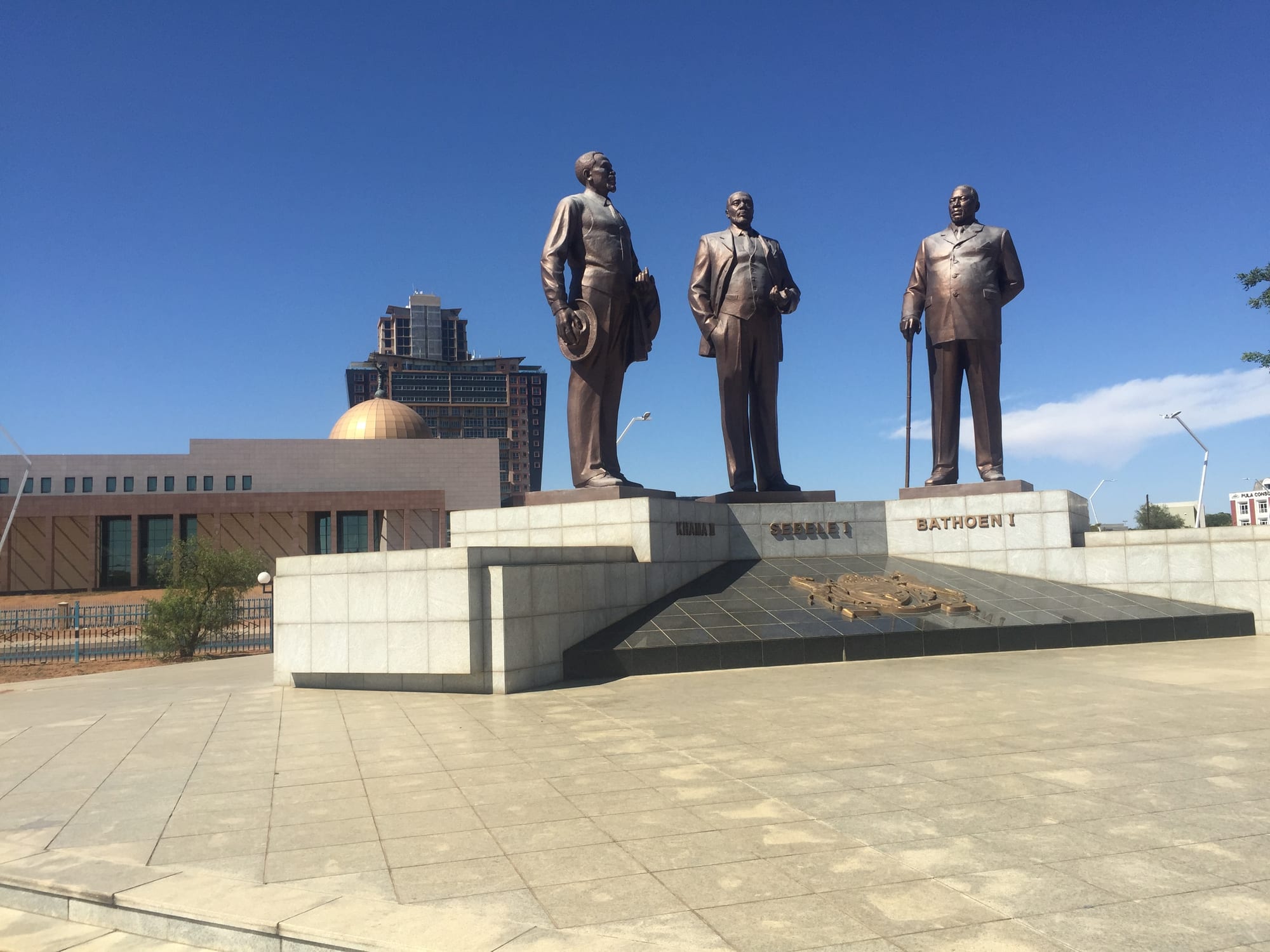
In 1895 Cecil Rhodes's British South Africa Company tried to have the Protectorate transferred to it. Three paramount chiefs — Khama III, Sebele I and Bathoen I — sailed to England, toured the country with the missionary society, and lobbied the Colonial Office and Queen Victoria to keep Bechuanaland under direct Crown rule. They won, and the discrediting of Rhodes in the Jameson Raid weeks later sealed it. The three kings' journey is a founding national story, marked by a monument in Gaborone.
The Seretse Khama affair
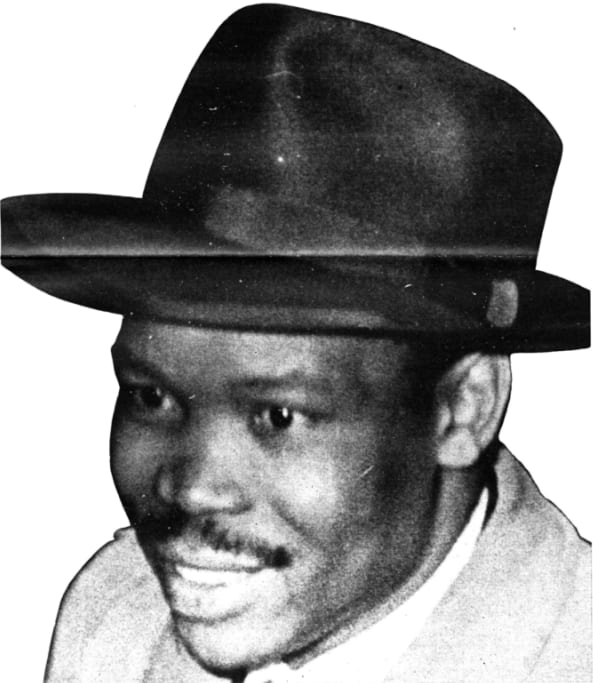
Bechuanaland stayed poor and ignored, its main export migrant labour to the South African mines, and South Africa expected eventually to absorb it. Then, in 1948, Seretse Khama — heir to the Bangwato chieftaincy and a law student in London — married a white Englishwoman, Ruth Williams. Apartheid South Africa and white Rhodesia protested furiously, and Britain, unwilling to antagonise Pretoria, exiled Seretse and Ruth from the Protectorate and barred him from the chieftaincy. The case became an international scandal. It was settled in 1956 when Seretse renounced the chieftaincy and was allowed home as a private citizen — after which he went straight into politics.
Independence and diamonds
Seretse Khama founded the Botswana Democratic Party in 1962, won the 1965 election, and led the country to independence on 30 September 1966, as its first president, with a new capital rising at Gaborone. Botswana at that moment had a few kilometres of tarred road, almost no secondary schools, a budget propped up by British aid, and hostile white-ruled states on every side.
A year later, De Beers geologists found a giant diamond pipe at Orapa; the mine at Jwaneng, opened in 1982, became the richest diamond mine in the world. What happened next is why Botswana is studied. The government negotiated a half share of the diamond company, took a large cut of the profits, and then largely invested the money — in roads, schools, clinics and a stabilisation fund — instead of stealing or wasting it. For three decades Botswana had one of the fastest-growing economies on earth, with regular elections, low corruption, and a competent civil service — the standard example of a mineral-rich country that escaped the "resource curse".
The record is not spotless. Botswana had one of the world's worst HIV/AIDS epidemics, with adult infection rates around a third of the population near its peak, before it became one of the first African countries to provide free antiretroviral treatment for everyone; life expectancy, which had collapsed into the 40s, recovered. Inequality is high, the relocation of San communities from the Central Kalahari was bitterly contested, and the diamond boom has slowed. And for all its democratic credentials, one party governed without a break from 1966 until 2024, when the Botswana Democratic Party finally lost an election and handed power to an opposition coalition — peacefully.
What Botswana keeps
Botswana's history has an unusual shape for the region: continuity rather than rupture. The Tswana chiefdoms, the kgotla, and the cattle economy carried through the Protectorate largely intact; the men who kept the country out of Rhodes's company in 1895 were the grandfathers of the men who led it to independence in 1966; and the diamond wealth was handled by institutions that already worked. The result is one of Africa's steadiest states — and a live argument for the idea that what a country does with its resources matters more than whether it has them.