History · Bosnia and Herzegovina
Bosnia and Herzegovina: The Meeting Place
A mountainous crossroads of Christianity and Islam — a medieval kingdom, four Ottoman centuries, the spark of the First World War, and the 1990s war that redrew it
By Worldlore Editorial · 19 September 2026
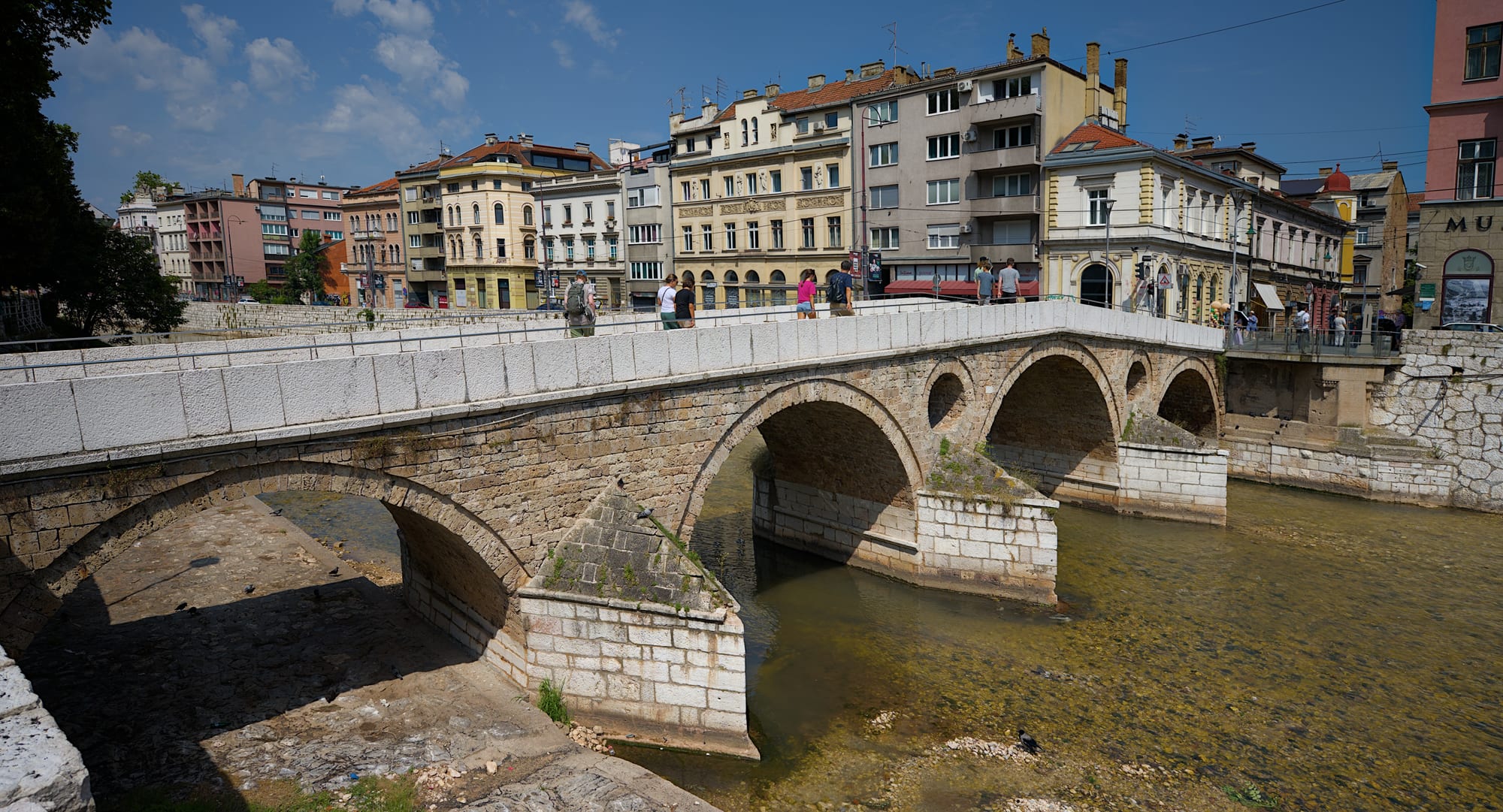
A country of mixtures
Bosnia and Herzegovina is a rugged, forested, nearly landlocked country in the western Balkans. Its 3.2 million people belong to three "constituent peoples" — Bosniaks, who are Muslim; Serbs, who are Orthodox Christian; and Croats, who are Catholic — all of them South Slavs speaking what is essentially one language. For most of its history that mixture was Bosnia's defining feature and, in the towns, its ordinary condition. In the 1990s it became the reason for a war that killed around 100,000 people and left the country split into two ethnic halves held together by an international treaty.
A short history
- 12th–15th c.
Medieval Bosnia
A distinct state under bans, then kings, with its own church.
- 1463
The Ottoman conquest
Bosnia becomes an Ottoman province; Herzegovina follows by 1482.
- 16th–17th c.
Islamisation
A large part of the Slavic population converts to Islam.
- 1878
Austria-Hungary
The Congress of Berlin hands Bosnia to Vienna; it is annexed in 1908.
- 28 June 1914
Sarajevo
Gavrilo Princip assassinates Archduke Franz Ferdinand, triggering the First World War.
- 1945–1992
Yugoslav republic
Bosnia is restored within its historic borders inside socialist Yugoslavia.
- 1992–1995
The war
Serb forces wage a campaign of conquest and "ethnic cleansing"; Sarajevo is besieged for 44 months.
- July 1995
Srebrenica
Around 8,000 Bosniak men and boys are murdered — legally recognised as genocide.
- December 1995
Dayton
The war ends; Bosnia is divided into two entities under a weak central state.
The medieval kingdom
After Roman and then Slavic settlement, a distinct Bosnian polity took shape in the High Middle Ages under rulers called bans, often under nominal Hungarian overlordship. Its founding document, a trade charter issued by Ban Kulin in 1189, is one of the oldest texts in the language. Bosnia reached its height under Tvrtko I, who had himself crowned king in 1377 and briefly controlled much of the Adriatic coast. Medieval Bosnia also had its own church — neither Catholic nor Orthodox, long and probably wrongly described as a dualist heresy — which the Hungarian kings and the papacy repeatedly tried to stamp out.
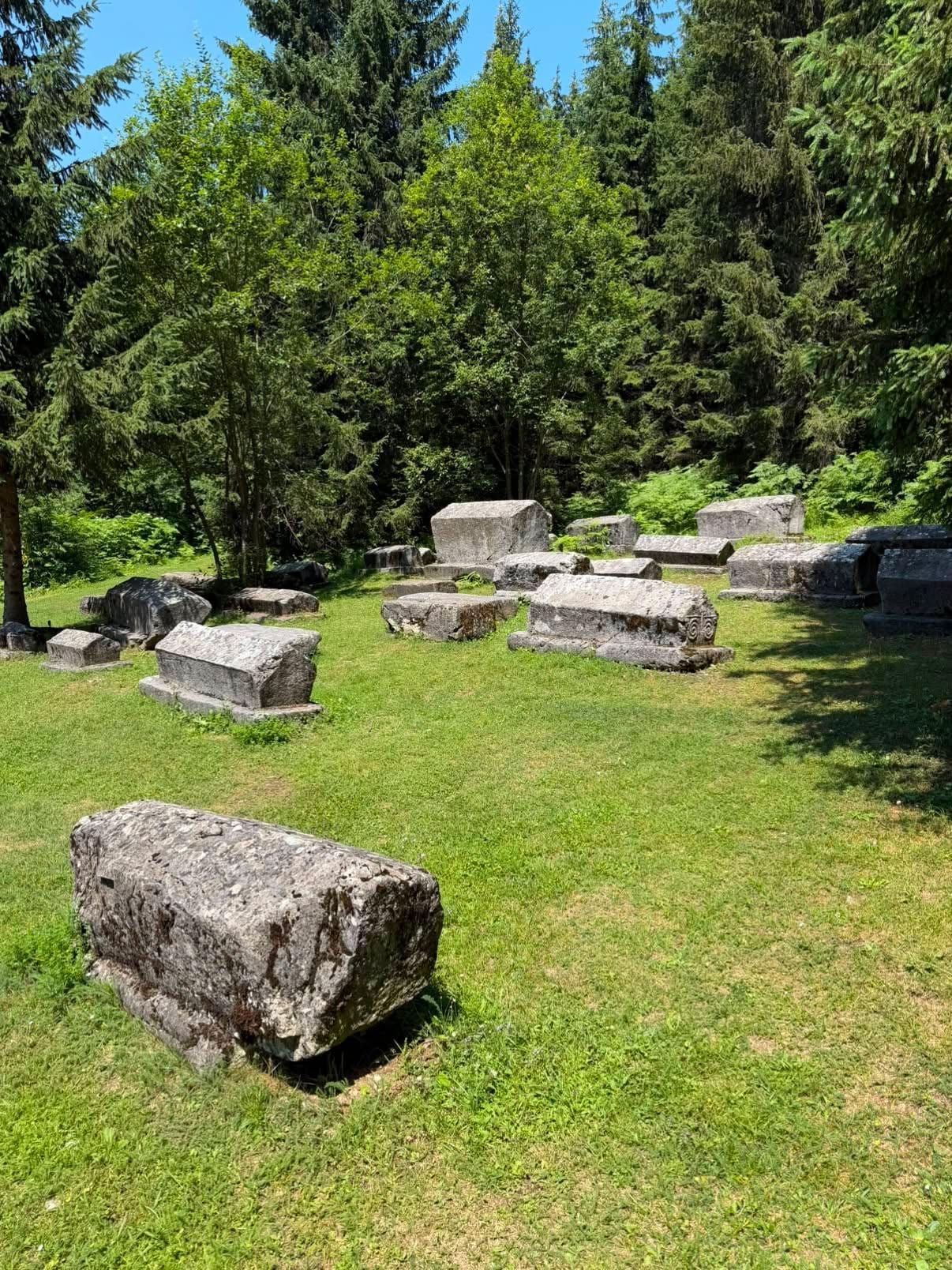
Their carved symbols — spirals, crosses, crescents, hunting scenes, raised hands — belong to no single faith, and they are claimed today as heritage by Bosniaks, Serbs and Croats alike.
Four centuries of the Ottomans
The Ottomans conquered the Bosnian kingdom in 1463 and the neighbouring duchy of Herzegovina — named for its herceg, or duke — by 1482. Bosnia then spent more than 400 years as an Ottoman province and a military frontier facing the Habsburgs. What made it unusual in the Balkans was that a large share of its Slavic population converted to Islam over the following two centuries, becoming the ancestors of today's Bosniaks. Sarajevo and Mostar were rebuilt as Ottoman cities of mosques, covered bazaars and stone bridges, and a Sephardic Jewish community settled in Sarajevo.
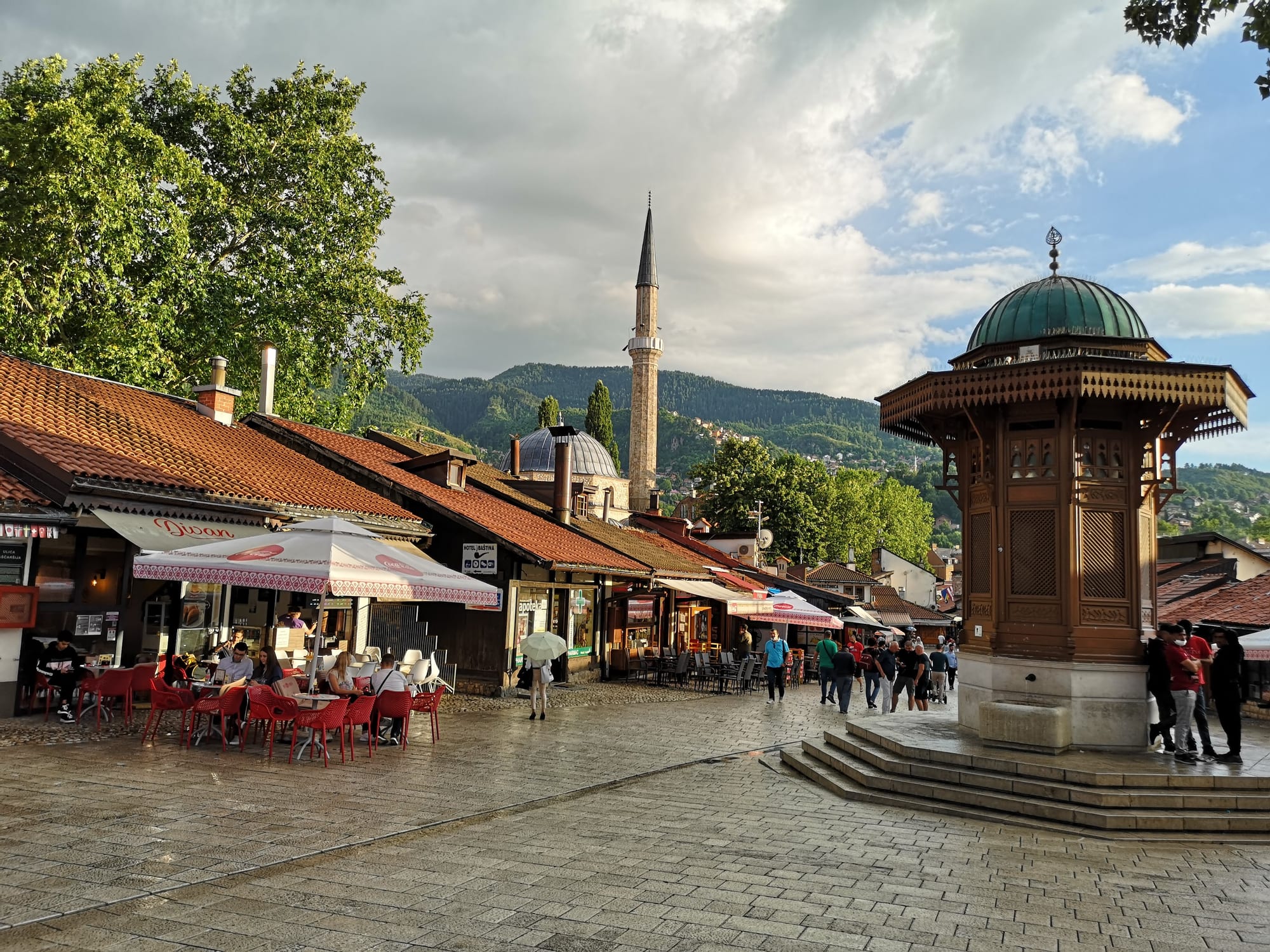
Bosnia's Muslim landed gentry became a distinct, often rebellious elite, rising against the sultan's reforms more than once. A peasant revolt in Herzegovina in 1875 set off a wider crisis that pulled in Serbia, Montenegro and Russia — and ended with Bosnia being handed to someone else.
Austria-Hungary and the shot in Sarajevo
The Congress of Berlin in 1878 placed Bosnia and Herzegovina under Austro-Hungarian administration, and Vienna formally annexed it in 1908. Austrian rule built railways, industry and the ornate architecture of central Sarajevo, but it left the land question unsolved and sharpened the competing nationalisms — Serb, Croat, and a newer Bosnian Muslim one — among a population it preferred to keep divided.
On 28 June 1914, a young Bosnian Serb named Gavrilo Princip, part of a revolutionary group with links to Serbian military circles, shot and killed the Archduke Franz Ferdinand, heir to the Habsburg throne, and his wife on a Sarajevo street. Austria-Hungary's ultimatum to Serbia, and the alliances behind both, turned the killing into the First World War.
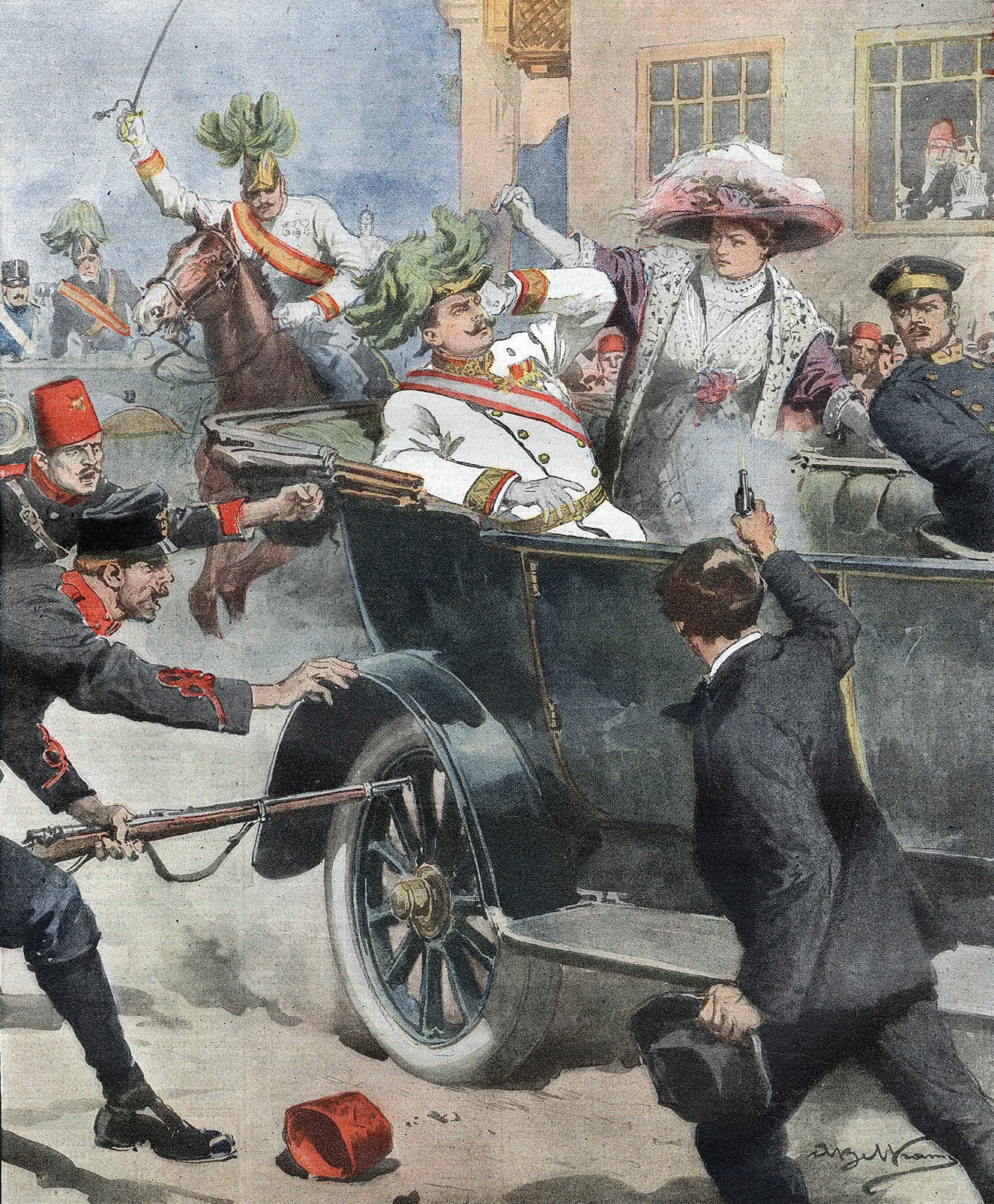
Princip was 19 and died of tuberculosis in an Austrian prison in 1918. The spot where he fired has been marked, unmarked and re-marked by successive regimes ever since, each with its own view of whether he was a hero or a terrorist.
Yugoslavia
After 1918 Bosnia was absorbed into the new Yugoslav kingdom and its historic borders were dissolved into other units. The Second World War was catastrophic here: most of Bosnia was folded into the Nazi-puppet Independent State of Croatia, whose Ustaša regime carried out genocide against Serbs, Jews and Roma, while a three-way war raged between the Ustaša, the royalist Chetniks and Tito's communist Partisans, who won.
Socialist Yugoslavia restored Bosnia and Herzegovina as one of its six republics, with its old name and roughly its old borders, and recognised the Bosnian Muslims as a distinct nation in 1968. It was the most thoroughly mixed of the republics — its cities intermarried and interwoven — it was industrialised, and in 1984 Sarajevo hosted the Winter Olympics.
The war
When Yugoslavia broke apart in 1991–92, Bosnia was trapped between Serb and Croat nationalist projects that each wanted to partition it. Bosniaks and Croats voted for independence in a referendum the Serbs boycotted, and Bosnia was recognised in April 1992. Bosnian Serb forces, armed by the Yugoslav army, at once began a war to seize territory for a "Republika Srpska", driving out and killing non-Serbs across eastern and northern Bosnia in what became known as ethnic cleansing. Sarajevo was besieged for 44 months — the longest siege of a capital in modern warfare — shelled and sniped from the surrounding hills.
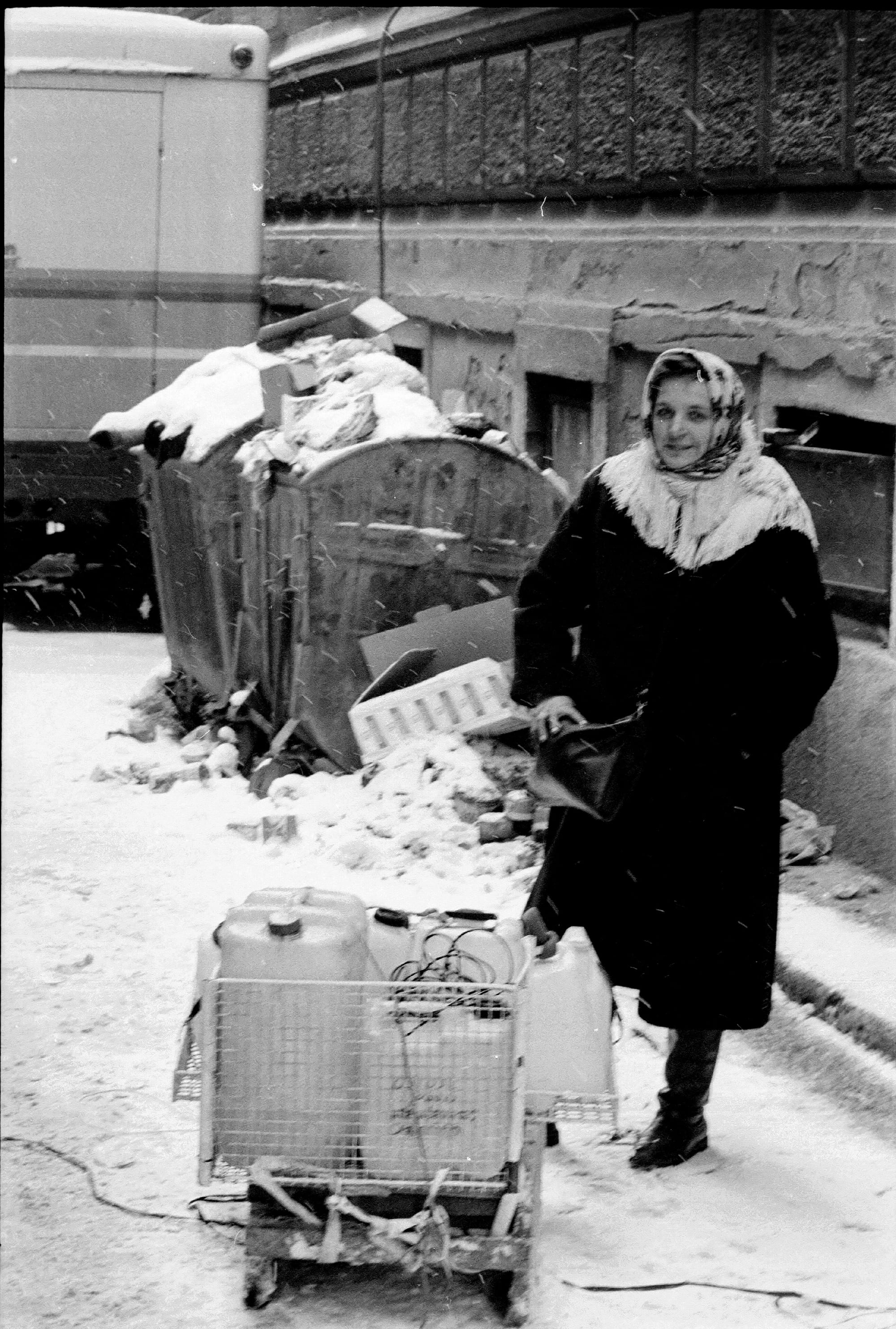
There was a second war inside the first, between Croats and Bosniaks in 1993–94, in which the Stari Most at Mostar was shelled into the river. And in July 1995 Bosnian Serb forces overran the United Nations "safe area" of Srebrenica and murdered around 8,000 Bosniak men and boys — the only act in Europe since 1945 that international courts have recognised as genocide.
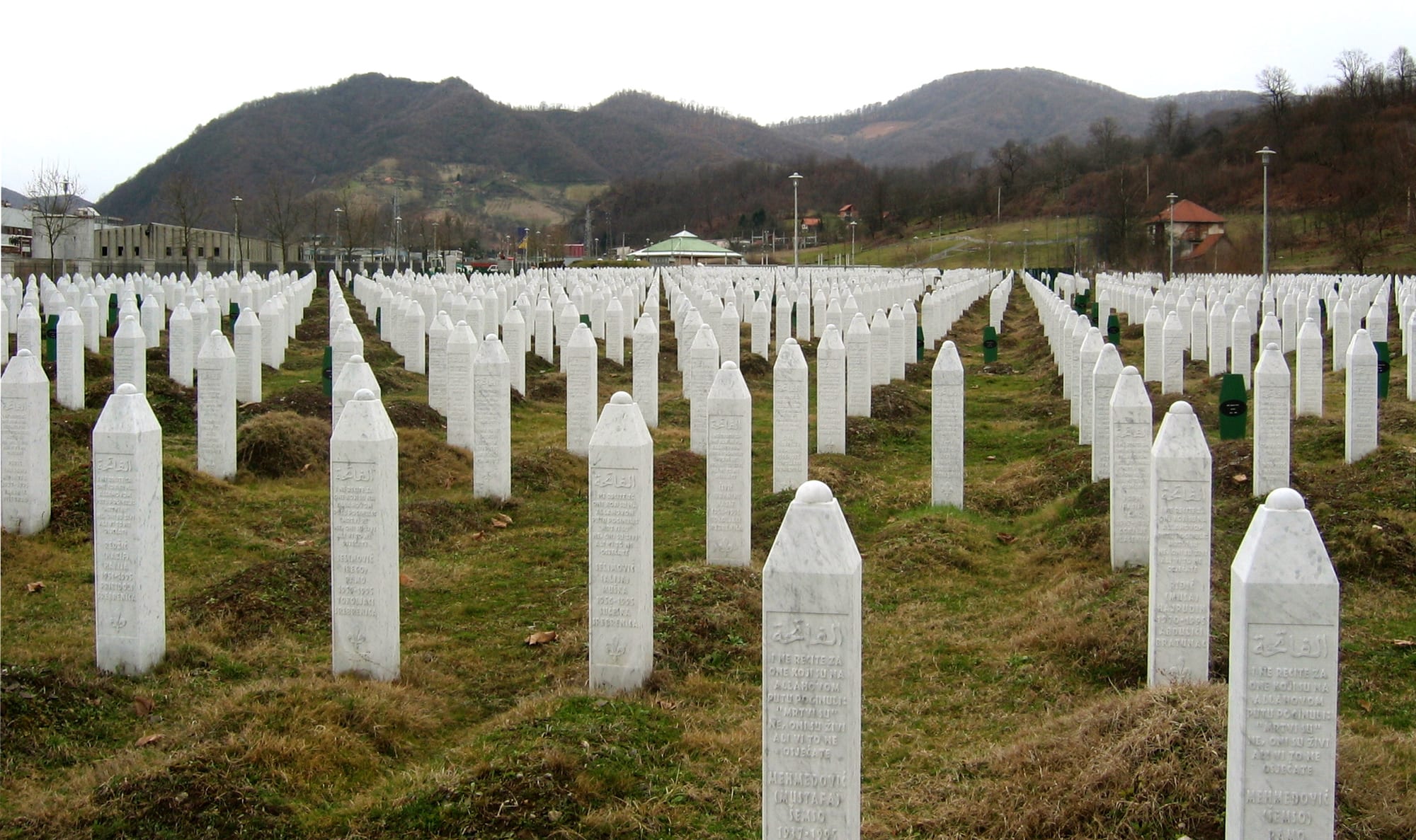
More than 6,000 victims have been reburied here after being identified by DNA; bodies are still being recovered from mass graves that were dug up and scattered to hide the crime.
Dayton, and after
NATO air strikes and a ground offensive in the autumn of 1995 forced a settlement. The Dayton Agreement, negotiated in Ohio and signed in Paris that December, froze the front lines into two entities — a Bosniak-Croat Federation on about half the territory and Republika Srpska on the rest — joined by a deliberately weak central government with a rotating three-member presidency, and overseen by an international High Representative with powers to impose laws.
Thirty years on, that structure still stands, and still barely functions: everything is apportioned by ethnicity, decisions stall, corruption is entrenched, and the population has shrunk through emigration. The leadership of Republika Srpska openly talks of secession. War criminals including Radovan Karadžić and Ratko Mladić were eventually convicted at The Hague, but denial of the Srebrenica genocide remains a feature of politics in the Serb entity. Bosnia is a candidate to join the European Union, with the reforms required for it long stalled.
What Bosnia carries
Bosnia's history is the story of a genuinely shared space — Muslim, Orthodox and Catholic Slavs living in the same valleys and the same streets for centuries — and of the repeated attempts, by outside powers and by nationalist projects, to sort it into separate parts. The war of the 1990s did that by force in much of the country; the Dayton system has kept it that way by design ever since. The rebuilt bridge at Mostar, put back stone by stone, is the country's chosen image of the alternative.