Culture & Customs · Bolivia
Bolivia: Pachamama and the Patron Saints
A plurinational state with thirty-seven official languages, a Catholic faith laced with Andean belief, miniature wishes blessed for the year ahead, and dance fraternities that rehearse all year for their saint
By Worldlore Editorial · 30 September 2026
In late January, a family walks through the stalls of the Alasita fair choosing tiny objects: a miniature house, a toy car, a bundle of banknotes the size of postage stamps, perhaps a little diploma for a child who hopes to graduate. Each stands for a wish for the coming year. Before they take them home, the miniatures must be blessed, either by an Andean ritual specialist or by a Catholic priest. Once consecrated, the objects are believed to carry the faith invested in them. Presiding over it all is the Ekeko, the beneficent god of abundance and prosperity. The scene captures Bolivian culture in miniature: Catholic and Andean belief intertwined, family and community at the centre, and a confident expectation that the spiritual and the practical go together.
Faith, identity and values
Bolivia describes itself as a plurinational state, and the phrase is meant literally. Its 2009 constitution recognises Spanish and thirty-six Indigenous languages as official, among them Quechua, Aymara and Guaraní, and requires governments to work in at least two of them. The same constitution declares that the state is independent of religion and guarantees freedom of religion and spiritual belief according to each person's view of the world.
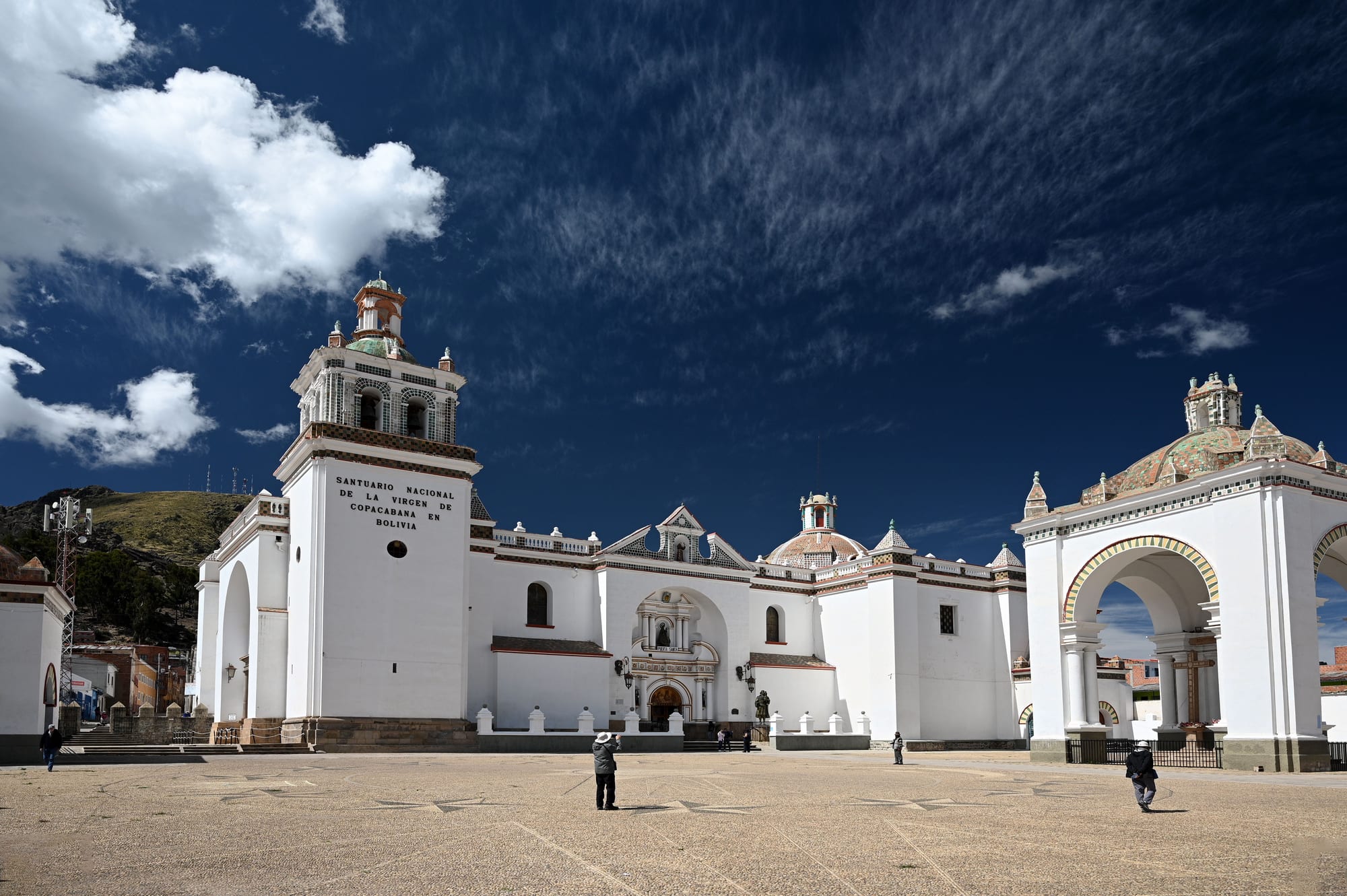
Catholicism is the majority faith, but religious practice has long been localised and blended with older custom, especially in rural communities. The saints and the Virgin share the spiritual landscape with Pachamama, Mother Earth, whose symbolism remains culturally significant. UNESCO, describing the Carnival of Oruro, notes that after the Spanish conquest the Andean gods were in effect concealed behind Christian icons, and that the old festivals continued under a Christian guise. The result is not a contradiction to most Bolivians but a single, layered way of relating to the sacred.
Family is the foundation of social life, and it extends well beyond parents and children. Extended networks of relatives provide mutual support, and a sense of obligation to the wider group runs deep. Class, ethnicity and regional identity also shape how people relate to one another, and Bolivians are acutely aware of the differences between highland and lowland, city and countryside. Communication tends to be courteous and indirect. A refusal or a problem is usually expressed diplomatically, to protect everyone's dignity, and softness in delivering bad news is taken as a sign of respect rather than evasion.
Greetings and meeting people
A handshake with direct eye contact is the standard greeting on meeting and on leaving. Relationships begin fairly formally and grow warmer and more relaxed as trust develops.
Titles matter. People are addressed as Señor or Señora with their surname, and professional titles are used widely and with pride: Doctor for a physician or lawyer, Ingeniero for an engineer, Licenciado or Licenciada for a university graduate. Using the correct title is a simple courtesy that is noticed. First names come later, usually at the other person's invitation.
Punctuality is relaxed in social life, where arriving somewhat after the stated time is normal, though business meetings are expected to start more promptly. Distance, traffic and geography can all affect timing, and patience is regarded as good manners.
Hospitality and being a guest
An invitation to a Bolivian home is meaningful, a sign that the host values the relationship. Guests bring a small gift, such as pastries, chocolates, a bottle of wine or spirits, or flowers. Some colours of flower, notably yellow and purple, are best avoided, as are knives and scissors. A thoughtful, modest gift is preferred to an obviously expensive one, and hospitality is understood as a way of building a relationship rather than a mere obligation.
At the table, guests are served first, and it is polite to wait for the host to signal before starting to eat or raising a glass. When the meal is over, it is courteous to stay and talk for a while rather than leaving immediately, since lingering shows respect for the host and appreciation of the company as well as the food.
Festivals and life's big moments
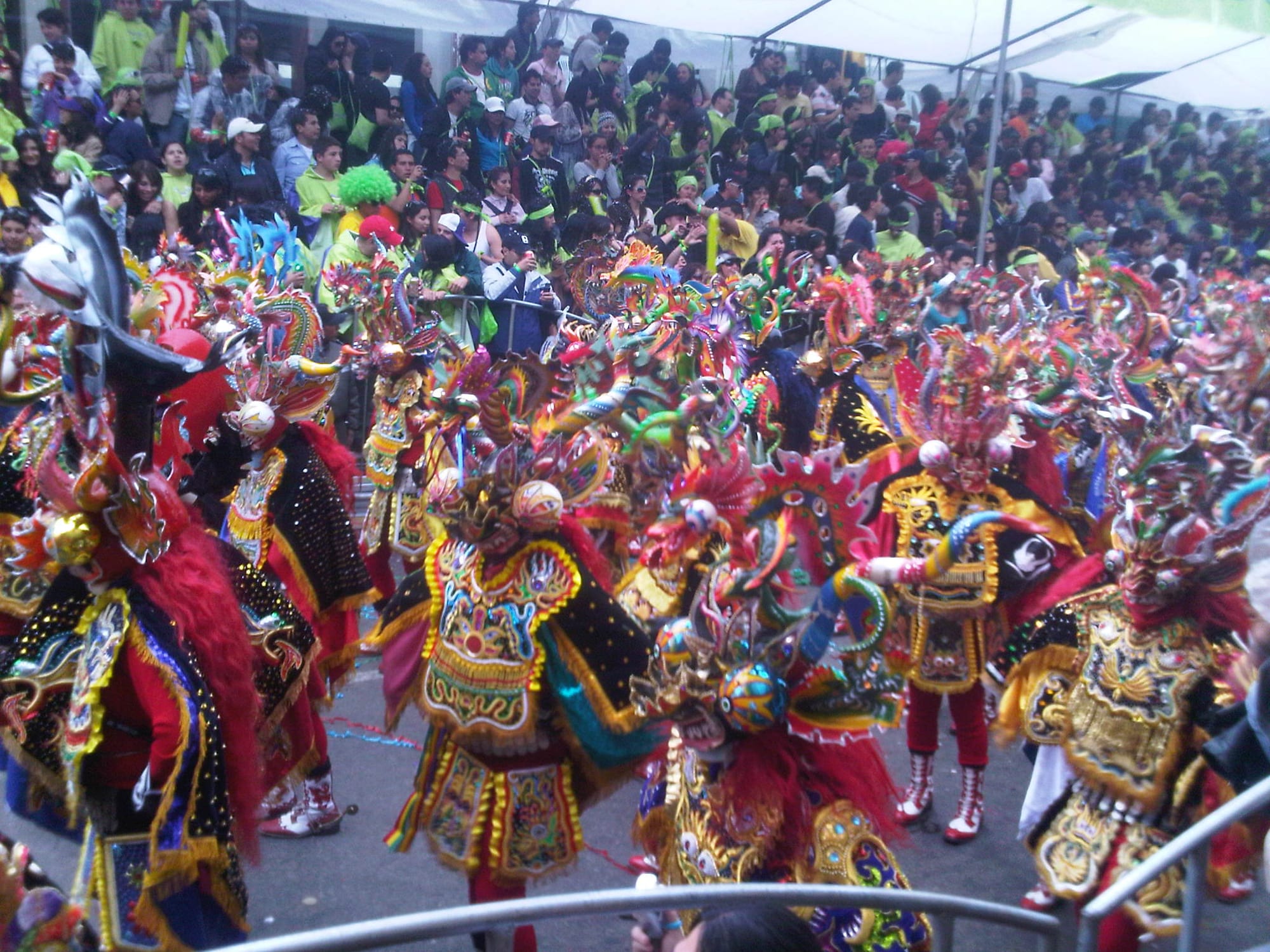
Bolivia's festival calendar is among the richest in the Americas, and nine of its traditions are inscribed on UNESCO's Representative List of intangible cultural heritage, most recently the festival of the Virgin of Guadalupe in Sucre in 2025. The most famous is the Carnival of Oruro, a celebration linked to Candlemas, in which some 28,000 dancers and 10,000 musicians in about fifty groups process for hours through the streets. The diablada, a dance of devils in spectacular masks, is its emblem, and the carnival showcases a whole panoply of popular arts in masks, textiles and embroidery.
Devotion to patron saints drives many other celebrations. Dancers join fraternities that prepare their music and choreography throughout the year, and on the feast day they dance through the streets as an offering to the saint. At the festival of the Gran Poder, UNESCO records around 40,000 devotees in sixty-nine fraternities, accompanied by 7,000 musicians, and the following day the image of the patron is carried on devotees' shoulders amid incense, flowers and confetti. Behind the dancers stand embroiderers and jewellers whose skills are passed down within families.
Alasita, which begins on 24 January, is the festival of miniatures. Its little objects are consecrated through a ritual known as the ch'alla, either by Andean ritualists or with a Catholic blessing, and they are also given as gifts, in the belief that the recipient will receive the real thing within the year. Parents bring their children, and the custom passes naturally from one generation to the next.
August belongs to Pachamama. In the Aymara view of the world, Mother Earth wakes hungry and thirsty after the dry season, ahead of the sowing season, and throughout the month families make offerings to her at home, in their fields, in shops and on mountain tops. The offering is known as a mesa, a "table" laid with sweets, grains, coca leaves, incense, tufts of coloured llama wool and small sugar figures of houses or cars standing for the family's hopes, sometimes with a dried llama foetus. Many people ask an Andean spiritual guide to prepare it. The whole mesa is then burned as a gift to the earth, and at some sacred sites the ashes are buried where the offering was made.
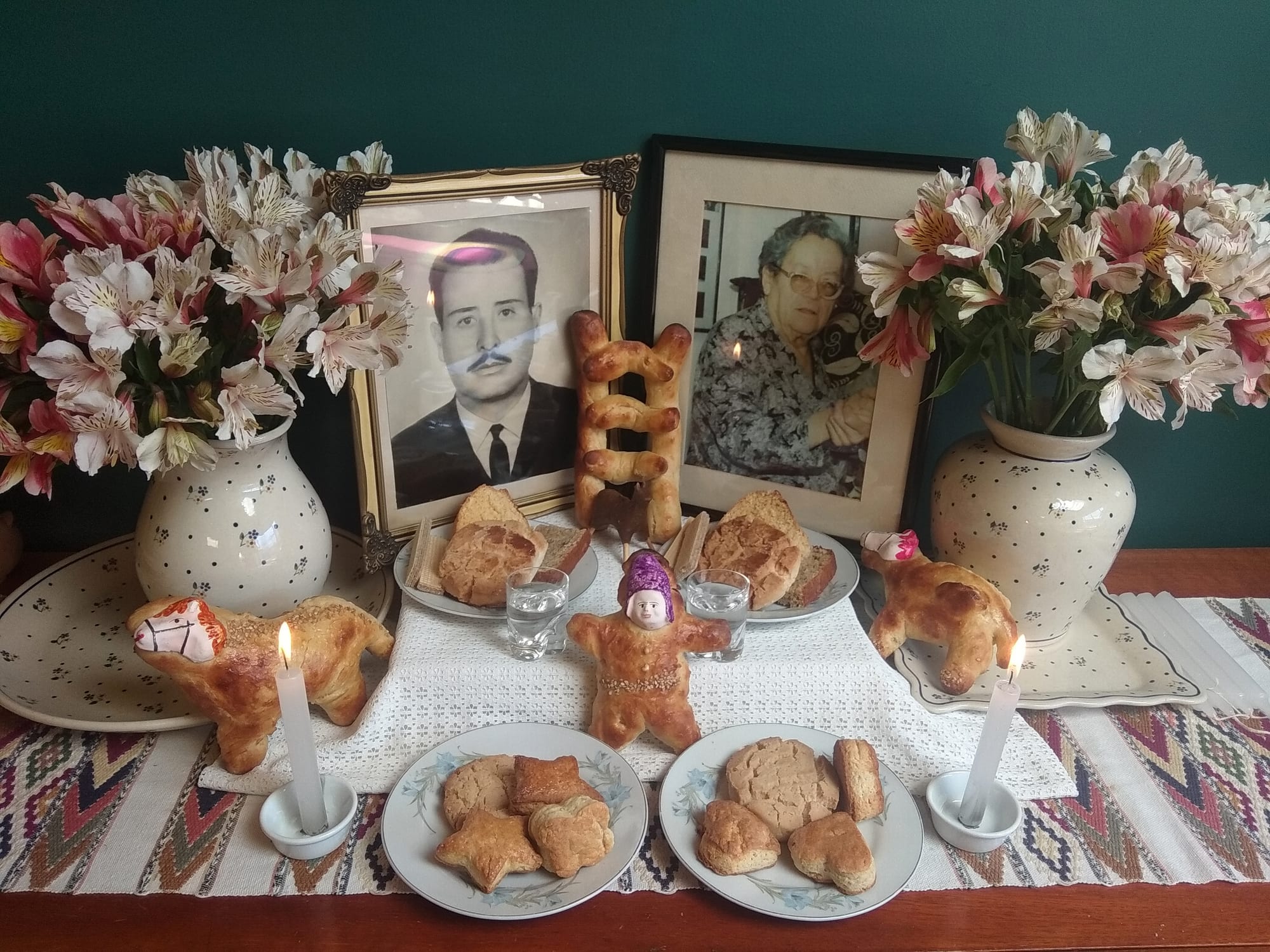
The most intimate date in the calendar is Todos Santos, on 1 and 2 November, when the souls of the dead are believed to come home. They are said to arrive at noon on 1 November, hungry and thirsty, and to stay among the living for twenty-four hours. Families set out a table for them, above all for those who have died recently, laid with t'antawawas, breads shaped like swaddled figures whose name means "child of bread", alongside pastries, sweets, fruit, flowers, water and the foods the person enjoyed in life. Ladders made of bread help the souls climb down from the heavens and back again, stalks of sugar cane serve as the staff that guides them, and candles light their way. Through the afternoon and evening, relatives, neighbours and friends call at the house to pray, and each is thanked with bread or biscuits from the table. At noon on 2 November the souls are sent on their way: families carry the offerings and flowers to the cemetery, where amid songs and prayers the food is shared and the dead are bid farewell until the following year.
In the countryside, music and dance follow the agricultural year. Among the Yampara people, the Pujllay is danced in the rainy season to celebrate the renewal of life and abundance brought by the rains, while the Ayarichi belongs to the dry season and to the feasts of Catholic saints. Both are learned by children through games and observation rather than formal lessons.
Weddings draw on the same wide networks of relatives and friends, and in the Andean tradition they run on ayni, the Quechua word for reciprocity. Padrinos, sponsoring godparents, take a central part, and guests and sponsors bring generous gifts, from furniture to crates of beer, while banknotes hung on the newlyweds' clothes wish them prosperity. What is received creates an obligation: those who have been given to are expected to return the gesture when they in turn attend other weddings. The grandest celebrations continue for several days of music, food and beer.
Funerals blend Catholic rites with Andean belief about the soul's journey. The soul is thought to need food and drink for the road, so families prepare the dead person's favourite dishes and set out offerings of coca leaves and chicha, a maize beer. In many Andean communities, mourners later gather for the lavatorio, washing the dead person's clothes in a river; the best garments are given to those present, the rest are burned, and the washing is meant to wash away the mourners' sorrow as well.
Arts, crafts and music
Music is everywhere, and much of it is played on instruments with ancient roots, above all panpipes, flutes and drums. The Pujllay is played on flutes and a horn clarinet, the Ayarichi on panpipes and drums, and the Kallawaya healers of the Andes hold ceremonies accompanied by kantus, ensembles of drums and panpipes.
One string instrument has especially deep roots in Bolivia: the charango, a small lute with five pairs of strings. It developed during the colonial period as a local adaptation of the Spanish guitar or vihuela, and its rounded back was traditionally made from the shell of an armadillo, though many are now made of wood. Among Andean peoples it was long played for courting and to accompany festival dancing, and in the twentieth century it was taken up by urban musicians and professional folk ensembles.
The Kallawaya themselves are one of Bolivia's most remarkable traditions, recognised by UNESCO. These itinerant healers draw on a knowledge of around 980 medicinal plant species, as well as animal and mineral remedies, passed on through apprenticeship and travel. Their worldview combines myth, ritual, values and artistic expression, and it faces pressure from acculturation and commercial interests.
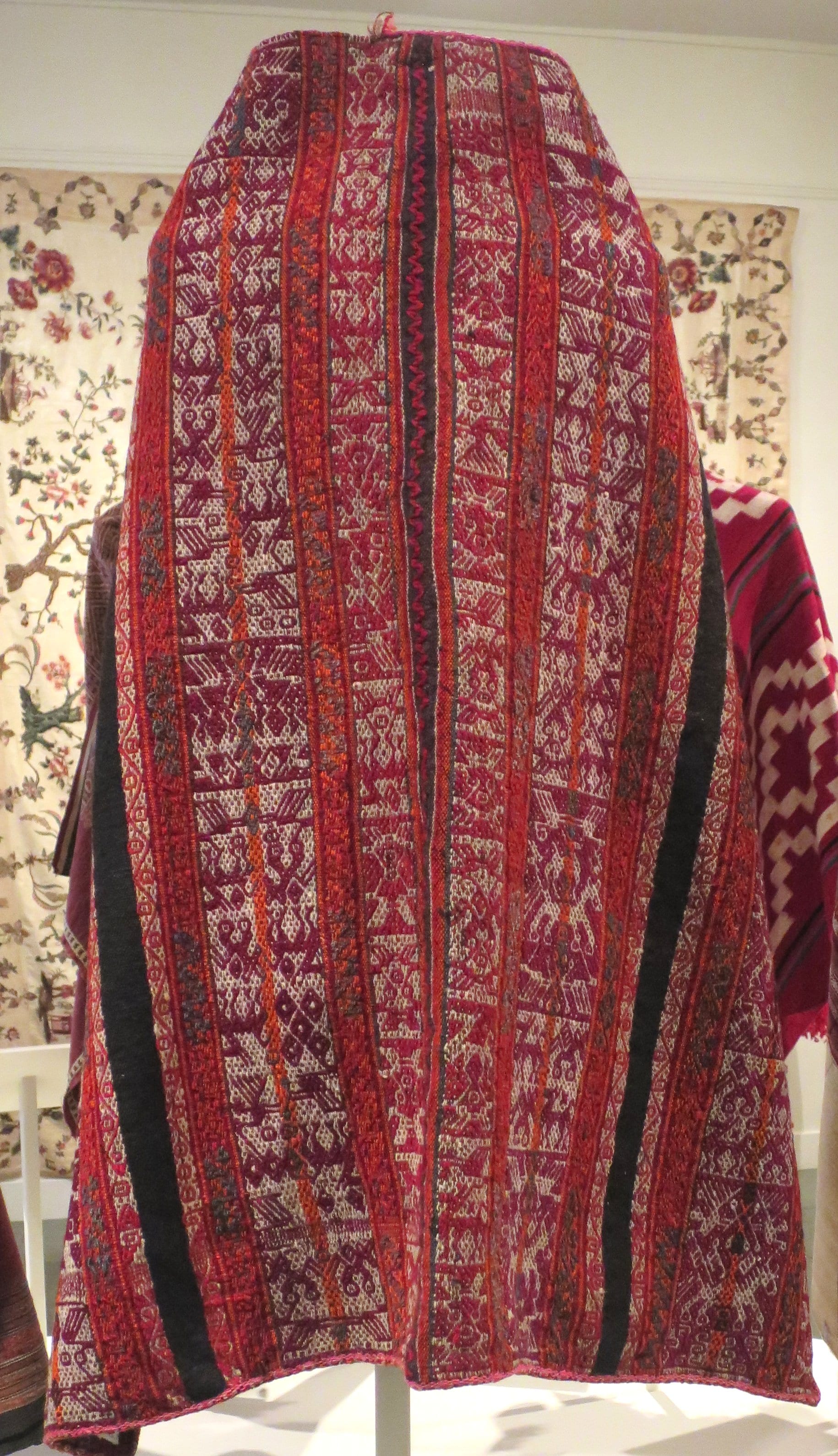
Weaving is the craft most closely bound up with identity. Aymara, Quechua and other Indigenous communities weave textiles whose patterns and colours carry meaning, and UNESCO notes that Kallawaya women weave designs that embody their view of the cosmos, while the costumes for dances such as the Pujllay are woven with painstaking care by craftswomen. Mask-making and embroidery reach their height in the costumes of the great festivals, and UNESCO also highlights Aymara textile arts and traditional agricultural knowledge among the heritage that communities are working to safeguard.
Dos and don'ts for visitors
- Do shake hands and make eye contact when meeting and leaving, and use titles such as Señor, Señora, Doctor or Licenciado until invited to use first names.
- Do bring a small gift when invited to a home, such as pastries, chocolates or wine.
- Do wait for the host's signal before eating or making a toast.
- Do stay a while after a meal rather than leaving straight away.
- Do accept the bread or biscuits offered in thanks if invited to pray at a Todos Santos table.
- Don't give yellow or purple flowers, or knives and scissors, as gifts.
- Don't expect social gatherings to start exactly on time; a relaxed approach is normal.
- Don't mistake a diplomatic answer for agreement; a soft reply may be a polite no.
What to take away
Bolivia's customs rest on family, community and a faith in which the saints and Mother Earth share the same altar, and a visitor who greets with courtesy, honours the host's table and watches its festivals with respect will be welcomed into one of the most vivid cultures in the Americas.