Daily Life · Bolivia
Bolivia: A Day Lived at Altitude
A country where most work happens outside any formal payslip, a leaf chewed nationwide to make the thin mountain air easier to bear, and a cable car doing the job an ordinary metro would do anywhere else
By Worldlore Editorial · 30 September 2026
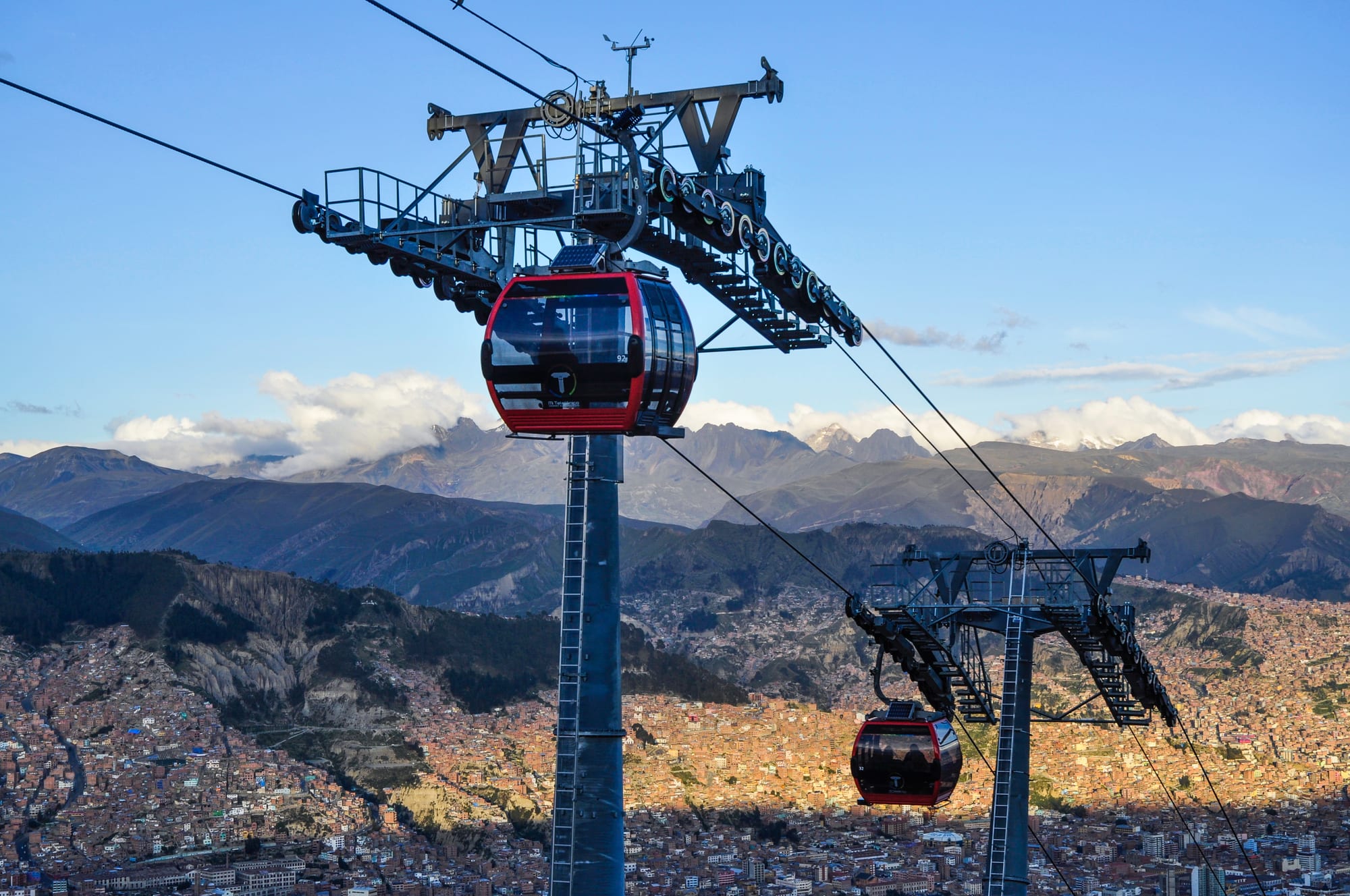
Altitude is not a detail of daily life in Bolivia, it is one of the things that organises it. La Paz, the seat of government, sits around 3,650 metres above sea level, high enough that chewing coca leaf, legal and genuinely useful against the thin air, remains a normal daily habit for a significant share of the population. Below that fact sits another that shapes even more of an ordinary day: most work in Bolivia happens outside any formal job, in markets, small trade and family networks that employ the large majority of the country's workers.
Family and home life
Extended family and community networks do much of the work a formal safety net might do elsewhere nationwide, and this shows up in how business itself is organised: street vendors in highland cities are commonly organised into associations that share out territory and standing spots among their members. Aymara and Quechua identity remains strong on the Altiplano and in the highland valleys, visible in dress such as the layered skirts and bowler hats worn by many older and middle-aged women, while the lowland department of Santa Cruz, now home to more people than any other in the country, has a distinct, more mestizo camba identity, its own dialect and rhythms, and a culture built around cattle ranching and agriculture rather than mining or highland trade. Rural-to-city migration has reshaped household life across Bolivia, not only around La Paz: fast-growing cities in both the highlands and the tropical lowlands are full of households that keep close, active ties back to a home village elsewhere in the country.
Work, school and the rhythm of the day
Bolivia's informal economy is unusually large even by regional standards and genuinely nationwide: more than four in five workers were informally employed in 2024, spanning street vending, small-scale trade, transport and contraband goods crossing from neighbouring countries, in the tropical lowlands around Santa Cruz and Cochabamba as much as in the highland cities. Street vending in particular employs enormous numbers of people, many of them women, often working long hours for modest earnings. A more recent and less settled layer sits on top of this nationwide: a dollar and fuel shortage since around 2023 brought queues and frequent protest, and after the government of Rodrigo Paz, in office since November 2025, ended fuel subsidies, mass protests and roadblocks paralysed much of the country in May and June 2026, disrupting daily routines and commutes.
Community life and public spaces
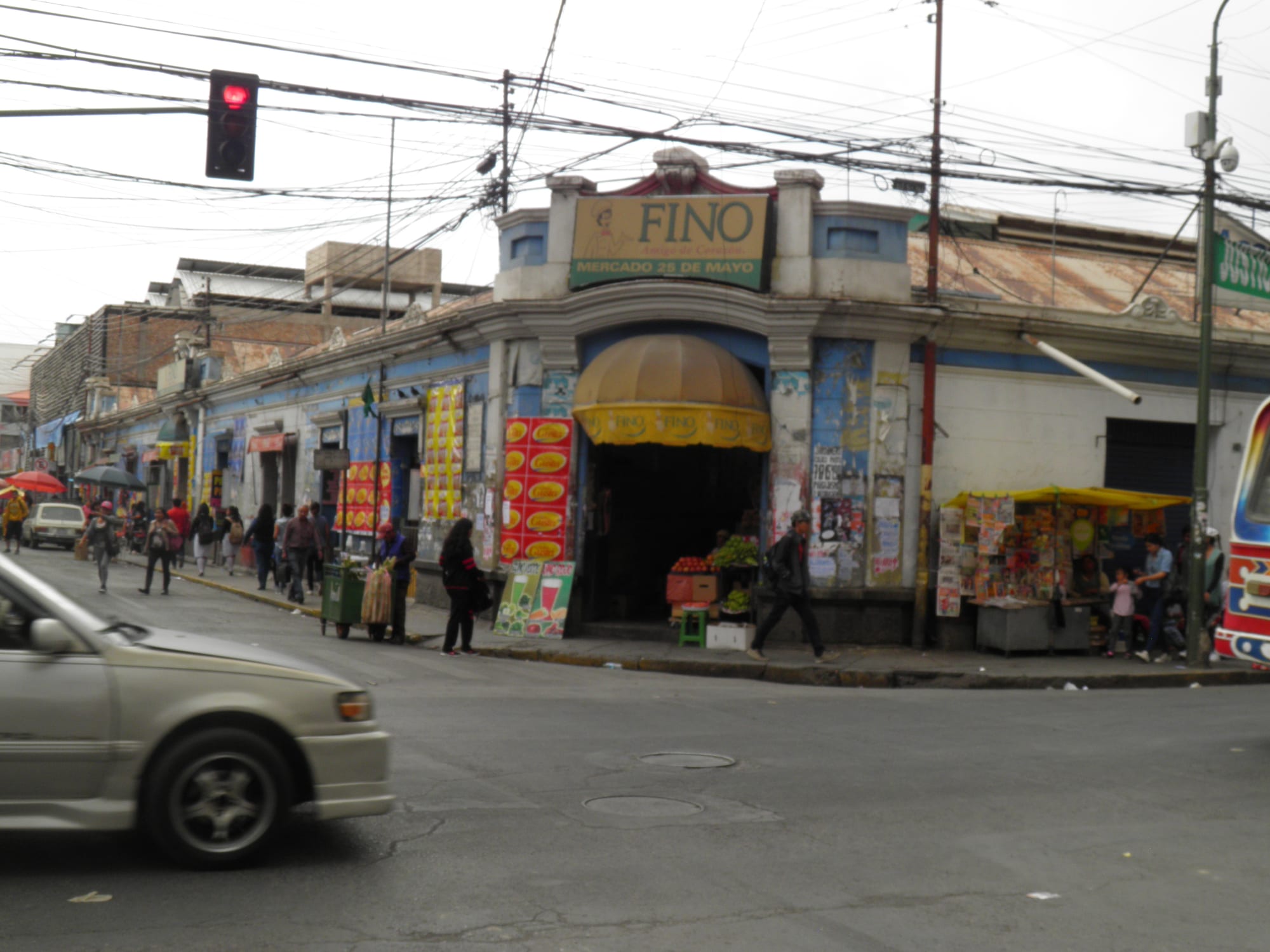
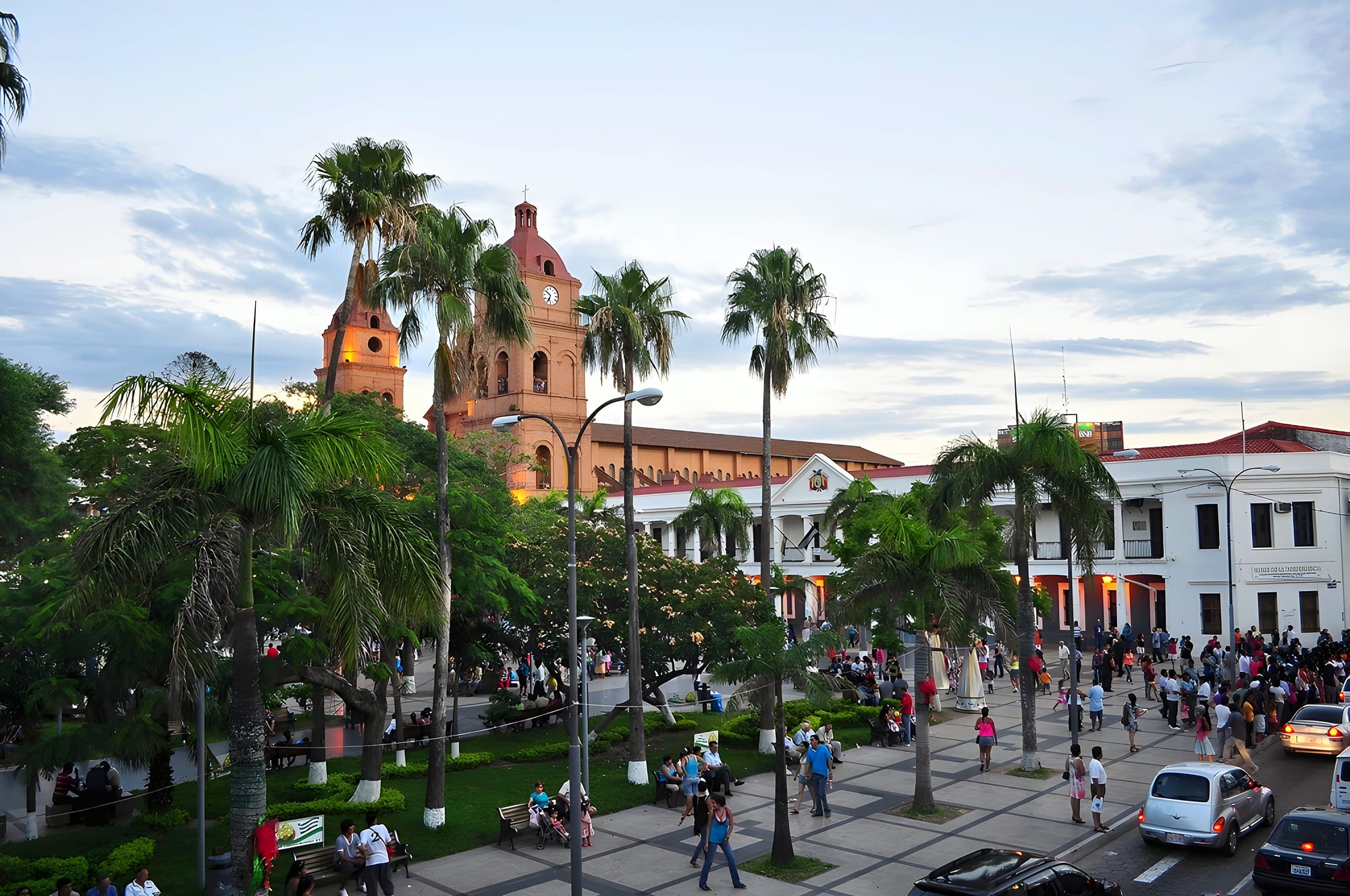
Markets are the backbone of daily commerce and public life nationwide, from neighbourhood produce stalls to genuinely vast, city-scale markets: Cochabamba's La Cancha, spread across five linked main markets and the streets around them, is one of the country's great market districts, and El Alto's huge open-air fair, high on the Altiplano, is on a similar scale. City geography shapes how people move around this daily commerce in different ways depending on where they live: La Paz's steep canyon setting made a conventional metro impractical, so Mi Teleférico, an aerial cable-car network, now carries a genuine share of the daily commute there, while flatter lowland cities like Santa Cruz rely instead on buses and a dense grid of ring roads. Street vendors, often organised into associations that negotiate directly with city authorities over space and enforcement, are as much a fixture of public space in every Bolivian city as any formal shop.
Free time and weekends
Football draws close attention nationwide, and Bolivia's national team is notoriously difficult for visiting sides to beat at La Paz's high-altitude stadium. Weekends bring family gatherings and, where the household can manage it, a trip back to a home village or a rural family plot, a pattern common across the country wherever a city has drawn in migrants from the surrounding countryside. Festivals punctuate the year distinctly by region: the Carnaval de Oruro, with its Diablada devil dance, is the best known nationally, while La Paz has its own Gran Poder parade. Coca-leaf chewing and coca tea remain part of ordinary daily rest as much as of work, not confined to any special occasion.
A visitor's ordinary day
A severe US-dollar shortage since around 2023 made cash and card payments unpredictable, and the boliviano was allowed to float against the dollar in June 2026; bring US dollars in cash and check the current situation before travelling, since it has continued to change. Altitude affects visitors as much as residents in La Paz, Sucre, Potosí and around Lake Titicaca, so arriving slowly and resting on the first day is worthwhile, and coca tea is widely offered as a mild, traditional remedy. Roadblocks and strikes tied to the country's political and economic strains can close highways for days without much notice, so building slack into travel plans matters more here than in most countries. Long-distance buses are the main way to cover ground cheaply, though the cheapest operators have a poor safety record on mountain roads.
What to take away
What shapes an ordinary day in Bolivia is less any single custom than two plain facts working together: an altitude that genuinely changes how the body copes with a normal day, and an economy where most people build that day's living outside any formal structure at all.