Culture & Customs · Belize
Belize: Many Peoples, Many Drums
Canoes re-enacting a landing at dawn, a Christmas procession that moves from house to house, masked dancers ushering in Lent, and a small country where each community keeps its own rhythm
By Worldlore Editorial · 30 September 2026
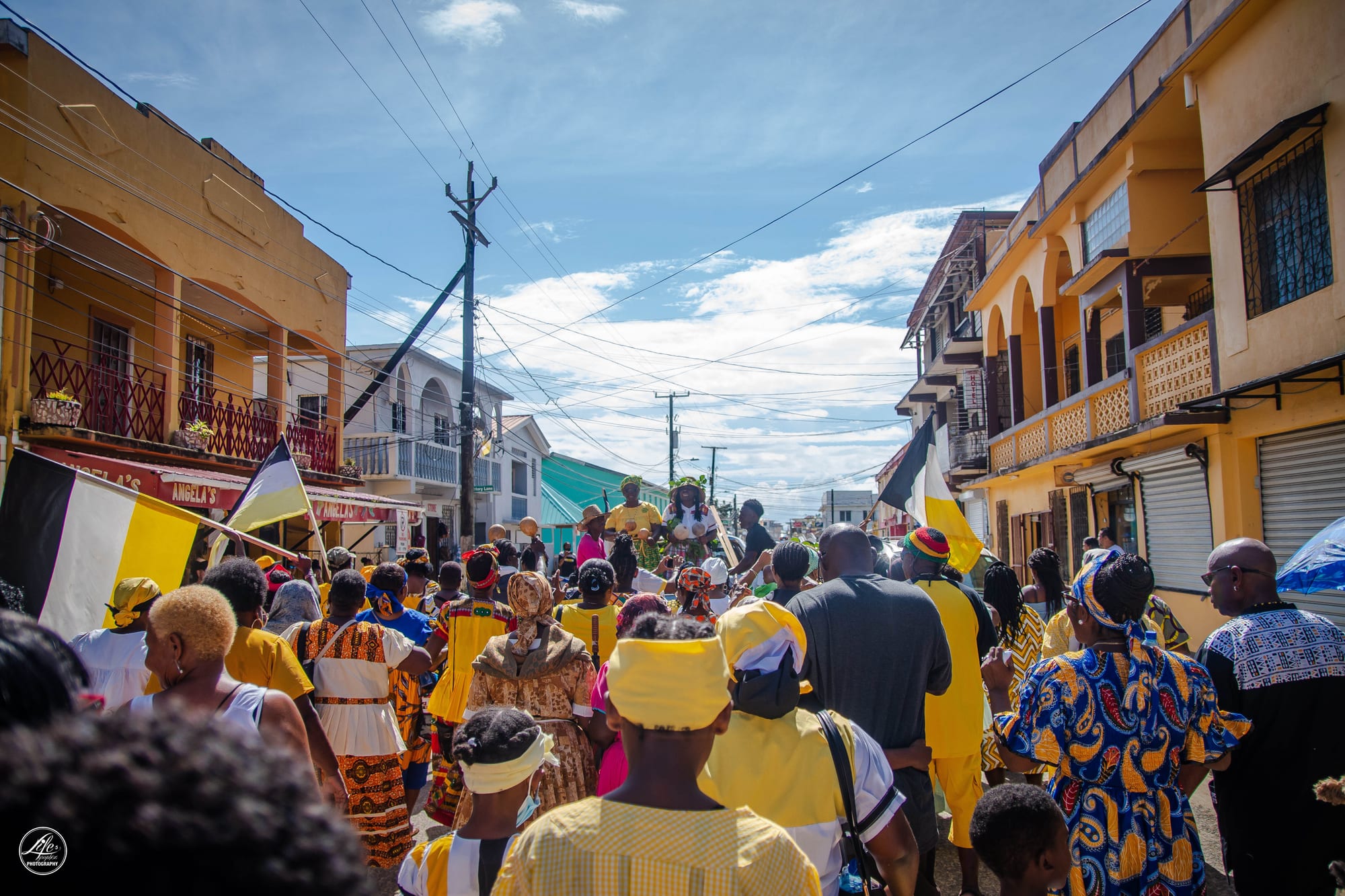
Early on the morning of 19 November, dugout canoes approach a Belizean shore. Drums sound from the boats and from the waiting crowd. Men dressed as the captains of the Garifuna leader Chatoyer ask permission to land, and are refused. They ask a second time and are refused again; only at the third request are they allowed ashore, carrying cassava, plantain and sugar cane, the crops their ancestors brought with them. The re-enactment, known as Yurumein, opens Garifuna Settlement Day, and the procession that follows winds, drumming and dancing, to a Mass of thanksgiving in church. It is one community's story, told in its own language and to its own rhythm, and that is typical of Belize. The country is small, but Creole, Garifuna, Mestizo, Maya, Mennonite and other communities each keep their own festivals, music and customs, and much of Belizean culture lies in how easily these traditions sit side by side.
Faith, identity and values
Belize is a predominantly Christian country, though the picture is changing quickly. In the 2022 census, the Statistical Institute of Belize counted Roman Catholics as the largest single group, at 31.8 per cent of the population, down from 40.1 per cent in 2010. Protestants of many denominations together made up a similar share, led by Pentecostals, Baptists and Seventh-day Adventists, with Anglican and Mennonite congregations among the many smaller churches. The sharpest change was among people reporting no religion, whose share doubled in twelve years to 31 per cent. Hindus, Muslims, Buddhists, Rastafarians and members of the Bahá'í Faith remain very small minorities.
The churches have long played a public role: by law they can be incorporated and relieved of taxes, and the state treats them as partners in managing the great majority of primary schools. Church services mark many of the country's celebrations, from the Mass that follows the Yurumein landing to the novenas and Masses held for village patron saints.
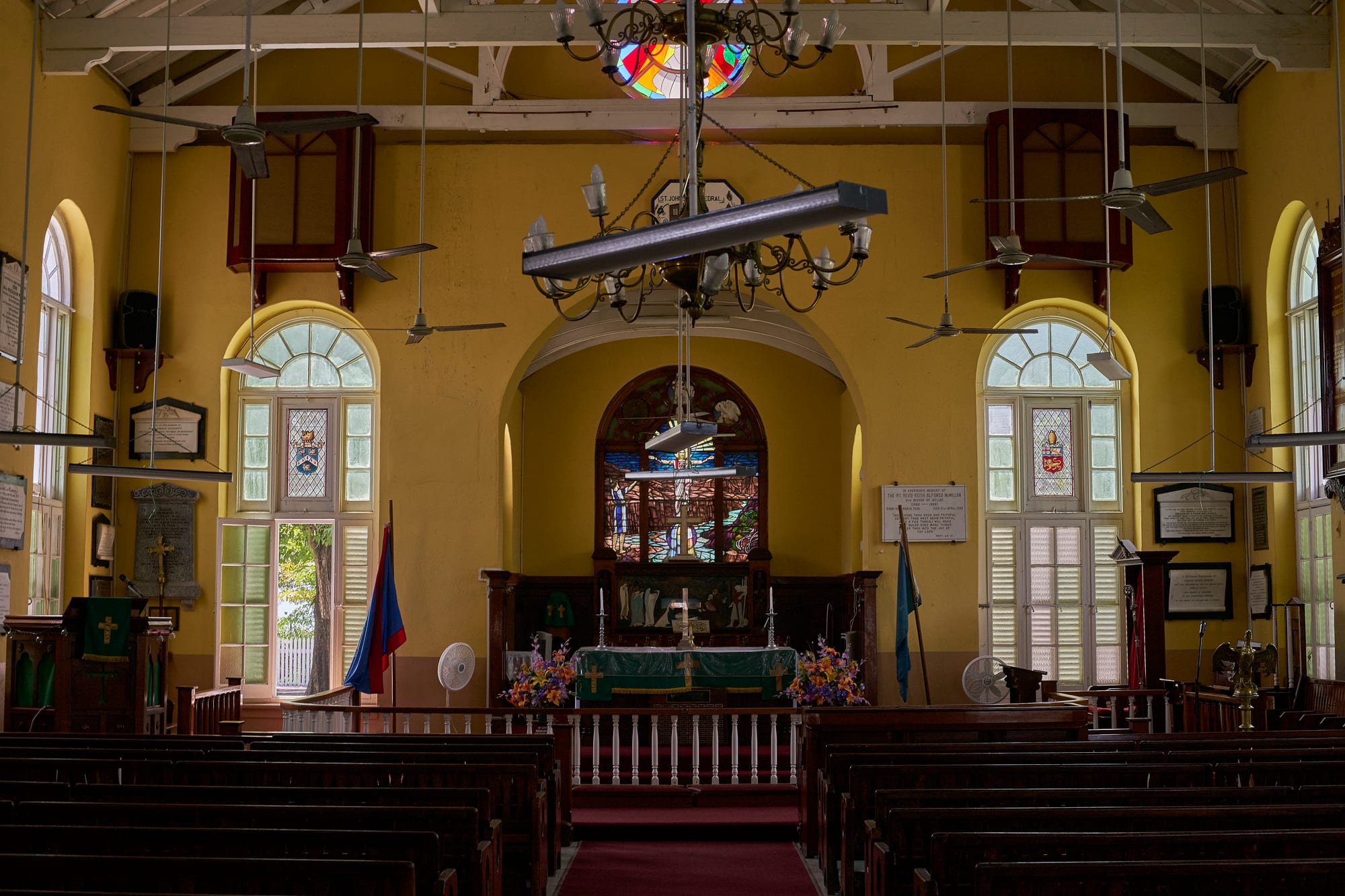
Beneath church observance, older beliefs remain important. Across the country's ethnic groups, ancestors are widely believed to be able to intervene in daily life, and traditional healing that draws on plants, baths, amulets, incantations and ancestral rituals continues alongside modern medicine. Among the Garifuna, the dügü is a private family reunion held to celebrate and connect with the spirits of the ancestors. Like other Garifuna rituals, it is understood as a means of reconciliation and healing within the family, the ancestors included.
Belizean identity is built on this plurality rather than on a single culture. Kriol, the language of the Creole community, is widely used across backgrounds as a common tongue, while English is the official language and Spanish is spoken by more than half the population; Garifuna, several Maya languages and the German dialect of the Mennonites are spoken too. Belizeans generally value an easy-going, unhurried approach to life, and extended family networks, which share work and support one another in hard times, remain central. Among the Garifuna, the bond within extended families is strong, as is the respect shown to elders. Behind the relaxed manner, Belizean society is on the whole quite conservative, which is worth remembering in matters of dress and public behaviour.
Greetings and meeting people
Belize is an informal and welcoming country, and the national tourism board credits its blend of cultures with giving Belizeans the ability to make anyone feel welcome. The first courtesy expected in return is simply to acknowledge people. Belizeans commonly greet everyone they meet, on the street, in shops or anywhere else, by bidding the time of day with a "good morning" or "good afternoon". One US Peace Corps volunteer serving in Belize described herself as fond of the custom, finding that simply acknowledging the people she encountered led to new connections and unexpected conversations with her neighbours.
The tone that follows is relaxed. Belizeans are used to visitors, and a friendly, patient approach goes much further than brisk efficiency. Because so many languages are spoken, the choice of language itself is part of meeting people: Kriol is the one most likely to be shared across communities, English serves for official business and most dealings with visitors, and Spanish is widely understood. The openness extends to public life, where members of the government are expected to be accessible and constituents are encouraged to speak to them directly.
Appearance matters more than the easy pace might suggest. The Peace Corps tells its volunteers that great importance is attached to neatness, grooming, hygiene and appropriate dress in Belize, and that the way a person presents themselves may be read as a sign of regard, or disregard, for the people around them; it also notes that extensive tattoos are not customary. Outside professional settings dress is generally casual, but revealing clothing, especially on women, is likely to be looked down upon, and particularly so in church.
Time is treated flexibly. Meetings, events and even celebrations may begin later than advertised, and impatience with the lack of punctuality is not well received; relaxed good humour goes much further. Attitudes to homosexuality are generally not accepting, and people rarely speak openly about sexual orientation. Open disapproval of visitors is unlikely, but public displays of affection are best avoided.
Hospitality and being a guest
Belizeans take pride in welcoming visitors. Anyone invited to a home for a meal can bring flowers or sweets for the hosts, which are appreciated gifts. Households often include extended family and young children, and the Peace Corps asks volunteers who live with Belizean host families for an open mind, patience and flexibility towards routines that may differ from their own. Beachwear is kept for the beach and is not worn in towns.
Everyday commerce has its own manners. Haggling is uncommon and is usually considered rude, the exception being street markets. Belizeans themselves rarely tip, but visitors are generally expected to leave around ten per cent in restaurants and taxis.
Hospitality is at its most generous during festivals. When the Christmas Bram procession arrives at a house, the hosts offer the dancers and musicians Christmas cake, rum popo, a Belizean eggnog, and home-made berry and fruit wines before the procession moves on to the next door. Friends, family and visitors alike are drawn into the singing and dancing as it goes.
Festivals and life's big moments
September is the most patriotic month of the year. National flags go up at the start of the month, and St George's Caye Day on 10 September, which marks a battle fought in 1798, and Independence Day on 21 September frame a season of parades and celebrations. They include a carnival, first organised in 1975, whose road march is one of the highlights.
Garifuna Settlement Day, on 19 November, is one of the largest cultural celebrations in the country. It commemorates the arrival of the Garinagu, the Garifuna people, who began settling in Belize as early as 1802; the largest group is said to have arrived in 1823 under the leadership of Alejo Beni. In 1941 the community leader Thomas Vincent Ramos won official recognition of the day in Stann Creek District; it was recognised in Toledo in 1943, and in 1977 it became a nationwide holiday. Celebrations have since grown into a month-long series of events, with drumming, punta and the black, white and yellow Garifuna flag, a symbol of the people's African and Amerindian heritage.
Christmas brings the Bram, which traces its roots to the colonial era, when enslaved Africans were brought to cut logwood, mahogany and other timber from the forests. Workers returned from the camps to their families at Christmas, the year's great opportunity for communal recreation. On 25 and 26 December, drums call people together and a procession of dancers and musicians moves from house to house. Late in the evening a bonfire is lit for the Sambai, a dance that many link to harvest and courtship beliefs. Once common in Creole communities, the Bram is now most closely associated with the village of Gales Point Manatee, where villagers who have moved away return each year to take part, and in December 2025 the Christmas Bram and Sambai of Gales Point Manatee were added to UNESCO's list of intangible cultural heritage.
In Maya Mestizo communities, the three days before Ash Wednesday belong to Carnaval. Masked dancers, the enmascarados, announce its arrival, and groups perform comparsas, theatrical dances taken from house to house, among them a maypole ribbon dance. A carnival queen is crowned, and at the end the "last will" of Juan Carnaval is read out before his effigy is burned. Among the same communities, the remembrance of the dead known as Finados keeps alive the craft of hand-made beeswax candles.
Mestizo towns and villages also hold annual fiestas that are at once religious and cultural celebrations, pairing church services, processions and prayers with fairs and dances. Some honour a patron saint such as Our Lady of Mount Carmel. Others are bound up with community history: one village founded by refugees who fled the Caste War of Yucatán in nineteenth-century Mexico still keeps a nine-day novena for its patron saint, with prayers led by rezadoras, candles lit and ribbons offered at the saint's statue before a closing Mass.
Marriage customs vary between communities. Among Creole and Garifuna families, long common-law unions have often been blessed by the church later in life, and a church ceremony carries real social value. Funerals are taken seriously by every group, and most hold elaborate ceremonies for the dead. Among the Garifuna, the beluria, a celebration held nine nights after a death, is one of the community's most important rituals, and wakes were traditionally the setting for úraga, tales recited to the gathered mourners.
Arts, crafts and music
The language, dance and music of the Garifuna, proclaimed by UNESCO in 2001, have been on its list of intangible cultural heritage since 2008, and the national tourism board describes Garifuna drumming and dance as expressions of history, identity, community and pride. In the late 1970s the artist and musician Pen Cayetano began turning traditional punta into the popular genre of punta rock, and his Turtle Shell Band, formed in 1979, carried it to international audiences. The language itself is under pressure: UNESCO points to economic migration, discrimination and its absence from the school system as threats to passing it on.
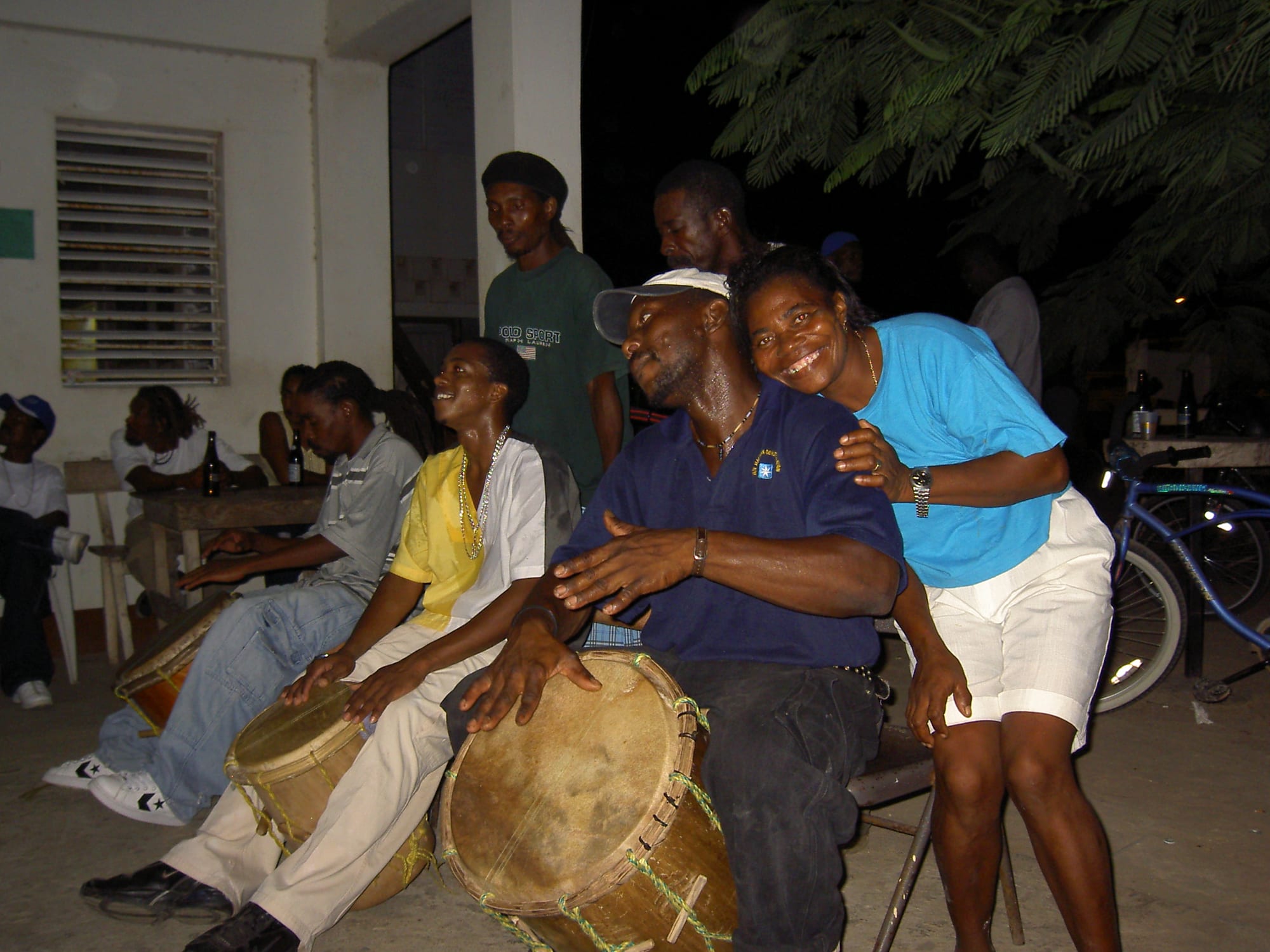
Creole music has its own voice in brokdong, the music of the Bram, with its call-and-response songs of community history and social commentary. Painting and sculpture are the most developed of the country's visual arts. Everyday crafts remain alive as well: hand-made beeswax candles, titai weaving, which produces household implements as well as small decorative pieces such as key chains and earrings, the making of chit brooms, one of the country's traditional brooms, and crocheting, which many women practise both as a pastime and as a source of income.
Dos and don'ts for visitors
- Do greet people with a "good morning" or "good afternoon" before anything else, including in shops.
- Do bring flowers or sweets if invited to a Belizean home for a meal.
- Do dress neatly and keep beachwear for the beach; revealing clothing is frowned on in towns and especially in church.
- Do be patient about timekeeping; events and appointments often start late.
- Do join in if welcomed into the singing and dancing at a festival such as the Christmas Bram.
- Don't haggle in shops; bargaining is generally kept for street markets.
- Don't forget to tip around ten per cent in restaurants and taxis, even though Belizeans themselves rarely do.
- Don't make public displays of affection, particularly as a same-sex couple; attitudes are conservative.
What to take away
Belize's customs are less a single code than a meeting of many traditions, and visitors who greet people warmly, take things at an unhurried pace and show interest in each community's music and festivals will find a genuinely warm welcome.