Attractions & Natural Wonders · Belize
Belize: Ten Attractions and Natural Wonders
A perfect blue sinkhole in the reef, Maya cities swallowed by jungle, a cave full of crystal-crusted skeletons, and the second-largest barrier reef on Earth
By Worldlore Editorial · 9 September 2026
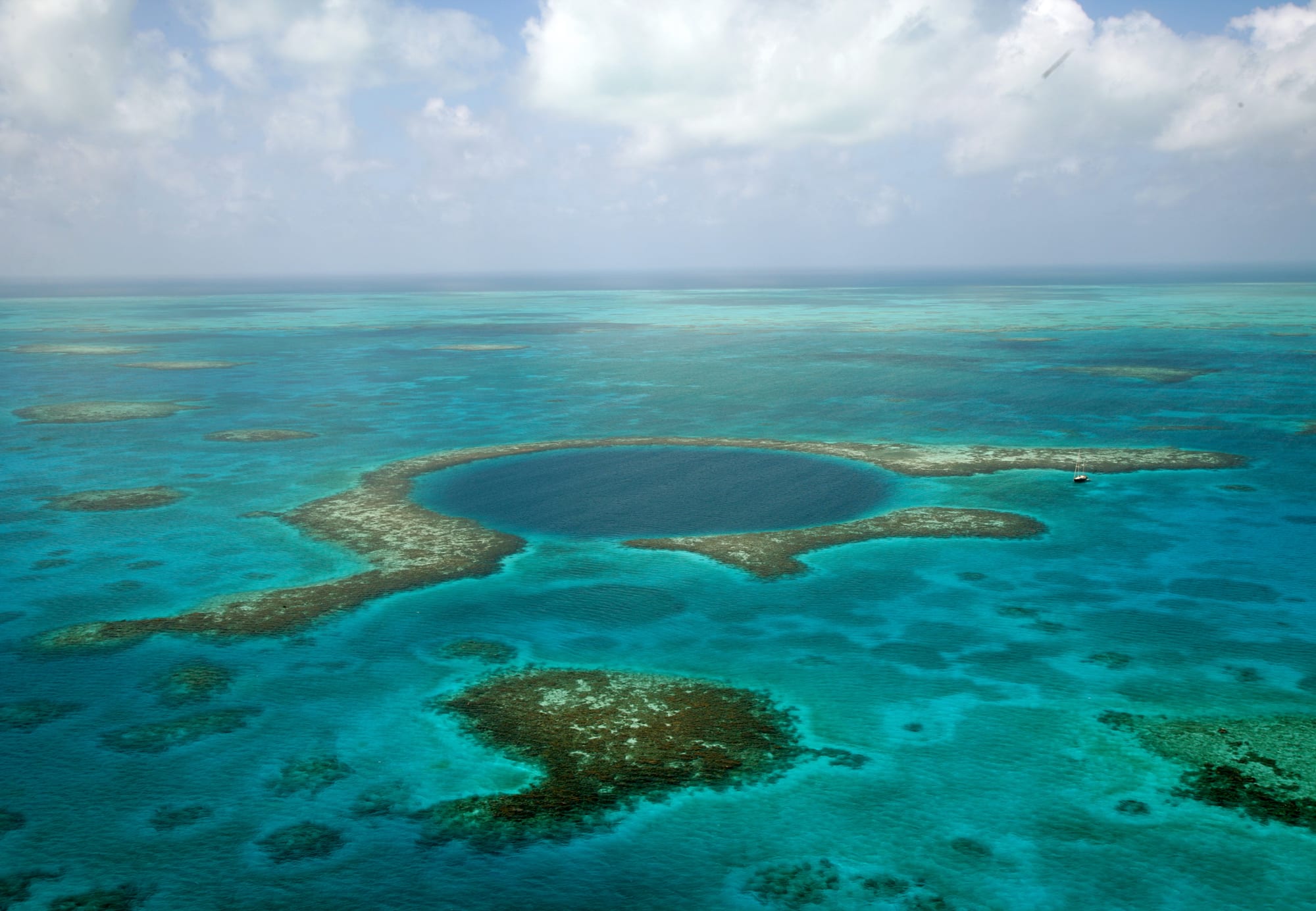
A small country of reef and rainforest
Belize is the only English-speaking country in Central America, and one of the least populous — a strip of Caribbean coast and jungle interior about the size of Wales, with fewer than half a million people. Its two great assets are the reef, which runs the length of the coast, and the jungle, which hides some of the largest Maya cities anywhere.
The ten below split roughly between the two. The cayes (islands) and the reef are reached from Belize City or Placencia; the ruins and caves cluster in the Cayo district around San Ignacio. The dry season, roughly December to May, is the time to go.
1. The Great Blue Hole
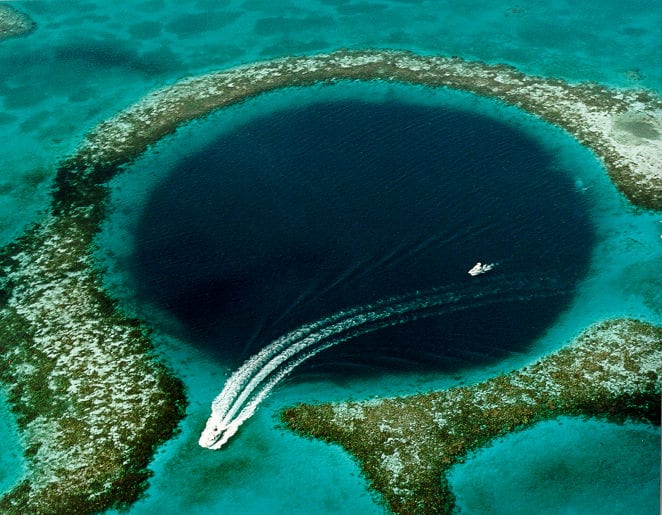
The Blue Hole is a giant marine sinkhole near the centre of Lighthouse Reef, about 70 kilometres offshore: a circular shaft of deep water, its rim marked by a ring of coral. It was made famous by Jacques Cousteau, who brought his ship here in 1971 and ranked it among the best dive sites in the world.
Divers descend past the walls to around 40 metres, where huge stalactites hang from an undercut ledge and reef sharks patrol. It is a long boat day from Ambergris Caye or Caye Caulker; non-divers can see the shape from a scenic flight.
2. The Barrier Reef and the cayes
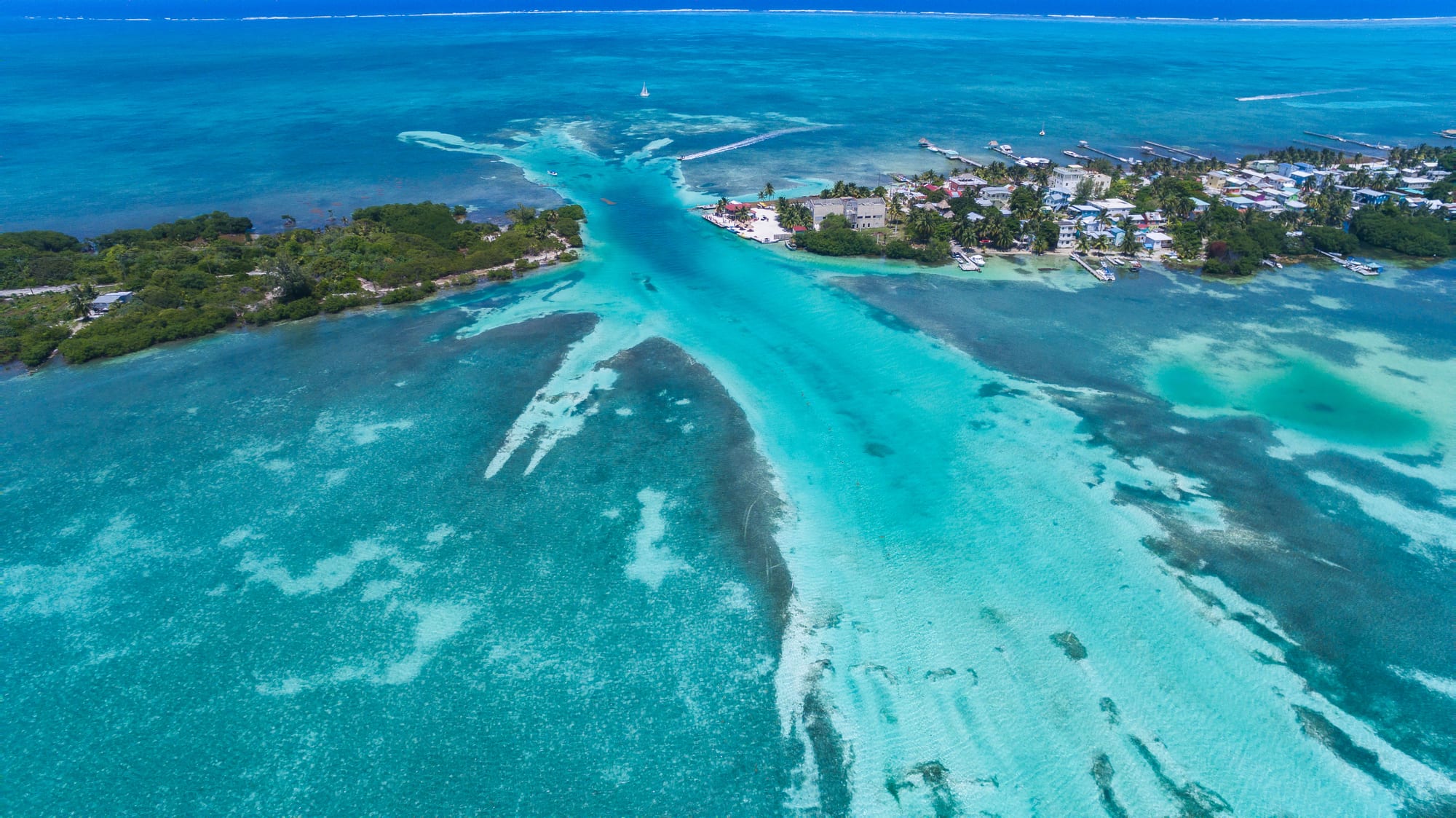
The Belize Barrier Reef is the largest in the Northern Hemisphere and the second largest in the world after Australia's — a 300-kilometre line of coral just offshore, protecting a lagoon dotted with mangrove cayes. It is a UNESCO World Heritage Site (for a time on the danger list, now off it).
Ambergris Caye, with the town of San Pedro, is the developed base; Caye Caulker is smaller, cheaper, and famously laid-back, its motto "go slow" and its main "street" a sand path. Both put you a short boat ride from the reef.
3. Hol Chan Marine Reserve
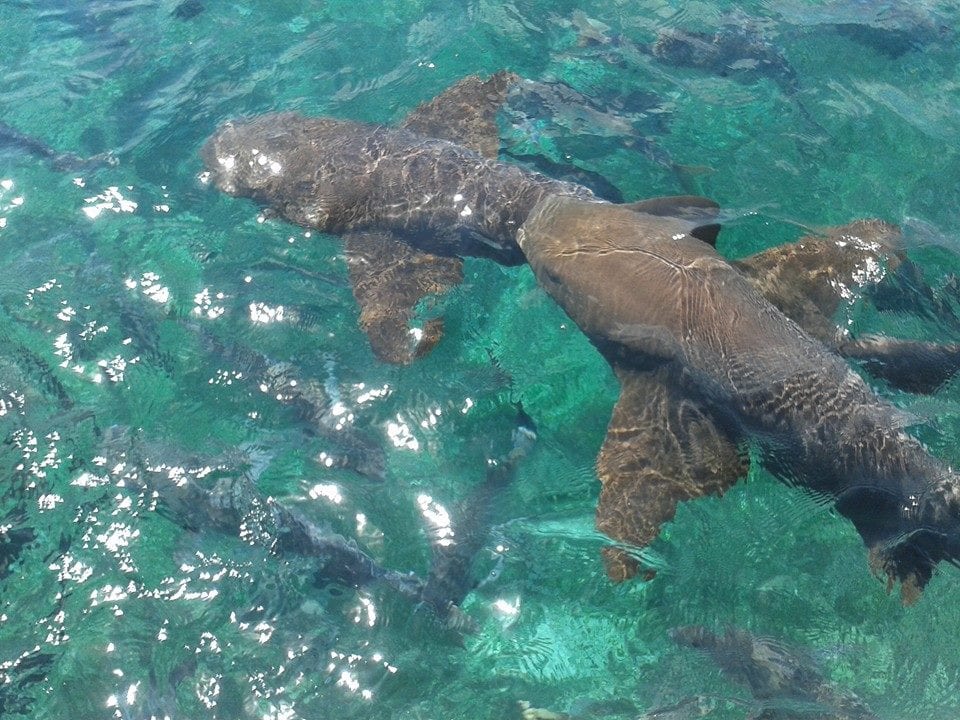
Hol Chan ("little channel" in Maya) is a small reserve built around a natural cut in the reef south of Ambergris Caye, and it is the most popular snorkelling trip in the country. The channel concentrates fish, turtles, rays, and reef sharks; the adjacent Shark Ray Alley, a former fish-cleaning spot, is where boats stop to snorkel among habituated nurse sharks and southern stingrays.
Half-day trips run constantly from San Pedro and Caye Caulker. Coral bleaching and crowding are real pressures, so it pays to choose a careful operator.
4. Caracol
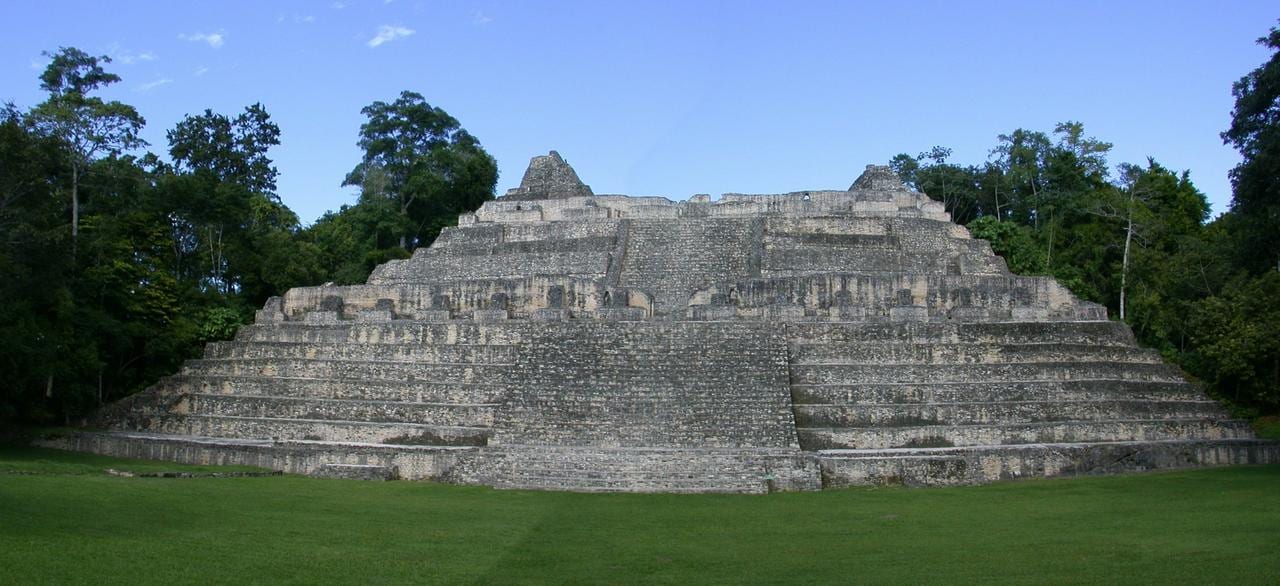
Deep in the Chiquibul forest near the Guatemalan border, Caracol was one of the great Maya cities — at its height around AD 650 it may have held more people than modern Belize City, and it defeated the superpower of Tikal in war. Its main pyramid, Caana, still rises above the canopy.
Getting there is an adventure: a long rough road, sometimes with a military escort, through the Mountain Pine Ridge with its waterfalls and the Rio Frio cave. Most people make it a full day from San Ignacio.
5. Xunantunich
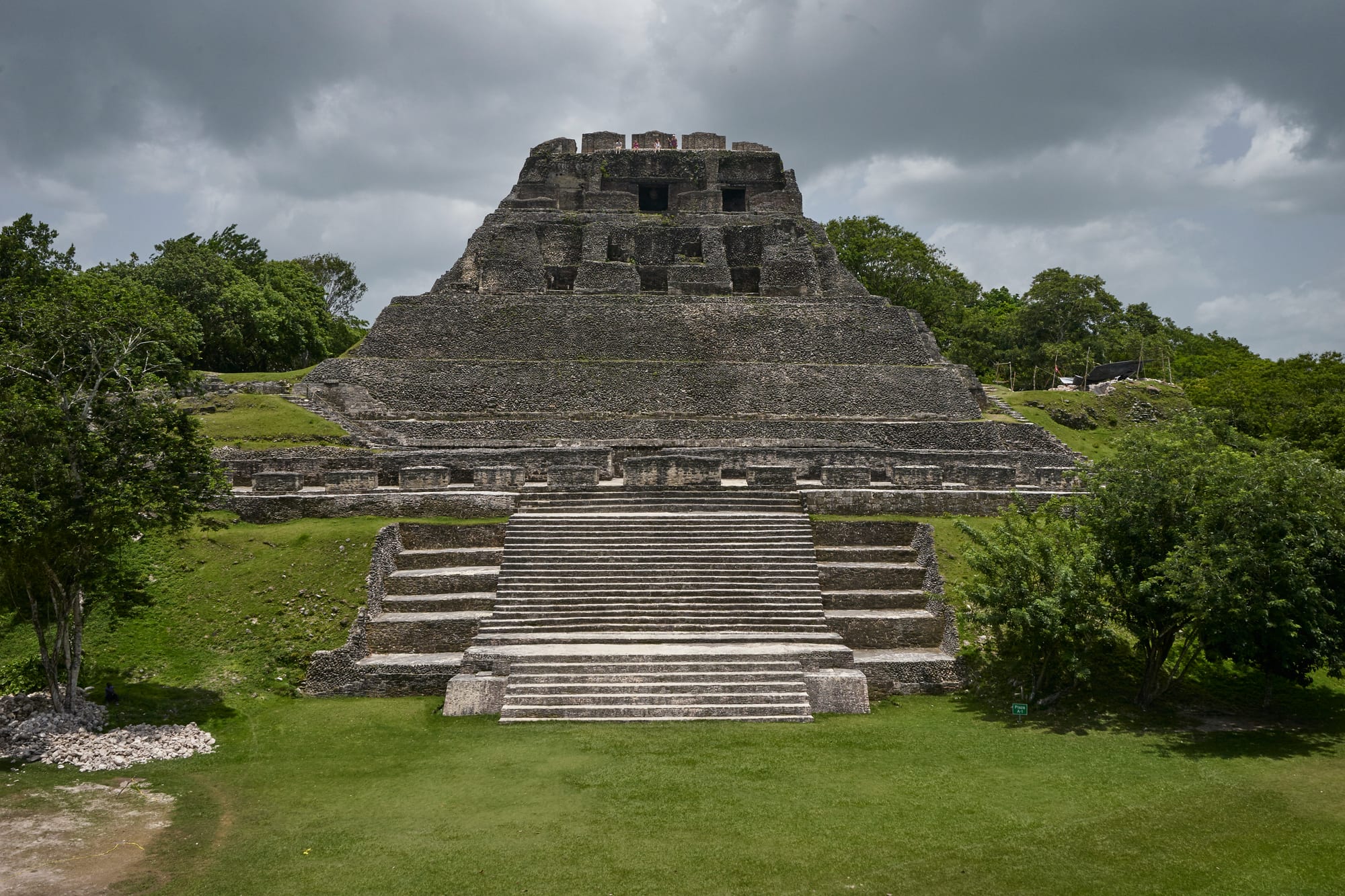
Xunantunich (the modern Maya name means "stone woman") is the most accessible big site in the country: a compact ceremonial centre on a ridge above the Mopan River, its main pyramid El Castillo carrying a restored stucco frieze of gods and astronomical symbols. The climb gives a view over the border into Guatemala.
You reach it from the village of San José Succotz on a small cable-drawn car ferry that carries a vehicle or two at a time — part of the appeal.
6. Lamanai
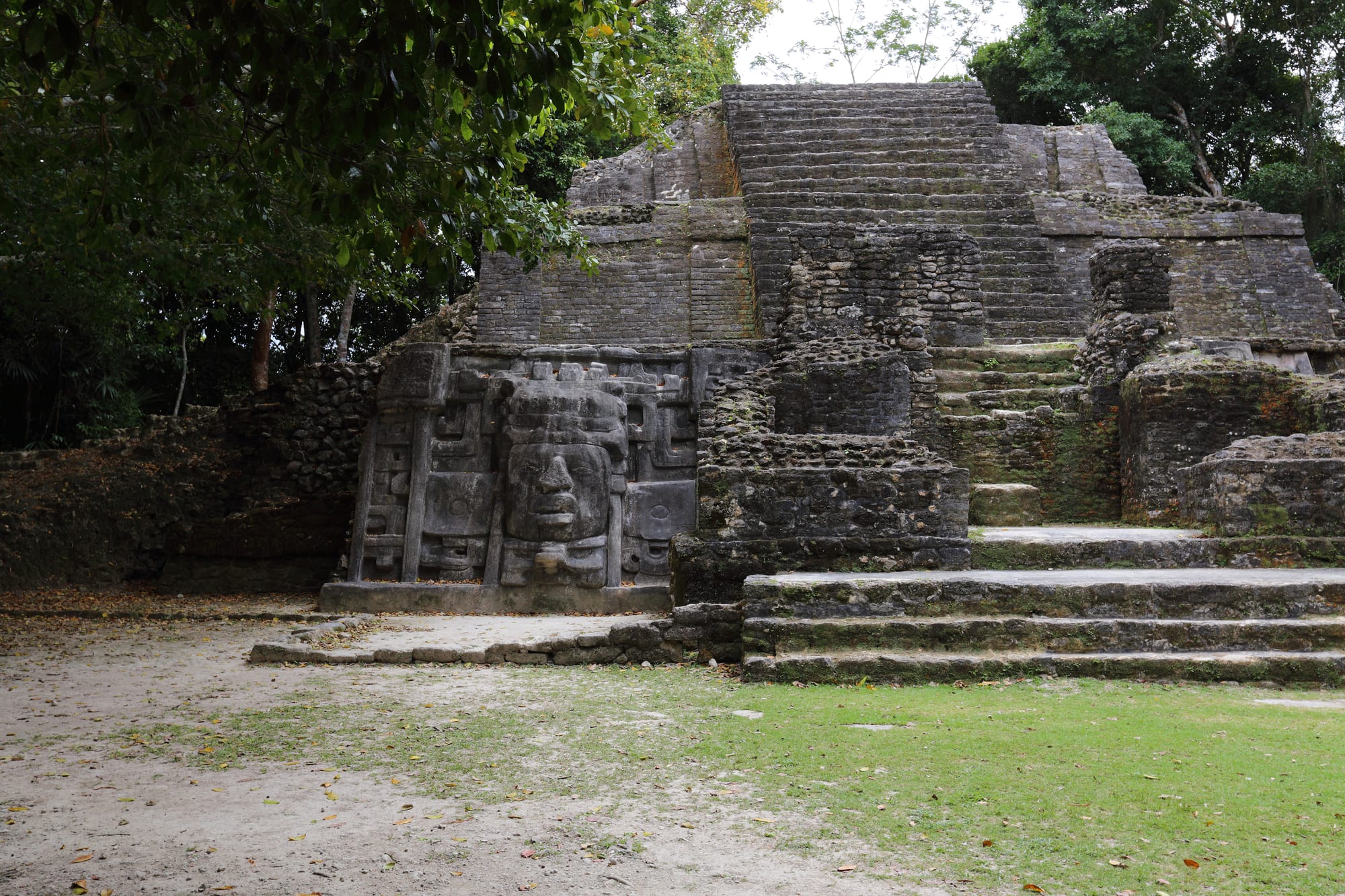
Lamanai, in the north, was lived in from about 1500 BC until Spanish contact and beyond — its Maya name, meaning "submerged crocodile", is one of the few original city names to survive. Its temples rise straight out of thick jungle beside a long lagoon, and there are two ruined 16th-century Spanish churches nearby.
Most visitors arrive by a fast boat up the New River from Orange Walk, a wildlife trip in itself — crocodiles, herons, howler monkeys, and bats.
7. Altun Ha
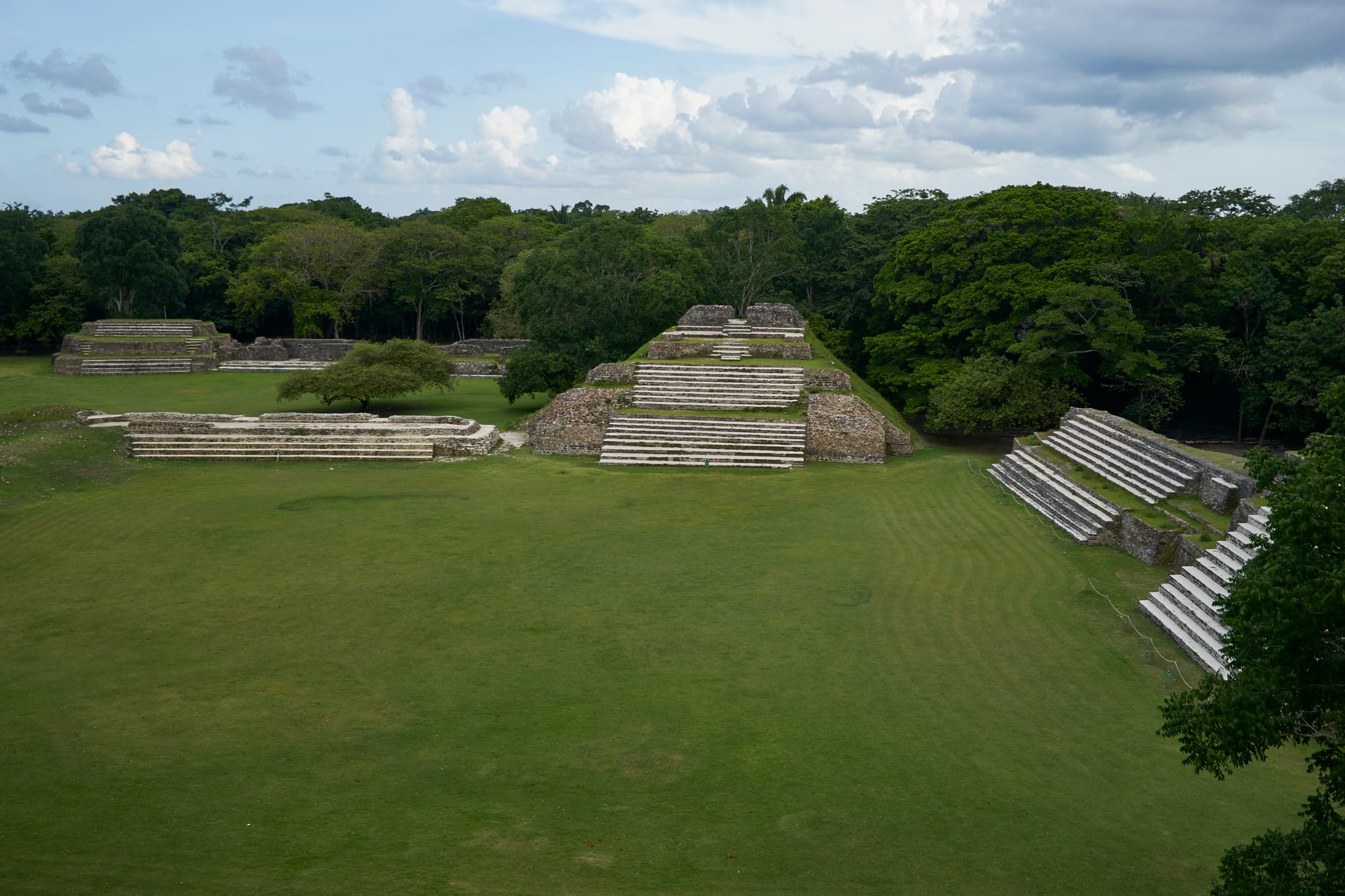
Altun Ha, an hour north of Belize City, is small and tidy — two main plazas of restored temples — but it was a wealthy trading town, and archaeologists found here the largest carved jade object from the Maya world, a head of the sun god weighing nearly 4.4 kilograms.
Its size and closeness to the city make it the standard stop for cruise passengers, so go early or late for a quieter visit.
8. Actun Tunichil Muknal (the ATM Cave)
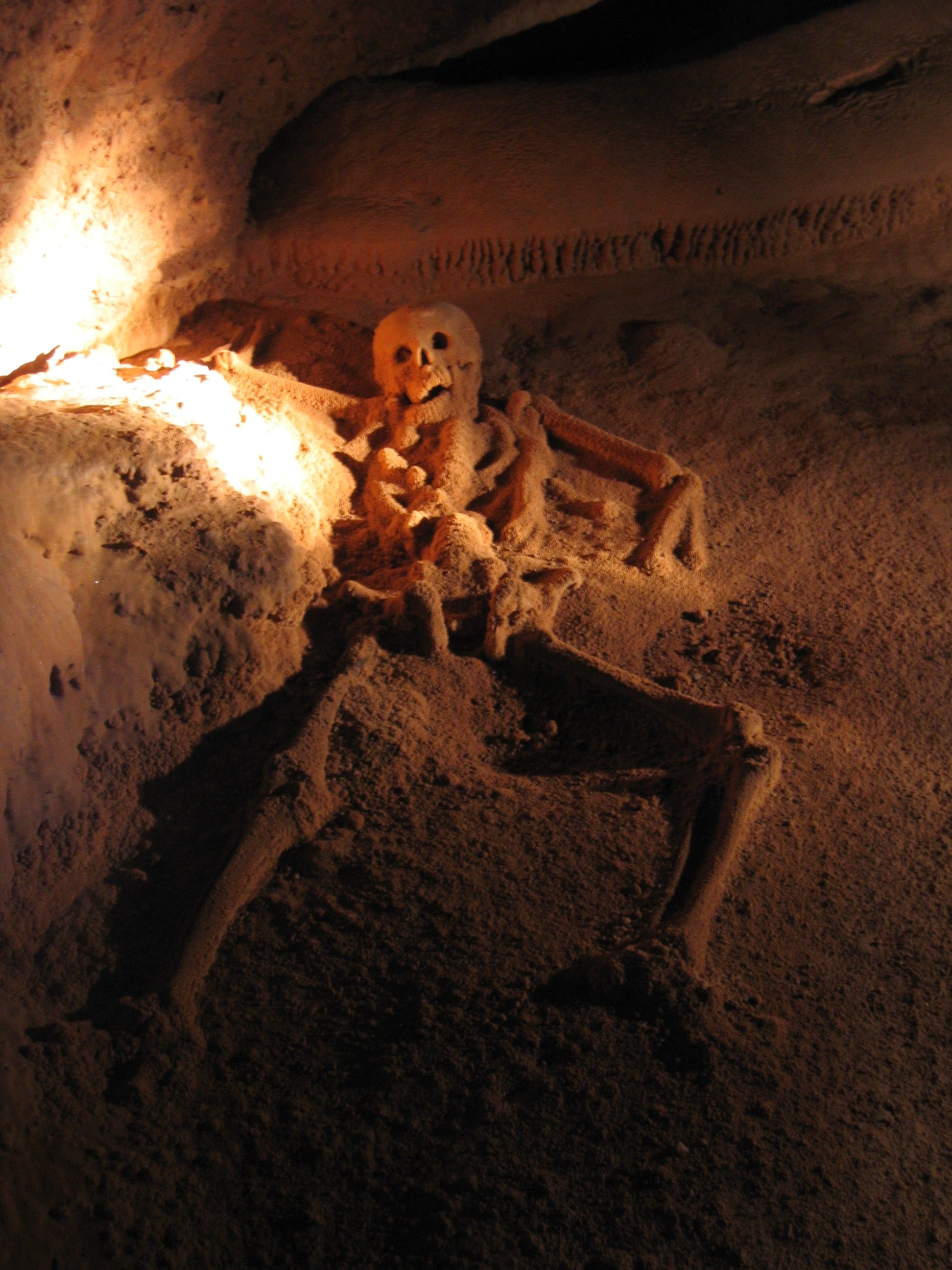
Rated by many as the best single day out in Belize, the ATM cave is a river cave the ancient Maya used for rituals and, in a crisis around AD 900, for human sacrifice. The tour swims in through the entrance pool, then wades and scrambles upstream for an hour to a dry upper chamber scattered with pots and the calcite-encrusted skeletons of 14 people, including the "Crystal Maiden".
It is physically demanding, led by licensed guides only, and cameras have been banned since a tourist dropped one on a skull.
9. Cockscomb Basin Wildlife Sanctuary
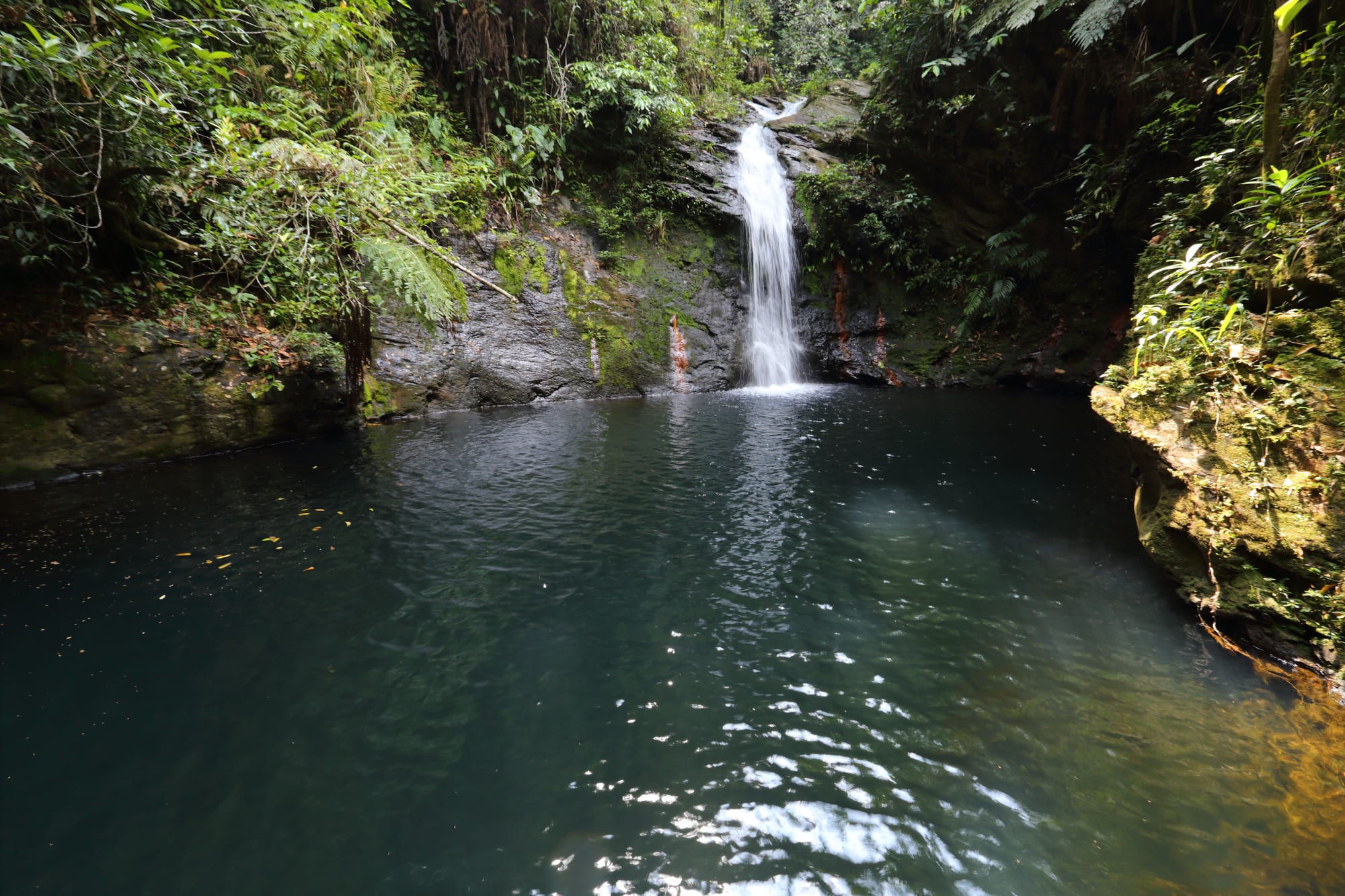
Set up in 1990 on the advice of the biologist Alan Rabinowitz, the Cockscomb Basin protects a large block of rainforest under the Maya Mountains with one of the densest jaguar populations in Central America. You are very unlikely to see one, but the reserve has a good network of trails, waterfalls and swimming holes, tapir and armadillo, and hundreds of bird species.
The village of Maya Centre, at the entrance, is run by the Mopan Maya and offers guides and simple lodging.
10. Placencia and the south
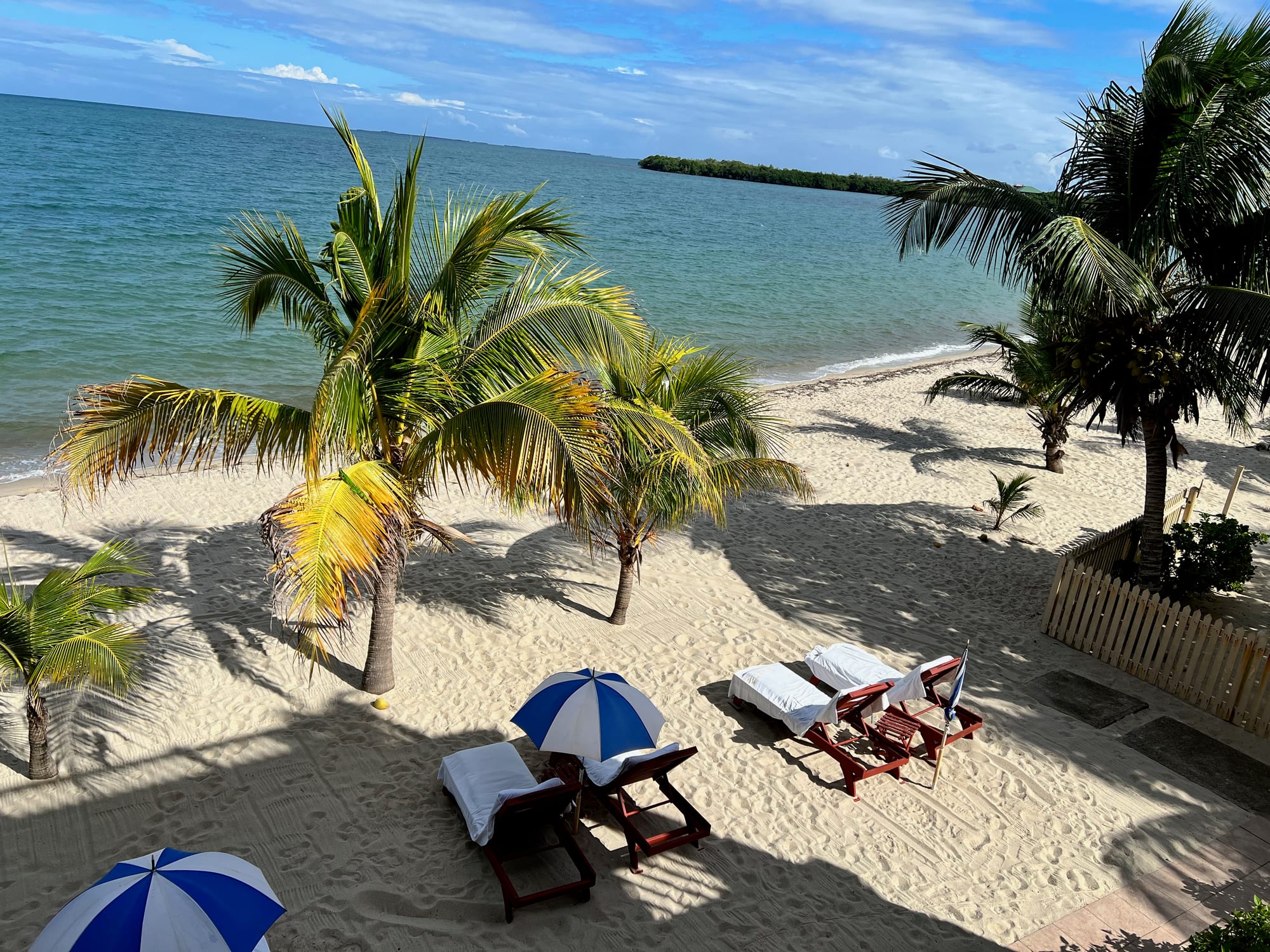
Belize's mainland coast is mostly mangrove, so its best beach town is Placencia, a former fishing village strung along a sandy peninsula in the south. It has a relaxed Creole–Garifuna character, a famously narrow concrete "sidewalk" as its main pedestrian street, and easy boat access to the southern cayes and reef, including the whale-shark aggregation off Gladden Spit in spring.
South of here, Punta Gorda is the base for the Garifuna coast and the little- visited southern Maya sites of Lubaantun and Nim Li Punit.
Belize is small and easily split in two: a few days on a caye for the reef, and a few in the Cayo interior for the ruins and caves, with the domestic hop between them taking under an hour.