Daily Life · Belize
Belize: A Day Lived in Three Languages
Houses raised on stilts against the floods, a school run in English uniforms, a converted American school bus to get to work, and a household that may switch from Kriol to Spanish to English before lunch
By Worldlore Editorial · 30 September 2026
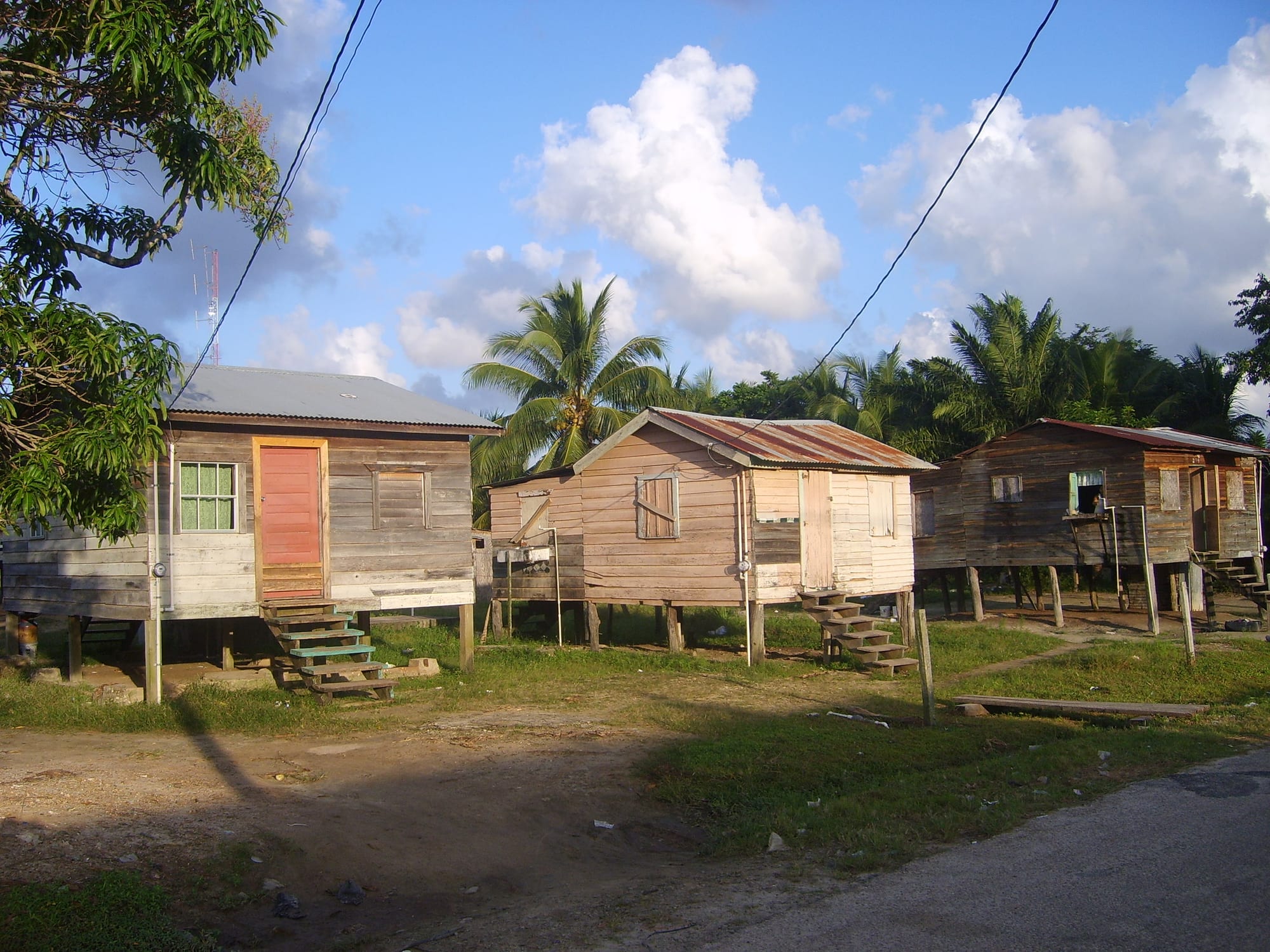
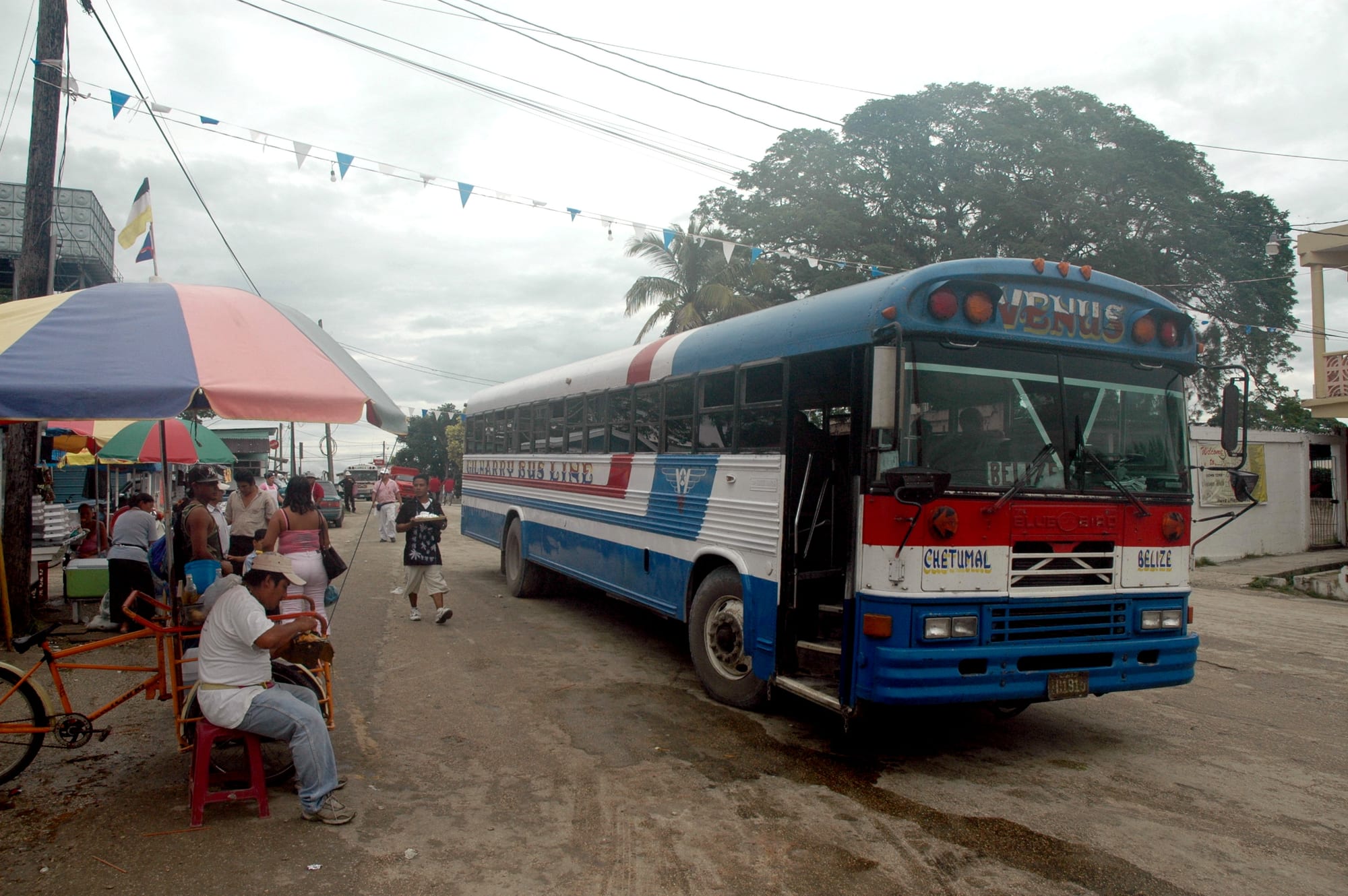
An ordinary day in Belize can pass through three languages before lunch. Breakfast conversation at home might run in Kriol or Spanish, the school run switches to English the moment a child reaches the gate, and the bus into town, a retired American school bus repainted and put back to work, carries Creole, Mestizo, Maya, Garifuna and Mennonite passengers who may not share a first language at all. Houses nationwide are commonly built up on stilts, clear of both floodwater and insects, a small daily adjustment to a wet, low-lying country. None of this feels remarkable to the people living it; it is simply what a day looks like in the least populous country in Central America.
Family and home life
The average Belizean household held 3.6 people in 2022, down from 4.0 in 2010, according to the national census, and it is increasingly common for that household to be built around a common-law union rather than a formal marriage: the 2022 census recorded a shift away from married couples towards common-law partnerships since 2010. Household shape also varies by community. In many lower-income households in Belize City the home is headed by a single parent, usually a mother, and sometimes children are raised by grandparents or other relatives while parents work away. Mennonite households, by contrast, are usually traditional farming families, while many Maya households in the west and south are extended families organised around farming. Across communities, raising a house on wooden posts, sometimes only knee-high, sometimes a full storey up, is common practice across the country, a response to seasonal flooding and to keeping the living space away from insects and damp ground.
Work, school and the rhythm of the day
Government offices and many private businesses keep a similar pattern: roughly 8am to 5pm on weekdays, with a lunch hour around midday that is generally observed rather than skipped. The school day typically runs from the morning into the mid-afternoon, schooling is compulsory from age five to sixteen, and uniforms, paid for by the family, are a familiar expense. Lessons are taught in English, the country's sole official language and the medium of a school system that sets Belize apart from every Spanish-speaking neighbour, even though English is, for many children, not the language spoken at home. Work is split unevenly across the economy: tourism, directly and indirectly, supports a large share of all jobs, agriculture remains significant, and an estimated 35 percent of all employment is informal, concentrated in farming and retail such as market vending.
Community life and public spaces
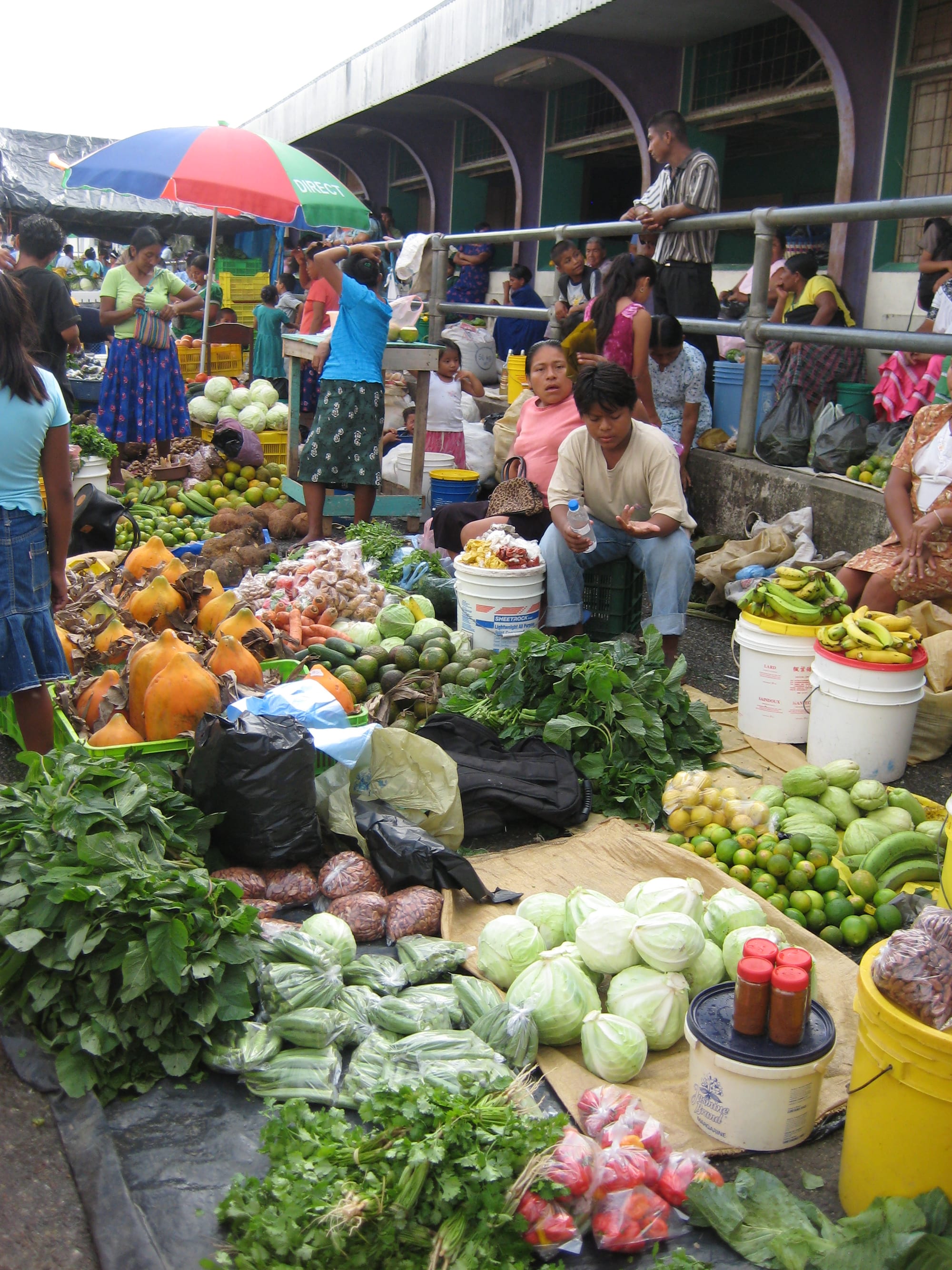
Retired American school buses, repainted and rebranded by their new owners, are the backbone of overland travel between towns, running the country's main highways at low fares. They are loud, often brightly decorated and genuinely used by ordinary people rather than kept for visitors, and the most common way to catch one is simply to flag it down by the road. Markets are the other constant of public life: in Belize City, the country's commercial hub, and in towns such as Punta Gorda, open-air markets bring farmers and vendors together to sell fresh produce, and market mornings are among the busiest times of the week. Football is the country's most widely followed sport, played in towns of every size, with local leagues drawing weekend crowds.
Free time and weekends
Weekends centre on family, football and, where a church is close by, Sunday worship. Extended family lunches are common, especially where grandparents live nearby or in the same household, and a weekend football match, watched at the pitch or at home, draws a genuine crowd in towns of every size. For families near the coast or a river, a Saturday or Sunday trip to swim or fish is an easy, low-cost way to spend a free afternoon, while Mennonite families in the farming communities of Cayo and Orange Walk districts tend to keep a quieter, more home-centred weekend built around the farm and the church.
A visitor's ordinary day
Belize runs on a dual currency: the Belize dollar is pegged at two to one against the US dollar, and US cash is widely accepted, usually with change given in Belize dollars. Chicken buses connect the main towns cheaply, for a few US dollars depending on distance, but timetables are loose, so budget extra time and expect to flag one down or ask locally when the next one leaves. Getting to the cayes means a water taxi rather than a bridge or causeway: high-speed water taxis run from Belize City to Caye Caulker, about 20 miles away, and on to San Pedro. Many shops and offices follow the 8am-to-5pm working day with a midday break, so plan errands around lunchtime, and expect a noticeably quieter pace on Sundays, when many businesses outside the main tourist areas close entirely.
What to take away
What makes an ordinary day in Belize distinctive isn't any single custom but the ease with which it moves between languages and communities that, elsewhere, might stay separate: English at school, Kriol on the bus, Spanish at home, all inside one very small country.