History · Belgium
Belgium: The Crossroads of Europe
Rich medieval cloth towns, a nation invented in 1830, a brutal empire in the Congo, and a small state still pulled between its two languages
By Worldlore Editorial · 19 September 2026
A country at a crossroads
Belgium occupies a small, flat, densely populated stretch of north-western Europe where the Germanic and Latin worlds meet — the language border between Dutch and French runs straight across it. For most of history there was no Belgium: the territory was a cluster of rich, quarrelsome medieval states, then a province fought over by every great power in turn. The country itself was assembled in 1830 out of the bits of the Low Countries that were Catholic and would not be ruled by the Dutch. Two things have shaped it ever since: its position as the battlefield of Europe, and the fault line between its Dutch-speaking north and French-speaking south.
A short history
- 12th–15th c.
The cloth cities
Bruges, Ghent and Ypres grow rich weaving wool into fine cloth; Flanders is among the most urbanised regions in Europe.
- 15th c.
Burgundy and Habsburg
The Dukes of Burgundy unite the Low Countries; the lands pass to the Habsburgs.
- 1568–1648
The Dutch Revolt
The northern provinces break away; the Catholic south stays under Spain.
- 1714–1794
The Austrian Netherlands
Habsburg rule from Vienna; the south is repeatedly a war zone.
- 18 June 1815
Waterloo
Napoleon is defeated just south of Brussels.
- 1830
The Belgian Revolution
The south revolts against Dutch rule; an independent, neutral Belgium is created.
- 1885–1908
The Congo Free State
King Leopold II runs a vast Central African territory as his private, murderous enterprise.
- 1914 / 1940
Invasion
Germany crosses neutral Belgium in both world wars.
- 1970–2011
Federalisation
Six state reforms turn Belgium into a federation of regions and language communities.
The cloth cities
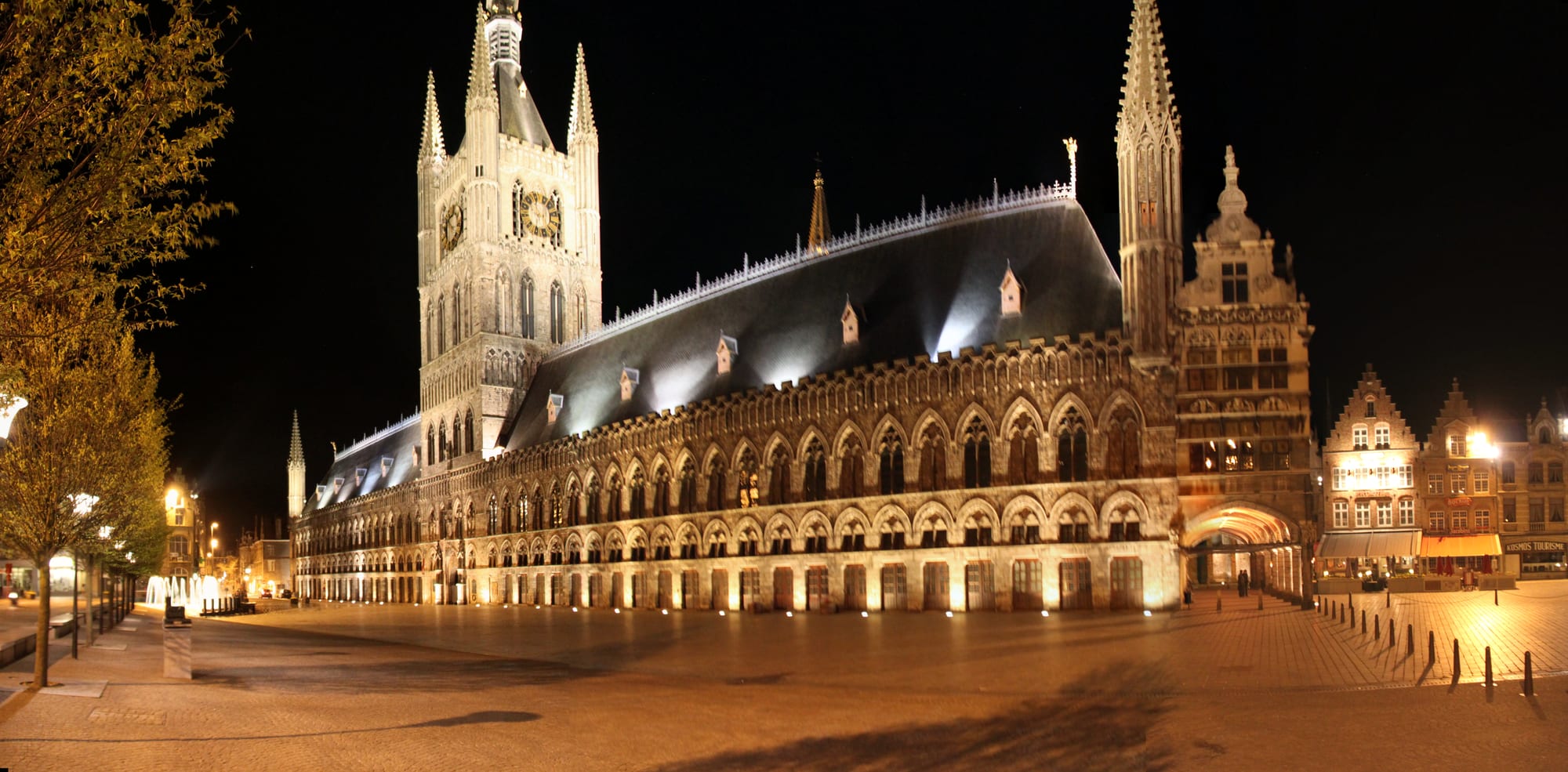
In the High Middle Ages the County of Flanders and the Duchy of Brabant were among the wealthiest, most urban places in Europe. Their towns — Bruges, Ghent, Ypres, and later Antwerp — imported English wool and turned it into the finest cloth on the continent, and their citizens defended their privileges fiercely: in 1302 a Flemish town militia destroyed a French army of knights at Kortrijk. In the 15th century the Dukes of Burgundy pulled the Low Countries into one state, and Bruges, then Antwerp, became the commercial and banking capital of northern Europe, the world of Jan van Eyck.
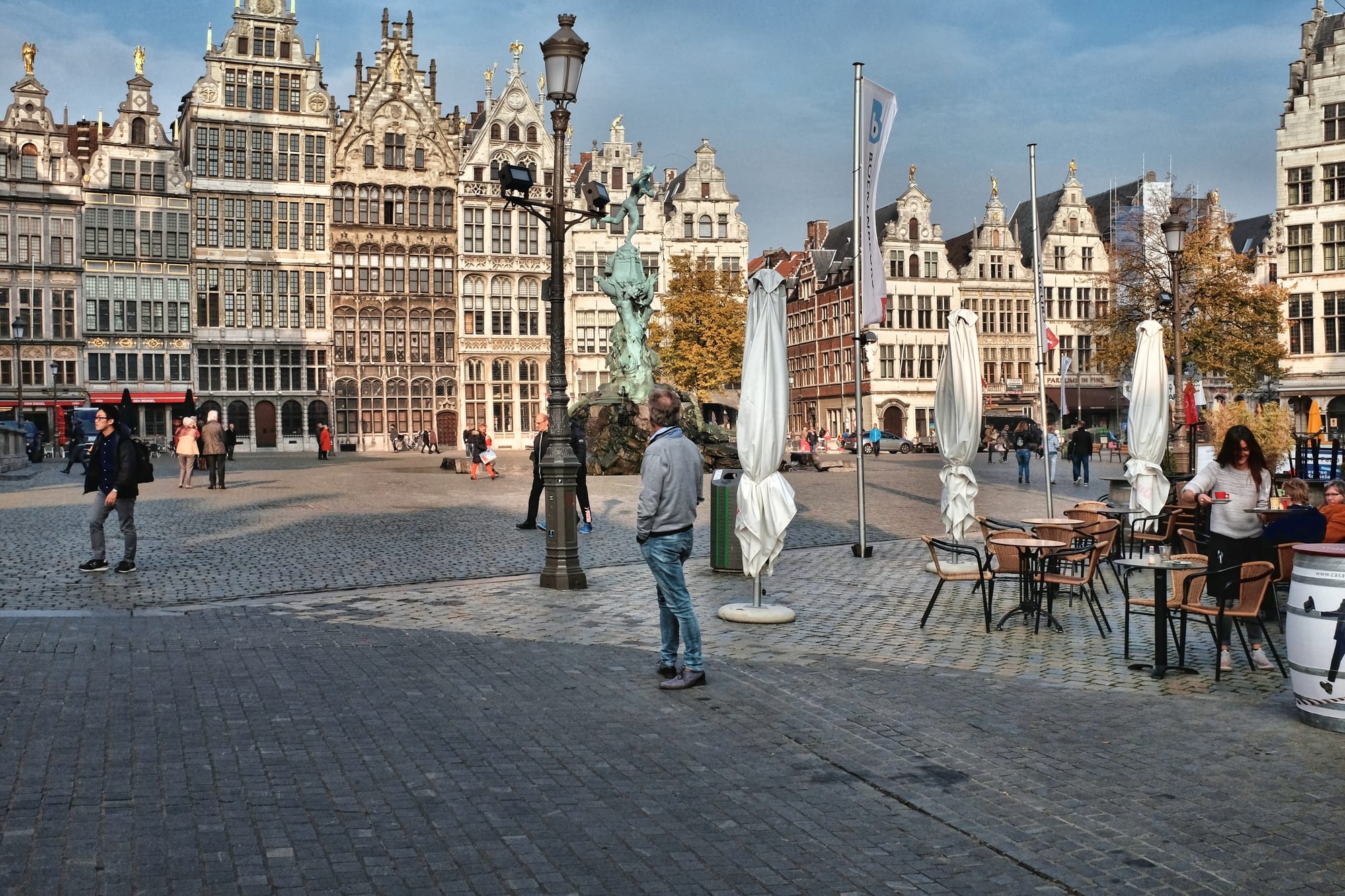
The Burgundian inheritance passed by marriage to the Habsburgs, and the future Emperor Charles V was born in Ghent in 1500. When the Low Countries rose against Habsburg Spain and for Protestantism in the Dutch Revolt, the region split for good: the northern provinces became the independent Dutch Republic, while the southern provinces — roughly modern Belgium — were reconquered, stayed Catholic, and remained under the Habsburgs, first of Spain and then, from 1714, of Austria.
The battlefield of Europe
Cut off from the sea trade that had made it rich, the southern Netherlands became a relative backwater — and a permanent theatre of war. For two centuries the armies of France, Spain, Austria, Britain and the Dutch Republic marched across it and fought their battles on its fields: Ramillies, Oudenarde, Fontenoy, Jemappes. Revolutionary France annexed the whole region in 1794. The last and most famous of these battles came in 1815, when a British-led and Prussian army defeated Napoleon at Waterloo, a few kilometres south of Brussels.
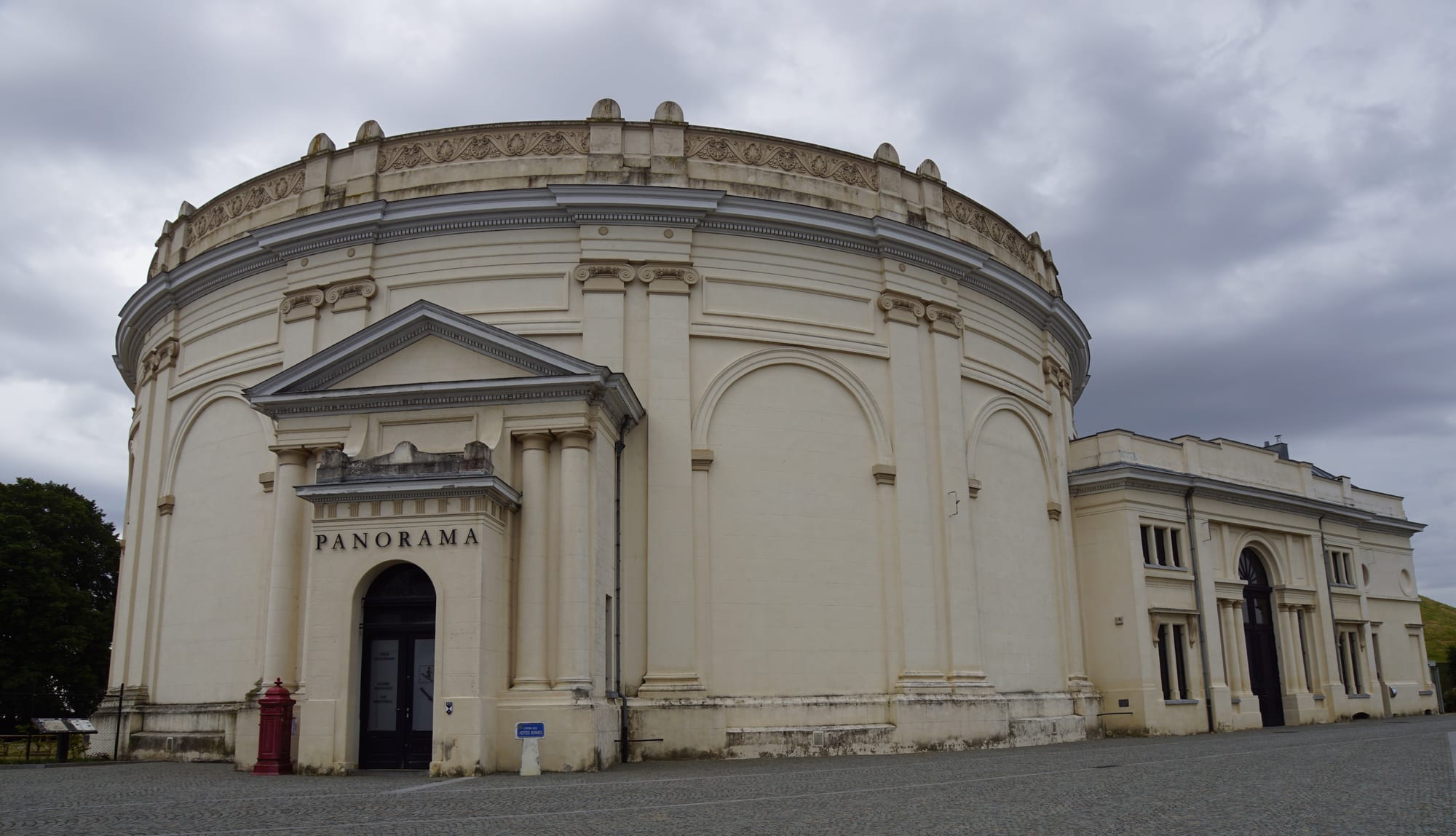
After Waterloo the Congress of Vienna joined the southern and northern Netherlands into a single United Kingdom of the Netherlands under the Dutch king, meant as a barrier against France. It lasted 15 years.
The revolution of 1830
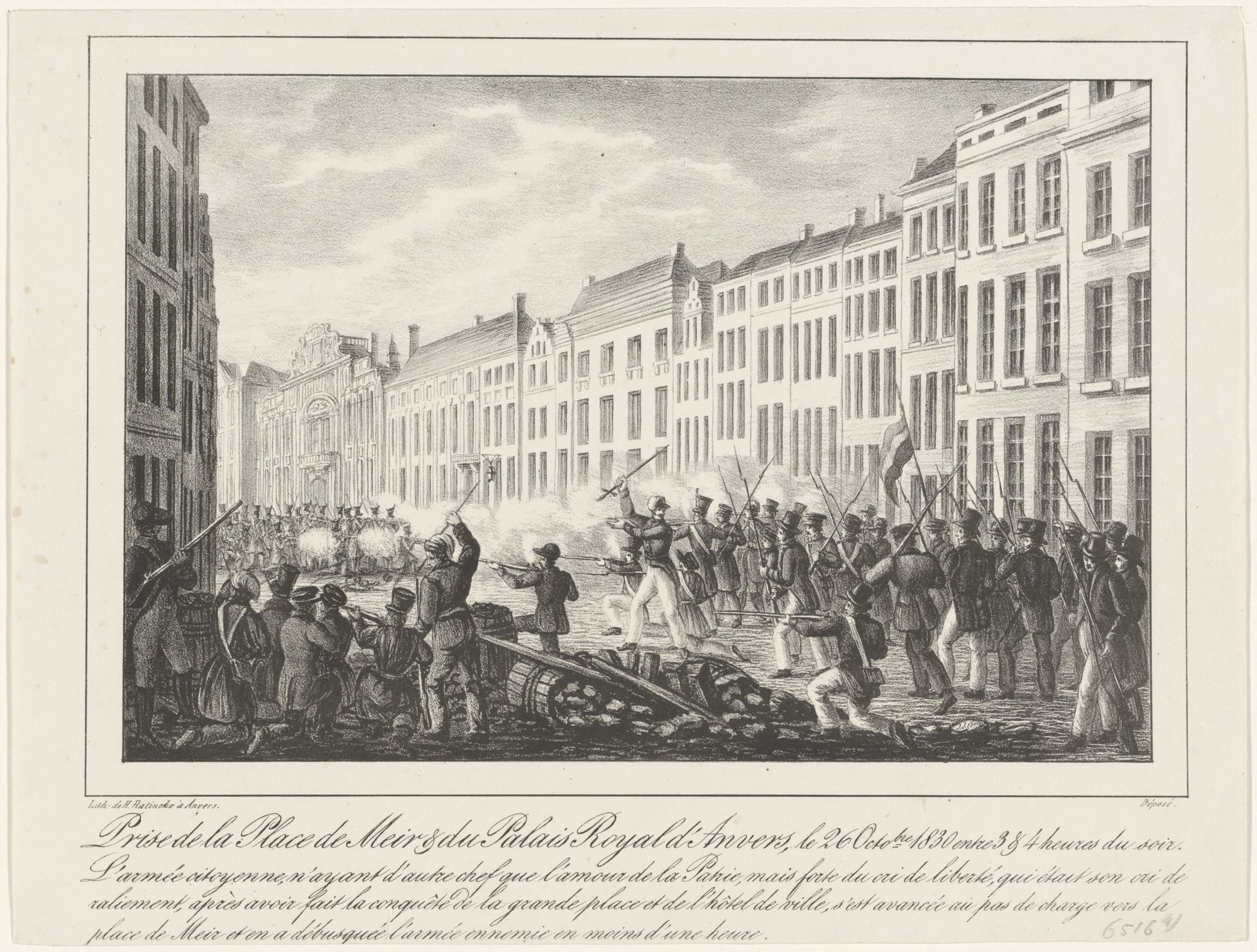
The union was resented in the south from the start: a Catholic, partly French-speaking population governed by a Protestant Dutch king who favoured Dutch industry and made Dutch the language of the state. In August 1830, with revolution in the air across Europe, riots broke out in Brussels; after days of street fighting in September a provisional government declared independence. The Great Powers, meeting in London, accepted an independent Belgium on condition that it be permanently neutral, and installed a German prince as King Leopold I.
Belgium then industrialised faster than anywhere on the continent — the first country in mainland Europe to have an industrial revolution, built on the coal and steel of French-speaking Wallonia and the first passenger railway on the mainland. Dutch-speaking Flanders, by contrast, stayed poor and agricultural, and the state ran entirely in French — the root of a Flemish grievance that has never gone away.
The Congo
In 1885 King Leopold II, unable to persuade his government to fund a colony, acquired one for himself. The Congo Free State — a territory 76 times the size of Belgium — was recognised as his personal possession, under a cover story of philanthropy and suppressing the slave trade. In practice it was a forced-labour regime for rubber and ivory, enforced by a private army that took hostages, burned villages, and cut off the hands of those who failed to meet quotas.
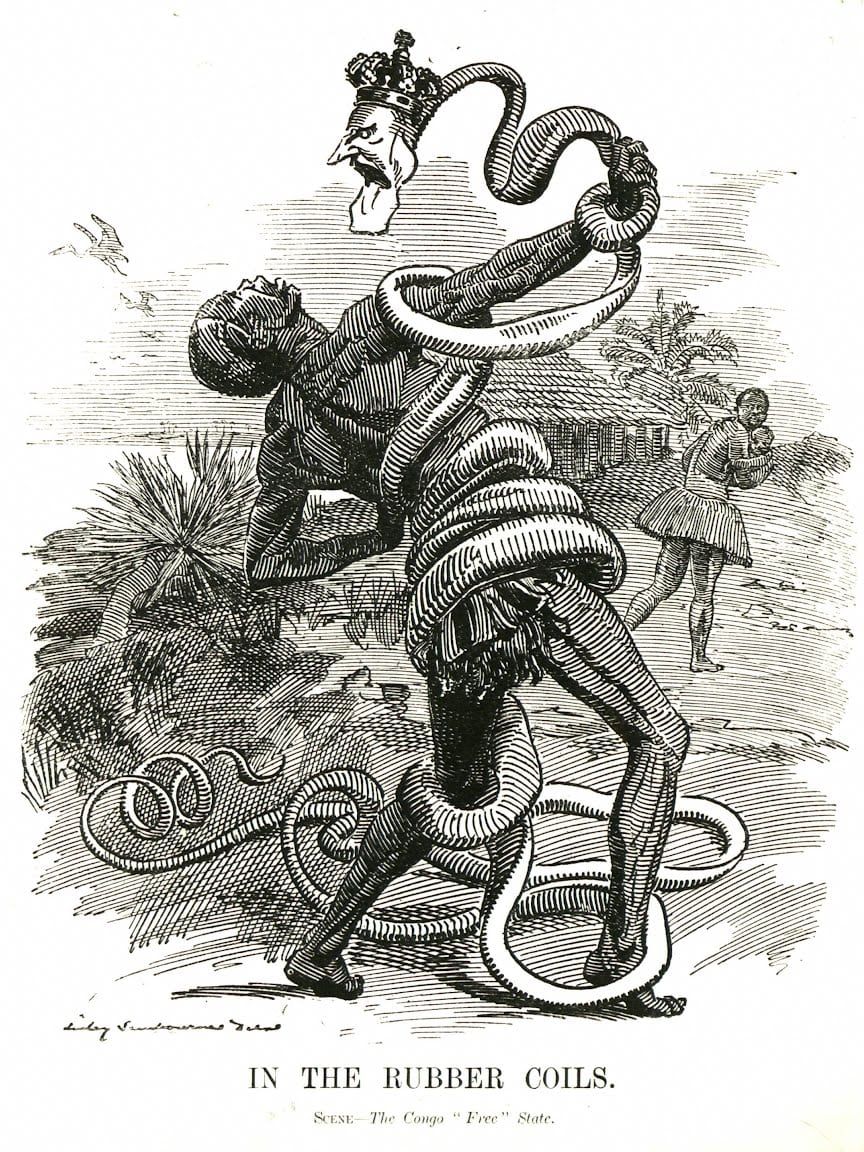
Estimates of the population lost to killing, starvation, exhaustion and disease over that period run to several million — by many accounts around half the population. An international outcry, backed by a British consular report, forced the Belgian state to annex the colony from its king in 1908. Belgian Congo remained an exploitative, racially segregated regime until independence was granted suddenly in 1960, and Belgium was complicit in the murder of the Congo's first elected leader, Patrice Lumumba, the following year.
Two invasions
Belgium's guaranteed neutrality was worthless when it mattered. In August 1914 Germany invaded to outflank France, killing thousands of civilians and burning the library of Leuven in reprisals that horrified the world. The Western Front then froze in Belgian mud: the Ypres Salient saw four years of trench warfare, the first large-scale poison-gas attack in 1915, and hundreds of thousands of dead. In 1940 Germany invaded again; the country was occupied for four years and liberated in 1944, with the last great German offensive fought in the Belgian Ardennes that winter.
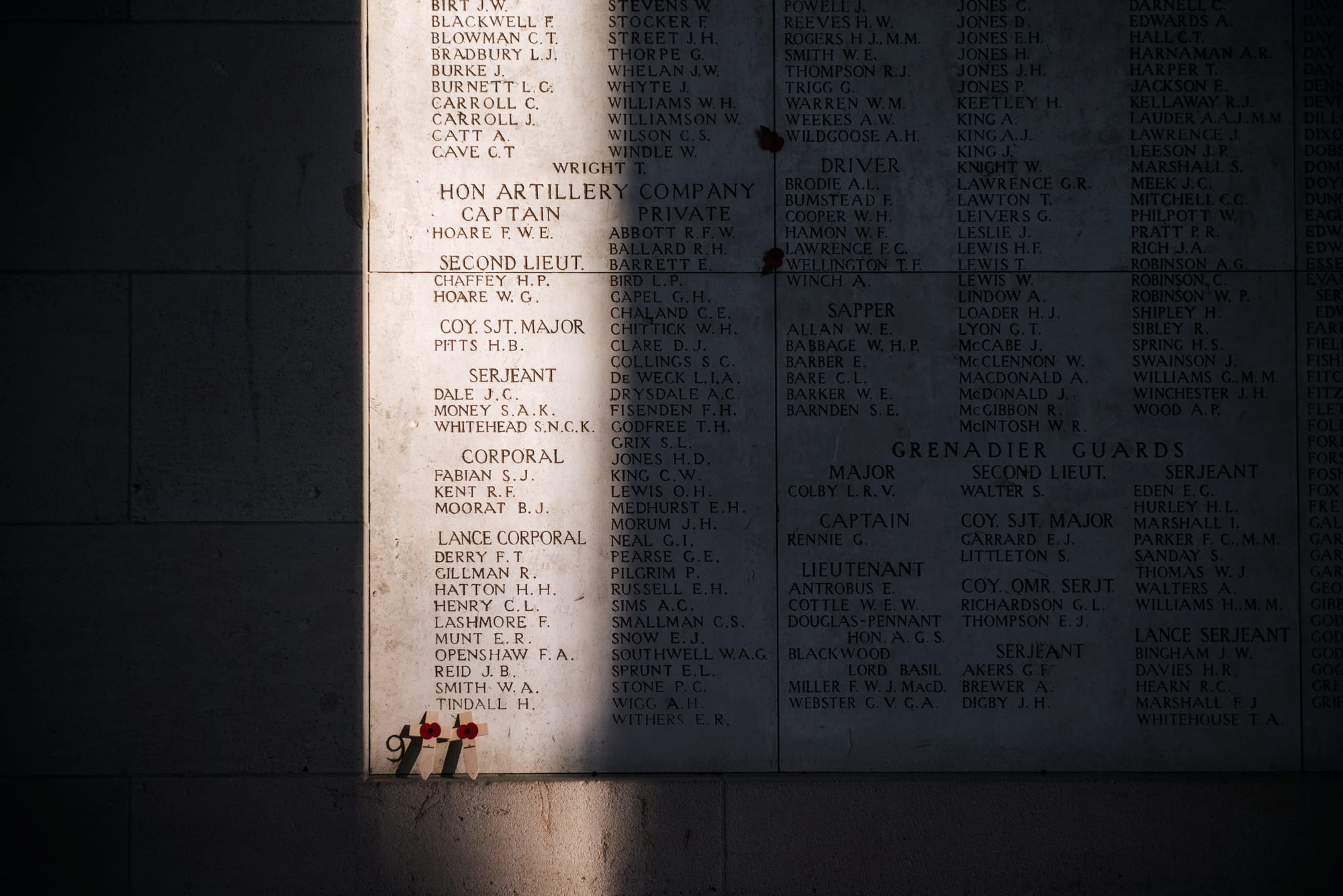
The Ypres battlefields, rebuilt from nothing after 1918, are among the most visited war sites in the world, and the poppy of remembrance comes from a poem written by a Canadian doctor at a dressing station near here in 1915.
Europe's capital, and a country dividing
After 1945 Belgium abandoned neutrality and helped found the institutions that became the European Union, making Brussels their headquarters and, later, the home of NATO. Prosperity returned, symbolised by the 1958 World's Fair and its Atomium.
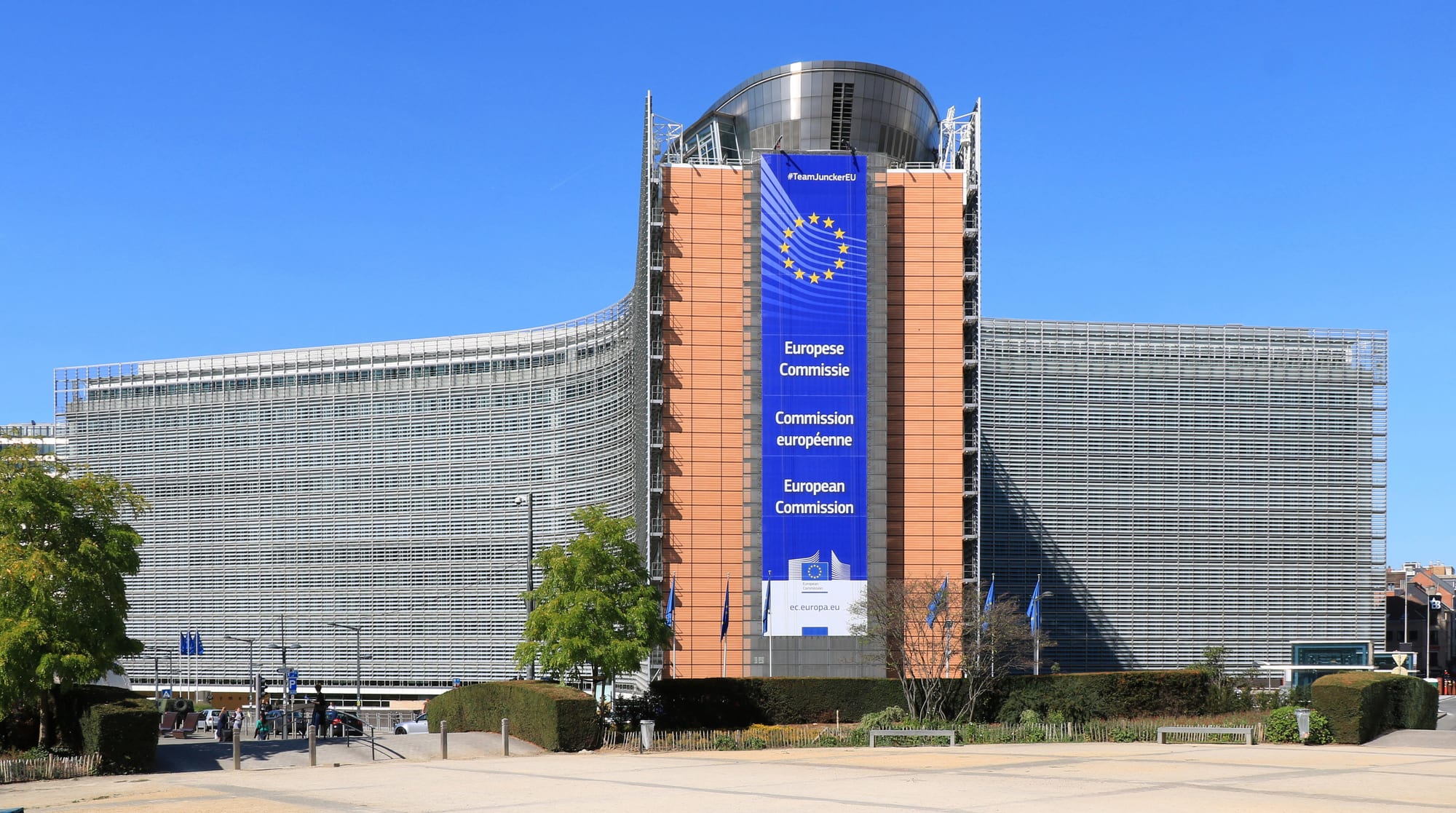
Underneath, the country was pulling apart along its language line. Wallonia's coal and steel declined; Flanders grew richer and more populous; a fixed language border was drawn in the 1960s; and between 1970 and 2011 six constitutional reforms turned the unitary state into a complex federation of Regions and language Communities, with even the political parties split in two. In 2010–11 Belgium went 541 days without an elected national government — a world record — and carried on functioning regardless.
What Belgium carries
Belgium is a small country with a very large amount of history done to it: the wealth of the medieval cloth towns, the centuries as Europe's chosen battlefield, the horror of the Congo, and two German invasions. It is held together now less by a strong national feeling than by a dense web of institutions, by Brussels's role as the seat of the European Union, and by the practical difficulty of dividing a country whose capital both of its halves want to keep.