Culture & Customs · Belgium
Belgium: Compromise and Carnival
A reserved, punctual, understated society that has made an art of meeting in the middle, and that still breaks out, each year, into masks, giants, bells and processions older than the country itself
By Worldlore Editorial · 30 September 2026
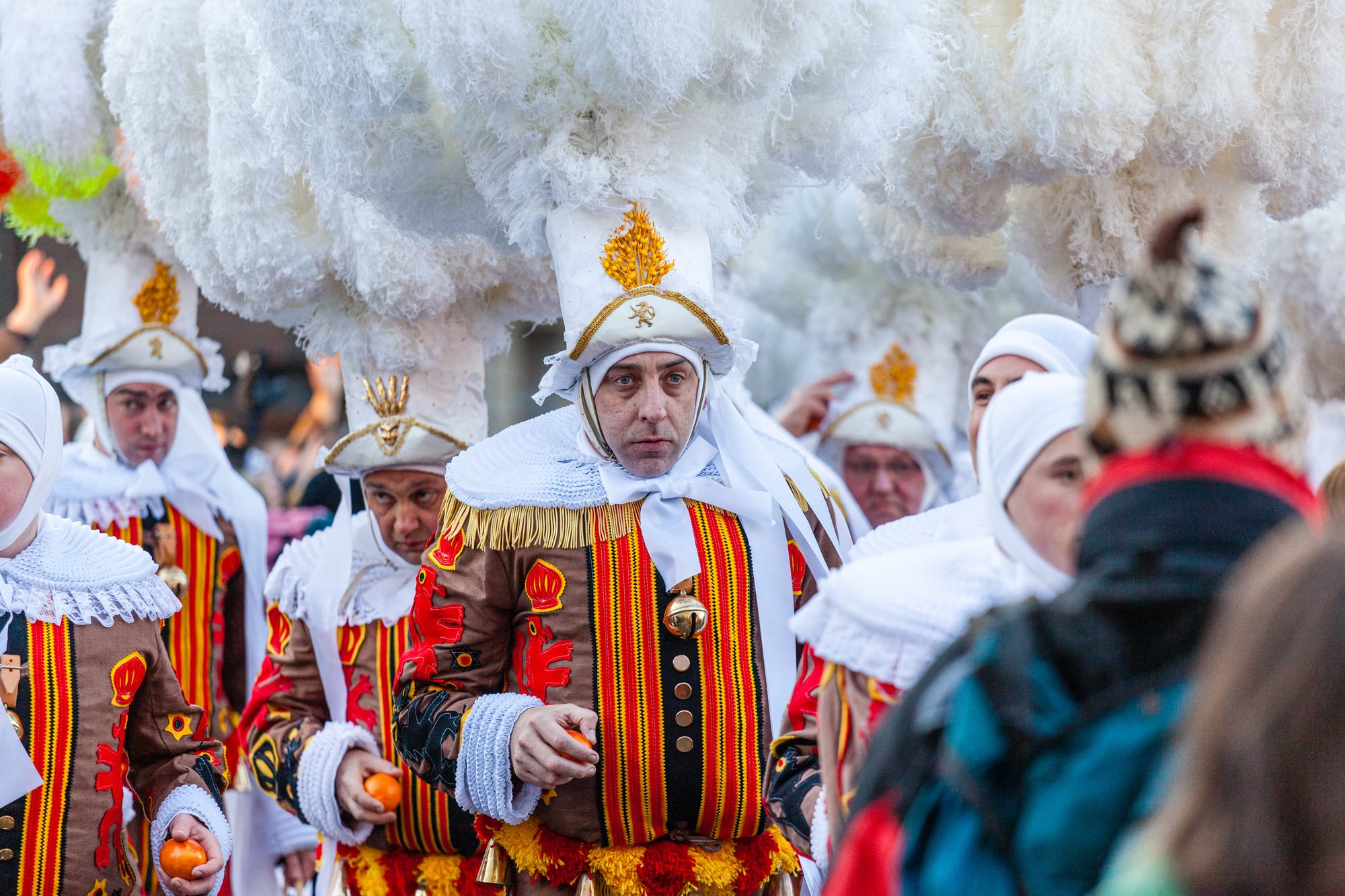
For most of the year, Belgian life runs on quiet good manners. People arrive on time, shake hands briefly, keep their voices down and their private lives to themselves, and settle disagreements by finding the middle ground. Then, on the days before Lent, a small town in the south fills with the sound of drums, bells and wooden clogs, and the Gilles appear in costumes of red, yellow and black, some in wax masks, others under towering hats of white ostrich feathers, dancing through the streets. The contrast is the key to Belgian culture: a reserved, pragmatic society that keeps an extraordinary store of folklore, and that takes both its courtesy and its celebrations entirely seriously.
Faith, identity and values
Belgium is historically Catholic, and the church still shapes its calendar, its architecture and its rites of passage, but religious practice has declined steeply. A 2018 survey cited by the US State Department found around 57 per cent of residents identifying as Roman Catholic, about 20 per cent as non-believers or agnostics, 9 per cent as atheists and nearly 7 per cent as Muslims, with smaller Protestant, Orthodox, Anglican and Jewish communities.
What sets Belgium apart is how it accommodates belief and non-belief side by side. The state officially recognises Catholicism, Protestantism, Anglicanism, Orthodox Christianity, Judaism and Islam, and it also recognises organised secular humanism, whose organisations hold their own non-religious ceremonies. For many families, the choice between a religious and a secular path is made visibly at key moments in a child's life, and both are treated as normal.
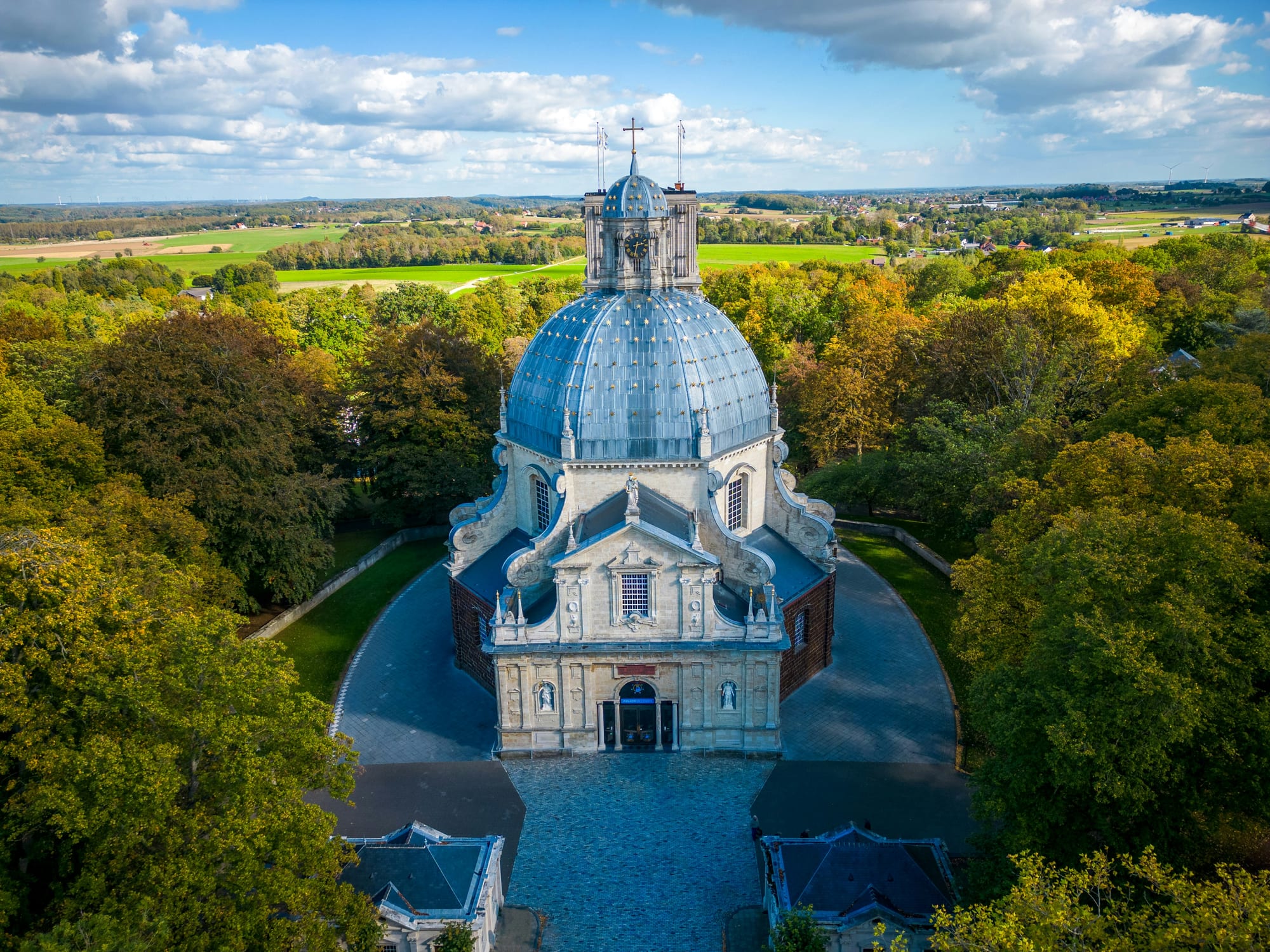
Beneath the religious landscape lie values that most Belgians share whatever their language. Pragmatism and compromise are prized, which is fitting in a country whose communities, regions and parties must constantly negotiate with one another. Modesty and understatement are preferred to display, and loud or theatrical behaviour can feel out of place. Belgians are often described as reserved: privacy is valued, and personal matters, money, politics and religion are not usually discussed with people one does not know well. Art, culture, food and sport are the comfortable common ground of conversation. Equality, tolerance, family and quality of life are all held in high regard.
Language carries symbolic weight. Belgium has three official languages, and using the right one, or asking which a person prefers rather than assuming, is taken as a sign of awareness and respect.
Greetings and meeting people
A brief, firm handshake is the standard greeting when meeting someone for the first time or in a formal setting, and it is used by both men and women. Among friends and family, kisses on the cheek often replace it, lightly brushed rather than planted. Customs differ between the language communities: in Flanders, a single kiss is common, and adult men usually shake hands rather than kiss; in Wallonia, one kiss is usual, sometimes three, and in Brussels both customs meet. When in doubt, it is safest to let the Belgian take the lead.
Forms of address are respectful and fairly formal at first. The polite pronoun, u in Dutch and vous in French, is used with strangers, older people and in professional life, while the familiar je or tu is kept for friends. In business, people are addressed as Mr or Ms followed by their surname until invited to use first names.
Punctuality is taken seriously, and arriving late for an appointment can come across as rude; if a delay is unavoidable, a message of apology is expected. Turning up at someone's home unannounced is generally avoided, except among close friends who welcome it.
Hospitality and being a guest
Guests invited to a Belgian home normally bring a small gift, and it should not be lavish. Flowers or good chocolates are the usual choice. Flowers are given in odd numbers, though never thirteen, and white chrysanthemums are avoided, because they are the flowers of mourning and of graves. A gift received is usually opened straight away, with thanks.
At the table, the manners are continental. It is polite to wait until everyone has been served and others begin before starting, and not to rush to clear plates before all the guests have finished. The fork stays in the left hand and the knife in the right, and hands are kept visible, with wrists resting on the edge of the table rather than in the lap, but elbows stay off it. Speaking with a full mouth is frowned upon, praise for the cooking is appreciated, and finishing what is on the plate is polite, since leaving food can be taken as wasteful. Drinking heavily is frowned upon, even at a relaxed meal. In restaurants, service is usually included in the bill, so large tips are not expected; rounding up is enough to show satisfaction.
Festivals and life's big moments
Belgium has ten national public holidays, several of them Christian feasts, including Ascension, the Assumption on 15 August and All Saints' Day on 1 November, alongside National Day on 21 July. All Saints' Day remains the main day for remembering the dead: families visit cemeteries, often just before or on the day itself, to tend graves and lay chrysanthemums.
For children, the highlight of the year comes in early December. Saint Nicholas, Sinterklaas in Dutch and Saint-Nicolas in French, is said to arrive in mid-November, and on the evening of 5 December children set out a shoe, sometimes with a carrot, hay or a lump of sugar for his horse. In the morning they find chocolate figures and coins, speculoos biscuits, oranges, marzipan and small toys. In the weeks before, the saint makes appearances at schools and shops, where children are told he checks a big book to see whether they have behaved.
Late winter belongs to carnival. The best known is the Carnival of Binche, inscribed on UNESCO's list, which reaches its climax on Shrove Tuesday, when the Gilles parade to the beat of drums in costumes of red, yellow and black, with bells, wooden clogs, wax masks with small spectacles and great hats of ostrich plumes. Preparations begin in January, with rehearsals and costume-making, and taking part represents a real commitment of time and money. Across the year, towns bring out processional giants, huge figures of heroes, animals and dragons carried and danced through the streets on their own feast days to the sound of brass bands. Some stand up to nine metres tall and weigh several hundred kilos, and each is an emblem of its town's history or legend: UNESCO's listing, which Belgium shares with France, names, among others, a legendary horse carrying four brothers and a combat between St George and the dragon. Each July, Brussels stages the Ommegang, a procession over two evenings in which more than a thousand participants in period dress, on foot and on horseback, recreate a ceremonial entry of Emperor Charles V in 1549. UNESCO's list includes more than a dozen other Belgian traditions, from religious processions to fire festivals and seasonal fairs.
The big moments of life follow both religious and secular paths. Many children celebrate their first communion at around six or seven, and a solemn communion at around twelve. Families outside the church mark the same stages with the lentefeest in Flanders or the fête laïque de la jeunesse in French-speaking Belgium, a secular spring celebration with roots in the free-thinking societies of the nineteenth century. Either way, the day usually ends in a family party, with new clothes and gifts for the child. Weddings begin at the town hall: Belgian law requires a civil ceremony, conducted by the mayor or an alderman, before any religious wedding can take place, and it is followed by photographs, a reception, a meal and dancing. Black remains the conventional colour of mourning at funerals.
Arts, crafts and music
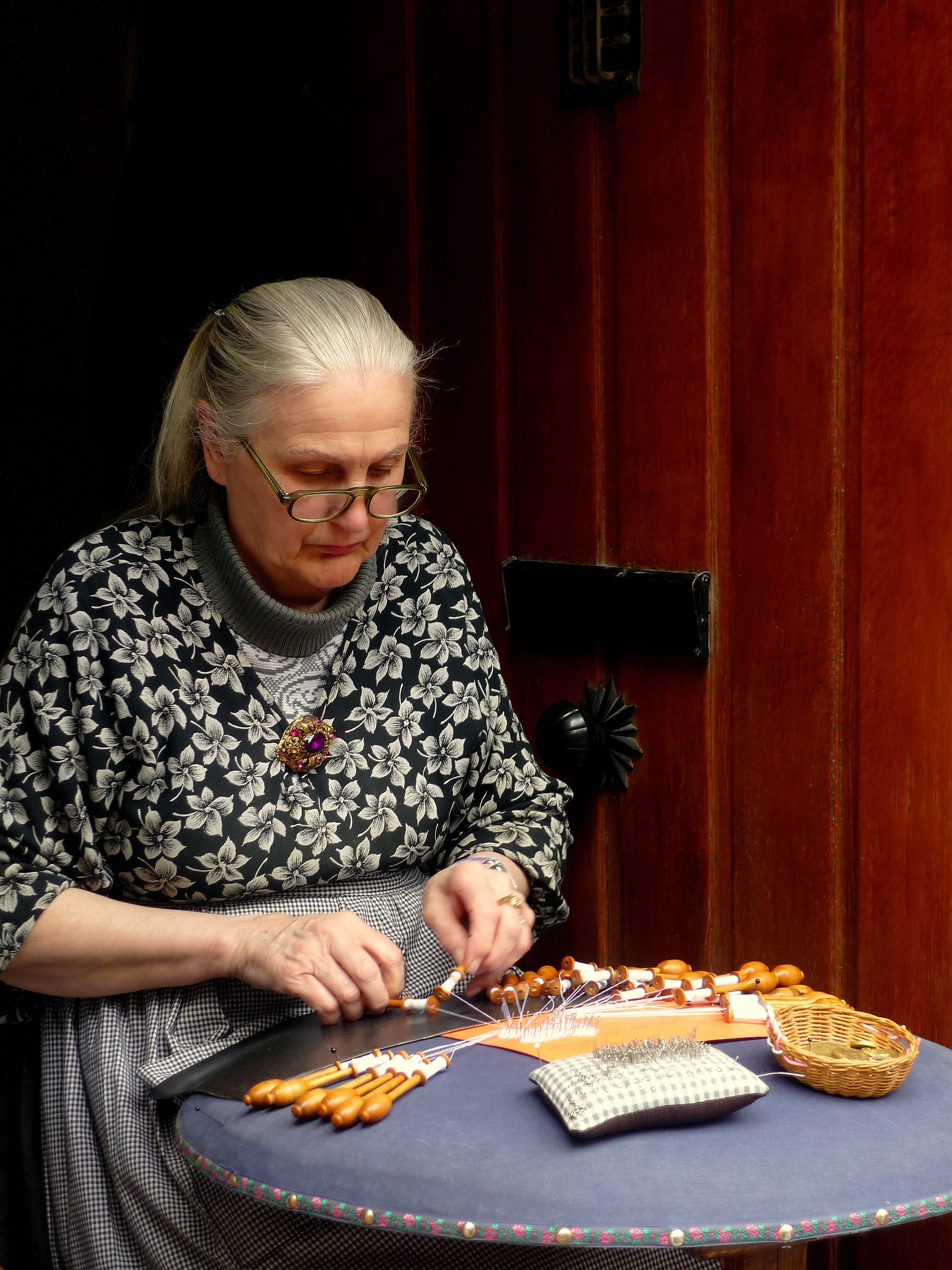
Belgium's artistic heritage is vast, from the painters of the Flemish golden age to Art Nouveau, but some of its most characteristic traditions are crafts and music kept alive by ordinary people. Bobbin lace is one. From the sixteenth century, lace-making was taught by mothers to daughters and in lace schools that opened across the country. The lacemaker works on a firm pillow, crossing and twisting threads wound on wooden bobbins to follow a pricked pattern, combining different stitches to build up the design. Once work that helped families out of poverty, it is now practised mainly as a skilled pastime, and lace centres still run courses for beginners, young people and teachers.
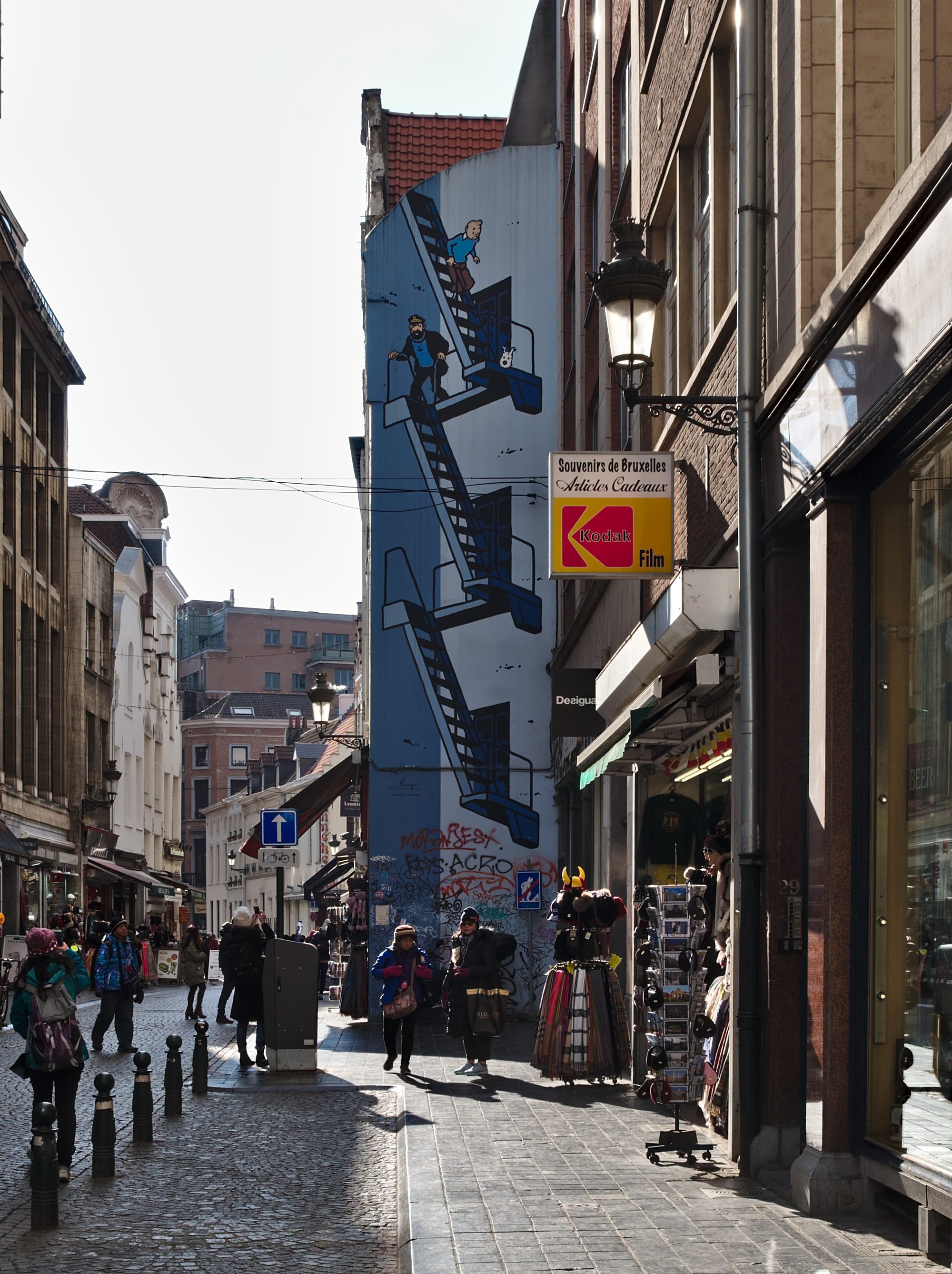
The carillon is the country's signature music. Played by a carillonneur from a keyboard high in a church tower or belfry, it is part of the soundscape of dozens of Belgian cities and villages, where the programme to safeguard it covers the instruments, the repertoire and the training of new players. The comic strip, known in Belgium as the ninth art, is another point of pride. The country produced some of Europe's best-loved comic characters, and since 1991 the capital has painted scenes from comic books across the walls of its buildings; more than fifty murals now form a trail through the city.
Living heritage stretches well beyond the arts. UNESCO has recognised Belgium's beer culture, its funfairs, falconry, dry-stone building and stilt jousting, and, on the North Sea coast, the fishermen who still ride horses into the surf to drag nets for shrimp.
Dos and don'ts for visitors
- Do greet with a brief handshake, and let Belgians lead on whether to kiss on the cheek.
- Do arrive on time, and send a message if running late.
- Do use the formal u or vous with strangers, and ask which language someone prefers rather than assuming.
- Do bring a modest gift, such as flowers or chocolates, when invited to a home, and open gifts received straight away.
- Do wait for others to begin eating, and keep hands visible with wrists resting on the table.
- Don't give white chrysanthemums, an even number of flowers or thirteen stems.
- Don't raise money, politics or religion with new acquaintances; art, food and sport are safer ground.
- Don't tip heavily; service is normally included, and rounding up is enough.
What to take away
Belgian courtesy is quiet, punctual and built on compromise, and visitors who match that restraint will find it matched in turn, by hosts who save their exuberance for the table, the belfry and the carnival street.