Attractions & Natural Wonders · Belgium
Belgium: Ten Attractions and Natural Wonders
A gilded market square, two medieval Flemish cities preserved almost whole, an iron atom nine billion times life size, and the fields of the Western Front
By Worldlore Editorial · 19 September 2026
A small country, densely packed
Belgium is compact, flat in the north and hilly in the south, and split between Dutch-speaking Flanders, French-speaking Wallonia, and bilingual Brussels. For its size it is remarkably rich in things to see: two of the best-preserved medieval cities in Europe, a capital of squares and museums, and the battlefields of both world wars. Nothing is far from anything else — the train from Brussels reaches almost every entry on this list in under an hour and a half.
The ten below run across all three regions. Spring and early autumn are ideal; Bruges and Ghent are magical (and quieter) in winter.
1. The Grand-Place, Brussels
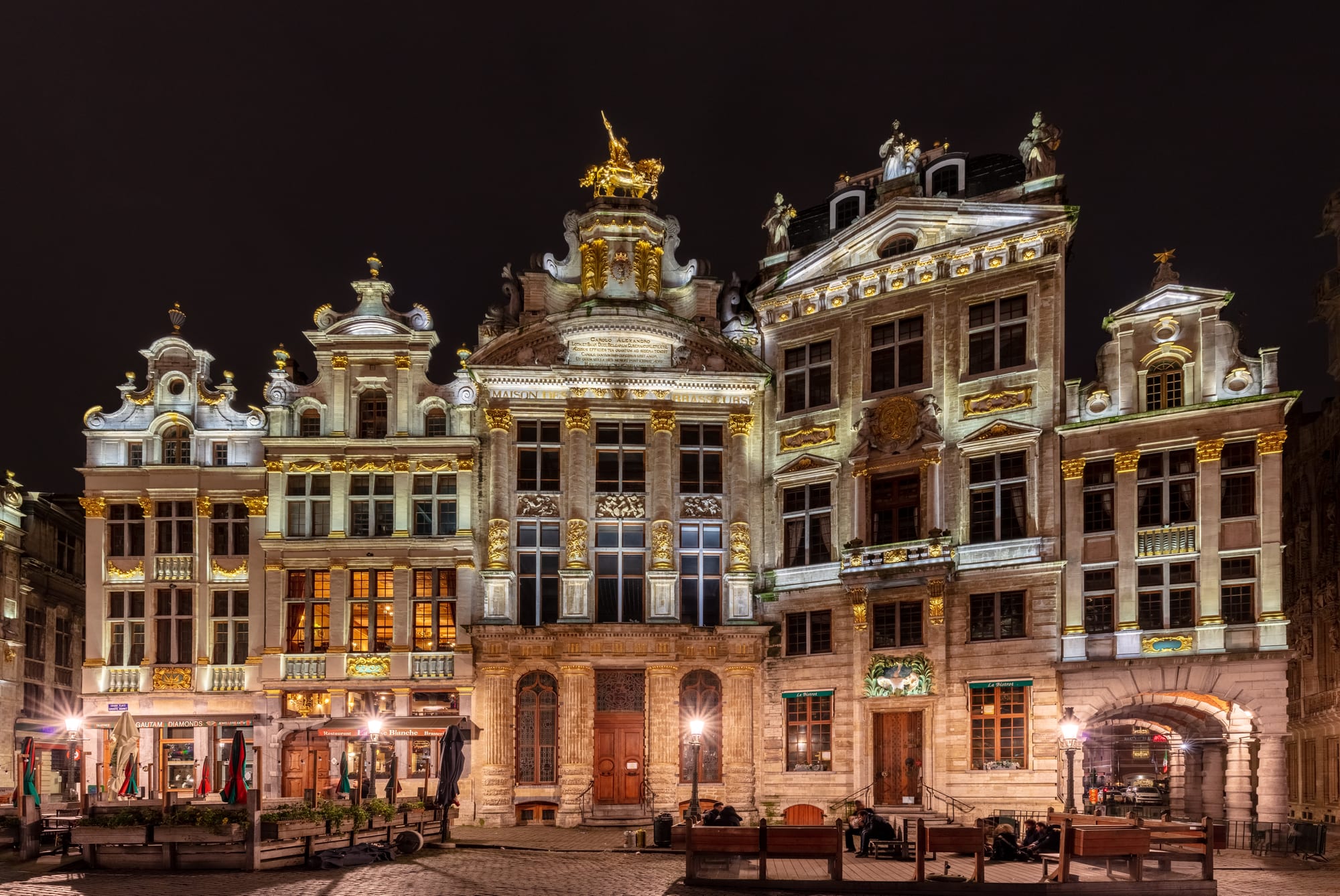
Brussels' central square is one of the most complete Baroque ensembles in Europe: a Gothic town hall with a 96-metre spire on one side, the king's house opposite, and the rest of the square filled with the gilded, gabled houses of the medieval trade guilds — most rebuilt in a single burst after Louis XIV's army flattened the city centre in 1695. It is a UNESCO World Heritage Site.
Every two years in August it is carpeted with nearly a million begonias. The lanes around it lead to the Manneken Pis, the galleries of the Galeries Royales Saint-Hubert, and the comic-strip murals the city is dotted with.
2. Bruges
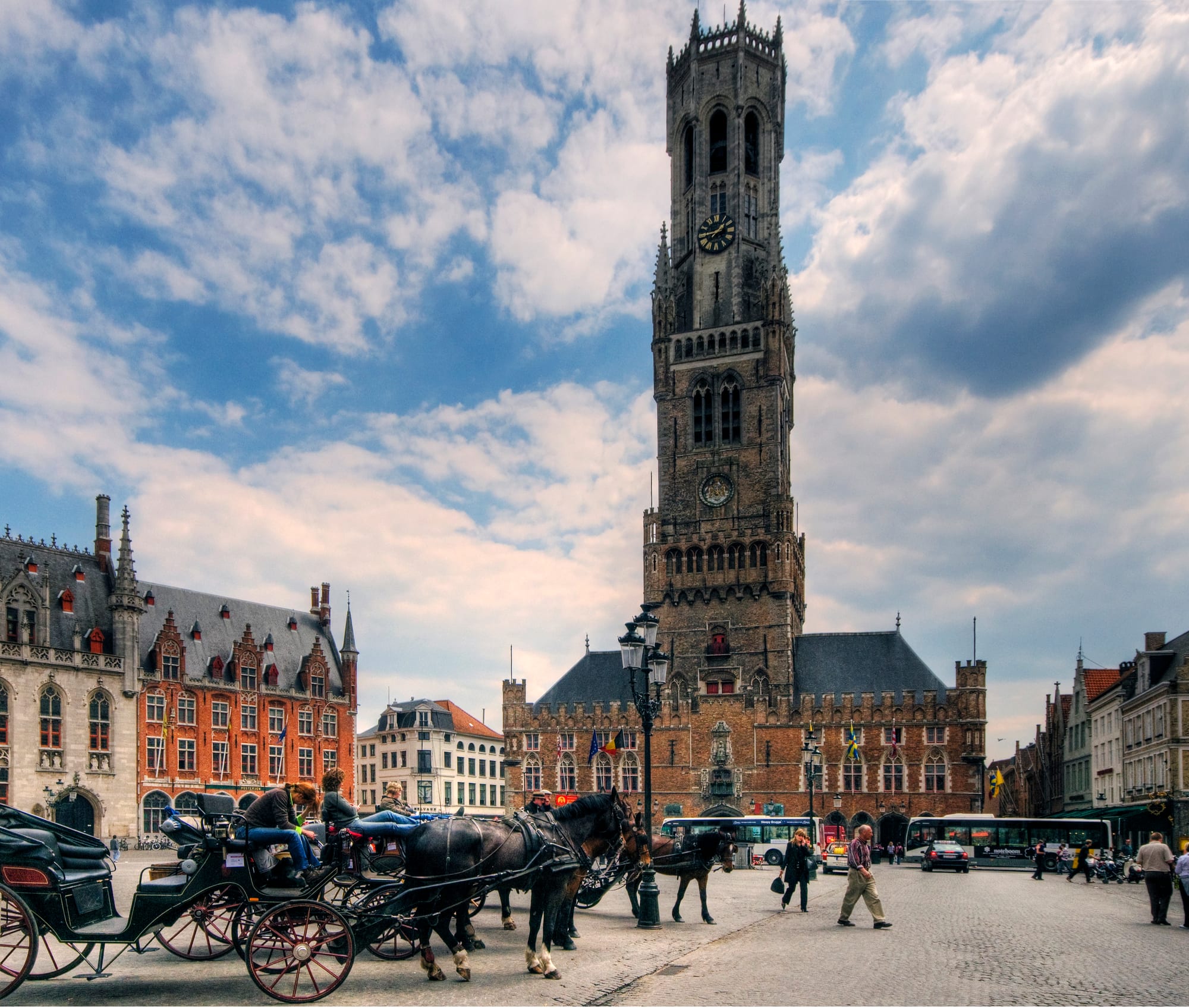
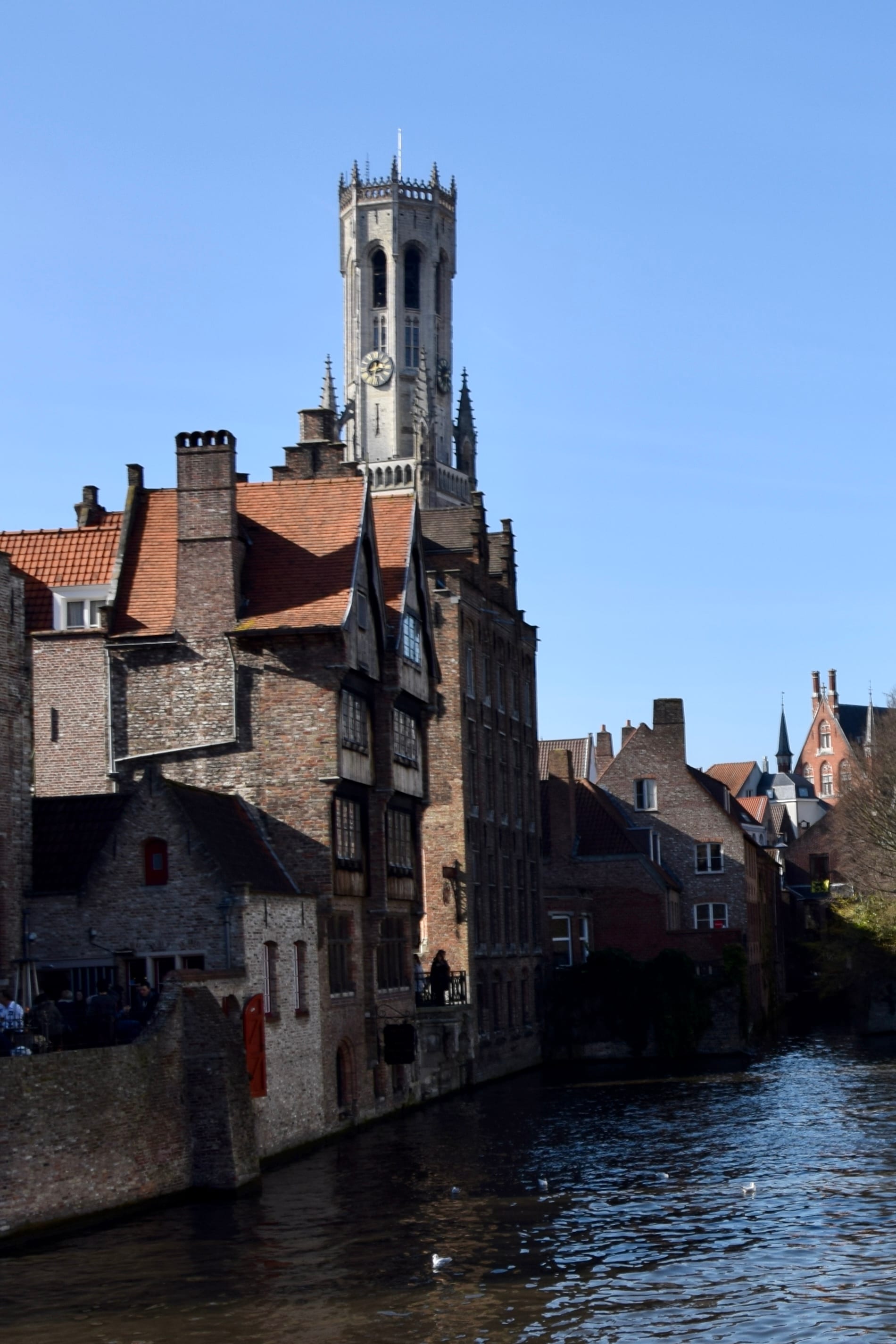
Bruges was one of the great trading cities of medieval Europe, then its harbour silted up and it fell asleep for centuries — which is why it survives so intact. The whole centre is a UNESCO World Heritage Site: a ring of canals around a dense core of brick gabled houses, the Markt with its climbable belfry, the Burg square, and the Groeninge Museum's Flemish Primitive paintings.
It is small, walkable, and very popular; a canal boat and an early start before the day-trippers arrive are both worth it. The béguinage — a walled community of lay religious women — is a separate UNESCO listing.
3. Ghent
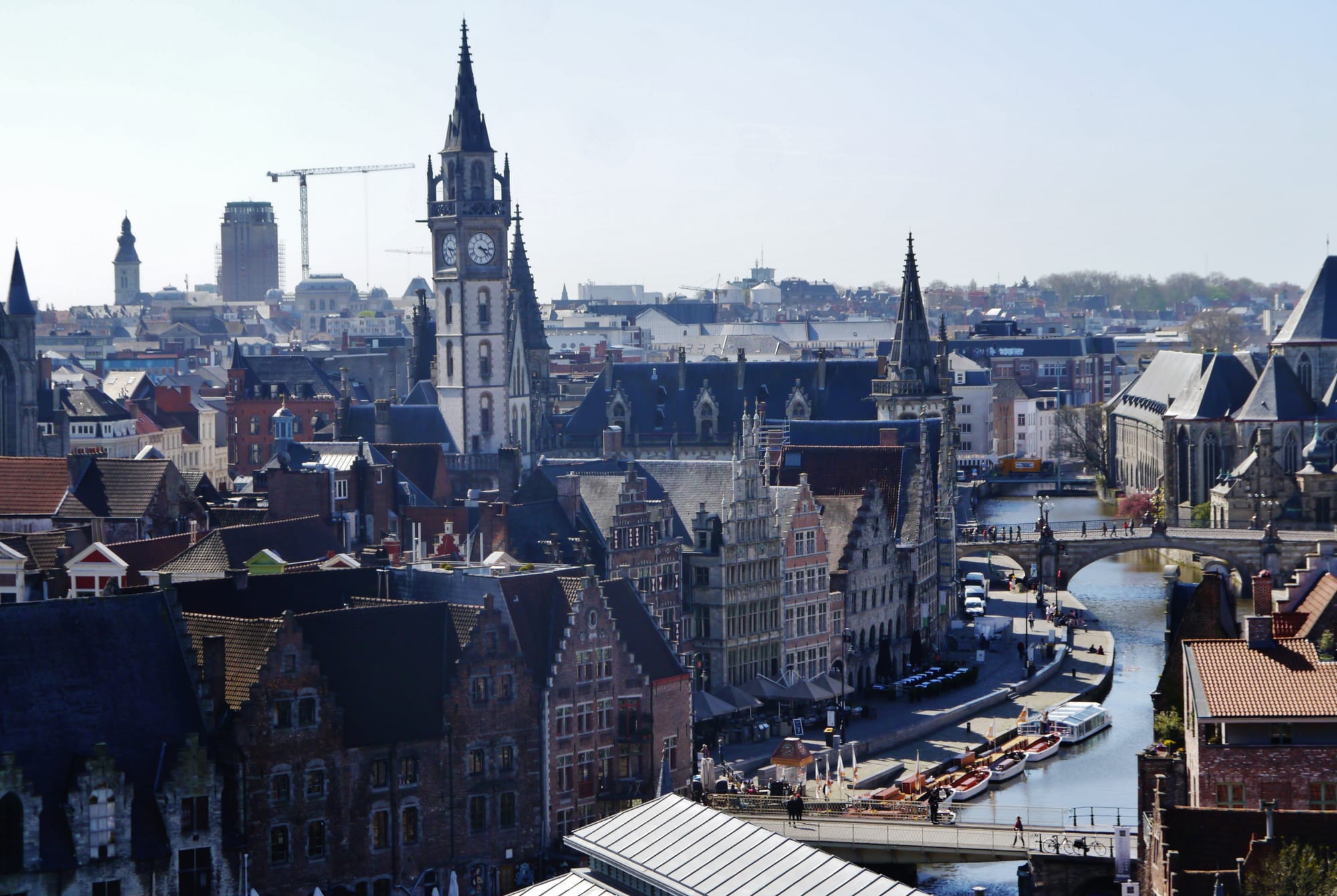
Ghent has Bruges' medieval bones but is a working university city, less polished and less crowded. The set-piece view is along the Graslei and Korenlei, facing rows of guild houses across the old harbour. Nearby are the moated Gravensteen castle (with a gruesomely entertaining audio tour), the three-tower skyline of St Nicholas, the belfry, and St Bavo's Cathedral — home to the Ghent Altarpiece, the 15th-century van Eyck polyptych, recently restored and shown behind glass.
The city lights its monuments carefully at night, and it is at its best after dark.
4. The Atomium
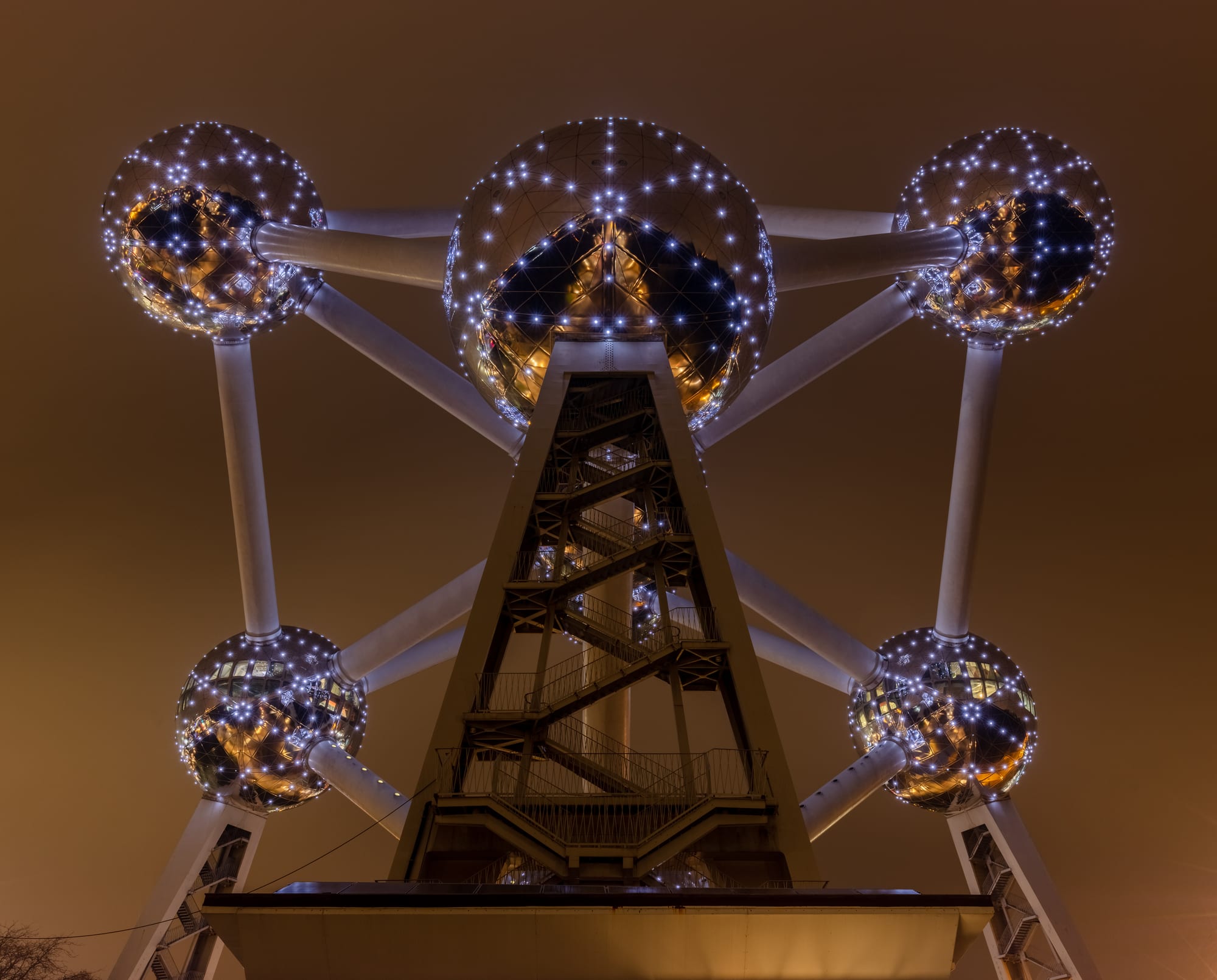
Built for Expo 58, the Atomium is a 102-metre stainless-steel model of an iron unit cell — nine spheres joined by tubes, magnified about 165 billion times. Escalators and a lift run through the tubes to exhibition spheres and a top-sphere restaurant with a view over the city.
It sits in the Heysel park with the Mini-Europe model village and the Expo grounds. Like the Eiffel Tower before it, it was meant to be temporary and became a permanent symbol of its city.
5. Antwerp's old town and cathedral
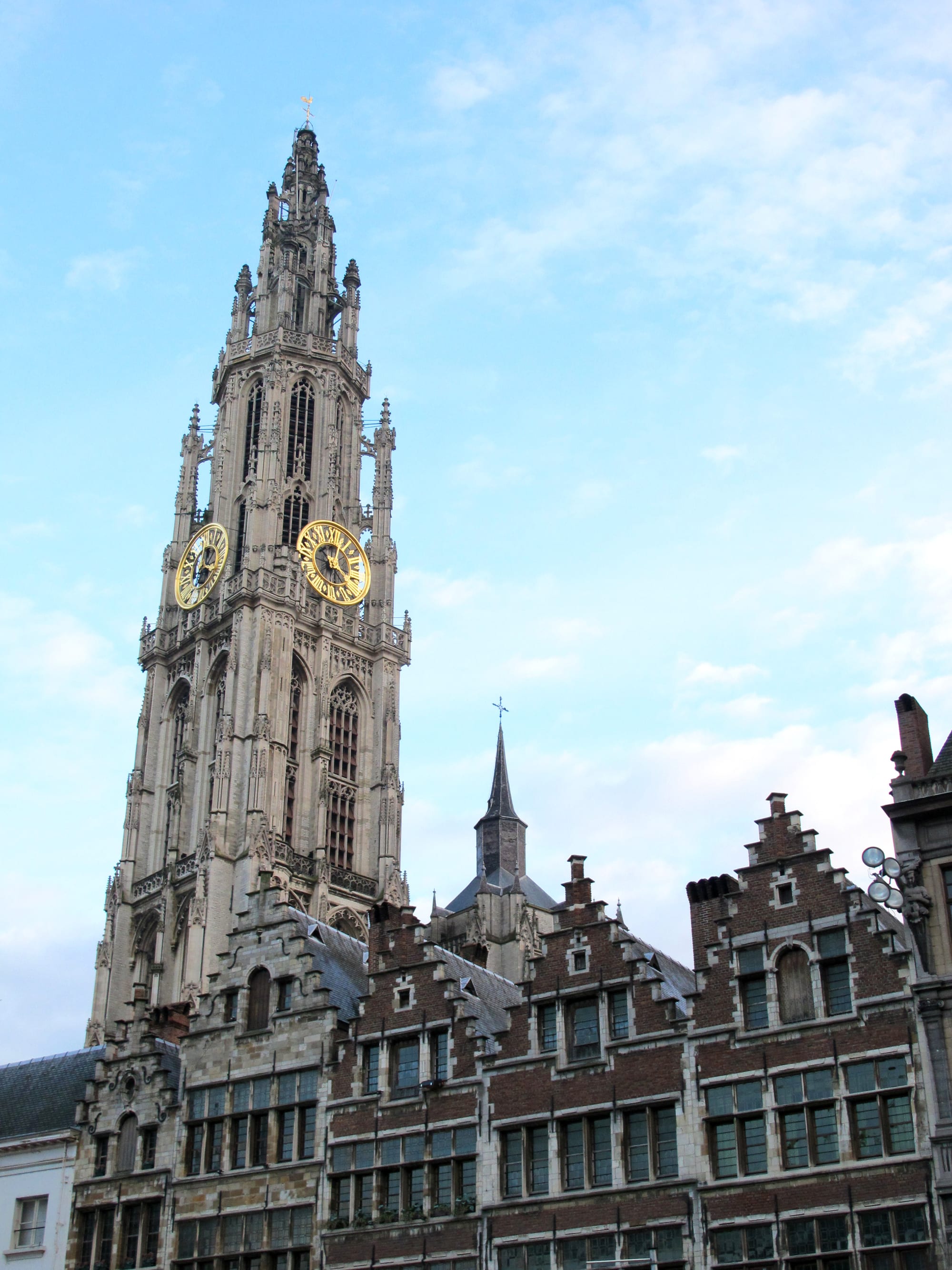
Antwerp was the richest city in 16th-century Europe, and it shows: a Grote Markt of guild houses, a huge Gothic Cathedral of Our Lady whose 123-metre tower is a UNESCO-listed belfry and whose walls hold four major Rubens paintings, and the painter's own house and studio a few streets away. The Plantin-Moretus printing museum, the world's oldest, is another World Heritage Site.
Modern Antwerp is a fashion and diamond city; the riverside MAS museum gives the best overview from its free rooftop.
6. Antwerpen-Centraal station
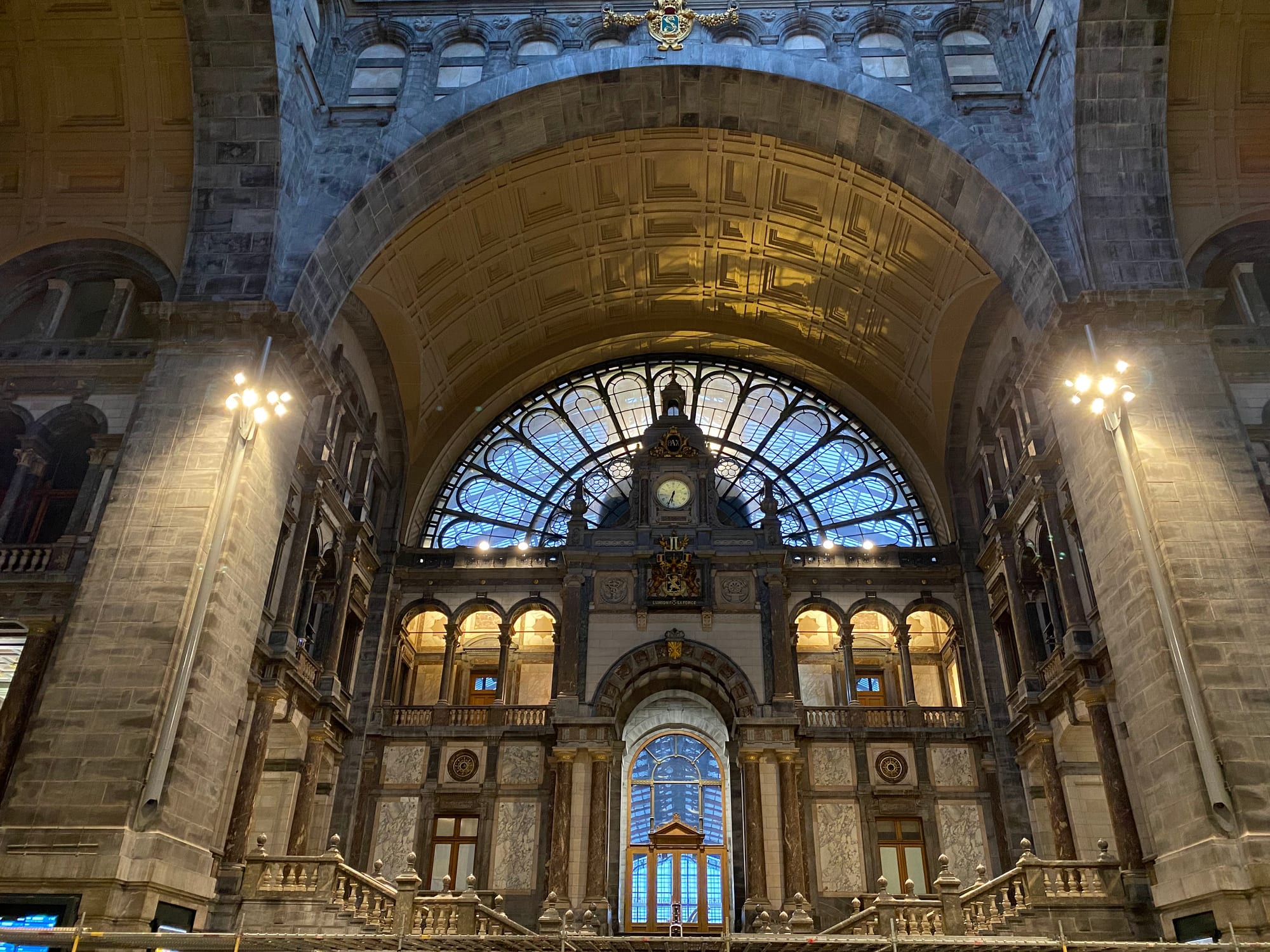
It is unusual for a train station to be a sight in its own right, but Antwerp's is regularly named among the most beautiful in the world: a monumental stone reception hall of 1905 under a great glass dome, opening to a soaring iron-and- glass train shed, since rebuilt on four levels to handle high-speed trains without losing the original.
It costs nothing to walk in and look up, and it is the arrival point for most visitors to the city anyway.
7. Ypres and Flanders Fields
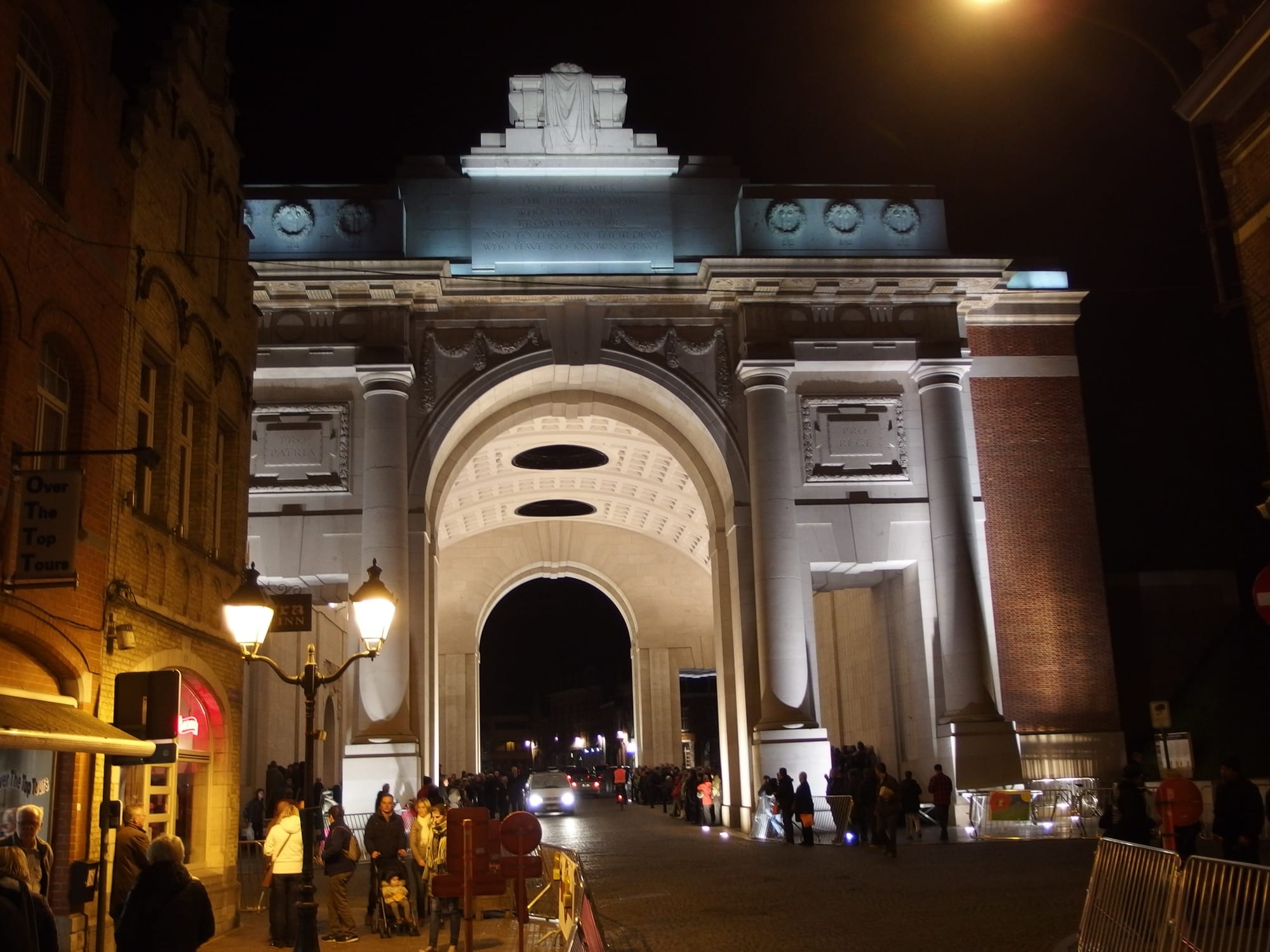
The town of Ypres (Ieper) was ground to rubble during four years of trench warfare around it and rebuilt brick by brick afterward, including its huge medieval Cloth Hall, now the In Flanders Fields Museum. The Menin Gate, on the eastern edge, is a memorial to the missing; every evening at 8pm since 1928 (with a break under German occupation), buglers have sounded the Last Post beneath the arch.
The surrounding countryside is dense with cemeteries, preserved trenches, and craters — Tyne Cot, the largest Commonwealth cemetery in the world, is nearby.
8. Bouillon and the Ardennes
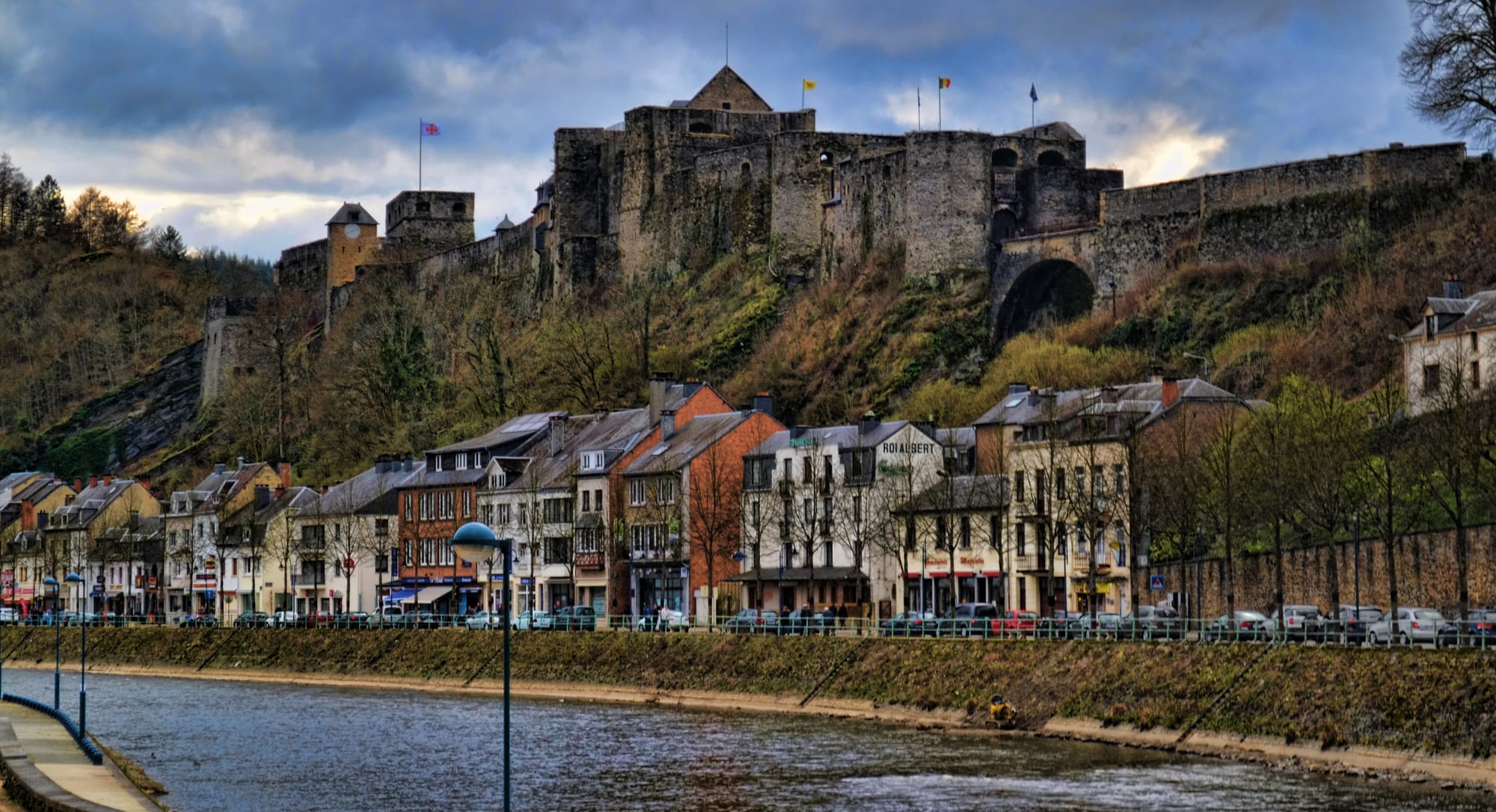
The Ardennes — the forested, hilly southeast — is Belgium's outdoor quarter, and its emblem is the castle at Bouillon, strung along a rock spine above a tight bend of the Semois river. It belonged to Godfrey of Bouillon, a leader of the First Crusade, who mortgaged it to fund his expedition in 1096.
The wider region has the Han-sur-Lesse show caves, the town of Durbuy (which markets itself as the smallest city in the world), the WWII Battle of the Bulge sites around Bastogne, and good hiking, kayaking, and beer.
9. Dinant and the Meuse valley
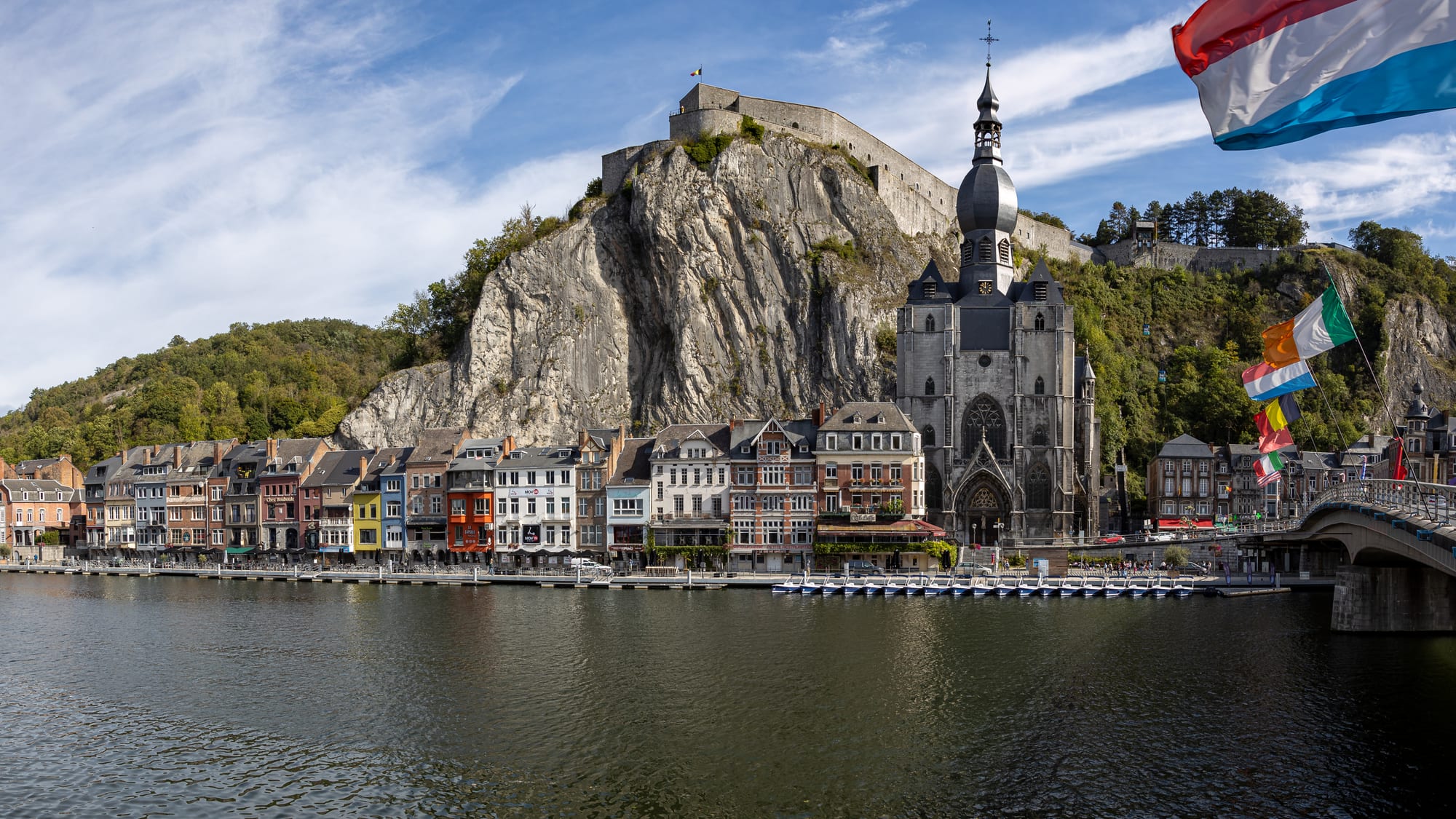
Dinant, on the Meuse in Wallonia, is squeezed onto a narrow strip between the river and a sheer cliff, with a bulb-domed collegiate church at the base and a citadel on top, reached by cable car or 400-odd steps. It is the birthplace of Adolphe Sax, inventor of the saxophone, and giant painted saxophones line the bridge.
The Meuse valley around it — Namur with its own great citadel, the château of Freÿr, the rock climbing at Freyr — makes an easy day's drive or river cruise.
10. Leuven
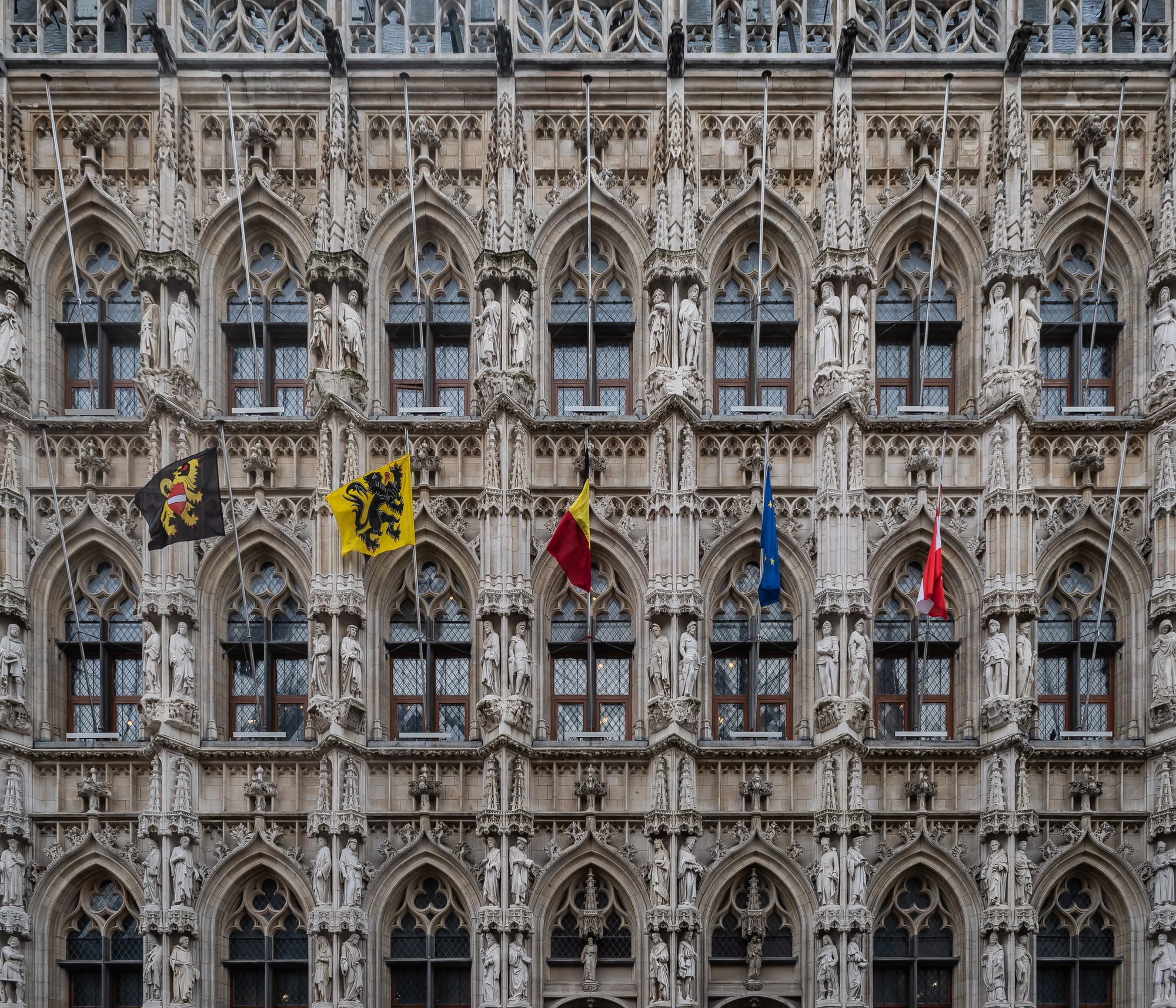
Leuven, 25 minutes east of Brussels, is a lively university town — the Catholic University here dates from 1425 — built around one of the most flamboyant town halls in Europe, a wedding-cake of Gothic pinnacles and statuary that survived both world wars while much around it burned.
The old cloth hall is now the university library (rebuilt twice after wartime destruction), the béguinage is a UNESCO-listed neighbourhood of the student city, and the Stella Artois brewery has run here since 1926. It also lays claim to the "longest bar in the world," the café-ringed Oude Markt.
Belgium is one of the easiest countries in Europe to tour by train from a single base. A week from Brussels or Antwerp puts everything on this list within reach as a day trip.