History · Belarus
Belarus: The Borderland
A land between — the Grand Duchy of Lithuania, the Russian Empire, the bloodiest ground of the Second World War, and a Soviet republic that never quite left
By Worldlore Editorial · 19 September 2026
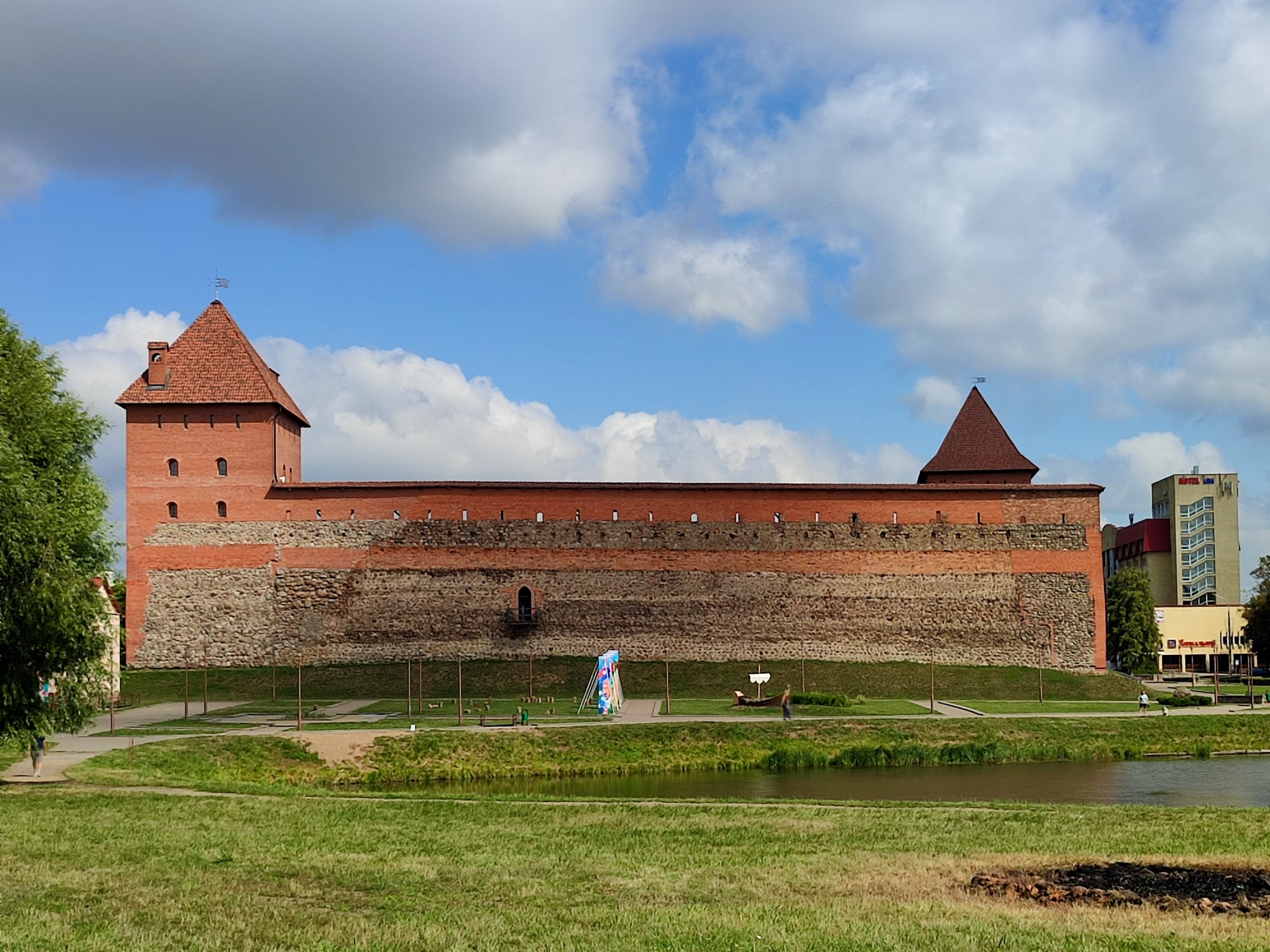
A land between
Belarus is a flat, forested, lake-strewn country with no coast and no natural frontiers, sitting on the open plain between Poland and Russia. That position is the whole of its history. Armies have crossed it in both directions for a thousand years — Teutonic Knights, Muscovites, Swedes, Napoleon's Grande Armée, the Wehrmacht — and every empire in the region has ruled part of it. Belarusians built no lasting state of their own until 1991, and the argument over what the nation is — a distinct European people with its own language, or a western branch of Russia — is still not settled inside the country.
A short history
- 10th–13th c.
Polotsk and Kievan Rus
East Slavic principalities, with Polotsk the strongest, on the rivers of the region.
- 13th–16th c.
The Grand Duchy of Lithuania
The Belarusian lands are its core, its law and chancery language East Slavic.
- 1569
The Commonwealth
The Union of Lublin joins Lithuania and Poland; the elite is gradually Polonised.
- 1772–1795
The Partitions
Russia annexes all the Belarusian lands.
- 1863–64
The January Uprising
An anti-Russian revolt; Russia denies that Belarusians are a distinct people.
- 1921
Divided again
The Treaty of Riga splits Belarus between Poland and Soviet Russia.
- 1941–1944
The German occupation
Belarus loses roughly a quarter of its population; whole villages are burned.
- 1991
Independence
Belarus becomes sovereign as the Soviet Union dissolves — on Belarusian soil.
- 1994 onward
Lukashenko
Alexander Lukashenko wins the last free election and never leaves.
- 2020
The uprising
Falsified elections trigger the largest protests in Belarusian history.
Polotsk and the Grand Duchy
East Slavic tribes settled the region in the early Middle Ages, and by the 10th century it was part of Kievan Rus. Its strongest centre was the Principality of Polotsk on the Western Dvina, powerful and often independent, with an 11th-century stone cathedral and, in the 12th, the princess-nun Euphrosyne, a scholar and church-builder who is now a national saint.
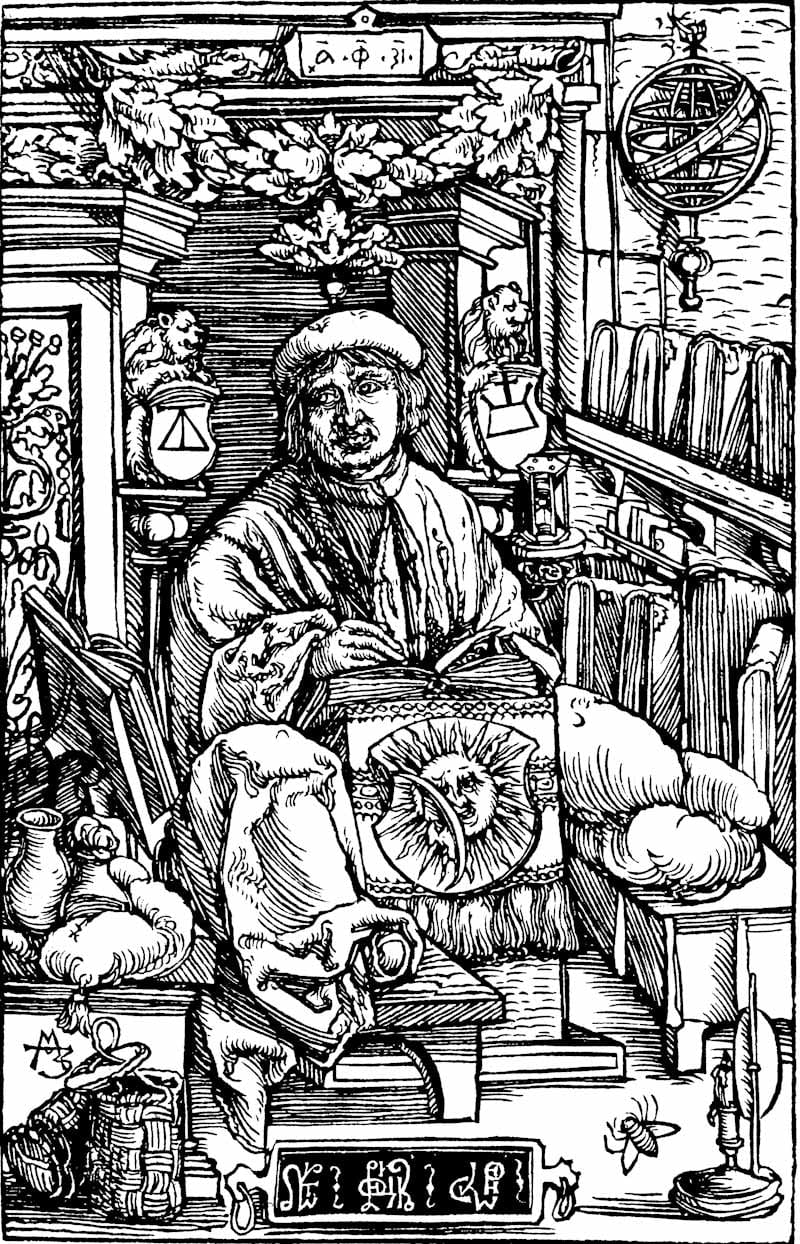
From the 13th century these lands became the heartland of the Grand Duchy of Lithuania — a large state that, despite its name, was mostly Orthodox and East Slavic in population, and whose laws and government were written in an early form of Belarusian. Its greatest cultural figure was Francysk Skaryna of Polotsk, who in 1517 printed the first books in the language, making him one of the earliest printers in Eastern Europe.
In 1569 the Grand Duchy entered a federal union with Poland — the Polish–Lithuanian Commonwealth. Over the next two centuries the Belarusian nobility adopted Polish language and, often, Catholicism, while most peasants belonged to the Greek Catholic (Uniate) Church. The Commonwealth's wars with Muscovy and Sweden in the mid-17th century were ruinous here, killing up to half the population in the worst- hit regions.
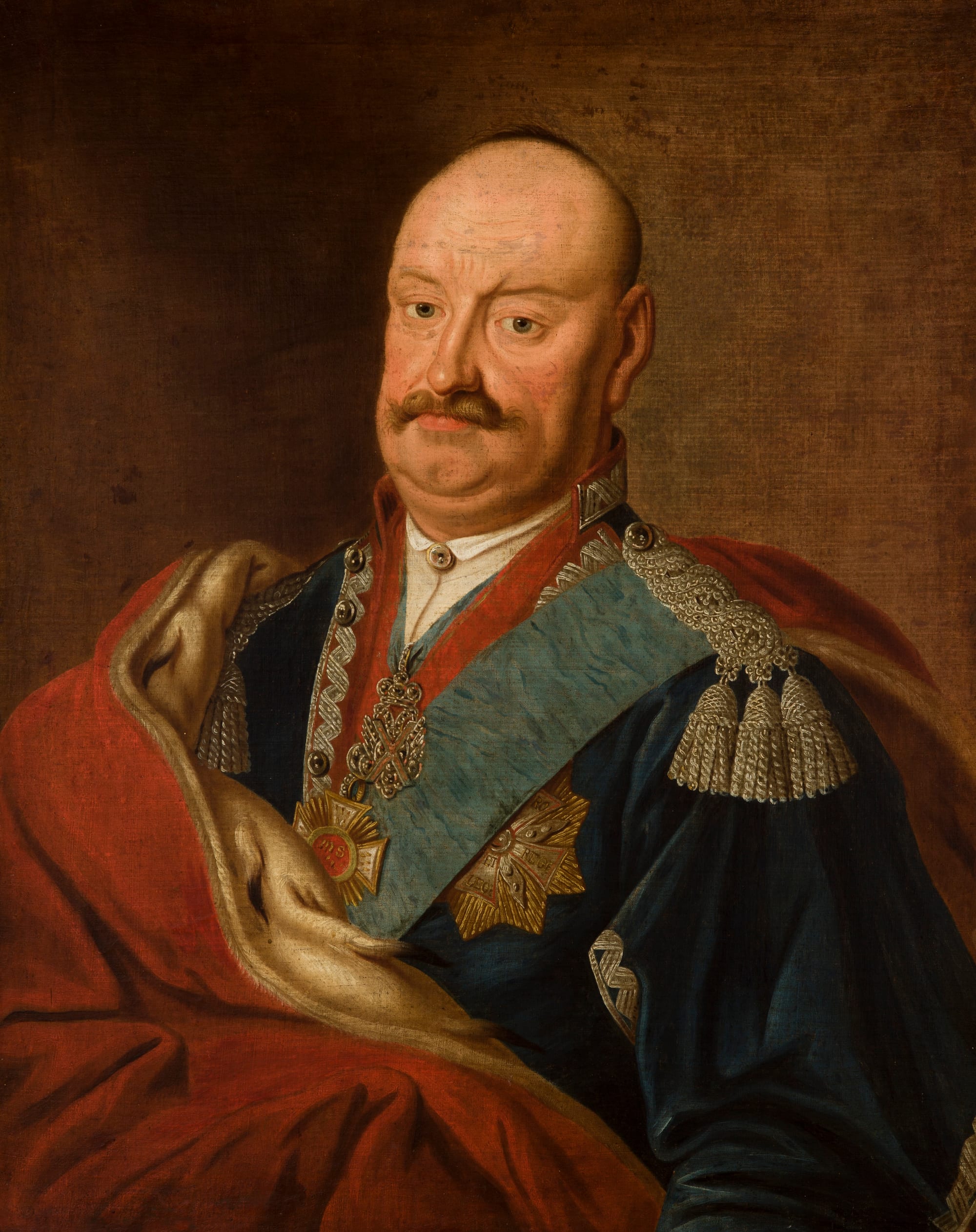
The Radziwiłłs kept their own army, minted their own coins, and hosted kings at Nesvizh; the gap between magnates like them and the enserfed peasantry was one of the widest in Europe.
Under Russia
The three Partitions of Poland between 1772 and 1795 handed the entire Belarusian territory to the Russian Empire. Russia treated it as an integral, "West Russian" part of the state: it abolished the Uniate Church by force in 1839, restricted the Polish and later the Belarusian language, and officially denied that Belarusians were anything other than Russians. The nobility rose against Russian rule in 1830–31 and again in 1863–64; the leader of the later revolt in this region, Kastuś Kalinoŭski, who printed an underground newspaper in Belarusian, was hanged and became a national hero.
Belarus also lay inside the Pale of Settlement, and its towns held one of the largest Jewish populations in the world — in many of them a majority. A Belarusian national movement, small and mostly cultural, appeared only around 1900, around the newspaper Nasha Niva and the poets Yanka Kupala and Yakub Kolas.
Divided, purged, then reunited
When the Russian Empire collapsed, Belarusian activists proclaimed a People's Republic in March 1918, but it never held territory. The Bolsheviks set up a Soviet Belarusian republic instead, and after the Polish–Soviet War the Treaty of Riga in 1921 cut the country in two: the west went to Poland, the east to the Soviet Union. Soviet Belarus began with a decade of official encouragement for the language and culture — and then Stalin reversed it, wiping out almost the entire Belarusian national intelligentsia in the terror of the 1930s. At Kurapaty, outside Minsk, the secret police shot tens of thousands and buried them in the forest. In 1939 the Soviet Union annexed western Belarus under its pact with Germany, uniting the country inside the USSR.
The war
Nothing in Belarusian history compares to what happened between 1941 and 1944. Under German occupation, Belarus was a centre of the Holocaust — its Jewish population of some 800,000 was almost entirely murdered, much of it at sites like Maly Trostenets near Minsk — and the ground of a savage anti-partisan war. German forces destroyed 5,295 villages, more than 600 of them with all or most of their inhabitants. One of them, Khatyn, where 149 people were burned alive in a barn in 1943, became the national symbol of the occupation.
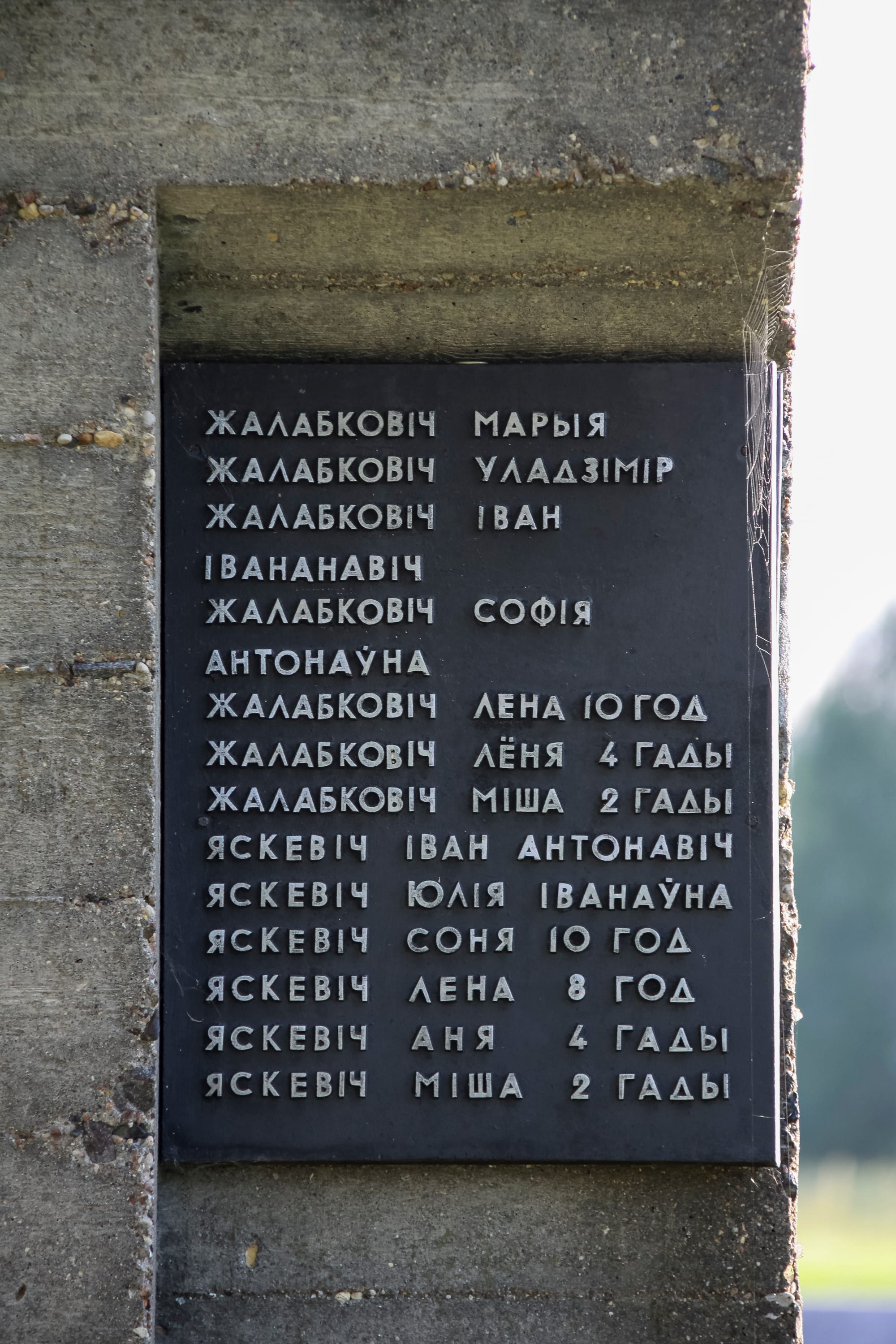
Belarus also raised one of the largest partisan movements in occupied Europe. By the time the Red Army drove the Germans out in 1944, the country had lost around a quarter of its people — proportionally the heaviest toll of any nation in the war — and its cities were rubble.
Soviet Belarus
The postwar republic was rebuilt from nothing as an industrial showcase — tractor and truck plants, chemical works, "the assembly shop of the Soviet Union" — and in the process it was thoroughly Russified: Russian became the language of the cities and of advancement, while Belarusian survived mainly in villages and folklore. In 1986 the Chernobyl reactor, just over the border in Ukraine, showered about a quarter of Belarusian territory with fallout, a burden the country still carries.
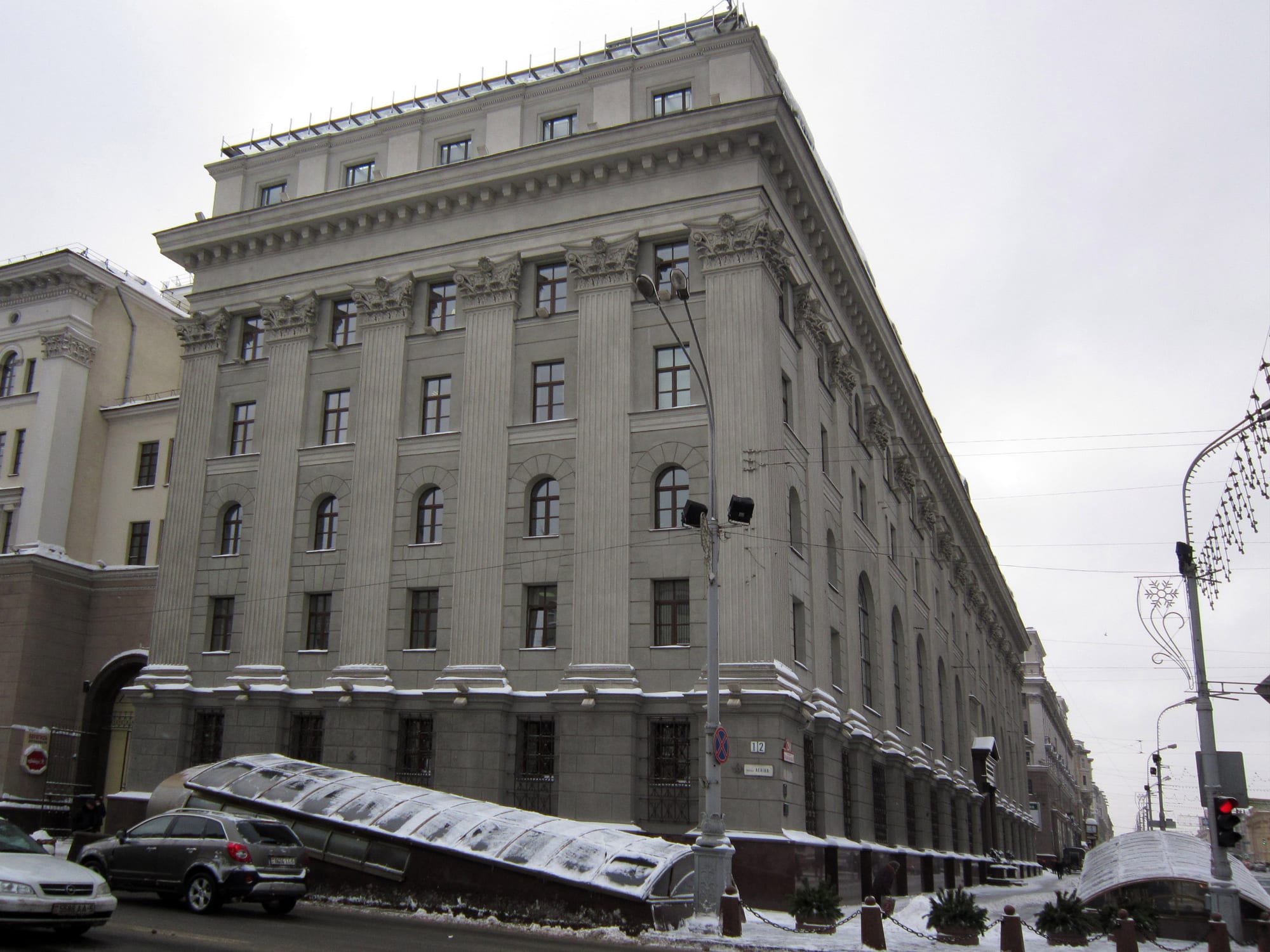
Belarus declared independence in August 1991, and it was in a hunting lodge in a Belarusian forest that the leaders of Russia, Ukraine and Belarus signed the agreement dissolving the Soviet Union that December.
Lukashenko
Independent Belarus had a brief pro-reform, pro-Belarusian government before Alexander Lukashenko, a former collective-farm director, won the presidency in 1994 on a platform of anti-corruption, Soviet nostalgia and closeness to Russia. He has held power ever since. Referendums expanded his authority and restored Soviet- era state symbols; parliament was neutered; opposition politicians disappeared; and independent media were shut down. Belarus became widely known as "Europe's last dictatorship".
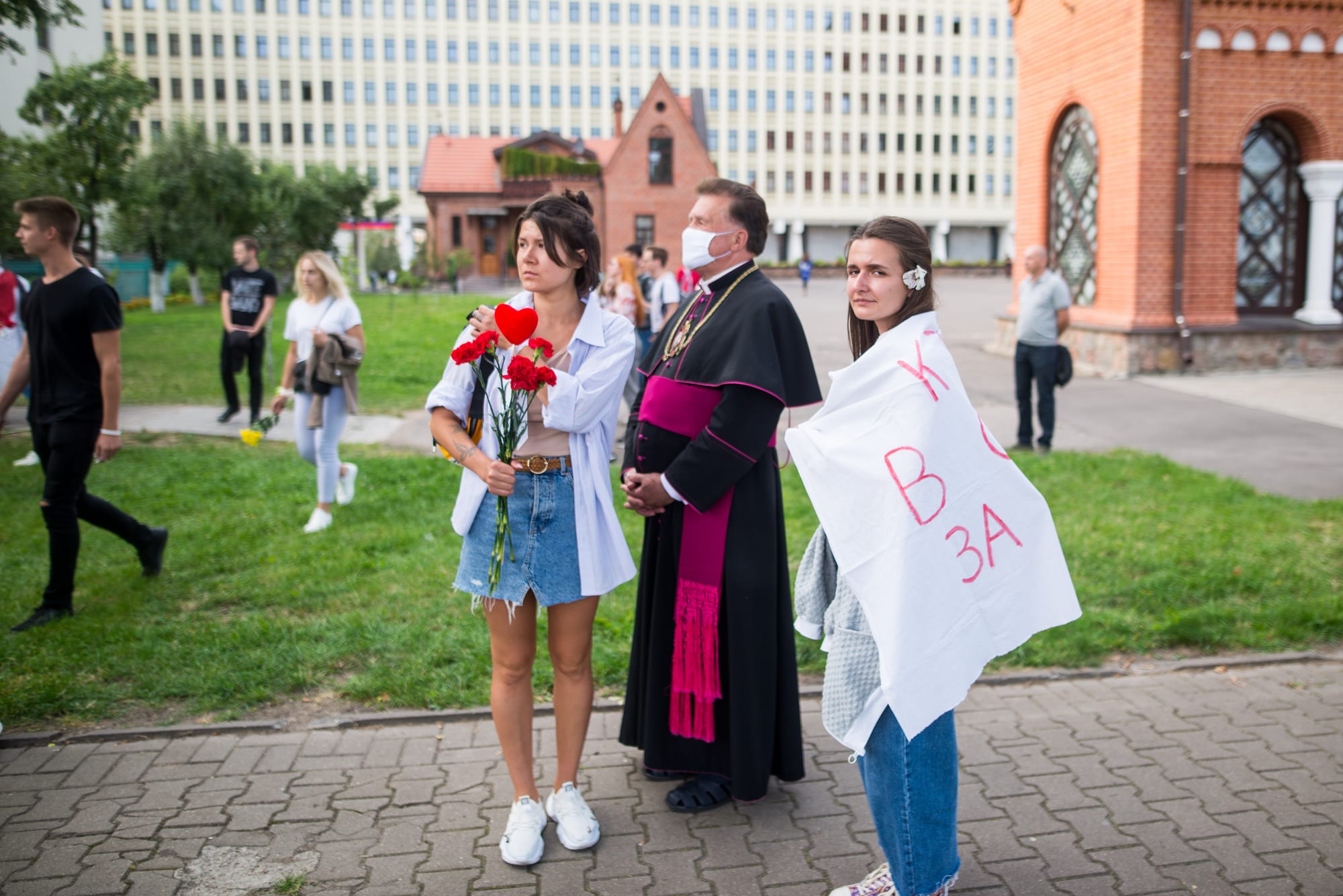
In August 2020, after a presidential election that was openly falsified and the real challengers jailed or exiled, hundreds of thousands of Belarusians took to the streets in the biggest protests the country had ever seen, with the exiled Sviatlana Tsikhanouskaya as their figurehead. The state crushed the movement with tens of thousands of arrests, torture and killings, and the West stopped recognising Lukashenko as president. Since 2022 Belarus has served as a base and partner for Russia's invasion of Ukraine and has accepted Russian nuclear weapons on its soil, leaving Lukashenko almost entirely dependent on Moscow.
What Belarus carries
Belarus is a country still arguing with itself about its own past. The state builds its identity on the Soviet war effort and on partnership with Russia; the opposition and a cultural revival look to the Grand Duchy, the Belarusian language, and the white-red-white flag of 1918 and 1991. Between those poles sits a real history: a distinct people on a plain with no defences, who survived a thousand years of other people's wars and lost more in the last one than almost anyone, and who briefly, in 2020, filled the streets to be counted.